Most people have heard of white diamonds, and plenty have heard of pink or blue ones too. Red diamonds are different. They sit at the very top of the rarity scale, and most jewelers will go an entire career without ever holding a genuine one in their hands. Fewer than 30 true red diamonds have ever been documented by gemologists, and most of them are smaller than a pea. Understanding what makes them red, where they came from, and why they’re worth so much says a lot about how colored diamonds work in general, and about just how strange and unpredictable nature can be when it comes to gemstones.
What Causes a Diamond to Turn Red?
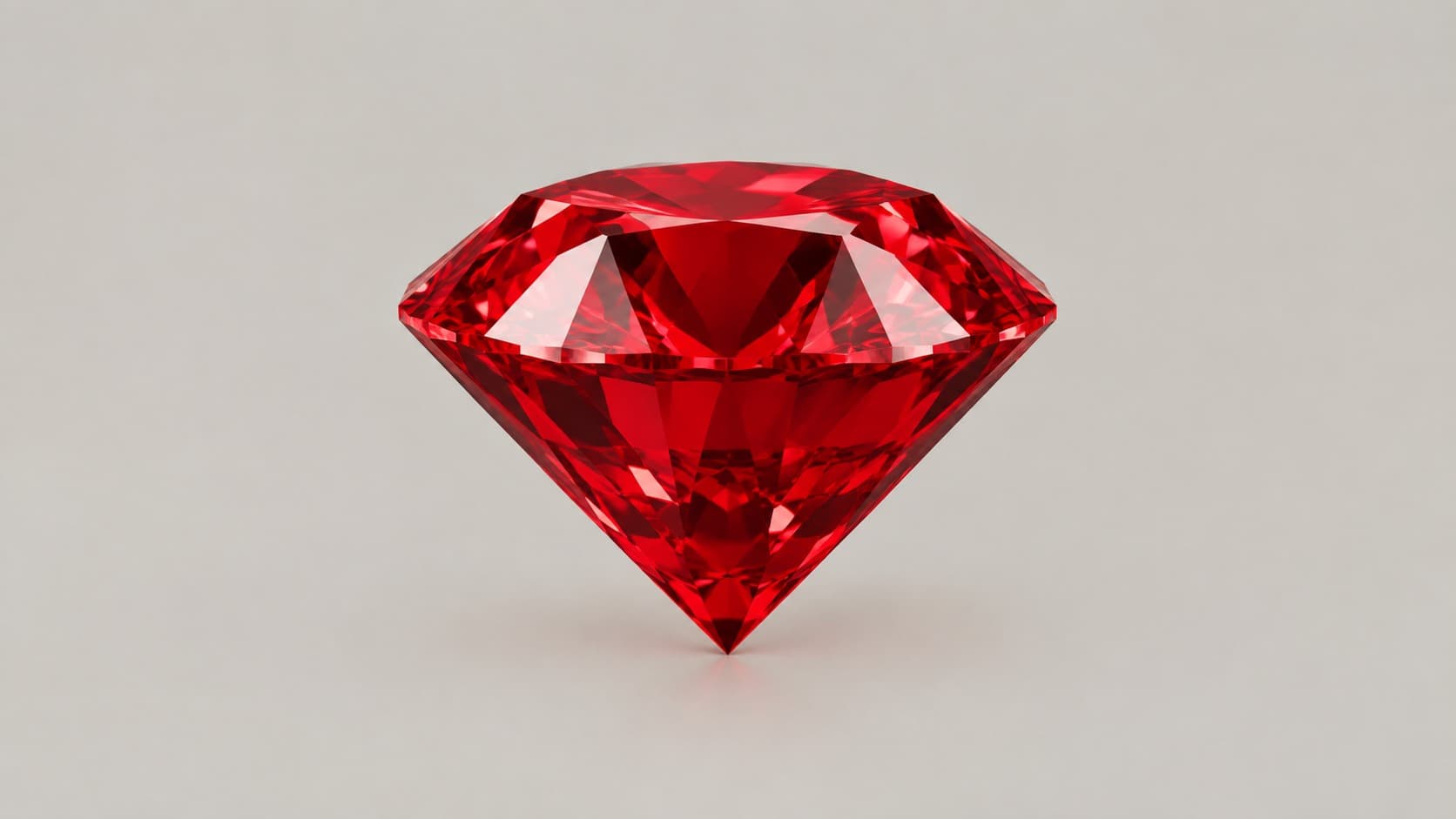
A red diamond is a natural diamond that formed with a true red color, caused by a distortion in its crystal structure rather than by any mineral impurity. That makes red diamonds chemically different from how people usually think colored gems work.
Most colored gemstones, and even most colored diamonds, get their hue because a trace element got mixed into the crystal as it formed. Blue diamonds, for example, contain tiny amounts of boron. Yellow diamonds contain nitrogen. Red diamonds don’t follow this pattern at all. They’re made of pure carbon, just like a colorless diamond, with no foreign element causing the color.
Scientists believe the red color is caused by something called plastic deformation. Deep underground, under enormous heat and pressure, the diamond’s crystal lattice gets bent and stressed as it grows, much like a stack of playing cards sliding sideways under pressure instead of staying neatly aligned. In a tiny number of stones, that stress twists the structure just enough to change how light passes through it, and the result is a red color. Why this happens to some diamonds and not others remains unexplained, which is part of why red diamonds remain such a scientific puzzle even to experienced gemologists.
Gemologists sometimes describe red diamonds as “dark pink diamonds,” since the same lattice-distortion process is thought to cause both colors — red is simply the most extreme, most saturated version of it.
How Rare Are Red Diamonds?
Red diamonds are rarer than any other diamond color, including pink, blue, and green. Gemological labs have graded fewer than 30 diamonds in history as “Fancy Red,” the top grading term for a pure red stone with no secondary color.
By comparison, thousands of blue and pink diamonds have been certified over the decades, while red diamonds are measured in the dozens, total, across all of human history. Most weigh under half a carat once cut and polished, because the crystal distortion that causes the red color tends to also limit how large a rough stone can grow without cracking or breaking apart during formation.
For decades, nearly all red diamonds that reached the market came from one place: the Argyle mine in Western Australia. Between 1983 and its closure in 2020, Argyle produced roughly 90% of the world’s pink and red diamonds, yet its combined pink-to-red output over the mine’s entire 37-year history was famously described as being small enough to fit in the palm of one hand. The mine’s final diamond tender took place around its 2020 closure, and since then even fewer red diamonds are expected to reach collectors in the future, which makes existing stones more significant rather than less.
No mine has stepped in to take Argyle’s place. Occasional red stones still turn up as unpredictable byproducts of general diamond mining in places like Russia, Brazil, Canada, and parts of Africa, but these are isolated, one-off discoveries rather than a dependable source, and nowhere close to Argyle’s historical output. In practice, this means the world’s supply of red diamonds is now almost entirely fixed to what has already been mined and cut.
The way a mine like Argyle found these stones in the first place explains why the numbers stayed so low. Miners weren’t digging for red diamonds specifically, since there’s no way to target them. Instead, every single diamond the mine produced, pink, brown, white, or otherwise, was sorted and graded, and only the rare handful that happened to show true red color were pulled aside. Out of millions of carats of rough diamond produced each year, only a tiny, invitation-only annual sale called the Argyle Pink Diamonds Tender ever included a red stone at all, and some years featured none.
Why Can’t Miners Just Find More?
Red diamonds can’t be “found” in the way a miner finds a deposit of a specific mineral, because the color isn’t tied to a location or a chemical vein the way gold or sapphire deposits are. It comes from a structural accident that happens to an individual crystal as it forms, which means no mine, however advanced, can search for red diamonds on purpose. A mine can only sort through everything it produces and hope a handful of stones turn out this way. That randomness is the core reason supply can never really increase, no matter how much technology or money gets thrown at the problem.
The Most Famous Red Diamonds in the World
A handful of named red diamonds have become legendary in the gem world because of their size, history, or sale price. Each one is well documented enough that gemologists treat them almost like historical artifacts rather than ordinary jewelry. The stones most often cited by experts include:
- The Moussaieff Red — At 5.11 carats, this is the largest known Fancy Red diamond in the world. It has a triangular brilliant cut, was graded internally flawless, and was displayed at the Smithsonian National Museum of Natural History in 2003 as part of an exhibit on the world’s great diamonds.
- The Kazanjian Red — A 5.05-carat step-cut stone discovered in South Africa in the 1920s and originally cut by the Goudvis Brothers in Amsterdam. It has a dramatic history: it was reportedly seized during World War II and later recovered from a salt mine where it had been hidden, mistaken at the time for a ruby because red diamonds were so unfamiliar.
- The DeYoung Red — A 5.03-carat round-cut diamond, close in size to the two stones above, now held in the Smithsonian’s gem collection alongside other famous colored diamonds.
- The Hancock Red — A small 0.95-carat stone that became famous in 1987 when it sold at auction for $926,000 per carat, a price that shocked the jewelry world at the time and helped establish just how valuable red diamonds could be, even at under one carat.
- The Argyle Phoenix — A 1.56-carat stone from the Argyle mine, purchased privately in 2013 for a reported price above $2 million, making it the highest price per carat ever paid for a diamond from that mine.
What Drives Up the Price of Red Diamonds?
Red diamonds sell for more per carat than any other diamond color because demand from collectors and investors stays constant while supply is essentially fixed and now shrinking permanently. A 1.92-carat fancy red diamond set a world auction record in 2013 when it sold at Christie’s in Geneva for $3.25 million, working out to roughly $1.6 million per carat. Prices like this aren’t really about size or sparkle the way a normal diamond purchase would be. Buyers are paying for something that, statistically, almost nobody else on Earth will ever own, and that scarcity tends to only get more extreme as decades pass and existing stones stay locked in museums or private collections.
How Gemologists Grade a Red Diamond
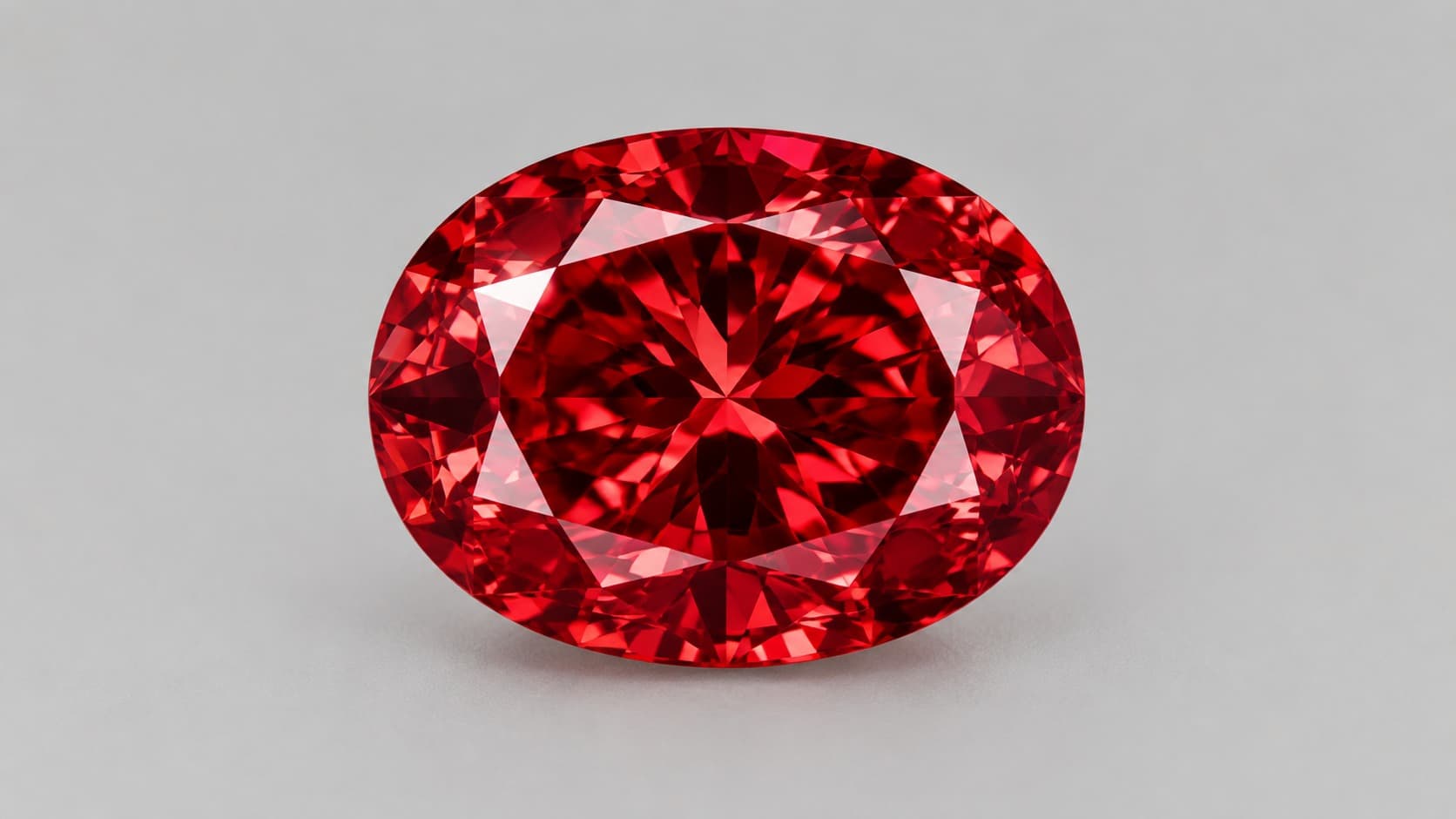
Red diamonds are graded the same way other colored diamonds are, by looking at hue, tone, and saturation, but the bar for calling a stone “red” is much stricter than for other colors. A lab like the GIA will only use the term “Fancy Red” when a diamond shows red as its one and only color, with no secondary tint like purple, orange, or brown pulling the eye in another direction.
Most reddish diamonds that come to market don’t qualify for that pure label. Instead, they’re graded with a secondary color attached, such as purplish-red, orangy-red, or brownish-red. These stones are still extremely rare and valuable, just not quite as rare as a true, pure Fancy Red, and collectors treat the distinction seriously when comparing prices. Red is never used as a secondary color on any other diamond, the way “purplish” or “brownish” might describe a pink or blue stone. A diamond either is red, or it borrows red as part of a different primary color, but red itself never plays second fiddle.
Because genuine examples are so unfamiliar even to experienced jewelers, a red diamond can be mistaken at first glance for a red gemstone like a ruby or a garnet, which is exactly what happened to the Kazanjian Red when it resurfaced after World War II. The only way to tell them apart for certain is lab testing, since a ruby and a garnet are entirely different minerals from diamond and will show completely different properties under proper gemological equipment.
Unlike with colorless diamonds, clarity barely affects a red diamond’s price. Buyers are paying almost entirely for the color itself, so a red diamond with visible inclusions can still sell for a fortune if the color is strong enough, which is a sharp contrast to how a traditional white diamond is valued.
Can Clarity or Cut Make a Red Diamond More Valuable?
Cut matters more than clarity for red diamonds, because a skilled cutter can angle the facets to make the color look as even and saturated as possible, essentially using the cut to concentrate and showcase the red tone. Clarity, by contrast, has only a small effect on price, since the entire reason these stones are valuable is their color rather than their transparency. Cutters who work on a red diamond often take months studying the rough crystal before making a single cut, since a wrong angle could waste rare material or dull the very color the stone is prized for.
Are Treated or Lab-Grown Red Diamonds Real?
Treated and lab-grown red diamonds exist and look red to the eye, but they are not considered the same as a natural Fancy Red diamond by gemologists or collectors. A natural diamond can be artificially turned red through irradiation and heat treatment, and lab-grown diamonds can also be engineered to show a red color. Both are legitimate products, and reputable sellers disclose them clearly, but their value is nowhere close to a natural, untreated red diamond, because the rarity that drives the price simply isn’t there.
An affordably priced “red diamond” is almost certainly treated or lab-grown rather than a natural Fancy Red stone, since a genuine natural one would be a six- or seven-figure purchase even at a small size. Grading paperwork from a major lab is the most reliable way to tell the difference, since any legitimate natural red diamond of real value will already carry a report clearly stating “Natural Color,” while a treated stone’s paperwork will say so directly.
Frequently Asked Questions
Are red diamonds the rarest diamond color?
Yes. Red diamonds are considered the rarest of all diamond colors, rarer than blue, pink, or green, with fewer than 30 true examples ever graded by major gem labs.
What causes a diamond to be red?
A rare distortion in the diamond’s crystal structure, known as plastic deformation, bends the lattice in a way that changes how light passes through the stone and produces a red color. No chemical impurity is involved.
Where do red diamonds come from?
Most known red diamonds trace back to the Argyle mine in Western Australia, which operated from 1983 until its closure in 2020 and supplied the vast majority of the world’s pink and red diamonds. A small number have also come from other sources, including South Africa.
How much does a real red diamond cost?
Natural red diamonds routinely sell for over $1 million per carat at auction, with some exceptional stones exceeding $2 million per carat. Even small stones under one carat can sell for several hundred thousand dollars.
Can you buy an affordable red diamond?
Only if it’s treated or lab-grown. A natural, untreated Fancy Red diamond is a major luxury purchase regardless of size, because the color is so exceptionally rare in nature.
The Bottom Line
Red diamonds end up being less about jewelry in the usual sense and more about a genuine natural rarity, something closer to a one-of-a-kind fossil than a typical gemstone. The color comes from an accident of pressure and stress deep in the earth, the known supply is capped at a few dozen stones, and the source that once produced almost all of them has already closed for good. That combination of scientific mystery, historical scarcity, and a reduced future supply is exactly why red diamonds remain the single most valuable and sought-after color in the entire diamond world.