Almost every necklace on the market works the same way: a chain, a clasp, and a hook that snaps shut behind the neck. A lariat necklace throws that rulebook out. It has no clasp at all, and instead of locking into one fixed loop, it drapes, wraps, or ties the way a scarf might. That single design choice is why the lariat has stuck around in jewelry boxes for more than a century, moving from cowboy gear to flapper parties to modern minimalist fashion without ever really going out of style.
What Is a Lariat Necklace?
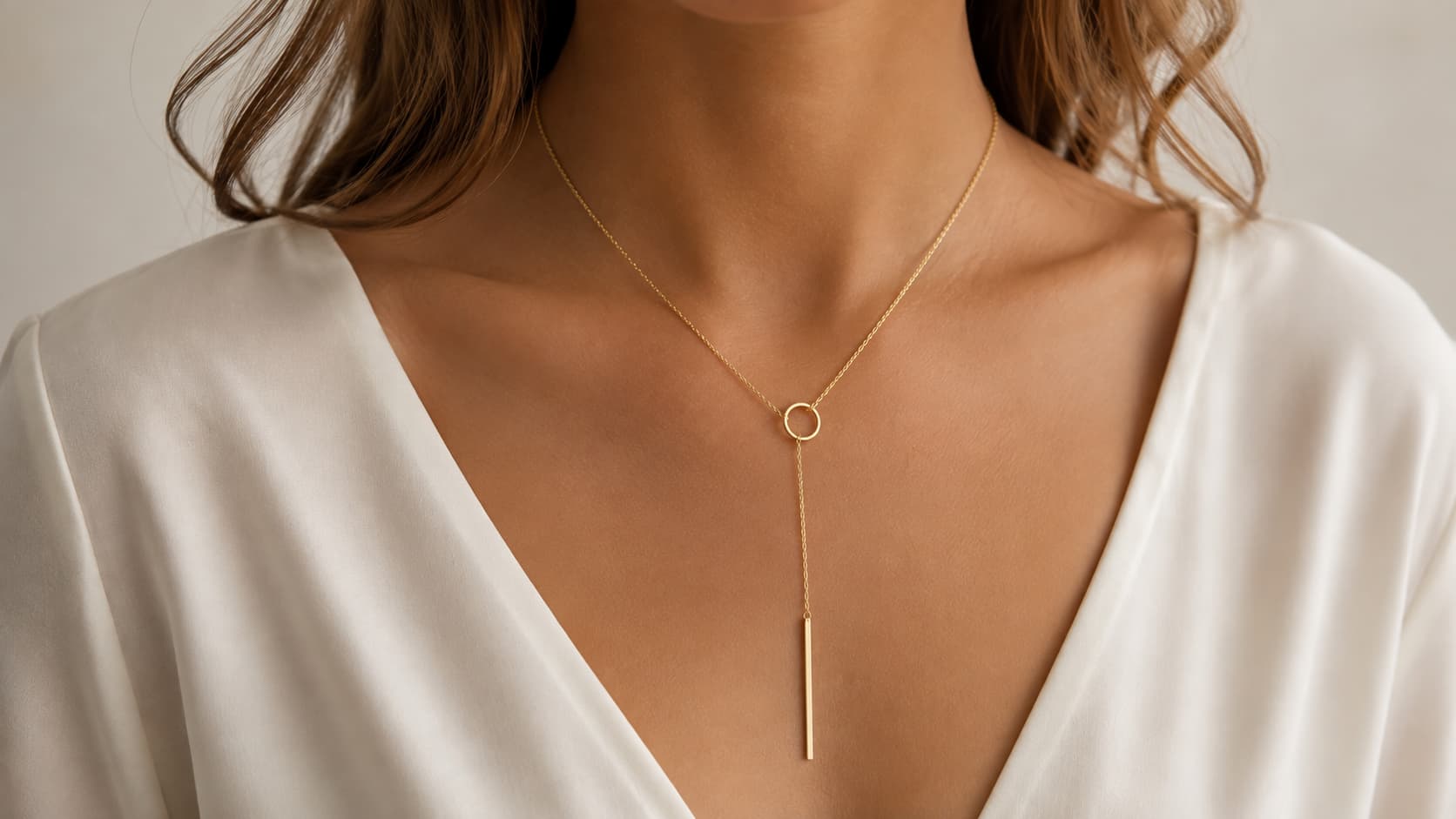
A lariat necklace is defined by one thing above all else: it has no clasp. Instead of closing into a fixed circle behind the neck, the strand wraps, loops, or threads through itself, letting the ends hang freely down the front of the chest.
That open-ended structure is what separates it from almost every other necklace style. A standard necklace is built to sit at one length, in one shape, because the clasp locks it there. A lariat skips that step entirely. One end of the strand usually has a loop, ring, or small fixture, and the other end threads through it, creating a soft knot near the collarbone with two lengths of chain, beads, or cord dropping below. Because nothing is fastened shut, the same piece can be worn several different ways depending on how tightly it is looped and where the ends fall.
Where Does the Name “Lariat” Come From?
The word lariat comes from the Spanish phrase la reata, which loosely translates to “to tie again,” referring to a rope used for roping cattle. Lariat ropes were tools used by cowboys and ranchers in the American West, and the necklace style borrowed both the name and the visual idea of a rope with a loop at the end.
That connection to ranching rope is more than a coincidence. A traditional lariat rope has a large loop that can tighten or loosen depending on how it is pulled, and jewelry designers leaned directly into that shape. A lariat necklace looped once around the neck with the ends hanging loose follows the same basic geometry as a cowboy’s lasso, just recreated in gold, silver, pearls, or beads instead of hemp.
The History of the Lariat Necklace
Lariat-style necklaces became genuinely fashionable in the early 1900s and exploded in popularity during the 1920s flapper era, when long beaded ropes were paired with low-cut dresses. Necklaces from that Art Deco period were typically strung from pearls or beads and often finished with tassels looping off each end. The style photographed beautifully against the era’s dropped waistlines and shorter hemlines, and a long draping necklace was an easy way to add movement and shine to an outfit.
The lariat did not disappear after the 1920s. A revival followed in the 1960s, when costume brands including Monet and Napier produced chain versions finished with tassels, drops, or beaded clusters, and Chanel later introduced faux-pearl lariats during the 1970s. Fine jewelry houses picked up the trend too, turning the humble rope-and-tassel idea into gold chains finished with sculpted leaf or feather-shaped drops. Each decade reinterpreted the lariat a little differently, but the core idea, a clasp-free strand that loops and drapes, never changed.
The style picked up momentum again toward the end of the twentieth century as designers began favoring longer, more fluid necklaces on the runway, which helped push the lariat from a mostly vintage or costume-jewelry idea into modern fine jewelry collections. That shift is part of why lariats today come in such a wide range, from delicate everyday gold chains to bold statement pieces, rather than being tied to one specific decade or look.
Is a Lariat the Same as a Y-Necklace?
A lariat and a Y-necklace often get mixed up because they can look almost identical once worn, but the difference comes down to construction. A Y-necklace has a fixed clasp at the back and a pendant or chain drop fixed in place at the front, so it always hangs the same way. A true lariat has no clasp at all, and the “Y” shape only appears from how the strand is looped and threaded.
That construction difference changes how predictable each style is. A Y-necklace goes on the same way every time, like any other necklace with a hook closure. A lariat functions more like a styling tool: looped once it creates a snug, high finish, looped twice it forms a shorter drop, and left open it hangs long for a completely different silhouette. Many pieces sold today borrow the “lariat” name loosely even when they technically function more like a Y-necklace, so the way a piece actually closes is worth checking against the “no clasp” definition before assuming it offers that same flexibility.
What Length Is a Lariat Necklace?
A lariat necklace is typically 30 to 45 inches long, noticeably longer than most everyday necklaces, because that extra length is what gives it enough slack to loop or wrap in the first place. A standard everyday chain, by comparison, sits around 16 to 18 inches, which would be far too short to thread through itself or double around the neck.
That extra length is a functional requirement, not just a style choice. A shorter strand simply cannot create a loop and still leave enough chain hanging down to form the signature drop, so lariats sit at the long end of the necklace-length chart alongside true rope necklaces. Where exactly the piece falls on the body depends on height and how many times it is looped: worn as a single open strand it can reach the waist, while doubling it around the neck once or twice shortens the visible drop considerably. This is also why lariats layer so easily, since even a heavily looped lariat still tends to sit lower than a standard princess-length necklace and can be stacked comfortably underneath shorter pieces.
How Is a Lariat Necklace Worn?
There is no single correct way to wear a lariat, which is really the entire point of the style. Because nothing clicks shut, the shape is controlled entirely by how the strand is looped, knotted, or threaded.
- Single loop, front knot – the strand wraps once around the neck and ties or threads loosely at the front, letting the ends hang down like a pendant.
- Double loop, choker style – the strand wraps twice for a shorter, snugger look, similar to a layered choker.
- Open drape – the loop is skipped entirely and the full length hangs open and long, which works well over a high-neck top.
- Belt or wrist wrap – some longer lariats are flexible enough to double as a slim belt or a wrapped bracelet, since there is no fixed clasp locking them into “necklace” mode.
Because the styling is so flexible, a single lariat can often do the job of two or three separate necklaces, which is part of why the style has held onto its popularity through so many different fashion eras.
Common Lariat Necklace Materials
Lariat necklaces are made from the same range of materials as most other necklace styles, including gold, silver, pearls, beads, and leather cord, with the material generally shaping how formal or casual the piece feels. A fine gold chain lariat with a small diamond-set drop reads as elegant and appropriate for evening wear, while a leather or beaded lariat feels more relaxed and everyday.
Pearl lariats carry a particularly direct link to the style’s history, since the long beaded pearl ropes of the 1920s are essentially the ancestor of the modern lariat, and pearl versions remain a popular choice for weddings and formal events. Metal chain lariats tend to be the most versatile option, since a simple chain with decorative ends moves easily between a casual daytime look and a dressier outfit.
| Material | Typical feel | Best suited for |
|---|---|---|
| Gold or silver chain | Sleek, versatile | Everyday wear, layering |
| Pearls | Classic, formal | Weddings, evening events |
| Beads or gemstones | Relaxed, colorful | Casual and summer outfits |
| Leather cord | Rustic, laid-back | Casual, bohemian styling |
| Diamond or gemstone-tipped chain | Luxurious | Special occasions, statement pieces |
Whatever the material, the same basic rule applies: the more structured and rigid the strand, the fewer ways it can realistically be looped, while soft, flexible strands like beads, pearls, or fine chain tend to offer the most styling options.
Tips for Choosing a Lariat Necklace
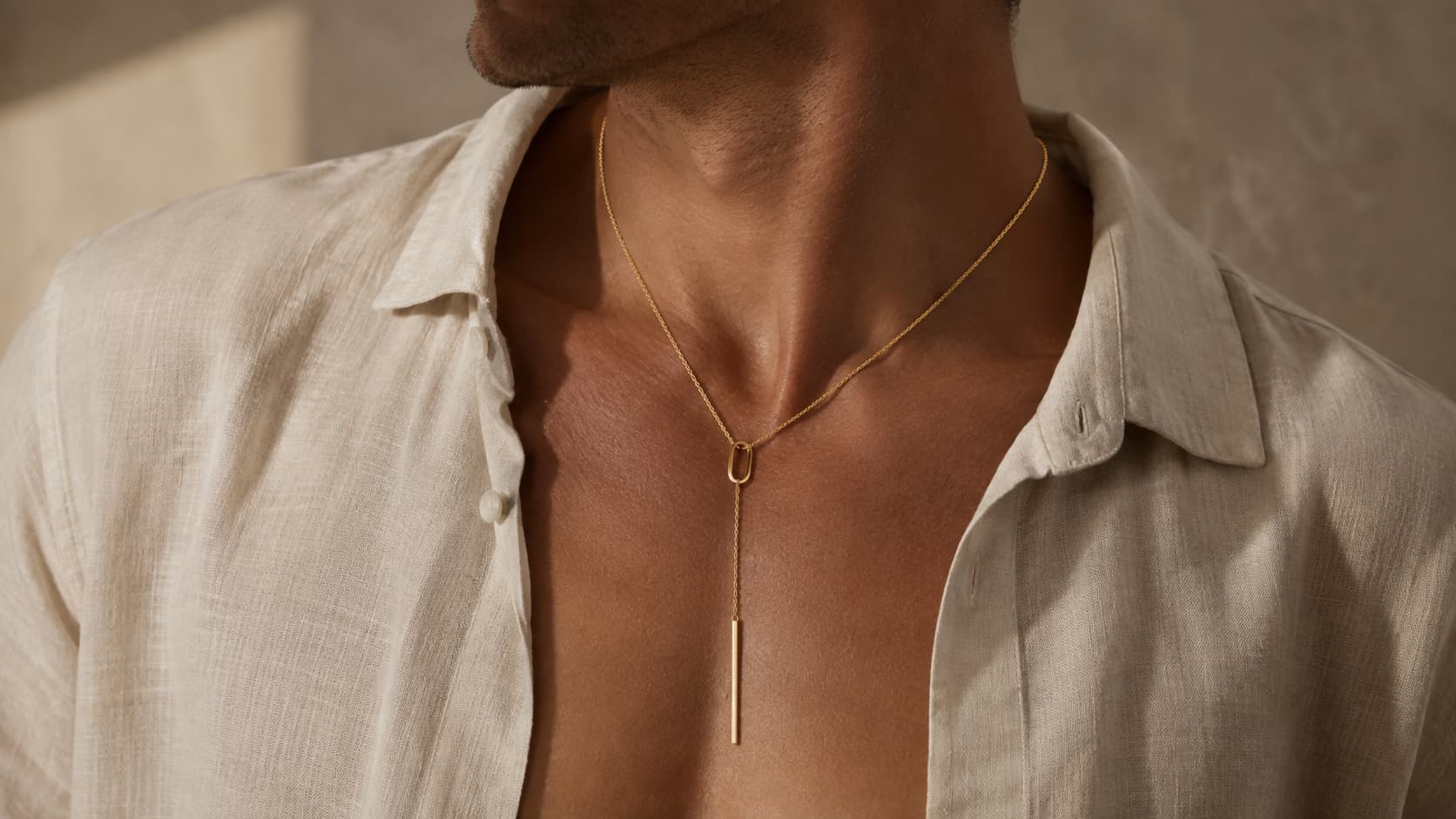
The most important detail on a lariat is the mechanism that holds it in place, since that small loop, ring, or slider does all the work a clasp would normally do. A smoothly finished loop lets the chain glide through it easily and prevents the strand from kinking, snagging, or wearing thin at that one contact point over time, which makes that piece worth examining closely before buying.
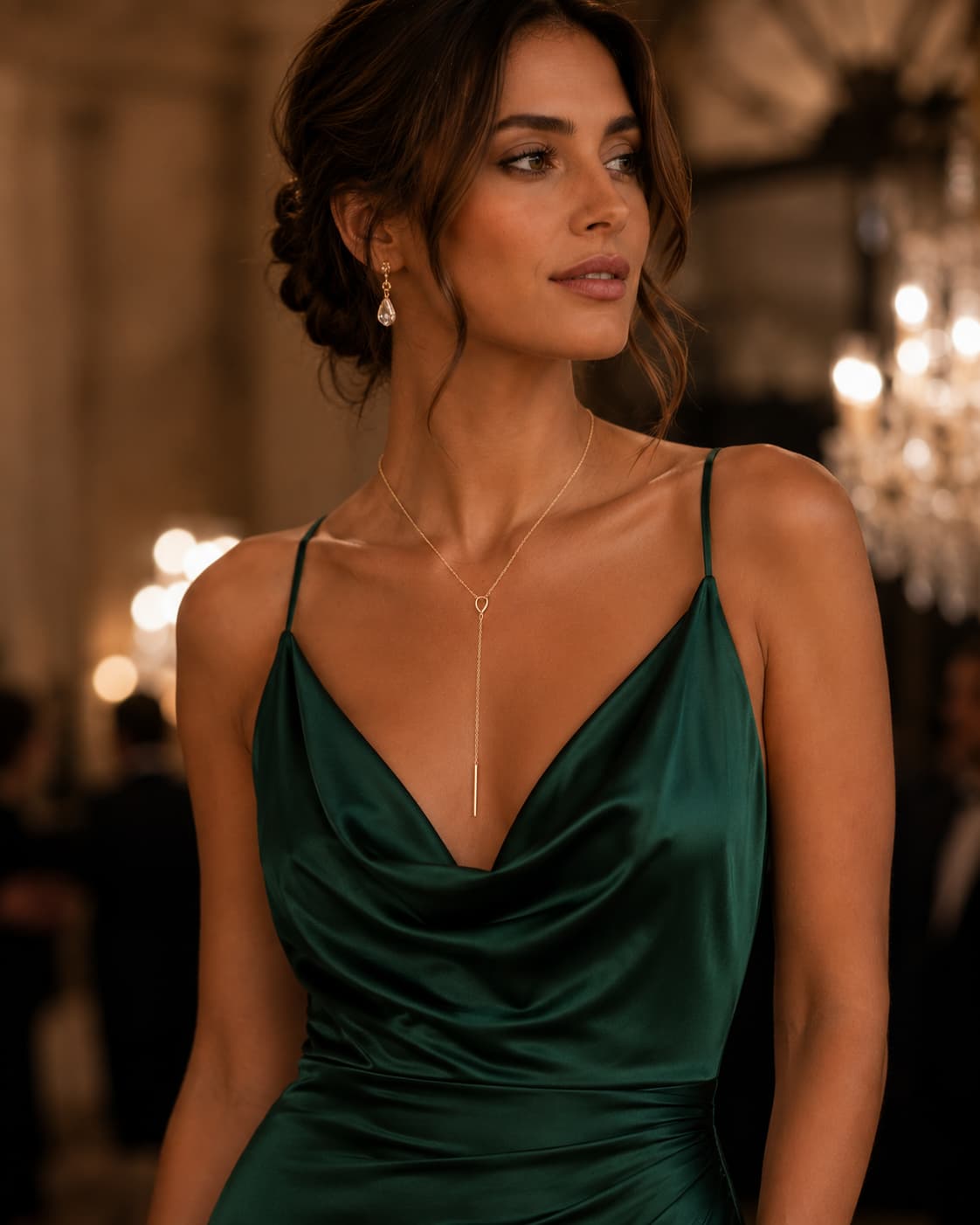
Length matters more with a lariat than with most other necklaces, because the entire appeal of the style depends on having enough strand to loop or drape. A longer lariat with a lower drop tends to suit necklines like V-necks and open collars, while a shorter one layers more easily under higher necklines or alongside other pieces. The flexibility of the material is worth weighing too: a soft, fluid chain or beaded strand can be looped and knotted in more configurations than a stiffer, more structured design, so a supple material generally offers a wider range of styling options than a rigid one.
Frequently Asked Questions
Does a lariat necklace have a clasp?
No. A true lariat necklace has no clasp. It stays in place because one end loops through a loop, ring, or fixture on the other end, or because the strand is tied loosely against the chest.
Can a lariat necklace be adjusted for length?
Yes, that adjustability is the main advantage of the style. Because there is no fixed clasp locking the necklace into one length, the same piece can be looped once for a longer drop or twice for a shorter, choker-like finish.
Is a lariat necklace the same as a Y-necklace?
Not exactly. A Y-necklace has a fixed clasp and a pendant that always hangs in the same spot, while a true lariat has no clasp and gets its shape from how it is looped or threaded. The two styles can look similar once worn, but they work differently.
What outfits pair well with a lariat necklace?
Lariat necklaces tend to work best with necklines that leave the chest open, such as V-necks, scoop necks, or button-downs left slightly undone, since the drop of the necklace has room to hang visibly. A lariat can also be layered over a simple high-neck top for a different, more architectural look.
How long should a lariat necklace be?
Most lariat necklaces run between 30 and 45 inches, which is significantly longer than a standard 16 to 18-inch chain. That added length is necessary so the strand has enough slack to loop, wrap, or thread through itself while still leaving a visible drop at the front.
Are lariat necklaces still popular today?
Yes. The style has appeared and reappeared in fashion for over a century, from 1920s flapper wear to 1960s costume jewelry to today’s minimalist gold jewelry trends, and it remains a common style in both fine and fashion jewelry collections.
Conclusion
A lariat necklace is ultimately defined by what it does not have: a clasp. That one missing piece turns it from a fixed accessory into a flexible one, letting the same strand of gold, pearls, or beads become a choker, a pendant-style drop, or a long open drape depending on how it is looped. The style’s roots trace back to ranching rope and took shape as fashion jewelry in the early 1900s, then resurfaced again and again through the decades because that flexibility never stopped being useful. The detail that matters most when evaluating any lariat is not which era it resembles, but whether it actually skips the clasp, since that is the feature that gives the style its name and its versatility in the first place.