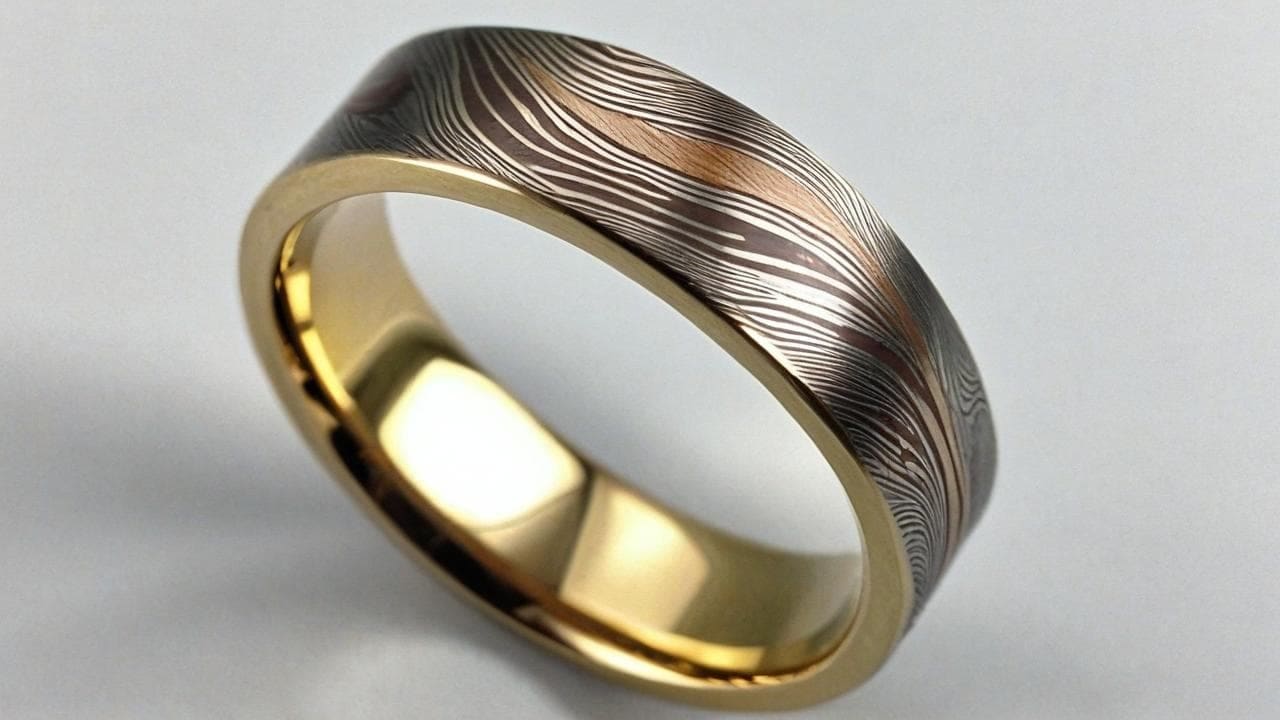
Mokume Gane is a metalworking technique that creates wood-like patterns in metal. Originating in 17th century Japan, this craft has found new life in modern jewelry. The name—“mokume” (wood grain) and “gane” (metal)—describes the visual effect achieved by layering and manipulating different colored metals. Today’s artisans have adapted this traditional technique to create unique pieces that showcase both historical craftsmanship and contemporary design.
What is Mokume Gane?
Mokume Gane is a metalworking process where multiple sheets of different colored metals are fused together and manipulated to create organic, wood-like patterns. Unlike alloys, Mokume Gane maintains the distinct colors of each metal layer, resulting in contrasting patterns. This technique requires exceptional skill, as the metals must bond at temperatures just below their melting points.
- Mokume Gane translates to “wood grain metal” in Japanese, accurately describing its appearance that mimics natural wood grain through layered and manipulated metal.
- The technique involves stacking alternating layers of different colored metals (combinations of gold, silver, copper, platinum, shakudo, shibuichi, and other compatible metals) into a “billet” that is heated, compressed, and forged to create solid metallic bonds without melting the metals together.
- Each Mokume Gane piece is unique—the patterns formed during forging, twisting, and manipulation cannot be duplicated, making every creation one-of-a-kind even when the same artist uses identical metal combinations.
- While visually similar to Damascus steel, Mokume Gane differs in purpose and composition—Damascus steel combines similar metals for strength in weaponry, while Mokume Gane combines contrasting metals specifically for decorative purposes and visual appeal.
- The creation requires precise temperature control—too much heat causes metals to melt together (destroying the layered effect), while insufficient heat prevents proper bonding.
The artistic value of Mokume Gane comes from balancing controlled technique with natural material behavior. While the metalsmith guides the pattern formation, the final design emerges from how the metals interact during the process. This creates jewelry with depth, character, and organic beauty that mass-produced pieces cannot match.
The Origins of Mokume Gane in Japan
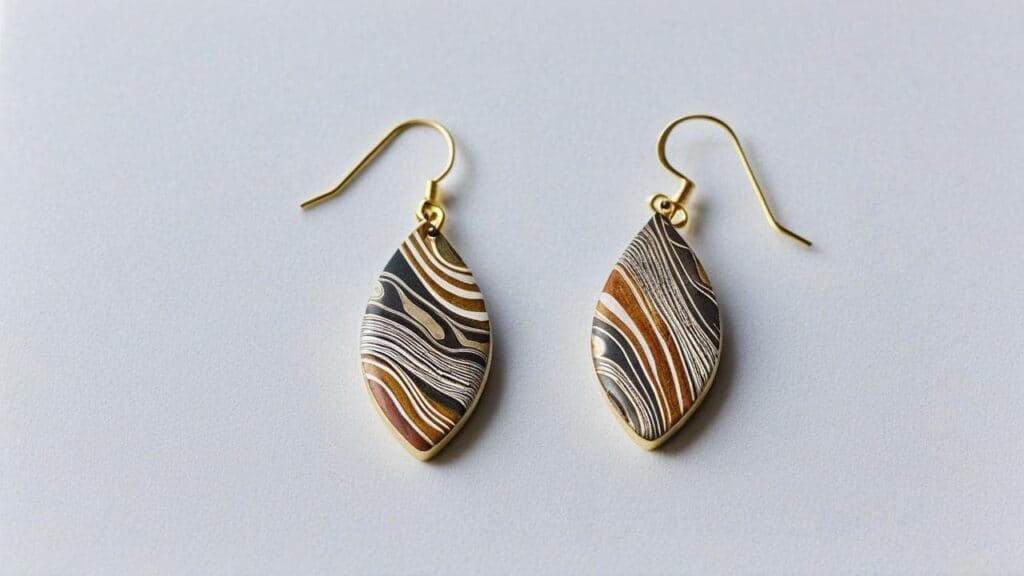
Mokume Gane was developed in 17th century Japan by master metalsmith Denbei Shoami (1651-1728) from Akita Prefecture. Originally created to decorate samurai swords, particularly the tsuba (handguard), this technique represented the highest level of metalsmithing artistry during Japan’s Edo period.
- Denbei Shoami invented the technique around 1600-1640, inspired by the layered and patterned steel used in traditional Japanese sword making (tamahagane). His innovation was applying this concept to non-ferrous metals purely for decorative purposes.
- The earliest Mokume Gane works were exclusively used for sword fittings—the tsuba (handguard), fuchi (collar), and kashira (pommel cap)—where their beauty symbolized the samurai’s status and wealth.
- When Japan’s Meiji Restoration in 1868 led to the decline of the samurai class, many skilled metalsmiths redirected their talents to create decorative objects, including inro (small containers), smoking accessories, and eventually jewelry.
- Mokume Gane remained relatively unknown in the Western world until the reopening of Japan to international trade in the late 19th century, when Japanese metalwork gained popularity at international expositions.
- The technique nearly disappeared in the early 20th century due to its labor-intensive nature and the industrialization of metalworking, but was revived in the 1970s by American metalsmith Hiroko Sato Pijanowski and a handful of dedicated artisans.
Today, Mokume Gane has evolved from its origins in weapon decoration to become a revered technique in contemporary fine jewelry. While modern tools have made some aspects of production easier, creating Mokume Gane still requires the same fundamental skills, patience, and artistic vision that Denbei Shoami employed centuries ago. The technique’s journey from samurai swords to wedding bands represents a beautiful continuation of this living metalworking tradition.
Mokume Gane Creation Process
Creating Mokume Gane involves a meticulous process of layering, bonding, and manipulating different metals to achieve the distinctive wood grain appearance. This labor-intensive technique requires specialized knowledge of metallurgy, precise temperature control, and skilled hand craftsmanship throughout each stage of production.
- The process begins with selecting compatible metals that can be bonded without melting. These metals must have similar melting points and shouldn’t form brittle intermetallic compounds when heated together.
- Thin sheets of different colored metals (typically between 0.5mm-1mm thick) are carefully cleaned, fluxed, and stacked alternately to create a “billet” of 20-30 layers. The metals must be absolutely clean—even fingerprints can prevent proper bonding.
- The stacked metals are compressed in a vice or clamp and placed in a forge or kiln where they’re heated to a temperature just below the melting point of the lowest-melting metal in the stack (typically between 700-900°C/1292-1652°F).
- Through a process called diffusion bonding or solid-state bonding, the metals fuse together without melting. The heat and pressure cause atoms from each metal to migrate across the boundaries, creating a molecular bond while maintaining distinct layers.
- After cooling, the fused billet is shaped, carved, drilled, or otherwise manipulated to reveal the layers. Traditional Japanese techniques include cutting, twisting, punching, carving, and forging to create different patterns.
- Modern techniques might include using rotary tools to selectively remove material, using controlled chemical etches to create depth, or using hydraulic presses for precise pattern development.
- Once the desired pattern is achieved, the piece is finished through filing, sanding, polishing, and sometimes patination to enhance contrast between the different metals.
The creation of Mokume Gane is as much an art as it is a science. While understanding the technical aspects is crucial, developing an intuitive feel for the materials takes years of practice. Each artisan develops their own signature approach to pattern creation, making this technique a true expression of individual craftsmanship in an increasingly mechanized world.
Best Metal Combinations for Mokume Gane
The selection of metals is crucial to successful Mokume Gane, as they must be metallurgically compatible while providing appealing color contrasts. The choice of metals directly influences both the technical success of the bonding process and the aesthetic quality of the finished piece.
- Traditional Japanese Mokume Gane used combinations of copper, silver, gold, shakudo (a gold-copper alloy with a blue-black patina), shibuichi (a silver-copper alloy with a gray-green patina), and kuromido (a copper alloy with black patina).
- Modern jewelry applications commonly use combinations of yellow, white, and rose gold with silver, palladium, platinum, or copper. These combinations offer durability for everyday wear while providing beautiful color contrasts.
- Copper and its alloys (brass, bronze) are frequently used in decorative objects but less commonly in jewelry due to potential skin reactions and tarnishing. When used in jewelry, they’re typically sealed with protective coatings.
- Some metals cannot be used in Mokume Gane despite their attractive colors—aluminum, titanium, and stainless steel have oxide layers that prevent proper bonding, while others like lead or zinc have toxicity concerns or unsuitable melting points.
- The most successful combinations include metals from the same group on the periodic table, as they tend to have similar atomic structures and bonding properties. Gold, silver, copper, palladium, and platinum work well together in various combinations.
- The number of layers affects the final appearance—fewer, thicker layers create bold patterns, while numerous thin layers produce more delicate, detailed patterns that show greater complexity.
- Some contemporary artists incorporate non-traditional materials like meteorite (which contains natural pattern-bearing nickel-iron alloys) or mokume-inspired polymer clay techniques that mimic the aesthetic without the metalworking challenges.
The selection of metals balances technical considerations with aesthetic goals. While traditional combinations follow time-tested formulas, contemporary artists continue to experiment with new metal combinations. The most successful Mokume Gane pieces feature metals that not only bond well technically but also create pleasing visual contrasts that highlight the unique patterns of this distinctive technique.
Modern Uses of Mokume Gane in Jewelry
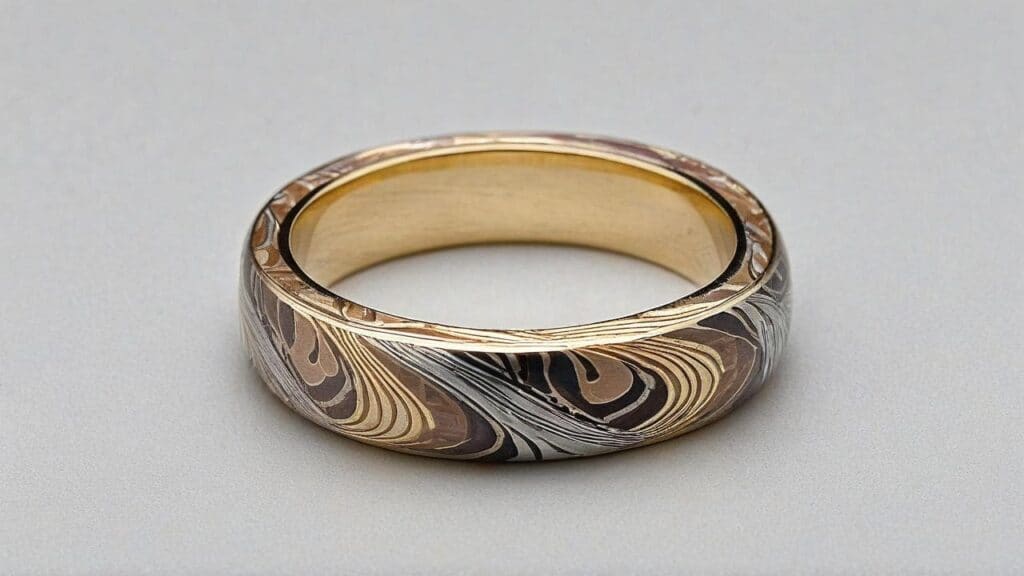
Today’s jewelry artists have embraced Mokume Gane, adapting this ancient technique to contemporary design sensibilities. Its unique characteristics make it especially popular for personalized jewelry pieces that clients want to be truly one-of-a-kind.
- Wedding and engagement rings are the most common modern application of Mokume Gane, as couples appreciate both the symbolic nature of intertwined metals and the guarantee of a unique piece that cannot be exactly duplicated.
- Contemporary designers often pair Mokume Gane with gemstones, creating striking contrasts between the organic metal patterns and the geometric facets or smooth cabochons of stones.
- The technique has found popularity within alternative jewelry movements that value handcraftsmanship over mass production, appealing to consumers seeking jewelry with artistic merit and historical significance.
- Modern Mokume Gane jewelry typically incorporates precious metals like gold and platinum for their durability and non-reactive properties, making them suitable for everyday wear unlike some traditional combinations that included more reactive metals.
- Digital design tools have enabled some artists to plan their Mokume Gane patterns with greater precision, though the final result still contains elements of unpredictability that give each piece its unique character.
- Contemporary artists have developed signature pattern styles—from geometric and controlled to wildly organic—that identify their work as distinctly their own within the Mokume Gane tradition.
- While traditional Mokume Gane was typically flat or slightly curved, modern techniques allow for complex three-dimensional forms and hollow constructions that expand the technique’s applications.
Modern Mokume Gane jewelry represents a beautiful bridge between ancient craftsmanship and contemporary design. By respecting the technical foundations laid centuries ago while embracing new aesthetic directions, today’s artisans ensure this remarkable technique continues to evolve and remain relevant. For jewelry collectors and wearers, Mokume Gane offers that rare combination of historical significance, artistic value, and the promise of owning something truly unique.
How to Care for Mokume Gane Jewelry
Mokume Gane jewelry requires thoughtful care to maintain its distinctive patterns and the integrity of its bonded metals. Since these pieces often contain multiple metals with different properties, understanding the proper maintenance approach is essential for long-term enjoyment.
- Regular cleaning with mild soap and warm water using a soft brush is generally safe for most Mokume Gane pieces. Avoid harsh chemicals, ultrasonic cleaners, or steam cleaning, as these can damage patinas or affect different metals unevenly.
- Some Mokume Gane combinations may develop a natural patina over time, especially those containing copper or silver. This aging process is often considered desirable as it enhances pattern contrast, but can be removed if preferred through professional polishing.
- Mokume Gane rings should be removed during activities involving chemicals, including swimming in chlorinated pools, hot tubs, or when using household cleaners, as these can damage or discolor certain metals in the pattern.
- Physical impacts can potentially delaminate the metal layers in extreme cases, so Mokume Gane jewelry should be protected from sharp blows, although most modern pieces are created with sufficient bonding strength to withstand normal wear.
- Store Mokume Gane jewelry separately from other pieces to prevent scratching. Soft cloth pouches or dedicated jewelry boxes with separate compartments work well for protection.
- Over time, Mokume Gane pieces made with precious metals may need professional refinishing to restore their original luster and pattern definition. Look for jewelers familiar with this specialized technique rather than general jewelry repair shops.
- If your Mokume Gane jewelry contains both noble metals (gold, platinum) and reactive metals (copper, silver), be aware that body chemistry and environmental factors may affect the reactive metals more quickly, potentially enhancing the pattern contrast.
With proper care, Mokume Gane jewelry can last for generations, developing character while maintaining its structural integrity. Many collectors appreciate how these pieces subtly evolve over time, with the patterns often becoming more pronounced as the different metals age at varying rates. This living quality adds to the special nature of owning a piece of wearable art created through this ancient technique.
How to Identify Authentic Mokume Gane
With the growing popularity of Mokume Gane jewelry, distinguishing authentic hand-crafted pieces from imitations has become important for collectors and buyers. True Mokume Gane has specific characteristics that differentiate it from mass-produced lookalikes.
- Authentic Mokume Gane shows variation in pattern throughout the piece—the pattern should flow organically and show subtle irregularities rather than perfectly repeating elements that suggest machine production or stamping.
- Genuine Mokume Gane has visible layers when viewed from the edge or in cross-section. These distinct layers confirm the piece was made through the traditional lamination process rather than being etched or engraved.
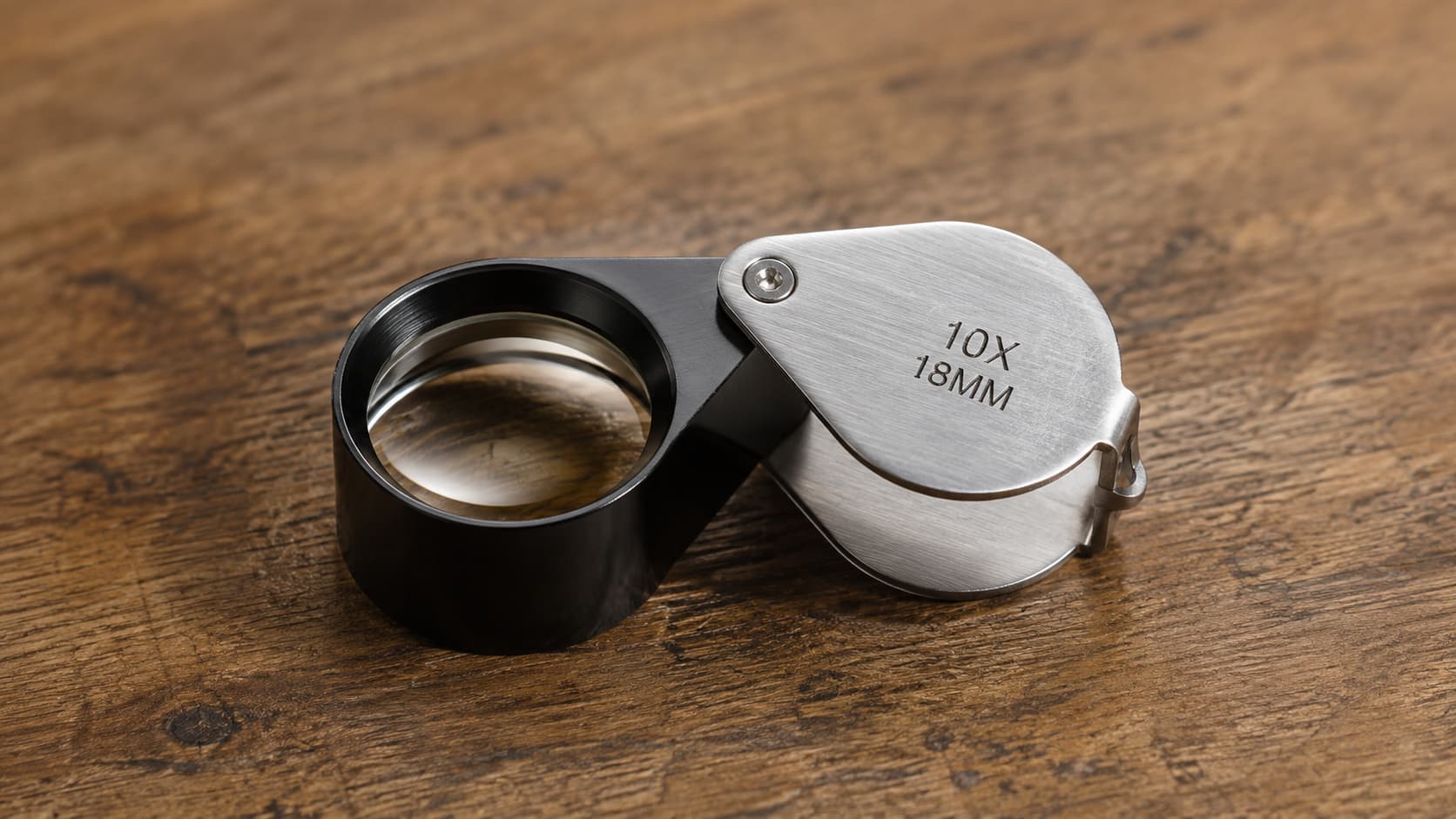
- Under magnification, real Mokume Gane reveals crisp boundaries between the different metal layers, while imitations often show blurred lines or painted-on effects that attempt to mimic the look of layered metals.
- Authentic pieces typically come with detailed information about the specific metals used in the laminate, as this is a point of pride for Mokume Gane artists who carefully select their metal combinations.
- True Mokume Gane has weight consistent with the precious metals it contains. Imitations may use lightweight base metals with plated surfaces that mimic the appearance of more valuable materials.
- The price reflects the labor-intensive process—authentic Mokume Gane jewelry requires significant time and skill to produce, making very inexpensive “Mokume” pieces suspect unless they use less precious metals.
- Reputable Mokume Gane artists sign their work or provide certificates of authenticity detailing the metals used and the creation process. Established galleries and jewelry stores can provide provenance information for the pieces they sell.
Learning to recognize authentic Mokume Gane comes with experience and education. The subtle variations, the organic flow of patterns, and the visible evidence of hand craftsmanship all contribute to the special character of genuine pieces. While convincing imitations exist, they lack the depth, complexity, and inherent value of jewelry created through the traditional bonding and manipulation of actual metal layers.
Common Mokume Gane Patterns and Styles
Mokume Gane artists have developed distinctive pattern styles over centuries, each requiring specific techniques to achieve. These patterns range from subtle and flowing to dramatic and geometric, offering different aesthetic expressions of the wood grain concept.
- Guri Bori (carved wood grain) features concentric rings created by drilling or punching into the layered billet and then forging it flat again, revealing bull’s-eye patterns that resemble tree rings or ripples in water.
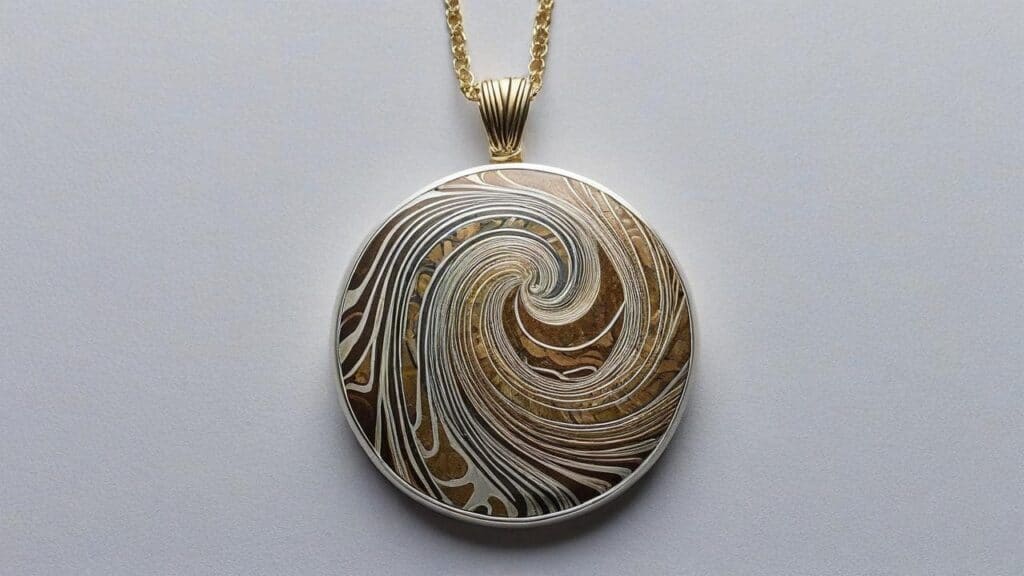
- Ayasugi-hada (flowing water pattern) creates wavy, parallel lines by gently twisting the billet before cutting and forging. The result resembles flowing water or wood grain with a directional movement across the piece.
- Itame (wood grain) is perhaps the most common pattern, achieved by randomly carving into the billet and then forging it flat, creating organic, unpredictable patterns similar to natural wood grain.
- Mokume Gane Yosegi (dented) incorporates shallow depressions or “dents” into the surface before final shaping, creating additional pattern complexity where the layers are revealed at different depths.
- Suminagashi (floating ink) creates swirling, marbled patterns reminiscent of Japanese paper marbling techniques. This is achieved through careful manipulation of the layers using special tools to create fluid-like movements in the metal.
- Geometric patterns use precise cutting and reassembling techniques to create more controlled, repeating designs—a contemporary approach that contrasts with the more organic traditional patterns.
- Kasumi (mist) technique produces a subtle, cloudy appearance by using metals with minimal color contrast and focusing on the textural differences between layers rather than bold color differences.
- Contemporary artists often develop signature pattern styles that combine elements of traditional techniques with innovative approaches, creating distinctive looks that identify their work to collectors.
The choice of pattern dramatically affects the character of the finished piece. Some patterns showcase bold contrasts between metals, while others create subtle, atmospheric effects that reveal themselves gradually to the viewer. The most skilled Mokume Gane artists develop an intuitive understanding of how their manipulation techniques will translate into finished patterns, allowing them to envision the final appearance while working with the layered metals.
Comparing Mokume Gane and Damascus Steel Techniques
Mokume Gane and Damascus steel are often confused due to their similar layered appearances, but they differ significantly in materials, purpose, and historical development. Understanding these differences helps appreciate the unique qualities of each technique.
- Mokume Gane primarily uses non-ferrous metals (copper, silver, gold, etc.) for decorative purposes, while Damascus steel uses iron and steel alloys specifically to create functional blades with both beauty and superior performance.
- The primary purpose of Mokume Gane is aesthetic—creating beautiful patterns for decorative objects and jewelry—while Damascus steel’s patterns are a byproduct of a process intended to create stronger, more flexible blades.
- Mokume Gane is bonded through solid-state diffusion at temperatures below melting point, preserving distinct layers. Damascus steel traditionally involved forge-welding at higher temperatures where the steel becomes semi-molten, creating a more integrated material.
- Mokume Gane originated in 17th century Japan specifically for decorative applications, while Damascus steel has much older origins (potentially dating back to 300-500 BCE) and developed across multiple cultures primarily for weapons.
- In Mokume Gane, contrast comes from different colored metals chosen specifically for visual appeal. In Damascus steel, contrast appears between different carbon contents in the steel, resulting in varied responses to etching acids.
- Modern Mokume Gane remains very close to its traditional production methods despite some technological aids. Contemporary “Damascus steel” often uses modern materials and methods that differ significantly from historical techniques.
- Mokume Gane patterns typically show more color variation due to the diverse metals used, while Damascus patterns rely more on textural and light-reflecting differences in the steel surface.
While both techniques create fascinating layered patterns, they represent different metallurgical traditions developed for different purposes. Mokume Gane celebrates the decorative possibilities of metal combinations, focusing on color, pattern, and visual impact. Damascus steel evolved to create functional tools with superior properties, with its beautiful patterns serving as evidence of its sophisticated construction. Both traditions demonstrate remarkable human ingenuity in transforming metals into objects of both utility and beauty.
Conclusion
Mokume Gane represents a perfect marriage of technical skill and artistic vision. This centuries-old technique transforms ordinary metals into extraordinary patterns that capture the organic beauty of natural wood grain in durable, precious materials. From its origins in samurai sword fittings to contemporary wedding bands, Mokume Gane jewelry connects wearers to a rich tradition of metalsmithing excellence.
What makes Mokume Gane special is its uniqueness—no two pieces can ever be identical, even when created by the same artist using the same metals. This inherent individuality makes it particularly meaningful for significant jewelry pieces that represent personal milestones or commitments. In an age of mass production, Mokume Gane stands as a testament to the enduring value of handcraftsmanship and the irreplaceable human element in creating objects of lasting beauty.