When shopping for diamonds, you’ll encounter many characteristics that affect a stone’s beauty and value. One of the most misunderstood yet potentially significant of these is diamond fluorescence. This natural property can influence a diamond’s appearance and price, making it an important factor to understand before making a purchase. Whether you’re buying an engagement ring or adding to your jewelry collection, this guide will explain diamond fluorescence in clear, straightforward terms.
What is Diamond Fluorescence?
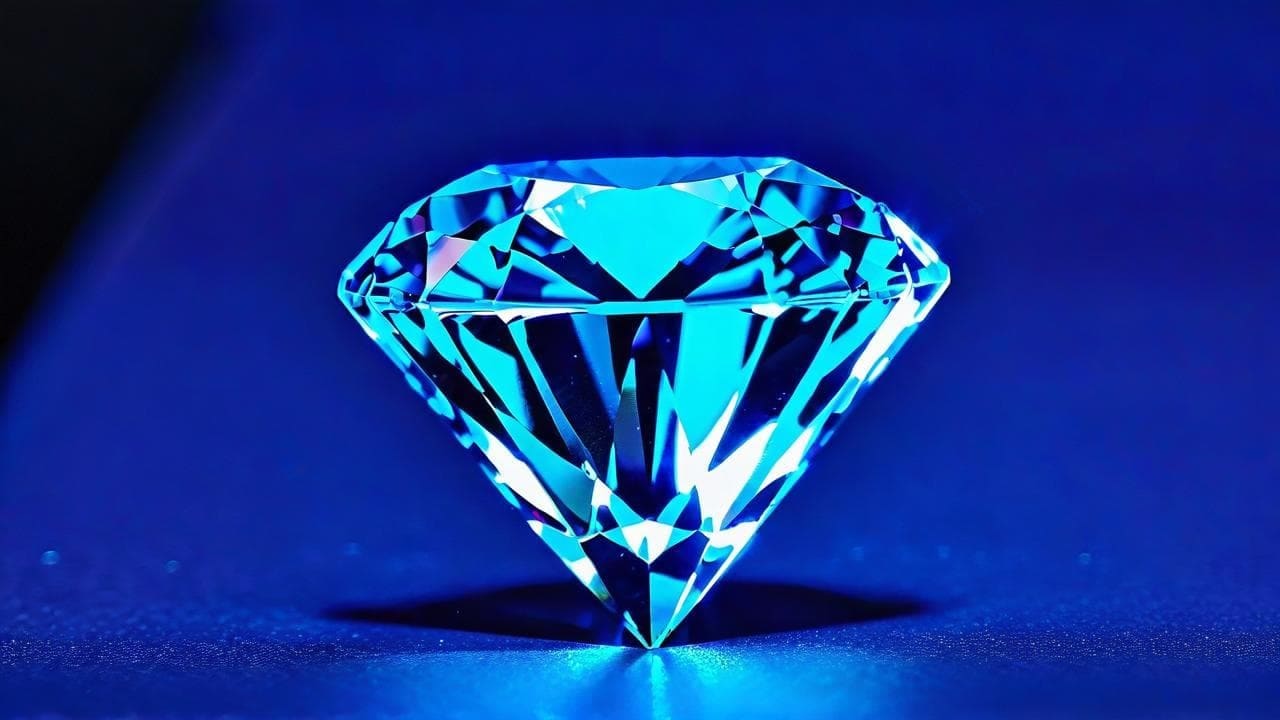
Diamond fluorescence is the visible glow that certain diamonds emit when exposed to ultraviolet (UV) light. This reaction occurs due to specific atomic structures within the diamond and affects roughly 25-35% of all diamonds. When you see a diamond certificate mentioning fluorescence, it’s referring to this property - not a flaw or enhancement, but a natural characteristic that can influence how a diamond appears in different lighting conditions.
- Fluorescence is the emission of visible light (usually blue) when a diamond is exposed to UV light sources like sunlight or black lights. The effect disappears immediately when the UV source is removed.
- This property occurs naturally due to the presence of trace elements (mainly nitrogen) in the diamond’s crystal structure that were incorporated during the diamond’s formation deep within the earth.
- Gemological laboratories grade fluorescence on diamond certificates as None, Faint, Medium, Strong, or Very Strong, describing the intensity of the glow under UV light.
- About 25-35% of diamonds exhibit some degree of fluorescence, while the majority show none, making it a distinguishing characteristic for many stones.
- Fluorescence is considered an identifying characteristic, separate from the traditional 4Cs (cut, color, clarity, and carat weight) but still noted on diamond certificates.
- Since UV light is present in natural daylight and some artificial lighting, fluorescence can subtly affect a diamond’s appearance in everyday situations, sometimes enhancing it and sometimes detracting from it.
Understanding diamond fluorescence helps you make informed choices when selecting a diamond. While some people specifically seek out fluorescent diamonds for their unique properties or potential value, others prefer non-fluorescent stones. What’s most important is knowing what you’re buying and how this characteristic might affect your diamond’s appearance in different lighting environments.
How Does Diamond Fluorescence Work?
Diamond fluorescence works through a fascinating interaction between light and the atomic structure of diamonds. When UV light hits certain atoms within a diamond, particularly nitrogen atoms that have replaced carbon in the crystal lattice, it causes a momentary energy state change that results in the emission of visible light. This scientific phenomenon explains why some diamonds appear to glow under UV light while others remain unchanged.
- When ultraviolet light strikes a diamond containing certain trace elements, the electrons in these atoms absorb the UV energy and temporarily jump to a higher energy state, becoming “excited.”
- As these excited electrons return to their normal state (which happens almost instantly), they release energy in the form of visible light – creating the fluorescent glow we see.
- The most common element causing fluorescence in diamonds is nitrogen, which typically produces a blue glow, though other elements can cause different fluorescent colors.
- The specific arrangement of these trace elements within the diamond’s crystal structure determines whether a diamond will fluoresce and how strongly.
- Fluorescence occurs only while the diamond is actively exposed to UV light; there is no residual glow or lasting effect once the UV source is removed.
- Both natural and laboratory UV light sources can trigger this reaction, including black lights, gemological UV lamps, and the UV component present in natural sunlight.
The fluorescence mechanism is a completely natural physical property of certain diamonds and doesn’t indicate damage or treatment. Much like how different gemstones have different colors due to their chemical composition, fluorescence is simply another way diamonds can vary naturally based on their atomic structure.
Diamond Fluorescence Grades
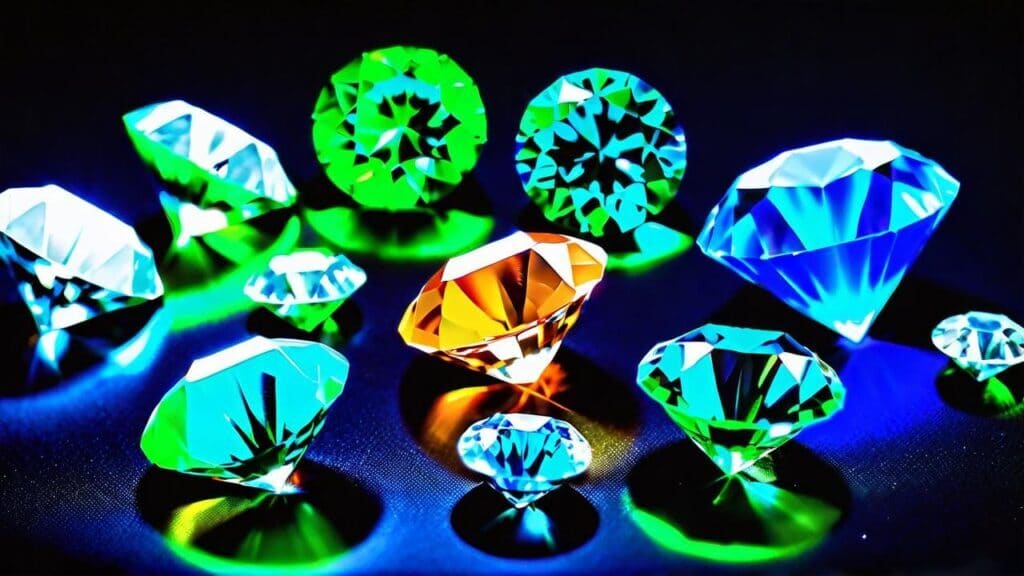
The intensity of a diamond’s fluorescence is carefully graded by gemological laboratories and documented on diamond certificates. This grading scale helps consumers understand exactly how much their diamond will react under UV light, which can impact both appearance and value. The strength of fluorescence describes how visibly a diamond glows when exposed to UV light, not how it looks under normal conditions.
- None (N): The diamond shows no visible fluorescence when exposed to UV light, making it completely inert to this type of illumination.
- Faint (F): The diamond exhibits a slight glow that is barely noticeable, even under strong UV light. This level of fluorescence typically has little to no effect on the diamond’s appearance in normal lighting.
- Medium (M): The diamond shows a moderate, easily visible glow under UV light. Medium fluorescence may slightly affect a diamond’s appearance in certain lighting conditions, particularly with lower color grades.
- Strong (S): The diamond produces a bright, intense glow under UV light that is immediately obvious. Strong fluorescence can noticeably impact a diamond’s appearance, sometimes positively and sometimes negatively.
- Very Strong (VS): The diamond emits an extremely bright, vivid glow under UV light. This highest grade of fluorescence is less common and can significantly affect how a diamond looks in various lighting conditions.
The strength of fluorescence is an important consideration when purchasing a diamond, particularly for higher color grades (D-F). While fluorescence is neither inherently good nor bad, understanding its intensity helps you predict how your diamond might look in different environments and make an informed decision based on your preferences.
Diamond Fluorescence Colors
While blue is the most common fluorescence color in diamonds, other fascinating and rare fluorescent colors exist. The specific color of fluorescence results from different trace elements or structural characteristics within the diamond. Understanding these color variations can help you appreciate the unique nature of fluorescent diamonds and make more informed purchasing decisions.
- Blue fluorescence is by far the most common, occurring in approximately 98% of fluorescent diamonds. This blue glow comes primarily from nitrogen atoms arranged in specific configurations within the diamond’s crystal structure.
- Yellow fluorescence is considerably rarer and may be caused by different nitrogen arrangements or other trace elements. Yellow fluorescent diamonds can create interesting effects, especially in diamonds with yellowish body color.
- Green fluorescence is very uncommon and highly collectible. The exact cause isn’t always clear but may relate to specific structural characteristics or unusual trace elements within the diamond.
- Orange or red fluorescence is extremely rare and highly prized by collectors. These unusual fluorescence colors can command premium prices from specialized collectors.
- White fluorescence appears as a colorless or whitish glow under UV light and is quite uncommon in natural diamonds.
- Multiple colors or color-zoning occurs when different areas of the same diamond fluoresce in different colors, creating a particularly unusual and rare effect.
The color of fluorescence is usually noted on diamond certificates alongside the intensity. While blue fluorescence is the industry standard and most widely understood, unusual fluorescence colors can make a diamond exceptionally unique. Collectors sometimes specifically seek diamonds with rare fluorescence colors, even paying premiums for these distinctive characteristics.
Advantages and Disadvantages of Diamond Fluorescence
Fluorescence can be either advantageous or disadvantageous depending on various factors including the diamond’s color grade, the strength of fluorescence, and personal preferences. Understanding both the potential benefits and drawbacks will help you determine whether a fluorescent diamond is right for your needs.
Potential Benefits of Diamond Fluorescence
The advantages of fluorescent diamonds make them worth considering for many buyers, especially those looking for value or unique characteristics. Understanding these benefits can help you determine if a fluorescent diamond might be the right choice for your jewelry needs.
- Fluorescent diamonds typically sell at a 5-15% discount compared to non-fluorescent diamonds of equal quality, creating significant savings opportunities for budget-conscious buyers.
- Medium to strong blue fluorescence can make slightly yellow diamonds (K-M color) appear whiter and brighter in daylight, effectively improving their apparent color due to the counteracting effect of blue against yellow.
- Every fluorescent diamond has a unique “light signature” that serves as a natural identifying characteristic, adding character and individuality to your stone.
- The blue glow visible under UV lighting provides a special feature that some owners enjoy, especially in environments like beaches or clubs where UV light is more prevalent.
- The fluorescence phenomenon is completely natural and has been valued in certain historical periods and cultures as a desirable quality in fine diamonds.
- In lower-color diamonds, fluorescence can effectively mask yellow tints without the higher price of a better color grade diamond.
- Fluorescent diamonds with faint to medium fluorescence rarely exhibit any negative visual effects, making them excellent value options.
When shopping with value in mind, fluorescent diamonds offer a way to get a larger or higher-quality stone for your budget. The potential appearance enhancement in lower color grades is particularly advantageous, allowing you to prioritize other qualities like cut or carat weight while still getting a diamond that appears bright and white.
Potential Drawbacks of Diamond Fluorescence
Understanding the possible disadvantages of fluorescent diamonds will help you make an informed purchase decision and avoid potential disappointment. While not all fluorescent diamonds exhibit these characteristics, being aware of the risks helps you evaluate each stone individually.
- Very strong fluorescence in high-color diamonds (D-F) can sometimes cause a hazy or “oily” appearance in natural daylight, reducing transparency and brilliance in approximately 2% of cases.
- Fluorescent diamonds may display inconsistent appearance across different lighting environments, which some buyers find unpredictable and unsatisfying.
- Strong or very strong fluorescence can occasionally create a slightly chalky or milky appearance in certain lighting conditions, affecting the diamond’s visual performance.
- The diamond industry has historically valued non-fluorescent diamonds more highly, which may impact resale value if you’re considering your purchase as an investment.
- Some jewelers and consumers mistakenly view fluorescence as a defect rather than a natural characteristic, potentially limiting resale options to knowledgeable buyers.
- The “overblue” effect in strongly fluorescent stones can sometimes give diamonds a slight blue tint even in normal lighting conditions.
- Online purchases of strongly fluorescent diamonds carry greater risk since you cannot personally evaluate how the fluorescence affects appearance before buying.
Whether these potential drawbacks matter depends entirely on your personal preferences and priorities. For most buyers, especially those considering faint to medium fluorescence, these issues are minimal or non-existent. The key is to personally view any diamond with strong or very strong fluorescence before purchase to ensure you’re satisfied with its appearance in the lighting conditions where you’ll typically wear it.
Does Fluorescence Make Diamonds Look Better or Worse?
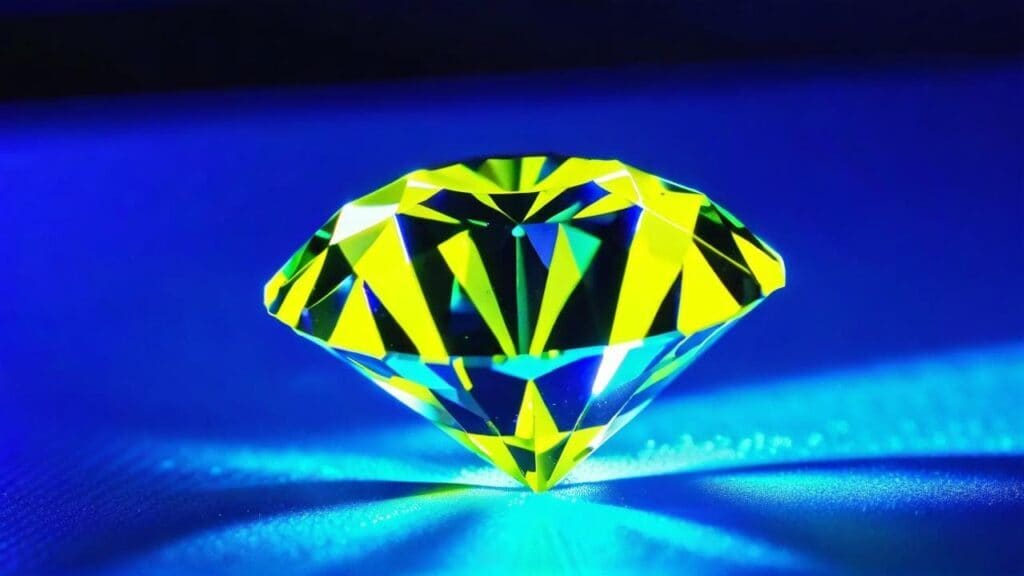
Fluorescence can influence how a diamond looks in different lighting conditions, sometimes dramatically altering its visual characteristics. Understanding these effects helps you make an informed decision about whether a fluorescent diamond suits your preferences and lifestyle.
- In colorless or near-colorless diamonds (D-F), strong fluorescence may cause a subtle haziness or milky appearance in direct sunlight or UV-rich environments, potentially reducing the diamond’s transparency and brilliance.
- In diamonds with faint yellow tint (I-M colors), medium to strong blue fluorescence can create a counteracting effect that makes the diamond appear whiter and brighter in daylight, effectively improving its apparent color.
- The impact of fluorescence varies greatly depending on lighting conditions - a diamond may look completely different under office lighting, outdoor daylight, candlelight, or UV-rich environments like clubs or beaches.
- Faint fluorescence typically has minimal to no visible effect on a diamond’s appearance in normal lighting conditions and is often undetectable without specialized UV testing.
- The “overblue” effect can occur in strongly fluorescent diamonds, where the blue glow is so intense that it becomes visible even in lighting with minimal UV content, giving the diamond a slight blue tint.
- The notorious “milky” appearance doesn’t affect all strongly fluorescent diamonds - studies show only about 2% of diamonds with strong fluorescence exhibit this characteristic.
- The cut quality of a diamond often has a greater impact on appearance than fluorescence - a well-cut fluorescent diamond will generally outperform a poorly-cut non-fluorescent diamond.
The effect of fluorescence on appearance is highly individual to each diamond. Two diamonds with identical fluorescence grades may respond differently due to their unique internal structures. This is why personally viewing a diamond before purchase is invaluable, especially for those with medium or stronger fluorescence. Observe the diamond under various lighting conditions to ensure you’re satisfied with its appearance in the environments where you’ll typically wear it.
How Fluorescence Impacts Diamond Cost and Value
Diamond fluorescence has a notable impact on market value, creating interesting opportunities for informed buyers. The relationship between fluorescence and price is complex and sometimes counterintuitive, but understanding these pricing dynamics can help you maximize your budget.
- Diamonds with medium to strong fluorescence typically sell for 5-15% less than equivalent non-fluorescent diamonds, creating potential value opportunities for knowledgeable buyers.
- The discount is usually most significant for high-color diamonds (D-F) with strong or very strong fluorescence, where the market perceives the greatest risk of negative appearance effects.
- In lower color diamonds (I-M), medium blue fluorescence sometimes commands less of a discount or occasionally even a slight premium, as it can improve the apparent color of these stones.
- The price impact varies by market segment - investment-grade diamonds and high-end luxury jewelers often significantly discount fluorescent diamonds, while mid-market retailers may apply smaller discounts.
- Historical pricing trends show that the discount for fluorescence has increased over time, partly due to greater consumer awareness and information available through diamond certificates.
- Unusually colored fluorescence (yellow, orange, red, green) may actually increase a diamond’s value among specialized collectors who seek these rare characteristics.
- Online diamond retailers typically offer greater discounts for fluorescent diamonds than brick-and-mortar stores, as internet buyers are often more price-sensitive and research-oriented.
Fluorescence-related pricing creates interesting opportunities for savvy shoppers. If you’re considering a diamond with lower color grade (H-K), medium blue fluorescence might provide better apparent color at a lower price point. However, if you’re purchasing primarily as an investment or plan to resell in the future, non-fluorescent diamonds typically maintain their value better in the current market. Your ultimate decision should balance budget considerations with personal preferences for appearance.
How to Test Diamonds for Fluorescence
Checking for diamond fluorescence involves both professional evaluation and some simple techniques you can use yourself. While gemological laboratories provide the most accurate assessment, there are ways to observe fluorescence effects before making a purchase.
- Professional diamond certificates from reputable laboratories like GIA or AGS include fluorescence grading information, specifying both the intensity and typically the color of fluorescence.
- You can request to see a diamond under a UV lamp at most reputable jewelry stores - this specialized equipment will reveal fluorescence immediately and allow you to judge its intensity personally.
- Natural sunlight contains UV radiation and can sometimes reveal fluorescence effects, especially on cloudy days when the UV component is proportionally higher in the diffused light.
- Compare a diamond in multiple lighting environments to see if its appearance changes significantly - strongly fluorescent diamonds may look different under daylight, office lighting, and home lighting.
- Some smartphones can detect basic fluorescence by using the front-facing camera (which lacks a UV filter) while shining a UV flashlight or black light on the diamond.
- Pay special attention to a diamond’s transparency and brilliance in bright natural light, as this is where any negative “milky” effect from strong fluorescence would be most visible.
- When examining diamonds with fluorescence, bring a non-fluorescent comparison stone if possible to better perceive subtle differences in appearance.
Proper evaluation of fluorescence requires seeing diamonds in person under various lighting conditions. Online purchases of fluorescent diamonds come with greater uncertainty about appearance, so look for retailers with generous return policies if you can’t view the stone beforehand. Remember that certificates describe the intensity of fluorescence under concentrated UV light, which may not directly translate to how noticeable the effect will be in everyday conditions.
Diamond Fluorescence: What to Know Before Buying
Choosing whether to purchase a fluorescent diamond requires balancing several factors including appearance preferences, budget considerations, and how you plan to wear your diamond. This buying guide will help you navigate these considerations to make a choice that best suits your individual needs.
- For colorless (D-F) diamonds, faint fluorescence typically has no visible impact and offers a small discount - making it an excellent value choice for most buyers.
- For near-colorless (G-J) diamonds, faint to medium blue fluorescence often provides good value with minimal risk of negative effects and potential color enhancement.
- For diamonds with noticeable color (K-M), medium to strong blue fluorescence can improve apparent color while reducing price - a winning combination for budget-conscious shoppers.
- If you’re extremely sensitive to diamond performance or purchasing primarily as an investment, non-fluorescent diamonds offer the most consistent appearance and better value retention.
- Always request to see strongly fluorescent diamonds in natural daylight before purchasing to check for any undesirable milky or hazy appearance.
- Consider your lifestyle and where you’ll wear the diamond - if you frequently visit beaches, clubs, or other UV-rich environments, the fluorescence effect will be more noticeable.
- For unique engagement rings, intentionally choosing a diamond with attractive fluorescence provides a romantic “hidden” feature that’s visible in special lighting conditions.
- When buying online, carefully read the return policy regarding fluorescent diamonds and inspect your purchase thoroughly upon receipt in multiple lighting environments.
- Trust your eyes more than the certificate - some people cannot detect any difference between fluorescent and non-fluorescent diamonds, while others are very sensitive to these differences.
The ideal approach is to view diamonds with different fluorescence levels side by side. This comparison will help you determine your personal sensitivity to fluorescence effects and whether you find them enhancing or detracting. Remember that fluorescence is neither good nor bad inherently - its desirability depends entirely on your preferences, budget priorities, and the specific diamond in question.
Caring for Fluorescent Diamonds
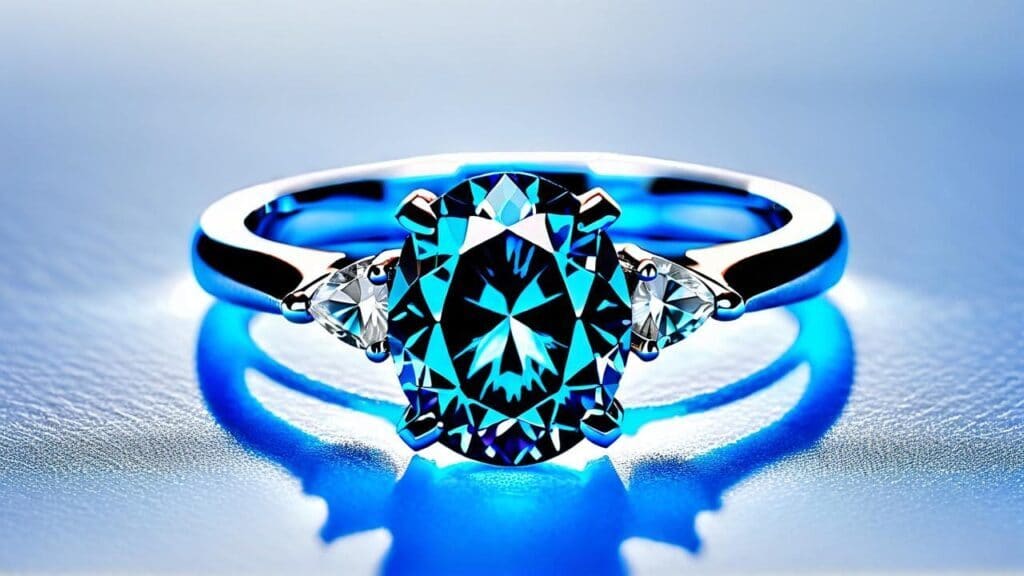
Caring for fluorescent diamonds follows the same general guidelines as non-fluorescent diamonds, with a few additional considerations. Proper maintenance ensures your diamond maintains its beauty regardless of its fluorescence properties.
- Fluorescent diamonds don’t require special cleaning methods - standard diamond cleaning practices work perfectly well for these stones.
- Prolonged exposure to intense UV light (such as in tanning beds) won’t damage the fluorescence property, but isn’t recommended for jewelry generally as it can affect settings and mounting materials.
- The fluorescence property is stable and permanent - it won’t fade or intensify over time regardless of exposure to UV light or wearing patterns.
- When having your diamond jewelry cleaned professionally, inform your jeweler about the fluorescence so they can check that cleaning processes haven’t affected the stone’s appearance.
- Fluorescent diamonds benefit from the same regular maintenance as non-fluorescent diamonds: cleaning every few weeks and professional inspection every 6-12 months.
- When storing your fluorescent diamond, standard jewelry boxes or pouches are perfectly appropriate - no special storage conditions are needed to maintain the fluorescence property.
- If your diamond has strong fluorescence, you might occasionally want to check it under UV light to enjoy this special property - this viewing is harmless to both the diamond and the fluorescence effect.
Fluorescence is an inherent, stable property of your diamond that won’t change over time. There’s no need to worry about “protecting” the fluorescence or any special maintenance requirements. Simply enjoy your diamond’s unique characteristics and maintain it as you would any fine jewelry piece.
Common Questions About Diamond Fluorescence
Diamonds with fluorescence often generate many questions from buyers trying to understand this complex characteristic. These frequently asked questions address common concerns and misconceptions about diamond fluorescence.
- Is diamond fluorescence a flaw or defect?
No, fluorescence is a natural characteristic, not a defect. It’s simply a reaction some diamonds have to UV light due to their atomic structure. - Does fluorescence mean the diamond is fake or treated?
Absolutely not. Fluorescence occurs in natural diamonds and has nothing to do with treatments or authenticity. In fact, fluorescence testing is one method used to identify natural diamonds. - Will a fluorescent diamond glow all the time?
No, diamonds only fluoresce when exposed to UV light. In normal indoor lighting with minimal UV content, fluorescence is typically not visible at all. - Does fluorescence affect a diamond’s durability?
No, fluorescence has no effect whatsoever on a diamond’s hardness, durability, or structural integrity. It’s purely an optical phenomenon. - Can fluorescence develop or disappear over time?
No, fluorescence is a stable physical property that won’t change throughout the lifetime of a diamond. - Are most diamonds fluorescent?
No, only about 25-35% of diamonds exhibit any detectable fluorescence, with strong fluorescence being quite uncommon. - Should I avoid buying a diamond with fluorescence?
Not necessarily. For many buyers, especially those purchasing I-K color diamonds, medium fluorescence can actually improve appearance while reducing cost. - Do colored diamonds also show fluorescence?
Yes, some colored diamonds exhibit fluorescence, though the effect and prevalence vary by color. For instance, yellow diamonds rarely show strong fluorescence.
Diamond fluorescence represents one of the most misunderstood yet potentially beneficial characteristics for diamond shoppers. By understanding what causes fluorescence, how it affects appearance and value, and which fluorescence levels work best with different diamond qualities, you can make an informed choice that maximizes both beauty and value. Rather than automatically avoiding fluorescent diamonds, consider whether this natural characteristic might actually enhance your diamond experience.
Conclusion
Diamond fluorescence remains one of the most misunderstood yet potentially valuable characteristics to understand when purchasing diamonds. This natural property—present in about 25-35% of diamonds—can significantly impact appearance and price, creating opportunities for informed buyers to find exceptional value. While strong fluorescence in high-color diamonds may occasionally create undesirable effects, in most cases fluorescence is either neutral or beneficial, particularly in diamonds with warmer body colors.
The most important takeaway is that fluorescence should be evaluated on a diamond-by-diamond basis. There’s no universal rule about whether fluorescence is “good” or “bad”—it depends on the specific diamond, your personal preferences, and how you plan to wear your jewelry. By understanding fluorescence and evaluating diamonds in different lighting environments, you can make a confident decision about whether a fluorescent diamond is right for you, potentially saving money while still getting a beautiful stone that performs wonderfully in everyday conditions.