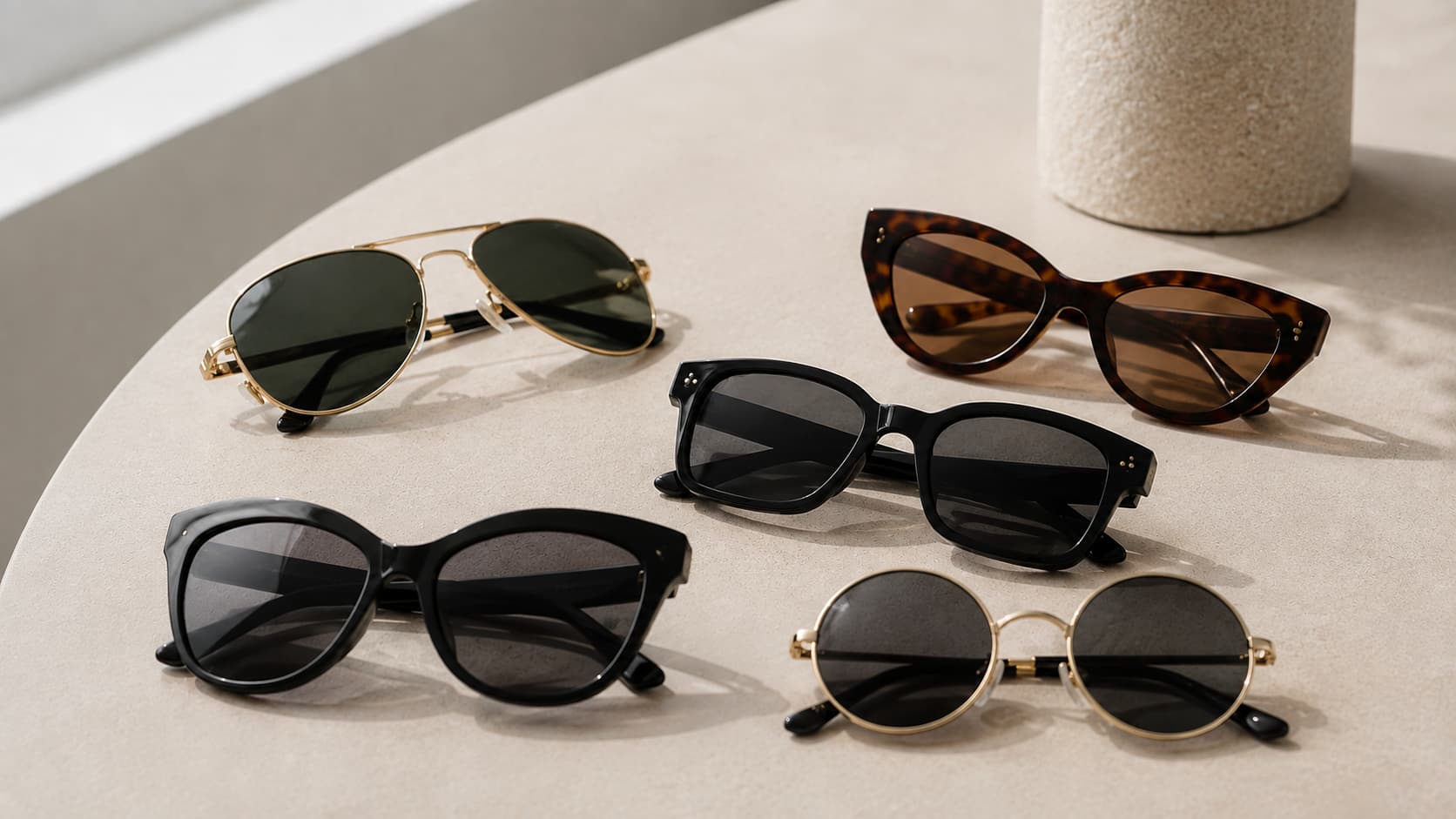
Picking a pair of sunglasses might seem as simple as grabbing whatever looks cool on the shelf, but the frames that make one person look great can make another person look a little off. That’s because every face is built with a different shape, and certain sunglass styles are designed to balance out the lines and angles that are already there. Once you know your own face shape and the basic rules that go with it, shopping for sunglasses stops being a guessing game and starts being a lot more fun.
Why Face Shape Matters When Choosing Sunglasses
Sunglasses that match your face shape create balance, while sunglasses that clash with it can make certain features look bigger or sharper than you want. The general idea is called the “rule of opposites.” A face with soft, rounded lines usually looks better in sunglasses with straighter, more angular frames, while a face with sharp, angular lines often looks better in sunglasses with softer, rounder frames.
This isn’t a strict law carved in stone, and plenty of people break it and still look fantastic. But it’s a useful starting point, especially if you’ve ever tried on sunglasses and couldn’t quite explain why one pair looked amazing and another looked strange. Understanding your face shape gives you a reason behind that feeling, and it makes trying on new styles a lot less random.
Round faces generally suit angular frames, square faces suit curved ones, and so on, with the full breakdown below.
At a glance
| Face Shape | Best Frame Styles | Frames to Avoid |
|---|---|---|
| Oval | Almost everything — square, round, cat-eye, oversized | Frames so large they hide the face |
| Round | Square, rectangular, angular frames | Round or small circular frames |
| Square | Round, oval, curved cat-eye | Square or boxy rectangular frames |
| Heart | Aviator, cat-eye, bottom-heavy round | Thick, heavy top-rim frames |
| Diamond | Cat-eye, oval, rimless or semi-rimless | Very narrow or small frames |
| Oblong | Oversized, wraparound, decorative wide frames | Small, narrow frames |
| Triangle | Cat-eye, browline (bold top, light bottom) | Bottom-heavy or wide-at-the-base frames |
How to Figure Out Your Face Shape
You can figure out your face shape by looking at three things: the width of your forehead, the width of your cheekbones, and the shape of your jawline. Comparing these three parts tells you whether your face is more round, square, long, heart-shaped, or one of the other common shapes.
Look at Your Cheekbones, Jawline, and Forehead
Start by asking a few simple questions about your face:
- Is your forehead wider than your jaw, or are they about the same width?
- Is your jawline sharp and angular, or soft and rounded?
- Are your cheekbones the widest part of your face, or does your face stay roughly the same width from top to bottom?
- Is your face noticeably longer than it is wide, or closer to equal in both directions?
Answering these honestly, one at a time, will usually point you toward one of the main face shape categories without much guesswork.
The Simple Mirror Trick
A classic way to check your face shape is to stand in front of a mirror and trace the outline of your face using a dry-erase marker or a bar of soap directly on the glass:
- Pull your hair back so your hairline and jaw are fully visible.
- Look straight ahead and keep your expression relaxed, not smiling.
- Trace the outline of your face on the mirror, following your hairline down to your jaw and chin.
- Step back and compare the outline to the shapes described below — it will usually match one of them closely.
If you’d rather skip the marker, taking a straight-on photo and tracing the outline digitally, or simply measuring your forehead, cheekbone, and jaw width with a soft tape measure, works just as well.
Best Sunglasses for Oval Faces
Oval faces are considered the most balanced shape, so almost every sunglass style tends to look good on them. An oval face is longer than it is wide, with a jawline that’s slightly narrower than the forehead and cheekbones, and softly rounded edges rather than sharp corners.
Because the proportions are already balanced, people with oval faces have the most freedom to experiment. Oversized frames, cat-eye shapes, square frames, and round frames all tend to work well. The main thing to avoid is frames so large that they overwhelm the natural balance of the face — beyond that, it’s mostly about personal taste.
If you have an oval face and genuinely can’t decide between styles, a good rule of thumb is to pick frames that are as wide as the widest part of your face, or slightly wider, so the sunglasses don’t look cramped or oversized in either direction.
Best Sunglasses for Round Faces
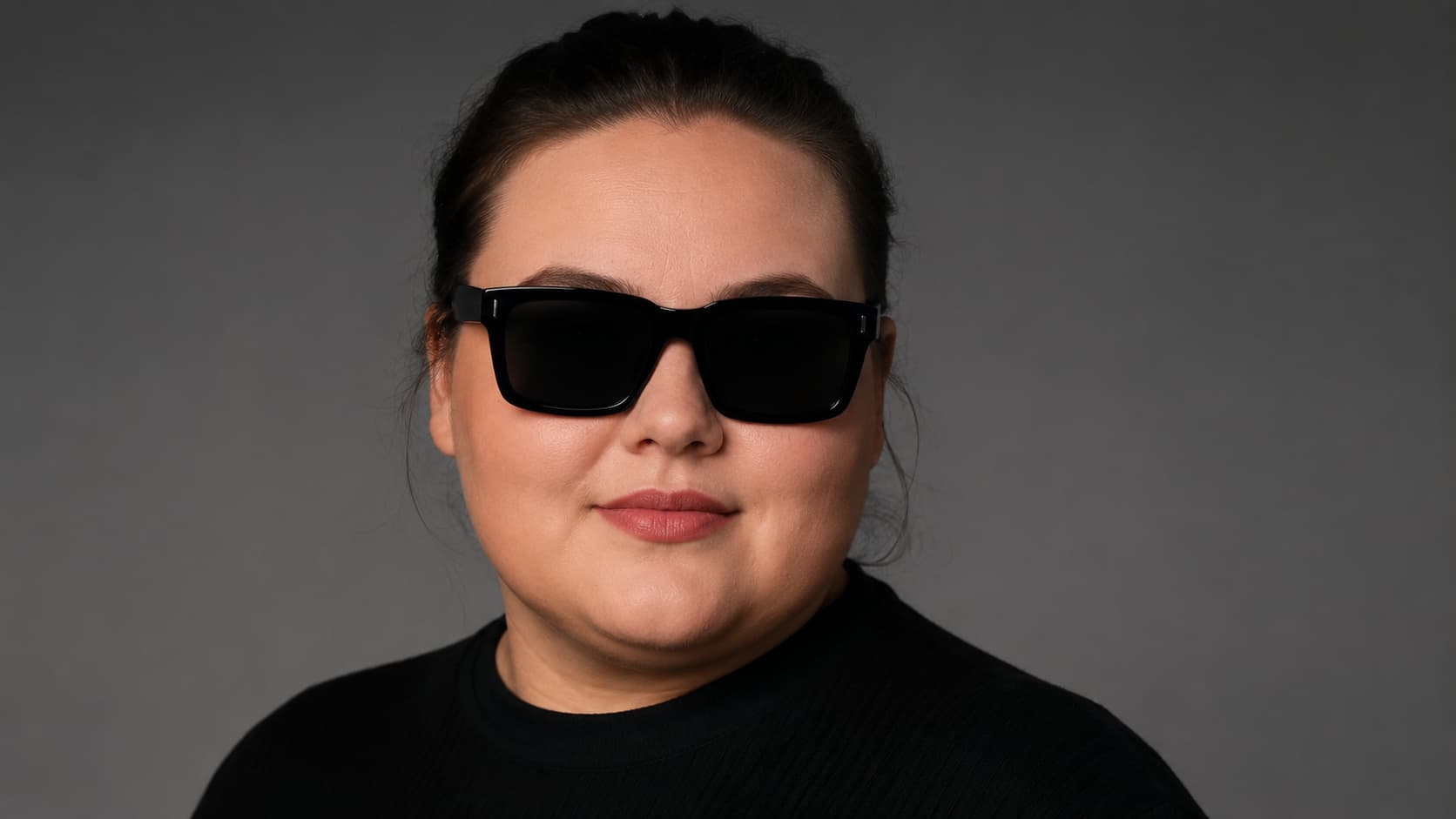
Round faces look best in angular sunglasses, like square or rectangular frames, because the straight lines add definition that a round face doesn’t naturally have. A round face has soft curves, full cheeks, and a rounded chin, with the width and length of the face being close to equal.
Square and rectangular frames create contrast against the curves of the cheeks and jaw, which can make the face look a little longer and more structured. Angular frames with clean, straight edges tend to work better than round or oval sunglasses, which can echo the roundness of the face and make it look even fuller. Frames that sit a bit higher on the bridge of the nose can also help lengthen the face slightly.
Geometric shapes like hexagon or slightly angled cat-eye frames are also worth trying, since they offer the same contrast as a square frame without looking quite as boxy. Dark, solid frame colors tend to add definition too, while very light or transparent frames can make a round face look softer than intended.
Best Sunglasses for Square Faces
Square faces look best in round or oval sunglasses because the curved lines soften a strong jawline and forehead. A square face has a broad forehead, angular jaw, and cheekbones that are roughly the same width, giving the whole face a boxy outline.
Round and oval frames smooth out those strong angles instead of matching them, which keeps the face from looking too sharp or heavy. Cat-eye frames with soft curves can also work nicely. It’s usually best to stay away from square or rectangular sunglasses on a square face, since matching angular frames to an already angular jaw tends to emphasize the squareness rather than balance it.
Thinner frame materials, like fine metal wire, can also help a square face look a bit less heavy compared to thick plastic frames, which add extra bulk to an already strong jawline.
Best Sunglasses for Heart-Shaped Faces
Heart-shaped faces look best in sunglasses that are wider at the bottom, since this balances a forehead that’s broader than the chin. A heart-shaped face has a wide forehead and cheekbones that narrow down to a small, sometimes pointed chin.
Frames like aviators, cat-eye shapes, or round sunglasses work well because they draw attention to the middle and lower part of the face rather than the forehead. Oversized frames can also help balance a wider forehead by adding visual weight lower down. Thick, heavy frames across the top of the sunglasses, on the other hand, can make the forehead look even wider, so lighter or rimless tops are usually a safer bet.
Light-colored or gradient lenses that get lighter toward the bottom can add a bit more visual balance too, since they draw the eye downward instead of straight across the brow line.
Best Sunglasses for Diamond Faces
Diamond faces look best in sunglasses with detailing or curves around the brow line, since the goal is to soften pronounced cheekbones. A diamond face has a narrow forehead and jawline with cheekbones that are the widest part of the face, giving it an angular, pointed look at both the top and bottom.
Cat-eye and oval frames tend to be flattering because they highlight the eyes and brow area while balancing out wide cheekbones. Rimless or semi-rimless frames can also work well since they don’t add extra width at the cheekbone level. Narrow or very small frames are usually less flattering, since they can make the cheekbones look even more prominent by comparison.
Diamond faces are one of the rarer shapes, so it’s worth trying on a few different curved styles in person if possible, since the amount of cheekbone width varies a lot from person to person within this category.
Best Sunglasses for Oblong (Long) Faces
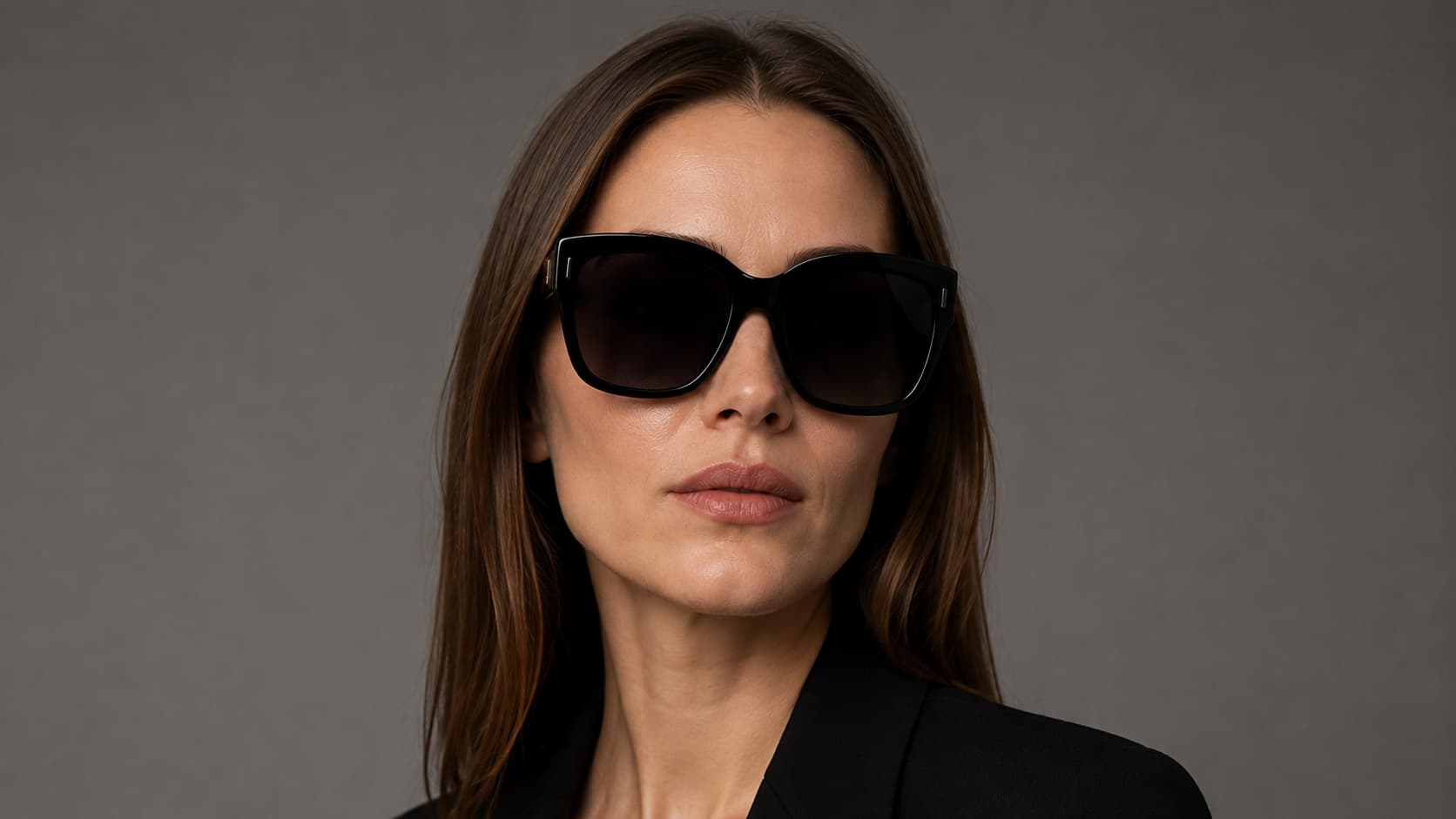
Oblong faces look best in oversized or decorative sunglasses that add width, since the goal is to make the face appear shorter and less narrow. An oblong face is longer than an oval face, with straight cheek lines and a length that’s noticeably greater than the width.
Frames with more width, like wraparound styles or oversized square frames, help break up the length of the face. Sunglasses with decorative temples or extra detailing can also draw the eye outward instead of up and down, which visually shortens the face. It’s best to avoid narrow, small frames, since they don’t do much to counter the natural length of the face and can even exaggerate it.
Frames that sit lower on the nose, rather than high up near the brow, can also help an oblong face look a touch more proportional by breaking up the vertical space between the hairline and chin.
Best Sunglasses for Triangle Faces
Triangle faces look best in sunglasses that are wider at the top, like cat-eye or browline frames, since these balance a jaw that’s wider than the forehead. A triangle face (sometimes called a pear shape) has a narrow forehead, wider cheekbones, and an even wider, more defined jawline.
Cat-eye frames and browline styles — where the top of the frame is bolder than the bottom — draw attention upward and help balance the width at the jaw. Frames with detailing or color on the upper rim also work in the same way. Bottom-heavy frames or styles with a lot of width down low tend to work against a triangle face rather than for it.
Bold colors or patterns along the top rim, paired with a plainer bottom edge, can help emphasize the upper half of the face even further, drawing attention up toward the eyes and away from a wider jawline.
Other Factors That Matter When Choosing Sunglasses
Face shape is a helpful starting point, but skin tone, lens coverage, and personal style all play a role in how a final pair of sunglasses actually looks and feels.
Skin Tone and Frame Color
Frame color can be matched loosely to skin tone using the same warm-versus-cool logic often used for clothing and jewelry:
- Warm skin tones (with golden, peachy, or yellow undertones) tend to suit tortoiseshell, gold, brown, or olive-green frames.
- Cool skin tones (with pink, red, or blue undertones) tend to suit black, silver, grey, or blue-toned frames.
- Neutral skin tones can usually wear either warm or cool frame colors comfortably.
This isn’t a hard rule, but it can help narrow down color choices once you already know which shapes suit your face.
Lens Size and Coverage
Lens size affects both how sunglasses look and how well they protect your eyes from the sun. Larger lenses block more UV light and glare, which matters for genuine sun protection, while smaller lenses can look more delicate but may let more light in around the edges. Look for lenses labeled as blocking 100% of UVA and UVB rays regardless of size, since the darkness of a lens alone doesn’t tell you how much UV protection it actually offers.
Polarized lenses are also worth considering if you spend time driving, near water, or outdoors on bright days, since they cut down glare bouncing off flat surfaces like roads and water in a way that regular tinted lenses don’t. Choosing a size that fits comfortably on your face, without pinching at the temples or slipping down your nose, matters just as much as the shape.
Frame Size and Fit
Even a perfectly shaped frame can look wrong if it’s the wrong size for your head, so it’s worth checking the tiny numbers printed on the inside of most sunglasses’ temple arms. That string of numbers, something like 52-18-140, tells you the lens width, the bridge width (the gap that sits on your nose), and the temple arm length, all measured in millimeters. Comparing these numbers between pairs you already own that fit well is one of the easiest ways to find the right size in a new style.
Frames that are too narrow tend to pinch at the temples and leave marks behind the ears, while frames that are too wide can slide down the nose or sit crookedly. Getting the shape right matters most for how the sunglasses look, but getting the size right matters just as much for how comfortable they actually are to wear.
Personal Style
At the end of the day, the sunglasses you feel most confident wearing are usually the ones you’ll actually put on and enjoy. Face shape guidelines are meant to be a helpful map, not a strict rulebook, and plenty of people mix and match styles that “shouldn’t” work for their face and still pull them off with confidence.
Frequently Asked Questions
Can I have more than one face shape?
Yes, many people fall somewhere between two shapes rather than fitting one category perfectly. If that’s the case, it’s usually fine to try frames recommended for either shape, or to focus on the shape your face resembles most closely at the jawline and cheekbones, since those areas have the biggest visual impact.
Do sunglasses actually change how my face looks?
Sunglasses don’t change your bone structure, but they can change how balanced or proportioned your face appears at a glance, similar to how a hairstyle or eyeglasses frame can shift the way a face reads visually. This effect comes from contrast and proportion, not any physical change to your features.
What’s the easiest face shape to buy sunglasses for?
Oval faces are generally considered the easiest to shop for because their proportions are already balanced, so most frame shapes tend to look good on them. If you’re unsure of your face shape or just don’t want to overthink it, oval-style sunglasses are also a safe, flattering choice for many other face shapes too.
Should I match my sunglasses to my regular eyeglasses?
You don’t need matching frames, but the same face-shape guidelines apply to both, so a frame shape that flatters your face in regular eyeglasses will likely flatter it in sunglasses as well. Many people actually enjoy having different styles for each, using sunglasses to experiment with bolder shapes or colors they might not wear every day.
Are certain sunglass shapes more timeless than others?
Aviators, round frames, and classic square shapes have stayed popular for decades and are generally considered safe, long-lasting choices. Trend-driven shapes come and go faster, so if you want a pair that won’t look dated in a few years, leaning toward these classic styles is usually a smart move.
Conclusion
Choosing sunglasses for your face shape really comes down to one idea: balance. Round faces lean toward angular frames, square faces lean toward curved ones, heart and triangle shapes look for frames that add width where the face narrows, and oblong faces benefit from styles that add width overall. Oval faces have the easiest time of all, since almost anything works with their already-balanced proportions. Once you know which category your face falls into, you have a real starting point for trying on frames — and from there, comfort, color, lens protection, and personal taste can take over to help you land on the pair that actually feels like you.