Bright fluorescent lights, glaring computer screens, and even a sunny afternoon can be more than just annoying for some people — they can trigger real pain. Migraine alone affects roughly one in four U.S. households, and light is one of the most commonly reported triggers, which is why so much research has gone into finding ways to filter it out rather than just avoiding it. FL-41 glasses were built specifically for that problem, using a rose or pink-tinted lens designed to block the exact wavelengths of light most likely to cause headaches, migraines, and eye strain. They’ve gone from a niche medical tool to a fairly well-known option at eye doctors’ offices, but plenty of people still aren’t sure what makes them different from a pair of sunglasses off a store shelf, or whether the science behind them actually holds up.
What Are FL-41 Glasses?
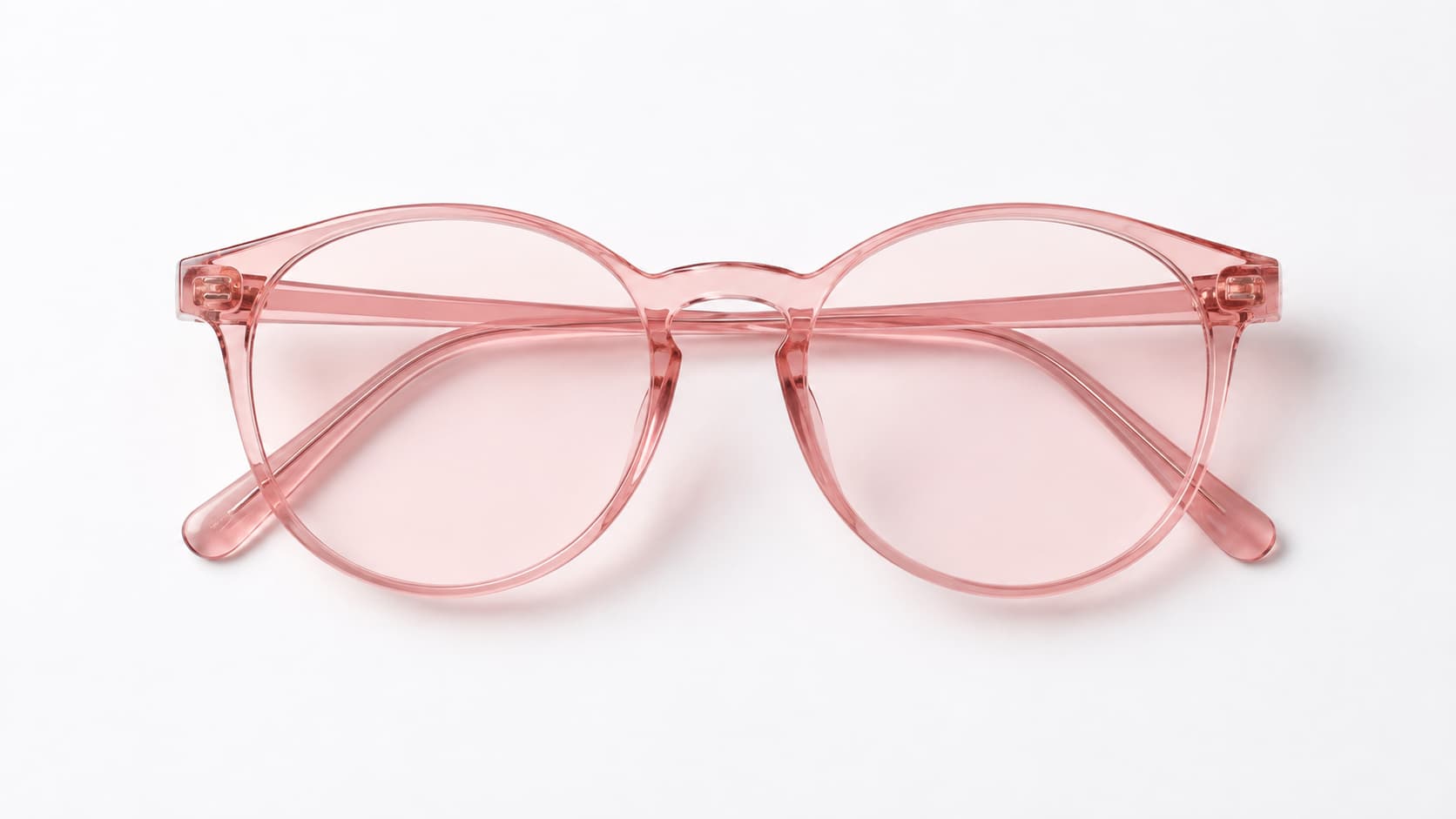
FL-41 glasses are eyeglasses with a special rose or pink-colored lens tint that filters out specific bands of light known to trigger migraines and light sensitivity (also called photophobia). The name comes from “fluorescent 41,” a nod to the fact that the tint was first created to help people who struggled with old-style flickering fluorescent lights.
The tint was developed by researchers in the late 1980s and early 1990s who were looking for a way to help patients with severe light sensitivity get through their day without pain. Instead of just darkening everything the way sunglasses do, FL-41 was designed to target a narrower slice of the light spectrum — mainly the blue and blue-green wavelengths, roughly in the 480 to 520 nanometer range, that seem to bother sensitive eyes the most. That’s why FL-41 lenses look pink instead of gray or brown like typical sunglasses.
How Do FL-41 Lenses Work?
FL-41 lenses work by physically blocking a large portion of blue and blue-green light before it reaches your eyes, while still letting most other colors of light through so the world doesn’t look completely different. A well-made FL-41 tint cuts out roughly four-fifths of the light sitting in that 480 to 520 nanometer band, since that’s the slice of the spectrum research has tied most closely to triggering light-related pain.
The reason this particular slice of light matters so much comes down to specialized cells inside the retina at the back of your eye, called intrinsically photosensitive retinal ganglion cells. These cells are especially reactive to blue-green light, and they connect to nerve pathways involved in headache and migraine pain. When these cells get overstimulated by the “wrong” kind of light, they can send signals that make head pain worse or even help kick off a migraine attack in the first place. By cutting down that specific light before it reaches those cells, FL-41 lenses aim to calm that whole chain reaction down.
The path these signals travel matters too. Those light-sensitive retinal cells link up with the trigeminal nerve, the largest nerve in the head and the same one responsible for a lot of facial and migraine pain. So it isn’t just that bright light feels unpleasant — for someone prone to migraines, the wrong wavelengths can feed directly into the same nerve pathway that produces the headache itself. That’s the biological reason a lens tint can influence something as significant as headache frequency, rather than just making things look dimmer.
FL-41 is also not one single fixed formula. Because early lenses were tinted by hand, the exact strength and shade can vary a bit between manufacturers, and companies have kept refining the tint over the decades to filter out more of the troublesome wavelengths while distorting colors as little as possible.
Does FL-41 Actually Help Migraines?

Yes, for many people with light-triggered headaches and migraines, FL-41 glasses have real research behind them showing they help. The tint isn’t just a marketing gimmick — it came out of actual clinical studies, and it has continued to be studied since.
One of the more well-known studies followed children with migraines who wore FL-41 lenses and found their attacks dropped from an average of roughly six per month down to fewer than two per month, an improvement that held up over time rather than fading out. Later research looked at adults with a condition called benign essential blepharospasm, a movement disorder that causes involuntary eyelid spasms and is often set off by light. Compared with a plain gray tint, patients wearing FL-41 blinked less often, rated their light sensitivity as milder, and reported getting through daily tasks like reading more easily.
That said, FL-41 isn’t a guaranteed fix for every single person, and results can vary depending on what’s actually causing someone’s light sensitivity. It’s also not a replacement for medical treatment if migraines are frequent or severe — it works best as one tool among several, alongside things like medication, trigger tracking, or care from a neurologist.
Researchers have found that a narrow band of green light can actually feel soothing to migraine sufferers, while blue, amber, and red light tend to make symptoms worse — which is part of why later versions of FL-41 have been tweaked to let more green light through.
What Conditions Can FL-41 Glasses Help?
FL-41 glasses were originally designed for migraine and fluorescent light sensitivity, but they’ve since been used for a wider range of light-related conditions. The common thread is that all of these involve eyes or nerves that overreact to certain kinds of light, among them:
- Migraine with light sensitivity between or during attacks
- Chronic light sensitivity from fluorescent lighting or screens
- Benign essential blepharospasm (involuntary eyelid spasms)
- Post-concussion light sensitivity
- Chronic dry eye with light discomfort
- General photophobia not tied to a specific diagnosis
If you’re dealing with any of these and haven’t tried a tinted lens like FL-41, it’s a low-risk option worth discussing with an eye doctor, especially compared to more invasive treatments.
FL-41 vs. Regular Tinted or Blue-Light Glasses
FL-41 glasses are not the same thing as standard sunglasses or the blue-light glasses marketed for screen use, even though people sometimes lump them together. The difference comes down to precision — FL-41 is engineered to hit a specific, research-backed target rather than just darkening or tinting the lens in a general way.
| Lens Type | What It Filters | Main Purpose |
|---|---|---|
| FL-41 | Targeted blue and blue-green light, roughly 480–520nm | Reduce migraine and photophobia symptoms |
| Avulux | Blue, amber, and red light, while letting soothing green light through | Reduce migraine and light sensitivity with less color distortion |
| Standard sunglasses | Overall brightness, all wavelengths somewhat evenly | Comfort and glare reduction outdoors |
| Blue-light glasses | Light from digital screens, often a smaller slice of blue wavelengths | Reduce eye strain from screen use |
Regular sunglasses simply cut down the total amount of light hitting your eyes, which can help with glare but doesn’t target the wavelengths most associated with migraine pain. Blue-light glasses, the kind marketed for gamers or office workers, usually have a much lighter, often barely-there tint and aren’t held to the same spectral filtering standard that genuine FL-41 lenses are.
Avulux has emerged as the main alternative to FL-41, built to address some of its gaps. Rather than relying on a rose-colored tint, Avulux uses filtering technology built into the lens material itself, which gives it a neutral gray appearance instead of a pink one and avoids shifting how colors look. It’s designed to block blue, amber, and red wavelengths while allowing more of the green light that research suggests feels soothing rather than triggering, and some wearers report it actually improves contrast and sharpness rather than just dimming everything.
What to Look For When Buying FL-41 Glasses
Not every rose or pink-tinted lens sold online meets the genuine FL-41 standard, and a pink color alone isn’t proof of it. A few details separate an authentic pair from one just dyed a similar shade for style:
- A stated transmission spec — genuine FL-41 lenses should show a documented dip in light transmission around the 480nm mark, not just a description of “rose tint.”
- Indoor vs. outdoor versions — lighter FL-41 lenses are made for indoor use under fluorescent lights or screens, while darker, sometimes polarized versions are meant for outdoor daylight.
- Prescription compatibility — many FL-41 lenses can be made with a prescription, so light-sensitivity relief doesn’t have to come at the cost of clear vision.
- Frame comfort — since these are often worn for long stretches during the day, frame fit and weight matter as much as the lens itself.
- Lens material options — FL-41 tints can be applied to high-index lens materials, which matters for strong prescriptions that would otherwise mean thick, heavy lenses.
- Polarization for outdoor pairs — outdoor FL-41 lenses are sometimes available polarized, which cuts glare off pavement, water, or car windshields on top of the wavelength filtering.
A reputable optician or specialty eyewear seller should be able to state exactly what standard their FL-41 lenses are tested against.
Are There Any Downsides to FL-41 Lenses?
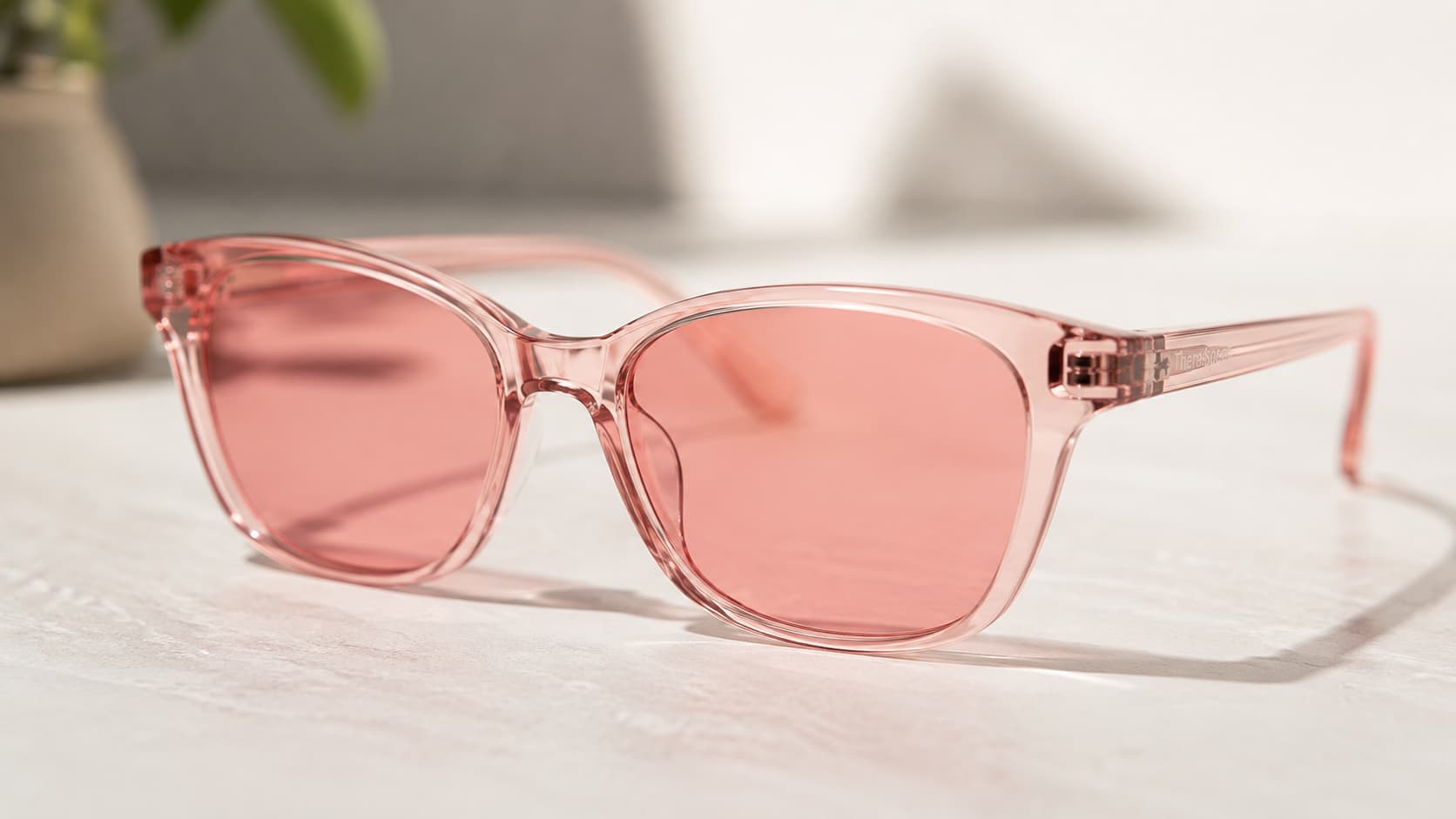
The main downside of FL-41 lenses is color distortion, since blocking specific wavelengths of light changes how colors look through the lens. Because the tint filters out a meaningful chunk of blue and blue-green light, things viewed through FL-41 glasses can appear shifted toward pink or warm tones, which some wearers find takes getting used to.
Another consideration is that FL-41 doesn’t filter every wavelength linked to light sensitivity. Some researchers point out that it primarily targets blue light and doesn’t do much to reduce red-orange light around 590 nanometers, which has also been connected to discomfort for some patients. That’s part of why newer competing lens technologies have been developed to filter a broader range of problem wavelengths while still letting soothing green light through. FL-41 glasses also aren’t ideal for driving at night for some wearers, since any tinted lens can reduce visibility in low light, so it’s worth testing them in different settings before relying on them everywhere.
Frequently Asked Questions
Do FL-41 glasses work for regular headaches, not just migraines?
They can help with headaches that are triggered or worsened by light exposure, even if someone doesn’t have a formal migraine diagnosis. Since the lens targets a light-sensitivity mechanism in the eye rather than a specific diagnosis, tension headaches made worse by screens or fluorescent lighting may also see some relief.
Can kids wear FL-41 glasses?
Yes, and some of the earliest and most notable research on FL-41 was actually done with children who had migraines. As with any child’s eyewear, it’s a good idea to have a pediatric eye doctor confirm the fit and prescription needs first.
Do FL-41 glasses come in prescription versions?
Yes, most opticians and specialty eyewear companies can apply the FL-41 tint to prescription lenses. This means someone who already needs glasses for vision correction doesn’t have to switch between two separate pairs.
How long does it take to notice a difference?
Some wearers notice reduced eye strain and discomfort within the first few uses, while the full migraine-reduction benefits documented in research studies were measured over weeks to months of consistent wear. Results tend to build over time rather than appearing instantly.
Are FL-41 glasses the same as rose-colored glasses from a store?
Not necessarily. Plenty of pink or rose-tinted glasses are sold purely for fashion and haven’t been manufactured to meet the specific light-filtering benchmark that defines true FL-41, so the color alone isn’t a reliable way to tell them apart.
What’s the real difference between FL-41 and Avulux lenses?
FL-41 uses a rose-tinted dye that mainly blocks blue and blue-green light, while Avulux is a newer, gray-tinted lens built to block blue, amber, and red light while still letting soothing green light through. Both are aimed at the same problem, but Avulux was designed partly to address wavelengths — like red-orange light around 590 nanometers — that FL-41 doesn’t filter as effectively, and it tends to distort color vision less.
Conclusion
FL-41 glasses aren’t a magic cure, but they’re one of the few pieces of light-sensitivity eyewear with real clinical research behind them, going back over three decades. The rose tint works by blocking a specific band of blue and blue-green light that’s been linked to overstimulating pain-related nerve pathways in the eye, which is why they tend to help migraine sufferers and people with conditions like blepharospasm or post-concussion light sensitivity more than a plain pair of tinted sunglasses would. If light is a real trigger for your headaches or eye discomfort, FL-41 lenses are worth trying — just look for a pair with an actual documented light-transmission spec, not just a pink color, and treat them as one part of a broader plan rather than a standalone fix.