Hawaiian jewelry represents more than beautiful adornments – these pieces tell stories of heritage, tradition, and cultural values spanning generations. From ancient ceremonial ornaments to modern interpretations, Hawaiian jewelry combines exquisite craftsmanship with profound cultural significance, connecting wearers to the rich history and natural beauty of the Hawaiian islands.
Significance and Beauty of Traditional Hawaiian Jewelry
Hawaiian jewelry stands as one of the most distinctive and meaningful jewelry traditions in the world. These pieces serve as both personal adornments and powerful symbols of identity, status, and connection to Hawaiian values. From ancient times when natural materials dominated the craft to today’s contemporary interpretations using precious metals, Hawaiian jewelry has evolved while maintaining its cultural importance. What makes these pieces special isn’t just their beauty but their ability to communicate Hawaiian stories, beliefs, and connections to the natural world.
- Hawaiian jewelry originated as functional adornments using locally available materials including shells, bone, wood, seeds, feathers, and plant fibers, each selected for both practical and spiritual significance in ancient Hawaiian society.
- Traditional pieces often incorporate spiritual protection, with many designs featuring symbols meant to guard the wearer against negative energies or connect them to ancestral spirits and gods. These protective elements reflect the Hawaiian belief in the interconnectedness between the physical and spiritual worlds.
- The concept of mana (spiritual power) is central to Hawaiian jewelry, with certain pieces believed to contain and transfer this divine energy between generations when passed down as heirlooms. The most sacred pieces were thought to accumulate mana over time, making ancient family pieces particularly valuable beyond their material worth.
- Unlike purely decorative Western jewelry, traditional Hawaiian adornments served as visual representations of social status, family lineage, personal achievements, and spiritual connections. The type of materials, craftsmanship quality, and specific designs communicated important information about the wearer’s place in society.
- Contemporary Hawaiian jewelry maintains strong connections to cultural identity, serving as proud expressions of Hawaiian heritage even as materials and techniques have evolved with modern influences. Today’s pieces often blend traditional symbols with contemporary styling to create wearable connections to Hawaiian culture.
Hawaiian jewelry continues to thrive today because it connects people to something deeper than fashion – it links wearers to the spirit of aloha, the natural beauty of the islands, and centuries of cultural wisdom. Whether worn by those with Hawaiian ancestry or admirers of Hawaiian culture, these pieces carry meaning that transcends ordinary adornment, telling stories through their symbols and craftsmanship that celebrate one of the world’s most distinctive cultural heritages.
Historical Journey of Hawaiian Jewelry Traditions
The history of Hawaiian jewelry traces back to the original Polynesian settlers who arrived on the islands around 300-600 CE, bringing with them adornment traditions developed over centuries of seafaring culture. These early pieces were primarily crafted from natural materials available on the islands and served important cultural and spiritual functions beyond mere decoration. As Hawaiian society developed, jewelry became increasingly sophisticated, eventually transforming dramatically with Western contact while still maintaining distinctive cultural elements that persist to this day.
- The earliest Hawaiian adornments included lei made from shells, nuts, seeds, bones, teeth, feathers, and flowers – materials that held both aesthetic appeal and spiritual significance in Hawaiian cosmology. These materials weren’t chosen randomly but for specific properties believed to connect the wearer to particular natural forces or deities.
- The lei niho palaoa, a curved pendant carved from whale tooth or bone and suspended on intricately braided human hair, represented one of the most sacred ornaments in traditional Hawaiian society. Worn exclusively by ali’i (royalty and high chiefs), these pendants symbolized divine authority, connection to the sea god Kanaloa, and the wearer’s ability to navigate between the human and spiritual realms.
- Kūpe’e (bracelets and anklets) crafted from whale ivory, bone, shells, dog teeth, and later metal, served as important status markers. Different designs indicated specific family lineages, with certain patterns reserved exclusively for royal families and passed down through generations.
- The arrival of Captain James Cook in 1778 introduced metal tools, new techniques, and precious metals to Hawaiian jewelry making. Gold and silver began to replace natural materials, though traditional designs and symbols were often adapted rather than abandoned entirely.
- During the Hawaiian monarchy period (1795-1893), royal jewelry reflected both Hawaiian traditions and European influences. Queen Lili’uokalani and other royals commissioned pieces that blended Hawaiian motifs with European jewelry styles, creating unique cross-cultural adornments that reflected Hawaii’s changing society.
- Following the overthrow of the Hawaiian monarchy in 1893 and annexation by the United States in 1898, traditional Hawaiian cultural practices including jewelry making faced active suppression. Many traditional techniques were nearly lost during this period of cultural assimilation.
- The Hawaiian Renaissance of the 1970s sparked renewed interest in traditional crafts, including jewelry making. This cultural revival movement helped preserve ancient techniques and designs that might otherwise have disappeared, while also inspiring new generations of Hawaiian jewelry makers.
The evolution of Hawaiian jewelry reflects the islands’ complex history – from an independent kingdom with its own rich cultural traditions to a U.S. state influenced by global trends. Today’s Hawaiian jewelry artisans honor this legacy by preserving traditional techniques while continuing to innovate, ensuring that Hawaiian jewelry remains both culturally significant and relevant in contemporary fashion.
Traditional Materials Used in Authentic Hawaiian Jewelry
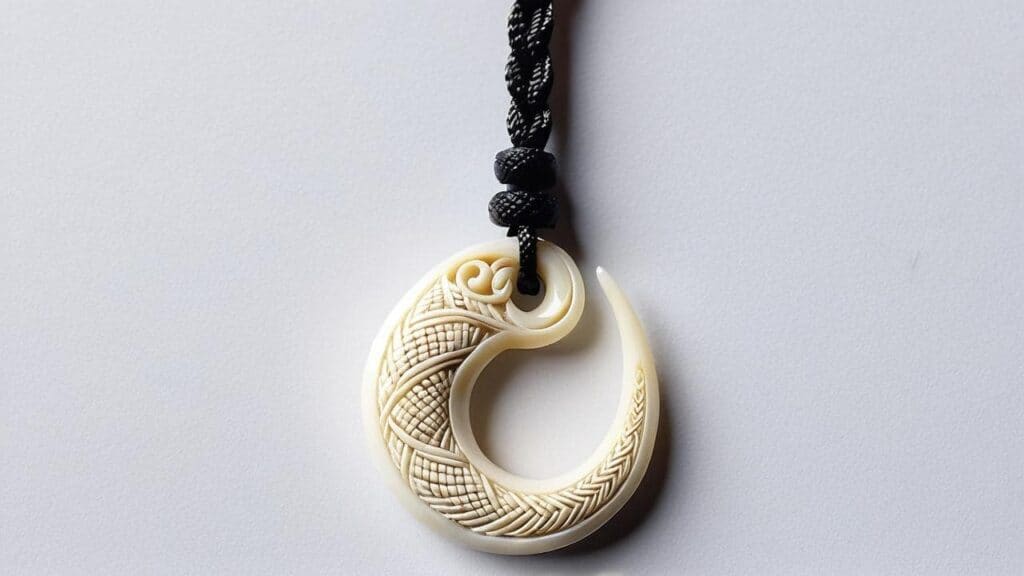
Hawaiian jewelry materials evolved significantly over time, transitioning from exclusively natural elements to incorporating precious metals and gemstones after Western contact. The selection of materials in traditional Hawaiian jewelry wasn’t merely aesthetic but deeply meaningful, with specific materials chosen for their spiritual properties, availability, and cultural significance. These material choices reflected Hawaiian values of sustainability and connection to the natural environment long before these concepts became global concerns.
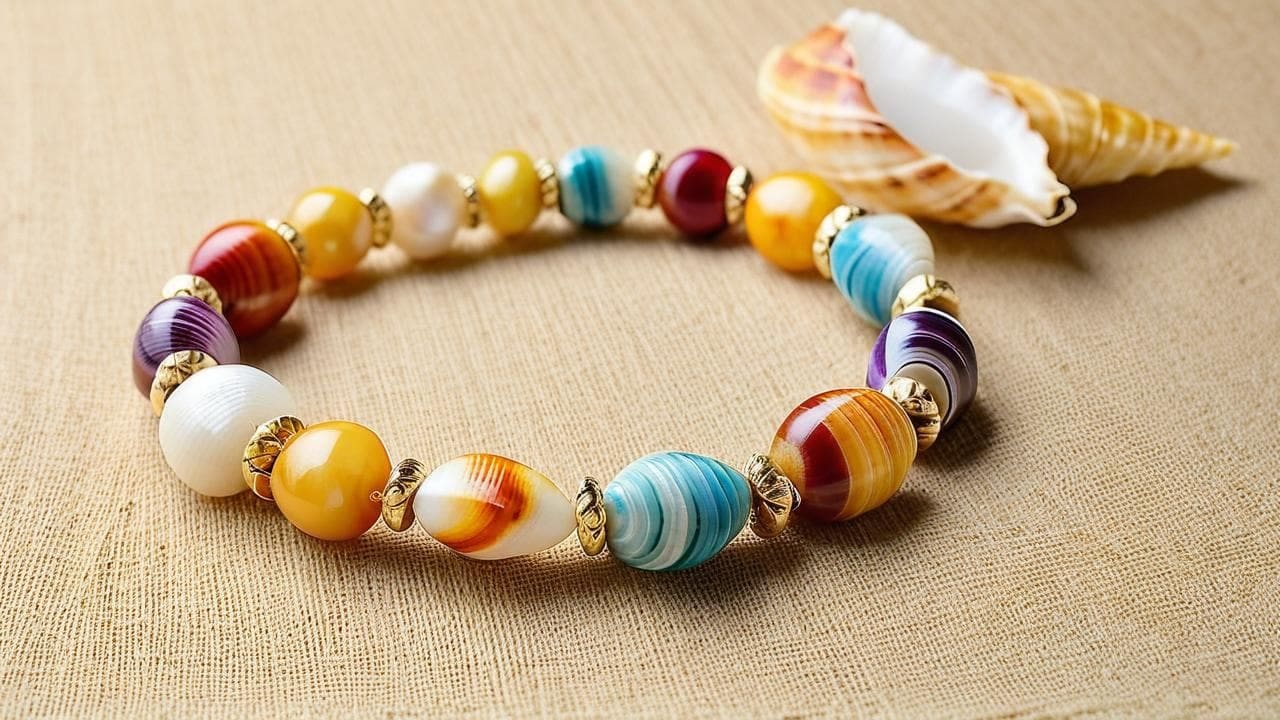
- Shells formed the foundation of early Hawaiian adornment, with puka shells, cowrie shells (leho), and cone shells (pūpū) most frequently used. Niʻihau shells, tiny shells found only on the island of Niʻihau, were particularly prized for their rarity and remain highly valued in authentic Hawaiian shell jewelry today.
- Bones and teeth from various animals held significant spiritual power in Hawaiian culture. Whale teeth and bones were reserved for royal adornments, while pig tusks, dog teeth, and fish bones appeared in jewelry for other social classes. These materials were believed to transfer the animal’s qualities to the wearer.
- Plant materials included seeds from the kukui nut tree (used for their glossy black appearance when polished), colorful Job’s tears seeds, vibrant mountain apple seeds, and strong, flexible plant fibers used for stringing and weaving components together.
- Feathers represented some of the most valuable materials in ancient Hawaiian society, with certain colors reserved exclusively for royalty. Yellow feathers from the now-extinct mamo bird and red feathers from the ʻiʻiwi bird were particularly sacred, requiring thousands of birds to create a single royal feather cape or helmet.
- Wood, particularly koa wood with its rich reddish color and beautiful grain patterns, appeared in carved pendants and beads. Other native woods like ʻōhiʻa lehua and milo also featured in traditional pieces, each associated with specific gods or natural elements.
- Precious metals entered Hawaiian jewelry tradition after Western contact, with silver becoming particularly popular. By the late 19th century, Hawaiian royalty commissioned gold pieces set with diamonds and other gemstones, creating a unique fusion of Hawaiian designs with Western materials.
- Coral and pearls hold special significance in Hawaiian jewelry, representing the bounty of the sea and connection to ocean deities. Black coral (now protected) and pink coral were traditionally harvested for special ceremonial pieces, while pearls were rare treasures reserved for the highest-ranking individuals.
- Contemporary Hawaiian jewelry often incorporates sustainable or recycled materials that honor the traditional Hawaiian value of mālama ʻāina (caring for the land), including responsibly sourced woods, repurposed metals, and ethically harvested natural elements that minimize environmental impact.
The transition from purely natural materials to precious metals and gemstones reflects Hawaii’s complex history of cultural exchange and adaptation. Today’s Hawaiian jewelry makers often blend traditional materials with contemporary ones, creating pieces that honor ancestral techniques while meeting modern environmental and ethical standards. This evolution ensures Hawaiian jewelry remains both culturally authentic and environmentally responsible.
Common Symbols and Their Meanings in Hawaiian Jewelry
Symbolism lies at the heart of Hawaiian jewelry, with each design element carrying specific cultural meanings that connect wearers to Hawaiian values, natural elements, and spiritual beliefs. Far more than decorative patterns, these symbols tell stories of Hawaii’s rich cultural heritage and natural environment. Understanding these meanings adds significant depth to appreciating Hawaiian jewelry beyond its aesthetic beauty, revealing how these pieces serve as carriers of cultural knowledge and values.
- The plumeria flower (known as melia in Hawaiian) symbolizes natural beauty, positivity, and new life. Commonly featured in Hawaiian jewelry, this five-petaled flower represents birth and creation, with different colors carrying additional specific meanings like yellow for joy and white for purity and devotion.
- The hibiscus, Hawaii’s state flower, represents delicate beauty and the fleeting nature of life, as the blossoms typically last only a day. In jewelry, hibiscus motifs often symbolize royal beauty and the importance of enjoying the present moment, reflecting Hawaiian values of being fully present.
- Ocean waves (nalu) symbolize strength, continuity, and life’s constant changes. Wave patterns in Hawaiian jewelry represent the importance of adaptability and resilience, as well as honoring the ocean that surrounds and sustains the Hawaiian islands.
- The honu (sea turtle) represents longevity, peace, good luck, and the spirit of navigation. As one of Hawaii’s oldest creatures, sea turtles in jewelry symbolize wisdom and ancient knowledge, with their natural ability to navigate vast oceans connecting to Hawaiian values of finding one’s way in life.
- Makau, the traditional Hawaiian fish hook, symbolizes prosperity, safe passage across water, strength, and good fortune. These hook-shaped pendants represent not just successful fishing but the broader Hawaiian connection to the ocean as a source of sustenance and their seafaring heritage.
- The hala (pandanus) tree pattern represents life’s foundation and proper foundation. In jewelry, intertwined hala patterns symbolize the strength of connections among family and community, reflecting the Hawaiian value of ‘ohana (family) extending beyond blood relations.
- Kalo (taro) leaves symbolize family unity and connection to ancestors in Hawaiian culture. This staple food crop is central to Hawaiian creation stories, and its representation in jewelry connects wearers to their ancestral roots and the importance of sustaining family relationships.
- Engraved Hawaiian names or words carry special significance, with many pieces featuring family names or meaningful Hawaiian terms like “aloha” (love/compassion), “mana” (spiritual power), or “ohana” (family). These engravings personalize jewelry while connecting to Hawaiian language and values.
- The Maile leaf, represented in many traditional Hawaiian bracelets and necklaces, symbolizes respect, blessing, and honor. Traditionally used in lei for important ceremonies, this symbol in jewelry represents reverence for significant life moments and connections to important relationships.
- Petroglyphs (ki’i pohaku) – ancient Hawaiian rock carvings – inspire many jewelry designs. These primitive human and animal figures connect wearers to Hawaii’s ancestral past and often represent specific family ‘aumakua (personal family gods or ancestors who take animal form).
Hawaiian jewelry symbols invite wearers to carry these cultural values and connections with them daily. Whether worn by Native Hawaiians maintaining connections to their heritage or by others who appreciate Hawaiian culture, these symbolic elements ensure that Hawaiian jewelry remains meaningful beyond mere decoration. Each piece tells a story through its symbols, connecting people to Hawaii’s rich cultural landscape and natural beauty.
Popular Types and Styles of Traditional Hawaiian Jewelry
Hawaiian jewelry encompasses diverse forms ranging from ancient ceremonial pieces to modern interpretations. While styles have evolved over centuries, certain distinctive types remain closely associated with Hawaiian cultural traditions. These jewelry categories represent both historic significance and continuing cultural expression, with many contemporary designs maintaining recognizable connections to ancient forms while incorporating modern elements.
- The Hawaiian heritage bracelet, also known as the Hawaiian bangle, remains one of the most iconic forms of Hawaiian jewelry. Traditionally crafted in sterling silver or gold, these sturdy bands feature engraved names, dates, or Hawaiian phrases, often accompanied by black enamel to enhance visibility. Originally inspired by Victorian-era bangles, they became popularized during the Hawaiian monarchy period and now represent important milestones in life.
- Heirloom-quality pendants evolved from the sacred lei niho palaoa worn by Hawaiian royalty. Modern versions feature traditional symbols like the makau (fish hook), honu (turtle), or endemic Hawaiian flora and fauna carved from precious metals, bone, or stone. These pieces often become family treasures passed down through generations, carrying both personal and cultural significance.
- Hawaiian name jewelry represents a deeply personal connection to Hawaiian identity. Traditional Hawaiian name necklaces and bracelets feature names in flowing script, often accompanied by decorative elements like plumeria flowers or scrollwork. The tradition of wearing one’s Hawaiian name honors ancestral connections and personal identity.
- Koa wood jewelry utilizes one of Hawaii’s most prized native hardwoods, known for its striking reddish color and beautiful grain patterns. Contemporary artisans craft rings, pendants, and bracelets incorporating koa wood with precious metals, creating unique pieces that connect wearers to the Hawaiian forests and land. Because koa is now protected, sustainable harvesting practices are essential.
- Shell jewelry continues ancient traditions using puka shells, cowrie shells, and the highly prized tiny shells from Niʻihau Island. Modern pieces range from casual puka shell necklaces to elaborate Niʻihau shell lei that require months of meticulous work. These pieces directly connect to pre-contact Hawaiian adornment traditions that utilized the ocean’s bounty.
- Millefiori-style Hawaiian quilt jewelry translates traditional Hawaiian quilt patterns into wearable art. These distinctive geometric designs, often featuring stylized natural elements like breadfruit or mountains, are recreated in precious metals or enamel work. This style bridges Hawaiian textile traditions with jewelry craftsmanship.
- Maile-style jewelry replicates the sacred maile vine traditionally used in ceremonial lei. Crafted in precious metals, these open-ended necklaces and bracelets feature entwined leaf patterns that symbolize respect and honor. Originally worn by royalty for important occasions, they now mark significant life events like graduations or weddings.
- Contemporary Hawaiian fusion jewelry combines traditional symbols and techniques with modern design aesthetics. These innovative pieces might incorporate traditional symbols in unexpected materials or combine Hawaiian motifs with contemporary jewelry trends, creating wearable art that appeals to younger generations while maintaining cultural connections.
- Customized family jewelry holds special significance, with many pieces created to honor specific family ‘aumakua (ancestral guardian spirits) or to commemorate important family events. These bespoke creations often incorporate symbols unique to a family’s history and spiritual connections.
Hawaiian jewelry continues to evolve while maintaining its cultural significance, with today’s artisans balancing respect for tradition with creative innovation. These distinctive jewelry types represent more than fashion – they embody Hawaiian cultural values, family connections, and personal identity. Whether crafted following ancient techniques or incorporating contemporary elements, Hawaiian jewelry remains recognizable through its distinctive forms and meaningful symbolism.
Traditional Hawaiian Heritage Bracelets
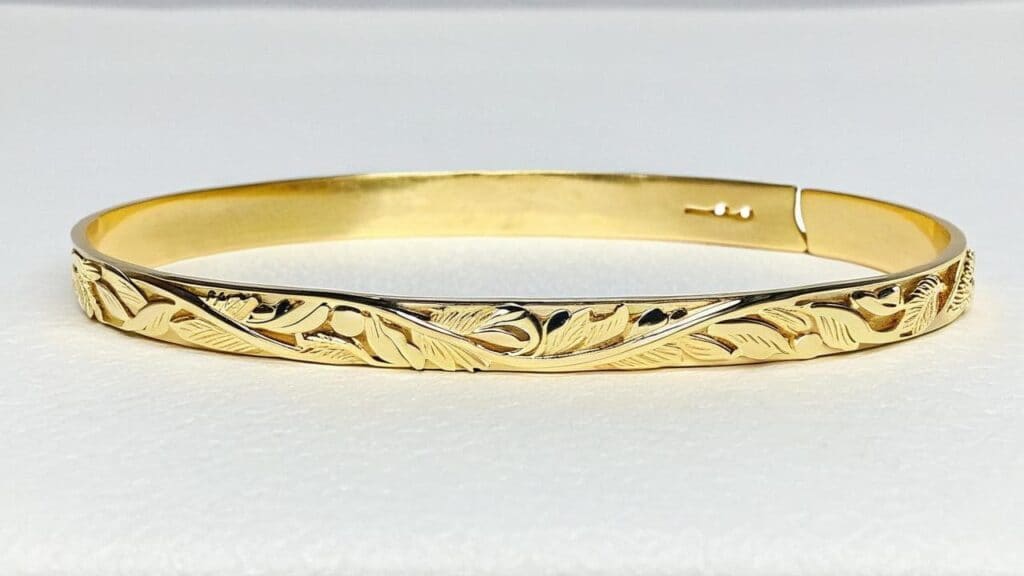
The Hawaiian heritage bracelet, also known as the Hawaiian bangle or Hawaiian heirloom bracelet, stands as perhaps the most recognizable form of Hawaiian jewelry worldwide. These distinctive solid bangles, typically crafted from sterling silver or gold with black enamel accents, represent a cultural tradition that began during Hawaii’s monarchy period and continues to hold profound significance today. Far more than decorative accessories, these bracelets mark important life milestones and family connections.
- The Hawaiian bracelet tradition began during the reign of Queen Lili’uokalani, Hawaii’s last monarch, who received a gold bracelet engraved with “Hoʻomanaʻo Mau” (Lasting Remembrance) from English royalty in the late 19th century. This gift inspired similar pieces among Hawaiian nobility and eventually spread throughout Hawaiian society as a treasured tradition.
- Traditional Hawaiian bracelets feature intricate hand-engraving of names, dates, or meaningful Hawaiian phrases, with black enamel filling to enhance visibility and contrast. The engraving typically showcases old English or cursive lettering styles, reflecting Victorian influences during Hawaii’s royal period.
- The bracelet’s circular form symbolizes eternity and unbroken connections, representing lasting bonds between family members or significant life relationships. Many Hawaiian families pass bracelets down through generations, with each piece accumulating personal history and mana (spiritual power) over time.
- Proper wearing tradition dictates that if someone gives you a Hawaiian bracelet, they should place it on your wrist. If the bracelet is engraved on the outside, the giver should place it with the engraving facing away from the body; when the recipient looks down, the engraving appears upside down, but others can read it correctly – symbolizing that the message is meant for others to see.
- Significant life milestones typically warrant receiving a Hawaiian bracelet – graduations, significant birthdays (particularly Sweet 16), weddings, or the birth of children. Each occasion might be commemorated with specific engraving styles or additional decorative elements alongside the recipient’s name.
- Width and style variations exist, with narrower bracelets (6-8mm) traditionally given to younger recipients or for less formal occasions, while wider bracelets (10-12mm or more) often mark more significant life achievements. The royal pattern featuring scrolling designs remains the most traditional, though modern variations incorporate additional Hawaiian symbols.
- Custom inscriptions hold deep meaning, with traditional phrases including “Aloha Pau ‘Ole” (Everlasting Love), “Kū’u Ipo” (My Sweetheart), family mottos, or birth dates. These personalized elements connect the wearer to important relationships, memories, or values.
- Contemporary Hawaiian bracelet variations now include two-tone designs (combining yellow and white gold), diamond accents, or incorporating traditional Hawaiian symbols like plumeria flowers or maile leaves alongside engravings. These modern interpretations maintain the tradition while appealing to current aesthetics.
The Hawaiian heritage bracelet represents more than jewelry – it embodies Hawaiian cultural resilience through periods of immense change. From its origins during Hawaii’s monarchy to its continued significance today, this distinctive bracelet style connects wearers to Hawaiian history, family traditions, and personal milestones. Each bracelet tells a unique story through its engravings, becoming more meaningful as it journeys through time and between generations.
Tradition of Passing Down Hawaiian Jewelry Through Generations
Hawaiian jewelry holds a unique position within family inheritance traditions, with pieces often designated as treasured heirlooms meant to pass through generations. This practice goes beyond simple material inheritance – it represents the transmission of cultural values, family stories, and spiritual connections. Heirloom Hawaiian jewelry carries mana (spiritual essence) that accumulates through the years, making these pieces increasingly significant with each generation that wears and cares for them.
- The Hawaiian concept of mo’okūʻauhau (genealogy) forms the foundation for jewelry inheritance traditions. Just as oral histories preserve family lineages, heirloom jewelry provides tangible connections to ancestors, with each piece carrying the energy of previous wearers and their life experiences.
- Specific pieces often follow matrilineal or patrilineal inheritance patterns within Hawaiian families, with certain traditional designs designated to pass through specific family lines. These carefully preserved pieces might commemorate important family achievements or connections to particular ancestral lands or family ‘aumakua (guardian spirits).
- The practice of blessing new jewelry (ho’omaika’i) and cleansing inherited pieces (ho’oma’ema’e) maintains spiritual significance in Hawaiian culture. Many families perform specific rituals when transferring important pieces between generations, including ceremonial cleansing with salt water, ti leaf wrapping, or pule (prayers) to honor both the piece and its previous wearers.
- The most revered pieces often carry documented provenance connecting them to significant historical figures or events in Hawaiian history. Pieces with known connections to ali’i (royalty) or important historical moments hold particular cultural significance beyond their material value, serving as physical links to Hawaiian history.
- Hawaiian families often designate specific jewelry pieces to commemorate life milestones, with certain heirloom pieces reserved exclusively for weddings, births, coming-of-age ceremonies, or other significant events. These designated pieces emerge from storage for these occasions, reinforcing family continuity through generations.
- Contemporary Hawaiian jewelry designers create pieces specifically intended as future heirlooms, using durable materials, masterful craftsmanship, and timeless designs that will remain wearable across generations. Many incorporate hidden elements – names, dates, or symbols engraved in inconspicuous locations – that document the piece’s journey through a family.
- The concept of kuleana (responsibility) extends to caring for family heirloom jewelry. Recipients understand they serve as temporary caretakers rather than owners, responsible for preserving both the physical piece and its associated stories for future generations. This stewardship approach differs significantly from Western concepts of ownership.
- Digital documentation now accompanies many significant Hawaiian heirloom jewelry pieces, with families creating detailed records including photographs, creation information, previous wearers, significant occasions when worn, and associated family stories. These records ensure that even if oral traditions fade, the piece’s significance remains preserved.
The tradition of passing down Hawaiian jewelry creates living connections between past, present, and future family members. Unlike many material possessions that simply transfer ownership, Hawaiian heirloom jewelry carries accumulating layers of meaning, connection, and mana with each wearer. These pieces become repositories of family history and cultural knowledge, their value measured not merely in precious materials but in the stories, connections, and spiritual significance they preserve across generations.
Tips for Selecting Authentic Traditional Hawaiian Jewelry
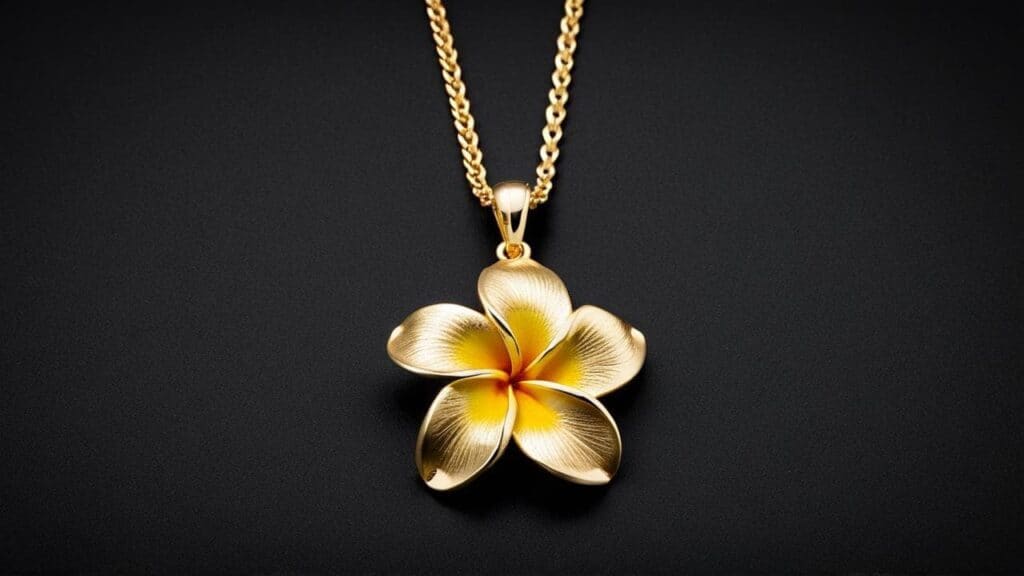
Selecting authentic Hawaiian jewelry requires understanding both traditional craftsmanship and cultural significance. With increased global interest in Hawaiian designs, distinguishing genuine culturally connected pieces from mass-produced imitations has become important for those seeking jewelry that genuinely represents Hawaiian heritage and supports Hawaiian artisans. Authentic pieces maintain cultural integrity while often providing superior craftsmanship and materials that justify their higher investment value.
- Authentic Hawaiian jewelry typically features hand-craftsmanship elements rather than solely machine production. Look for evidence of hand-engraving, traditional techniques like Hawaiian-style scroll work, and attention to detail in areas like bail attachments or closure mechanisms that mass-produced pieces often simplify.
- Reputable Hawaiian jewelers proudly share information about their craftspeople, design inspirations, and cultural connections. Established Hawaiian jewelry houses often have documented histories spanning generations, with many family businesses maintaining traditional techniques passed down through multiple generations of artisans.
- Materials matter significantly in authentic Hawaiian jewelry. Traditional pieces use high-quality sterling silver (925), 14k gold or higher, genuine koa wood from sustainable sources, authentic Hawaiian shells (particularly those from Ni’ihau), and other materials with cultural significance rather than lookalike substitutes.
- Cultural accuracy in symbols and designs distinguishes authentic pieces. Genuine Hawaiian jewelry demonstrates proper understanding of traditional symbols and their meanings, with designs that respect cultural significance rather than mixing disconnected elements solely for decorative appeal.
- Consider the production location when selecting Hawaiian jewelry. While not all authentic Hawaiian jewelry is produced in Hawaii today (some established Hawaiian jewelers maintain workshops elsewhere), pieces should maintain connections to Hawaiian design traditions and cultural knowledge regardless of where they’re physically crafted.
- Price reflects quality in authentic Hawaiian jewelry, with genuine pieces commanding higher prices due to superior materials, skilled craftsmanship, and cultural knowledge incorporated into each design. Suspiciously inexpensive “Hawaiian” jewelry typically indicates mass production without genuine cultural connections.
- Ethical considerations matter in authentic Hawaiian jewelry, particularly regarding cultural appropriation versus appreciation. Responsible jewelers acknowledge Hawaiian cultural origins, respect traditional meanings of symbols they incorporate, and often contribute to Hawaiian cultural preservation rather than simply profiting from Hawaiian designs.
- Documentation and education accompany authentic Hawaiian jewelry, with reputable sellers providing information about the cultural significance of designs, proper care based on traditional practices, and sometimes the specific story behind a piece’s creation. This educational component demonstrates respect for the cultural context.
When selecting Hawaiian jewelry, consider whether the piece honors Hawaiian cultural heritage or simply appropriates superficial elements for decorative purposes. Authentic Hawaiian jewelry represents a living cultural tradition rather than merely a fashion trend. By choosing pieces that genuinely connect to Hawaiian craftsmanship traditions and cultural meanings, you not only acquire more meaningful jewelry but also support the continuation of Hawaiian cultural arts for future generations.
How to Care for and Maintain Hawaiian Jewelry
Proper care of Hawaiian jewelry ensures both its physical longevity and cultural significance remain intact. Different materials traditional to Hawaiian jewelry require specific maintenance approaches to preserve their beauty and integrity over generations. Understanding these care requirements helps maintain these pieces as family treasures that can continue to carry cultural connections and personal meanings for years to come.
- Silver Hawaiian jewelry, particularly traditional Hawaiian bracelets with black enamel, requires special attention to prevent tarnishing and enamel damage. Use a non-abrasive polishing cloth specifically designed for silver with enamel inlay, avoiding harsh chemicals that can damage the black enamel contrasting elements.
- Gold Hawaiian pieces generally require less maintenance than silver but still benefit from gentle cleaning. Use mild soap and warm water with a soft cloth, followed by thorough drying. High-karat gold Hawaiian pieces (18k and above) contain softer gold content, requiring careful handling to prevent scratches and dents.
- Koa wood elements in Hawaiian jewelry need protection from excessive moisture and sunlight. Apply occasional light coats of natural oils (like jojoba) to maintain the wood’s luster and prevent drying or cracking. Never submerge koa wood jewelry in water, and remove before swimming or bathing.
- Shell components, particularly delicate Ni’ihau shells, require extremely gentle handling. Clean only with a soft, barely damp cloth, never using chemicals or soaking. Store shell jewelry away from direct sunlight to prevent color fading, ideally wrapped in acid-free tissue within a protective container.
- Mother-of-pearl elements common in Hawaiian jewelry should be wiped clean with a soft, slightly damp cloth and immediately dried. Avoid ultrasonic cleaners, harsh chemicals, and extended exposure to sunlight, which can damage the natural iridescence and cause cracking.
- Hawaii’s humid climate presents unique challenges for jewelry care, particularly for visitors wearing Hawaiian jewelry in the islands. Remove jewelry before swimming in salt water or chlorinated pools, and wipe pieces with a clean, dry cloth after exposure to high humidity to prevent moisture damage.
- Traditional storage methods for Hawaiian heirloom pieces often involve wrapping in acid-free tissue or natural materials like ti leaves, then placing in wooden boxes or other containers that allow minimal air circulation while preventing exposure to household chemicals or environmental contaminants.
- Professional servicing by jewelers familiar with Hawaiian pieces is recommended every few years for valuable heirloom items. This should include checking stone settings, cleaning hard-to-reach areas, reapplying enamel if needed, and documenting the piece’s condition as part of its provenance history.
Caring for Hawaiian jewelry extends beyond physical maintenance to respecting its cultural significance. Treat these pieces with reverence appropriate to their meanings and connections, recognizing that proper care preserves not just material value but cultural heritage and family connections. By maintaining Hawaiian jewelry according to both practical needs and cultural traditions, you ensure these meaningful pieces can continue telling their stories for generations to come.
Conclusion
Hawaiian jewelry stands as more than beautiful adornment – it represents a living connection to Hawaiian cultural heritage, values, and artistic traditions. From ancient pieces crafted from natural materials to contemporary designs in precious metals, Hawaiian jewelry tells stories of Hawaii’s rich cultural landscape and deep connection to the natural world. The distinctive symbols, meaningful craftsmanship techniques, and cultural significance embedded in Hawaiian jewelry make these pieces treasures that transcend ordinary accessories.
What makes Hawaiian jewelry special is its ability to connect wearers to something larger than themselves – cultural traditions, family histories, and values like respect for nature and reverence for ancestors. Whether worn by those with Hawaiian ancestry maintaining connections to their heritage or by others who appreciate the beauty and meaning of Hawaiian designs, these pieces invite wearers to carry aspects of Hawaiian cultural wisdom with them. By understanding the history, symbolism, and proper care of Hawaiian jewelry, we honor the cultural traditions that created these meaningful adornments while ensuring they continue to tell their stories for generations to come.