A raw animal hide and a finished leather handbag look like they belong to two completely different worlds, but they’re made of the same starting material. The thing that bridges that gap is tanning, a process that’s been keeping skin from rotting and turning it into something soft, strong, and long-lasting for thousands of years. Understanding how it actually works makes it a lot easier to know why one leather wallet ages beautifully for twenty years while another cracks apart in two, and why leather goods can vary so much in price, feel, and smell even when they look similar on a store shelf.
What Is Tanning and Why Does Leather Need It?
Tanning stops a raw hide from rotting by permanently changing its protein structure so it stays flexible, strong, and stable instead of decaying like untreated skin would. Fresh animal skin is made mostly of a protein called collagen, and on its own, it behaves the same way any other piece of flesh does: it decomposes.
Tanning works by getting tanning agents, whether they come from tree bark or mineral salts, to bond permanently with the collagen fibers inside the hide. That bond reshapes the protein at a molecular level so bacteria can no longer break it down, and it also keeps the fibers from gluing together into a stiff, brittle mass as the hide dries. The result is a material that stays flexible, resists water and heat far better than raw skin, and can last for decades instead of days.
Tanning is different from simply drying or salting a hide. Drying and salting only slow down decay temporarily. Tanning changes the hide permanently, which is why a leather jacket from the 1970s can still be worn today while an untreated hide would have disintegrated within weeks.
How Is a Hide Prepared Before Tanning?
Before any tanning agent touches the hide, it has to be cleaned, preserved, and stripped of hair, fat, and flesh in a stage called beamhouse processing. This groundwork is arguably as important as the tanning itself, because a hide that isn’t properly prepared won’t absorb tanning agents evenly.
The process typically starts with curing, where fresh hides are salted or chilled right after slaughter so they don’t begin decomposing before they reach the tannery. Once at the tannery, the hides are soaked in water to rehydrate them and rinse away the salt, dirt, and blood. From there, they move into a lime solution that loosens the hair and epidermis so it can be scraped off, a step called liming. After the hair is removed, workers trim away leftover fat and flesh from the underside of the hide in a process known as fleshing.
The hide then goes through deliming and bating, which neutralize the lime and use enzymes to relax the fiber structure, making the hide softer and more receptive to whatever tanning method comes next. Finally, many hides are pickled in a salt and acid solution to bring them to the right pH level right before tanning starts. All of this happens before a single tannin or chromium salt is introduced, and skipping or rushing any of it shows up later as uneven color, weak spots, or a hide that simply won’t tan properly.
Vegetable Tanning: The Traditional Method
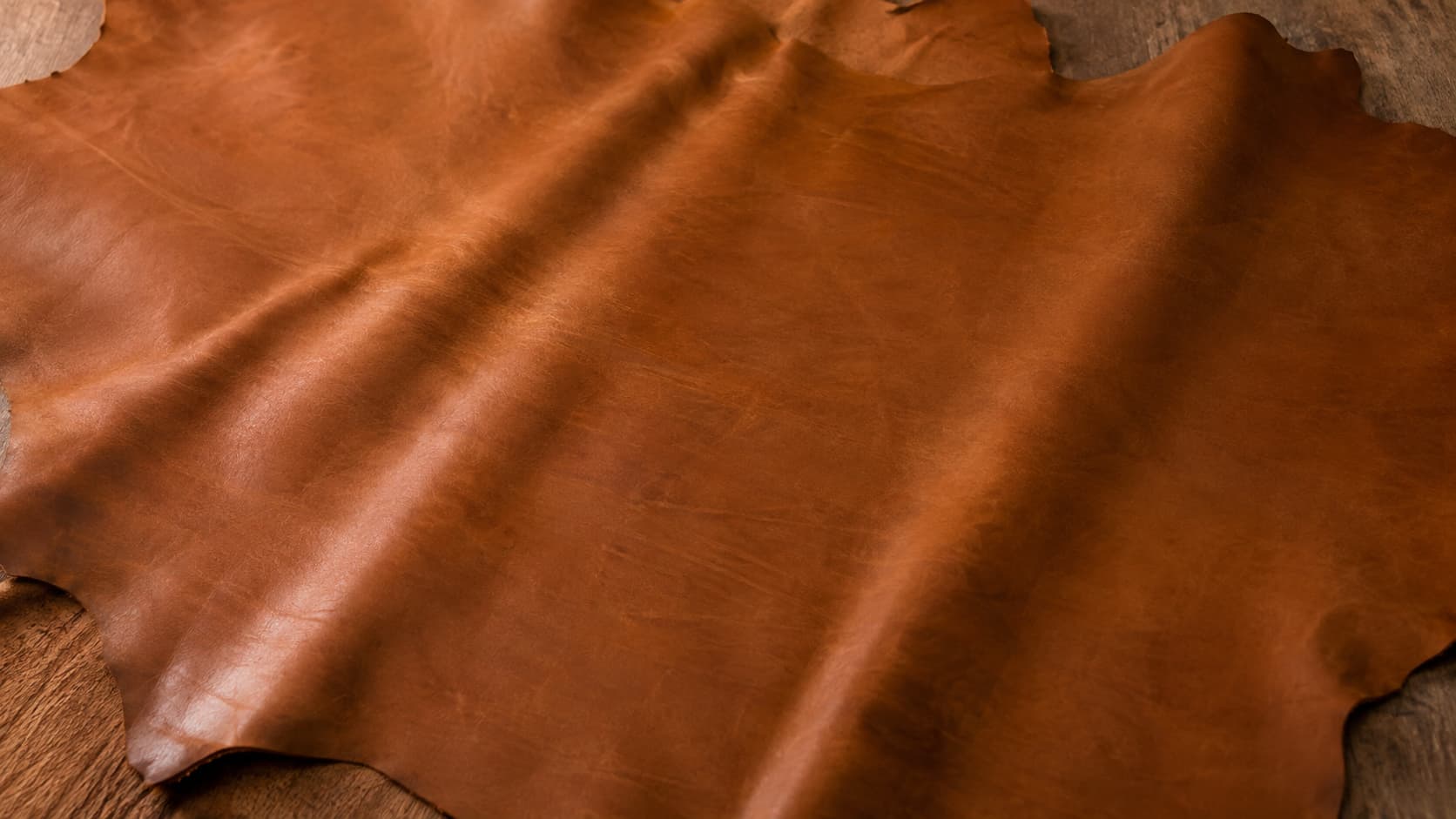
Vegetable tanning uses natural tannins pulled from tree bark, leaves, and other plant material to slowly convert hide into leather over several weeks. It’s the oldest tanning method still in wide use, and it’s the reason certain leather goods develop that warm, honey-colored patina over years of handling.
Tanners work the hide through a sequence of baths, starting weak and gradually increasing in tannin strength, until the plant compounds have soaked all the way to the core. Depending on how thick the hide is, this soaking process can stretch from several weeks to several months. Common sources for these tannins include oak bark, chestnut wood, and mimosa, all of which contain compounds that bond tightly with the collagen in the hide. Because the tannins build up gradually and settle deep into the fiber structure, the leather that comes out is dense and firm with a natural, unfinished look, and it only grows more supple and characterful the longer it’s carried or handled.
That aging quality is a big part of why vegetable-tanned leather is prized for goods meant to last a lifetime, like belts, wallets, and structured handbags. The tradeoff is time and cost: because the process is slow and requires more skilled handling, vegetable-tanned leather is typically more expensive and less uniform in color than leather made through faster methods.
Why Vegetable-Tanned Leather Develops a Patina
Patina forms because the plant tannins inside the leather react with light, natural skin oils, and air over time, gradually deepening and warming the color. This is a natural chemical process rather than wear and damage, and it’s considered a feature rather than a flaw. Two identical vegetable-tanned bags carried by two different people will develop slightly different patinas depending on how often they’re used, what they’re exposed to, and even the natural body oils that touch the surface.
Chrome Tanning: The Modern, Faster Method
Chrome tanning uses chromium salts instead of plant tannins, and it can turn a hide into leather in as little as a single day rather than weeks or months. Its roots trace back to Germany and Sweden in the mid-19th century, where chemists first experimented with chromium as a tanning agent, but the process only became commercially viable once an American, Augustus Schultz, secured a patent for it in 1884.
In this process, hides that have already been through the beamhouse stages are soaked in a solution of chromium sulfate, which bonds with the collagen fibers much more quickly than plant-based tannins do because the chromium molecules are smaller and penetrate the hide faster. If the leather isn’t dyed right after this stage, the chromium leaves behind a pale grey-blue cast, giving rise to the industry nickname “wet blue” for hide at this unfinished point in production.
Chrome-tanned leather comes out of the process soft and pliable right away, without needing years of wear to break in. It also holds dye far more evenly and vibrantly than vegetable-tanned leather, which is why most colorful, consistently toned leather goods, from handbags to car interiors, are chrome tanned. It generally offers stronger resistance to heat and water damage right out of the tannery as well. The tradeoff is that it won’t develop the same rich patina as vegetable-tanned leather, and the color tends to stay close to its original shade throughout the life of the product.
Today, chrome tanning accounts for the large majority of leather produced worldwide, largely because of its speed, consistency, and lower production cost compared to vegetable tanning.
Comparing Vegetable and Chrome Tanning
| Vegetable Tanning | Chrome Tanning | |
|---|---|---|
| Tanning agent | Natural plant tannins (oak, chestnut, mimosa bark) | Chromium sulfate (a mineral salt) |
| Time to tan | Several weeks to several months | About one day |
| Feel right after tanning | Firm and structured | Soft and pliable |
| Color over time | Darkens and develops a patina | Stays close to its original shade |
| Best suited for | Belts, structured bags, tooled or stamped leather | Colorful goods, garments, upholstery |
| Typical cost | Higher | Lower |
What Happens to the Hide After It’s Tanned?
Tanning alone doesn’t produce finished leather; it just stabilizes the hide so it won’t rot, leaving it in a raw, workable state that tanners call “crust” or, for freshly chrome-tanned hides, “wet blue” because of the pale blue-grey tint the chromium leaves behind. Several more steps still stand between that point and the finished leather used in a final product.
First, the hide is neutralized to bring its pH back into a normal range, since leftover acid from tanning would otherwise interfere with coloring later on. It’s then split horizontally, separating the smoother top-grain layer used for higher-quality goods from the lower split layer often turned into suede, and shaved by machine to an even thickness throughout. From there, most hides go through retanning, which fine-tunes the leather’s texture and firmness, followed by dyeing to add color and fatliquoring, where oils are worked into the fibers to keep the leather supple once it dries. Without fatliquoring, the fibers would stick together as the water leaves them, leaving the leather stiff and prone to cracking.
Finally, the leather is dried, conditioned, and finished, a stage that can include surface coatings, embossing, or polishing depending on the intended use. Only after all of these steps is the material considered genuinely finished leather, ready to be cut and sewn into anything from a wallet to a jacket.
More Tanning Methods to Know About
Vegetable and chrome tanning aren’t the only methods used, and several others show up regularly in specialty leather goods, each trading off speed, durability, and environmental impact in its own way.
- Combination tanning blends chrome and vegetable methods, often chrome tanning first for speed and durability, then finishing with vegetable tannins to add some of the character and firmness associated with veg-tan leather. This gives manufacturers a middle ground between the two main approaches.
- Aldehyde tanning uses glutaraldehyde instead of chromium salts and produces what’s often labeled “chrome-free” or “eco” leather, marketed as a gentler alternative for people sensitive to chromium. It’s commonly used for baby shoes, gloves, and other products that sit close to the skin.
- Alum tanning, sometimes called tawing, uses aluminum salts and dates back thousands of years, making it one of the oldest tanning methods known. It produces a less permanent result than true tanning, since the aluminum bond can wash out over time, and it’s mostly used today for specialty items like drum skins, bookbinding leather, and some white or pale-colored goods.
- Oil tanning, historically used by indigenous communities across North America, uses animal brain or fish oils to soften hides and is still practiced in some traditional and small-batch leatherworking today. It produces an especially soft, supple leather often called “brain-tanned” buckskin.
- Synthetic tanning, sometimes called syntan tanning, uses man-made aromatic compounds instead of chromium or plant tannins. It’s frequently used alongside other methods during retanning to fine-tune a leather’s color, softness, or fullness rather than as a standalone tanning process.
How Long Does the Tanning Process Take?
Tanning time depends entirely on the method, ranging from about a single day for chrome tanning to several weeks or even months for full vegetable tanning. Chrome tanning’s chemistry allows the tanning agent to penetrate the hide quickly, which is exactly why it became the industry standard once it was developed in the 19th century.
Vegetable tanning takes longer because the plant tannin molecules are larger and need to slowly work their way through the hide’s fiber structure in successively stronger baths. Thicker hides, like those used for structured bags or the soles of shoes, generally take longer than thinner ones used for gloves or garments, regardless of which tanning method is used.
Does the Tanning Method Affect How Leather Smells?
Yes, and it’s often one of the easiest ways to tell the two apart without any labeling. Vegetable-tanned leather tends to have an earthy, almost woody scent that comes directly from the tannins in the bark and plant material used to treat it, and that smell often lingers for years, which is why old vegetable-tanned bags and boots are so recognizable by scent alone. Chrome-tanned leather usually has a much fainter smell, sometimes with a faint chemical note, since chromium salts don’t carry the same natural aroma as tree bark.
The finishing stage can also mask or add to a leather’s natural scent. A heavily coated or synthetically finished leather may smell more like the topcoat used on its surface than the tanning method underneath, so scent alone isn’t always a perfectly reliable test.
Frequently Asked Questions
Is vegetable-tanned leather better than chrome-tanned leather?
Neither is objectively better; they’re suited to different purposes. Vegetable-tanned leather ages beautifully, holds tooling and stamped designs well, and is favored for long-lasting, structured goods, while chrome-tanned leather is softer immediately, more water-resistant out of the gate, and better suited to consistent, vibrant coloring.
Is chrome-tanned leather safe to wear or carry?
Finished chrome-tanned leather that has gone through proper dyeing and finishing is considered safe for everyday use. Concerns around chromium mostly relate to the tanning process itself and its wastewater, rather than the finished product sitting in a bag or wallet, though some people with sensitive skin prefer vegetable-tanned or chrome-free alternatives.
How is vegetable-tanned leather told apart from chrome-tanned leather?
Vegetable-tanned leather is usually a warm tan or golden-brown color straight off the tannery floor, feels firmer to the touch, and darkens noticeably with handling and sun exposure. Chrome-tanned leather comes in a much wider range of consistent colors, feels softer from the start, and changes color far less dramatically over time.
Why is vegetable-tanned leather more expensive?
It takes significantly longer to produce, requires more manual handling and skilled labor, and yields a smaller batch of usable hides per production cycle compared to the fast, highly automated chrome tanning process, all of which drive up the cost.
Is tanning bad for the environment?
It depends heavily on the method and how responsibly a tannery operates. Vegetable tanning uses natural, biodegradable materials and is generally considered gentler on the environment, while chrome tanning uses chemical compounds that require careful wastewater treatment to avoid environmental harm. Many modern tanneries, regardless of method, now follow certification standards like those set by the Leather Working Group to reduce their environmental impact.
The Bottom Line
Tanning is the step that turns a perishable animal hide into the durable, flexible material known as leather, and the method used shapes almost everything about the final product. Vegetable tanning takes weeks or months and rewards patience with leather that ages and deepens in color over years of use, while chrome tanning takes a fraction of the time and produces soft, consistently colored leather that resists water and heat right away. Neither approach is inherently superior, but the tanning method behind a piece of leather explains a great deal about how it will look, feel, and hold up over years of use.