Almost every handbag hides a layer of material covering its inner walls, and that layer does more work than most people realize. It covers the raw seams and stitching on the back of the exterior leather, adds shape to the bag, and protects a phone, keys, or lipstick from scratching against rough surfaces. Brands choose between fabric and leather for this hidden layer based on weight, cost, and the kind of experience they want the bag to deliver, and that choice quietly affects how heavy a bag feels on the shoulder, how easy it is to clean, and how long it lasts.
Fabric Lining Explained
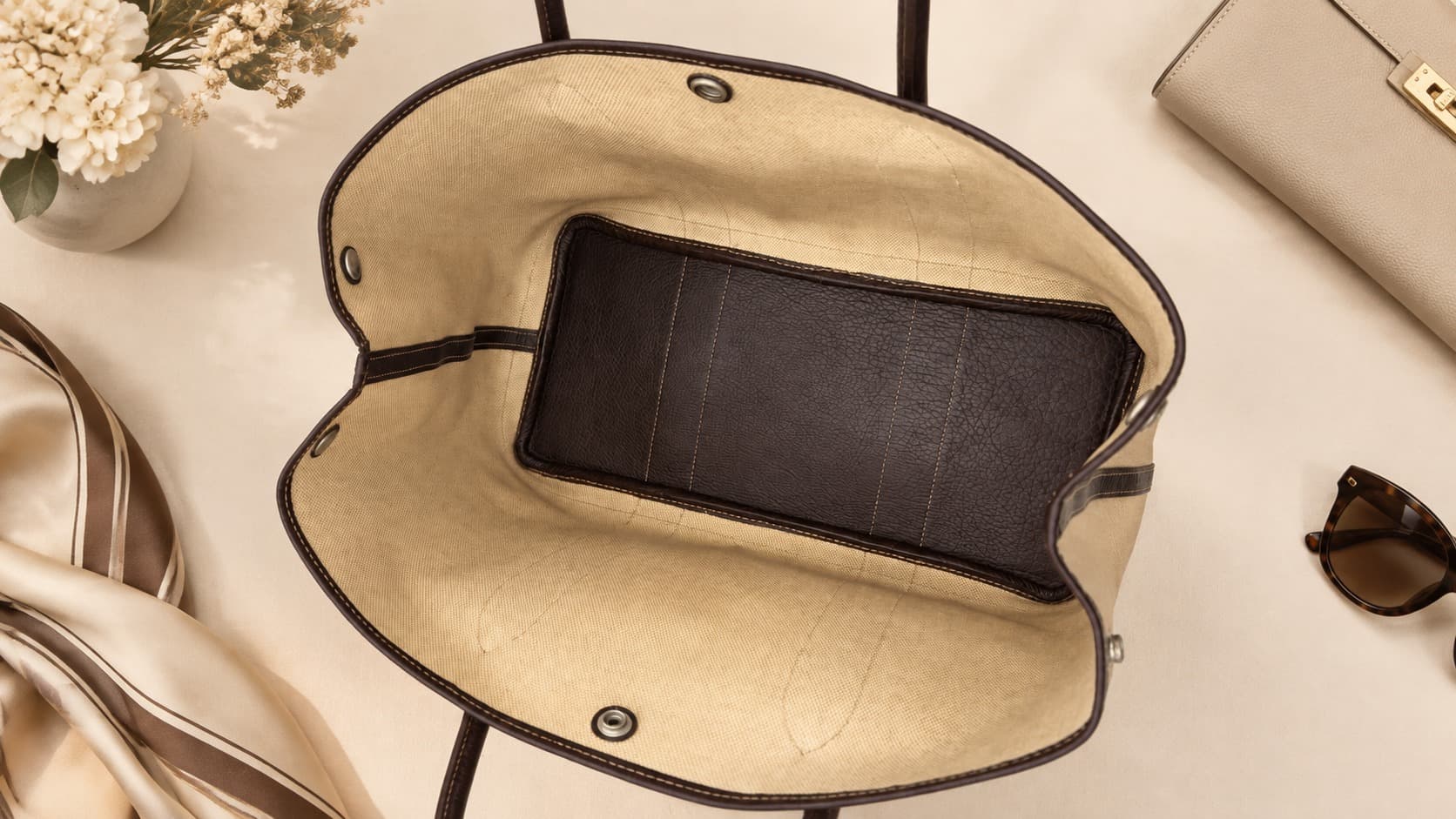
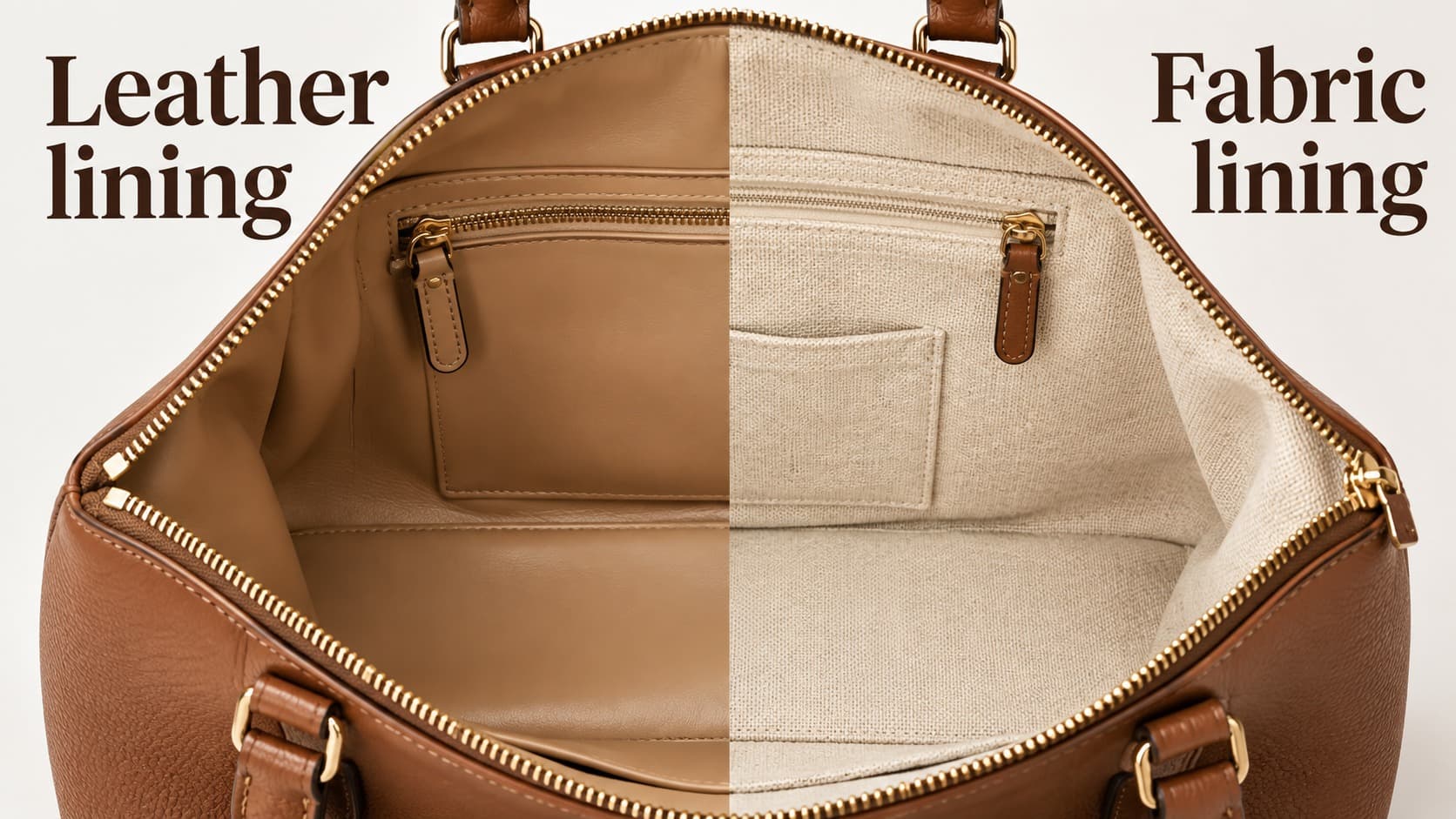
Fabric lining is a layer of woven material, usually cotton, canvas, polyester, or linen, sewn inside a bag to cover its interior. It is the most common lining type because it is light, affordable to produce, and comes in endless colors and patterns.
Cotton and canvas linings feel sturdy and hold up well to daily use, which is why they turn up so often in casual totes and travel bags. Polyester and nylon linings resist moisture a little better and let items slide in and out more smoothly, one reason they appear so often in everyday work bags and diaper bags. Some luxury houses, including Louis Vuitton, have used linen for their linings, valuing it for its clean, understated texture rather than its low cost. Vintage evening clutches sometimes went a step further and used silk, prized for its glamorous shine even though it tears and stains far more easily than sturdier weaves.
A more modern fabric option is microsuede, sold under trademarked names like Alcantara or Ultrasuede. It is a synthetic blend rather than real animal suede, and several Louis Vuitton handbag lines have featured it as an interior material over the years. The Milan-based manufacturer keeps its exact production process private, but the fabric is generally understood to be roughly two-thirds polyester fiber blended with about one-third polyurethane, engineered to mimic the soft, velvety hand of real suede while holding up to cleaning far better.
Microsuede linings look and feel like leather suede but are actually made from man-made fibers, so they’re technically a type of fabric lining, not a leather one.
Leather Lining Explained
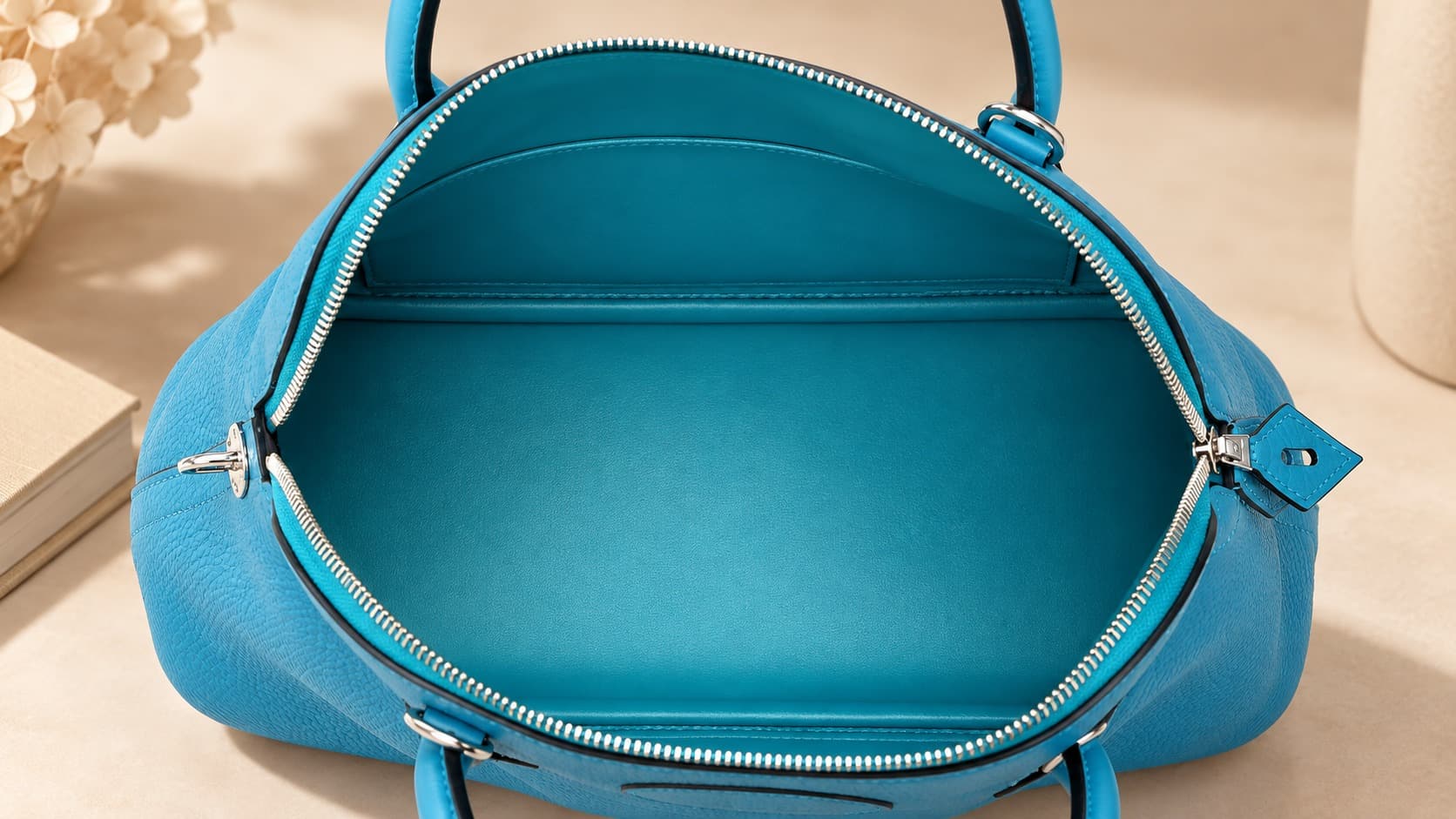
Leather lining means the inside of the bag is covered in real animal hide instead of woven cloth, and it’s typically reserved for higher-end bags because it costs more to produce. It gives a bag a heavier, more substantial feel the moment it’s opened.
Brands often use a smooth, soft leather for this job, sometimes the exact same hide as the exterior, and sometimes a different type chosen because it’s supple and thin enough to line an interior without adding bulk. Hermès is a good example of how one brand can use several approaches at once: most of its bags are lined in a soft leather such as swift or chèvre, some styles like the Garden Party use a canvas lining instead to keep the bag light, and a few designs like the Evelyne or Picotin are left completely unlined, showing the raw underside of the exterior leather on the inside. Smooth leathers like swift and chèvre resist watermarks and general grime better than a suede lining does, since suede’s soft, napped surface shows dirt and moisture marks more easily and needs gentler, specialized cleaning.
That raw, unlined finish is known in the industry as “rough-out,” a construction long associated with Coach’s classic vintage handbags, which for many years left the underside of the exterior leather exposed as the interior surface instead of adding a separate lining. Because genuine leather lining is a natural material, no two bags are perfectly identical, and the surface can develop a soft patina with age, similar to how the outside of a leather bag ages over time with regular handling.
Weight: Which Lining Feels Heavier?
Leather lining makes a bag noticeably heavier than fabric lining does. This matters more than people expect once a bag is loaded with a wallet, phone, keys, and everyday essentials.
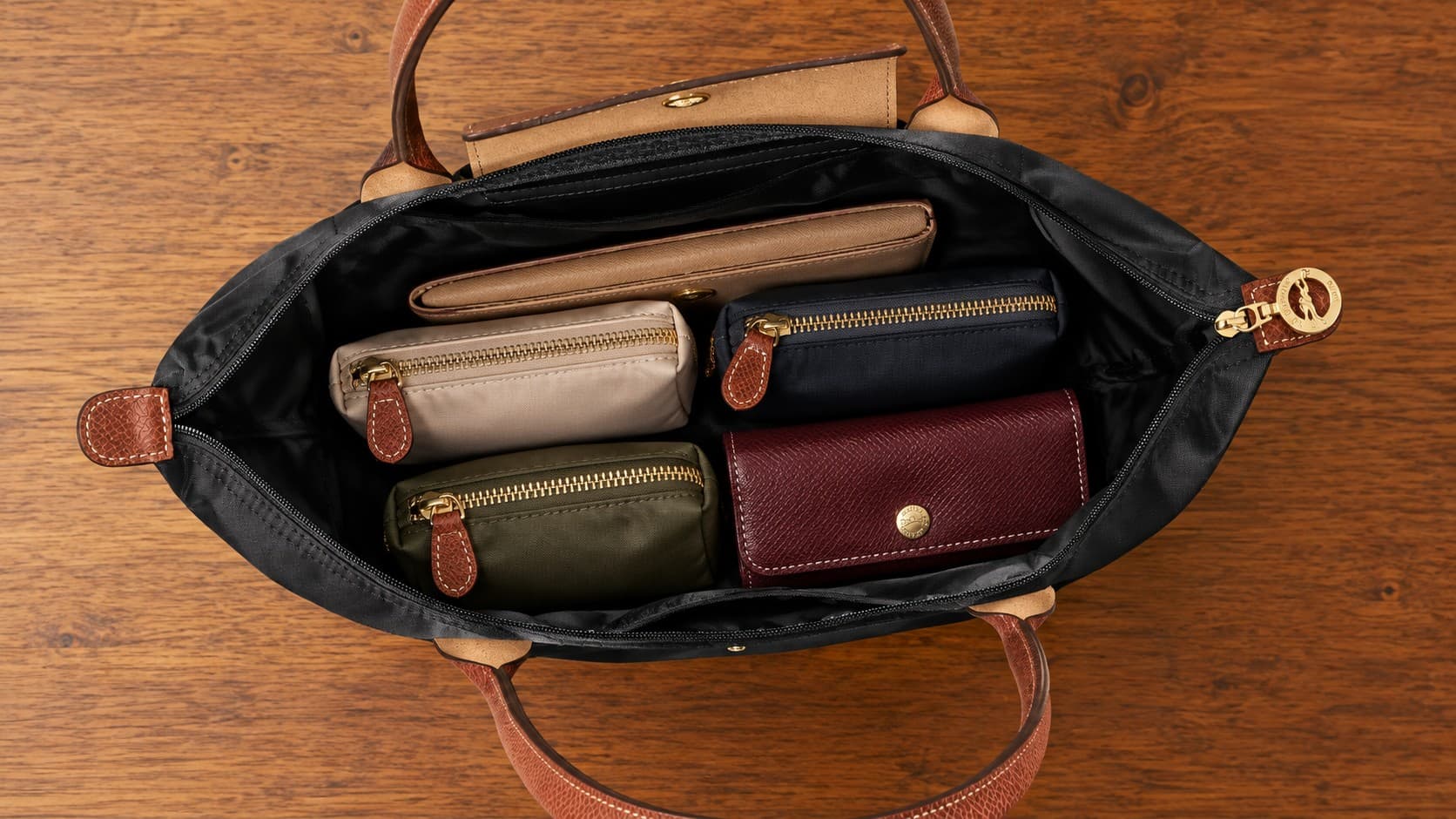
The difference comes down to basic material weight. Leather is a dense material even when a thinner hide is chosen for interior use, while cotton, canvas, and polyester weigh very little in comparison. Frequent flyers and people who carry a bag all day, every day, often notice their shoulder or arm gets tired faster with a leather-lined bag versus the same size bag with fabric inside. Some shoppers who want the structure of leather without the extra weight use a separate fabric bag organizer or insert placed inside an unlined or fabric-lined bag, which adds shape without the added heft of a full leather lining.
Durability: Which Lining Lasts Longer?
Leather lining generally holds up to sharp objects and repeated use better than fabric, but fabric lining is easier to replace or repair when it eventually wears out. Durability depends on what “lasting” means in practice.
Keys, pens, and metal zipper pulls rub against the inside of a bag every single day, and leather resists punctures and abrasion better than most woven fabrics. Over years of heavy use, a fabric lining is more likely to develop small holes, fraying edges, or thinning patches, especially in the corners where items settle. That said, fabric linings are usually simpler and cheaper to remove and re-sew if damage does happen, while repairing or replacing a leather lining is a more specialized and costly job best left to a professional leather worker. So leather wins on resisting damage in the first place, but fabric is friendlier to fix once damage occurs.
Cleaning and Stains: Which Is Easier to Care For?
Fabric lining is generally easier to spot-clean, while leather lining is more prone to permanent staining. This is one of the biggest factors that surfaces only after a bag has already been bought and used for a while.
A light stain on cotton or canvas can often be blotted or gently spot-cleaned without lasting damage, and some sturdier fabric linings can even handle a careful hand wash. Leather, on the other hand, absorbs liquids like ink, makeup, or spilled coffee into its surface, and once that happens, the mark is usually there to stay. Suede and microsuede linings sit somewhere in between: they resist some stains but need special, solvent-free cleaners rather than regular soap and water, since harsh cleaning products can strip their soft texture. One thing to watch for with fabric is moisture getting trapped inside a bag stored while still damp, since fabric can hold onto dampness and develop a musty smell or mildew faster than leather does. For anyone prone to tossing loose pens or uncapped lip products straight into a bag, a fabric or microsuede lining will likely cause fewer headaches down the road.
Fabric vs Leather Lining: Price and Structure
Leather lining adds significantly more to a bag’s production cost than fabric does, which is a major reason it’s reserved for pricier or higher-end pieces. It also tends to add more shape and structure to a bag.
Tanning and preparing leather is a longer, more labor-intensive process than weaving or cutting fabric, and that added cost gets passed on in the final price tag. Beyond cost, leather lining genuinely holds a bag’s shape better than most fabrics because it’s naturally stiffer, so a leather-lined tote is less likely to slouch or collapse when it’s half empty. Fabric-lined bags, especially those in canvas or cotton, are more prone to a relaxed, slouchy look over time, which suits a casual style for some and is something others try to correct with a bag insert.
Fabric vs Leather Lining Summary
| Feature | Fabric Lining | Leather Lining |
|---|---|---|
| Weight | Lighter | Heavier |
| Typical cost | Lower | Higher |
| Stain resistance | Better for spot-cleaning | Prone to permanent stains |
| Puncture resistance | Wears through more easily | More resistant to scratches |
| Structure | Can slouch over time | Holds shape better |
| Repair | Easier and cheaper to replace | Specialized, costlier repair |
Frequently Asked Questions
Is leather lining always better than fabric lining?
No, “better” depends on what’s needed from the bag. Leather lining resists punctures and holds a bag’s shape well, but fabric lining is lighter, easier to clean, and cheaper to repair, so plenty of well-made bags use fabric on purpose rather than as a shortcut.
Can a fabric lining be replaced with a leather one?
Yes, a skilled leather worker or bag repair specialist can often re-line a bag, but it’s a custom job that involves removing the stitching, fitting new material to the exact shape, and re-sewing everything by hand, so it typically costs more than the original bag’s lining did.
Is Alcantara the same as real suede?
No, Alcantara is a synthetic material, not animal suede. It’s a proprietary microsuede made from roughly 68 percent polyester and 32 percent polyurethane, built to look and feel like natural suede while resisting stains a bit better.
Why do some luxury bags have no lining at all?
Some designs leave the interior unlined on purpose, using the underside of the exterior leather, known as the flesh side, as the interior surface. This keeps the bag lighter and shows off a raw, natural material, though it means the interior can absorb stains just like exterior leather can.
Does lining affect how a bag smells?
Yes, leather lining can develop a natural leathery scent as it ages, often described as a good thing by leather lovers, while fabric linings typically stay closer to neutral unless they absorb odors or trapped moisture from whatever is carried inside the bag.
The Bottom Line
Choosing between a fabric or leather lining really comes down to how a bag gets used day to day. For something light, meant for travel or daily errands, and easy to wipe clean, fabric, cotton, canvas, or a soft microsuede like Alcantara, is the more forgiving option. For a bag meant to hold its shape for years and shrug off the odd scratch from keys, a leather-lined piece delivers that, at the cost of extra weight and a more careful cleaning routine. Neither option is objectively superior, but knowing this difference before buying means the interior of a new bag won’t be a surprise once it’s actually in daily use.