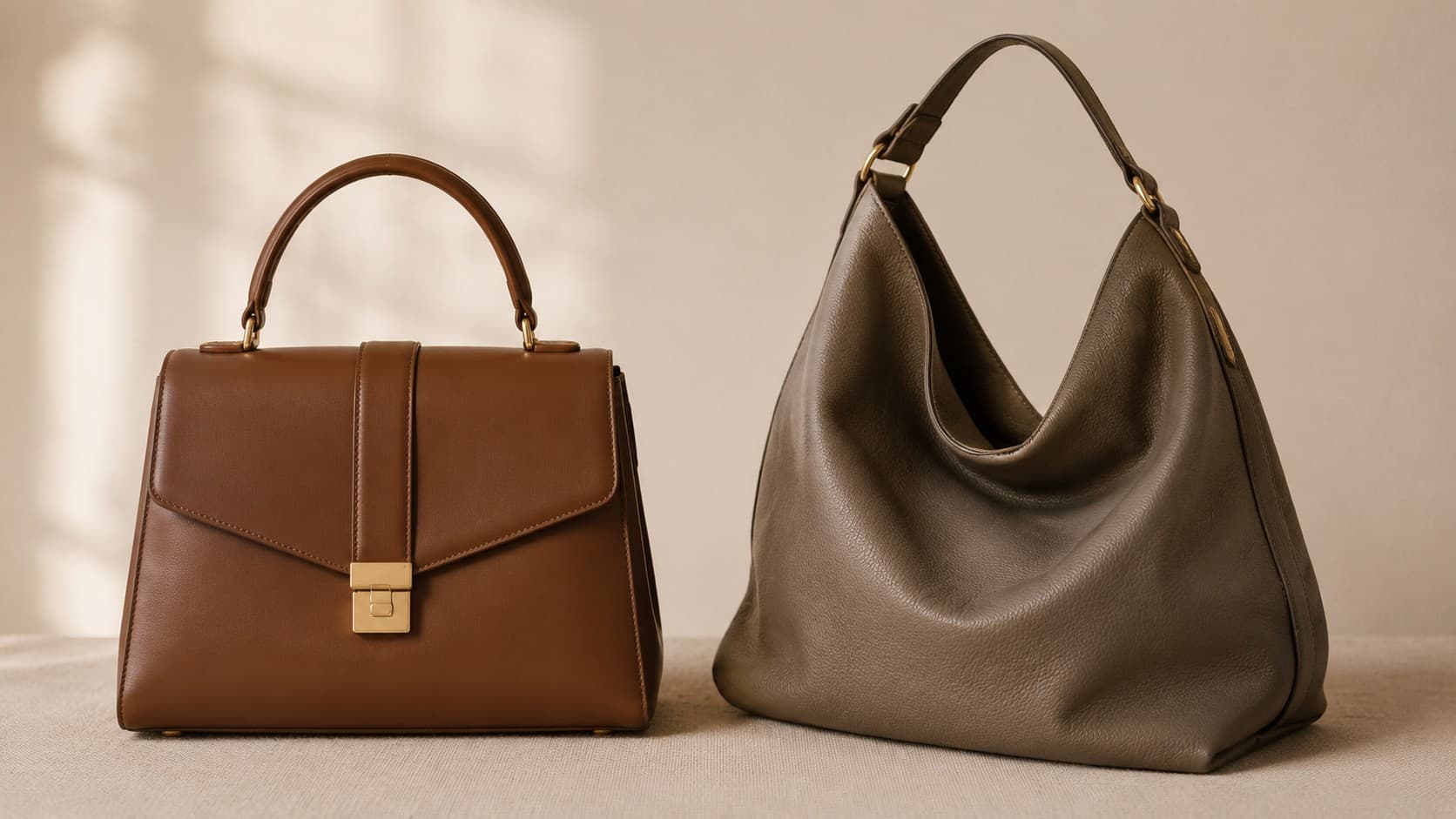
Anyone standing in front of a handbag display will notice two very different personalities looking back: the crisp, boxy bag that holds its shape no matter what, and the soft, slouchy bag that folds and drapes like it’s made of butter. Neither one is “better” in any objective sense, but they behave completely differently once they’re actually being carried around, tossed into a car seat, or stuffed with a water bottle and a laptop. Picking between them isn’t really about trend or price — it comes down to how a person’s day actually goes, what they’re hauling around, and what they want people to notice first when they walk into a room.
What Makes a Bag Structured or Slouchy?
A structured bag keeps a fixed shape because of stiff materials or internal support, while a slouchy bag is soft and floppy and changes shape depending on how full it is or how it’s sitting. That’s really the whole distinction — everything else about how they look, feel, and function grows out of that one difference.
Structured bags usually get their shape from a combination of firmer leather (or leather-like material), a rigid frame, reinforced panels, or a stiff lining sewn inside. A lot of that stiffness comes from a layer that stays hidden — interfacing or buckram sewn between the outer leather and the inner lining, plus a solid or wired base that keeps the bottom from caving in. A bag that stands upright on its own, without leaning over on a table, is structure at work. Slouchy bags, on the other hand, are built from softer, more pliable leather like lambskin or suede, often with little to no internal reinforcement, so they collapse a bit when set down and mold themselves around whatever is inside them.
The simplest test: a bag set down empty that holds its shape is structured. One that flops sideways the moment it’s released is slouchy.
There’s also a middle category: semi-structured bags, which use just enough internal support to keep a rough shape while still having some give, softening slightly with use without ever fully collapsing. For anyone who finds neither fully structured nor fully slouchy styles quite right, this in-between category offers a practical middle ground.
How to Spot a Structured or Slouchy Bag in Store
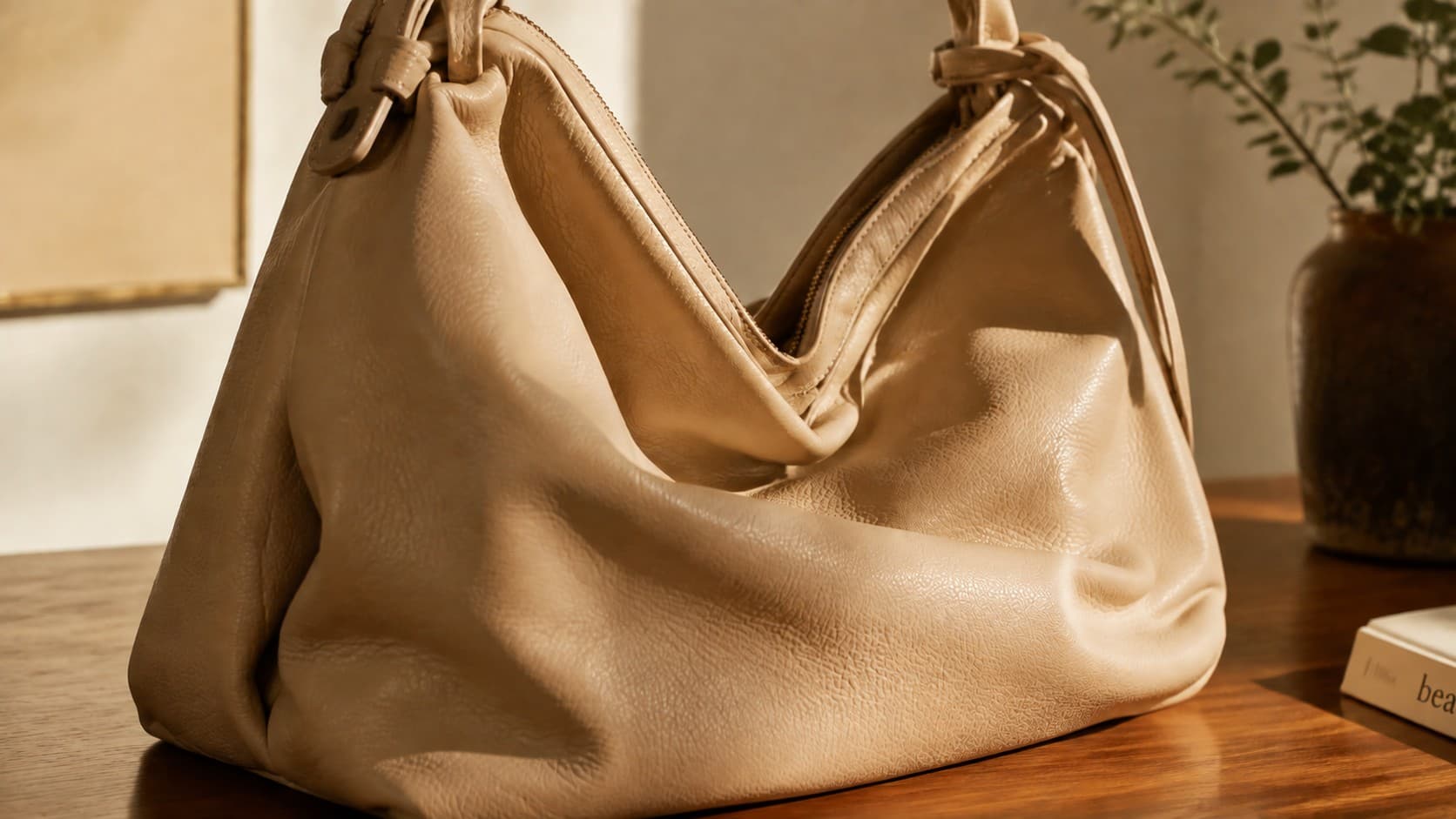
The difference is usually clear within a few seconds of picking a bag up and setting it back down. A bag that wobbles, folds, or sags when empty is slouchy. One that stays upright and keeps its silhouette is structured.
A few other details separate the two styles. Structured bags tend to have visible seams, sharp corners, and a stiffer handle that stands up on its own rather than flopping over. Slouchy bags usually have soft, rounded edges, handles that droop or hang loosely, and a general “melted” look even when they’re not overstuffed. The leather itself offers another clue — pressing a thumb into the side panel barely dents a structured bag, while a slouchy one dents easily and springs back slowly.
The bottom of the bag is another giveaway. Structured bags often sit on small metal feet or studs to protect the base and keep it from scuffing, which only makes sense on a bag designed to stand upright on its own. Closures offer a small clue too — structured bags more often use zip-tops or clasps that need a firm shape to click shut properly, while slouchy bags lean toward open tops, magnetic snaps, or drawstrings that work fine even when the opening shifts around.
Which Bag Is More Practical Day to Day?
Structured bags are generally more practical for people who carry specific items they need to find quickly, since the fixed shape keeps everything in its place. Slouchy bags are more practical for people who overpack, carry bulky items, or want a bag that can expand and contract depending on the day.
This comes down to how each style handles weight and volume. A structured bag with a defined base and separate compartments keeps a wallet, keys, and phone from sliding around and disappearing into a pile at the bottom, a real advantage for anyone who’s constantly digging through a bag at a checkout counter. A slouchy bag doesn’t offer that same organization, but it makes up for it in flexibility — it can go from half-empty in the morning to stuffed with a sweater, a book, and snacks by the afternoon without looking odd or bulging in strange places, because it was never rigid to begin with.
Weight distribution is a practical detail rarely noticed until it becomes uncomfortable. A structured bag with a solid base spreads weight evenly across the bottom, so a full bag still hangs fairly steady against the side or shoulder. A slouchy bag tends to let weight pool wherever gravity takes it, which usually means everything settles low and pulls the whole bag into a stretched, bottom-heavy shape by the end of the day. It rarely causes real problems, but it becomes noticeable when the bag carries something genuinely heavy, like a water bottle or a stack of books.
Do Structured Bags Last Longer Than Slouchy Ones?
Structured bags tend to hold their appearance longer because the reinforced construction resists sagging, creasing, and shape loss over time. Slouchy bags develop character faster, meaning they soften and change shape with wear, which some people love and others see as a downside.
The materials used in structured bags — thicker leather, stiffer interfacing, sturdier hardware — are built specifically to resist the kind of everyday stress that causes bags to lose their form. Leathers like saffiano, which is treated and cross-hatched to be extra scratch-resistant, are a common choice for structured styles precisely because they hold a crisp look under daily handling. That’s why a well-made structured tote can look nearly the same after several years of use as it did on day one. Slouchy bags age differently. The soft leather typically used in these styles — often lambskin, nappa, or suede — is designed to move and flex, so it naturally develops creases, folds, and a broken-in look over time. This isn’t necessarily damage — it’s simply what that type of leather does, and for a lot of people, a slouchy bag looking a little more lived-in after a year is part of the appeal rather than a flaw, the same way good leather boots or jackets are often more prized once they’ve softened.
Which Bag Style Looks More Formal?
Structured bags generally read as more formal and polished because of their clean lines and defined shape, while slouchy bags feel more relaxed and casual because of their soft, unstructured silhouette.
Formality in bag design works a lot like it does in clothing — sharp lines and clean geometry signal “put together,” while soft, draping shapes signal “easygoing.” A structured top-handle bag next to a tailored blazer looks intentional and finished. A slouchy hobo bag paired with the same blazer creates a slightly more undone, contrast-driven look, which appeals to some and not others in work settings. Neither look is wrong, but for wardrobes built around client meetings, interviews, or formal events, structured shapes remain the safer, more traditional choice.
Can You Wear Both Bag Styles for Any Occasion?
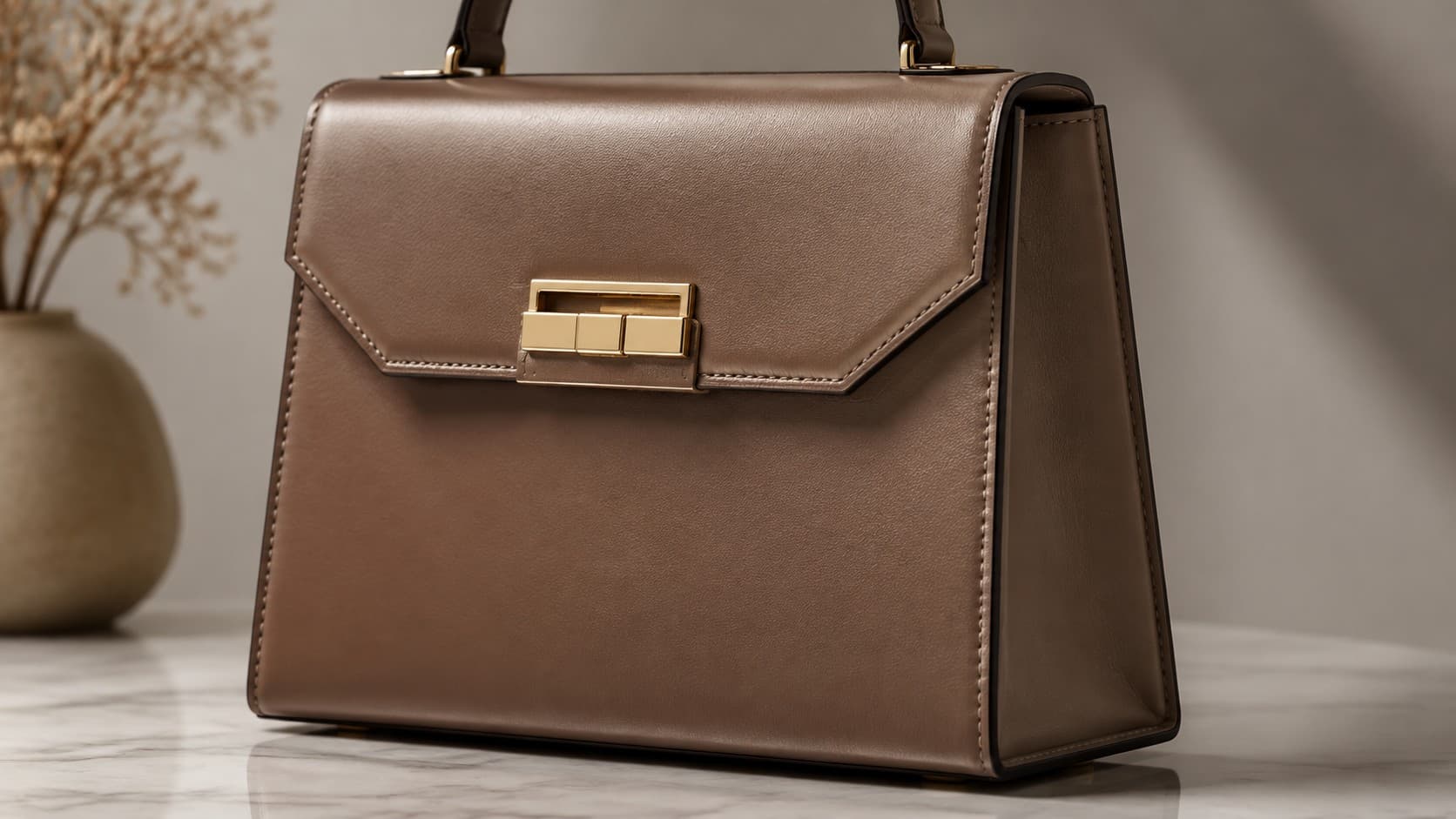
Yes, both styles can work for most occasions, but they change the overall impression of an outfit. A structured bag tends to sharpen a casual outfit, while a slouchy bag tends to soften a formal one.
One of the more useful style tricks with handbags is balancing the bag against the rest of the outfit rather than matching it. Jeans and a t-shirt paired with a structured leather bag instantly look more put-together, almost like the bag is doing the work of “dressing up” the rest of the look. Flip it around, and a slouchy leather bag carried with a tailored dress or suit takes some of the stiffness out of the outfit and makes it feel more approachable. Thought of this way, choosing between the two styles becomes less about rules and more about the specific effect being aimed for on a given day.
Does Bag Shape Matter for Body Type?
Yes — structured bags tend to add visual sharpness and volume, which can balance out a very soft or flowing outfit, while slouchy bags drape closer to the body and tend to blend in rather than stand apart from the rest of an outfit. Neither shape is off-limits for anyone; it’s more about proportion than body type.
Scale matters more than shape here. A large structured bag with hard corners next to a smaller frame can visually take over, simply because there’s a lot of straight-edged volume competing for attention. Sizing down, or choosing a structured bag with softer, rounded corners, usually solves that without giving up the polished look. On a taller frame, that same oversized structured bag often looks intentional and balanced rather than overwhelming, since there’s more visual space for it to sit in. Slouchy bags tend to be more forgiving across heights and builds, because the material moves with the body instead of holding a fixed outline, but they can still get lost visually against a busy or oversized outfit if the bag itself is small.
Where the bag is carried changes the effect too. A structured top-handle bag held in the hand or crooked at the elbow draws the eye upward, toward the shoulders and face, which is why it’s such a common choice for formal events. A slouchy bag worn on a long strap across the body tends to sit at hip level, drawing the eye down and creating a more relaxed, elongated line. Trying a bag on and walking around in it, rather than holding it still in front of a mirror, is the most reliable way to judge these effects, since photos and store displays rarely capture how a bag moves with a body in motion.
Which Bag Style Fits More Items?
Slouchy bags are generally better for carrying larger or bulkier loads because the soft material expands to accommodate volume, while structured bags have a fixed interior space that limits how much can comfortably fit.
A structured bag’s biggest strength — that it holds its shape — is also its limitation when it comes to capacity. Once the interior space is full, there’s nowhere else for items to go, and forcing in extra items can strain seams or hardware over time. A slouchy bag doesn’t have that same ceiling. Because the material isn’t fighting against a rigid frame, it can stretch to hold an extra layer, a pair of shoes, or a stack of documents without looking obviously overstuffed. This is part of why slouchy totes and hobo bags are so popular as travel or “everything” bags, while structured bags tend to work better as a dedicated, curated carry.
Structured Bags vs. Slouchy Bags
| Feature | Structured Bags | Slouchy Bags |
|---|---|---|
| Shape when empty | Holds its form | Collapses or droops |
| Common materials | Saffiano, stiffened leather, canvas with interfacing | Lambskin, nappa, suede, unlined soft leather |
| Organization | Easier to keep items in place | Items shift and settle at the bottom |
| Weight distribution | Even, spread across a firm base | Pools toward the bottom as it fills |
| Formality | Reads as polished, formal | Reads as relaxed, casual |
| Capacity | Fixed, limited by design | Expands with soft material |
| Aging | Resists sagging and creasing | Softens and develops character |
| Everyday weight | Generally heavier due to reinforcement | Generally lighter, easier on the shoulder |
| Best for | Work, events, organized carry | Travel, overpacking, everyday ease |
Structured or Slouchy: Which One Should You Get?
The best choice comes down to matching the bag to actual daily habits rather than picking based on trend alone. Someone who carries a laptop, notebook, and makeup bag every day will get more use out of a structured bag’s built-in organization, while someone who wants one bag that can handle a gym change of clothes one day and a light lunch out the next will lean more on a slouchy bag’s flexibility.
It also helps to consider how someone typically treats their belongings. A bag that gets tossed onto the floor of a car, dropped on the ground at a park, or crammed under an airplane seat regularly is better served by a slouchy style, which is more forgiving of that kind of handling since there’s no rigid frame to bend or crack. A bag that mostly sits on a desk or gets carried carefully from one indoor space to another makes a structured bag’s more delicate construction less of a concern. Many wardrobes end up with at least one of each, using the structured piece for work or dressier occasions and the slouchy one for weekends, travel, or days when comfort matters more than polish.
Frequently Asked Questions
Can a slouchy bag become structured over time, or vice versa?
Not really. The shape comes from how the bag was built — the type of leather, the internal support, the stiffness of the lining — and that construction doesn’t change with wear. A slouchy bag can soften further with use, but it won’t develop rigid structure it wasn’t built with, and a structured bag will typically hold its shape until the materials themselves wear out.
Are structured bags heavier than slouchy bags?
Often, yes. Structured bags tend to use thicker leather, internal frames, or stiff interfacing to hold their shape, and all of that adds weight. Slouchy bags are usually made from softer, lighter materials, which is part of why they feel more comfortable to carry for long stretches, like during travel.
Do slouchy bags stretch out and lose their original shape permanently?
Soft leather does relax and mold to how it’s carried over time, but this is expected behavior rather than damage. It’s different from a structured bag losing its shape, which usually signals wear on the internal support rather than normal material behavior.
Is one style easier to clean and maintain than the other?
Structured bags are generally a bit easier to wipe down and maintain because their firmer surface doesn’t hold creases where dirt can settle. Slouchy bags, with their folds and soft texture, can trap dust or grime in the creases, so they may need slightly more frequent care to stay looking fresh.
Which style photographs better for social media or events?
Structured bags tend to hold a cleaner, more defined shape in photos since they don’t shift or sag between shots. Slouchy bags photograph more naturally in candid, movement-based shots, since their relaxed shape fits an easygoing, in-the-moment look rather than a posed one.
Conclusion
Choosing between a structured and slouchy bag ultimately comes down to daily habits. A routine that calls for order, polish, and a bag that looks the same at 8 a.m. as it does at 8 p.m. is better served by structure. A less predictable routine, where the bag needs to flex — literally — around whatever it’s carrying, tends to suit a slouchy style far better. Both are timeless for a reason, and the smartest wardrobes usually make room for one of each rather than forcing a single style to do every job.