A handbag is never just a place to keep keys. Across any decade of the last hundred years, the bags women carried reveal almost everything about how they lived, worked, and dressed at the time. War made bags plain and sturdy. Prosperity made them structured and polished. Rebellion made them slouchy and free. Money made them loud with logos, and then, eventually, quiet again. That path from the 1920s to today tells a much bigger story than fashion alone — a story about how women’s roles, freedoms, and daily routines kept reshaping the objects they carried on their arms.
1920s: The Handbag Becomes an Everyday Object
The 1920s turned the handbag from a rare accessory into something almost every woman owned and used daily. Before this decade, purses were small and mostly decorative. As women entered the workforce and social life in bigger numbers, they needed a bag that could hold real things: money, keys, a compact, a cigarette case.
Art Deco design shaped how these bags looked. Beading, geometric patterns, and metal mesh were everywhere, especially on evening bags meant for dancing and parties. Daytime bags looked completely different. They used sturdier leather, simple shapes, and metal snap closures built for actual use rather than just show. This split between “bag for going out” and “bag for getting things done” still exists today, and it started here.
The 1920s handbag was really two bags in one decade: a glittering evening clutch built to be seen, and a tougher daytime bag built to be used.
One American company, Whiting & Davis, shows how far this new handbag culture reached. Founded as a jewelry maker in 1876, the company had made mesh purses by hand since the 1890s, but a 1912 machine that automated the process suddenly made mesh bags affordable enough for ordinary shoppers, not just the wealthy. Through the 1920s, Whiting & Davis mesh bags became genuine status pieces among flappers, sold in bold enameled colors and geometric Art Deco patterns, and even carried designs from names like Paul Poiret and Elsa Schiaparelli. It is one of the clearest examples of a pattern that repeats throughout handbag history: a manufacturing shortcut makes a once-expensive item affordable, and fashion quickly turns that item into a trend.
1930s: Style During the Great Depression
The 1930s handbag had to do more with less, since the Great Depression drained household budgets across much of the world. Practicality became the priority again, but designers refused to let that mean boring. Instead of expensive materials, many bags used new, cheaper alternatives, and instead of restrained shapes, they leaned into playful, eye-catching design.
Bakelite and celluloid, early forms of hard plastic, became hugely popular for handbag frames, clasps, and handles during this decade, roughly between 1933 and 1941. These materials were far cheaper than metal or ivory but could be carved and colored into striking shapes, so handbags started showing up as novelty forms like teapots, animals, or geometric Art Deco frames rather than plain rectangles. Designer Elsa Schiaparelli pushed this even further through her collaborations with Surrealist artists, producing handbags that looked almost like small pieces of art rather than ordinary accessories. The result was a strange but genuine combination: a decade defined by financial hardship that still managed to be one of the most inventive periods in handbag design.
1940s: Wartime Shortages Reshape the Handbag
World War II made handbags simpler because materials for anything else were scarce. Leather, metal, and other resources were rationed across much of Europe and North America, so designers had to work with what was left over — canvas, cheaper leathers, and wood or plastic handles instead of metal hardware.
This was not really a style choice. It was a supply problem. Bags from this era were boxier, more practical, and far less decorated than what came before. Many women carried bags built to survive daily commuting, factory work, and long hours away from home, since so many were stepping into jobs that men had left behind to serve in the war. Fashion historians often point to the 1940s as the moment handbags became tools first and accessories second, a shift that quietly influenced how brands thought about everyday bag design for decades afterward.
1950s: Structure, Polish, and the Birth of Two Icons
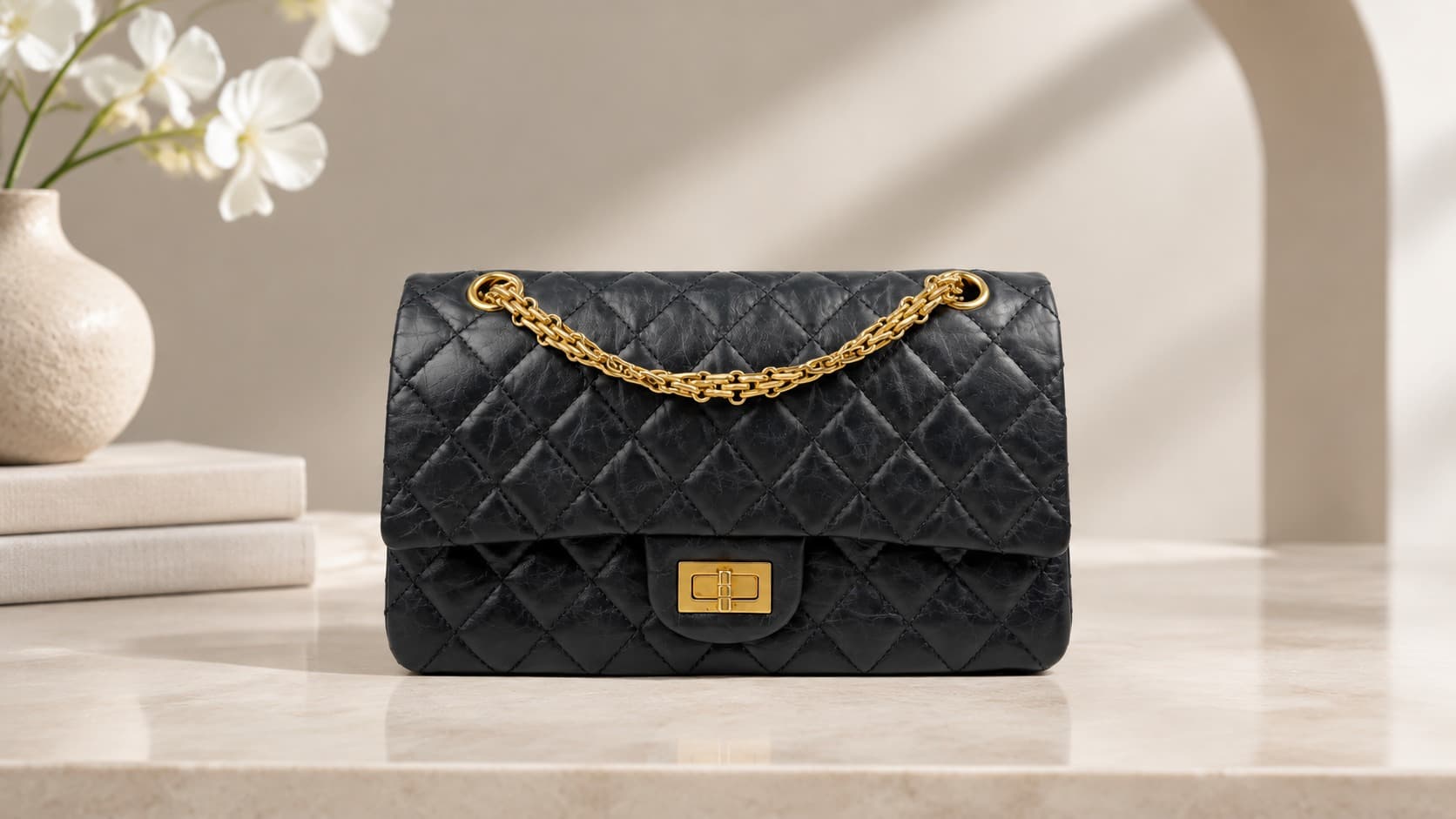
The 1950s handbag was small, structured, and worn as a sign of a put-together life. As postwar prosperity grew, especially in the United States and parts of Europe, fashion swung hard away from wartime plainness and into a much more polished, feminine silhouette — and the handbag followed that lead.
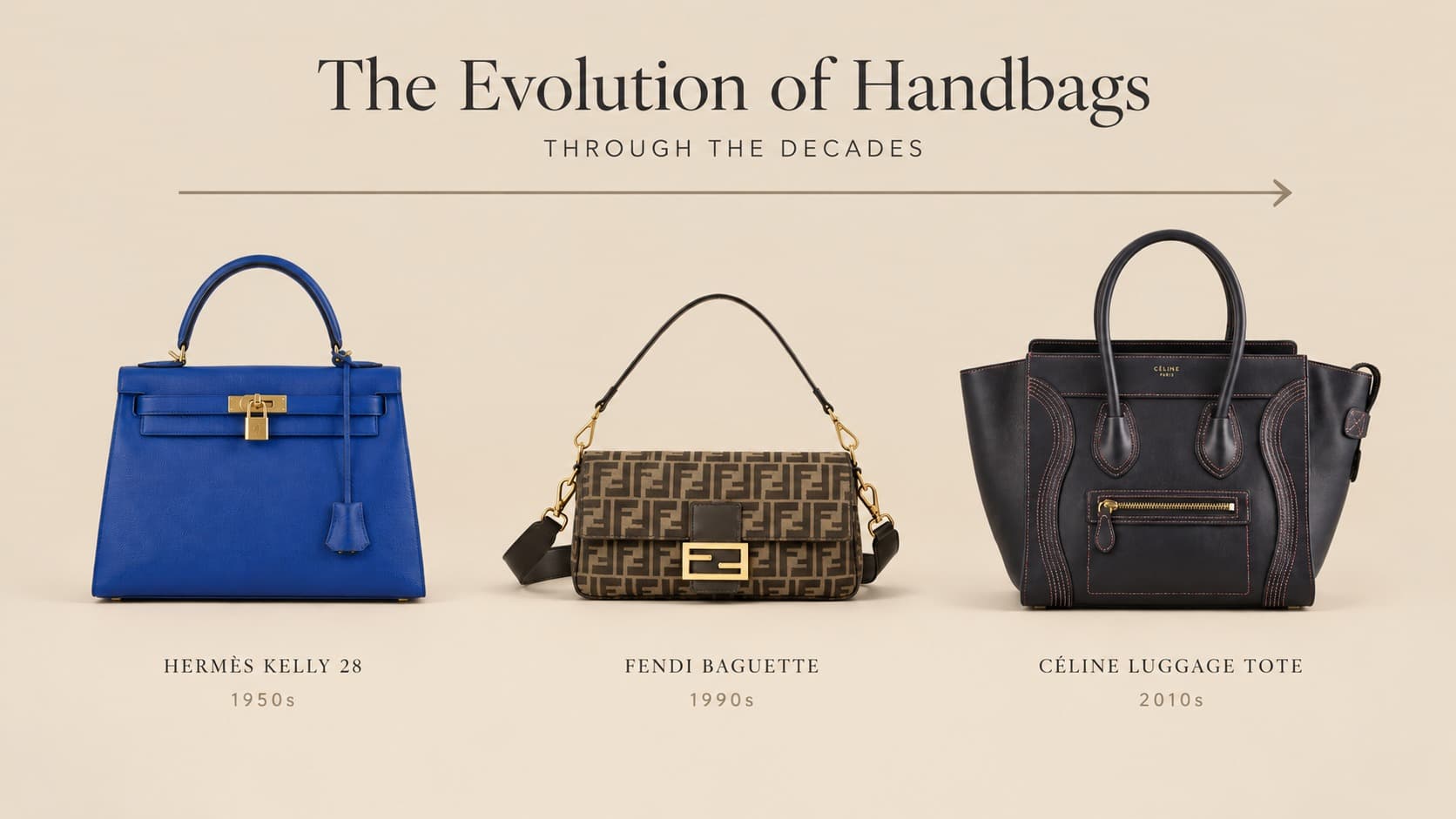
Two bags from this decade are still famous today, and they explain a lot about how “status bags” work even now. Chanel introduced the 2.55 quilted flap bag in February 1955, named for the month and year it launched, featuring a chain strap that let women wear it over the shoulder instead of only in the hand — a small but genuinely useful change at the time. Around the same period, Hermès had a bag originally called the Sac à Dépêches, which had existed since the 1930s as a saddle-inspired design. It became famous under a new name after actress Grace Kelly was photographed using it to shield her pregnancy from paparazzi in 1956, and the press simply started calling it the Kelly bag. Both bags are still in production, which says something rare about how well 1950s design has aged.
The 2.55’s chain strap was not just a style detail. Chanel reportedly said she grew tired of holding her purses in her hands and losing them at parties, so she borrowed the idea of a long strap from military bags and added it to her design, letting women carry a bag over the shoulder for the first time in a widely accepted way. That single change is why the shoulder bag became a normal, everyday category rather than something reserved for evening clutches, and it is the reason so many bags today still default to a strap rather than a handle alone.
1960s: Youthquake and the First Break From Tradition
The 1960s handbag started loosening up as younger generations pushed back against their parents’ formal style. Fashion writers at the time called this cultural shift the “youthquake,” and handbags were part of it. Bags got a little less rigid, a little more playful, and less tied to matching a woman’s shoes, gloves, and hat perfectly, which had been an unwritten rule in the 1950s.
Designers also began making bags with younger buyers specifically in mind. Louis Vuitton, for example, introduced a smaller version of its Speedy bag in 1965 after actress Audrey Hepburn reportedly asked for something more compact than the original. That smaller size became one of the brand’s most enduring shapes. This decade also planted the seed for something bigger: the idea that a handbag could be inspired by, or even named after, a specific real person, not just a general trend.
American design also pushed handbags forward in a quieter, more lasting way during this decade. In 1962, designer Bonnie Cashin became the first female creative director in leather goods when she joined Coach, and she treated bags like functional tools rather than decoration alone. She is credited with bringing industrial hardware into fashionable handbag design, most famously the brass turnlock closure, which she is said to have designed after noticing how the top of her own convertible car clipped shut. That small hardware detail is still a signature of Coach bags today, decades later.
1970s: Freedom, Fringe, and the Rise of the Slouchy Bag
The 1970s handbag prioritized freedom of movement over formal structure. This was the decade of bohemian style, disco nightlife, and a much more relaxed attitude toward dressing overall, and bags reflected all of it at once. Soft, slouchy shoulder bags became common because they matched a more casual way of living and moving through the day.
Fringe, suede, and natural materials like woven straw and rope detailing showed up constantly, echoing the wider “back to nature” mood of the era. At the same time, disco culture pushed some evening bags in the opposite direction, with metallic finishes and small, glitzy clutches built for the dance floor. Having two very different moods in one decade — earthy daytime, glossy nighttime — became a pattern that shows up again and again in handbag history.
1980s: Status, Logos, and the Birkin
The 1980s handbag became a visible symbol of success. As more women moved into senior professional roles, fashion followed with sharper tailoring, stronger shoulders, and handbags that projected confidence and money rather than just personal taste. Structured shapes returned, often in bold colors or with obvious designer branding.
This is also the decade that gave logos real selling power. Brands leaned into their monograms and initials because customers wanted their bag to be instantly recognizable as expensive. Louis Vuitton’s monogram canvas, first created back in 1896, was pulled firmly back into the spotlight, and houses like Gucci and Fendi leaned harder into their own initials and clasps as visible brand markers rather than quiet details tucked inside a bag. Owning a bag was no longer just about the leather or the craftsmanship; it was about anyone across the room being able to identify the brand at a glance.
Hermès added another icon to its lineup here too: the Birkin bag, created after a 1984 conversation between actress and singer Jane Birkin and Hermès executive Jean-Louis Dumas about her need for a better-designed weekend bag. Decades later, it remains one of the most talked-about handbags in the world, and its origin story is a good reminder that some of fashion’s biggest icons started as a simple, practical complaint rather than a marketing plan.
1990s: Minimalism, Then a Surprise Twist
The early-to-mid 1990s handbag pulled hard in the opposite direction from the 1980s. Fashion embraced minimalism, with sleek, unfussy shapes in black, tan, or muted colors, often without loud branding. Simplicity was the whole point, and quiet, well-made leather said more than a big logo did.
Then, right at the end of the decade, one bag flipped that idea on its head. Fendi released the Baguette bag in its 1997 Fall/Winter collection, designed by Silvia Venturini Fendi and named for the way it tucked under the arm like a loaf of French bread. It arrived at a moment when the fashion world was fully minimalist, and its small size, bold prints, and prominent logo clasp stood out precisely because it broke every rule of the moment. Fashion historians generally consider the Baguette the first true “it bag” — a bag famous enough on its own that people lined up for it regardless of outfit or occasion. Its constant appearances on the television show Sex and the City only accelerated the demand.
2000s: The Height of “It Bag” Culture
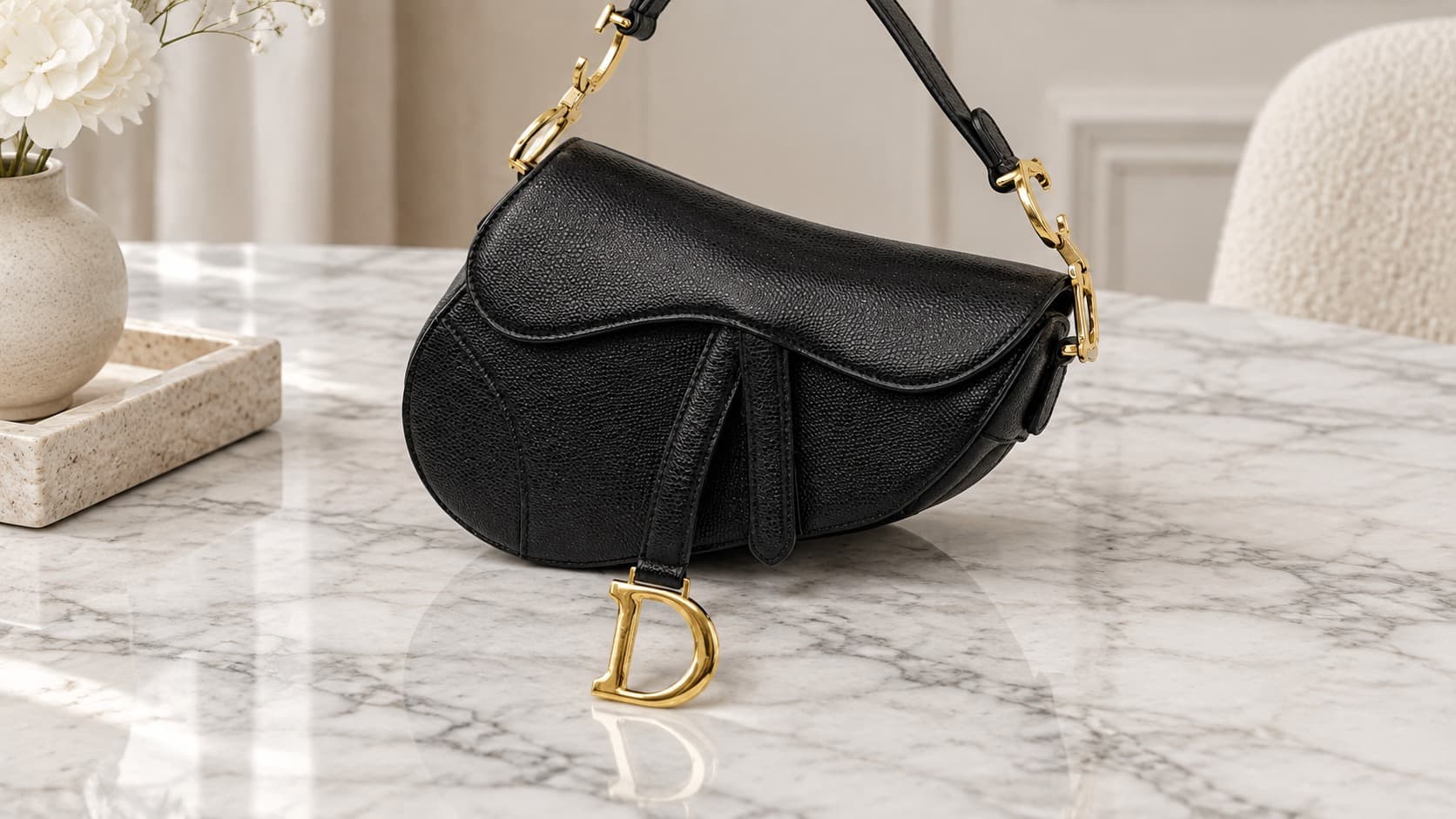
The 2000s handbag became a genuine cultural obsession, with waiting lists, resale markups, and celebrity photography driving demand more than ever before. Following the Baguette’s success, brand after brand raced to create their own must-have design. Balenciaga’s Motorcycle bag, designed by Nicolas Ghesquière and released in 2001, became known simply as the City bag and defined the era’s boho-edgy look with its slouchy leather and metal hardware. Dior’s Saddle bag and other instantly recognizable silhouettes followed a similar path, becoming shorthand for being fashion-aware at the time.
Celebrity culture and early-2000s tabloid photography played a huge role here in a way that hadn’t existed in earlier decades. A single photo of a famous person carrying a specific bag could sell out that style within days. This decade essentially built the modern template for hype-driven fashion, years before social media existed to accelerate it even further.
2010s: Quiet Logos, Giant Totes, and Everyday Practicality
The 2010s handbag shifted attention toward clean, structured shapes that worked for a busy daily routine rather than only for photographs. Céline’s Luggage Tote, introduced under creative director Phoebe Philo in 2010, became one of the decade’s defining silhouettes thanks to its structured, boxy shape and understated design. Mulberry’s Alexa bag, named after British television personality Alexa Chung, and Givenchy’s Antigona followed a similar mood: recognizable, well-made, but not shouting for attention.
Tote bags in general grew hugely popular through this decade, partly because more women were commuting with laptops, gym clothes, and daily essentials that smaller bags simply couldn’t fit. Function and fashion started to overlap more than they had in years, since a bag now had to actually work for a full day rather than just complete an outfit.
2020s: Micro Bags, Soft Shapes, and Quieter Spending
The 2020s handbag split into two very different directions, and both are still playing out. On one hand, soft, pillowy, almost cloud-like bags became extremely popular, led by styles like Bottega Veneta’s Pouch under creative director Daniel Lee, alongside cushioned designs from brands like Coach and Marc Jacobs. Colors also brightened up noticeably after years of pandemic lockdowns, with pastel yellows, mint greens, and other cheerful tones showing up far more than the classic black bags of earlier decades.
On the other hand, a “quiet luxury” mindset took hold, especially among younger shoppers who grew wary of loud logos and highly visible spending. Interest grew in simpler, unbranded totes and understated leather goods that signal taste rather than price tag. This pulls the story back around almost full circle: a century after the practical, sturdy bags of the 1920s and 1940s, function and quiet quality are fashionable again, just for very different reasons.
Two very different bags capture how split this decade has been. French label Jacquemus made headlines starting in 2018 with its Le Chiquito, a bag so small it could barely hold a phone, and the joke-sized Mini Le Chiquito that followed in 2019 could fit little more than a stick of gum — yet both sold out and turned tiny size itself into a status symbol. At the opposite end, Telfar’s Shopping Bag, designed by Liberian-American designer Telfar Clemens and modeled on an ordinary Bloomingdale’s shopping bag, became a genuine cultural phenomenon after its 2020 breakout, nicknamed the “Bushwick Birkin” for combining Birkin-level demand with a price tag usually under $300 and an explicitly inclusive, unisex design. Between an impractical luxury micro bag and a deliberately affordable status tote, the 2020s have made room for both extremes at once.
Decade-by-Decade Handbag Style Overview
| Decade | Defining Mood | Notable Bag or Trend |
|---|---|---|
| 1920s | Everyday necessity meets Art Deco glamour | Beaded evening clutches, sturdy daytime bags |
| 1930s | Depression-era whimsy | Bakelite and celluloid novelty bags |
| 1940s | Wartime practicality | Canvas and simplified leather bags |
| 1950s | Postwar polish and structure | Chanel 2.55, Hermès Kelly |
| 1960s | Youthquake and looser rules | Louis Vuitton Speedy 25 |
| 1970s | Bohemian freedom and disco glam | Fringe shoulder bags, metallic clutches |
| 1980s | Power dressing and status | Hermès Birkin, rise of logomania |
| 1990s | Minimalism, then rebellion against it | Fendi Baguette (1997) |
| 2000s | Peak “it bag” hype | Balenciaga City, Dior Saddle |
| 2010s | Quiet function for busy lives | Céline Luggage Tote, oversized totes |
| 2020s | Soft shapes and quiet luxury | Bottega Veneta Pouch, unbranded totes |
Frequently Asked Questions
What was the first designer “it bag”?
Most fashion historians point to the Fendi Baguette, released in Fendi’s 1997 Fall/Winter collection. Its small size, bold prints, and visible branding stood out sharply against the minimalist fashion of the late 1990s, and it became famous enough that people wanted it specifically, rather than just wanting “a nice bag.” Its frequent appearances on Sex and the City pushed that demand even further.
Why is the Hermès Kelly bag called that?
The bag started out as a saddle-inspired design called the Sac à Dépêches. It became known as the Kelly bag after actress Grace Kelly was photographed using it to cover her pregnancy from photographers in 1956, and the nickname stuck permanently.
Why did handbags become plainer in the 1940s?
World War II created severe shortages of leather, metal, and other materials in many countries. Designers had to substitute canvas, wood, and cheaper materials, which made bags simpler and more functional out of necessity rather than style preference.
What made 1930s handbags different from other decades?
Handbags in the 1930s used cheap new plastics like Bakelite and celluloid instead of costly materials such as metal or ivory, since the Great Depression had squeezed most household budgets. Despite the tight money, designers used these materials to create whimsical shapes and novelty designs rather than plain, practical ones, making it one of the more playful decades in handbag history despite the economic hardship behind it.
Are logo-heavy bags going out of style?
Interest in heavily branded bags has cooled somewhat in the 2020s in favor of “quiet luxury,” a preference for understated design and quality materials over visible logos. Fashion trends are cyclical, though, and logo-forward styles have returned to popularity before, so this shift is more of a current mood than a permanent rule.
What handbag style is most associated with the 2020s?
Soft, rounded, pillow-like shapes have defined much of the decade so far, popularized by bags like Bottega Veneta’s Pouch. Alongside that, simpler and less branded totes have grown in popularity as shoppers lean toward understated style over obvious logos.
The Bottom Line
Handbag history keeps circling back on itself in a way that says a lot about what people actually value at different points in time. Practicality rules when times are hard, as in the 1940s. Status and logos take over when money flows and people want to show it, as in the 1980s and 2000s. Then quiet, functional design comes back into fashion once loud branding starts to feel excessive, which is exactly where the 2020s stand now. That pattern points toward one likely direction for what comes next: probably not another decade of shouting logos, but whatever quietly solves how people actually live day to day.