Leather shopping gets confusing fast because almost every label uses the word “leather,” even when the products inside are worlds apart in quality. A wallet tagged “genuine leather” sounds like a good thing, but in the leather industry that phrase actually points to one of the lower grades available. Full-grain, top-grain, and genuine leather all come from real animal hide, yet they’re cut from different layers, treated in different ways, and age completely differently once put to use. Knowing what separates the three explains why prices vary so much between products that all use the same word on their label.
What Is Full-Grain Leather?
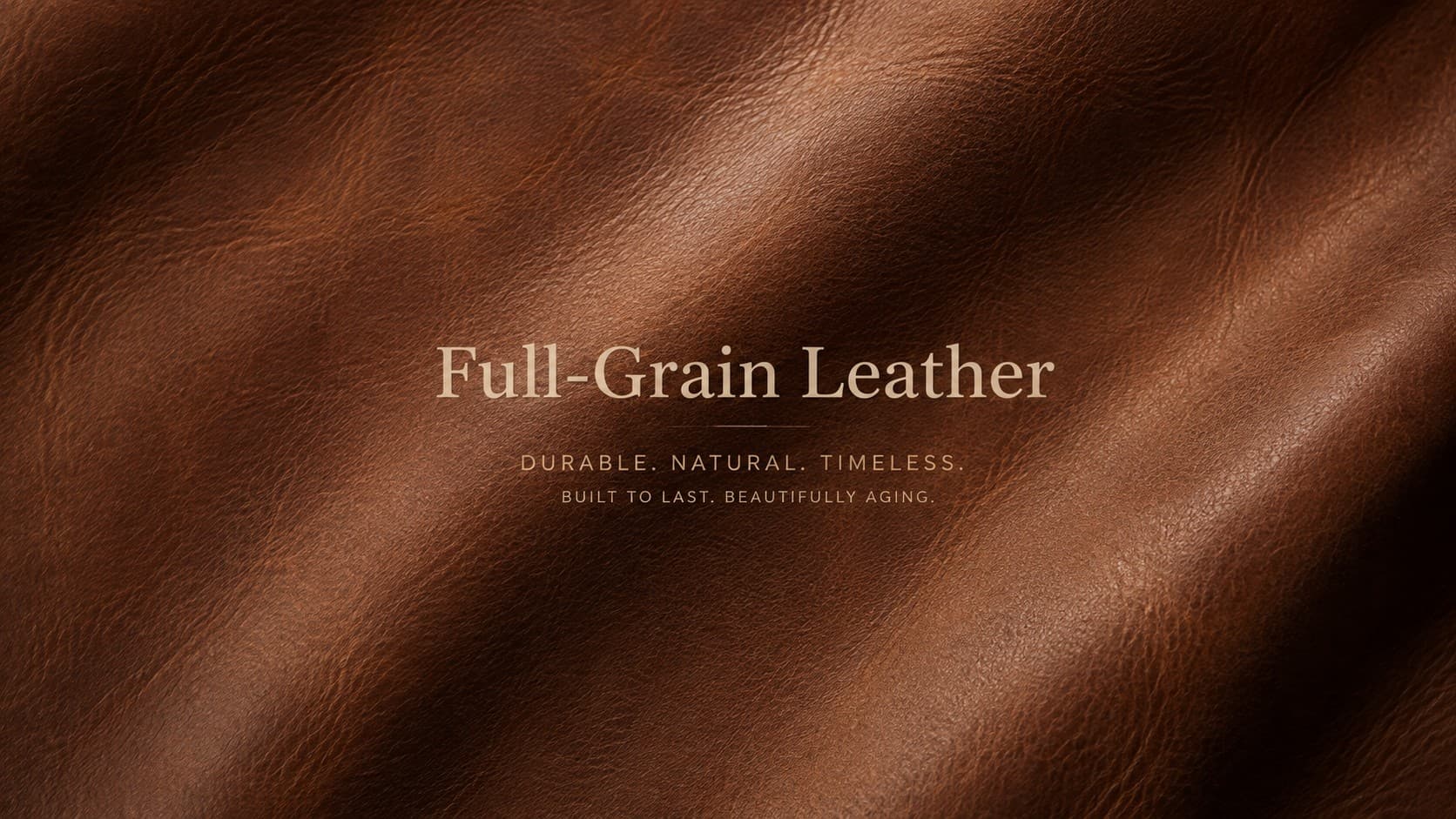
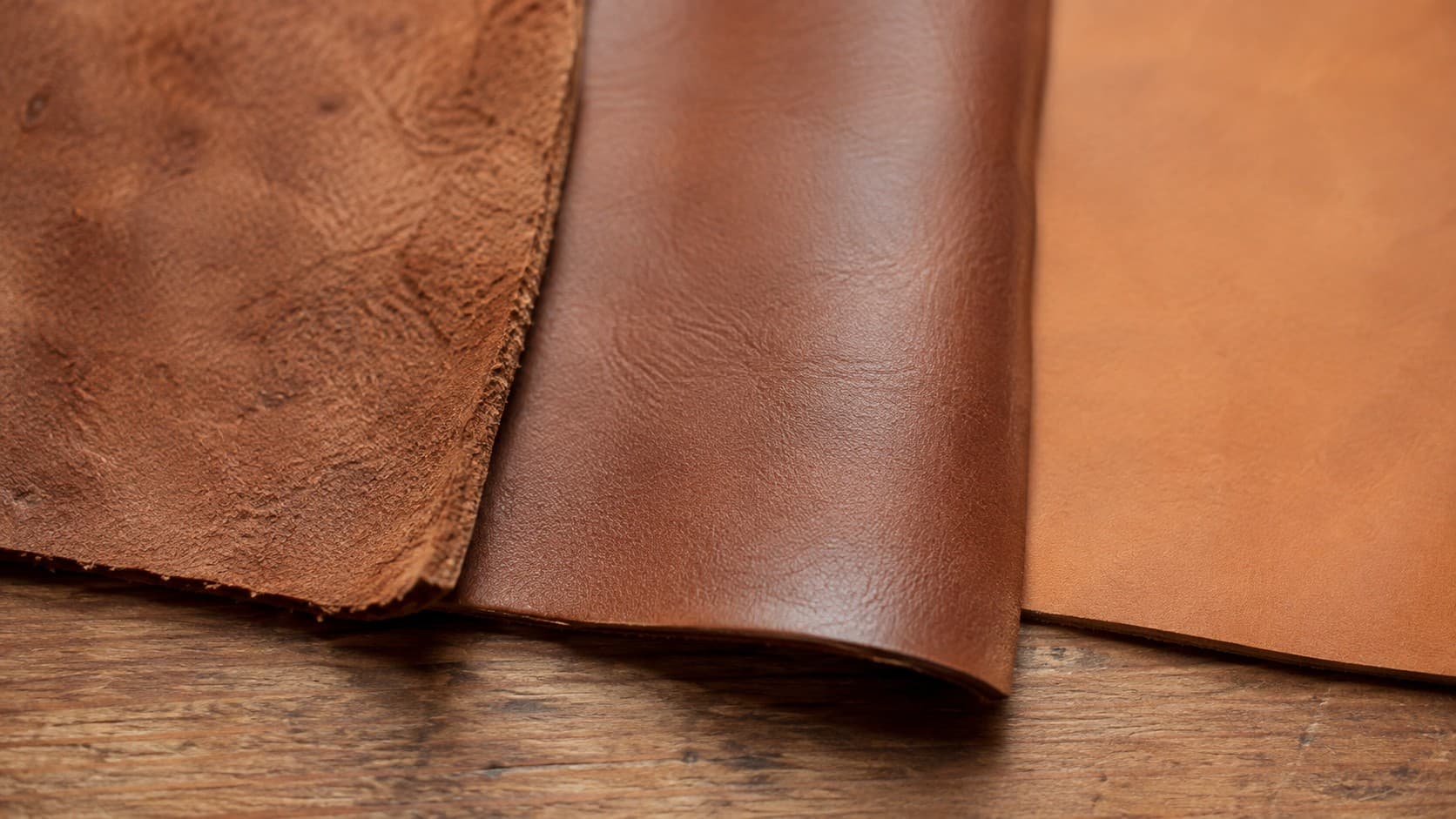
Full-grain leather is the outermost layer of the hide, left completely untouched aside from tanning and dyeing. It keeps every natural mark, wrinkle, and pore the animal had, and that’s exactly what makes it the strongest and longest-lasting type of leather available.
Because nothing gets sanded or buffed away, full-grain leather holds onto the tightest, densest fibers of the hide — the part that gives leather its toughness. This is also the layer that develops a patina, which is the rich, slightly darker sheen leather picks up over years of handling, sunlight, and everyday wear. A full-grain leather bag or belt looks a little different after five years of use, and most people consider that a feature, not a flaw. The trade-off is cost: because the hide can’t be sanded to hide imperfections, tanners have to be pickier about which sections of the hide qualify, and that extra selectivity makes full-grain leather the most expensive of the three grades.
Not all full-grain leather looks rustic, though. If a hide happens to come out of tanning nearly blemish-free, or if it’s given a light, even pebbled texture, it still counts as full-grain as long as the natural grain layer itself hasn’t been sanded off. What pushes leather out of the full-grain category is any process that alters or removes that top surface, such as heavy embossing to fake a crocodile or ostrich pattern — that’s usually called “corrected-grain” leather instead, and it’s treated as a step down.
Full-grain leather is judged by what it keeps — the natural grain — not by what’s been removed to make it look uniform.
What Is Top-Grain Leather?
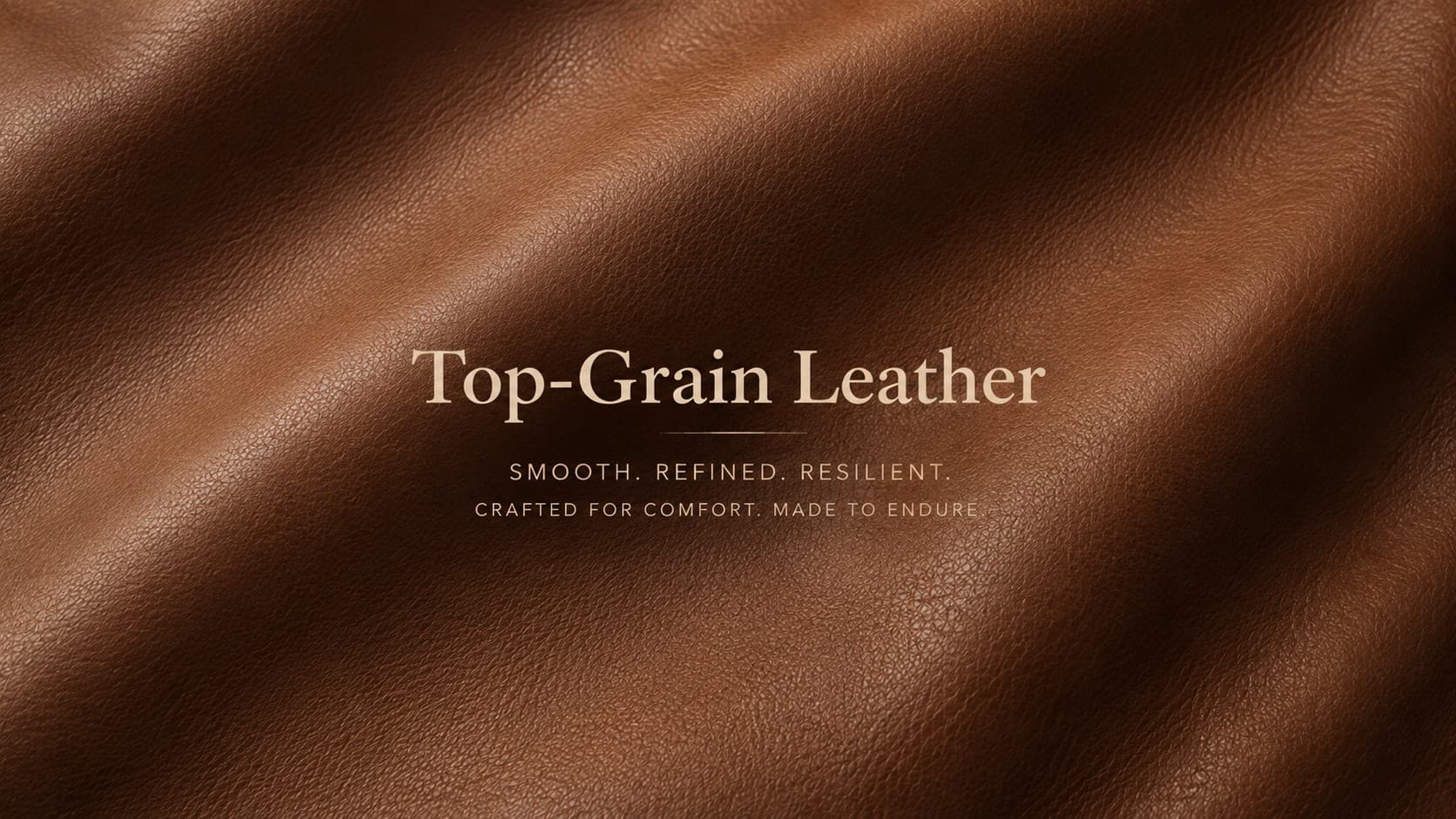
Top-grain leather is also cut from the upper part of the hide, but the very top surface is sanded or buffed down to remove scars, insect bites, and other natural blemishes. That process makes it thinner, smoother, and easier to shape than full-grain leather.
Sanding away the surface improves how consistent the leather looks, which is why top-grain leather shows up in a lot of luxury handbags and structured goods where a clean, uniform finish matters. It’s also more resistant to stains and easier to clean than full-grain leather, since the sanded surface isn’t as porous. What gets lost in that process is some of the hide’s natural strength — the toughest fibers sit right at the very top, and once they’re sanded off, the leather becomes a bit less durable and won’t build the same deep patina over time. It still counts as a genuinely high-quality material, just one step below full-grain.
Top-grain and full-grain also aren’t always two totally separate hides — sometimes they’re the same hide at different stages. If a tannery sands a hide only lightly, just enough to clean it up without cutting into the strong upper fibers, that piece can arguably still perform like full-grain leather even though it’s labeled top-grain. This is one reason leather grading isn’t as strictly regulated as people assume, and why the sanding depth matters more than the label itself.
Comparing Full-Grain and Top-Grain Leather
| Feature | Full-Grain | Top-Grain |
|---|---|---|
| Surface | Natural, shows grain and marks | Sanded smooth, more uniform |
| Durability | Highest | Slightly lower |
| Patina over time | Develops richly | Minimal to none |
| Stain resistance | Lower (more porous) | Higher |
| Cost | Highest | Mid-range |
| Feel | Slightly textured | Smooth, polished |
| Best suited for | Pieces meant to age and last decades | Structured goods that need a clean, even finish |
What Is Genuine Leather?
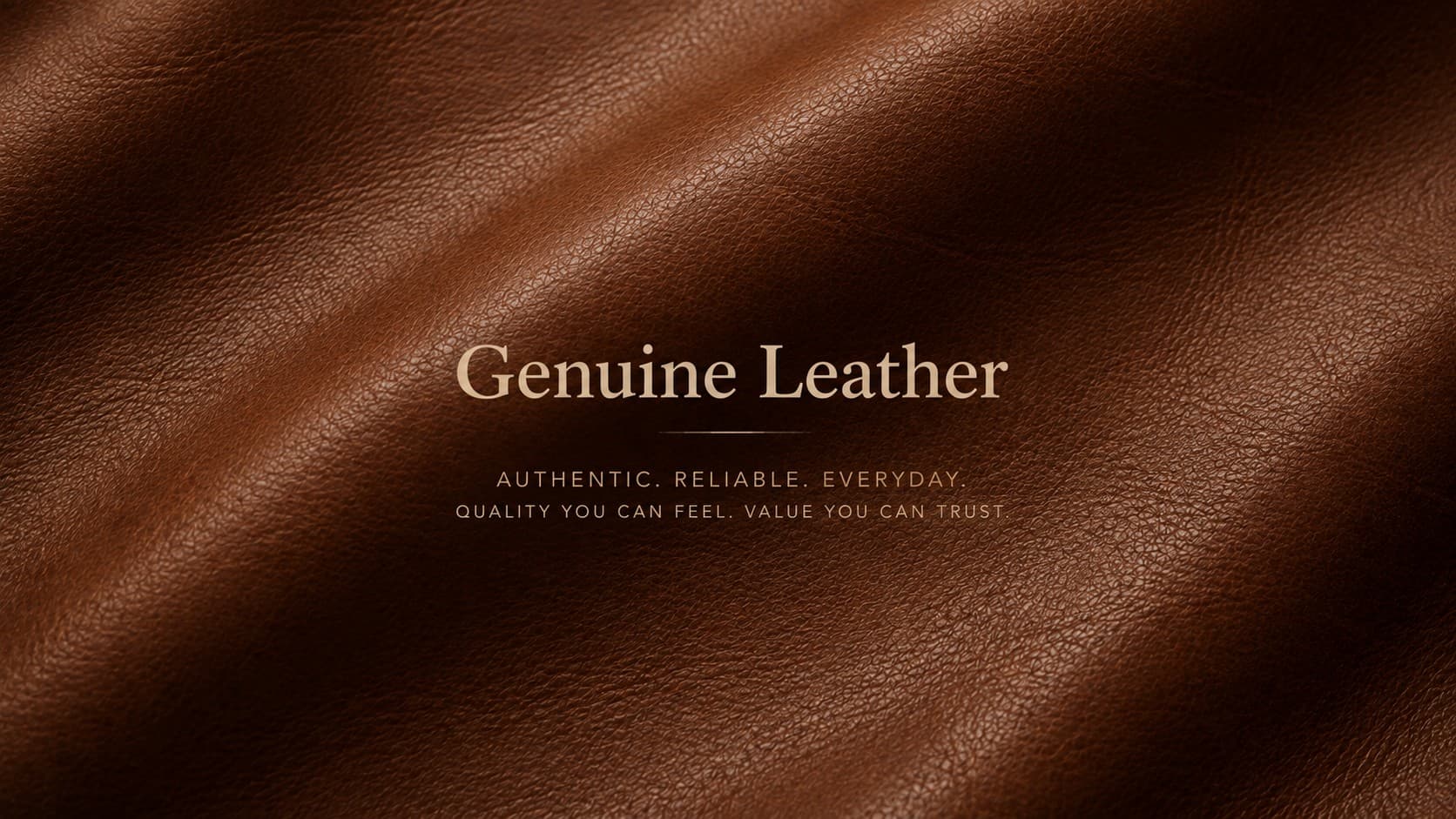
Genuine leather is real animal hide, but it’s typically cut from the lower, weaker layers of the skin that are left over after the top layers have already been split off for full-grain or top-grain products. It’s then treated and finished to look presentable.
The name is genuinely misleading. Most shoppers assume “genuine” means high quality, when in the leather trade it actually signals the opposite — it’s a catch-all term for real leather that didn’t come from the hide’s best layer. Because it’s cut from a lower part of the hide, genuine leather has looser, less dense fibers, so a piece of genuine leather is meaningfully weaker than a full-grain piece of the same thickness, and it also tends to crack, stretch, or wear through faster with regular use. That said, it isn’t fake leather, and it isn’t automatically a bad choice — it’s simply a budget-friendly grade suited to products not expected to see heavy or long-term use, like an inexpensive belt or an occasional-use accessory.
Genuine leather is sometimes also labeled “split leather,” which is a more honest description of where it comes from — the lower splits of the hide left over once the top layers are sliced away. Because the natural surface on these splits is loose and unattractive on its own, it’s common for genuine leather to be embossed with an artificial grain pattern or coated in a finish that makes it look more like full-grain leather than it actually is. A texture that looks a little too perfectly even is often a sign of that kind of treatment.
Why Does the Same Hide Produce Three Different Grades?
A single animal hide is often split into layers during tanning, and each layer becomes a different grade of leather depending on how much of the natural surface remains. The topmost, densest layer becomes full-grain or top-grain leather, while the layers underneath become genuine or split leather.
Think of a hide like a thick sandwich. The very top slice has the tightest fibers and all the natural texture — that’s what full-grain leather is cut from, and top-grain is that same slice with the surface lightly sanded down. The layers further underneath are thinner, looser, and less durable on their own, so tanneries treat, stamp, or emboss them to look more finished before selling them as genuine leather. This is also where a related product, bonded leather, comes from — it’s made of leftover leather scraps and fibers glued onto a fabric backing, and it’s a step below even genuine leather in durability. None of these are “fake” leather; that term belongs to synthetic materials like PU or PVC leather, which contain no actual hide at all.
How to Identify Each Leather Grade
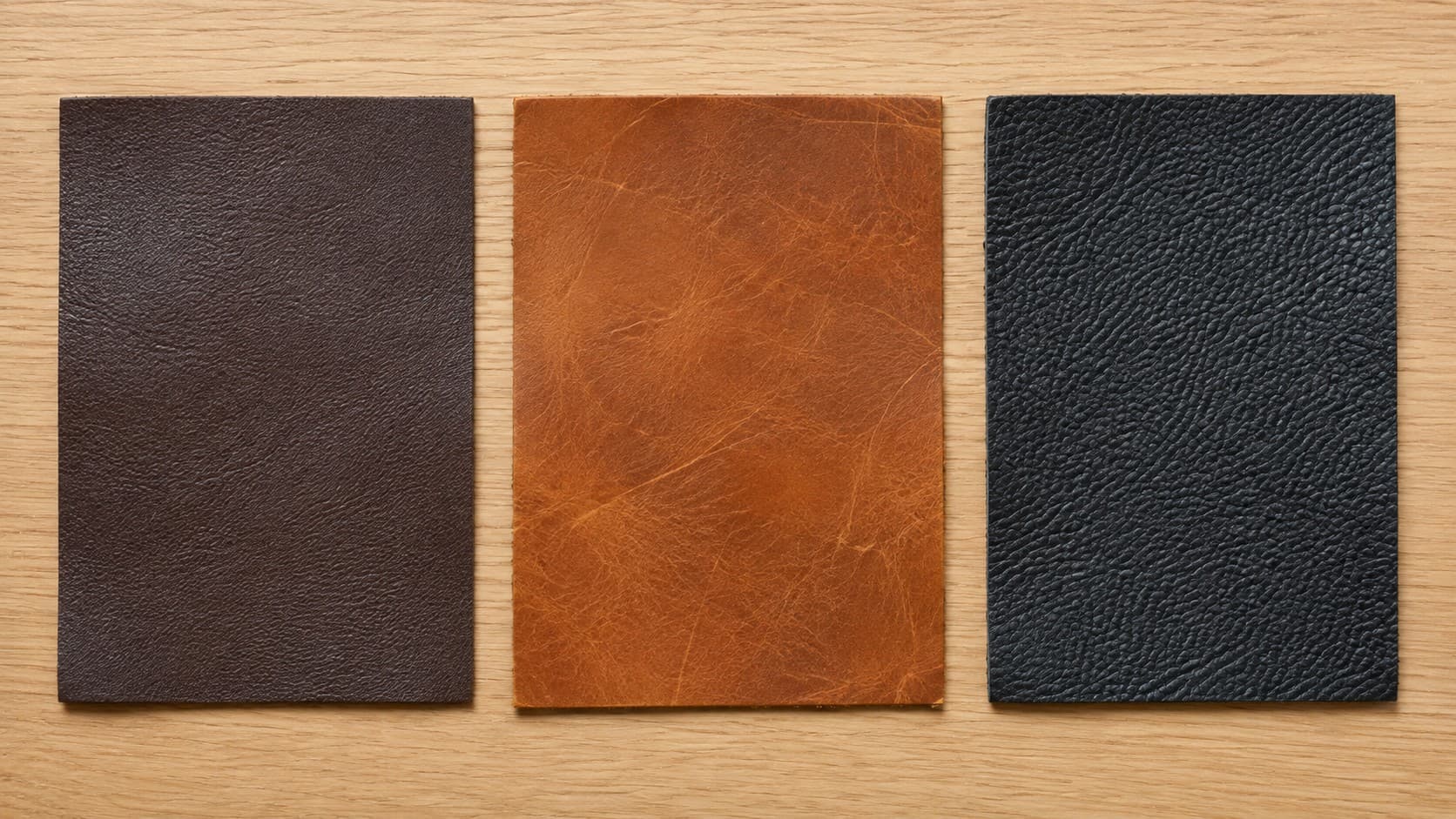
The fastest way to check is to look at the surface and press it. Full-grain leather shows small natural marks and slight unevenness, and it gives a little under pressure before springing back without leaving a hard crease. Top-grain and genuine leather both feel flatter and more uniform, since both have been sanded or treated to smooth out the surface.
The cut edge of the material — visible inside a wallet or along a seam — reveals even more. Full-grain and top-grain leather are solid all the way through the edge, while bonded leather (leftover leather fibers pressed onto a fabric backing) shows a visible fabric layer underneath a thin leather coating. Reading past the word “leather” itself also helps: a label that only says “genuine leather” is technically accurate but doesn’t guarantee much, while “full-grain” or “top-grain” are more specific claims about where the material actually came from. A product description that avoids naming a grade at all is usually worth treating as a small red flag rather than an oversight.
Choosing the Right Leather Grade
The right grade depends on how long a piece is meant to last and how much wear it will see. For daily-use items kept for years — a bag, a wallet, a belt in regular rotation — full-grain or top-grain leather holds up far better than genuine leather over time.
When durability and graceful aging matter most, full-grain leather justifies its higher price because it’s built to improve with use rather than break down. Top-grain leather is a solid middle ground for anyone who wants a polished, consistent look without quite that price tag — it’s still real, durable leather, just with a more refined finish. Genuine leather makes the most sense for occasional-use items or lighter budgets, where trading some longevity for a lower price is a reasonable exchange. None of these choices is inherently “wrong” — they simply serve different needs, and the most common mistake is assuming “genuine” is the top option purely because of how the word sounds.
Frequently Asked Questions
Is top-grain leather real leather?
Yes. Top-grain leather comes from an actual animal hide — it’s simply had its outer surface sanded down to remove natural marks, unlike full-grain leather, which is left untouched.
Is genuine leather bad quality?
Not bad, but it is the lowest grade of real leather. It comes from the lower layers of the hide, so it’s weaker and less durable than full-grain or top-grain leather, though it’s still an authentic animal-hide product.
Which lasts longer, full-grain or top-grain leather?
Full-grain leather generally lasts longer because its tightest, strongest fibers are still intact. Top-grain leather is still durable, but sanding away the surface removes some of that natural strength.
Does genuine leather develop a patina?
Genuine leather can darken slightly with age, but it doesn’t develop the same rich, deepening patina that full-grain leather does, since its fibers and surface aren’t as dense.
What’s the easiest way to tell the difference just by looking at a product?
Full-grain leather shows visible natural texture, small marks, and slight irregularities. Top-grain leather looks smooth and evenly finished. Genuine leather often has a flatter, more artificial-looking surface because it’s been treated to disguise the weaker layer it came from.
Conclusion
Understanding these three grades comes down to one idea: the closer the leather is to the natural outer layer of the hide, the stronger, longer-lasting, and more expensive it tends to be. Full-grain sits at the top for durability and character, top-grain offers a smoother middle ground, and genuine leather is a real but lower-tier option best suited for lighter use. Reading past the word “leather” on a label and checking which grade it actually is reveals far more about how long a piece will last than the price tag alone.