Sunglasses take a beating most people never think about. They get tossed in bags, left on car dashboards, folded the wrong way, and wiped with whatever fabric is closest. None of that feels like a big deal in the moment, but small habits like these are exactly why a pair that looked perfect a year ago now has a scratched lens or a frame that sits crooked on your face. The good news is that almost all of this damage is avoidable, and it usually comes down to a few storage habits that take seconds to build.
What Is the Best Way to Store Sunglasses?
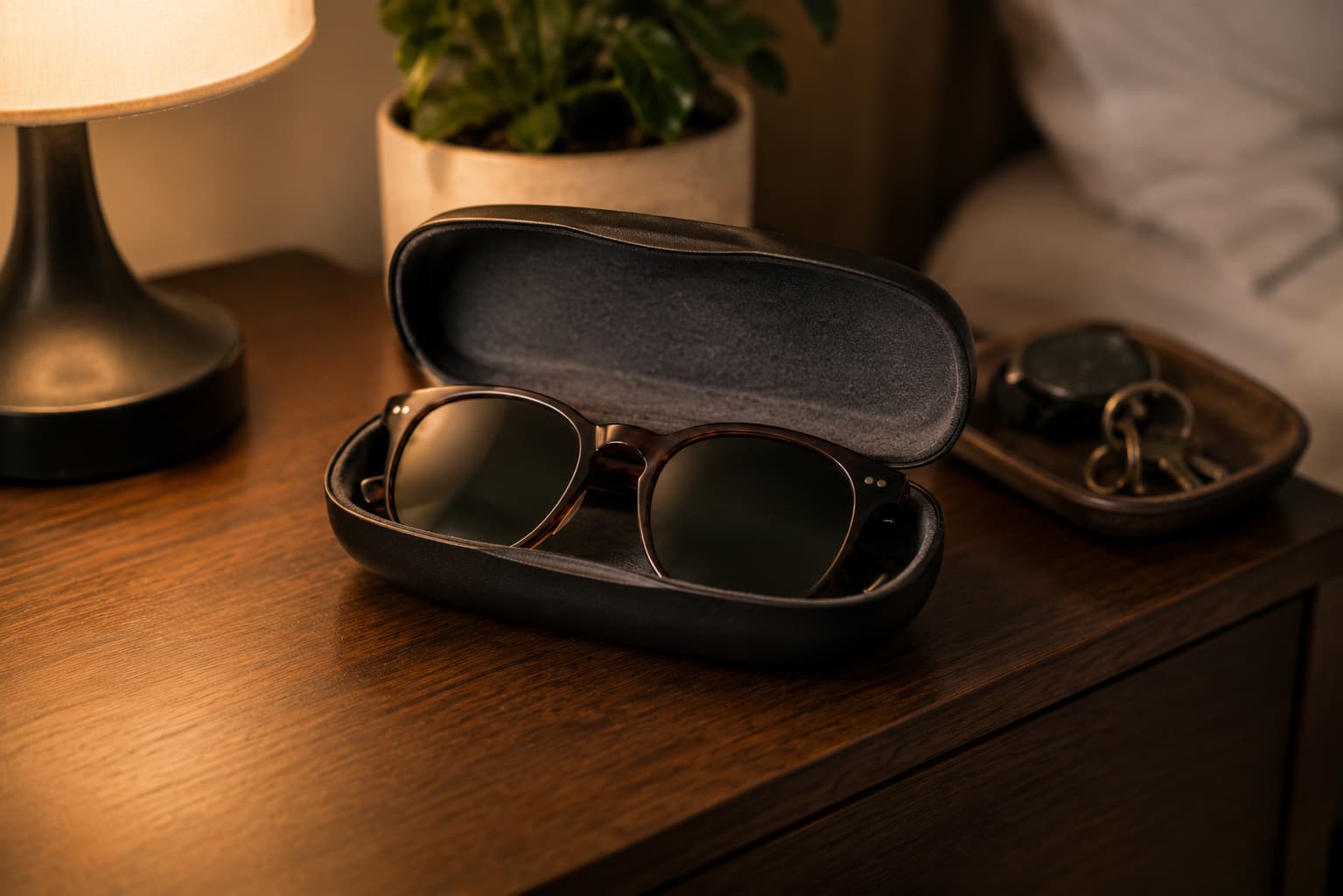
The best way to store sunglasses is in a hard-shell case, kept somewhere cool and out of direct sunlight, with the lenses facing up and nothing pressing on them. A hard case protects against the two biggest threats to sunglasses: impact and heat. Soft pouches are better than nothing, but they won’t stop a lens from cracking if something heavy lands on top of the glasses in a bag.
A case works as armor rather than simply a place to store sunglasses when they’re not being worn. Setting sunglasses down without one — on a table, in a purse, on top of a stack of books — leaves the lenses exposed to a scratch almost every time. A hard case removes that risk almost entirely, and most quality sunglasses come with one for exactly this reason.
Not all cases offer the same protection, though. A rigid clamshell case (the kind with a hinge and a firm outer shell) can survive being sat on or dropped without transferring that pressure to the lenses. A soft pouch or drawstring bag only guards against scratches and dust, not impact, so it’s better suited for tossing sunglasses into a jacket pocket for a short walk than for carrying them in a packed bag all day. If your sunglasses have spring hinges — the small metal coils inside the arms that let them flex outward before folding — storing them in a case that fits snugly also helps those hinges stay tensioned correctly instead of loosening from being jostled around loose in a bag.
Why Do Sunglasses Get Scratched Easily?
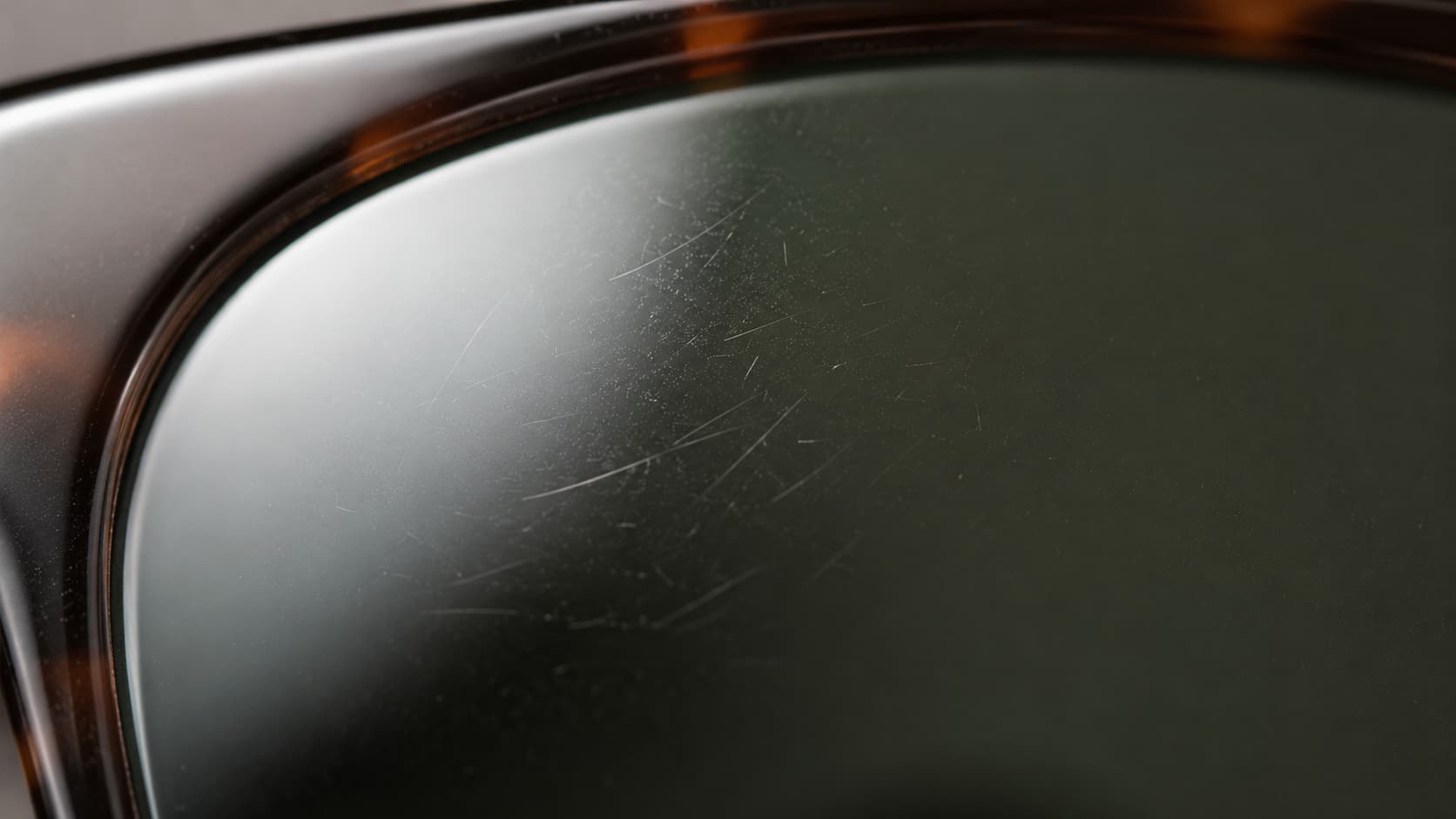
Sunglasses scratch easily because lens coatings are thin and sit right on the surface, so even tiny bits of dust or grit act like sandpaper when they rub against the lens. This is true even for lenses marketed as “scratch-resistant,” which reduce scratching but don’t eliminate it. Scratch-resistant just means tougher, not indestructible.
Most scratches don’t come from one dramatic event. They build up from small, repeated contact:
- Wiping lenses with a shirt, paper towel, or tissue instead of a proper cloth
- Setting sunglasses lens-down on a table or countertop
- Tossing them into a bag loose, where they rub against keys, phones, or coins
- Cleaning with dry cloth when there’s dust already on the lens, which grinds the particles into the coating
Rubbing a dusty lens with a rough cloth works a lot like sanding it, just very slowly. The damage isn’t visible after a single wipe, but after fifty wipes over a few months, it adds up into a lens covered in fine scratches.
Some lenses are also more delicate than others depending on what’s coated onto the surface. Mirrored lenses have a reflective metallic layer that’s thinner than a scratch-resistant coating on its own, so they tend to show wear faster. Anti-reflective and hydrophobic coatings, which make water and oil bead up and slide off, can also wear thin with repeated dry wiping, and once that coating is gone the lens underneath scratches more easily than it did when new. Polarized lenses aren’t more scratch-prone by nature, but they’re often paired with these extra coatings, so the same care rules apply.
What Causes Sunglasses Frames to Warp?
Sunglasses frames warp mainly from heat, and the most common source of that heat is a hot car. Plastic and acetate frames, which make up most sunglasses on the market, soften when temperatures climb, and a parked car in direct sunlight can climb past 100°F (38°C) within about 20 minutes and reach 120–140°F (49–60°C) or higher within an hour, with dashboard surfaces often running even hotter than the air around them. Once the plastic softens, the frame can bend out of shape and won’t always spring back once it cools down.
Metal frames are more heat-resistant but aren’t immune either, especially at the hinges or any parts that have plastic or resin components. Warping doesn’t always look dramatic. Sometimes it just means one arm sits slightly higher than the other, or the glasses no longer sit flat when you set them down. That small shift can also throw off how the lenses align with your eyes.
A pair of sunglasses left on a car dashboard for one summer afternoon can warp permanently, even if the car doesn’t feel unbearably hot to a person sitting inside.
Not every frame material reacts to heat the same way. Cellulose acetate, a plant-based plastic used in a lot of fashion-forward frames, is especially prone to softening and warping because it’s designed to be lightweight and slightly flexible in the first place. Nylon and TR90 (a type of flexible thermoplastic often used in sport frames) resist heat a bit better and tend to bounce back into shape more easily. Even without heat, though, plastic frames slowly become more brittle over years of UV exposure, which is part of why very old sunglasses sometimes crack at the hinges even if they were never left somewhere hot.
Where Should You Never Leave Sunglasses?
You should never leave sunglasses on a car dashboard, in direct sunlight, near a heater or radiator, or loose in a bag or pocket without a case. Each of these spots combines heat, pressure, or scratching risk in a way that speeds up damage.
Some spots cause more damage than others, and for different reasons:
| Location | Main Risk |
|---|---|
| Car dashboard | Heat warps frames and can damage lens coatings |
| Beach towel or sand | Sand grains scratch lenses on contact |
| Bottom of a bag | Keys, phones, and other objects crush or scratch |
| Back pocket | Sitting on them bends or snaps frames |
| Near a heater or radiator | Heat softens plastic frames over time |
The same conditions that damage a phone left in a hot car or a crowded bag tend to cause the same kind of damage to sunglasses.
How Should You Clean Sunglasses Without Damaging Them?
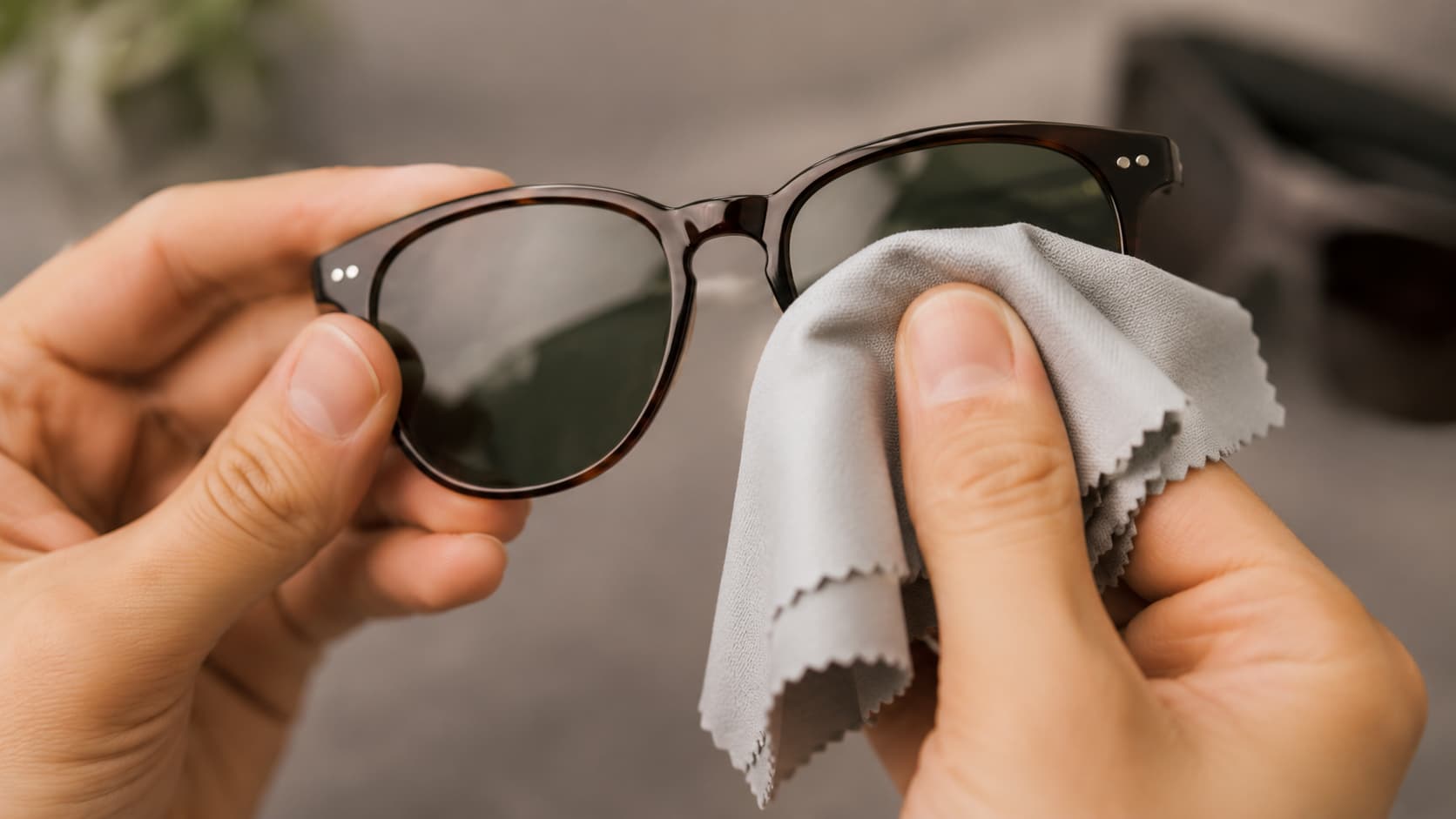
Sunglasses should be cleaned by rinsing off any dust or grit with water first, then wiping gently with a microfiber cloth or a small amount of mild soap and water. Skipping the rinse step is where most damage happens, because wiping a dry, dusty lens grinds the particles directly into the coating.
A safe cleaning routine follows a simple order:
- Rinse the lenses under lukewarm water to knock off loose dust or sand.
- Add a drop of gentle, alcohol-free dish soap if the lenses are greasy.
- Rub gently with clean fingers, not a cloth, while they’re wet.
- Rinse again to remove any soap residue.
- Dry with a clean microfiber cloth using light pressure.
Avoid paper towels, tissues, and clothing — they all contain rough fibers that can leave fine scratches over time, even though they look soft. Also avoid glass cleaners or household sprays, since some contain ammonia or alcohol that can strip lens coatings.
Sunscreen and salt water deserve special mention, since they’re two of the fastest ways to damage a coating without realizing it. Sunscreen contains oils and chemical filters that can react with anti-reflective and hydrophobic coatings if left to dry on the lens, leaving a hazy film that’s hard to fully remove. Salt water leaves behind fine salt crystals as it dries, which act like extra grit the next time the lenses get wiped. After a day at the beach or pool, rinsing sunglasses with plain fresh water as soon as possible — even before a full cleaning — prevents both of these from setting in.
Does Folding Sunglasses the Wrong Way Damage Them?
Yes, folding sunglasses in the wrong order puts extra strain on the hinges and can eventually crack or loosen them. Most sunglasses are designed to have one arm folded first and then the other folded on top, and doing it backward forces the frame to twist slightly every time.
It sounds like a small detail, but hinges are one of the most fragile parts of any pair of sunglasses. Repeated twisting in the wrong direction, even gently, wears down the tiny screws and joints faster than normal use would. If you’re not sure which arm goes first on your pair, check which side folds flatter and more naturally when the glasses are closed — that’s usually the correct first fold.
Frequently Asked Questions
Can sunglasses warp back into shape after they’ve bent?
Sometimes. Mild warping in plastic frames can occasionally be reversed by gently warming the frame with a hairdryer on low heat and carefully reshaping it by hand, but this only works for small bends and risks further damage if the plastic is old or brittle. For anything more than a slight shift, an optician can usually adjust the frame safely.
Is it bad to store sunglasses lens-side down?
Yes, setting sunglasses down lens-side down is one of the easiest ways to scratch them, since the lenses end up resting directly on whatever surface they’re placed on. Folding the arms and setting them down frame-side down, or better yet using a case, keeps the lenses off any surface entirely.
Do cheap sunglasses scratch and warp faster than expensive ones?
Generally yes, because higher-priced sunglasses often use more durable frame materials and higher-quality scratch-resistant coatings, but price alone doesn’t guarantee durability. Storage habits matter more day to day than the price tag, since even premium sunglasses will scratch and warp if they’re treated carelessly.
How often should sunglasses be cleaned?
A quick rinse and wipe every few days is enough for most people, with a more thorough clean whenever they’ve been exposed to sand, saltwater, or sunscreen, all of which leave residue that can degrade lens coatings if left on too long.
Can sunglasses be stored in a glasses case meant for regular eyeglasses?
Yes, as long as the case is a hard-shell design and fits the sunglasses without forcing the arms into an unnatural angle. The material of the case matters far more than whether it was originally marketed for sunglasses or eyeglasses.
Conclusion
Keeping sunglasses scratch-free and properly shaped really comes down to a handful of consistent habits: use a hard case, keep them away from heat sources like car dashboards, clean them wet instead of dry, and fold them in the correct order every time. None of these steps take more than a few extra seconds, but skipping them repeatedly is exactly how a good pair of sunglasses ends up scratched, crooked, or replaced sooner than it should be.