Wearing two pendants on a single chain is one of those small styling choices that changes how a necklace reads without changing what it costs. Instead of a second chain and a second clasp, meaning or style gets combined onto one strand. It works for a birthstone paired with an initial, a religious symbol next to a family charm, or simply two favorite pendants that don’t need to compete for separate necklaces. Done well, it looks intentional. Done carelessly, the pendants twist, overlap, and fight each other with every movement.
Can You Put Two Pendants on One Chain?
Yes, and it’s easier than most people expect. It only takes the right chain, a way to attach each pendant, and a plan for spacing so they don’t collide.
Most jewelers do this with jump rings, small metal loops that connect a pendant’s bail to the chain. The ring is opened slightly, slipped through the chain link and the pendant’s loop, then closed back up. No soldering is required, and no tools beyond a small pair of pliers. An 18-gauge jump ring is the usual choice for an average pendant, since it’s thick enough to hold weight without looking bulky; a thinner 20-gauge ring suits something small and light, like a tiny charm.
A useful check before attaching anything is whether both pendants’ bails are a similar shape and size. A pendant with a very wide bail and one with a tiny loop won’t hang the same way on the same link, and one may end up sitting slightly crooked. Swapping in a slightly larger jump ring on the smaller pendant evens things out, so both hang at the same angle against the chest.
Methods for Adding a Second Pendant
There isn’t one correct method. The right choice depends on how the pendants should sit and move, and how different they are in size.
The Stack Method
This means threading both pendants directly onto the chain so they sit one behind the other, usually at the same point near the center. Because of that, the pendants often overlap slightly and move as a single unit during walking or turning. It creates a fuller, layered look at the front of the neck, suited to a bolder statement rather than two distinct focal points.
Stacking tends to work best when one pendant is noticeably smaller than the other, since the smaller one can peek out from behind without competing for the same space. Two pendants of nearly identical size stacked together often just look like a blur of metal rather than two separate pieces.
The Stagger Method
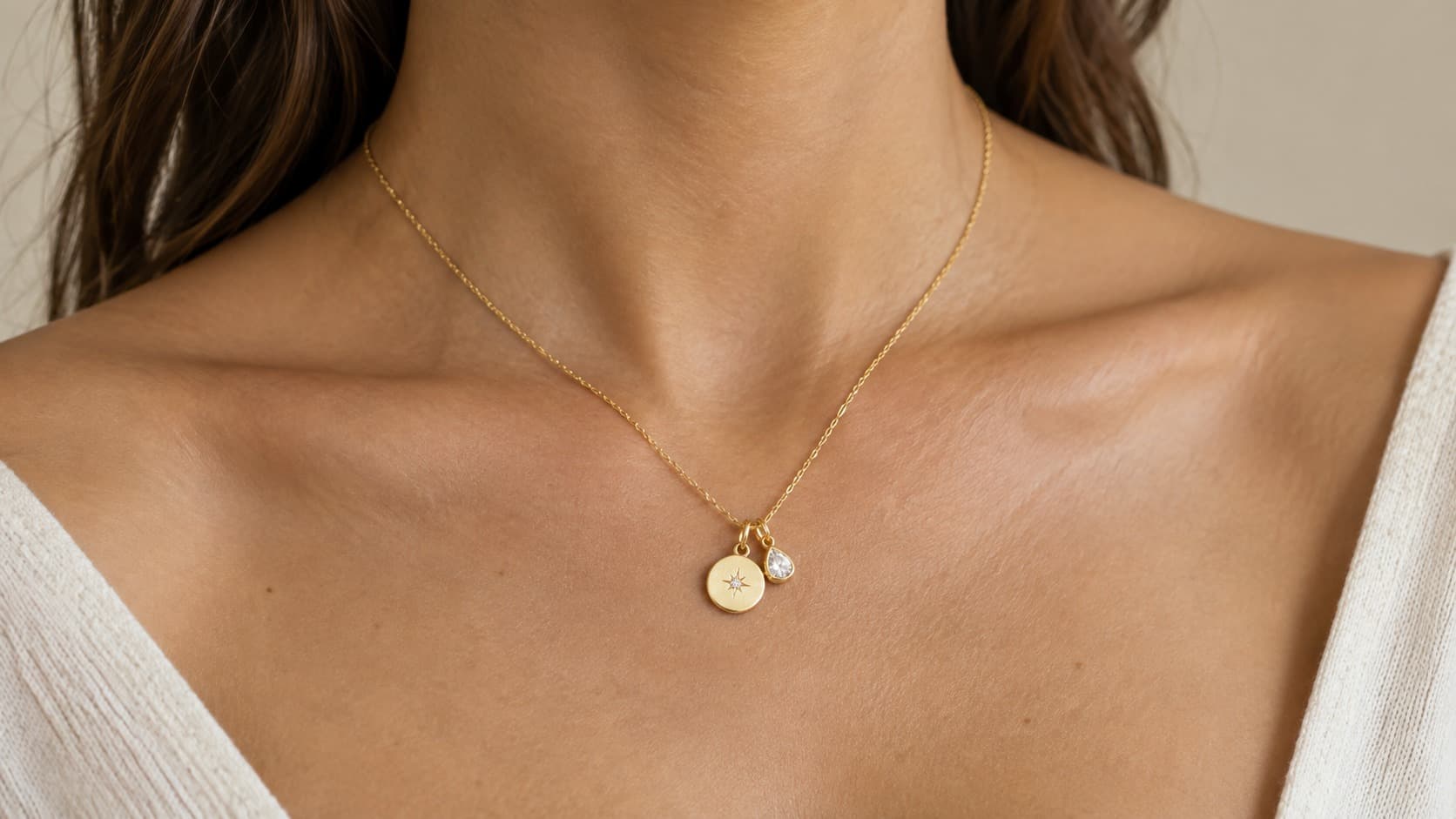
Here, each pendant sits at a different height on the chain, so one falls higher on the chest and the other lower. Because they’re separated by space rather than sitting on top of each other, they don’t compete for attention. This is the method most stylists recommend for daily wear, since it keeps the pendants visually distinct and reduces the chance of tangling.
A variation on this attaches the second pendant to a short length of extra chain, called a drop, rather than directly to the main chain. This creates a tiered effect where one pendant sits noticeably lower than the other, similar to a layered necklace set, but using only one chain and one clasp.
The Slide Method
With this approach, both pendants have bails large enough to slide freely along the chain rather than being fixed in place with jump rings. That means they can shift closer together or spread apart depending on how the chain rests against the body. It gives a more relaxed, casual look, though the pendants can also bunch up in the middle if the chain isn’t kept fairly taut.
This method only works if the bail’s inner opening is noticeably wider than the chain link, otherwise the pendant catches rather than glides. The bail also needs to be checked against the clasp, since one without a fixed stopping point will travel the full length of the chain if the necklace is removed carelessly.
A jeweler’s rule of thumb: if two pendants are similar in size and weight, staggering them slightly prevents one from constantly sliding into the other.
What Makes Two Pendants Look Good Together
The pendants should share something visually, whether that’s metal color, general size, or style era. Mixing rose gold and yellow gold on the same chain can look unintentional rather than eclectic, so matching metals is the simplest way to keep the pairing cohesive.
Size matters just as much. Two large, heavy pendants on one chain tend to clash and pull awkwardly on the neck, while one larger “anchor” pendant paired with a smaller, delicate one usually reads as balanced. It works on the same logic as pairing a bold necklace with subtle earrings: one piece leads, the other supports.
Material is worth considering too. A softer material like pearl or opal can pick up fine scratches if it constantly rubs against a harder metal edge or faceted gemstone, especially with the stack method where the two pendants touch. Pairing a delicate organic gem with a smooth-edged metal pendant, rather than a sharp-cut stone, protects it during everyday wear.
When the two pendants have very different bail sizes, a small connector or a swapped jump ring keeps both sitting securely without slipping around.
Best Chain Type for Two Pendants
A slightly sturdier chain handles two pendants better than a very fine, delicate one. A chain around 1.5mm or thinner suits a single light charm, but two pendants together usually call for something closer to 2mm to 3mm so the chain doesn’t stretch or sag over time.
Curb chains, rolo chains, and figaro chains are common choices because their links are wider and less prone to distorting under weight. Snake chains and very fine box chains, by contrast, can kink permanently if pulled or twisted, which becomes more likely once there’s extra weight and movement from a second pendant. Lightweight pendants, such as small enamel charms, still pair fine with a finer chain. Anything with real heft, like a coin pendant or a chunky gemstone piece, does better on the wider-link chains.
Length also affects how the pieces sit. A shorter chain, around 16 to 18 inches, keeps both pendants visible near the collarbone. A longer chain lets them drop lower and gives more room between the two, which naturally reduces tangling.
How to Space Pendants to Avoid Tangling
Tangling almost always comes down to spacing and bail size, not bad luck. When two pendants sit too close together, their bails catch on each other every time the chain moves.
Leaving at least an inch of chain between attachment points gives each pendant room to swing independently. Wide or unusually shaped bails benefit from a bit more space still. A small bead or metal spacer between the two pendants also works well, acting as a physical buffer that stops them from sliding into contact.
For anyone attaching pendants at home rather than through a jeweler, laying the chain flat on a table before attaching anything and marking the placement with a small piece of tape makes the spacing far easier to get right the first time, rather than redoing the work after both jump rings are closed.
Common Mistakes to Avoid
Uneven weight is the most common problem that goes unnoticed until it’s already happened. When one pendant is noticeably heavier than the other, especially with the stagger method, the extra weight pulls that side of the chain forward and slowly rotates the whole necklace around the neck. Over the course of a day, the clasp can end up sitting at the side or even the front instead of the back. Balancing the pendants’ weight, or placing the heavier one closer to the center of the chain rather than off to one side, keeps the necklace sitting the way it started.
Forcing a bail onto a jump ring or chain link that’s slightly too small is another mistake worth avoiding. It might look fine in the moment, but a bail that’s been stretched or squeezed to fit can weaken over time and eventually crack or bend out of shape. When a pendant’s bail doesn’t slide onto the ring easily, the fix is a slightly larger jump ring, not extra force.
Skipping a spacer between two pendants that sit close together is a small oversight responsible for most tangling problems that show up later. A tiny bead or metal spacer costs almost nothing and takes a moment to add, but it keeps the pendants from grinding against each other with every movement, which also protects any plating or soft stones from unnecessary wear.
Simple Styling Notes for Two Pendants
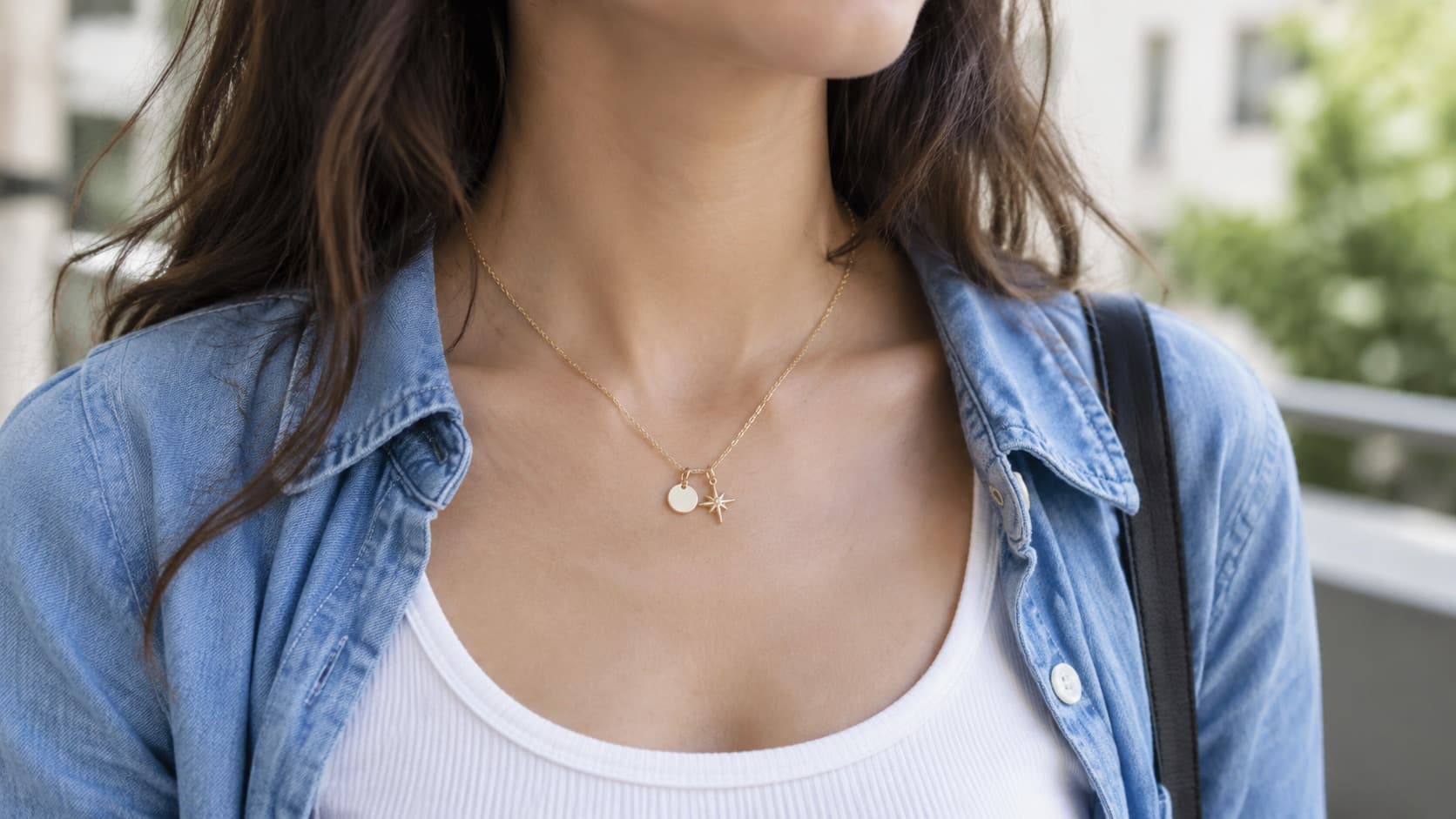
Two pendants on one chain works with almost anything, though a few small habits keep the look polished rather than cluttered.
- Minimal other neck jewelry keeps focus on the two pendants, since a second necklace layered on top tends to clutter the look unless it sits noticeably shorter or longer.
- Simple earrings balance a busier necklace better than large statement pieces, which compete for the same attention.
- The drape can shift over the course of a day, so the pendants sometimes need a quick re-center in front of a mirror.
- Neckline changes the effect: a crew neck hides shorter drops, while a V-neck or scoop neck shows off the spacing between two pendants more clearly.
Maintenance Tips for Two-Pendant Necklaces
Two pendants on one chain put more strain on the metal than a single pendant does, so a little extra care goes a long way. Removing the necklace before showering, sleeping, or exercising helps, since sweat and moisture speed up tarnishing and can loosen jump rings over time.
Storing it flat or hanging separately from other jewelry keeps the chain from twisting around another piece, one of the most common causes of stubborn knots. A check every few months on whether both jump rings are still fully closed is worthwhile too, since repeated movement can gradually work them open, especially with the stack method where the two pendants press against each other constantly.
When either pendant is plated, such as gold-plated or rhodium-plated, the spot where the two pieces touch is worth watching closely. Constant friction between two pendants wears through plating faster than normal wear does, so that contact point is usually the first place to show the base metal underneath.
Frequently Asked Questions
Will two pendants always tangle on one chain?
Not if they’re spaced properly. Tangling usually happens when pendants sit too close together or have bails large enough to catch on each other. Enough space between attachment points, combined with a slightly sturdier chain, solves most tangling problems.
Can a second pendant be added to an existing necklace?
Yes, in most cases. A jeweler can attach a jump ring to an existing chain in minutes, as long as the chain is strong enough to support the added weight. A very delicate chain may call for a small connector piece instead, to avoid bending it.
Do the two pendants need to match?
No, but they should relate to each other in some way, whether that’s metal color, size, or overall style. Two pendants in the same metal tone almost always look more intentional than two in mismatched golds or finishes.
Is a jeweler needed to attach the second pendant, or can it be done at home?
Simple jump ring attachments can be done at home with small jewelry pliers, especially on sturdier chains. Fine gold chains, unusual bail shapes, or pendants with real weight are better handled by a jeweler, who can attach them more securely and avoid bending the chain.
What’s the best chain length for two pendants?
It depends on how much separation is wanted. Shorter chains, around 16 to 18 inches, keep both pendants close to the collarbone, while longer chains give more visual space between them and reduce the chance of tangling.
The Bottom Line
Wearing two pendants on one chain comes down to three things: pendants that share some visual thread, a chain sturdy enough to carry the extra weight, and enough spacing between attachment points to stop them from tangling. Stacked, staggered, or left to slide, getting those three right is what makes the result look like a deliberate pairing rather than two pieces that happened to end up on the same chain.