Most people picture a diamond as perfectly clear, like a drop of frozen water. But diamonds actually come in almost every color imaginable, and brown is by far the most common one nature makes. For decades these stones were overlooked, melted down for industrial drill bits, or sold for a fraction of what a clear diamond would fetch. That changed in the 1980s, when a huge Australian mine and some clever marketing turned brown diamonds into a genuine jewelry trend, complete with warm new names like champagne and cognac. Today brown diamonds sit in a strange spot in the gem world: they’re technically a “fancy color” diamond, yet they’re also the most affordable one, which makes them one of the more approachable entry points into the world of colored diamonds.
What Are Brown Diamonds?
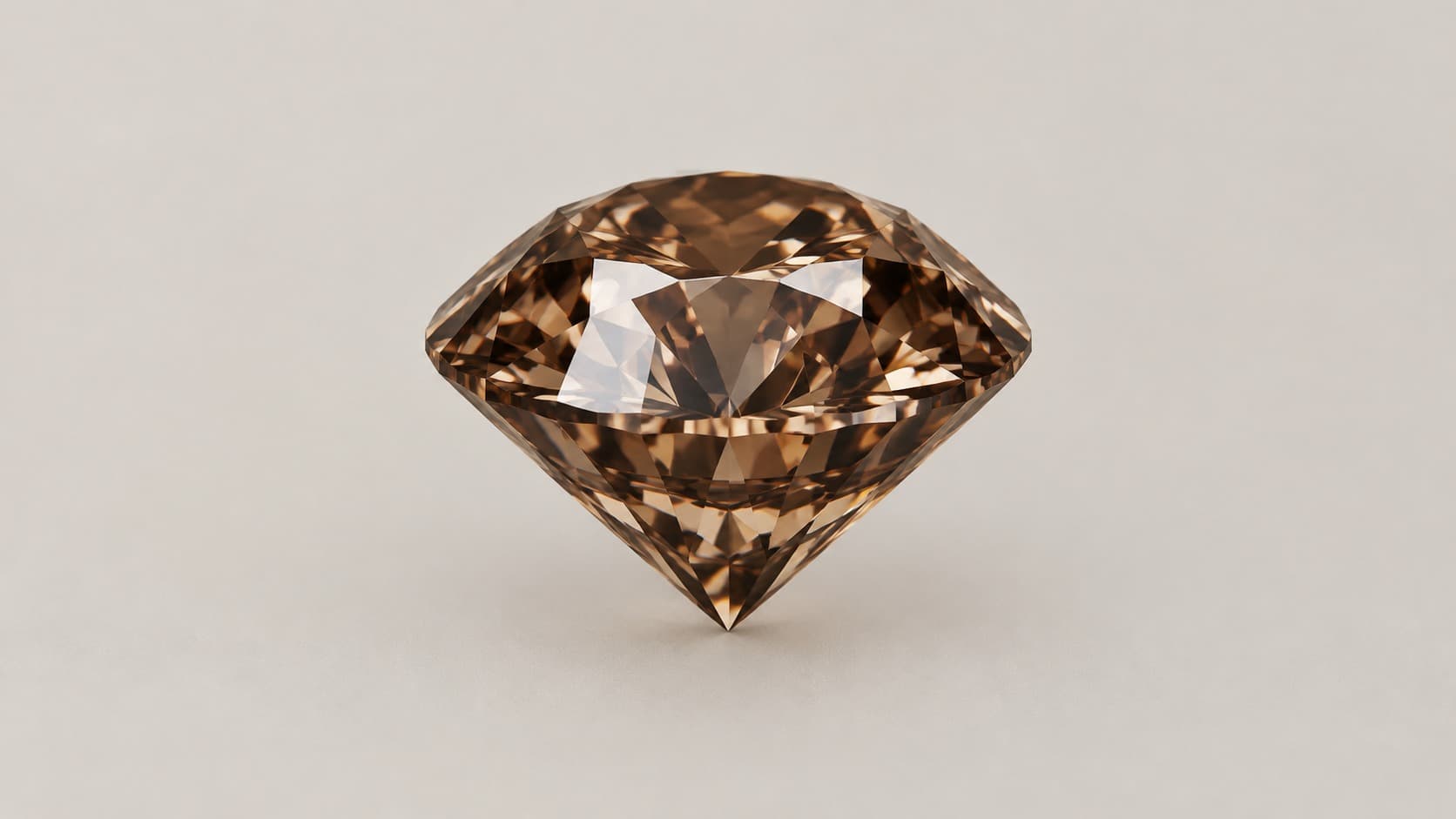
A brown diamond is a natural diamond that formed with a visible brown tint instead of staying colorless. The shade can range from a barely-there tan to a deep, almost coffee-dark brown, depending on how strong the color is.
Diamonds are graded for color on a scale that most people know from engagement ring shopping, running from D (completely colorless) to Z (a noticeable yellow or brown tint). Brown diamonds that fall within that D-to-Z range are usually just called “light brown” stones. But when the brown color is strong enough to stand out on its own, the diamond gets reclassified into a separate system built just for colored diamonds, known as a fancy color. That’s the point where a stone stops being a slightly tinted white diamond and officially becomes a brown diamond in its own right.
Brown diamonds also have a longer history in jewelry than most people assume. For most of that history they moved in and out of fashion quietly, never commanding much attention, until a modern marketing campaign in the 20th century turned the color into a genuine trend almost overnight.
What Causes Brown Diamonds?
Brown color in diamonds almost always comes from tiny defects inside the diamond’s crystal structure, not from dirt or impurities. Deep underground, while a diamond is forming under extreme heat and pressure, the orderly grid of carbon atoms can get bent or squeezed out of shape. Gemologists call this plastic deformation, and it’s the leading cause of brown color, especially in diamonds that are otherwise very pure.
A diamond’s atoms work much like a tightly stacked pyramid of oranges. If something shifts that pyramid while it’s still being built, a few oranges end up crooked instead of lined up straight. Light passing through those crooked spots gets absorbed differently, and the diamond reads as brown to the eye instead of clear. A smaller share of brown diamonds are thought to get their color through a different route: natural radiation exposure deep in the earth over long stretches of time, which alters the bonds between atoms and can also push a stone toward brown or darker tones.
This distinction matters: a brown diamond isn’t a “flawed” clear diamond. It’s a structurally different stone that formed under slightly rougher geological conditions, and that history is literally built into its color.
How Common Are Brown Diamonds?
Brown is actually the most common color found in natural fancy-color diamonds, not the rarest. Across most diamond mines worldwide, brown diamonds make up roughly 15% of total diamond production, which is a huge share compared to colors like pink, blue, or red, which can represent a tiny fraction of a percent.
That abundance is exactly why brown diamonds spent so long being treated as a lower-tier product. Mining companies had more brown rough than they knew what to do with, and for most of the 20th century it was simply sold for industrial cutting tools, like saw blades and drill bits, rather than jewelry. It wasn’t until a huge new source of supply forced the industry’s hand that brown diamonds got a second look as gems.
Not every brown diamond is equally common, though. The darkest, most richly saturated browns, the kind graded C4 through C7 on the old Argyle scale, are considerably scarcer than pale, barely-there champagne tones, which is one reason the deepest brown stones carry a real premium over lighter ones.
Where Are Brown Diamonds Found?
The Argyle diamond mine in Western Australia was the single biggest source of brown diamonds in modern history. It operated from 1983 until it closed in November 2020, and at its peak around 80% of everything it dug out of the ground was brown in color, making it the main engine behind the entire brown diamond jewelry market.
Rio Tinto, the company that ran Argyle, faced a real problem: it was pulling huge volumes of brown rough out of the earth with almost no buyer demand for it as a gemstone. Starting in the 1980s, the company launched a long marketing push to reframe these stones as warm, luxurious, and fashionable rather than second-rate. That campaign is the reason the trade names “champagne” and “cognac” exist at all.
Argyle was never the only source, just the dominant one. Brown diamonds are also mined in smaller volumes in Russia’s Siberian fields, Canada’s Northwest Territories, South Africa, the Democratic Republic of Congo, and Brazil. Since Argyle’s closure, the supply of certified Argyle-origin stones is fixed and permanently finite, so most new brown diamonds entering the market today come from these other sources instead.
Champagne, Cognac, and Chocolate Diamonds Explained
These are marketing names for brown diamonds, not official grading terms used by independent gem labs. Champagne generally describes lighter, golden-brown stones, cognac describes deeper reddish-brown stones, and chocolate describes the darkest, most saturated browns.
The Gemological Institute of America, usually called GIA, is the most respected independent lab in the diamond world, and its official reports never use words like champagne or cognac. Instead, GIA describes brown diamonds using its own vocabulary: Faint Brown, Very Light Brown, Light Brown, Fancy Light Brown, Fancy Brown, Fancy Dark Brown, Fancy Deep Brown, and in rarer cases Fancy Intense or Fancy Vivid Brown. A jeweler might call a stone “champagne” on a price tag, but the paperwork that actually proves its color and authenticity will use GIA’s own terms.
Argyle also created its own private grading scale that ran alongside these trade names, and it still turns up on older stones and certificates:
| Argyle Grade | Common Name | General Shade |
|---|---|---|
| C1–C2 | Light Champagne | Very light, subtle brown |
| C3–C4 | Medium Champagne | Warm golden-brown |
| C5–C6 | Dark Champagne | Deeper, richer brown |
| C7 | Fancy Cognac | Darkest, reddish-brown |
One brown diamond name is actually off-limits to most jewelers: “Chocolate Diamond” is a registered trademark owned by the American jewelry company Le Vian, launched in 2000 and protected in over a hundred countries. Le Vian reserves the name for brown diamonds in roughly the C4-to-C7 range that meet its own standards for color depth and clarity, and other retailers legally cannot use that exact term on diamonds that aren’t part of the Le Vian brand.
Because these trade names were never standardized across the whole industry, the same diamond could be labeled “cognac” by one jeweler and “dark champagne” by another. The only reliable way to confirm a stone’s exact shade and quality is the official color grade on an independent lab report, not the marketing name on the tag.
Understanding Brown Diamond Grades
Brown diamonds are graded the same way as any other diamond, using color, clarity, cut, and carat weight, but their color grade follows the fancy-color system instead of the standard D-to-Z scale once the brown is strong enough to stand out. A gemologist looks at how saturated, how dark, and how evenly distributed the brown color is before assigning a grade.
Clarity and cut still matter a great deal for how a brown diamond looks and performs. A well-cut brown diamond can show real warmth and sparkle in the right lighting, while a poorly cut one can look flat or muddy no matter how nice its color grade is on paper. Because brown diamonds are priced lower per carat than colorless ones, many jewelers can afford to cut larger brown stones, which is one reason brown diamonds often appear as bold, eye-catching centerpieces in rings and pendants rather than small accent stones.
Natural vs. Treated Brown Diamonds
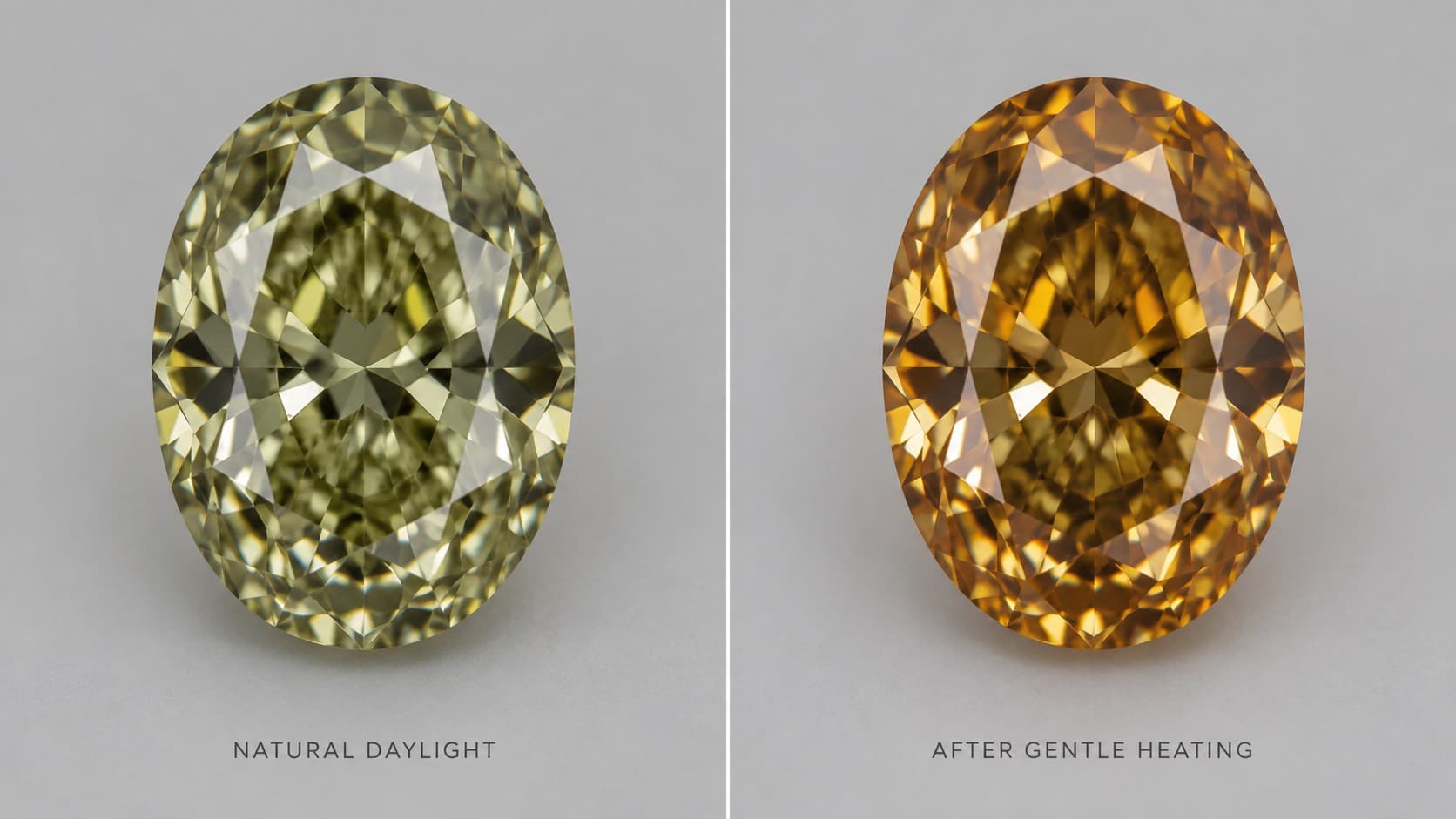
Some brown diamonds on the market are treated to shift or deepen their color, most commonly using a process called HPHT, which stands for high-pressure, high-temperature treatment. This process mimics the extreme conditions deep in the earth and can push a brown diamond’s color toward near-colorless, yellow, or other hues.
It helps to separate this from the natural radiation cause mentioned earlier. Natural radiation exposure happens underground over millions of years, long before a diamond is ever mined, and it’s considered a fully natural color origin. Lab irradiation, by contrast, is done deliberately on a cut or rough diamond after it’s been pulled from the ground, as a treatment to change its color. Both can produce similar-looking brown tones, which is exactly why a lab report matters: it’s the only way to tell which one actually happened to a given stone.
This is a legitimate, disclosed practice in much of the trade, but it’s one buyers benefit from understanding. A treated diamond is not fake or synthetic, it’s a real diamond that has had its appearance altered after mining, and this should always be noted on its grading report. For anyone purchasing a brown diamond specifically for its color, confirming whether that color is natural or enhanced is worthwhile, since the two can look identical to the naked eye.
The World’s Most Famous Brown Diamonds
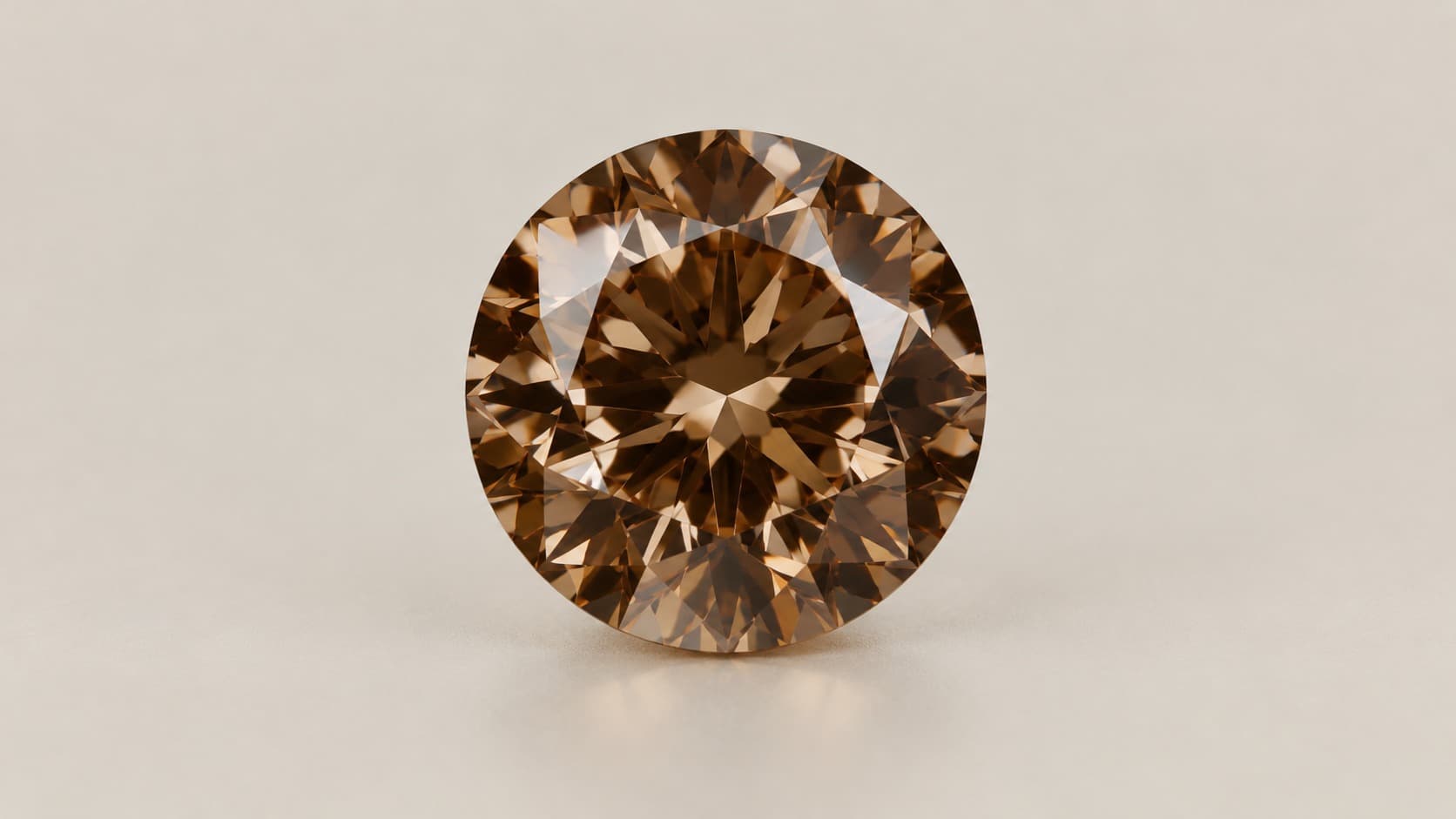
A handful of giant brown diamonds have become legends in the gem world because of their sheer size. The largest cut diamond on Earth is actually brown: the Golden Jubilee, a cushion-cut stone weighing 545.67 carats, graded as a Fancy Yellow-Brown. It’s more than four times larger than the next biggest brown diamond ever found.
Another famous example is the Lesotho Brown, a rough diamond weighing 601 carats discovered in the African kingdom of Lesotho in 1967. Jeweler Harry Winston bought the stone in 1968 and cut it into 18 separate polished diamonds, together weighing about 242.5 carats, proving just how much usable gem material can hide inside one giant brown rough stone. Brown diamonds have also made it onto the red carpet more than once, with celebrities including Rihanna, Madonna, and Jennifer Lopez having worn Le Vian’s trademarked Chocolate Diamonds in public appearances over the years.
What Affects Brown Diamond Price?
Brown diamonds are generally the most affordable members of the fancy-color diamond family, often costing a small fraction of what a comparable blue, pink, or red diamond would cost. Their relative abundance in nature is the main reason for this lower price point.
That doesn’t mean all brown diamonds are cheap, though. Larger stones, exceptional cut quality, and documented natural color with no treatment can all push the price up considerably, especially now that Argyle-origin stones are no longer being newly mined. Since the mine’s 2020 closure permanently cut off the largest supply source in the world, some collectors and jewelers have reported rising prices specifically for certified Argyle brown diamonds, even though brown remains, overall, one of the more budget-friendly diamond colors.
How Brown Diamonds Compare to Other Colors
Brown diamonds sit at the opposite end of the rarity scale from stones like pink, blue, and red diamonds, even though all of them are classified as “fancy color” diamonds under the same grading system. Pink and red diamonds, in particular, are famously scarce, which is part of why Argyle became so legendary: that one mine once produced around 90% of the world’s pink diamonds, even though pink diamonds were never more than a tiny sliver of its total output.
This contrast explains the pricing gap between diamond colors. A deep pink or red diamond can sell for many multiples of what an equally sized brown diamond costs, simply because the odds of finding one in nature are so much lower. For buyers who love the idea of a naturally colored diamond but want something within a realistic budget, brown is usually the most practical entry point into that world.
Frequently Asked Questions
Is a brown diamond a real diamond?
Yes. A brown diamond is a completely natural diamond made of the same carbon crystal as a colorless one. Its brown color comes from internal structural quirks or natural radiation exposure during formation, not from any added material or defect in the stone’s authenticity.
Are brown diamonds cheaper because they’re lower quality?
Not exactly. Brown diamonds are less expensive mainly because they’re more common in nature, not because they’re lower quality. A well-cut, eye-clean brown diamond can be just as durable and brilliant as a colorless one; it simply costs less because supply is higher and demand has traditionally been lower.
What’s the difference between champagne and cognac diamonds?
Both are trade nicknames for brown diamonds, not official grades. Champagne refers to lighter, golden-toned brown stones, while cognac refers to darker, more reddish-brown stones. Neither term appears on an independent gem lab’s official grading report.
Is “Chocolate Diamond” the same as any dark brown diamond?
Not legally. “Chocolate Diamond” is a trademark owned by Le Vian, reserved for specific brown diamonds that meet that company’s own color and clarity standards. A retailer outside the Le Vian brand cannot use that exact name on its own brown diamonds.
Do brown diamonds sparkle like clear diamonds?
Yes, a well-cut brown diamond has the same hardness and light-bending properties as any other diamond, so it can sparkle brightly. The color simply tints that sparkle with warm brown tones instead of leaving it colorless, and cut quality affects how lively that sparkle looks just as much as it does in a clear diamond.
Can brown diamond color be changed or faked?
The brown color itself can sometimes be shifted through a heat-and-pressure treatment called HPHT, which should always be disclosed on a grading report. Lab-grown diamonds can also be produced in brown tones. Neither of these makes a stone “fake” exactly, but both affect its value, which is why independent lab documentation remains the only reliable way to confirm which one applies.
The Bottom Line
Brown diamonds tell a genuinely interesting story: they’re proof that a diamond doesn’t need to be colorless to be valuable, durable, or beautiful. Their warm tones come from real geological drama inside the earth, their abundance makes them one of the more wallet-friendly ways to own a naturally colored diamond, and their history, from industrial drill bits to a trademarked luxury brand, shows how much perspective and marketing can shape what we consider precious. For anyone drawn to the idea of a diamond with a bit more personality than a plain clear stone, a brown diamond offers that warmth, that history, and real GIA-documented quality, without the price tag of its rarer pink and red cousins.