A handbag can look beautiful in a photo and still fall apart within a year, and the difference almost always comes down to details most shoppers never learn to check. Stitching is one of the clearest windows into how a bag was actually made, because thread holds every panel, handle, and lining in place, and it is one of the few parts of a bag that can be inspected before it’s ever used. Once the difference between careful stitching and rushed stitching becomes familiar, it starts showing up everywhere, and it becomes one of the fastest ways to judge whether a bag was built to last or built to sell.
How Many Stitches Per Inch Should a Quality Handbag Have?
On a well-built bag, the main seams generally run 8 to 10 stitches per inch, and the count climbs to around 10 or 12 near the parts that take the hardest pulling, such as where a handle meets the body or a D-ring is anchored in place. Stitch count is one of the easiest things to check in a store or in a close-up photo, since the individual thread marks along a seam are visible to the naked eye or with a small magnifying glass.
The logic behind the number is simple. Each stitch is a small hole that shares the load of holding two pieces of leather together. Too few stitches and each one carries more weight than it should, so the seam stretches, loosens, and eventually rips under the pull of a shoulder strap or a stuffed interior. Too many stitches, on the other hand, can actually weaken thin leather by perforating it with more holes than the material can comfortably hold. Anything under 6 stitches per inch on a load-bearing seam is a warning sign of corner-cutting construction, no matter how polished the leather looks.
| Seam location | Stitches per inch | What it means |
|---|---|---|
| Main body panels | 8–10 | Standard for a well-built bag |
| Handle bases, D-rings, strap anchors | 10–12 | Higher stitch density needed to handle repeated pulling |
| Under 6 anywhere on a load-bearing seam | — | Cost-cut construction, likely to loosen over time |
Attachment points carry the most repeated stress every time a bag is picked up, set down, or slung over a shoulder, so brands that care about durability tighten the stitch count specifically in those areas rather than keeping it uniform across the whole bag.
What Is Saddle Stitching and Why Does It Matter?
Saddle stitching works differently from most other stitching methods because it doesn’t rely on a single strand of thread weaving its way through the material. Instead, a needle is threaded onto each end of one length of thread, and the two needles are worked back and forth through the same punched hole from either side of the leather. Each stitch essentially locks itself in place the moment it’s formed, rather than depending on the tension of the stitches around it. That design is the reason saddle-stitched seams are so prized in leather goods.
Ordinary machine stitching works differently. It typically forms a lockstitch from two threads — one fed down through the needle, one held in a bobbin underneath the leather — that interlock inside the material as the seam is sewn. It holds up fine under normal handling, but because every stitch along the line shares tension with its neighbors, a cut or badly frayed thread at one point can let the surrounding stitches loosen and the seam give way further than that single spot. Saddle stitching avoids this because each stitch is locked in place on its own, independent of the ones next to it. If one breaks, its neighbors hold firm, and the seam stays intact long enough for a repair rather than failing all at once. This is why saddle stitching has been the standard for saddles, bridles, and other equipment that has to survive years of hard use, and why it carries over into wallets, belts, and handbags built for longevity rather than a season or two of wear. It often shows up as a slightly diagonal, rope-like pattern in the thread line, the natural result of two needles crossing through the leather from either side.
| Saddle stitch | Machine lock stitch | |
|---|---|---|
| Threads used | Two needles, two independent threads | One continuous thread |
| If a stitch breaks | Neighboring stitches stay locked | Can unravel progressively along the seam |
| Typical use | Wallets, belts, handles, high-stress points | Straight body seams, linings, mass production |
| Speed to produce | Slower, often hand-done | Fast, machine-driven |
Neither method is automatically inferior — a well-calibrated machine seam holds up fine on a flat body panel that isn’t under constant strain. The real distinction is whether saddle stitching, or an equivalent reinforced technique, was used specifically at the points where a bag takes the most abuse.
How to Spot Bad Thread Tension on a Handbag
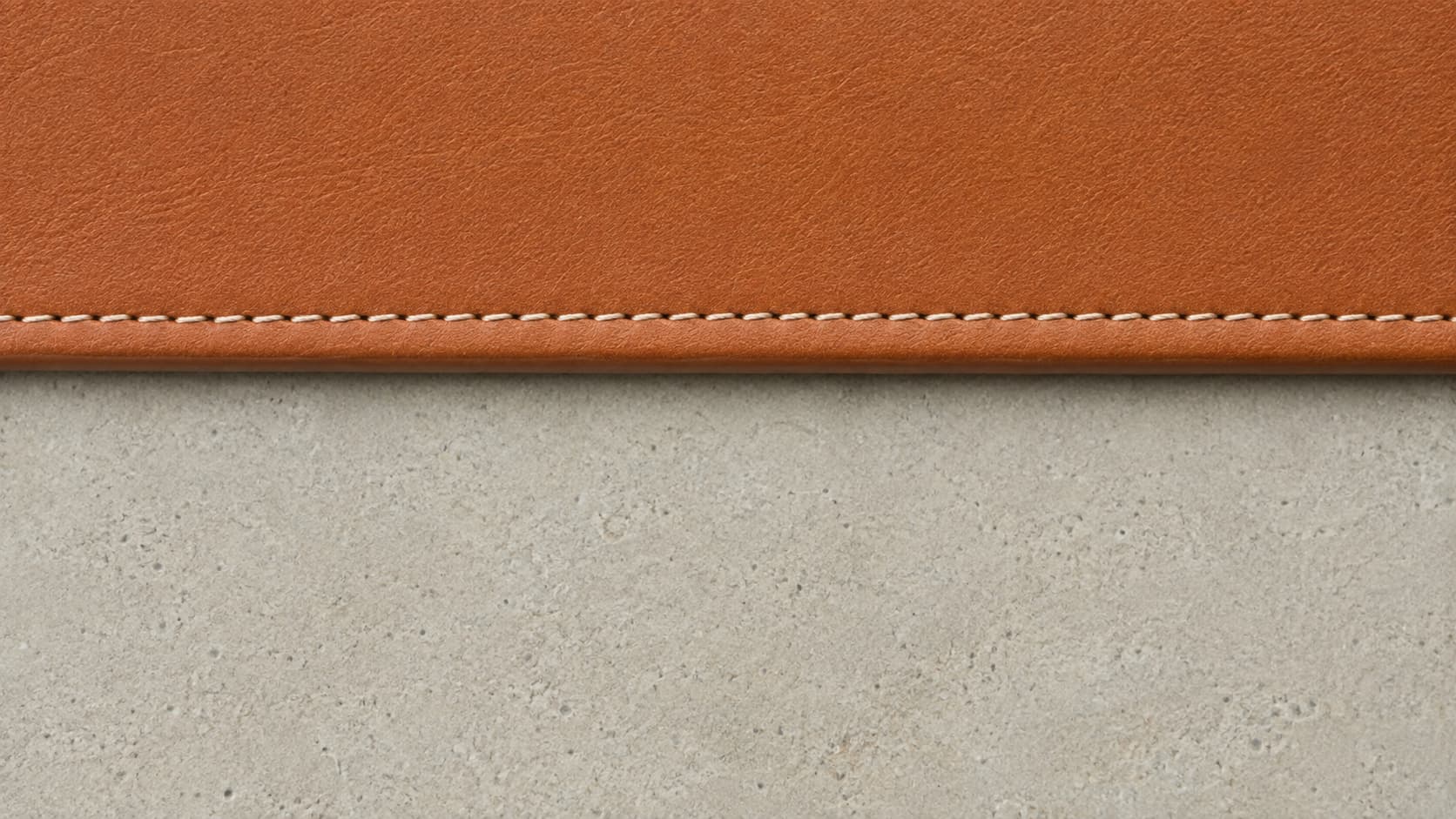
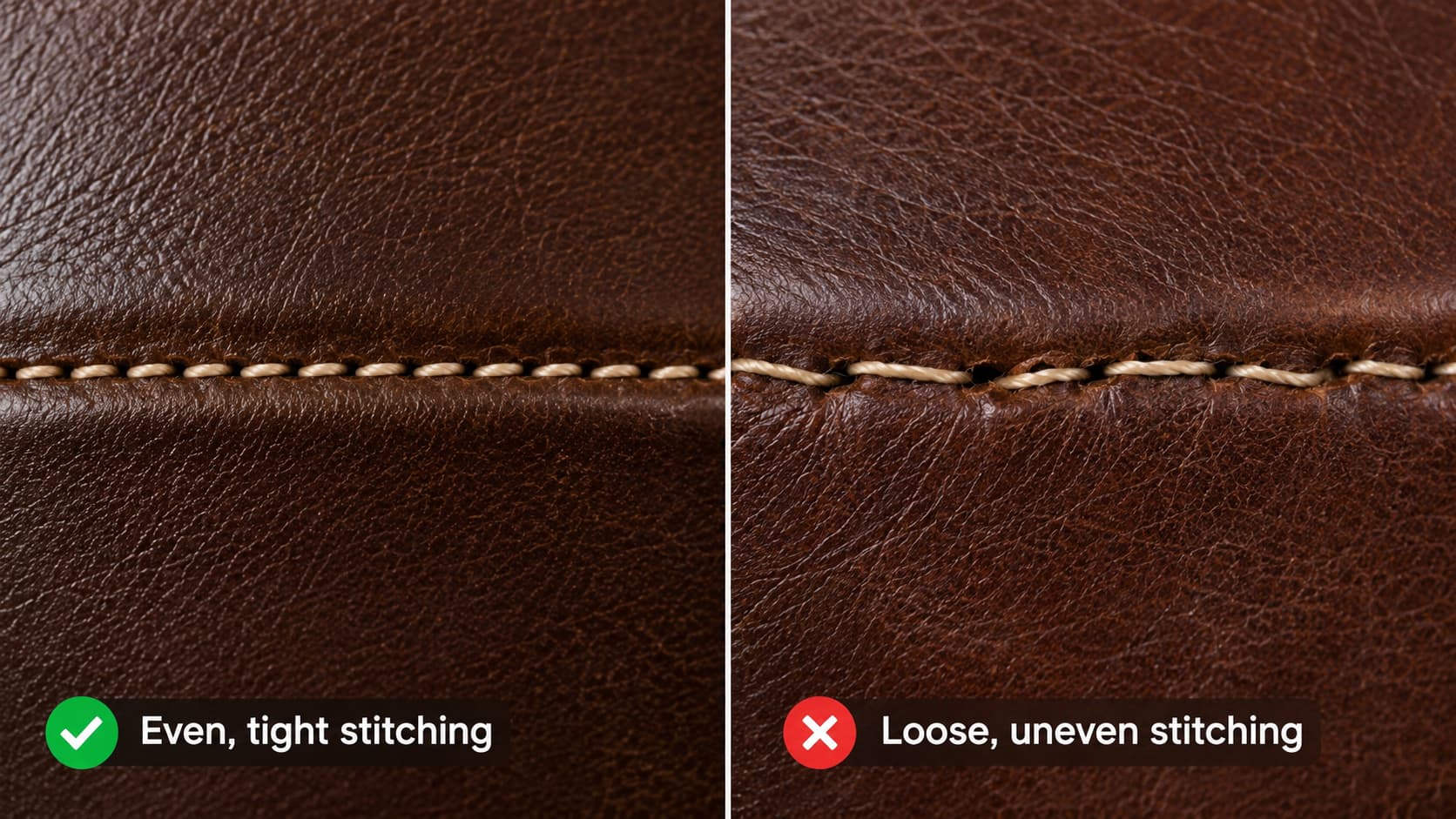
Uneven tension is one of the fastest tells of rushed or poorly calibrated stitching, and it’s usually visible without any special tools. On a properly tensioned seam, the thread sits flush against the leather on both sides. When the machine is out of balance for the thread weight or leather thickness, the result is tight little loops on one side of the seam and small pulled dimples on the other.
Good tension looks almost boring, in the best way — a straight, evenly spaced line without slack loops or puckering. Puckered leather around a stitch line usually means the operator forced a stitch length that didn’t match the leather’s thickness, which puts extra strain on the material every time the bag flexes. Tension problems tend to show up first at corners and curves, since those are the hardest places to keep consistent, so a gentle bend at a seam corner will often reveal whether the stitching lies flat or starts to gap.
A seam that looks slightly “too perfect” in a photo but shows loose loops or dimpling in person is often a sign the bag was styled for a listing rather than built for daily use.
Why Do Stitch Lines Need to Be Straight and Evenly Spaced?
A straight, evenly spaced stitch line is a direct sign that the leather was marked, cut, and guided carefully before a single stitch was made. Wobbling or drifting stitch lines usually mean the guide marks were skipped or the workshop was moving too fast to bother with them.
This matters for more than looks. A stitcher who takes the time to mark consistent spacing with a pricking iron, guided by a channel cut with a stitching groover, is also, by habit, someone who checks leather thickness, trims edges evenly, and matches thread weight to the material. Sloppy spacing is rarely an isolated problem; it tends to travel with other shortcuts elsewhere on the bag. A line that curves gently to follow the shape of a gusset or a curved panel is expected and fine, but a line that zigzags or drifts off course by more than a stitch or two is not.
A related detail worth a second look is symmetry between matching parts of the same bag. Two handles, two side gussets, or matching front and back panels should show the same stitch count and spacing on both sides. A mismatch — say, 9 stitches per inch on one handle and 7 on the other — usually means the two pieces weren’t cut or sewn by the same careful process, even when each one looks fine on its own.
What Does Good Thread Quality Look Like?
Good handbag thread looks smooth, feels slightly waxy or coated, and shows no fraying, fuzziness, or color bleed after normal handling. Thread that already looks frayed on a brand-new bag is a strong indicator it will only worsen with wear.
Most quality leather goods use polyester or waxed linen thread rather than plain cotton, because coated threads resist moisture and abrasion far better and don’t rot the way untreated natural fiber can over years of use. Thread thickness should also look proportional to the stitch spacing rather than either lost inside oversized holes or bulging out of undersized ones, since mismatched thread and hole size is a sign the workshop used whatever was on hand instead of the right material for that leather.
- Waxed linen – traditional, strong, and easy to hand-stitch, though it can wear faster than synthetic options on heavily-used bags.
- Bonded polyester – resists rot, moisture, and UV fading, and is common on bags meant for daily use.
- Plain cotton – cheaper and softer, but breaks down faster and is a weaker choice for stress points.
Contrasting thread colors, which some brands use deliberately, make stitch consistency easier to judge in photos, since every irregularity stands out clearly against the leather rather than blending into it.
What Do Reinforced Stress Points Look Like on a Well-Made Bag?
Reinforced stress points show up as extra rows of stitching, small leather tabs, or box stitching (an X or box pattern) at the spots where a handle, strap, or D-ring attaches to the body of the bag. These are the areas most likely to fail first, so quality construction treats them differently from the rest of the seams.
A handle base takes a downward pull every single time the bag is lifted, a very different kind of stress than the gentle tension along a side seam. Bags built to last are reinforced at exactly these points, often through a combination of techniques.
- Box-X stitching – a square with a crossing X inside it, which spreads pulling force in four directions instead of just one, making it well suited to handles and multi-directional stress.
- Bar tacking – a dense cluster of short, tight stitches in one small spot, used to stop a seam from starting to unravel at its weakest point.
- Doubled or tripled stitch rows – running an extra line, or two, of stitching alongside the original seam so the pulling force is shared across several rows of thread rather than resting on a single line.
- Leather backing patches or reinforcement tape – an extra layer sewn or bonded underneath the visible stitching to give the thread more material to grip.
A slight give or flex where a handle meets the bag body, felt through a light tug, is usually a sign that reinforcement is thin. Bags that skip this step often look identical to well-made ones in a flat photo, since the extra work is concentrated in a small, easy-to-overlook area.
How Does Edge Finishing Reflect the Quality of a Handbag?
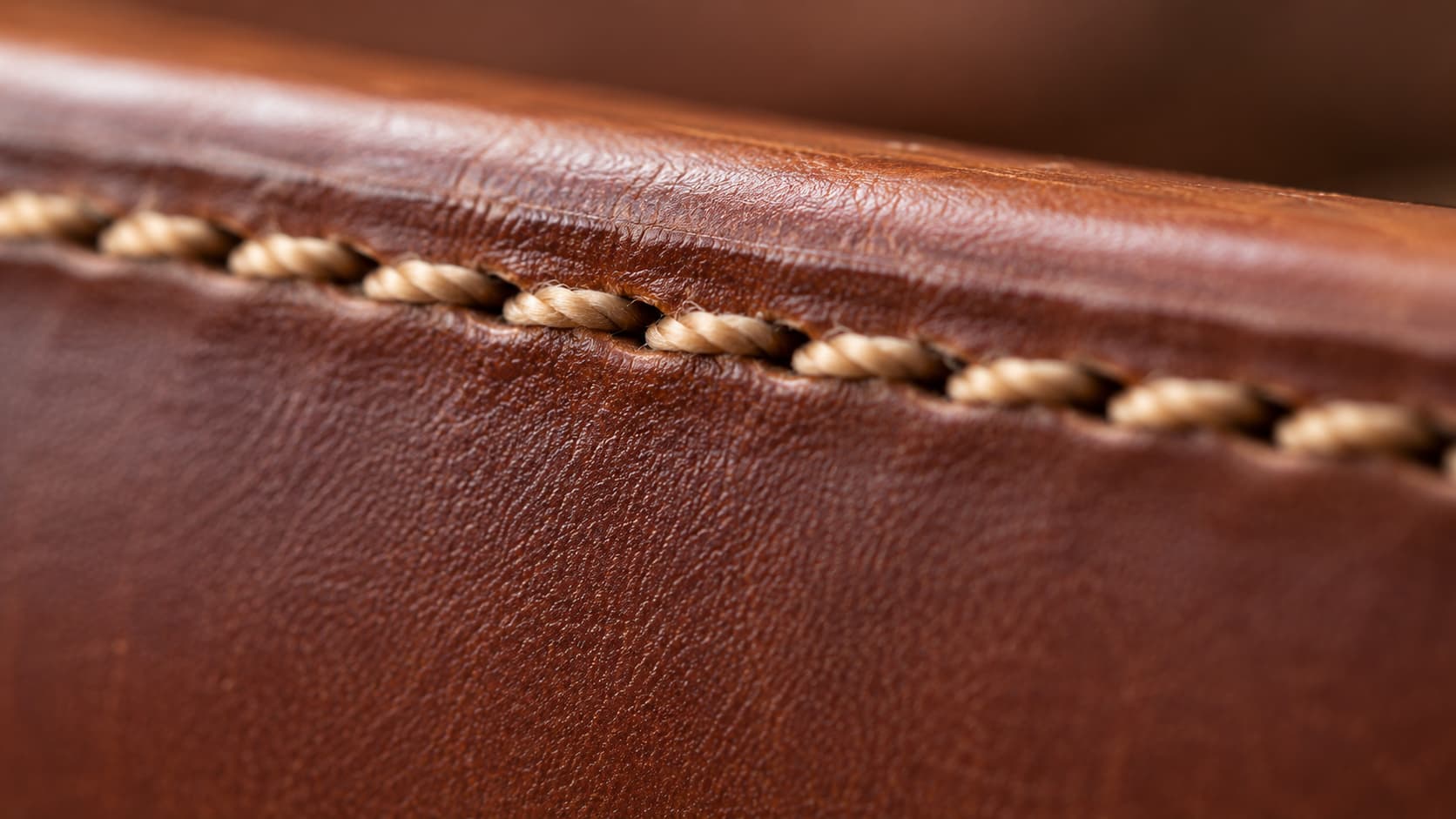
Clean edge finishing — whether painted, burnished, or folded — is a strong sign of overall craftsmanship because it takes patience and multiple passes to get right, and there’s no way to fake it quickly. A raw leather edge should feel smooth and rounded rather than rough, flaky, or sticky.
- Edge painting – several thin coats of paint applied and lightly sanded between coats, resulting in a smooth, slightly glossy line with no cracking or uneven thickness.
- Burnishing – friction, and sometimes a touch of wax or water, used to compress and smooth the leather’s own fibers into a polished edge without adding paint.
- Folded edges – common on lighter leathers and fabric-backed panels, and should show a tight, even fold with no fraying visible at the crease.
Because edge work sits right next to the stitching, both can usually be judged at the same time: a bag with careful stitching but cracked or peeling edge paint is a sign that corners were cut somewhere in the finishing stage even if the sewing itself was solid.
What Should Be Checked Inside the Bag, Not Just Outside?
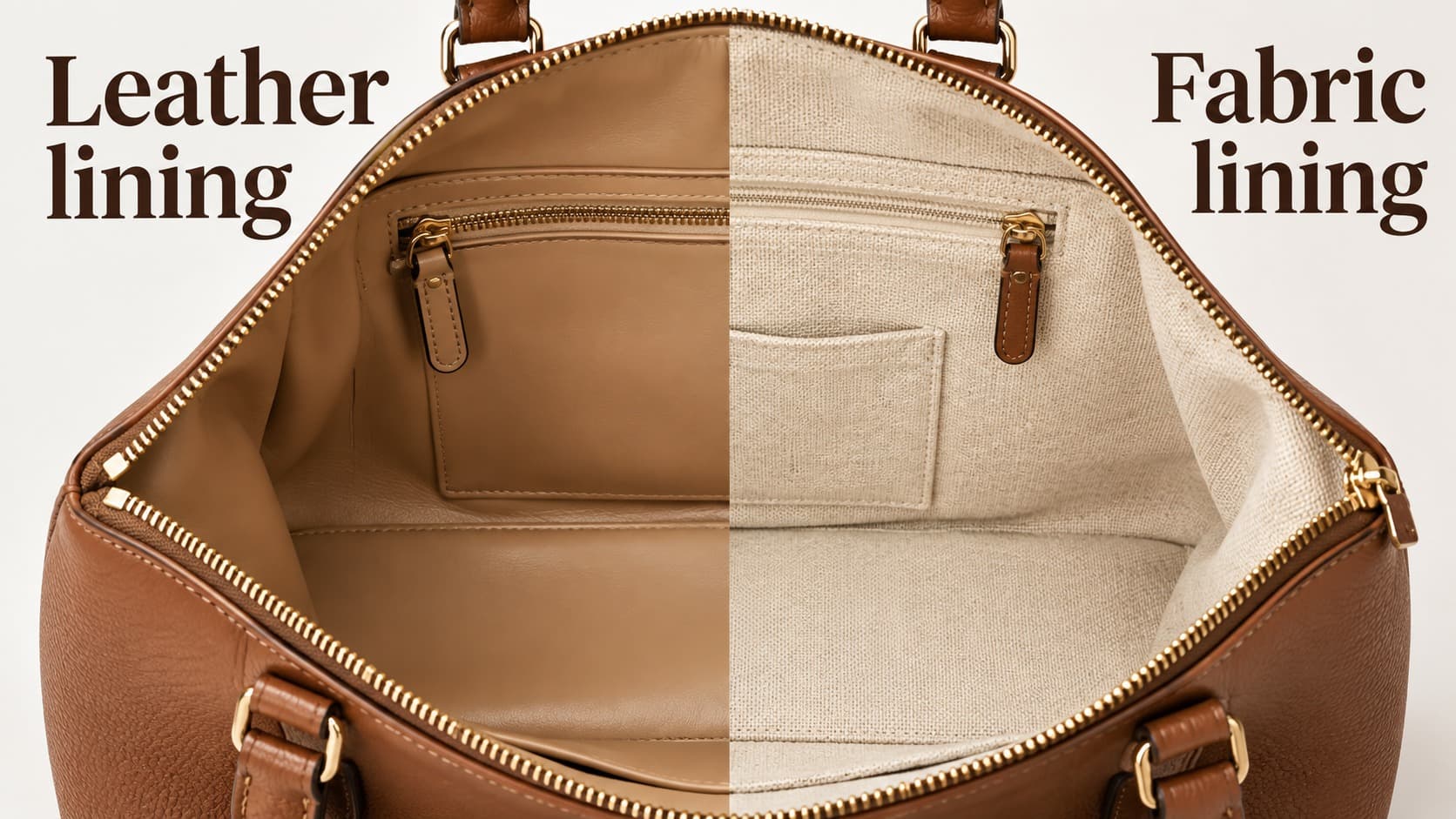
The lining seams, pocket stitching, and any interior labels or tags deserve the same scrutiny as the exterior, since interior work is where many otherwise nice-looking bags reveal shortcuts. A quality bag keeps its stitch count, tension, and thread quality consistent whether the focus is the outside or an interior pocket.
Interior pockets see just as much daily stress as exterior panels — phones, keys, and wallets going in and out repeatedly — so loose or crooked stitching around a zippered pocket fails just as quickly as a poorly sewn handle. Lining fabric should be attached evenly along the top edge with no puckering or gaps, and interior labels should be stitched flat rather than glued or stapled, since adhesive labels tend to peel within months. A strong chemical or glue smell coming from inside a bag often signals that construction relied heavily on adhesive to hold panels together rather than proper stitching, a shortcut that tends to fail as the glue ages and dries out.
- Pocket edges lie flat with no loose threads poking through
- Lining seams match the stitch quality of the exterior
- Labels and tags are stitched, not just glued
- No strong adhesive smell coming from inside the bag
- Zipper stitching is even on both sides of the zipper tape
Frequently Asked Questions
Is hand stitching always better than machine stitching on a handbag?
Not automatically. A well-calibrated machine can produce consistent, strong stitching, and many respected workshops use machines for straight seams while reserving careful hand-stitching, like saddle stitching, for stress points and finishing details. What matters most is the stitch pattern used, the tension, and the stitch count, not simply whether a human or a machine pulled the thread.
Can loose stitching be repaired, or does it mean the bag is ruined?
Loose or slightly uneven stitching can usually be repaired by a leather specialist, especially when caught early before the thread breaks completely. A single popped stitch is a minor fix, but stitching that has already unraveled along a whole seam, particularly on a machine lock-stitched bag, is a bigger job and a sign the bag may need more repairs down the road.
Does contrasting thread color mean a bag is lower quality?
No, contrasting thread is a stylistic choice, not a quality shortcut. In fact, contrasting thread makes stitch consistency easier to judge at a glance, since every irregular stitch stands out clearly instead of blending into leather of the same color.
How many stitches per inch is too many?
Going much above 10 to 12 stitches per inch on thinner leather can actually weaken the material, since each stitch requires a small hole and too many holes packed closely together perforate the leather more than it can structurally handle. The right stitch count depends on leather thickness and thread weight, which is why quality workshops adjust the spacing rather than always maximizing it.
Why do some expensive bags still have stitching problems?
Price alone doesn’t guarantee construction quality, since it can reflect brand reputation, materials, or marketing as much as the actual labor that went into assembly. Stitch count, tension, and stress-point reinforcement are more reliable indicators of build quality than the price tag alone.
Conclusion
Stitching tells an honest story about how a handbag was actually put together, from the number of stitches holding each seam to the tension of the thread, the technique used at stress points, and the care taken on edges and linings that most people never think to check. None of these signs require special training to spot; they just require slowing down enough to look closely at a seam before deciding a bag is worth buying. A bag with tight, even stitching at 8 to 10 stitches per inch, reinforced handle bases, smooth edge finishing, and clean interior seams is one built with the intention of surviving years of real use, and that combination of details is far more telling than the price tag or the shine of the leather alone. The same close-look habit is worth carrying over to secondhand or vintage finds, where construction quality matters even more since there’s no manufacturer warranty to fall back on.