A smelly handbag is one of those problems that tends to sneak up without warning. A half-empty water bottle left inside, a few months sitting in a damp closet, or a leaky pen bleeding ink can all leave behind a strange, stubborn odor. Leather is a natural material, and just like a sponge, it soaks up whatever is around it — including smells. The good news is that most bad odors can be pulled back out again with a little patience and a few common household items.
Why Does Leather Absorb Smells So Easily?
Leather smells bad because it’s porous, meaning it has tiny holes that trap odor particles the same way it traps natural skin oils. Unlike plastic or metal, leather comes from animal hide, and even after tanning and treatment, it keeps a structure full of microscopic pores. Those pores are great for making leather soft and breathable, but they’re also excellent at grabbing onto moisture, bacteria, and anything that smells strong.
This is why a leather bag can pick up odors from mildew, spilled food, cigarette smoke, or even the plastic packaging it was stored in. Once an odor molecule gets pulled into those pores, it doesn’t just sit on the surface where a quick wipe would remove it — it settles deeper into the material. That’s also why odor removal takes longer with leather than with something like a plastic lunchbox, and why gentle, repeated methods usually work better than one aggressive cleaning attempt.
Not all leather absorbs smells at the same rate. Full-grain and top-grain leather have a tighter, more natural surface, so they tend to hold odors a bit less than suede or nubuck, which have an open, fuzzy texture that acts almost like a sponge. Bonded or “faux” leather, which is really a plastic coating over fabric, actually traps smells in the fabric backing rather than the surface itself, which is why it can sometimes smell worse for longer. Humidity plays a role too — a bag stored in a damp basement or a humid climate will pick up and hold odors much faster than one kept somewhere dry, since moisture helps odor-causing bacteria and mold grow inside the pores.
Best Odor Fix Method for Each Smell
The right fix depends on what’s actually causing the smell, since a method that works great on stale air might do very little against mildew. The table below matches common odor types to the most effective method, with each one explained in full further down.
| Smell Type | Best Method | Backup Option |
|---|---|---|
| Stale or “unused” smell | Airing out | Baking soda |
| Mild body odor / sweat on straps | Baking soda | Airing out |
| Food or drink spill | Baking soda | Wiping the lining |
| Cigarette or campfire smoke | Activated charcoal | Airing out (extended, several days) |
| Musty or mildew smell | Vinegar wipe on lining | Activated charcoal |
| Visible stain with odor | Wiping the lining | Baking soda after cleaning |
| Chemical or ink smell | Airing out (extended) | Activated charcoal |
When the smell doesn’t clearly fit one category, airing the bag out for 24 hours is the safest starting point regardless — it’s the first step for every situation and often clears up more than expected on its own.
Step 1: Air It Out First
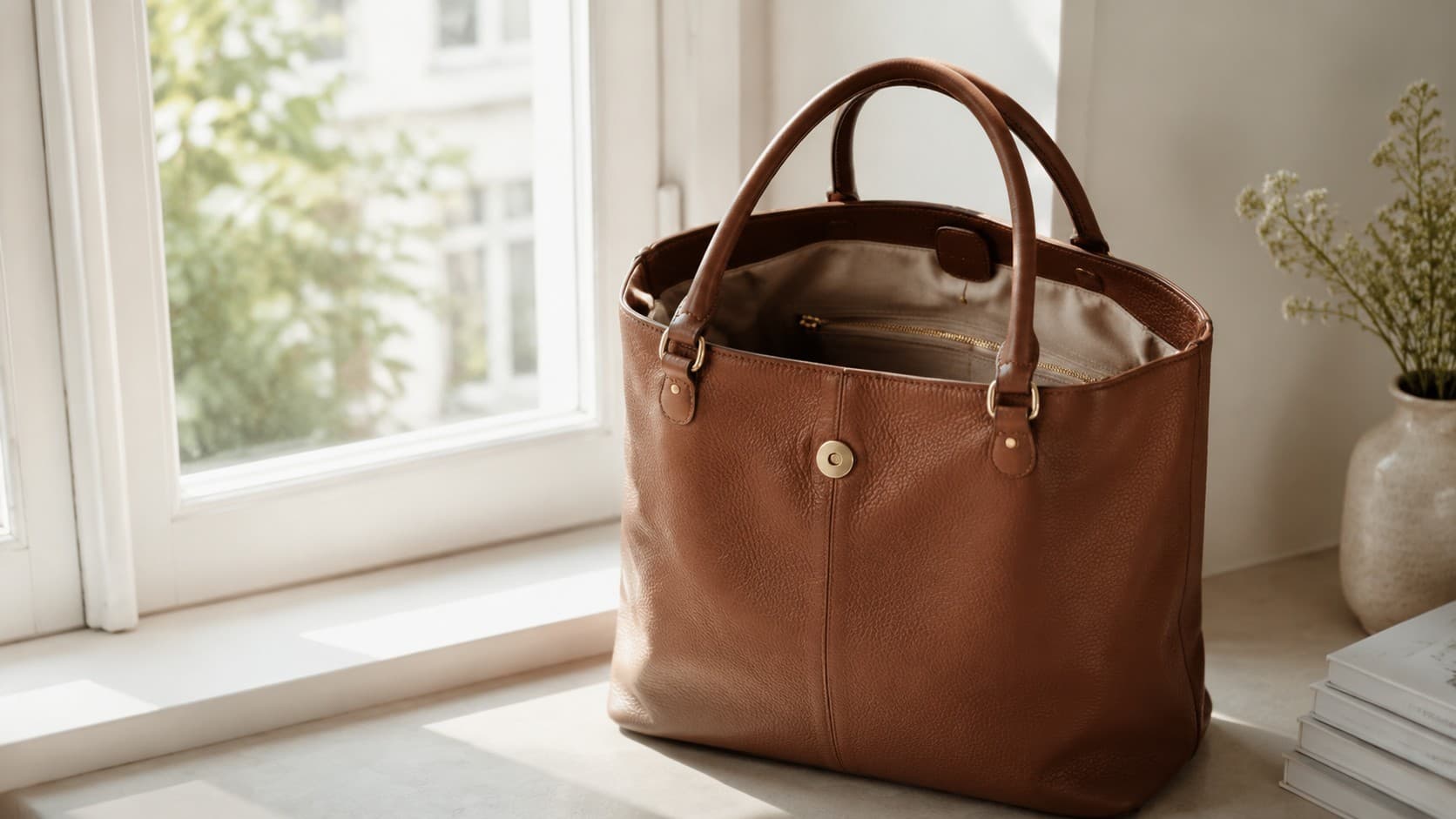
Before trying any cleaning trick, always start by airing the bag out somewhere with good airflow, out of direct sunlight. This single step solves mild odors on its own and costs nothing.
Open the bag fully, take out everything inside including the lining pockets, and stand it up somewhere with a breeze — near an open window works well. If the bag has a zippered or snapped closure, leave it unlatched so air can actually move through the inside rather than just sitting at the opening. Avoid direct sun or a spot near a heater, because leather can dry out, crack, or fade if it gets too hot. Give it at least 24 hours. A lot of “bad” bag smells are really just trapped stale air, and this alone can fix it.
If the bag has a removable pouch, insert, or crossbody strap, take those out separately, since fabric linings and straps often hold onto smells even after the main leather body has aired out completely. Propping the bag open with a rolled towel or a couple of paper towel tubes inside keeps the sides from collapsing back together while it airs, which lets more of the interior surface actually reach open air instead of resting against itself. If the odor is still there after a full day, move on to one of the absorbing methods below.
Step 2: Use Baking Soda to Pull Out the Smell
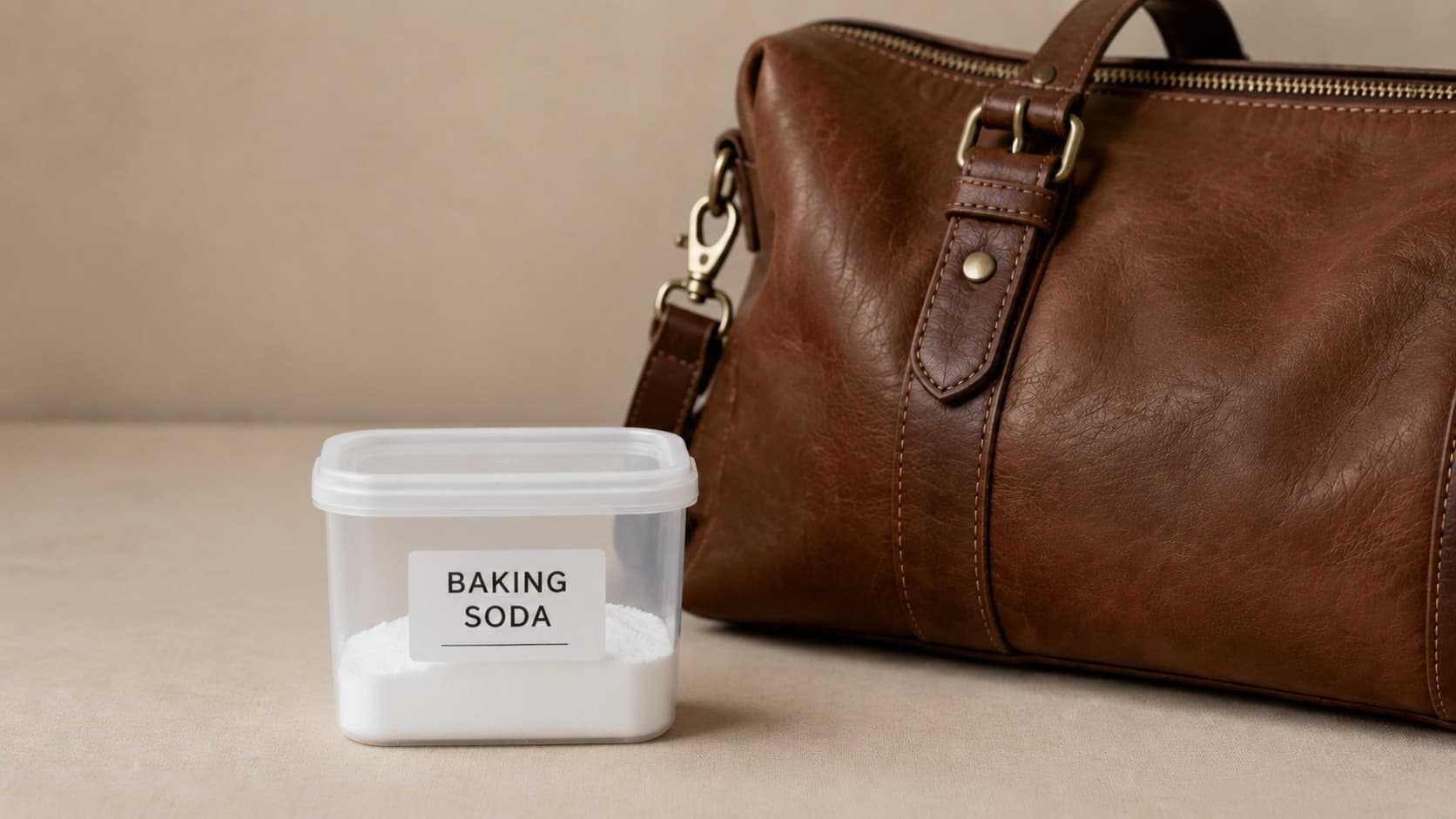
Baking soda is one of the best odor removers for leather because it absorbs smells instead of just covering them up with a stronger scent. It works through a natural chemical reaction that neutralizes odor-causing acids sitting in the leather’s pores.
Baking soda is mildly alkaline, and many odor molecules — especially ones from sweat, mildew, or food — are acidic. When they meet, the baking soda essentially cancels the smell out rather than masking it.
- Fill a small, breathable pouch (an old sock or a piece of cloth tied with a rubber band works fine) with about half a cup of plain baking soda.
- Place the pouch inside the bag and close it, or leave it open if the smell is very strong.
- Let it sit for 24 to 48 hours.
- Remove the pouch and shake out or vacuum any loose powder.
- Smell the bag — if the odor is still noticeable, repeat with a fresh batch of baking soda.
Never pour baking soda loose and rub it directly onto the leather itself, since the fine grains can scratch the surface. Keep it inside a cloth pouch so it only interacts with the air inside the bag.
Once baking soda has absorbed as much odor as it can, it stops working, so don’t reuse the same batch for a second round — a fresh half cup costs almost nothing and works far better than recycled powder. This method is best for everyday smells like stale air, mild body odor from a strap, or light food smells, but it’s usually not strong enough on its own for deep mildew or smoke, which is where charcoal tends to do a better job.
Step 3: Try Activated Charcoal for Stronger Odors
Activated charcoal works even better than baking soda for tough smells like smoke or mildew, because it has an enormous surface area that traps odor molecules almost like a magnet. Charcoal is used in air filters and water filters for the exact same reason — it’s extremely good at grabbing particles out of the air and holding onto them.
You can buy small charcoal bags made specifically for shoes and bags, or use activated charcoal briquettes wrapped in breathable cloth. Bamboo charcoal bags are the most common option sold for this purpose, and they’re reusable — setting them outside in direct sunlight once a month “recharges” them by releasing the trapped odor particles, so the same bag can be used again and again for a year or more. Place a bag or two inside the handbag, close it most of the way, and leave it for two to three days. Unlike baking soda, charcoal doesn’t need to be shaken out afterward since it stays inside its own pouch, which makes it a little less messy for repeated use.
Charcoal costs a bit more upfront than a box of baking soda, but because it’s reusable, it tends to be the better long-term option for households that deal with smelly bags, shoes, or gym gear on a regular basis. For a one-time issue like a spilled drink, baking soda is usually enough; for a bag that’s been sitting in storage for months or has a mildew smell baked in, charcoal is worth the extra cost.
Step 4: Wipe Down the Inside Lining
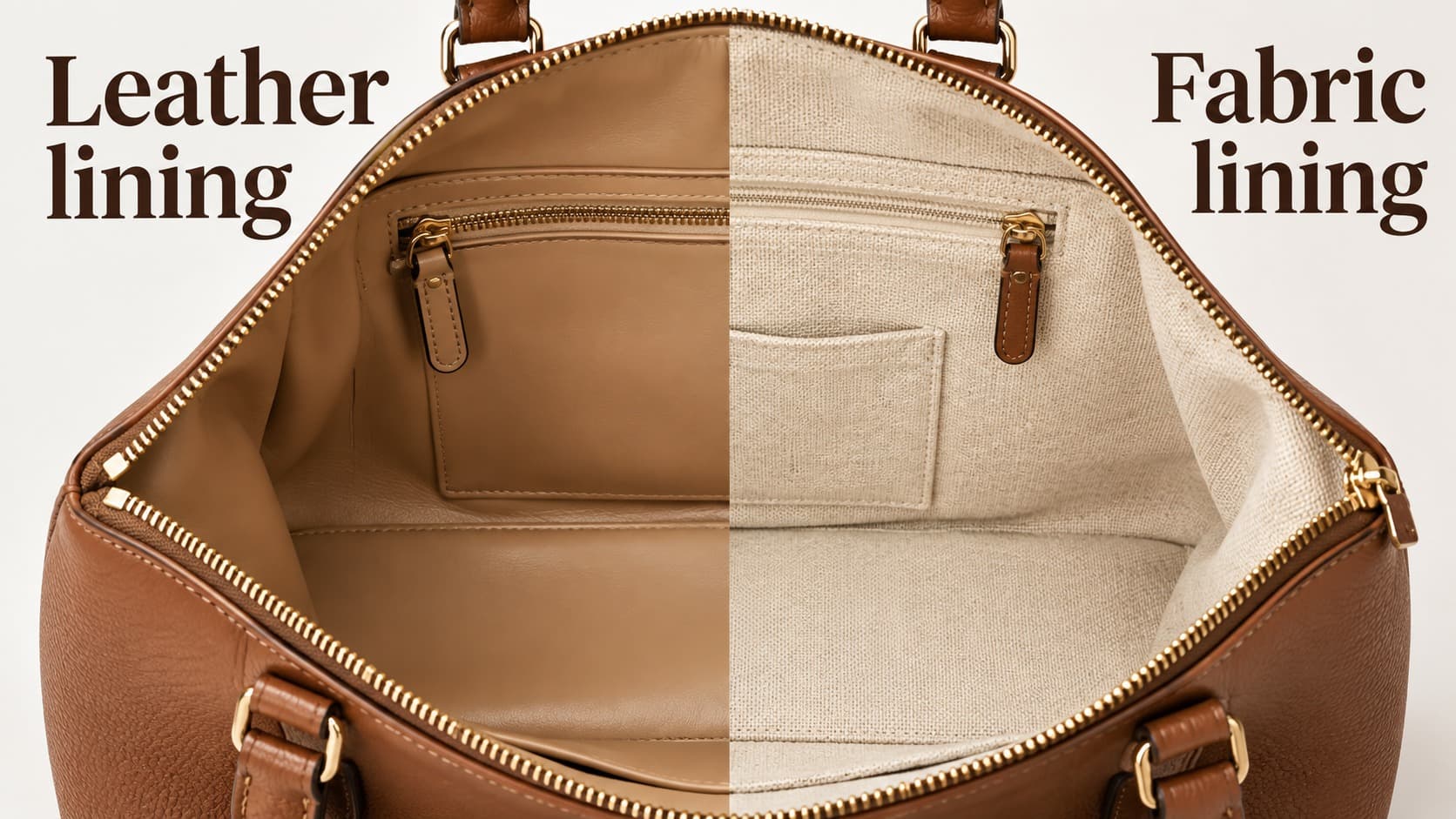
If the smell is coming from a stain rather than just trapped air, the inside lining itself may need a light clean rather than just an odor absorber. Most handbag linings are fabric or a coated material, not the same delicate leather as the outside, so they can usually handle a gentle wipe.
Mix a small amount of mild soap with water, dip a soft cloth in it, and wring it out until it’s just damp — not wet. Gently dab or wipe the lining, focusing on any visible stains or spots that smell strongest. Never soak the lining or spray liquid directly inside the bag, since trapped moisture can lead to mildew, which creates an even worse smell than the original problem. Let the bag air dry completely with the opening propped wide before using it again.
Linings are usually cotton twill, polyester, or a suede-like microfiber, and each reacts a little differently to moisture. Cotton and polyester linings are the most forgiving and can handle a light damp-cloth wipe without much risk, while suede-style linings should only be blotted, never rubbed, since rubbing can flatten the texture and leave a visible mark. Whatever the lining is, testing the soap-and-water mix on a small hidden area first, like a corner near a seam, helps confirm it won’t cause discoloration before the rest gets wiped down.
Step 5: Consider White Vinegar for Musty or Mildew Smells
White vinegar is especially effective against musty, mildew-type odors because it’s mildly acidic and disrupts the mold and bacteria that cause that smell. Many people avoid vinegar because of its own sharp scent, but that smell fades completely within a few hours as it evaporates, taking the musty odor with it.
Lightly dampen a cloth with white vinegar — never spray it directly onto leather — and wipe the inside lining only, avoiding the leather exterior. Let the bag air out afterward until the vinegar smell is completely gone.
A mix of one part white vinegar to three parts water is strong enough to fight musty odors without being harsh, and only a light dampening of the cloth is needed — it shouldn’t be dripping. Vinegar should be treated as a stronger, occasional option rather than a first choice, since repeated use on real leather (if it touches the exterior) can dry it out over time. Suede and nubuck should generally skip vinegar altogether, since the moisture tends to leave visible water marks on the textured surface that are hard to blend out. When it’s unclear whether a bag’s exterior is genuine leather or a coated material, testing the vinegar mix on a hidden inside seam first is the safer approach.
What NOT to Do When Removing Odor From Leather
Some common “quick fix” tricks people try online can actually damage a leather bag permanently, so it’s worth knowing what to avoid.
- Don’t use a hairdryer or direct heat to speed up drying — leather can crack, shrink, or stiffen when it dries too fast.
- Don’t spray perfume or air freshener inside the bag — this only masks the smell temporarily and can leave sticky residue that attracts more odor later.
- Don’t soak the bag or submerge it in water — leather that gets fully saturated often loses its shape and can develop mildew as it dries slowly from the inside.
- Don’t use bleach or strong household cleaners — these can discolor leather instantly and are difficult or impossible to reverse.
- Don’t leave the bag in direct sunlight to “sun it out” — UV rays fade and dry out leather, and heat can make musty smells worse by encouraging any trapped moisture to keep sitting in the pores.
When Home Remedies Aren’t Enough
Some odors are strong enough, or dangerous enough, that home methods won’t fully fix them and a leather specialist or professional cleaner is the safer choice. This mainly applies to visible black or green mold, a bag that was fully soaked or submerged in water, or a strong urine smell from a pet accident.
Visible mold growth, especially black mold, can release spores into the air that aren’t safe to breathe in during cleanup, and simply wiping it away often leaves the roots behind in the pores, letting it return within days. A bag that’s been fully soaked — from a flood, a spilled bucket, or being left out in heavy rain — can develop mildew deep inside the lining and padding where air simply can’t reach it with basic airing or a charcoal pouch. Urine odor is particularly stubborn because it contains uric acid crystals that keep releasing smell every time they get damp again, even after the surface smell seems gone, and household methods rarely break those crystals down completely.
A professional leather cleaner has access to enzyme treatments and equipment that reach inside seams and padding in a way home methods can’t. If airing the bag out along with baking soda or charcoal has been tried for several days with no noticeable improvement, that’s usually a sign the odor has gone deeper than a home fix can reach, and a professional opinion is worth getting before the leather itself starts to break down.
How to Keep a Leather Bag Smelling Fresh
Prevention is much easier than repeated odor removal, and a few small habits make a big difference over time. Store the bag with a few silica gel packets or a small cedar block inside, both of which naturally control moisture and musty smells without any chemical scent. Keep it in a breathable dust bag rather than sealed plastic, since plastic traps any moisture already inside the leather. Always let the bag dry fully before storing it if it ever gets rained on or splashed, and avoid leaving food, drinks, or damp items like a swimsuit or umbrella inside it for long periods.
If you clean the exterior leather at any point, follow up with a leather conditioner once it’s fully dry, since cleaning can strip some of the natural oils that keep leather from drying out and cracking — dry, cracked leather also tends to trap odors more easily than leather that’s properly conditioned. Rotating between two or three bags rather than using the same one every single day also helps, since it gives each bag time to fully air out between uses instead of building up moisture and odor day after day.
Frequently Asked Questions
How long does it take to get smell out of a leather bag?
Mild odors often clear up within 24 hours of simply airing the bag out, while stronger smells like mildew or smoke usually need two to four days using baking soda or activated charcoal, sometimes repeated more than once.
Can I put a leather handbag in the washing machine to remove odor?
No, a washing machine will damage genuine leather by soaking it unevenly, which can cause stiffening, cracking, or shrinking as it dries. Odor removal should always be done with airing, absorbers like baking soda or charcoal, and light spot-cleaning of the lining only.
Will coffee grounds work to remove odor from a leather bag?
Coffee grounds can absorb some odor similarly to baking soda, but they carry a real risk of staining light-colored leather or lining if any grounds touch the surface directly, so baking soda or charcoal in a sealed pouch is the safer choice.
Why does my leather bag smell musty even after cleaning?
A lingering musty smell after cleaning usually means moisture is still trapped somewhere inside the lining or seams, which allows mildew to keep growing; in that case, extend the drying and airing time and repeat the baking soda or charcoal treatment before storing the bag.
Is it normal for new leather bags to have a strong smell?
Yes, new leather bags often have a strong “leather smell” from the tanning and dyeing process, and this typically fades naturally within a few weeks of normal use and airing, unlike a sour or musty odor which points to moisture or mildew rather than the tanning process.
Conclusion
Getting rid of odor from a leather handbag really comes down to patience and choosing the right absorber for the job — baking soda for everyday smells, activated charcoal for stronger ones like smoke, and a light vinegar wipe for musty, mildew-driven odors on the lining only. Skip the shortcuts like heat, perfume sprays, or soaking, since those tend to trade a bad smell for permanent damage. With a couple of days of airing and the right pouch tucked inside, most bags come back smelling completely neutral, and a few simple storage habits afterward will keep it that way for good.