Flip over almost any leather bag or wallet, and a row of stitches is usually what’s holding it together. Those little threads are doing more work than most people realize. They’re the difference between a bag that survives twenty years of daily use and one that starts falling apart after a few months. But not all stitching is made the same way, and the method used says a lot about how the item was built, how long it will last, and why it costs what it costs.
What Is Hand Stitching in Leather Goods?
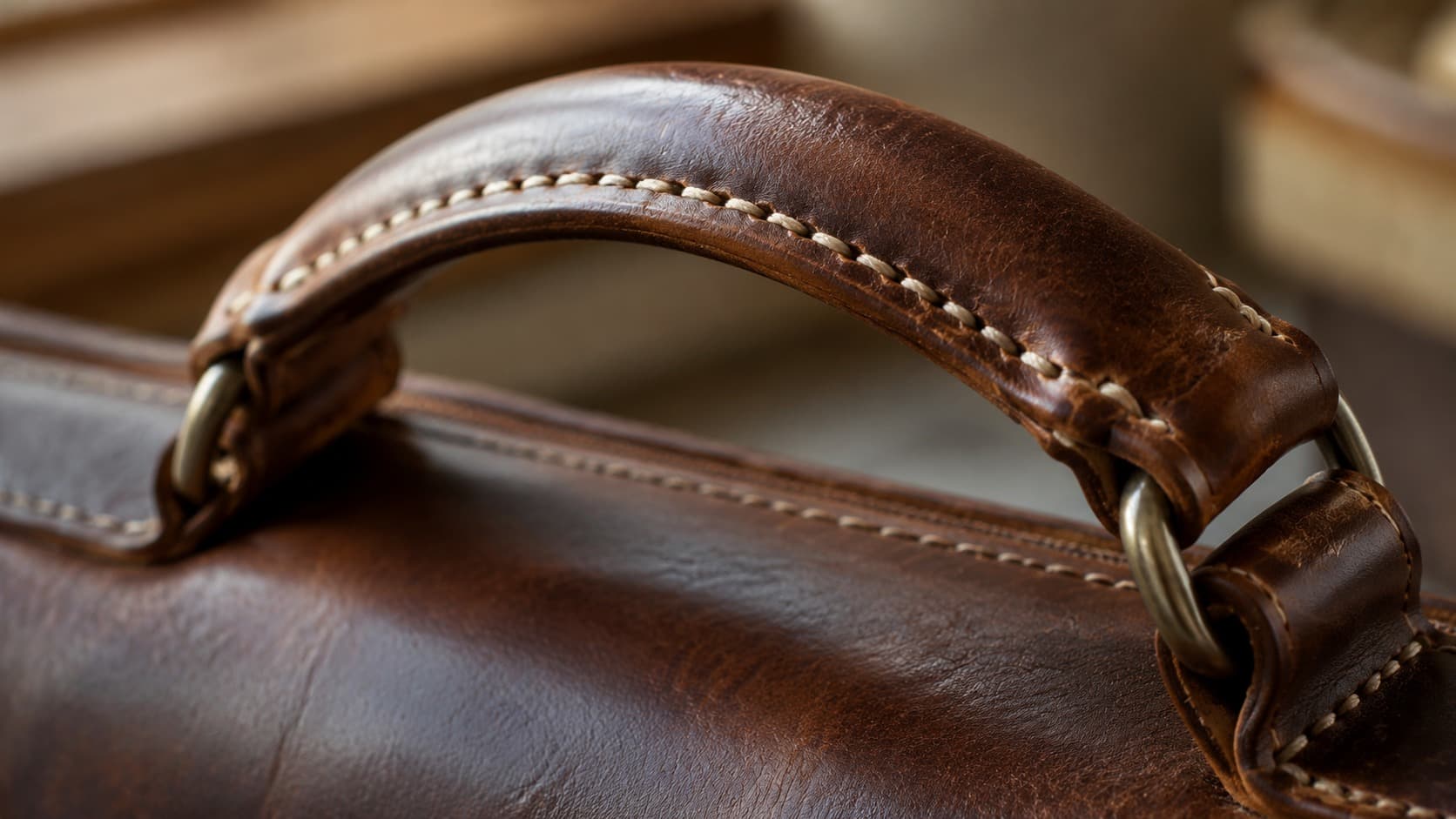
Hand stitching, most often called saddle stitching, is when a craftsperson sews leather using a single length of thread with a needle tied to each end. Instead of a machine looping two separate threads together, one person pushes both needles through the same hole from opposite sides, over and over, until the seam is finished.
This method got its name because it was originally developed by saddle makers, who needed stitching strong enough to hold a rider’s full weight without snapping. Each stitch locks itself in place independently. If a break happens in one part of the row, it doesn’t unravel the rest of the seam the way a machine stitch would. That’s the whole reason saddle stitching stuck around long after machines took over most of the leather industry — it’s simply harder to destroy.
The process is slow. A craftsperson typically marks the stitch line with a grooving tool, punches angled holes with an awl or a pricking chisel spaced evenly apart, and then works the two needles through each hole by hand, pulling the thread tight every single time. Most saddle stitching is done with waxed linen or waxed polyester thread rather than plain thread, since the wax coating helps the fibers grip the leather and resist fraying as the thread ages. A single wallet can take an experienced stitcher a couple of hours to finish this way, and the stitches are usually spaced fairly tightly, often somewhere around 6 to 9 stitches per inch, for a tidy, even line.
Leather saddles date back well over a thousand years, and the stitch got its name because it was the technique saddlers relied on to build tack that had to survive constant pulling, flexing, and weight without giving out. That’s a useful way to think about why the method is still used today: it wasn’t designed to look nice first, it was designed not to fail.
What Is Machine Stitching in Leather Goods?
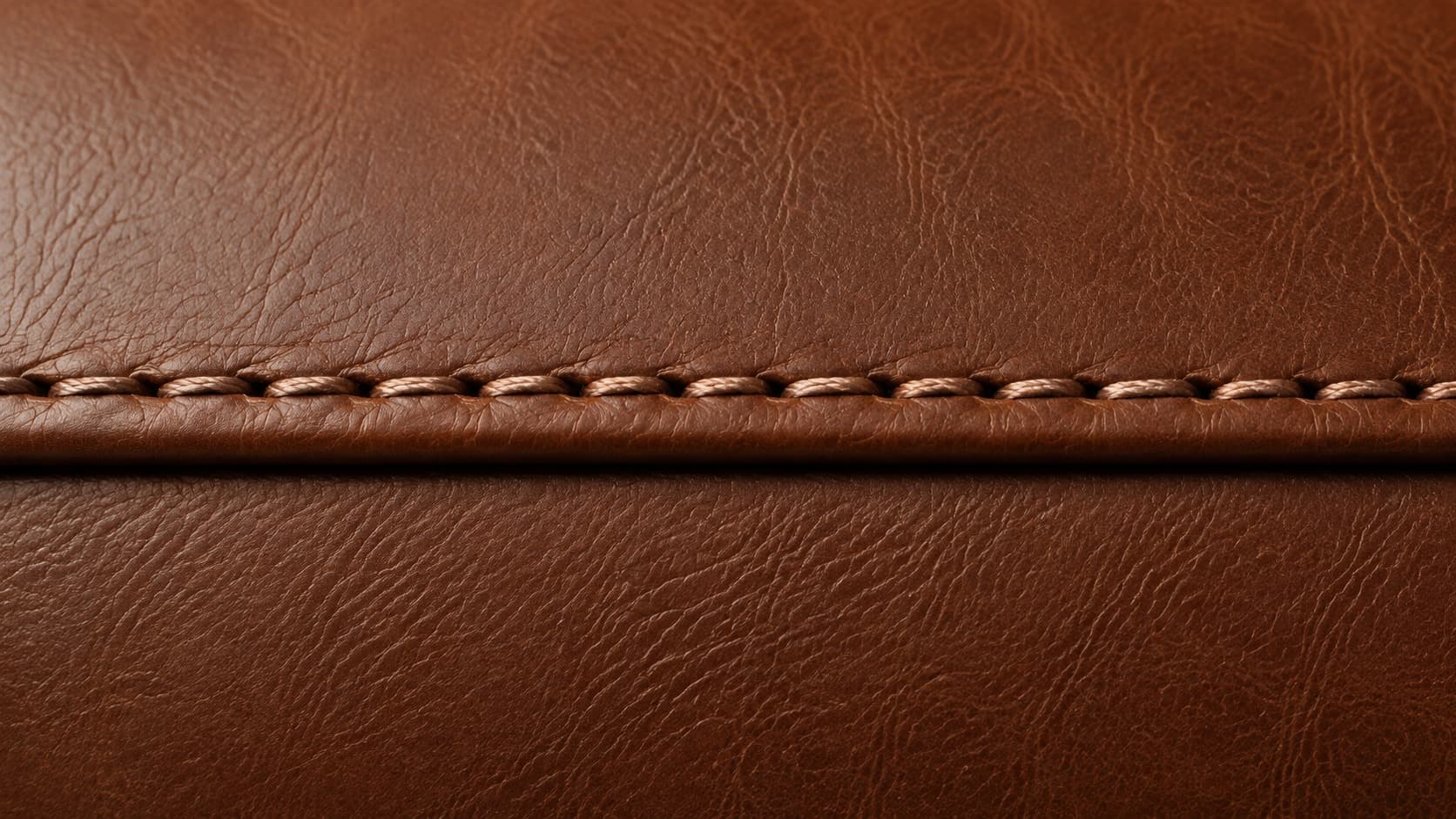
Machine stitching uses a sewing machine to run two separate threads through the leather, one on top and one underneath, that lock together in the middle of the material. It’s the same basic stitch found on jeans, sneakers, and most everyday clothing, just adapted for thicker material.
A machine stitch uses two pieces of thread to lock the stitch in place, with the upper thread pushing through the top of the leather and the lower thread looping around it from the back before returning to the top. Because the two threads meet and lock inside the leather rather than at each individual hole, the whole row depends on that connection staying intact from one end to the other.
Machines can stitch a seam in seconds that would take a person an hour, and they produce a perfectly even, uniform line every time. That speed and consistency is exactly why the vast majority of leather goods sold worldwide, from department store handbags to most premium fashion brands, are machine stitched.
Machine stitching typically uses nylon or bonded polyester thread rather than waxed linen, since these synthetic threads run smoothly through a machine’s tension system without snagging. This method also tends to be the go-to choice for linings, gussets, long straight seams, and any part of a bag that’s large or simple enough that hand stitching wouldn’t add much practical benefit for the extra time it takes.
Is Hand Stitching Really Stronger Than Machine Stitching?
Hand-stitched saddle seams are generally more durable than machine-stitched seams, mainly because of how each one fails. This isn’t about one method being “fake” and the other “real” — it comes down to basic mechanics.
Saddle stitching is stronger and more durable than machine lock-stitch because a broken stitch will not unravel, and the reason comes down to how each one fails under stress:
- Saddle stitch: each stitch is locked on its own. If one thread wears through, the stitches around it stay put and the seam holds.
- Machine stitch: the two threads are linked together as one continuous system. If a machine lock stitch breaks, the thread on both sides loosens and the product becomes weak or falls apart.
That difference matters most in the spots that take the hardest daily beating: handles, straps, and corners. It matters a lot less on a seam that’s mostly decorative or barely touched. That’s part of why even famously precise leather houses reserve hand stitching for the parts under real stress and let a machine handle the rest.
Thread choice adds to the gap too. The waxed linen or waxed polyester thread commonly used in hand stitching is noticeably thicker and more abrasion-resistant than the fine synthetic thread run through most machines, so the stitch itself starts from a stronger material before even factoring in how it’s locked.
A stitch is only as strong as its weakest point. Hand stitching is built so that one weak point doesn’t take the whole seam down with it.
Which Stitch Is Easier to Repair?
Hand-stitched seams are usually easier and cheaper to repair because a damaged section can be restitched on its own without touching the rest of the seam. Since each hand stitch locks independently, a repair person can pick up right where the damage starts and finish without unraveling anything else.
Machine-stitched seams don’t offer that shortcut. Because a machine lock stitch unravels continuously when broken, a technician usually needs to remove the entire thread line and restitch the whole seam to restore its original strength. That’s more time, more labor, and usually a higher repair bill, even though the original stitching was faster and cheaper to produce in the first place.
Why Does Hand-Stitched Leather Cost More?
Hand-stitched items cost more mainly because of time. A machine can finish a seam that takes a skilled person an hour or more to sew by hand, and that labor gets built directly into the price tag. There’s also years of training behind consistent hand stitching, since every stitch has to be pulled to matching tension for the line to look clean and hold evenly.
It’s worth being clear that machine stitching isn’t a shortcut used only by cheap brands. Many established leather goods makers rely entirely on advanced machine stitching because it guarantees visual consistency across large batches and lets them produce at scale without sacrificing everyday durability. A well-made machine-stitched bag from quality materials can easily outlast a poorly hand-stitched one. The stitching method is one factor in quality, not the only one.
How to Tell Hand Stitching From Machine Stitching
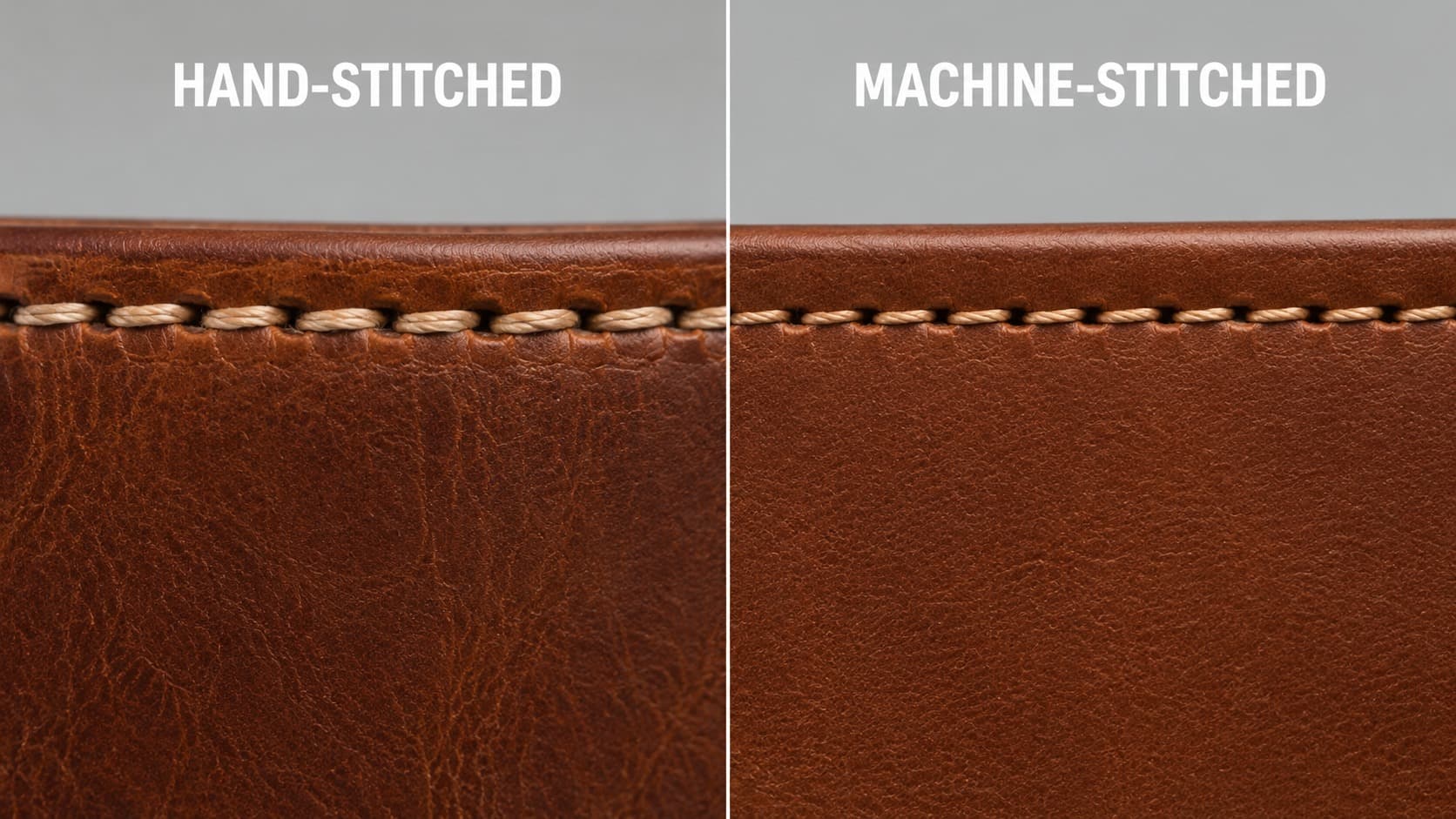
The two methods can usually be told apart by looking closely at the spacing, angle, and back side of the stitching. Machine stitches are almost perfectly even, run in a straight line, and look identical on both the front and back of the leather. Hand stitching tends to have small, natural variations from stitch to stitch, and the thread often sits at a slight diagonal angle because of how the needles cross through each hole.
| What to check | Hand (saddle) stitch | Machine stitch |
|---|---|---|
| Stitch spacing | Slightly irregular, human-made | Perfectly even |
| Thread angle | Often diagonal, crossing pattern | Straight, uniform |
| Front vs. back | Looks the same on both sides | Can look the same, but thread type may differ front to back |
| Speed to produce | Slow, one seam at a time | Fast, consistent across many units |
| Repair method | Fix just the damaged section | Usually needs the full line restitched |
A magnifying glass makes the difference easy to spot in person. Machine stitches are almost robotically consistent, while hand stitches carry a small amount of natural human variation, which is part of the appeal for many collectors.
Frequently Asked Questions
Is hand-stitched leather always better than machine-stitched leather?
Not automatically. Hand stitching tends to be stronger and easier to repair in high-stress spots, but a well-made machine-stitched item using quality leather and thread can still last for many years of regular use. The stitching method is one part of overall quality, not the whole story.
Does hand stitching mean an item is handmade overall?
Not necessarily. Some items combine machine-stitched panels with hand-stitched handles or edges where extra strength is needed most. It’s worth checking exactly which parts of an item are hand-sewn rather than assuming the whole piece was made without a machine.
Why do some expensive brands still use machine stitching?
Because machine stitching produces highly consistent results at a scale that hand stitching simply can’t match, and for most parts of a bag or wallet, that level of consistent everyday strength is more than enough. Hand stitching is typically reserved for the specific areas that take the most physical stress.
Can machine-stitched leather goods be repaired at all?
Yes, but the process usually involves removing and redoing the entire stitched line rather than fixing just the damaged section, since the two threads in a machine stitch are linked together continuously along the seam.
How long does hand stitching take compared to machine stitching?
A single seam that a sewing machine finishes in seconds can take a skilled person anywhere from several minutes to a couple of hours by hand, depending on the length of the seam and the thickness of the leather. That time difference is the main reason hand-stitched items typically cost more.
Conclusion
The real takeaway here isn’t that one method is good and the other is bad. Machine stitching earns its place through speed and rock-solid consistency, while hand saddle stitching earns its place through raw strength and a repair-friendly design that keeps a single broken thread from taking down an entire seam. What matters most is knowing which method was used where, since the smartest leather goods often use both: machines for efficiency across most of the piece, and hand stitching saved for the handles, straps, and joints that need to survive the longest.