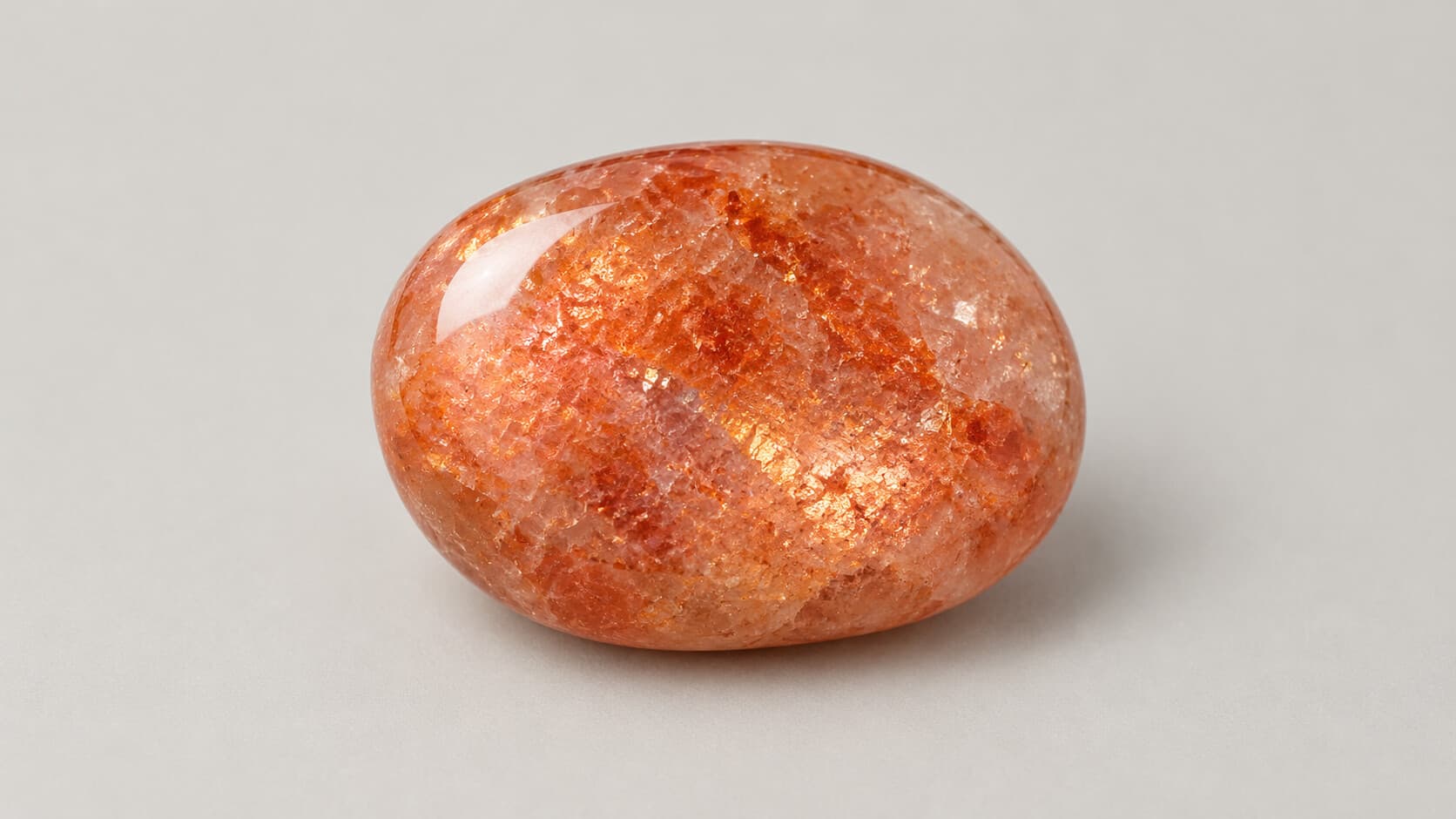
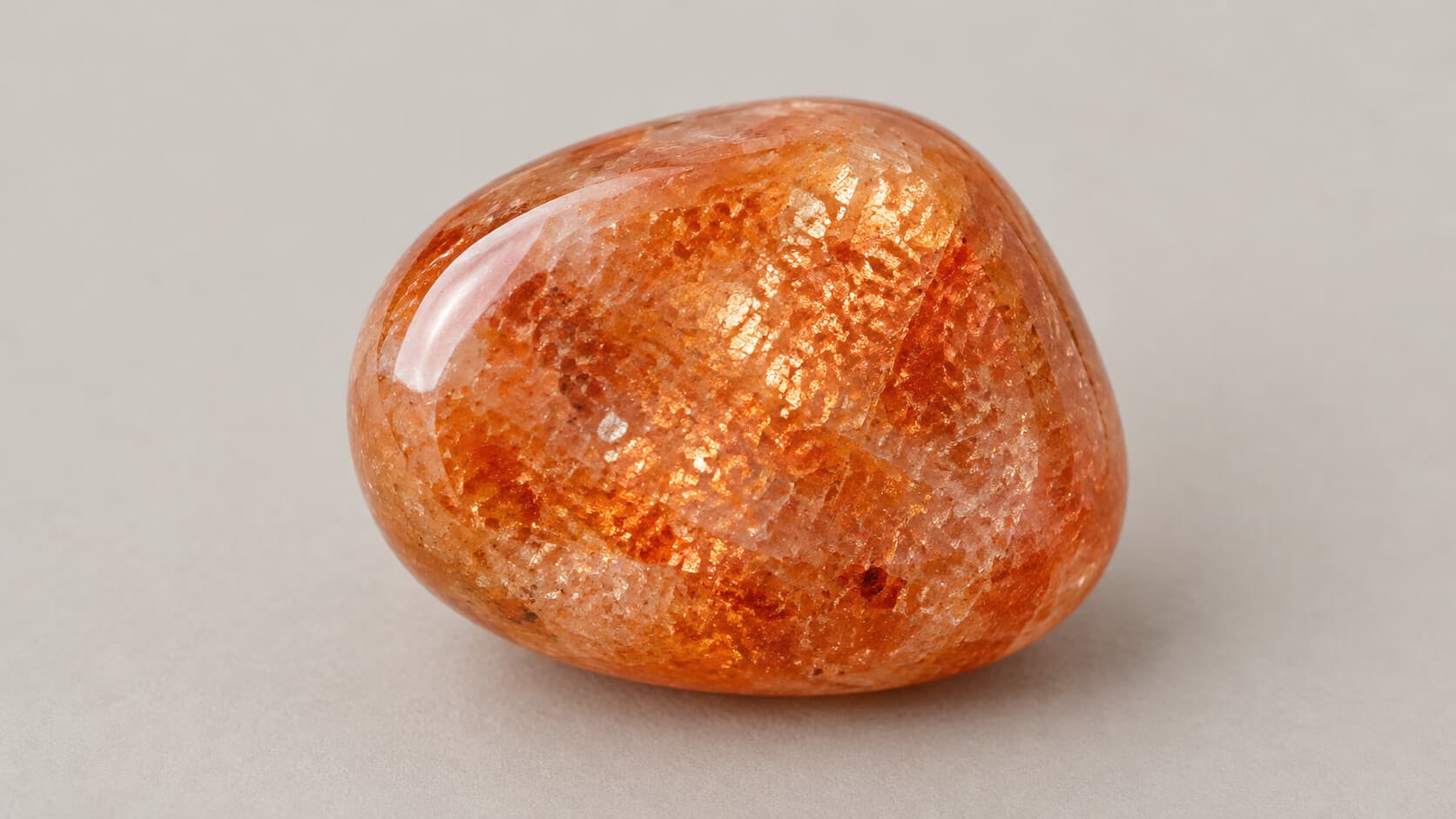
Sunstone is one of the few gemstones that genuinely looks like it has its own light source trapped inside it. Turned toward the light, tiny flecks inside it catch fire, flashing orange, red, or gold in a way no other common gem quite matches. It belongs to the feldspar family, the same mineral group as moonstone and labradorite, yet sunstone earned its name honestly: ancient cultures from the Greeks to the Vikings connected its warm glow to the sun itself. Today it’s prized by jewelry lovers who want something affordable, colorful, and genuinely different from the usual rotation of diamonds and sapphires.
What Is Sunstone Made Of?
Sunstone is a type of feldspar, a mineral group that makes up a huge chunk of the Earth’s crust. What makes it a gemstone rather than just ordinary rock is a special glittery effect inside it called aventurescence — tiny flat mineral platelets, usually made of copper, hematite, or goethite, that catch and bounce light back in flashes.
There are actually two main branches of sunstone. Oligoclase and labradorite sunstone are plagioclase feldspars, while orthoclase sunstone comes from the potassium feldspar family instead. Oligoclase sunstone is more common than orthoclase sunstone in the jewelry market, so most pieces sold today fall into that category. Because the gem is defined by its sparkle rather than one fixed chemical recipe, gemologists classify it more by its visual effect than by a single strict formula — which is also why its measurements, like density (around 2.64 g/cm³) and refractive index, shift slightly depending on which feldspar variety a particular stone belongs to.
What Makes Sunstone Sparkle?
That sparkle comes from thin, flat mineral inclusions sitting in neat layers inside the stone. As light hits these tiny platelets, it reflects off them like sunlight bouncing off a lake covered in glitter. Gemologists call this specific glittery effect aventurescence, and it’s the single feature that separates true sunstone from plain, dull feldspar.
Different sunstones get their sparkle from different materials. Oregon sunstone is the only variety containing native copper rather than hematite or goethite, which gives it a wider color range and a noticeably different shimmer than sunstone from other countries. Norwegian stones typically sparkle because of hematite, while Indian material often contains goethite instead. Not every piece of sunstone shows this effect strongly, though — lower-grade material can look like plain orange glass with barely any flash at all, so the strength and evenness of the sparkle is one of the biggest factors in how much a stone is worth.
Sunstone Mining Locations
Sunstone is mined in several countries, but Oregon in the United States produces the variety most prized by collectors. Norway, India, Canada, and Russia also have notable deposits, each producing stones with slightly different colors and sparkle patterns, and smaller amounts have historically been found in states like New Mexico, North Carolina, Pennsylvania, and Virginia as well.
Oregon Sunstone
Oregon sunstone is genuinely unusual among gemstones because it contains actual copper particles inside the crystal structure. Oregon sunstones are technically labradorite, another feldspar used as a gemstone, that exhibits sunstone’s characteristic aventurescence from tiny amounts of copper impurities. This copper content is also responsible for a feature almost no other gem has: some Oregon sunstones occur naturally in red and green shades without ever being heated or treated.
The gem matters enough to the state that the Oregon State Legislature designated it the official state gemstone in August 1987. Most Oregon sunstone comes from volcanic basalt deposits rather than the slow-growing crystal veins typical of other gem-producing regions, which is part of why the crystals can grow unusually large compared to sunstone found elsewhere.
Norwegian and Indian Sunstone
Norway holds a special place in sunstone history. For a long time, the country’s deposits near the town of Tvedestrand were the best-known source in the world, with sunstone occurring in masses embedded in quartz veins running through gneiss rock. Norwegian sunstone tends to show a softer, more golden-brown shimmer compared to the fiery reds sometimes found in Oregon material.
India produces large quantities of sunstone as well, often with a warm golden-orange base color and a subtler glitter caused by goethite inclusions. Indian sunstone is generally more affordable and widely available, making it the type most people encounter in everyday jewelry. Russia’s Lake Baikal region and parts of Canada round out the list of notable sources, though they supply a much smaller share of the market.
Sunstone Colors Explained
Sunstone most commonly appears in warm shades of orange, red, and golden brown, colors that naturally echo its sun-inspired name. These warm tones come from the metallic inclusions scattered through the crystal, and the richer the color, the more valuable the stone typically becomes.
Beyond the classic orange-red range, sunstone occasionally shows up in green, blue-green, pink, colorless, and even bi-color combinations, especially in Oregon material. A rare variety called “confetti sunstone” is densely packed with copper platelets, giving it an almost speckled, paint-splattered look. Some stones also display a cat’s-eye effect when cut as a cabochon, where the sparkle concentrates into a single moving line of light across the surface instead of scattering in all directions.
Is Sunstone a Durable Gemstone?
Sunstone sits at roughly 6 to 6.5 on the Mohs hardness scale (some sources place certain varieties as high as 7.2), which means it’s reasonably hard but softer than popular gems like sapphire or topaz. That alone wouldn’t disqualify it from everyday jewelry, but there’s a second factor that matters even more.
Feldspars, including sunstone, share two traits that affect their durability: softness, and cleavage in two directions, which gives sunstone a poor toughness rating.
Cleavage means the stone has internal planes where it can split cleanly if struck at the wrong angle, similar to how a log splits along its wood grain. This doesn’t mean sunstone is fragile or that it falls apart with normal wear. It simply means the setting matters a lot. Protective settings like pendants, earrings, and brooches shield the stone from everyday bumps far better than a ring, which takes far more daily impact. A well-set sunstone in a bezel or protected mounting can last for decades without issue.
Is Sunstone Natural or Treated?
Most sunstone on the market is untreated, which sets it apart from many other popular gemstones. Oregon sunstone’s colors don’t come from treatment — its reds and greens form naturally from copper inclusions during the stone’s formation, with no heating or diffusion process involved. That’s a genuine point in its favor for buyers who care about a gem close to how the earth actually made it, since so many gemstones sold today have been heated, irradiated, or otherwise enhanced to improve their color before reaching a jewelry case.
Even so, a little caution is warranted. In the early 2000s, a reddish or greenish feldspar called andesine entered the market under sunstone-like names, and some of that supply later turned out to carry undisclosed treatment. Andesine is a legitimate, separate feldspar species on its own, but the episode stands as a reminder that clear identification and treatment disclosure from a jeweler matter more than a trade name alone. A sunstone that has been fracture-filled to disguise small internal cracks is a similar case, and a reputable seller discloses that upfront.
How to Care for Sunstone Jewelry
The safest way to clean sunstone is warm water, mild soap, and a soft brush, followed by a gentle pat dry with a soft cloth. This simple routine removes body oils, lotion residue, and dust without putting the stone at any risk.
The things to avoid matter just as much as the cleaning routine itself. Ultrasonic and steam cleaners should be avoided, and because feldspars are rapidly attacked by hydrochloric acid, cleaning products containing bleach should also be avoided. High heat isn’t a good idea either, since sudden temperature changes can stress the stone’s internal cleavage planes. Between wearings, a sunstone piece is best stored separately from harder gems like diamonds or sapphires, which can scratch it if they knock together in a jewelry box, and kept out of direct sunlight to protect its color over time.
What Does Sunstone Represent?
Across different cultures and centuries, sunstone has consistently been linked to warmth, energy, and good fortune, which makes sense given its glowing appearance. Ancient Greeks associated it with Helios, their sun god, while Norse legends tell of sailors using a “sunstone” to help navigate cloudy skies at sea by holding it up and watching where it cast a beam of light.
Historians generally believe the stone used in those Viking navigation legends was actually Iceland spar, a clear form of calcite that polarizes light, rather than the sparkly feldspar known as sunstone today. Regardless of that historical mix-up, the gem has picked up its own rich set of meanings elsewhere in the world. In China it was linked to the imperial sun, Buddhist tradition connected it to Vishnu, and Celtic folklore associated it with cosmic light. Modern wearers often connect it with confidence, positivity, and personal energy, treating it less as a lucky charm and more as a stone that simply feels good to wear.
How Much Does Sunstone Cost?
Sunstone is generally one of the more affordable colored gemstones, which is a big part of its appeal. Basic commercial-quality material in common sizes can cost just a few dollars per carat, making it accessible for anyone who wants real jewelry without a steep price tag.
Prices climb sharply, though, once a stone shows strong color saturation combined with vivid aventurescence. Fine-quality Oregon sunstone with a deep red or green hue and lively sparkle can sell for well over a hundred dollars per carat, and exceptional large stones command even more. Interestingly, sunstone pricing doesn’t always follow the usual rule that bigger stones cost more per carat — demand for specific sizes and color combinations can actually make mid-sized stones pricier per carat than larger ones within certain color categories, which is unusual compared to most other gemstones.
Sunstone vs. Other Gemstones
Sunstone is sometimes confused with a few other stones because of overlapping names or similar looks, though each differs from it in a specific way:
| Gemstone | Family | Key Difference from Sunstone |
|---|---|---|
| Moonstone | Feldspar | Shows a soft blue-white glow (adularescence) instead of metallic sparkle |
| Labradorite | Feldspar | Flashes blue, green, or gold in broad sheets, not fine glittery points |
| Carnelian | Quartz (chalcedony) | Has a waxy, not glassy, luster and no aventurescence at all |
| Aventurine | Quartz | Shows a similar sparkle effect, but is a completely different mineral (quartz, not feldspar) |
| Andesine | Feldspar | A separate feldspar species sometimes marketed under sunstone-like names, with a controversial treatment history |
Moonstone and labradorite are sunstone’s closest relatives since all three belong to the feldspar family, which is why jewelry collections built around “feldspar gems” often feature all three side by side.
Frequently Asked Questions
Is sunstone a birthstone?
Sunstone isn’t one of the official modern birthstones recognized for any calendar month. It is sometimes used as an alternative or zodiac stone, particularly associated with Leo, because its warm, fiery coloring fits the sign’s sun-ruled symbolism.
Can sunstone be worn in the shower or pool?
It’s better to take sunstone jewelry off before showering, swimming, or exercising. Soap residue can dull its shine over time, and sudden temperature changes from hot showers followed by cold air aren’t ideal for a stone with cleavage planes.
Is sunstone a rare gemstone?
Basic sunstone is fairly common and widely mined, so it isn’t considered rare in general. However, top-quality material with vivid color and strong, even aventurescence — especially rare color varieties from Oregon — is genuinely scarce and sought after by collectors.
Is sunstone the same thing as andesine?
No. Andesine is a separate, legitimate feldspar species that entered the market under sunstone-like names in the early 2000s, and part of that supply later turned out to carry undisclosed treatment, unlike most natural sunstone.
How can a genuine sunstone be identified?
Genuine sunstone shows its glittery aventurescence from reflective internal platelets, which looks distinctly different from the smooth, even color of glass imitations. A jeweler can confirm authenticity using refractive index testing and microscopic examination, which reveals the telltale inclusions that glass and synthetic materials don’t naturally have.
The Bottom Line
Sunstone earns its name honestly. It’s a feldspar gem that genuinely glows with its own internal sparkle, shaped by the copper, hematite, or goethite particles trapped inside it millions of years ago. Oregon produces the most prized and unusual varieties, including rare natural red and green stones, while Norway and India supply the warmer, more widely available material found in everyday jewelry. It isn’t the toughest gem on the market, so a protective setting and gentle, soap-and-water cleaning go a long way toward keeping it beautiful for years. What makes sunstone worth seeking out isn’t rarity or price — it’s that unmistakable flash of light that no synthetic imitation has managed to fully replicate.