A pilot watch is a specialized timepiece that was originally created to help aviators navigate the skies safely and accurately. These watches emerged in the early 1900s when flying was still new and extremely dangerous, and pilots needed reliable tools to help them with timing, navigation, and flight calculations. What makes a pilot watch special isn’t just its bold, easy-to-read design - it’s the incredible history and engineering that went into creating timepieces tough enough to handle the extreme conditions of early aviation. Today, even though modern aircraft have sophisticated computer systems, pilot watches remain incredibly popular because they represent adventure, precision, and a connection to the golden age of aviation when brave pilots relied on nothing but their skills, their instruments, and their trusty wristwatches to conquer the skies.
What Is a Pilot Watch?
A pilot watch, also known as an aviator watch, is a specialised timepiece designed specifically for pilots. It originated in the early 20th century and has since become an iconic style of watch. Pilot watches are characterised by their large, easy-to-read dials, high contrast hands and markers and various features that assist pilots in navigation and timing during flight. These watches were essentially the first wearable computers for aviators, helping them perform critical calculations and timing operations that could mean the difference between life and death in the air.
- The requirements laid down for a pilot’s watch following WWI were few and simple. It had to have instant readability - hence the large size and black dials with white Arabic numerals. The large, bold numbers and high-contrast design allow pilots to read the time at a quick glance, even in challenging lighting conditions or when experiencing G-forces during flight maneuvers.
- Most pilot watches are significantly larger than regular dress watches, typically ranging from 40mm to 46mm in diameter, with some historical models reaching an enormous 55mm. This large size serves a practical purpose: making the watch easily readable when worn over thick flight jackets and gloves.
- Many pilot watches include specialized functions like slide rule bezels for flight calculations, GMT complications for tracking multiple time zones, chronographs for timing flight segments, and anti-magnetic protection to shield the movement from cockpit instruments.
- Anti-magnetic seal, or Faraday cage along with crystal technology to protect against sudden pressure drops and other extreme conditions encountered during flight, including temperature changes, vibration, and potential impacts make these watches incredibly durable tools designed for aviation’s harsh environment.
Although technology has progressed and pilot watches are no longer a necessity, they remain popular for their utilitarian design elements, retro-inspired aesthetic and versatility. Pilot watches are not only functional tools but also popular fashion accessories appreciated for their classic design and historical significance. Today, these timepieces serve as a bridge between the romantic era of early aviation and modern style, offering wearers a piece of aviation history on their wrist while providing excellent functionality for everyday use.
How Pilot Watches Were Invented
The fascinating story of pilot watches begins in the early 1900s when aviation was in its infancy and pilots faced incredible dangers every time they took to the skies. Watches have been important since the earliest days of flight. When in the air, timing is crucial for navigation, and early experiments in balloons and airships showed that timing distances accurately while in the air would be crucial to getting to where you wanted to go. What started as a practical need for timekeeping evolved into one of the most important tool watch categories in horological history.
- The first ever timepiece for a pilot dates back to 1904. It was created by Cartier and named Santos, after one of the first European aviation pioneers. Louis Cartier, on the request of his friend Alberto Santos-Dumont - a Brazilian aviator, designed and created the Cartier Santos. As a pilot, Santos-Dumont needed a reliable way to keep time without removing his hands from the controls. This watch looked quite different from later pilot watches, focusing more on style than the rugged functionality that would define the genre.
- Pilot Louis Bleriot wore a Zenith wristwatch when he made aviation history being the first to fly an airplane across the English Channel in July of 1909. This demonstrated that wristwatches could be reliable companions for historic aviation achievements, helping to establish their credibility among pilots and showing the world that these timepieces could handle the rigors of flight.
- The first pilot watches were developed during World War I, when military pilots needed a reliable timepiece for navigation. These watches were large and cumbersome, designed to be worn over a pilot’s flying suit. They typically had large, easy-to-read dials and hands, and were made with durable materials to withstand the harsh conditions of flight. The war accelerated development as military requirements demanded precision and reliability under extreme combat conditions.
- Still, it wasn’t until Charles Lindbergh’s history-making, trans-Atlantic flight in 1927 that the pilot watch solidified its place as a key navigational tool for flight. On his journey, he wore a Longines model. Then, upon his return, he worked with the brand to develop a watch that would help pilots determine their location over the open ocean. Weems invented two watch functions now seen as completely standard; the ability to stop the seconds hand moving while you set the watch, so that timing can be set to the second, and also the rotating bezel.
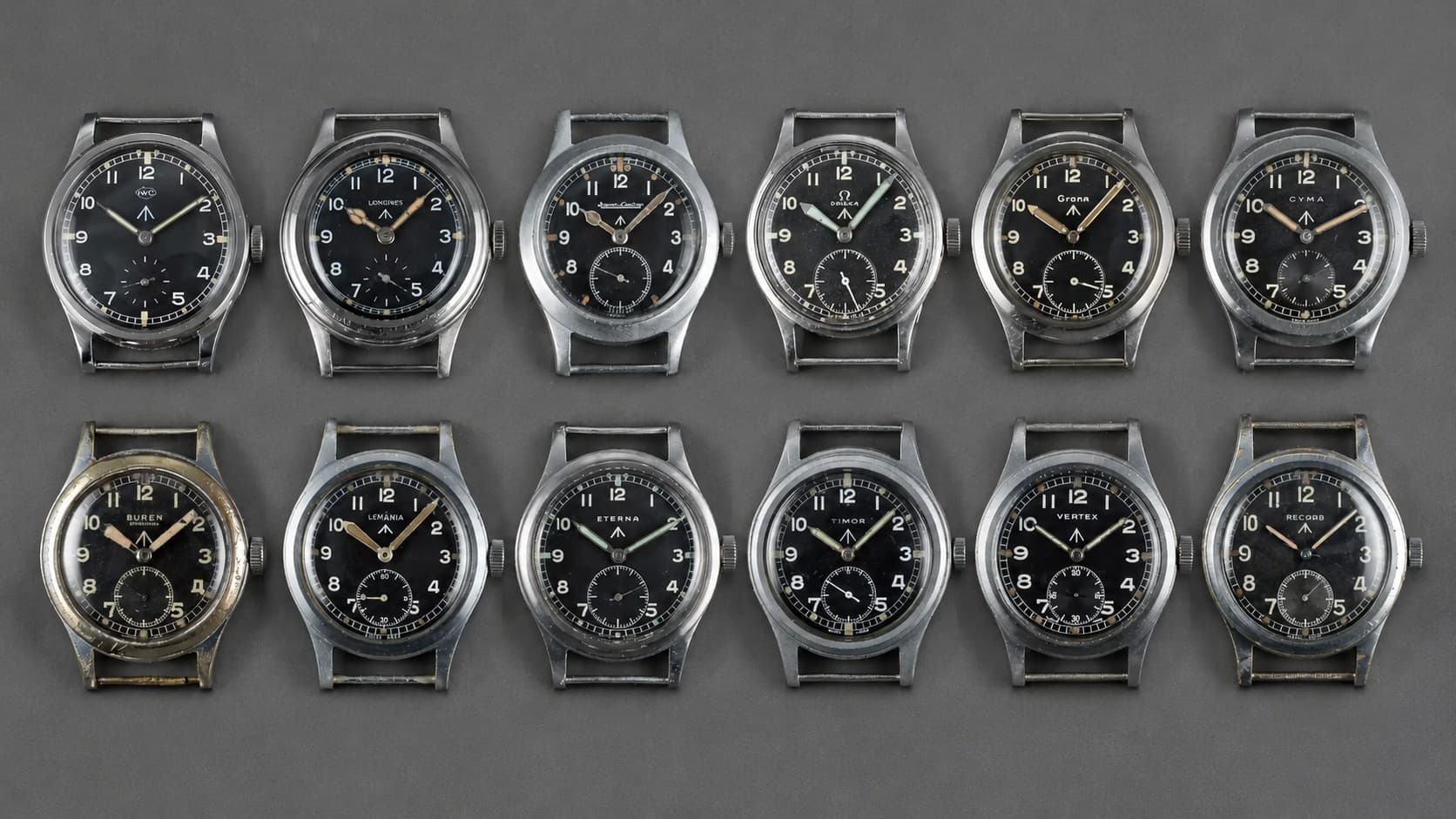
- The German military specified a design that set the standard for what is thought of as a classic pilot’s watch today. By 1936, aviation advances allowed airplanes to fly at all hours and in foul weather. The result was the Beobachtungsuhr (B-Uhr), or Observer. Even by today’s standards, the B-Uhrs were large timepieces, measuring 55mm in diameter. Five companies manufactured the B-Uhr: A. Lange & Söhne, Wempe, Lacher & Company/Durowe (Laco), and Walter Storz (Stowa). These watches were actually owned by the German government, not the pilots, and had to be returned after flights.
- In 1952, Breitling was commissioned by the Aircraft Owners and Pilots Association (AOPA) to create a chronograph for its members. The result was the Navitimer, a revolutionary wrist-worn flight computer that enabled its wearers to perform essential calculations like rate of climb and fuel consumption. This represented the evolution from simple timekeeping to complex flight calculation capabilities.
The evolution of pilot watches reflects the rapid advancement of aviation technology itself. All of these historical moments illustrate how significant the role of the pilot’s watch was in the early days of aviation, in military flight, and in humanity’s never-ending quest to achieve the impossible. From simple timekeeping devices to sophisticated flight computers, these watches became indispensable tools that helped pilots navigate vast distances, calculate fuel consumption, and coordinate complex military operations during some of the most crucial moments in aviation history.
Key Features That Define Pilot Watches
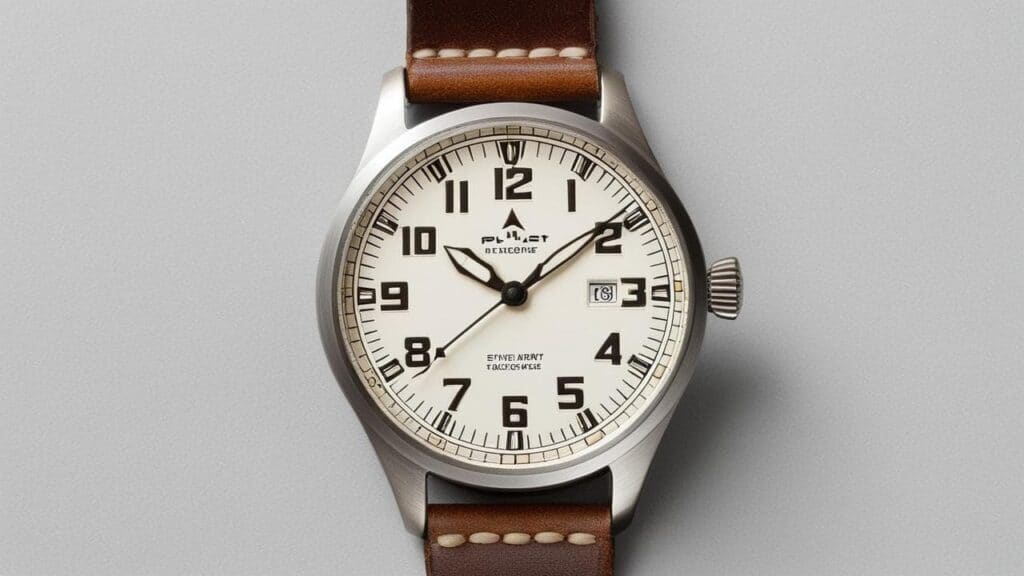
Pilot watches are immediately recognizable thanks to their distinctive features that were developed specifically to meet the demanding needs of aviation. It had to be visible in the dark - so lots of lume was required. It had to be easy to manipulate with gloved hands - enter the onion crown. It had to have premium accuracy - military users, in particular, insisted on chronograph certified movements. It had to be rugged - waterproof, shatter-resistant crystals, anti-magnetic treatments. Every element of a pilot watch’s design serves a specific purpose related to flight safety and functionality.
- Many pilots watches have large, dark dials with contrasting numbers or indices to ensure instant readability in all lighting conditions. For the sake of readability, the dials were as contrasted and luminous as possible (matte black dials with large numerals and markers, all painted in radioactive material). The typical design uses white Arabic numerals on a black background, creating maximum contrast for quick time reading during flight operations.
- Pilot watches feature up to 20 coats of Super-LumiNova on their dials, ensuring optimal visibility in the poorest of lighting conditions. A pilot watch should have a large, easy-to-read dial, with clear, legible markings. The dial should be designed with high contrast, making it easy to read in low-light conditions. This allows pilots to read their watch during night flights or in darkened cockpits without any additional lighting.
- Historically pilots wore gloves during flight and therefore needed a large crown they could easily manipulate without removing those gloves. The oversized diamond or onion crown could be operated with gloves on the hand. These crowns are often textured or fluted to provide better grip, and some are shaped like onions or diamonds to make them easier to grasp during critical flight operations.
- Mechanical watches are at risk when exposed to magnetic fields. Protection against this negative influence is therefore needed for all-purpose tool watches, but even more when it comes to pilot’s watches, as a cockpit is one of the most magnetic environments a watch can encounter. When flying, there’s a possibility of encountering magnetic fields that can damage a watch. To combat this problem, many manufacturers have integrated anti-magnetic properties through the protection offered by a Faraday cage (a specially designed enclosure that blocks electromagnetic fields).
- An orientation triangle at the 12 o’clock position was widely used to help pilots instantly see the orientation of their timepiece and determine the correct time. This triangle, often flanked by two dots, became one of the most recognizable features of pilot watches and helped pilots quickly orient their watch face during flight operations.
- Convex sapphire crystals come with a Mohs hardness rating of 9. That’s the equivalent to 2000Hv on the Vickers’ scale. Untreated crystals can allow light to reflect back, significantly affecting the legibility of the dial. So anti-reflective coatings are vapour-deposited to both sides of the glass in a vacuum environment, reducing reflections to less than 0.5% for optimum legibility.
These features weren’t just aesthetic choices - they were life-saving design elements that could mean the difference between a successful mission and disaster. Today, these same features form the basis of nearly every pilot’s watch. Gone are the extra-long straps required to fit over heavy flight jackets and the size of the watch has dropped back below the 50+mm sizes common during the war. Modern pilot watches maintain the essential DNA of their wartime predecessors while adapting to contemporary needs and wrist sizes.
Different Types of Pilot Watches
The world of pilot watches encompasses several distinct categories, each developed to meet specific aviation needs and preferences. For a tool that’s evolved to suit various needs, the pilot watch has developed different characteristics based on its use. Understanding these different types helps explain why pilot watches can look so different from each other while still maintaining their aviation heritage and functionality.
- “Flieger” is the German word for “flier” — contrary to what you may have read elsewhere, it’s not the direct translation of “pilot” (that would actually be “pilot”) — and if you’re a traveler visiting Germany, it’s a helpful word to know. Flieger is also the term that’s been widely adopted as shorthand for a specific style of pilot’s watch — one that traces its origins to World War II. Then there are the very straightforward and utilitarian fliegers. These models draw inspiration from historic aviation watches like the B-Uhr watches produced for the German Luftwaffe in WWII. They feature minimalist black dials and luminous hands and markers designed for maximum legibility and navigation.
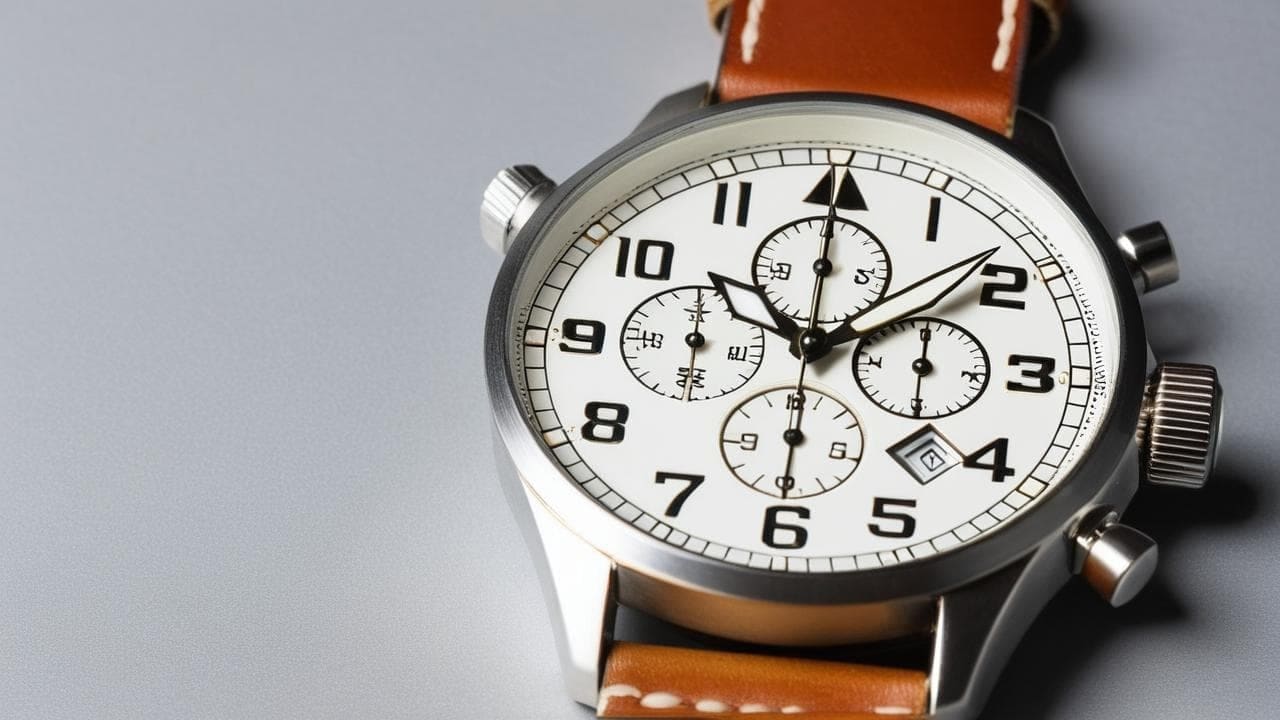
- Complex chronographs, like those produced by Breitling, contain a stopwatch feature for timekeeping and a slide rule bezel. This unique bezel design helps pilots calculate speed, distance, and fuel consumption all on the wrist. The slide rule bezel, a Breitling invention for its Chronomat watch, is a mechanical calculator for pilots – a sort of mini-computer of the pre-digital age – that allows for all types of inflight calculations. It is based on a fixed scale on the dial and a second, mobile scale on the bidirectional bezel.
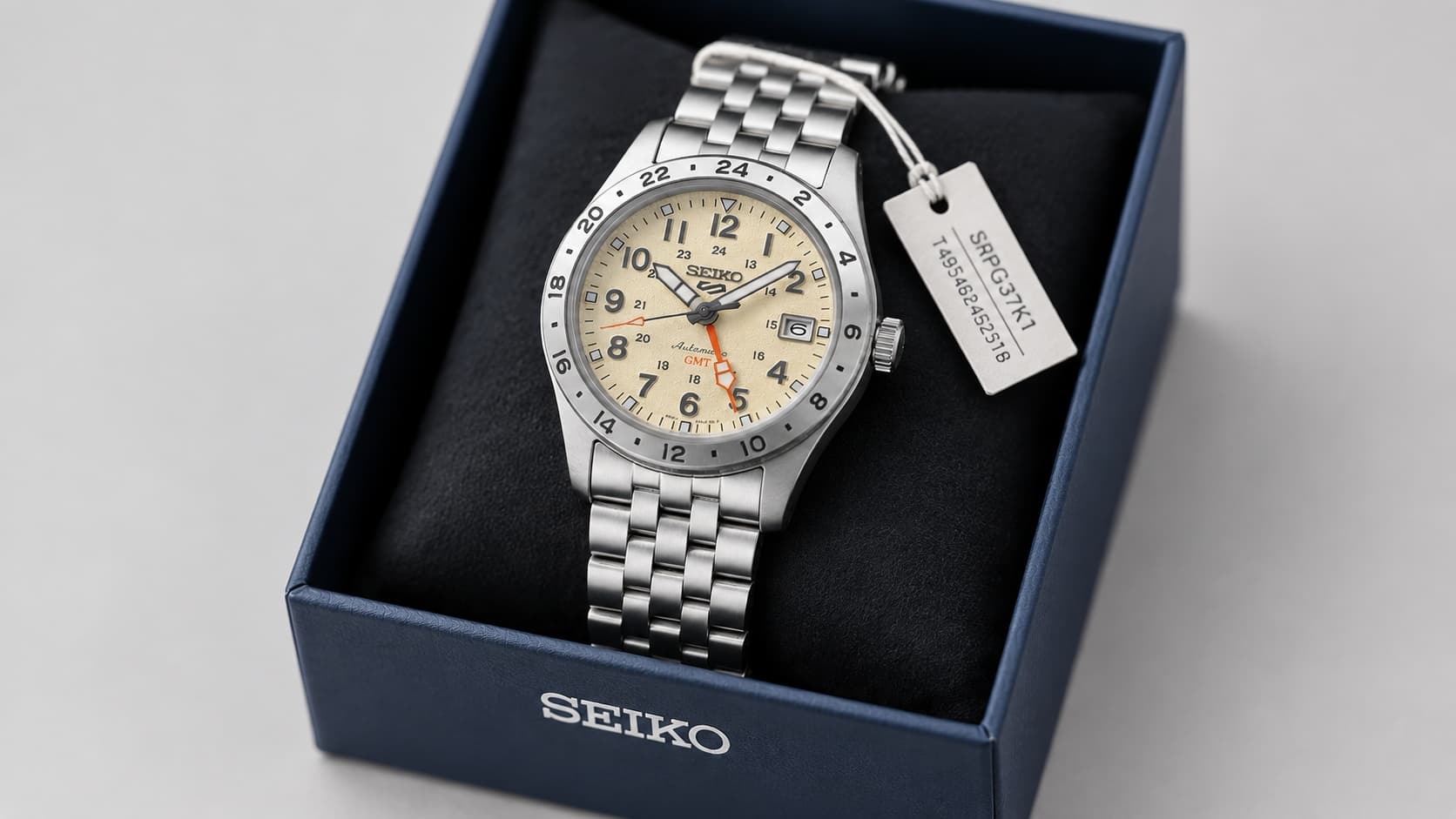
- GMT and dual-time pilot watches were specifically developed for commercial aviation needs. Many of the most iconic pilot’s watches had very critical uses like navigation, but Rolex had another need of pilots in mind when it introduced its GMT watch in 1954: pilot’s traveling between time zones needed to simultaneously keep track of their home time and that of their current destination. These watches allow pilots to track multiple time zones simultaneously, which is essential for international flight operations.
- Some chronographs will also have an additional flyback complication. This allows the wearer to use the stopwatch without having to stop the chronograph. In short, to reset the timer, just press a button. Then, the seconds hand will “fly back” to zero and start again. This feature is particularly useful for pilots who need to time multiple flight segments or navigation waypoints without losing precious seconds during the reset process.
- Then, there are unsentimental ones which feel as technical and serious as modern fighter planes or commercial aircraft. You can even find watches that embrace the fact that pilots don’t need these watches, and instead approach aviation as a design theme — some might have an airplane-shaped shaped seconds hand, a turbine-shaped rotor, or incorporate material from a historic aircraft in their construction.
- Digital pilot watches like the G-Shock GR-B200 come in several colorways to suit different styles, and are feature-packed, especially for the price. Like all G-Shocks, the GR-B200 is a tough cookie featuring G-Shock’s famed Carbon Core Guard structure, which encases the timekeeping module within a carbon-fiber-reinforced resin case. The GR-B200 has sensors that pilots will find useful, including a compass, altimeter, barometer, thermometer, and even a step counter.
Each type of pilot watch serves different needs and preferences, from the purist who wants an authentic military-style timepiece to the modern pilot who needs digital functionality and multiple sensors. Pilot’s watches can take many forms: big, small, military or civilian in origin, a bold and spartan dial or a captivatingly busy chronograph… But what they share in common is a focused purpose and a connection to the endlessly compelling idea of flight. The diversity within the pilot watch category ensures that there’s an aviation-inspired timepiece for every taste, budget, and functional requirement.
Best Pilot Watch Brands and Models
The pilot watch landscape is dominated by several legendary brands that have shaped aviation horology through decades of innovation and historical significance. IWC can also reveal its modern side. The brand’s Top Gun models have a matte-black ceramic case and a textile strap for a contemporary military look, while still maintaining other traditional features. For this reason, these watches are easily recognizable as IWCs. These manufacturers have created timepieces that are not just tools, but icons of aviation history.
- IWC’s first Big Pilot’s watch, made for the German Air Force in 1940, basically defined the look of a classic military aviation watch and its return to the modern lineup in 2002 kicked off an entire family of Pilot’s timepieces that has taken center stage in the brand’s portfolio. The IWC Big Pilot has its roots in the 1930s and 1940s, during the era of military aviation. In 2002, IWC revived the Big Pilot in its modern form, combining its historical aviation roots with contemporary watchmaking technology. The Big Pilot is designed around legibility at high rates of speed in the air, so the white indices against the black dial doesn’t get any more legible, and the fact that it’s basically a dinner plate on your wrist makes the Big Pilot the absolute authority on legible Pilot Watches.
- The Breitling Navitimer is one of the most legendary pilot’s watches ever made, with a history dating back to 1952. The Navitimer was designed specifically for pilots and aviation professionals, featuring a slide rule bezel that allowed for complex calculations related to flight. Pilots could use the Navitimer to calculate fuel consumption, flight times, distance, and much more. In 1954 they launched the Navitimer. This watch was designed for the American Owners and Pilots Association of civilian pilots in the USA. It features an updated and more sophisticated Slide Rule than the Chronomat and a Chronograph or stopwatch. Using these two features, the watch manual instructs a pilot how to calculate 14 different things, including how much fuel is left, distances, time at a speed, etc.
- Surely astronauts qualify as pilots, right? In that sense, the Omega Speedmaster might be the most famous pilot’s watch of them all — despite having been conceived as a racing chronograph, as its name indicates. NASA chose this very watch to go to the Moon after a long testing phase: the Speedmaster was the only watch to fulfil all the agency’s requirements. While not originally designed as a pilot watch, its space exploration heritage makes it one of the most famous aviation-related timepieces ever created.
- Hamilton might have moved to Switzerland in the Eighties, but that’s only burnished its watchmaking might. Inventors of the first digital watch in the Pulsar, as well as making a name in Hollywood, where Hamiltons have appeared on Elvis’s wrist in Blue Hawaii, in Kubrick’s 2001: A Space Odyssey. A useful actual pilot watch is one that is not only easy to read but has dual time capability such as a Glycine Airman, any GMT watch with a 24 hour bezel or an analogue digital watch such as the Breitling Aerospace.
- Martin-Baker is a British aviation company responsible for supplying 70% of the world’s Air Forces with fighter ejection seat technology. They first approached Bremont to create the ultimate pilot’s watch in 2007. More than simply putting a logo on an existing model, the watch had to withstand the same rigorous testing programme as the ejection seats themselves. This collaboration resulted in watches that can literally survive ejection seat deployment.
- The German manufacturers were Laco, Stowa, Wempe, and a watchmaker now known much more for high-luxury timepieces than tool watches, A. Lange & Söhne. The single Swiss maker was the International Watch Company, or IWC, which supplied watches to both the Axis and Allies as per Switzerland’s neutral status during the war. These historical manufacturers created the foundation for modern pilot watch design.
These brands didn’t just make watches - they created legends that continue to inspire modern aviation timepieces. A small mechanical device can connect wearers with icons like Santos Dumont, who was looking for a practical alternative to the pocket watch, or to Lindbergh and Blériot, who achieved unimaginable feats, but also to the darkness of war time. This creates a very special experience for the wearer – especially when curiosity and enthusiasm enter the equation. Each brand brings its own unique heritage and approach to pilot watch design, ensuring that aviation enthusiasts have a wide range of authentic, historically significant timepieces to choose from.
What to Look for in Pilot Watches
Selecting the right pilot watch requires careful consideration of several factors, from practical functionality to personal style preferences. Below are five questions that’ll help you choose the type of pilot’s watch that speaks to your inner aviator. The key is understanding what you want from your watch and how it will fit into your lifestyle, whether you’re an actual pilot or simply someone who appreciates aviation heritage.
- When it comes to big pilot watches, the range of prices can be quite broad, with options available at various price points to suit different budgets. While the high-end models from prestigious brands like IWC and Breitling can command prices in the thousands of dollars, there are also more affordable options that offer excellent value for money. To keep things orderly, prices are arranged from the least to most expensive. Entry-level options can start around $300-500, mid-range Swiss pieces range from $1,000-5,000, and luxury models can exceed $10,000-25,000.
- This question applies to watches of all kinds. Mechanical movements are more expensive and less accurate than their quartz counterparts, but they add a sense of “specialness” to watches, and this might be all the more important to buyers interested in pilot’s watches specifically for their history and tradition. Look for a watch that uses a quartz movement or a high-quality mechanical movement. Quartz watches are known for their accuracy, while mechanical watches offer a classic look and feel. Quartz movements are more practical for actual timing needs, while mechanical movements offer traditional craftsmanship and heritage appeal.
- Consequently, many pilot’s watches have large hands and bold numerals, and sometimes simply large diameters. Strongly lumed elements aid legibility. Most pilot watches range from 40mm to 46mm in diameter, with some vintage-inspired models reaching 48mm or larger. In 2021, IWC engaged enthusiasts who’d clamored for the Big Pilot’s style while lamenting its massive proportions (46mm, still smaller than the 53mm original) with the release of the Big Pilot 43, which not only offers a more wearable 43mm case size.
- A pilot watch should be able to withstand the rigors of aviation. Look for a watch that is water-resistant, shock-resistant, and scratch-resistant. The watch should also have a durable strap or bracelet that can withstand the wear and tear of daily use. Look for a watch with a durable case, scratch-resistant crystal, and a sturdy strap or bracelet. A watch with a water resistance rating of at least 100 meters is also ideal for pilots who may encounter water during their flights.
- If so, you already know that you don’t actually need a pilot’s watch. In the past, watches were an important tool for pilots, but what with the advent of digital instruments and computing, those times are gone. Civil Aviation Order 20.18 lists aircraft equipment that must be carried in flight and includes the requirement for ‘an accurate timepiece indicating the time in hours, minutes and seconds’ that ‘may be carried on the pilot or navigator’. Even though modern avionics have replaced many traditional functions, some pilots still prefer mechanical backups.
- The GMT complication and 24-hour bezel are both handy complications, too: originally intended for commercial pilots, these are especially useful for modern travelers or those with contacts in other time zones. For pilots who frequently travel across time zones, a GMT or dual time zone function is a valuable feature. This allows the pilot to easily track the time in two different time zones, ensuring they stay on schedule and avoid confusion.
The most important consideration is choosing a watch that matches your intended use and personal style. Ultimately, when it comes to choosing a big pilot watch, it’s important to carefully consider your budget and prioritize the features that are most important to you. Whether you opt for a more affordable model or splurge on a high-end timepiece, the key is to find a watch that not only fits your style but also provides excellent value and functionality for your needs. Remember that the best pilot watch is one you’ll actually wear and enjoy, whether you’re flying aircraft or simply appreciating the heritage and design of these remarkable timepieces.
How Pilot Watches Compare to Other Watches
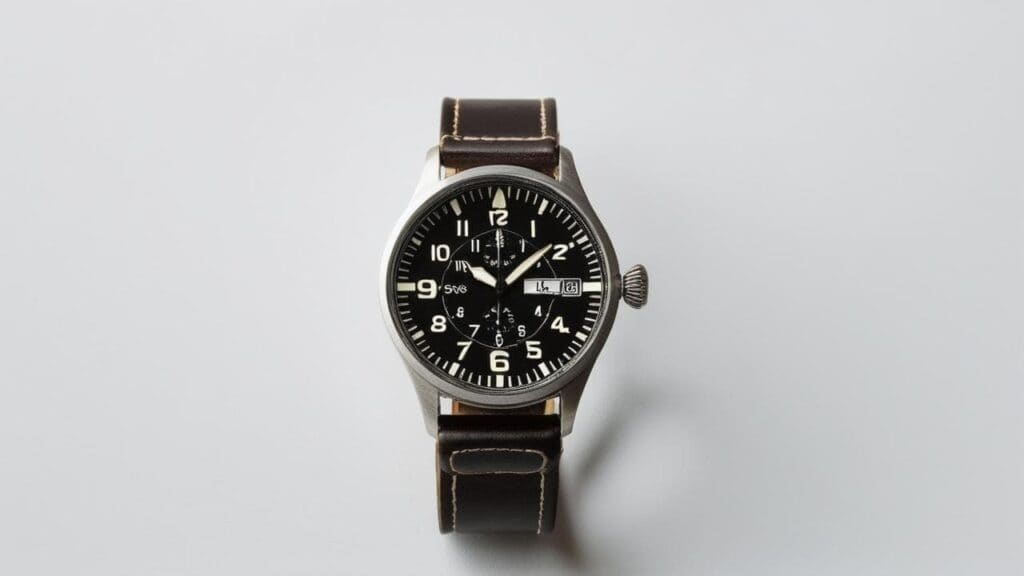
The differences between pilot watches and regular timepieces go far beyond just appearance - they represent fundamentally different approaches to watch design and functionality. The requirements for a pilot watch were different, although not vastly so, from a WW1 infantry watch, especially in the formative years. The dial would be preferably black, and the large indices and hands must stand out proudly. Maximum legibility was the principal objective, with accurate time keeping a close second. Understanding these distinctions helps explain why pilot watches have maintained their unique character and appeal.
- Pilot watches prioritize functionality over fashion, with every design element serving a specific aviation-related purpose. Regular dress watches focus primarily on elegance, style, and thin profiles that fit comfortably under shirt cuffs. Most classic Aviator watches are defined by their purpose-driven design language. The dials are intended for a quick reading of the time in almost all walks of life. This utilitarian approach means pilot watches often appear more robust and tool-like compared to the refined aesthetics of traditional timepieces.
- Easy watch manipulation was essential, and very soon, the earliest pilot watches had large textured crowns to allow adjustment with heavy insulated flying gloves. Regular watches typically have smaller, more proportional crowns that complement the overall design rather than prioritizing functional operation. The oversized crowns on pilot watches can appear disproportionate to those accustomed to traditional watch proportions.
- An interesting feature associated with many pilot’s watches is the triangle flanked by two dots at 12 o’clock, which is believed to have originated in German wartime flieger watches and was meant to help provide a quick visual orientation of the dial. Regular watches rarely include such specific orientation markers, instead relying on traditional hour markers or numerals for time reading.
- The size difference is immediately apparent when comparing pilot watches to regular timepieces. Most dress watches range from 34mm to 40mm in diameter and maintain thin profiles, while pilot watches commonly measure 42mm to 46mm with significantly thicker cases to accommodate larger movements and enhanced durability features.
- Whether it’s submitting a flight plan, reading a weather forecast, or planning a complex air campaign, pilots work in GMT (also known as UTC or Zulu time) because local time exposes them to the risk of making costly miscalculations. Many pilot watches include GMT complications, 24-hour markings, or dual-time displays that are uncommon in regular watches, which typically focus on local time display only.
- The operating environment of the watch will vary greatly with each aircraft type as, for example, the cockpit of a fighter jet is a much more hazardous place for a timepiece than the flight deck of a modern airliner. Regardless, in any aircraft, there is potential for it to face exposure to cockpit knocks, magnetism, heat, cold, rapid changes in air pressure and excessive G-forces all in the one flight. Regular watches are designed for typical daily wear conditions and rarely include such extreme environmental protection.
The choice between pilot watches and regular timepieces ultimately depends on personal preference and intended use. Even the classic aviator timepieces compliment almost every occasion and outfit. The option to switch from steel bracelet to leather strap, creates even more versatility and endless style options. While pilot watches offer superior legibility and tool-watch functionality, regular watches provide greater variety in formal and dress applications. Both serve their purposes well, but pilot watches bring a unique combination of historical significance, robust construction, and aviation heritage that regular watches simply cannot match.
How to Care for Pilot Watch
Proper maintenance of pilot watches is crucial for preserving their functionality and longevity, especially given their tool watch heritage and robust construction. As a pilot, your watch is not just a timepiece but also a valuable tool for flight navigation and timekeeping. Keeping your pilot watch in top condition is essential to ensure accurate timekeeping and reliable functionality in the cockpit. Whether you’re an actual pilot or simply an enthusiast, understanding proper care ensures your aviation timepiece will serve you well for years to come.
- Regularly clean your pilot watch to remove dirt, dust, and sweat. Use a soft-bristled brush or a microfiber cloth to clean the case, bracelet, and crystal. If the watch is water-resistant, you can also rinse it with clean water and dry it thoroughly with a soft cloth. Pay special attention to the crown and case back areas where dirt and moisture can accumulate, potentially affecting the watch’s water resistance and movement accuracy.
- When you’re not wearing your pilot watch, store it in a cool, dry place away from direct sunlight and moisture. Avoid storing it near magnets or electronic devices that can affect its accuracy. This is particularly important for pilot watches since many include anti-magnetic protection that can be compromised by prolonged exposure to strong magnetic fields from computers, phones, or other electronic devices.
- Like any mechanical device, pilot watches need regular servicing to maintain their accuracy and reliability. Professional servicing should typically occur every 3-5 years for mechanical movements, or when the watch begins showing signs of decreased accuracy, moisture inside the crystal, or other performance issues. Quartz movements require less frequent servicing but still benefit from periodic inspection and battery replacement.
- Avoid exposing your pilot watch to extreme temperatures, such as hot car interiors or freezing temperatures. Extreme temperatures can damage the watch’s components and affect its accuracy. Temperature variations can cause metal components to expand and contract, potentially affecting the movement’s regulation and the watch’s water resistance seals.
- For pilot watches with leather straps, regular conditioning and replacement are essential for maintaining both appearance and functionality. Aviation-style leather straps, often made from thick, durable leather, can last years with proper care but will eventually need replacement due to wear from regular use and exposure to moisture and oils from the skin.
- Anti-magnetic protection in pilot watches requires special consideration during maintenance. Avoid exposing the watch to strong magnetic fields during cleaning or storage, and have the anti-magnetic properties tested during professional servicing to ensure they remain effective.
- Water resistance testing should be performed annually if you regularly expose your pilot watch to moisture or if you notice any signs of moisture intrusion. Even watches rated for significant water resistance can lose their sealing properties over time due to worn gaskets or damaged crown seals.
By following these maintenance tips, you can keep your pilot watch in top condition and ensure reliable performance in the cockpit. A well-maintained pilot watch is not only a valuable tool for flight navigation and timekeeping but also a long-lasting investment. Proper care preserves not just the functionality but also the historical significance and value of these remarkable timepieces, ensuring they can be enjoyed and potentially passed down for generations while maintaining their connection to aviation heritage.
Pilot Watches for Everyday Wear
Today’s pilot watches have transcended their original aviation purpose to become versatile timepieces that appeal to a broad audience of watch enthusiasts, professionals, and style-conscious individuals. Most people that wear pilot’s watches today don’t fly planes. And actual modern pilots don’t rely on pilot’s watches. But none of that matters, because it’s what these once critical tools represent that makes them so compelling. The appeal lies not just in their functionality, but in the adventure, heritage, and distinctive aesthetic they bring to modern wearers.
- Perhaps even more than dive watches, pilot’s watches conjure adventure — whether it’s the dangerous experiments of early aviators, the dangerous jobs of military pilots or even the dazzlingly technical cockpits of commercial airlines. They can evoke the sense of wonder the general public had toward flight in the 20th century. For many wearers, pilot watches represent a connection to the golden age of aviation and the pioneering spirit of early aviators who pushed the boundaries of human achievement.
- A good pilot’s watch is attractive and beautiful to look at. Materials, features, and of course the brand image will vary depending on the price range. The offer ranges from the simple three-pointer observation watch, as the model Leipzig by LACO to masterpieces with various complications such as the Breguet type XXI chronograph. No matter what price range, your choice to select a good pilot’s watch testifies to your good taste and sense of style. The aesthetic appeal of pilot watches works equally well in boardrooms and casual settings, making them versatile accessories for modern professionals.
- Pilot watches tell of an era when only the bravest and daring of men would be able to navigate an airplane. Now, many decades later the only bravery associated with flying lies in trusting the pilot to carry you safely through the lively air traffic. Nonetheless, let that not keep you from outing your inner adventurer with a pilot watch on your wrist. Modern wearers are drawn to the romantic notion of aviation exploration and the courage of early pilots, even in today’s highly automated world.
- The robust construction and anti-magnetic properties of pilot watches make them excellent choices for people who work with computers, smartphones, and other electronic devices. Thanks to inner soft-iron Faraday cage protection, watches are protected from any potentially harmful magnetic fields up to 500 Gauss. This is over eight times the standard level of anti-magnetic protection required to comply with ISO 764 certification for anti-magnetic watches. This protection is valuable for anyone in technology-related professions or those who frequently use electronic devices.
- Both diver watches and pilot watches are offered in new models that perfectly suit the modern lifestyle in all its facets. Even the classic aviator timepieces compliment almost every occasion and outfit. The option to switch from steel bracelet to leather strap, creates even more versatility and endless style options. This versatility allows pilot watches to transition seamlessly from casual weekend wear to professional business attire.
- The superior legibility of pilot watches makes them practical choices for anyone who needs to read time quickly and accurately in various lighting conditions. Whether you’re giving presentations in dimly lit conference rooms, working outdoor jobs, or simply prefer watches that are easy to read at a glance, pilot watch design principles serve these needs perfectly.
- Refrain from drawing the conclusion that with all this talk about masculinity there can’t be pilot watches for ladies. Smaller 36mm diameter models cater to women with delicate wrists (and men who prefer smaller dials). Manufacturers as Stowa or IWC present a wide variety of choices. Modern pilot watch collections include options for all wrist sizes and style preferences, breaking traditional gender boundaries in watch design.
Modern pilot watches succeed because they combine practical functionality with emotional appeal and historical significance. Today, the complex functions found in historic aviation watches has migrated from the wrist to the plane’s instrument panel. Given the increased sophistication in aviation technology, there isn’t as much practical need for the complications that made the pilot watch a necessity in the early and mid-20th century. Still, people love the pilot watch for its historical significance, its appealing design, and the sense of adventure and possibility felt when wearing one on the wrist. They offer non-pilots the opportunity to connect with aviation heritage while enjoying timepieces that are both functional and stylistically distinctive in today’s watch landscape.
Frequently Asked Questions About Pilot Watches
Common questions about pilot watches reflect both curiosity about their practical applications and concerns about their distinctive design characteristics. Aviation developed alongside the wristwatch itself, and the watches associated with flying can evoke a sense of daring and a kick of adrenaline like few others. Understanding these frequently asked questions helps potential buyers make informed decisions about whether pilot watches suit their needs and preferences.
Do you need to be a pilot to wear a pilot watch?
Most people that wear pilot’s watches today don’t fly planes. And actual modern pilots don’t rely on pilot’s watches. But none of that matters, because it’s what these once critical tools represent that makes them so compelling. Pilot watches are designed for anyone who appreciates their heritage, functionality, and distinctive aesthetic - no aviation license required.
Are pilot watches too large for smaller wrists?
While many pilot watches are indeed large, ranging from 42mm to 46mm, manufacturers have recognized this concern. In 2021, IWC engaged enthusiasts who’d clamored for the Big Pilot’s style while lamenting its massive proportions (46mm, still smaller than the 53mm original) with the release of the Big Pilot 43, which not only offers a more wearable 43mm case size. Many brands now offer smaller versions, typically 38mm to 41mm, that maintain pilot watch design language while fitting more comfortably on smaller wrists.
What’s the difference between military and civilian pilot watches?
Military pilot watches were designed to strict specifications for combat conditions, featuring larger sizes, more robust construction, and specific military requirements. Beobachtungs-uhren (Observation watches) were a standard issue, but they were owned by Luftwaffe, not the pilots. They had to return them after the flight. Civilian pilot watches, while maintaining aviation aesthetics, focus more on style and commercial appeal while often including luxury features and premium materials.
How accurate are pilot watch timing functions?
The pilot’s watch needs to be accurate. It’s the law. Civil Aviation Order 20.18 lists aircraft equipment that must be carried in flight and includes the requirement for ‘an accurate timepiece indicating the time in hours, minutes and seconds’. Military aviation regulations further state that ‘during flight, pilots must maintain a time reference accurate to within ± 30 seconds’. Modern pilot watches, whether quartz or mechanical, easily meet these accuracy requirements, with many mechanical models achieving chronometer-certified precision.
Can pilot watches be worn for formal occasions?
Even the classic aviator timepieces compliment almost every occasion and outfit. The option to switch from steel bracelet to leather strap, creates even more versatility and endless style options. While traditionally considered tool watches, many pilot watches work well in business and semi-formal settings, especially when paired with leather straps and featuring cleaner dial designs.
Are pilot watches suitable for water activities?
Most pilot watches offer good water resistance, typically 100-200 meters, making them suitable for swimming and light water sports. However, they’re not specifically designed for diving like dedicated dive watches. Also unusual for pilot’s watches is the RA-AC0H04Y10A’s water resistance rating of 100 meters, making it an aviation watch that can also play in the water.
These questions highlight the practical considerations and misconceptions surrounding pilot watches. These practical timekeepers make a good sport watch alternative to the ever-popular dive watch as they’re overbuilt and handsome, to boot. Understanding these aspects helps potential buyers appreciate that pilot watches offer much more than just aviation heritage - they’re versatile, well-built timepieces suitable for a wide range of activities and personal styles.
Conclusion
Pilot watches represent one of the most fascinating and enduring categories in the world of horology, combining rich historical significance with practical functionality and distinctive design. As collector’s items, pilot’s watches are in a class of their own and absolutely deserve attention. From their humble beginnings as essential navigation tools for early aviators to their current status as coveted timepieces worn by enthusiasts worldwide, pilot watches have maintained their unique character while adapting to modern needs and preferences.
The evolution of pilot watches mirrors the incredible advancement of aviation itself, from the dangerous experimental flights of the early 1900s to today’s sophisticated aircraft with advanced digital systems. The pilot wrist watch is an instrument which has been present in the cockpit since the very beginning of aviation. The evolution of pilot watches shows aviation has always relied on cutting edge technology, setting trends for all other fields, including watchmaking. While modern pilots may no longer depend on mechanical timepieces for navigation and calculations, the legacy and appeal of these watches continue to captivate both aviation professionals and watch enthusiasts.
What makes pilot watches truly special is their ability to connect wearers with the pioneering spirit of early aviation. Whether you’re a seasoned pilot or simply admire the aviation aesthetic, finding the right big pilot watch can be a daunting task. But with proper research into the top brands and their standout models, you can find the perfect timepiece that suits your unique style and preferences. Whether you choose a vintage-inspired flieger, a complex chronograph with slide rule capabilities, or a modern interpretation with contemporary materials, you’re wearing a piece of aviation history that represents human ingenuity, courage, and the eternal desire to push boundaries. These remarkable timepieces continue to serve as both functional tools and powerful symbols of adventure, making them worthy additions to any watch collection and perfect companions for modern explorers, regardless of whether their journeys take them through the skies or simply through their daily lives.