Most pendants live on one chain for life. They hang from a small fixed loop, and once threaded onto a necklace, they usually stay there unless the whole chain is unclasped and restrung. An enhancer pendant breaks that rule. It opens up like a tiny hinged door, clips onto almost any chain, strand of pearls, or bead necklace, and just as easily clips off again. That one small mechanical difference changes how a piece of jewelry gets used, which is why enhancers have quietly stuck around in jewelry boxes for generations.
What Does “Enhancer Pendant” Mean?
An enhancer pendant is a piece of jewelry with a hinged, spring-loaded bail instead of a solid loop, letting it open and close around a necklace so it can be moved from chain to chain. The hinge sits at the top of the pendant, right where a normal loop would be. A small lever is pressed, or the two halves pulled apart, to open the bail enough to slide onto a chain or strand of beads; releasing it lets the bail snap shut and grip the necklace in place.
This design solves a problem jewelers have dealt with for a long time. A pendant with a fixed loop only fits chains with a clasp small enough to pass through that loop, or it has to be threaded on before the necklace is closed. An enhancer sidesteps all of that, because the bail opens wide enough to clamp onto a necklace of almost any thickness, including thick rope chains, pearl strands, or bead necklaces that a normal pendant loop could never slide over.
The term overlaps with an older one found on antique pieces: the “necklace slide.” Slides date back to the Victorian and Art Nouveau eras, when jewelers made small ornaments meant to sit in the middle of a ribbon or chain rather than dangle from a fixed loop. Modern enhancers do the same job, just with a hinge instead of a simple sliding loop.
Enhancer Pendant vs. Regular Pendant
A regular pendant has a closed loop, so it has to be strung onto a necklace before the clasp is fastened. Swapping it to a different chain therefore takes real effort: the necklace has to be unclasped, the pendant slid off, then threaded onto the new chain before the clasp is closed again.
An enhancer skips that whole process because its bail is hinged rather than closed. It can be added to or removed from an already-fastened necklace in seconds, without the clasp ever being touched. This is also what separates an enhancer from a charm. A charm typically attaches through a jump ring or clip built for bracelets, while an enhancer is built specifically to grip a full-size necklace chain or bead strand and act as a centerpiece.
Less a pendant, and more a piece of jewelry with its own built-in clasp.
How Does the Enhancer Clasp Open and Close?
Most enhancer bails work with a simple spring hinge, similar to the mechanism inside a lobster-claw clasp. One side of the bail is fixed to the pendant, and the other side swings open under light pressure on a small lever or seam. Some higher-end pieces use a smoother box hinge that closes flush, so the seam is barely visible once it’s shut.
Because the opening is spring-loaded, the bail snaps closed on its own and stays put under normal wear. Many enhancers built for pearl or multi-strand necklaces also include a small hidden safety catch behind the hinge, an extra lock that keeps the bail from popping open by accident while worn. Jewelers size these hinges carefully, since a bail that opens too easily can slip off, while one that’s too stiff becomes difficult to use. A well-made enhancer opens with light finger pressure and closes with a firm, audible click.
What Are Enhancer Pendants Made Of?
Enhancer pendants are made from the same metals used in most fine and fashion jewelry, including sterling silver and yellow, white, or rose gold. The bail itself is usually made from a slightly sturdier alloy than a decorative pendant would need, since it has to flex open and shut repeatedly without weakening over years of use.
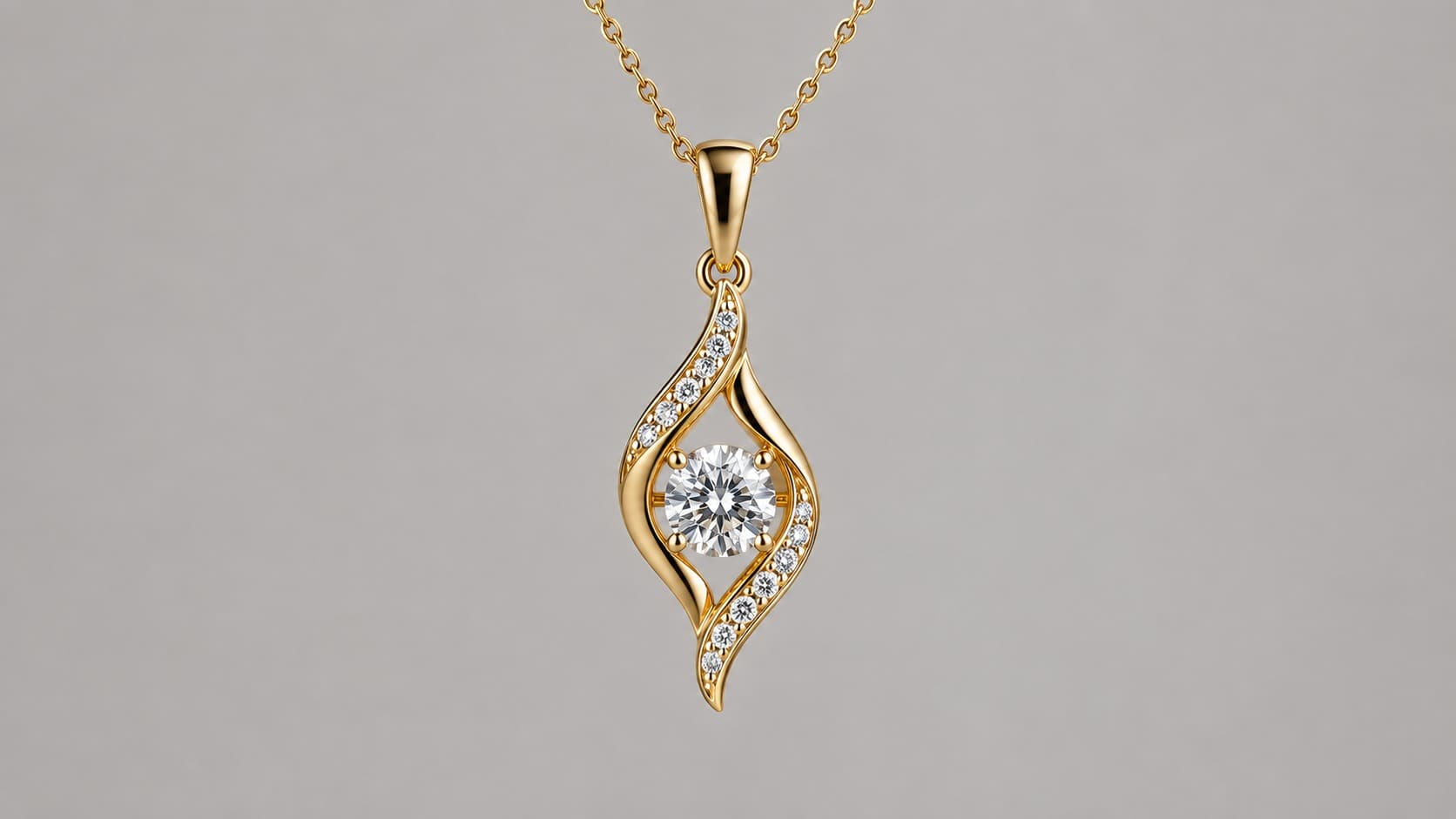
The decorative front of the pendant varies a lot more. Some feature a single gemstone, others use a cluster of small diamonds or accent stones, and vintage pieces sometimes incorporate coins, carved jade, enamel work, or engraved medallions. Because the piece is meant to move between different necklaces, many enhancers lean toward simple, symmetrical shapes like circles, ovals, or teardrops that look balanced no matter which chain they’re clipped onto.
Enhancer Pendant Shapes and Styles
Enhancer pendants come in a handful of recognizable silhouettes, and the shape often affects how the piece reads on the neck:
- Circles and ovals – classic, versatile shapes that sit centered and work with almost any chain thickness
- Teardrops – a pointed bottom that draws the eye downward, often used with a single gemstone
- Geometric shapes – squares, hexagons, or bars, common in more modern or minimalist designs
- Vintage coin or medallion styles – flat, disc-shaped pieces, sometimes with engraving or a historical design pressed into the metal
Vintage enhancers turn up especially often from the 1970s and 1980s, a period when pearl strands and Omega-style chains (flat, mesh-like necklaces with no visible links) were popular and jewelers leaned on enhancers to give plain strands a focal point. That history is part of why the style still feels closely tied to pearls today, even though modern enhancers work just as well on a simple gold chain.
Wearing an Enhancer Pendant: The Basics
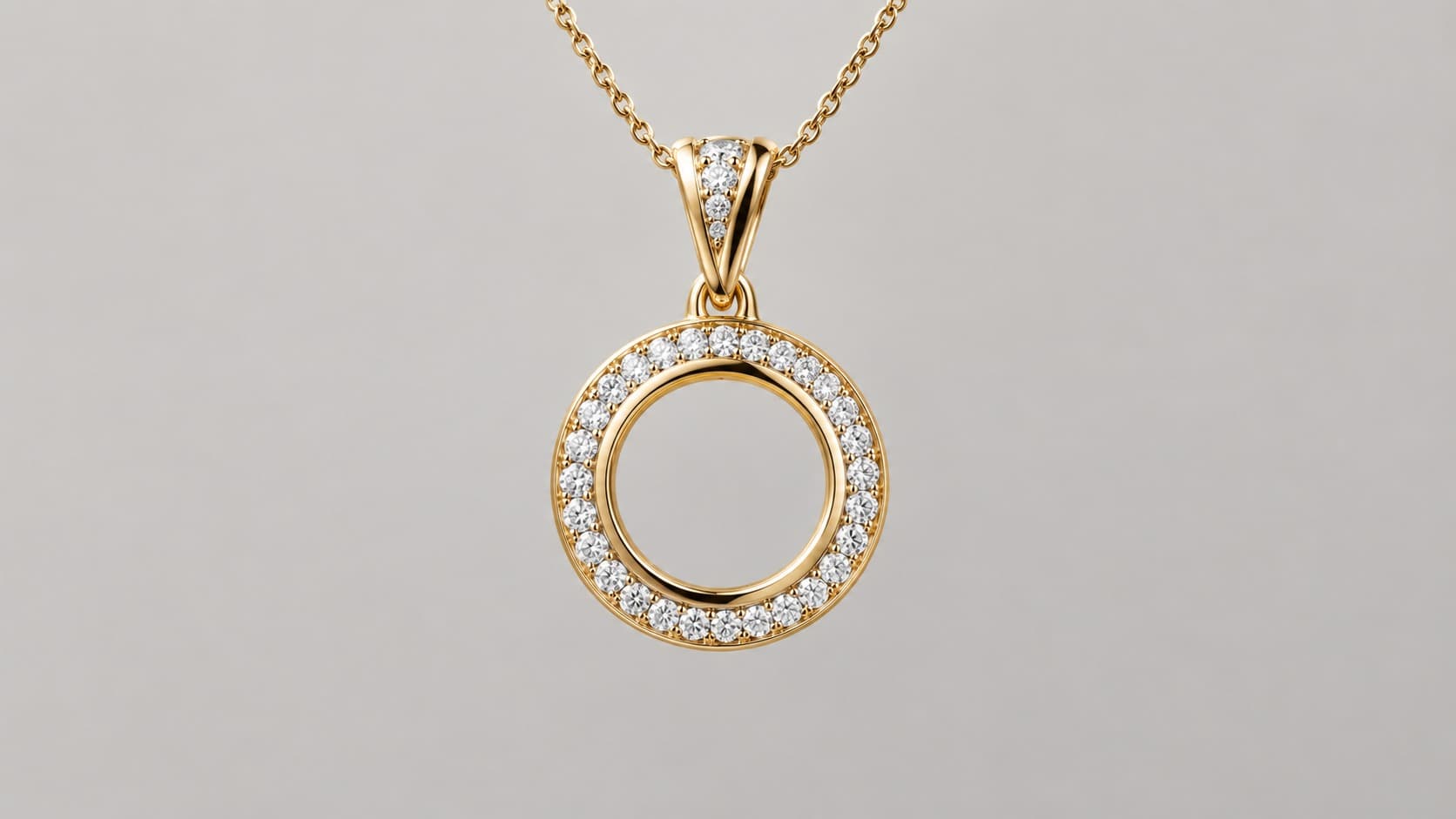
An enhancer is worn the same way as any pendant necklace, clipped onto the center of a chain so it hangs at the front of the neck. The advantage becomes clear when the setup changes. Because the bail opens, the same enhancer can move between a thin gold chain one day and a chunky pearl strand the next, without a jeweler or any tools involved.
That flexibility plays out in a few everyday patterns:
- Clipping onto a plain chain for daytime wear, then moving it to a statement chain for evening
- Attaching it to a strand of pearls to add color or sparkle to an otherwise simple piece
- Combining two thin chains and clipping the enhancer in the middle so it sits like a single necklace
- Rotating it between several necklaces already in a jewelry box, instead of a new pendant being bought for each one
Enhancer Pendant vs. Locket vs. Charm
Enhancer pendants, lockets, and charms are often confused, though each serves a different function:
| Feature | Enhancer Pendant | Locket | Charm |
|---|---|---|---|
| Attachment | Hinged bail, opens and closes | Fixed loop, threaded onto chain | Jump ring or clip, usually for bracelets |
| Can move between necklaces easily | Yes | No, needs unclasping | Depends on the clip type |
| Typical use | Centerpiece on a necklace | Holds a photo or keepsake inside | Small decorative addition, often stacked |
| Opens to reveal something inside | No | Yes | No |
A locket and an enhancer can look similar from a distance, since both often sit as a rounded centerpiece on a chain. The real difference is function: a locket opens to store something inside, while an enhancer opens only at the bail, to attach or detach from a necklace.
What to Check Before Buying an Enhancer Pendant
The hinge is the part that matters most, since it’s the mechanical piece doing all the work. A good enhancer opens smoothly without needing excessive force, and closes with a firm, secure click rather than a loose wobble. Gently testing the hinge a few times before buying, or checking product details that mention hinge durability for online purchases, gives a good sense of long-term reliability.
It’s also worth checking the bail’s maximum width, usually listed in millimeters, since this determines which necklaces it can actually clip onto. A bail rated for up to 6mm won’t open around a thick rope chain or a multi-strand pearl necklace, so matching that number against existing chains makes the piece far more useful day to day. Bail sizes generally line up with necklace types in a predictable pattern:
| Necklace type | Typical width | Bail size needed |
|---|---|---|
| Thin box or cable chain | 1–2mm | Small (up to ~4mm) |
| Standard rope or curb chain | 3–5mm | Medium (up to ~6mm) |
| Single-strand pearls | 6–9mm | Medium to large (up to ~10mm) |
| Multi-strand pearls or beads | 10mm+ | Large, often with a hidden safety catch |
These are general ranges rather than exact standards, since chain and pearl sizing varies by piece, so measuring the necklace in question is worthwhile before a specific enhancer is chosen.
Frequently Asked Questions
Can any pendant be turned into an enhancer?
Not without changing its bail. An enhancer’s opening mechanism has to be built into the piece from the start, since it requires a hinge and spring rather than a solid loop. A jeweler can sometimes replace a fixed loop with a hinged enhancer bail, but this is a repair job, not something that happens on its own.
Do enhancer pendants work with pearl necklaces?
Yes, and this is one of their most common uses. Because pearl strands often can’t be threaded through a small fixed pendant loop without restringing them, the open-and-close hinge on an enhancer lets it clip directly onto a pearl strand without touching the pearls themselves.
Are enhancer pendants less durable than regular pendants?
A well-made enhancer holds up fine under normal daily wear, since the hinge is engineered to flex thousands of times without failing. The main risk comes from cheaply made hinges that loosen over time, which is why checking hinge quality before buying matters more with enhancers than with fixed-loop pendants.
Is an enhancer the same as a pendant slide?
The terms are often used interchangeably, and both describe a pendant designed to sit in the middle of a chain or bead strand rather than dangle from a fixed loop. Some jewelers use “slide” specifically for antique pieces that thread on without opening, while reserving “enhancer” for pieces with a true hinged clasp, but usage varies across the industry.
Are vintage enhancer pendants worth collecting?
Many are, particularly pieces from the 1970s and 1980s or earlier Art Nouveau slides, since they combine a functional design with the craftsmanship of their era. Value depends on the usual factors for any estate jewelry: metal purity, gemstone quality, maker’s marks, and condition of the hinge itself, so a piece with a stiff or broken bail is worth less regardless of its age.
The Bottom Line
An enhancer pendant solves a genuinely practical problem: it lets one piece of jewelry work across chains, pearl strands, and bead necklaces that a fixed-loop pendant never could. The hinge is the entire story here, so how smoothly it opens and how securely it clicks shut reveals almost everything about its quality. Once that mechanism is understood, spotting a well-made enhancer versus a flimsy one becomes straightforward, whether the piece already sits in a jewelry box or is being considered for the first time.