A locket necklace is one of those rare pieces of jewelry that does more than just look nice. It opens up. Inside, someone can tuck away a tiny photo, a lock of hair, or a folded note, turning a simple pendant into a small, wearable keepsake box. That little hidden compartment is what sets a locket apart from every other necklace, and it’s also why lockets have stayed popular for hundreds of years, worn by kings, soldiers, grieving widows, and best friends alike.
What Is a Locket Necklace?
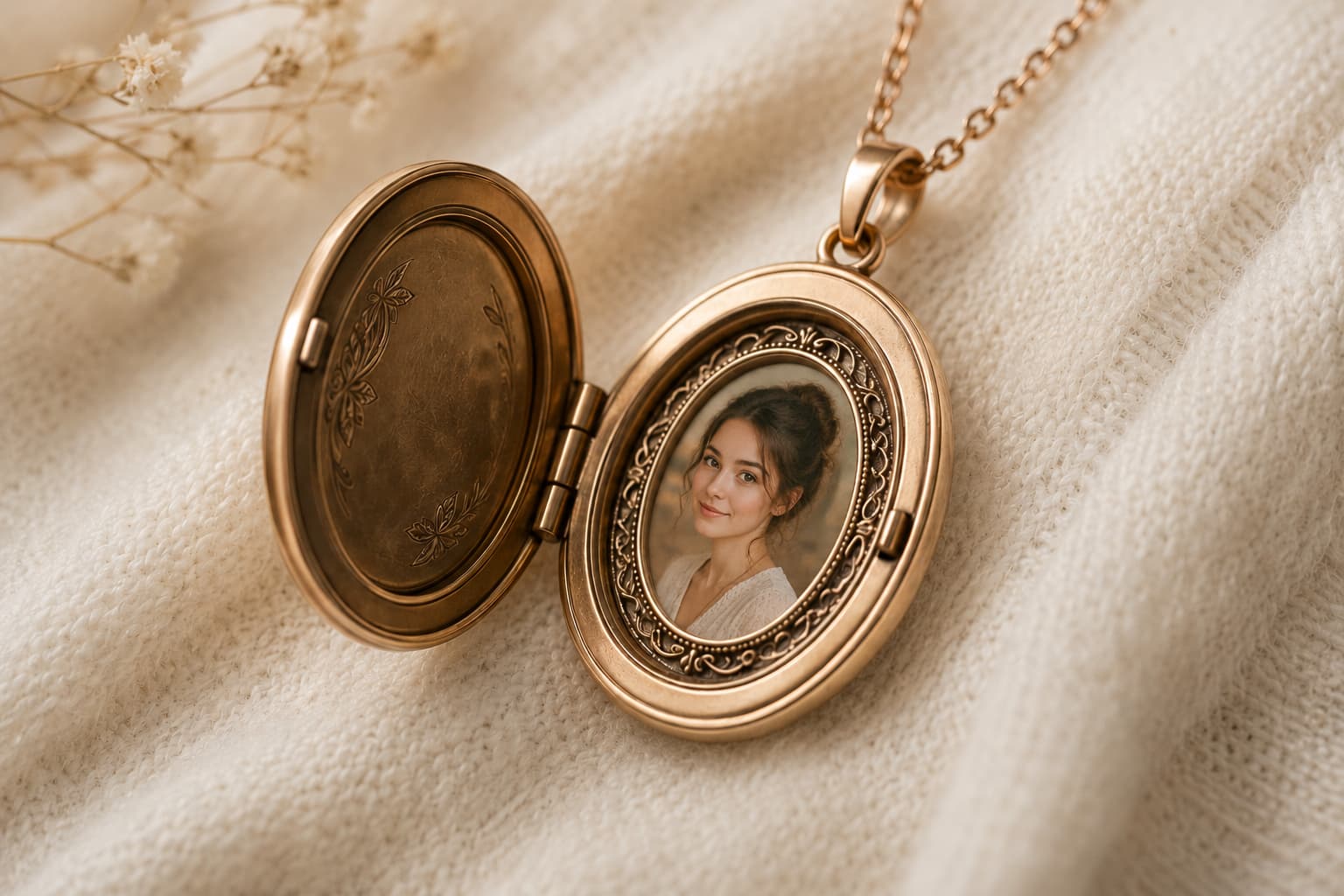
A locket necklace is a pendant with a hinge and a small hollow space inside that opens and closes, usually to hold a photo, a keepsake, or a short message. Unlike a regular pendant, which is just one solid piece hanging from a chain, a locket is built like a tiny hinged box or case. A small clasp or catch holds the piece shut, and the front swings open like a miniature door once it’s released.
Most lockets are shaped like ovals, hearts, or circles, though rectangles, flowers, and even animal shapes exist as well. Inside, many lockets have one or two small glass or plastic frames that hold a photo in place, so it doesn’t slide around or get scratched. Some older or fancier lockets skip the frame entirely and just leave an open space for hair, a pressed flower, or a folded piece of paper.
A locket turns jewelry into a container for memory. It’s not just something to wear — it’s something to carry.
The Origins of the Locket Necklace
Lockets started out as protective charms, not romantic keepsakes, and the sentimental use we know today came much later. Long before anyone thought of putting a photo of a loved one inside a locket, ancient civilizations wore small hollow pendants that were believed to ward off evil spirits, illness, or bad luck. Ancient Egyptians wore amulets close to the chest for spiritual protection, and similar hollow charms have been found in ancient Greek and Roman jewelry as well.
By the 15th and 16th centuries, lockets in Europe had shifted toward holding hidden good-luck charms or small religious tokens, closer to what we’d now call reliquary jewelry — pendants made to protect a tiny fragment of something sacred. Mourning became a huge part of locket culture in the 1600s, and the practice picked up serious momentum after England’s King Charles I was executed in 1649, when loyal supporters began hiding his miniature portrait inside pendants and other small pieces of jewelry as a quiet, secret tribute.
The locket most people picture today took shape during the Victorian era, when people began filling them with portraits and locks of hair from the people they loved or had lost. Wearing a piece of someone’s hair close to the heart might sound strange by modern standards, but at the time it was considered deeply sentimental, since hair doesn’t decay or change the way a memory can. This wasn’t a casual habit either — Victorian artisans turned hairwork into a genuine craft, arranging strands into detailed braids or small pictorial scenes before sealing the finished piece behind glass inside the locket.
Lockets also played an emotional role during both World Wars, when soldiers carried them into battle as a reminder of home, and families back home wore them to keep their absent loved ones close. Because gold and silver were expensive, many everyday mourning lockets from this period were actually made from pinchbeck, a cheaper copper-and-zinc alloy designed to look like gold, which made the sentiment of owning a locket accessible to people outside the wealthy classes.
What Materials Are Lockets Made From?
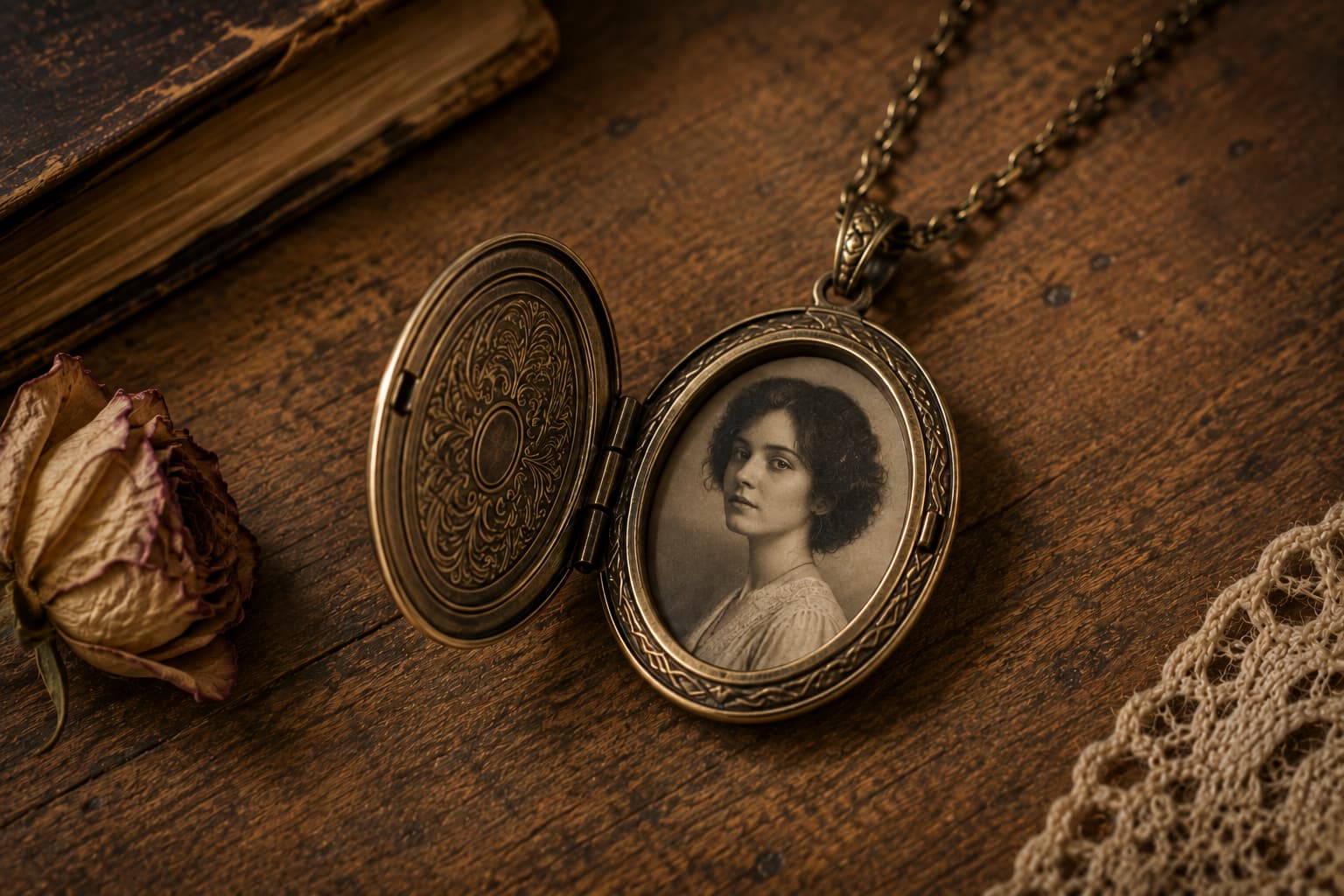
Most locket necklaces are made from precious or plated metals like gold, sterling silver, rose gold, or gold vermeil, though costume versions use base metals like brass or stainless steel. Fine jewelry lockets tend to use solid gold or sterling silver because these metals hold up well over years of opening and closing, and they resist tarnishing better than cheaper alloys.
Antique and vintage lockets sometimes include extra details like enamel painting, engraved patterns, tiny gemstones, or a woven pattern of hair sealed under glass — a Victorian technique called hairwork. Modern lockets are more likely to be simple and clean, often with just a monogram, a birthstone, or a short engraved word on the outside, letting whatever’s inside stay the real star of the piece.
Shoppers comparing options often run into three similar-sounding terms: solid gold, gold-filled, and gold vermeil. Solid gold is gold all the way through and costs the most, gold-filled has a thick layer of gold mechanically bonded to a base metal, and gold vermeil is a thinner layer of gold plated over sterling silver. All three look similar at first glance, but they age differently — solid gold won’t wear thin, while plated finishes can eventually fade with years of daily wear and need replating.
What Goes Inside a Locket Necklace?
The most common things people keep inside a locket are photographs, but hair, small notes, flowers, and even ashes have all been used throughout history:
- Photographs — the most popular choice today, usually a small printed or cut-to-size photo of a partner, child, parent, or pet
- Locks of hair — a Victorian tradition that’s seen a small comeback, especially for baby hair or hair from someone who has passed away
- Handwritten notes — a tiny folded message, date, or set of initials
- Pressed flowers — often from a wedding bouquet or a meaningful occasion
- Cremated remains — a small amount of ash, in what’s often called a memorial or cremation locket
There’s no single “correct” way to use a locket. Some people leave theirs completely empty and just enjoy the design, while others treat it like a tiny personal museum they can open whenever they want a reminder of someone.
Memorial lockets holding hair or ashes have never really gone away, but they’ve seen a noticeable comeback in recent years as more families look for a physical way to keep grief and remembrance close, rather than relying only on digital photos on a phone. If a locket is meant to hold ashes, it’s worth buying one specifically labeled as a cremation or memorial locket, since these are built with a sealed inner chamber rather than an open photo frame.
How Is a Locket Different From a Pendant?
The main difference is that a locket opens and a regular pendant doesn’t. A pendant is a fixed decorative piece — a gemstone, a charm, a symbol — that hangs from a chain and stays exactly as it was made. A locket, on the other hand, has moving parts: a hinge, a small clasp, and an interior space designed to hold something that isn’t the jewelry itself.
| Feature | Locket | Regular Pendant |
|---|---|---|
| Opens or closes | Yes, has a hinge and clasp | No, solid piece |
| Holds an item inside | Yes (photo, hair, note, etc.) | No |
| Common shapes | Oval, heart, circle, flower | Any shape, often gemstone-focused |
| Sentimental use | Very common | Sometimes, but not built for it |
Tips for Picking the Perfect Locket
The best locket depends mostly on what’s meant to go inside it and how prominently it should sit on the chest. A locket labeled as photo-ready usually comes with a built-in frame sized for cropped pictures, which suits anyone planning to display a specific photo. Someone drawn to symbolism over function might lean toward a smaller, simpler locket with just initials or a birthstone rather than one built around a large photo compartment.
Chain length matters too. A locket worn on a shorter chain, closer to the collarbone, tends to draw more attention and pairs well with lower necklines, while a longer chain lets the locket sit lower and feel a little more subtle and everyday. The opening mechanism is also worth checking before buying — some lockets use a simple push-clasp that’s easy for anyone to operate, while more delicate antique styles may need a bit of practice or even a small tool to open safely.
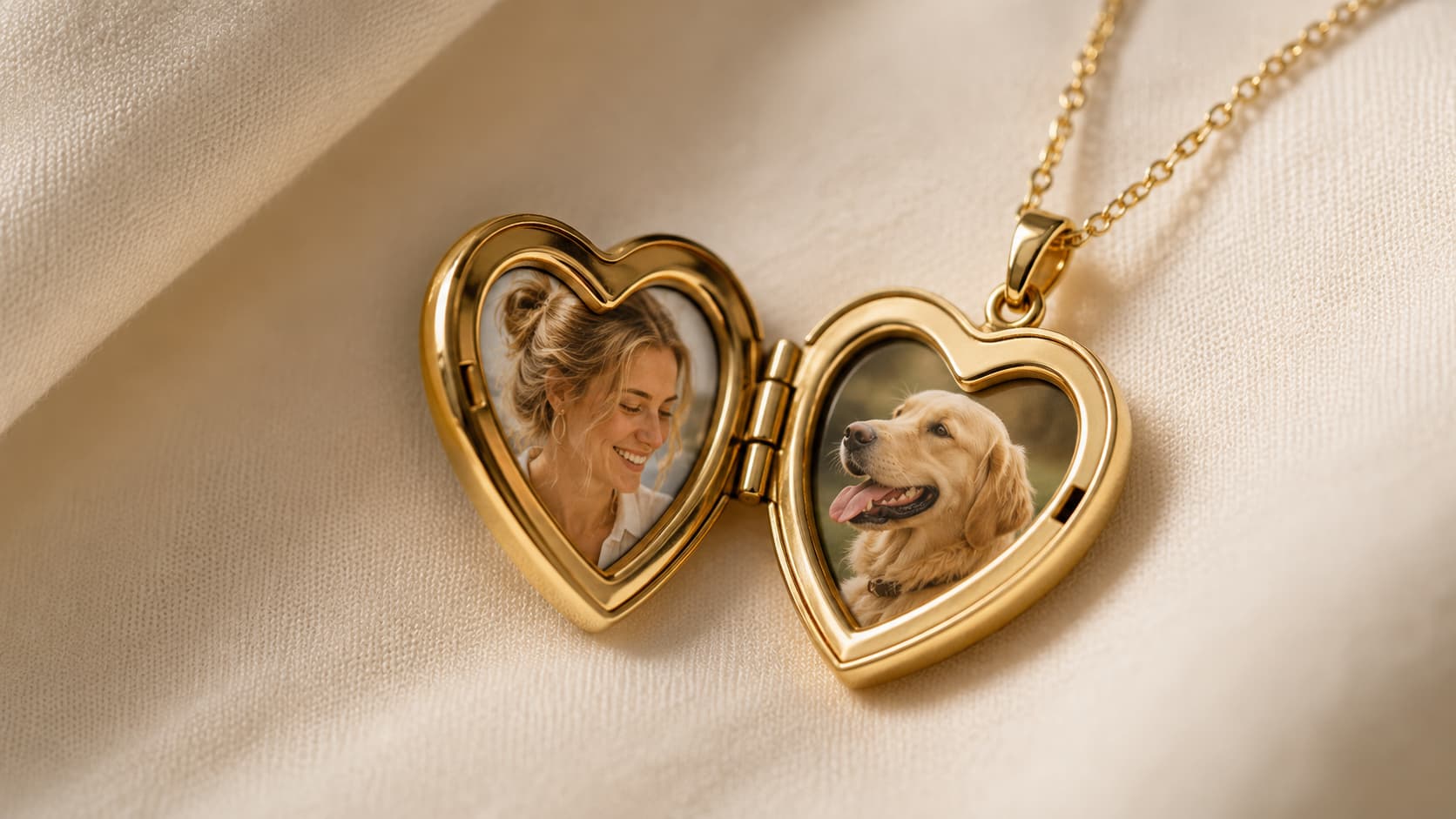
Single versus double frames is another consideration. A single-frame locket holds one photo, while a double-frame locket has two small frames facing each other, allowing two photos, or a photo alongside a note, in the same piece. Double lockets sit slightly thicker and heavier around the neck, so a single-frame design is generally the more comfortable pick when everyday lightness matters more than fitting two photos.
How to Clean and Store a Locket Safely
Because lockets have moving hinges and often hold paper or photo inserts, they generally need a bit more care than a solid pendant.
- Water exposure should be avoided, especially when the locket holds a paper photo or note, since moisture can warp or fade what’s inside.
- Cleaning the outside with a soft, dry cloth is safer than using harsh jewelry cleaners, which can seep into the hinge and cause it to stick or corrode.
- Storing the piece flat or hanging separately from other jewelry keeps the hinge from getting bent or scratched by tangled chains.
- Opening and closing the clasp gently matters, since forcing a stuck clasp is the most common way lockets get damaged.
- A dull or thinning plated locket can usually be replated by a jeweler rather than replaced entirely.
A hinge that starts feeling stiff shouldn’t be forced open or treated with household oil, since the wrong lubricant can stain fabric, skin, or whatever’s stored inside. A jeweler can clean and loosen a stuck hinge safely, and it’s a quick, inexpensive fix compared to prying it open and snapping the clasp.
Frequently Asked Questions
Can any locket be opened and closed as many times as I want?
Yes, a well-made locket is built to open and close many times over its life, though older or delicate antique lockets can wear out faster if the hinge isn’t sturdy. If a locket feels stiff or resistant, it’s better to have a jeweler look at it than to force it open.
What size photo fits inside a locket?
Most lockets are designed for small, cropped photos, generally somewhere around 15mm to 25mm depending on the locket’s overall size and shape, since the full pendant itself is often only about 20mm to 40mm across. Many jewelers or photo printing shops can resize a photo to fit a specific locket.
Are locket necklaces only for women?
No, lockets were historically worn by men, women, and children alike, and men’s lockets — often plainer and worn on longer chains — remain a real option today rather than a purely modern trend.
Do lockets have a specific meaning?
Lockets are generally associated with love, remembrance, and keeping someone close, but the exact meaning really comes from what the wearer chooses to put inside, since two identical lockets can carry completely different stories.
Is it okay to wear a locket every day?
Yes, lockets are sturdy enough for daily wear as long as they’re made from a durable metal and the hinge is checked occasionally for looseness, though it’s smart to remove any necklace before swimming, showering, or exercising heavily.
Conclusion
Lockets have survived for centuries because they solve a problem no other piece of jewelry quite does: they carry a memory, not just a decoration. Whether it holds a childhood photo, a strand of hair, or nothing at all, a locket necklace works the same way it always has — as a small, personal space that stays close, opens on demand, and gets passed down to someone else when the time comes.