Art Nouveau jewelry stands as one of history’s most distinctive artistic movements, transforming the world of personal adornment between 1890 and 1910. Characterized by flowing lines, natural motifs, and innovative craftsmanship, this revolutionary style broke away from rigid Victorian aesthetics to embrace a more organic, imaginative approach to jewelry design. These pieces weren’t just accessories but wearable art that reflected changing social attitudes and a new appreciation for craftsmanship in an increasingly industrialized world.
What is Art Nouveau Jewelry?
Art Nouveau emerged as a reaction against industrialization and Victorian conventions, creating a revolutionary approach to jewelry design that prioritized artistic expression over traditional displays of wealth. This movement, spanning roughly 1890 to 1910, transformed jewelry from symmetrical, gem-centered pieces into flowing works of art that celebrated nature, imagination, and craftsmanship. The jewels of this period were distinguished by their sinuous lines, natural motifs, and innovative use of materials like horn, glass, and enamel alongside precious metals and stones.
- Art Nouveau jewelry appeared simultaneously across Europe and America under different names: Jugendstil in Germany, Modernismo in Spain, Liberty Style in Italy, and Secession Style in Austria, though each region developed distinctive interpretations of the broader aesthetic principles.
- The movement was named “Art Nouveau” after Siegfried Bing’s influential Parisian gallery “Maison de l’Art Nouveau,” which opened in 1895 and became a central hub for artists working in this new style, helping to define and popularize the aesthetic through exhibitions and commissions.
- Unlike previous jewelry styles focused on displaying wealth through precious materials, Art Nouveau pieces emphasized artistic vision and craftsmanship, often using affordable materials like horn, glass, and enamel in innovative ways to achieve stunning visual effects that prioritized beauty over intrinsic value.
- Art Nouveau jewelers approached their work as fine artists rather than craftsmen, signing their pieces and creating unique, one-of-a-kind designs rather than producing multiple identical items, elevating jewelry making to the status of other fine arts.
- The rise of Art Nouveau coincided with the women’s suffrage movement and changing female roles in society, with many jewelry designs reflecting this cultural shift through dynamic forms and images of women as powerful, independent forces rather than delicate, passive creatures.
- While often associated with elite clientele, department stores like Liberty in London and galleries like Maison de l’Art Nouveau made moderately priced Art Nouveau jewelry accessible to middle-class consumers, spreading the aesthetic to a broader audience than previous fine jewelry movements.
The significance of Art Nouveau jewelry extends far beyond its brief timespan. This movement permanently altered how society viewed personal adornment, elevating jewelry from mere decoration to legitimate artistic expression. By prioritizing design and imagination over material value, Art Nouveau jewelers established principles that would influence generations of designers and continue to inspire contemporary jewelry artists more than a century later.
How Art Nouveau Began
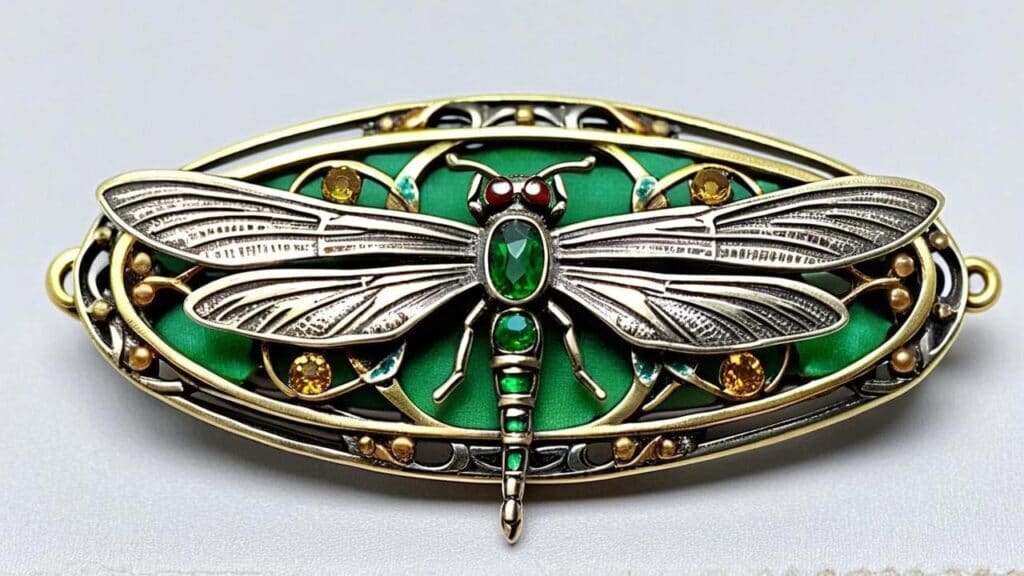
The Art Nouveau movement emerged during a period of tremendous social and technological change as the 19th century gave way to the 20th. Industrialization had transformed manufacturing, and with it came both progress and problems—mass production created more affordable goods but often sacrificed quality and artistic merit. Art Nouveau developed as a conscious rebellion against this mechanization and against the academic art traditions that had dominated Western aesthetics for centuries.
- The philosophical roots of Art Nouveau can be traced to the British Arts and Crafts movement led by William Morris, which championed handcraftsmanship and rejected mass production. Art Nouveau expanded on these ideals but rejected Morris’s medieval inspirations in favor of more modern, organic forms.
- Japanese art became enormously influential on Art Nouveau designers after Japan opened to Western trade in the 1850s. The asymmetry, natural themes, and flowing linework of Japanese woodblock prints (ukiyo-e) provided a fresh aesthetic vocabulary that heavily shaped Art Nouveau jewelry design.
- The symbolic movement in poetry and painting during the 1880s-1890s, with its emphasis on suggestion rather than direct representation, influenced Art Nouveau’s approach to design—jewelry pieces often contained layers of meaning through symbolic forms rather than literal depictions.
- Economic prosperity among the urban middle classes created new markets for luxury goods and decorative arts, allowing Art Nouveau jewelers to find customers beyond traditional aristocratic patrons and supporting their experimental approaches.
- Each major European city developed its own Art Nouveau center: Paris became known for the sinuous, nature-inspired works of René Lalique; Vienna’s Wiener Werkstätte created more geometric, structured pieces; Glasgow had Charles Rennie Mackintosh’s elegant, elongated designs; while Barcelona featured Antoni Gaudí’s fantastical organic forms.
- The 1900 Exposition Universelle (World’s Fair) in Paris marked the high point of Art Nouveau’s popularity and influence, with pavilions and exhibitions showcasing the style to millions of visitors from around the world and cementing its international significance.
Art Nouveau represented more than just a decorative style—it was a comprehensive philosophy that sought to remake the visual world through beauty and artistic integrity. The movement’s emphasis on individuality, creativity, and natural inspiration created a revolutionary approach to jewelry design that broke from centuries of tradition. Though its mainstream popularity lasted less than two decades, being superseded by Art Deco’s more geometric modernism after World War I, Art Nouveau permanently altered the trajectory of jewelry design by establishing the notion that jewelry could be a legitimate form of artistic expression.
Art Nouveau Jewelry Characteristics
Art Nouveau jewelry departed radically from traditional jewelry design through its emphasis on organic forms, flowing lines, and artistic expression over material value. While earlier Victorian pieces often showcased large gemstones in symmetrical settings, Art Nouveau jewelers prioritized design and craftsmanship, creating pieces where the overall aesthetic took precedence over the intrinsic value of materials. This revolutionary approach produced instantly recognizable pieces with distinctive visual language.
- The “whiplash line” or “coup de fouet” became the signature element of Art Nouveau design—an elongated, sinuous curve inspired by plant stems that created dynamic, flowing composition. These asymmetrical lines gave pieces movement and vitality unlike the static symmetry of previous jewelry styles.
- Nature served as the primary inspiration, but Art Nouveau designers didn’t simply reproduce natural forms—they interpreted and stylized them. Flowers, insects, and animals were rendered in dreamy, sometimes mystical ways that captured their essence rather than creating exact replicas.
- The female form featured prominently, often depicted as nymphs or fairy-like creatures with flowing hair that merged with the design elements around them. These “femmes-fleurs” (flower-women) embodied the Art Nouveau ideal of harmony between humanity and nature.
- Color played a crucial role through innovative use of enameling techniques, particularly plique-à-jour (allowing light to pass through transparent enamel sections like miniature stained glass) and basse-taille (creating depth through layers of transparent enamel over engraved metal).
- Gemstone selection differed dramatically from previous eras—Art Nouveau jewelers chose stones for their color and aesthetic qualities rather than value, embracing opals, moonstones, horn, ivory, and baroque pearls for their unique visual properties and organic associations.
- The integration of different materials in a single piece became a hallmark of the style. A typical Art Nouveau brooch might combine gold, enamel, horn, glass, and semi-precious stones in ways that traditional jewelers would never have considered but which created stunning artistic effects.
- Scale and wearability often took second place to artistic vision—some Art Nouveau pieces were dramatic statements meant more for exhibition than everyday wear, pushing the boundaries of what could be considered wearable art.
- Japanese influence appeared through asymmetrical compositions, natural motifs, and the technique of mixing precious and non-precious materials to achieve aesthetic goals regardless of traditional hierarchy of materials.
What made Art Nouveau jewelry truly revolutionary was its rejection of jewelry’s traditional role as a status symbol defined by material value. These pieces were appreciated for their artistic merit, innovative design, and the skill of their creation rather than for the value of their components. This profound shift in perspective elevated jewelry from mere adornment to legitimate art form, a transformation that continues to influence contemporary jewelry design more than a century later.
Famous Art Nouveau Jewelers
The Art Nouveau movement produced extraordinary jewelry designers who approached their craft with an artist’s sensibility, creating pieces that transcended traditional notions of adornment. These visionary creators signed their works like painters, developed distinctive personal styles, and elevated jewelry making to a fine art through their innovation and craftsmanship. Their contributions transformed not just how jewelry looked, but how society understood its purpose and value.
- René Lalique (1860-1945) stands as perhaps the most influential Art Nouveau jewelry designer, revolutionizing the field with his imaginative combinations of materials. Initially trained as a traditional goldsmith, Lalique broke conventions by incorporating glass, horn, and enamel alongside precious materials. His insect and flower designs featuring plique-à-jour enamel techniques created ethereal, translucent effects previously unseen in jewelry.
- Louis Comfort Tiffany (1848-1933), while better known for his glass lamps and windows, created remarkable Art Nouveau jewelry featuring innovative enameling techniques and unusual gemstone combinations. His nature-inspired pieces often incorporated distinctive “Tiffany setting” techniques that maximized light reflection and brilliant color effects through his signature favrile glass.
- Georges Fouquet (1862-1957) collaborated with Czech artist Alphonse Mucha to create some of the most dramatic Art Nouveau jewelry pieces, including elaborate stage jewelry for actress Sarah Bernhardt. Fouquet’s Paris shop, designed by Mucha in 1901, became an Art Nouveau landmark with its exotic woods, curved showcases, and peacock-inspired decor that complemented his bold jewelry designs.
- Henri Vever (1854-1942) combined exceptional craftsmanship with artistic vision, creating pieces that perfectly embodied the French Art Nouveau aesthetic. As both a jeweler and an art historian who documented the movement, Vever’s sophisticated designs featured masterful enameling and artistic compositions influenced by Japanese art and symbolist painting.
- Philippe Wolfers (1858-1929) led Belgian Art Nouveau jewelry design with his distinctive creations featuring sculptural elements and complex symbolism. His unique “exemplaires uniques” (one-of-a-kind pieces) were never reproduced and featured his signature combination of ivory, precious metals, and gemstones in compositions inspired by natural forms and mythological themes.
- Lucien Gaillard (1861-1933) became renowned for his exceptional Japanese-inspired techniques, particularly his ability to create subtle patinas and textures on metal that mimicked natural materials. His beetles, dragonflies, and botanical designs displayed extraordinary technical skill in rendering natural details through innovative metalworking methods.
- Elizabeth Bonté (1868-1941), one of the few successful female jewelers of the period, created distinctive Art Nouveau pieces featuring floral motifs and insect designs. Her work demonstrated that women could succeed in the male-dominated jewelry world through artistic vision and technical expertise.
- The Pforzheim school of German Art Nouveau jewelry, centered in Germany’s traditional jewelry-making region, developed a distinctive approach under designers like Theodor Fahrner who created more affordable yet artistic pieces for middle-class consumers, helping spread Art Nouveau aesthetics beyond elite markets.
These designers transformed jewelry from a conventional luxury good into a vehicle for artistic expression and innovation. Their willingness to experiment with materials, techniques, and forms liberated jewelry design from traditional constraints and established new possibilities that continue to inspire contemporary designers. Though the Art Nouveau movement lasted less than two decades, these visionaries left an indelible mark on the history of decorative arts through their revolutionary approach to wearable art.
Art Nouveau Jewelry Techniques and Materials
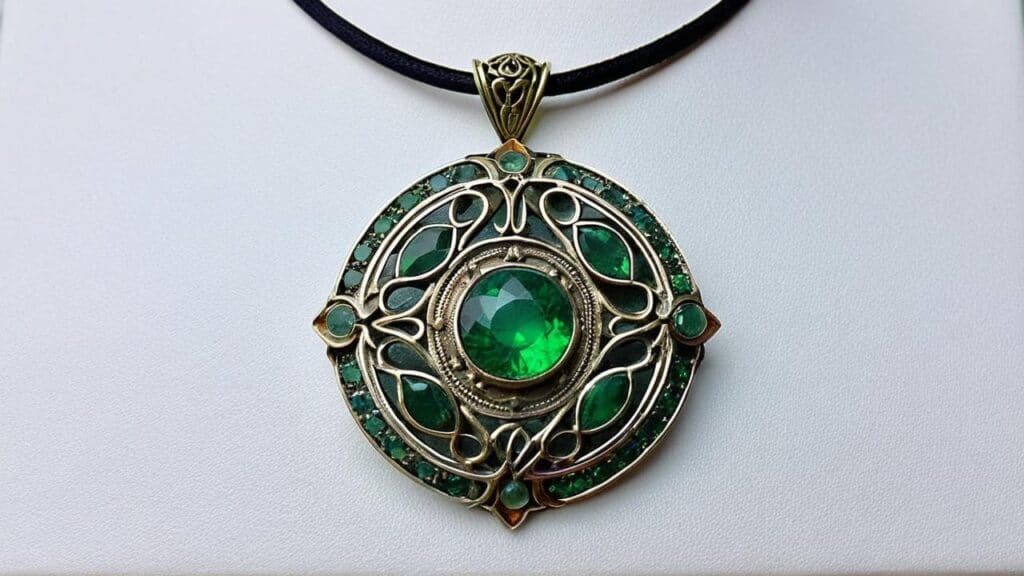
Art Nouveau jewelers revolutionized their field not just through design innovation but through radical approaches to materials and techniques. Breaking from tradition, they valued artistic effect over intrinsic worth, embracing both new industrial materials and ancient techniques reinterpreted for modern aesthetics. This experimental approach produced jewelry with unprecedented visual qualities and expanded the possibilities of the medium.
- Enamel became a signature material of Art Nouveau jewelry, with designers developing extraordinary skill in techniques like plique-à-jour (open-backed enamel that allows light to pass through like stained glass), champlevé (enamel inlaid in recessed areas), and basse-taille (transparent enamel over engraved patterns that create depth and movement).
- Horn, ivory, and bone—materials previously considered appropriate only for folk art or utilitarian objects—were elevated to fine art status through masterful carving and integration with precious metals. These materials’ organic qualities and subtle coloration perfectly suited Art Nouveau’s natural themes.
- Glass played a central role, particularly in the works of René Lalique and Louis Comfort Tiffany, who developed innovative approaches to incorporating molded, carved, and colored glass elements that created effects impossible to achieve with traditional gemstones.
- Semi-precious stones were selected for their aesthetic qualities rather than value. Moonstones, opals, aquamarines, and peridots were prized for their unique color effects and organic associations. Unusual cuts and cabochon forms were preferred over the faceted brilliance of traditional diamond jewelry.
- Pearls, especially baroque (irregularly shaped) specimens, were highly valued for their organic origins and lustrous surfaces. Art Nouveau designers often incorporated pearls as decorative elements within larger compositions rather than as central focal points.
- Gold was often worked in unexpected ways, with designers favoring subtle, matte finishes over high polish and developing new techniques for creating textured surfaces that mimicked natural materials or created atmospheric effects within the metal itself.
- Mixed metal techniques allowed for rich color variations within a single piece. Many Art Nouveau jewelers combined gold of different colors (green, rose, yellow) with silver, platinum, and copper to create subtle color transitions and highlighting effects impossible with a single metal.
- Innovative setting techniques freed gemstones from traditional prong and bezel settings. Many Art Nouveau pieces incorporated stones directly into the design through custom-fit openings, invisible wire settings, or integration into sculptural elements, creating more organic, unified compositions.
- Pâte de verre (glass paste) techniques allowed for the creation of delicate, sculptural glass elements with subtle coloration that complemented enamelwork and created translucent effects previously impossible in jewelry design.
The technical virtuosity of Art Nouveau jewelers remains impressive even by today’s standards. Many of their achievements required extensive handwork that would be prohibitively expensive to reproduce in modern commercial jewelry. This commitment to craftsmanship, combined with their willingness to experiment with unconventional materials, created a body of work that stands apart in jewelry history. While the aesthetic they pioneered eventually fell from fashion, their technical innovations and material explorations permanently expanded the possibilities of jewelry as an art form.
Art Nouveau Jewelry Motifs and Their Meanings
Art Nouveau jewelry spoke through a rich visual language of symbols and motifs drawn from nature, mythology, and contemporary artistic movements. These elements weren’t merely decorative but carried layers of meaning that resonated with the cultural and intellectual currents of the era. The symbolic dimension of these pieces added depth and significance beyond their ornamental function, making them expressions of the period’s values and sensibilities.
- Flowers dominated Art Nouveau jewelry, with each species carrying specific symbolic meanings. Orchids represented luxury and sensuality; lilies symbolized purity and resurrection; irises signified faith and wisdom; while poppies connoted sleep, dreams, and the subconscious—themes central to the Symbolist movement that influenced Art Nouveau aesthetics.
- Insects, particularly dragonflies and butterflies, featured prominently for their association with transformation and ethereal beauty. Dragonflies, with their iridescent wings and elongated bodies, perfectly suited the sinuous lines and translucent enameling techniques of Art Nouveau, while also symbolizing change and impermanence.
- The “femme-fleur” (flower-woman) became an iconic Art Nouveau motif—female figures with flowing hair that transformed into plant tendrils, embodying the movement’s ideal of harmony between humanity and nature. These ethereal women represented both natural fecundity and spiritual transcendence.
- Peacocks appeared frequently for their exotic beauty and the iridescent “eyes” in their feathers, which provided perfect inspiration for enameling techniques. In the Art Nouveau context, peacocks symbolized immortality, renewal, and the exotic Eastern influences that inspired the movement.
- Snakes coiled through Art Nouveau designs, drawing on their ancient symbolism of wisdom, eternity (through the ouroboros, or snake eating its tail), and feminine power. Unlike Victorian mourning jewelry where snakes represented eternal love, Art Nouveau snakes often carried more mystical, sometimes dangerous, connotations.
- Mythological creatures like nymphs, satyrs, and mermaids bridged the human and natural worlds, reflecting the Art Nouveau interest in liminal spaces and transformative states. These beings embodied the movement’s fascination with dreams, the unconscious, and pre-industrial harmony with nature.
- Water imagery—waves, ripples, and flowing forms—translated perfectly into the sinuous lines of Art Nouveau design. Beyond their aesthetic appeal, these water motifs symbolized change, life’s continuity, and the subconscious depths explored by contemporary psychologists like Sigmund Freud.
- Japanese-inspired elements including asymmetrical compositions, cherry blossoms, and stylized landscapes reflected the significant influence of Japanese woodblock prints on Art Nouveau aesthetics, while also signaling cosmopolitan sophistication and openness to non-Western artistic traditions.
- Celtic and Norse motifs experienced revival in Art Nouveau jewelry, particularly in British and Scandinavian examples. These interlacing patterns and ancient symbols connected the revolutionary modern style to pre-industrial, indigenous European artistic traditions, satisfying the movement’s desire for authentic cultural expression.
The symbolic richness of Art Nouveau jewelry reflected the era’s intellectual complexity and artistic cross-pollination. These weren’t simply beautiful objects but carriers of meaning that engaged with contemporary philosophical ideas about nature, femininity, spirituality, and modernity. This symbolic dimension helps explain why the style remains intellectually engaging over a century later—beneath the surface beauty lies a complex visual language that continues to speak to contemporary concerns about human relationships with nature, industrialization, and authentic artistic expression.
How to Tell if Art Nouveau Jewelry is Authentic
Authenticating Art Nouveau jewelry requires understanding both its distinctive aesthetic characteristics and the technical details that separate genuine period pieces from later reproductions. Given the style’s continuing popularity and the high values authentic pieces command, the market includes many revival pieces and outright fakes. Developing a discerning eye for the subtle qualities of genuine Art Nouveau jewelry helps collectors and enthusiasts distinguish true examples of this revolutionary movement.
- Dating techniques begin with examining construction methods—authentic Art Nouveau pieces typically show hand-fabrication marks rather than machine production. Look for individually crafted components, hand-engraved details, and the subtle irregularities characteristic of handwork from this period.
- Hallmarks and signatures provide crucial authentication evidence. Many significant Art Nouveau jewelers signed their works, while national hallmarking systems (particularly in France, England, and Germany) can help establish date ranges. Research specific maker’s marks, as these can confirm both attribution and period.
- Materials analysis offers important clues—early Art Nouveau pieces often used 18k or 22k gold rather than 14k, silver that has developed specific patination patterns over time, and gemstones cut in styles typical of the period rather than modern cutting techniques.
- Enamel techniques in authentic pieces show extraordinary craftsmanship difficult to reproduce in modern times. Plique-à-jour enamel in particular requires exceptional skill—examine these sections closely, as genuine examples show slight irregularities and variations in thickness impossible to recreate in mass production.
- Distinction from Art Deco requires recognizing fundamental design differences—Art Nouveau embraces asymmetry, flowing lines, and naturalistic forms, while Art Deco (which followed in the 1920s) features geometric patterns, symmetry, and more abstract, stylized motifs.
- Wear patterns on authentic pieces typically show age-appropriate signs consistent with over a century of existence. Examine areas where natural wear would occur—clasps, pin backs, ring bands—for patina and wear that cannot be artificially created in modern reproductions.
- Common reproduction periods occurred primarily in the 1960s-1970s and again in the 1990s-2000s when Art Nouveau revivals created numerous pieces in the style. These reproductions often use modern alloys, synthetic gemstones, and manufacturing techniques unavailable during the original period.
- Provenance documentation, while rare, provides the strongest authentication. Original sales receipts, period photographs showing the jewelry being worn, exhibition records, or continuous ownership history significantly increase confidence in authenticity and can substantially enhance value.
Distinguishing authentic Art Nouveau jewelry requires developing both technical knowledge and an educated eye. The extraordinary craftsmanship of the original period is difficult to reproduce economically today, making close examination of construction techniques particularly revealing. Museums with significant Art Nouveau collections provide excellent reference points for understanding the genuine article’s distinctive qualities. While revival pieces can be beautiful in their own right, the historical significance and extraordinary handcraftsmanship of authentic Art Nouveau jewelry explains why collectors and institutions continue to value these revolutionary pieces more than a century after their creation.
How to Collect Art Nouveau Jewelry
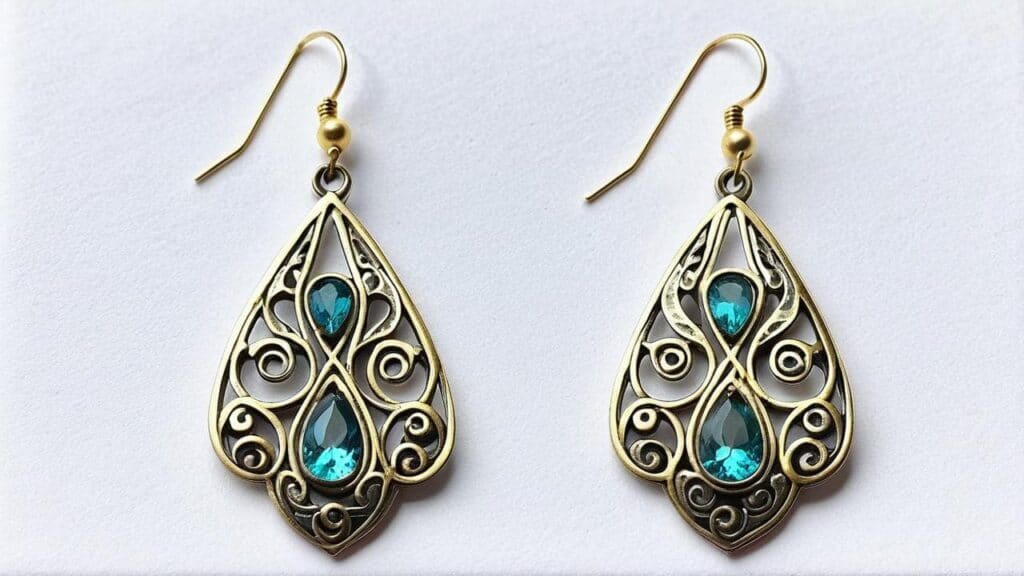
Collecting Art Nouveau jewelry combines aesthetic appreciation with historical interest and potential investment value. This distinctive style continues to attract enthusiasts and serious collectors alike, with significant pieces regularly appearing at major auction houses and specialized dealers. Understanding the market, condition factors, and authentication challenges helps collectors build meaningful collections regardless of budget.
- Entry points for new collectors typically include smaller items like stick pins, brooches, or simple pendants by lesser-known makers, which can still showcase the distinctive Art Nouveau aesthetic without commanding the premium prices of signed pieces by famous designers. Silver and mixed-metal pieces generally offer more affordable options than all-gold examples.
- Investment considerations should account for rarity, provenance, condition, and attribution. While exceptional signed pieces by René Lalique, Georges Fouquet, or Louis Comfort Tiffany have shown strong appreciation over decades, the market fluctuates based on broader art market trends and changing fashion preferences.
- Condition factors significantly impact both value and collectability. Unlike some antiques where patina adds character, jewelry typically commands premium prices in excellent condition. Damage to enamel (particularly plique-à-jour enamel) can be virtually impossible to restore authentically, making intact enamelwork especially valuable.
- Specialized knowledge development requires consulting reference works, museum collections, and auction catalogs. Essential resources include “The Jewelry of René Lalique” by Vivienne Becker, “Art Nouveau Jewelry” by Vivienne Becker, and the collection catalogs from the Musée des Arts Décoratifs in Paris and the Victoria & Albert Museum in London.
- Storage and display considerations must account for the fragility of many Art Nouveau pieces, particularly those with delicate enamelwork or organic materials like horn. Individual fabric-lined boxes, controlled humidity, and protection from light helps preserve these delicate treasures for future generations.
- Insurance and appraisal documentation becomes essential as collections grow in value. Regular updated appraisals from specialists in Art Nouveau jewelry provide both insurance coverage basis and authentication documentation that can enhance resale values.
- Building a coherent collection often benefits from focusing on specific aspects—collecting examples by a particular designer, pieces featuring certain techniques like plique-à-jour enamel, or jewelry incorporating specific motifs like dragonflies or orchids creates meaningful collections with thematic coherence.
- Ethical considerations increasingly influence collecting decisions, particularly regarding organic materials like ivory, tortoiseshell, or horn that face modern restrictions. Understanding legal implications of materials, especially for international purchases, helps collectors navigate complex regulations while building historically significant collections.
Collecting Art Nouveau jewelry offers more than potential financial returns—it provides tangible connection to a revolutionary artistic movement that transformed decorative arts. Whether focused on museum-quality masterpieces or more modest examples of the style, thoughtful collections preserve these extraordinary objects for future appreciation. The relatively brief period of original Art Nouveau production (approximately 1890-1910) means the supply of authentic pieces remains finite, while interest continues to grow as new generations discover the enduring appeal of this groundbreaking aesthetic movement.
How Art Nouveau Influences Modern Jewelry Design
The revolutionary aesthetic of Art Nouveau jewelry continues to exert powerful influence on contemporary designers, experiencing periodic revivals and ongoing reinterpretation. Beyond direct reproduction, modern jewelry creators draw inspiration from Art Nouveau’s philosophical approach—its emphasis on organic forms, artistic integrity, and harmony between design and natural elements. This enduring legacy demonstrates how thoroughly the movement transformed jewelry’s possibilities as an art form.
- Neo-Art Nouveau movements emerged periodically throughout the 20th century, with significant revivals in the 1960s counterculture (which embraced the style’s organic forms and rejection of industrialization) and again in the 1990s with renewed interest in handcraftsmanship and artistic jewelry.
- Contemporary art jewelers including René Lalique’s great-granddaughter Marie-Claude Lalique, American designer Paula Crevoshay, and Spanish creator Lluís Masriera have directly referenced Art Nouveau techniques and aesthetics while adapting them to modern sensibilities and materials.
- Sustainable and ethical design practices in contemporary jewelry frequently echo Art Nouveau’s philosophical commitments to craftsmanship, artistic integrity, and meaningful connection to natural forms—approaching jewelry as meaningful artistic expression rather than mere adornment.
- Technical innovations originally pioneered during the Art Nouveau period, particularly plique-à-jour enameling and the integration of unusual materials like glass and horn, continue to inspire experimental approaches among today’s most innovative jewelry artists seeking to push boundaries.
- High-end luxury brands including Tiffany & Co., Van Cleef & Arpels, and Cartier periodically release collections that reference Art Nouveau aesthetics, bringing reinterpreted versions of these historical designs to contemporary luxury markets and introducing new generations to the style’s distinctive language.
- Wearability adaptations in modern interpretations often modify Art Nouveau’s sometimes impractical sculptural excesses to create pieces better suited to contemporary lifestyles while maintaining the movement’s distinctive flowing lines and natural inspiration.
- Digital design tools have enabled new approaches to achieving Art Nouveau’s complex, organic forms. Computer-aided design and 3D printing allow contemporary designers to create pieces with Art Nouveau’s characteristic flowing lines and complex structures while reducing the prohibitive labor costs of traditional handcrafting.
- Styling Art Nouveau pieces in contemporary wardrobes works best when treating these distinctive pieces as focal points paired with simple, modern clothing. Authentic or revival Art Nouveau jewelry makes strongest statements when allowed to stand out against minimalist backgrounds rather than competing with busy patterns or other statement accessories.
The enduring influence of Art Nouveau jewelry speaks to the movement’s revolutionary impact on how we understand personal adornment. While fashion continuously evolves, Art Nouveau established fundamental principles about jewelry’s artistic potential that remain relevant more than a century later. Contemporary designers continue finding inspiration in Art Nouveau’s harmonious relationship between art and nature, its elevation of jewelry to legitimate artistic expression, and its commitment to meaningful craftsmanship in an increasingly mass-produced world. This ongoing dialogue between past and present ensures that Art Nouveau’s innovations continue shaping jewelry’s future.
Conclusion
Art Nouveau jewelry’s revolutionary spirit continues to resonate with collectors, designers, and appreciators more than a century after the movement’s brief but brilliant flowering. These extraordinary pieces permanently transformed jewelry from mere adornment into legitimate art form through their perfect balance of technical virtuosity and creative imagination. By embracing nature’s flowing lines, incorporating unconventional materials, and prioritizing artistic vision over material value, Art Nouveau jewelers created a new language of personal adornment that still feels fresh and inspiring today.
The movement’s rejection of mass production in favor of individual artistic expression anticipated many contemporary concerns about authenticity, craftsmanship, and connection to the natural world—giving these historical pieces surprising relevance to modern sensibilities. Though Art Nouveau’s mainstream popularity lasted less than two decades, its influence continues reverberating through contemporary jewelry design, ensuring that this revolutionary artistic movement’s legacy remains vibrantly alive in the twenty-first century.