Gold comes in more colors than most people realize. Everyone knows yellow gold, and plenty of people have seen white gold or rose gold on a ring. But blue gold is a different story entirely — it’s rare enough that most jewelers will never work with it, and most shoppers will never see a piece in person. It sounds like a trick of the light or a marketing gimmick, but it’s a real metal with real chemistry behind it, and understanding how it’s made explains why it never became a mainstream jewelry option.
What Is Blue Gold?
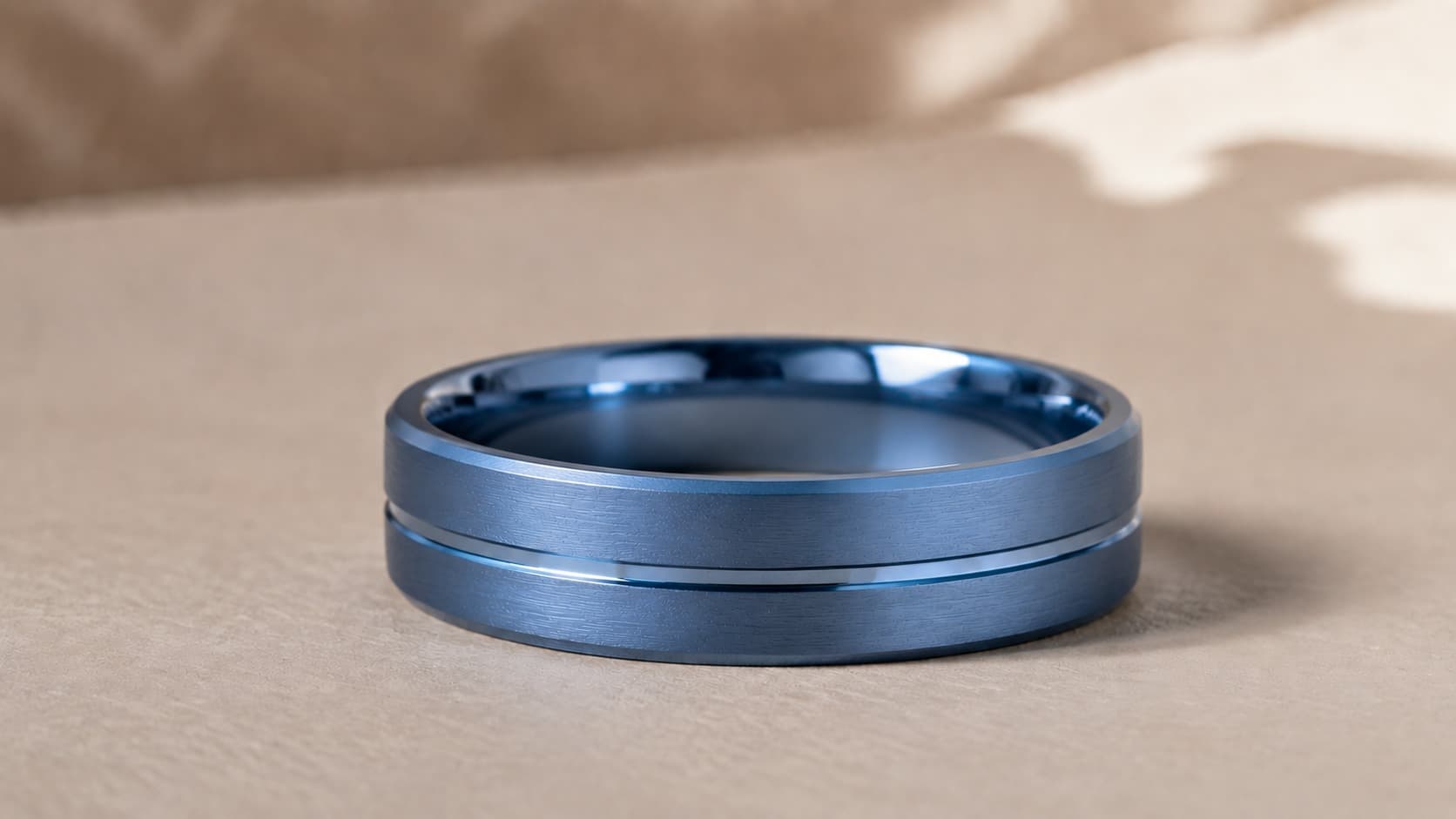
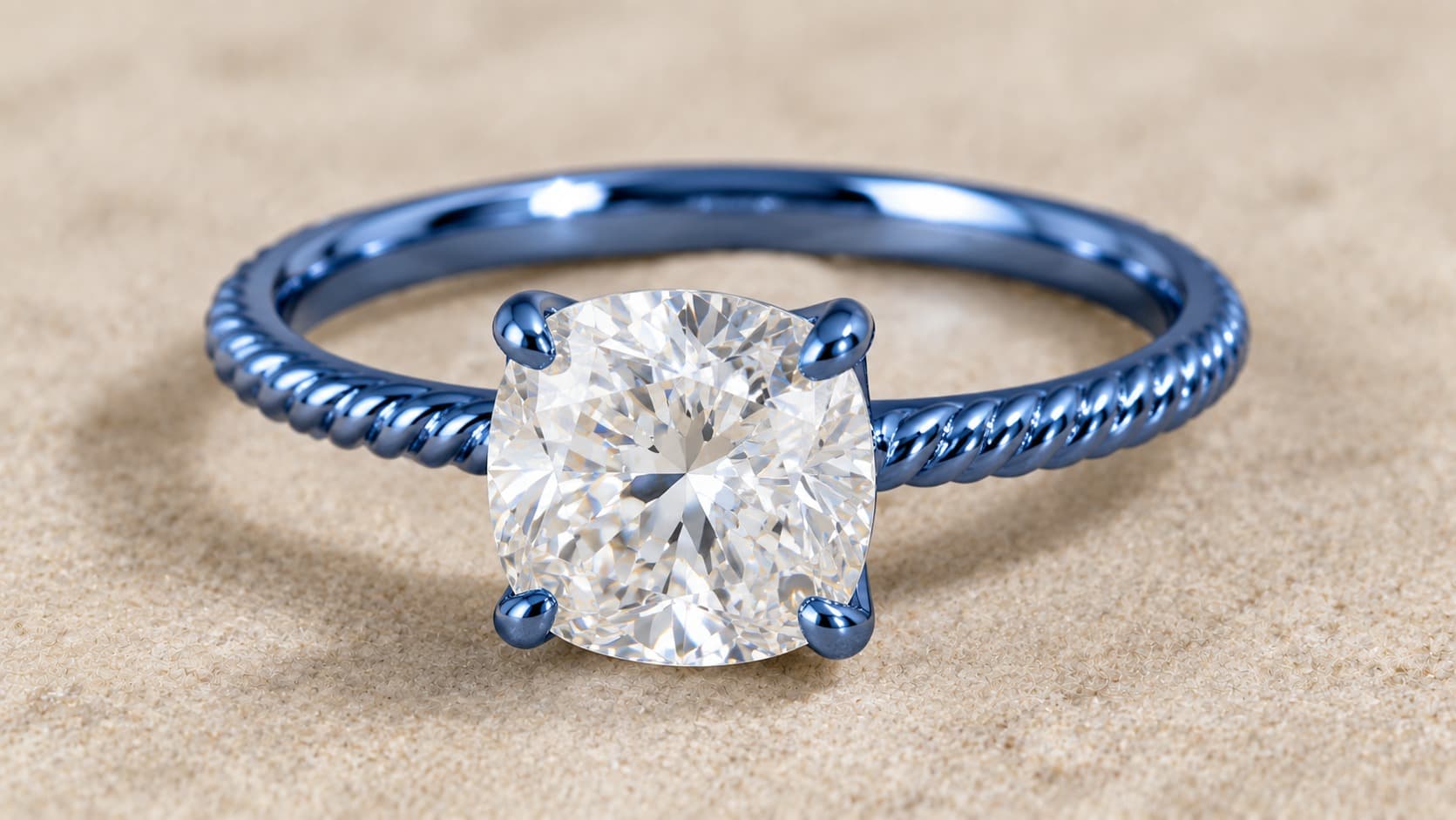
Blue gold is gold that has been alloyed or treated so that it turns a shade of blue instead of its natural yellow. It’s a real but rare gold alloy made by combining yellow gold with metals like indium, gallium, or iron, and the exact shade can range anywhere from a pale, icy blue to a deep, almost violet-blue.
There are two completely different ways to get there, and the distinction matters for how a piece labeled “blue gold” actually behaves. One method creates a true alloy, where the blue color runs all the way through the metal. The other method creates a thin blue surface layer on top of ordinary gold. Both are called blue gold, but they behave very differently once they’re made into jewelry.
How Is Blue Gold Made?
Blue gold is made either by melting gold together with indium, gallium, or iron to form a new compound, or by heat-treating a gold-iron alloy so a blue oxide layer forms on the surface. The first method changes the metal at a chemical level. The second is closer to a colored coating.
The true alloy method relies on something chemists call an intermetallic compound. When gold is combined with indium in a very specific ratio — roughly 46% gold to 54% indium, which works out to about 11-karat gold — the two metals don’t just mix, they form an entirely new compound called AuIn2 with its own blue color. A similar reaction happens with gallium, though that version needs a higher gold content, around 58.5% gold, and produces a lighter blue tone.
The oxidation method works differently. Jewelers alloy gold with iron — a mix of roughly 75% gold and 25% iron is common — and then heat the metal to a precise temperature, generally somewhere between 450 and 600 degrees. That heat causes a thin oxide film to form on the surface, and depending on the exact iron content and temperature, the result can land anywhere from steel blue to blue-green.
Historically, a few jewelers guarded their blue gold recipes like state secrets. In the early 1900s, an Argentine jeweler named Antoniassi developed a blue gold process using cobalt, and when rivals demanded he publish the formula to prove the metal’s purity, the numbers he released simply didn’t work for anyone else who tried them. The real technique was never figured out.
A few workshops also get around the fragility problem by not making a solid piece of blue gold at all. Instead, they bond a thin layer of the blue alloy onto a sturdier gold base, using techniques like diffusion bonding or electroplating followed by careful annealing. This gives a piece the look of blue gold on the surface while relying on ordinary, tougher gold underneath to actually hold the jewelry together.
Why Blue Gold Is Hard to Find
Blue gold is rare mainly because it’s genuinely difficult to make well and difficult to use once it’s made. The intermetallic versions are extremely brittle, the oxidized versions wear off with everyday handling, and neither one behaves like the gold jewelers are used to working with.
True alloy blue gold is beautiful in theory but troublesome in practice. Intermetallic compounds like this have low plasticity and high fragility, which means a piece can crack or fracture if it’s dropped or knocked. That single property rules it out for anything that gets everyday wear, like a wedding band or a bracelet. Jewelers who do use it usually cut it into small accent pieces and set it the way they would set a gemstone, surrounded by sturdier metal that absorbs any impact.
The surface-oxidized version has the opposite problem. It looks and feels like normal gold to wear, but the blue layer is thin, so it gradually rubs off over time unless the piece is handled carefully — a real issue for rings and bracelets that brush against things all day. A necklace pendant might hold its color for years; a ring worn daily might start showing yellow gold underneath within months.
On top of the technical challenges, jewelers have never quite managed to produce a blue that’s both consistently even and genuinely attractive across a whole piece, which is a big part of why blue gold never caught on the way rose gold or white gold did. Color can also vary noticeably from one production batch to the next, so matching the blue tone across a multi-piece set, like earrings and a matching pendant, is harder than it is with a standard gold alloy.
Is Blue Gold Durable Enough to Wear Every Day?
Not really, and that’s the most important thing to know about the metal. Both production methods trade away some durability to get the color, so blue gold jewelry needs gentler treatment than a standard yellow or white gold piece.
For a true alloy piece, the biggest risk is a hard knock or a drop — the brittleness that makes the color possible also makes it prone to chipping or cracking. For a surface-oxidized piece, the biggest risk is everyday friction: a ring knocking against a desk, keys, or a doorframe, or a bracelet sliding against a sleeve or countertop. Earrings and pendants tend to hold up best simply because they touch fewer surfaces during the day.
Ultrasonic cleaners and steam cleaners are best avoided with blue gold entirely — the vibration and heat that are perfectly safe for solid yellow or white gold can crack a brittle alloy or strip an oxide layer. A soft, dry cloth is the safest way to wipe a piece down, and storing it in its own pouch, rather than loose in a jewelry box, keeps it from knocking against harder pieces.
Whether a piece is a true alloy or a surface treatment changes how it should be cared for, and the difference isn’t always obvious just by looking at the metal — a jeweler can usually confirm which method was used.
Where Has Blue Gold Actually Been Used?
Blue gold shows up almost exclusively in specialty and vintage pieces rather than everyday jewelry stores, and its most famous appearance is tied to one particular watch. Patek Philippe’s original Golden Ellipse, launched in 1968, paired a gold case with a shimmering blue-gold dial made using a proprietary process the company kept secret. That watch became one of the brand’s most enduring designs, and vintage examples with the blue dial are still sought after by collectors today.
Outside of watchmaking, blue gold mostly turns up in small runs from independent or experimental jewelers, often as an accent stone-like element rather than the entire piece. Because so few workshops have mastered either production method, finding a modern blue gold piece usually means going through a specialty maker rather than a mainstream retailer.
The idea of coloring gold blue or black is also older than most people expect. Shakudo, a Japanese alloy that’s mostly copper with only a small amount of gold, was used to make dark blue-black sword fittings and decorative pieces for centuries, and similar copper-gold color techniques have turned up in ancient Egyptian, Greek, and Roman metalwork. Modern blue gold is a different alloy chemically, but it belongs to the same long tradition of jewelers trying to push gold outside its natural yellow.
How Does Blue Gold Compare to Other Colored Golds?
| Gold Color | How It’s Made | Everyday Durability |
|---|---|---|
| Yellow gold | Gold alloyed with silver and copper | Excellent |
| Rose gold | Gold alloyed with a higher percentage of copper | Excellent |
| White gold | Gold alloyed with palladium or nickel, often rhodium-plated | Very good, needs occasional replating |
| Purple gold | Gold alloyed with aluminum | Poor, brittle |
| Black gold | Gold plated with black rhodium or ruthenium, or oxide-treated | Fair, plating can wear over time |
| Blue gold | Gold alloyed with indium, gallium, or iron, or oxide-treated | Poor to fair, depending on method |
Purple gold is blue gold’s closest relative in the color family, and it shares the same brittleness problem for the same chemical reason. Both are described as intermetallic or specialty alloys rather than traditional jewelry metals, which is why they typically appear as small accents instead of full rings or bracelets.
Frequently Asked Questions
Is blue gold real gold?
Yes. It contains real gold, though the karat purity is usually lower than standard yellow gold jewelry, since the blue color depends on mixing in a large proportion of another metal like indium or iron.
Does blue gold tarnish?
The oxidized surface version can wear down over time and reveal the yellow gold underneath, which looks similar to tarnishing but is really just the thin blue layer rubbing away. The true alloy version doesn’t tarnish in the traditional sense, though it can chip or crack.
Can blue gold be resized like a normal ring?
It’s risky. Resizing involves bending and stretching the metal, and the brittleness of true alloy blue gold makes it prone to cracking under that kind of stress. Any resizing should only be attempted by a jeweler experienced with specialty alloys.
Why isn’t blue gold sold in regular jewelry stores?
Because it’s hard to produce consistently and hard to use in everyday pieces. Most mainstream jewelers stick to yellow, white, and rose gold because those alloys are durable, predictable, and easy to work with at scale, while blue gold requires specialized knowledge most workshops simply don’t have.
Is blue gold hypoallergenic or magnetic?
The indium and gallium alloy versions are generally non-magnetic and don’t contain nickel, so they’re unlikely to bother most people with sensitive skin. The one exception is oxidized blue gold made with cobalt, since cobalt is a known skin allergen for a small percentage of people, similar to nickel. Anyone with a known metal allergy is best off confirming which method was used before wearing a piece regularly.
Is blue gold more expensive than yellow gold?
Not necessarily because of the gold content itself, since some blue gold alloys actually contain less gold by weight than 18-karat yellow gold. The higher cost usually comes from the specialized labor and expertise needed to produce it well, plus its rarity as a collector’s item.
Conclusion
Blue gold earns its rarity honestly. It’s either a genuine gold compound that’s too brittle for everyday wear, or a gold-iron alloy with a blue surface layer that wears away with use — and jewelers still haven’t found a way around either trade-off after more than a century of trying. That’s exactly why it shows up mostly in vintage watch dials and small specialty pieces rather than a typical jewelry case. It remains, in the end, one of the hardest colors in jewelry to pull off, which is precisely what makes a genuine piece worth noticing.