Jewelry terminology can be confusing, especially when it comes to words that sound identical but have completely different meanings. “Carat” and “karat” represent two essential but distinct measurements in the jewelry world. While they share similar pronunciation and historical roots, mixing them up could lead to confusion when shopping for jewelry. Understanding the difference between these terms helps you make more informed decisions when purchasing gemstones and gold jewelry, ensuring you know exactly what you’re buying and can communicate effectively with jewelers.
What Does Carat Mean in Gemstones?
Carat is the standard unit of weight used specifically for gemstones and pearls in the jewelry industry. This precise measurement helps determine a gemstone’s value, with larger stones typically commanding higher prices due to their rarity in nature. The term has ancient origins but has evolved into a standardized global measurement system that ensures consistency across international markets. Understanding carat weight is essential for anyone looking to purchase diamonds or other precious gemstones, as it directly impacts both appearance and value.
- One carat equals exactly 200 milligrams or 0.2 grams, standardized internationally in 1907 by the General Conference on Weights and Measures to ensure consistency across global markets and prevent regional variations in measurement. Before this standardization, carat weights could vary slightly from one country to another, causing confusion in international gem trading.
- The word “carat” derives from “carob seeds,” which ancient Mediterranean traders used as counterweights when measuring precious gems. These seeds were remarkably consistent in weight, making them nature’s first “standardized” measurement tool for valuable items that were too small for conventional scales. This historical connection highlights how ancient civilizations developed ingenious solutions for precise measurements.
- Diamonds and other gemstones increase in price exponentially with size – a 2-carat diamond typically costs significantly more than twice the price of a 1-carat diamond of similar quality because larger gems are exponentially rarer in nature. This non-linear pricing reflects the decreased probability of finding larger, flawless specimens in natural diamond deposits, making larger stones disproportionately valuable.
- Carat weight refers only to weight, not size or dimensions. Two stones of identical carat weight may appear different in size depending on cut, proportion, and depth. For example, a well-cut 1-carat diamond might look larger than a poorly-cut 1.2-carat stone because of how the cut affects the stone’s surface area and light performance. Different gemstone materials also have different densities, meaning a 1-carat sapphire will be physically smaller than a 1-carat diamond.
- For stones under one carat, jewelers often use “points” where 1 carat equals 100 points. A 0.50-carat diamond would be called a “50-point diamond” or “half-carat,” while a 0.25-carat stone is a “quarter carat” or “25 points.” This decimal subdivision system allows for precise communication about smaller stones, which make up the majority of gemstones used in commercial jewelry.
- The “magic sizes” in diamond weight (0.50ct, 0.75ct, 1.00ct, etc.) often see price jumps. A 0.99-carat diamond may cost significantly less than a 1.00-carat diamond of identical quality because of psychological pricing barriers and market demand at these key weight thresholds. Smart shoppers sometimes look for stones just below these thresholds to maximize value while maintaining visual size.
Understanding carat weight helps you make informed decisions when purchasing gemstones, but remember that while weight affects price, other factors like cut quality, color, and clarity also significantly influence a gemstone’s beauty and value. A smaller, high-quality stone often creates more brilliance and beauty than a larger stone with poor characteristics. The interplay between these factors means that carat weight should be considered alongside other quality metrics rather than in isolation. Developing an eye for this balance is key to making wise gemstone investments that satisfy both aesthetic desires and budget considerations.
What Does Karat Mean in Gold Jewelry?

Karat (with a K) measures the purity of gold in jewelry and is a fundamental concept for anyone interested in gold pieces. This fractional measurement system indicates how much of an item is pure gold versus other metals, directly affecting its value, durability, color intensity, and wearability characteristics. Unlike many modern measurement systems that use percentages, the karat system divides gold content into 24 parts, reflecting its ancient origins and traditional significance in the jewelry trade throughout centuries of human history.
- Pure gold is designated as 24 karats (24K), meaning it contains 99.9% gold with minimal impurities. This system divides gold purity into 24 parts, with each karat representing 1/24th of the whole. The 24-part system originated in ancient times and continues today as the international standard for expressing gold purity in jewelry, despite the availability of percentage-based alternatives. The tradition underscores gold’s historical importance in human commerce and adornment.
- Common gold purities in jewelry include 24K (99.9% pure), 22K (91.7% pure), 18K (75% pure), 14K (58.3% pure), and 10K (41.7% pure). Each represents a different balance between gold content, durability, and affordability. These standardized purity levels have evolved to serve different market needs, from investment-grade gold to practical everyday jewelry, allowing consumers to select the right balance for their specific needs and preferences.
- Pure 24K gold is rarely used for everyday jewelry because it’s extremely soft and malleable. It scratches easily, bends under pressure, and isn’t practical for items that undergo daily wear like rings and bracelets. A pure gold ring would quickly deform around the finger, losing its shape and potentially damaging any gemstone settings. This natural softness explains why humans have been alloying gold with other metals for thousands of years, even before they understood the metallurgical science behind it.
- Alloying gold with other metals creates both strength and different colors: copper produces warm rose gold, nickel or palladium creates white gold, and mixtures of silver and copper maintain yellow gold’s color while adding necessary durability. These alloys not only strengthen the metal but have allowed for diverse aesthetic expressions throughout jewelry history. Modern metallurgical techniques continue to expand these possibilities, with newer alloys creating unique colors like chocolate, purple, or green gold.
- Different regions have different preferences for gold purity. North American jewelry frequently uses 14K gold, European countries often prefer 18K, and many Asian countries favor higher purity 22K and 24K gold, especially for special occasions and investment purposes. These regional preferences reflect cultural traditions, historical availability of gold, and different perspectives on the balance between purity and practicality in jewelry items.
- In the United States, the minimum gold content that can legally be marketed as “gold jewelry” is 10K (41.7% pure gold). Items with less gold content must be labeled as “gold-plated,” “gold-filled,” or similar terms to prevent consumer confusion. This legal threshold helps maintain integrity in the jewelry market and ensures consumers receive a minimum standard when purchasing gold items. Different countries maintain different minimum standards, reflecting varying regulatory approaches.
- Gold purity markings (hallmarks) are usually stamped inside jewelry pieces. These may appear as “14K,” “585” (European marking for 14K), or similar indicators depending on the country of origin. Some countries require additional marks indicating the manufacturer or assay office that verified the purity. These hallmarking systems, some dating back hundreds of years, provide accountability and consumer protection in the precious metals trade.
Karat measurements help consumers understand exactly what they’re buying when it comes to gold jewelry. Higher karat gold contains more pure gold and thus has a more intense gold color and higher intrinsic value, but lower karat gold offers improved durability and affordability for everyday wear. Understanding these tradeoffs allows consumers to select the right purity level for their specific needs, whether they prioritize investment value, durability, hypoallergenic properties, or particular aesthetic qualities. The karat system, despite its ancient origins, continues to serve as an essential framework for both jewelers and consumers in the modern marketplace.
Essential Differences Between Carat and Karat
The similar pronunciation of these terms causes considerable confusion in the jewelry world. Understanding their key differences helps consumers communicate clearly when shopping for jewelry and understand exactly what they’re purchasing. These distinctions are not merely academic but have practical implications for jewelry valuation, care requirements, and selection decisions. Despite their phonetic similarity and shared historical roots in ancient measurement systems, carats and karats operate in completely different domains of the jewelry world.
- Carat (with a C) exclusively measures the weight of gemstones and pearls, while karat (with a K) exclusively measures the purity of gold alloys. This fundamental distinction means they measure entirely different properties – one is a unit of mass while the other represents a ratio of pure gold to other metals. The measurement’s purpose drives this distinction: gemstones are valued primarily by weight (among other factors), while gold is valued by its purity level.
- One carat equals 200 milligrams (a weight measurement), while one karat represents 1/24th of pure gold content (a purity ratio). This means that while you could have a 100-carat gemstone (weighing 20 grams), you can never have gold purer than 24 karats. These different scales reflect the different properties being measured and have evolved to serve specific needs in the jewelry industry over centuries of trade.
- Carat values can be any positive number (including fractions) and typically range from tiny 0.01-carat accent stones to rare stones weighing 100+ carats. Karat values, by contrast, are always whole numbers between 1 and 24. This difference reflects the continuous nature of weight versus the discrete, fractional nature of the gold purity system. The largest diamond ever discovered (the Cullinan Diamond) weighed 3,106 carats before cutting, demonstrating the unlimited potential of carat measurements.
- The higher the carat weight of a gemstone, the more it typically costs. Similarly, the higher the karat rating of gold, the more expensive it generally is per gram due to higher gold content. However, the value curves differ: gemstone prices increase exponentially with carat weight, while gold prices increase more linearly with karat purity. These different value relationships reflect the different market dynamics and rarity factors at play.
- Both terms share similar linguistic roots in ancient measuring systems using seeds, but they evolved to measure entirely different properties in the jewelry world. Carat comes from the Greek “keration” (carob seed), while karat also derives ultimately from measurements using carob seeds. This shared etymology explains the similar spelling and pronunciation while highlighting how measurement systems evolved differently across different commodities.
- International symbols differ: carats are typically abbreviated as “ct” or “cts” for gemstones, while karats use “K” or “k” for gold purity. European systems sometimes use different notations altogether, with three-digit numbers representing gold purity percentages (585, 750, etc.). These standardized abbreviations help prevent confusion in international trade documentation and jewelry certification.
- Platinum and silver purity are never measured in karats – this system applies exclusively to gold. Platinum typically uses percentage purity (e.g., 950 platinum = 95% pure), while silver uses sterling standards (e.g., 925 silver = 92.5% pure). This distinction highlights how different precious metals have developed different measurement traditions and standards based on their unique metallurgical properties and historical trading patterns.
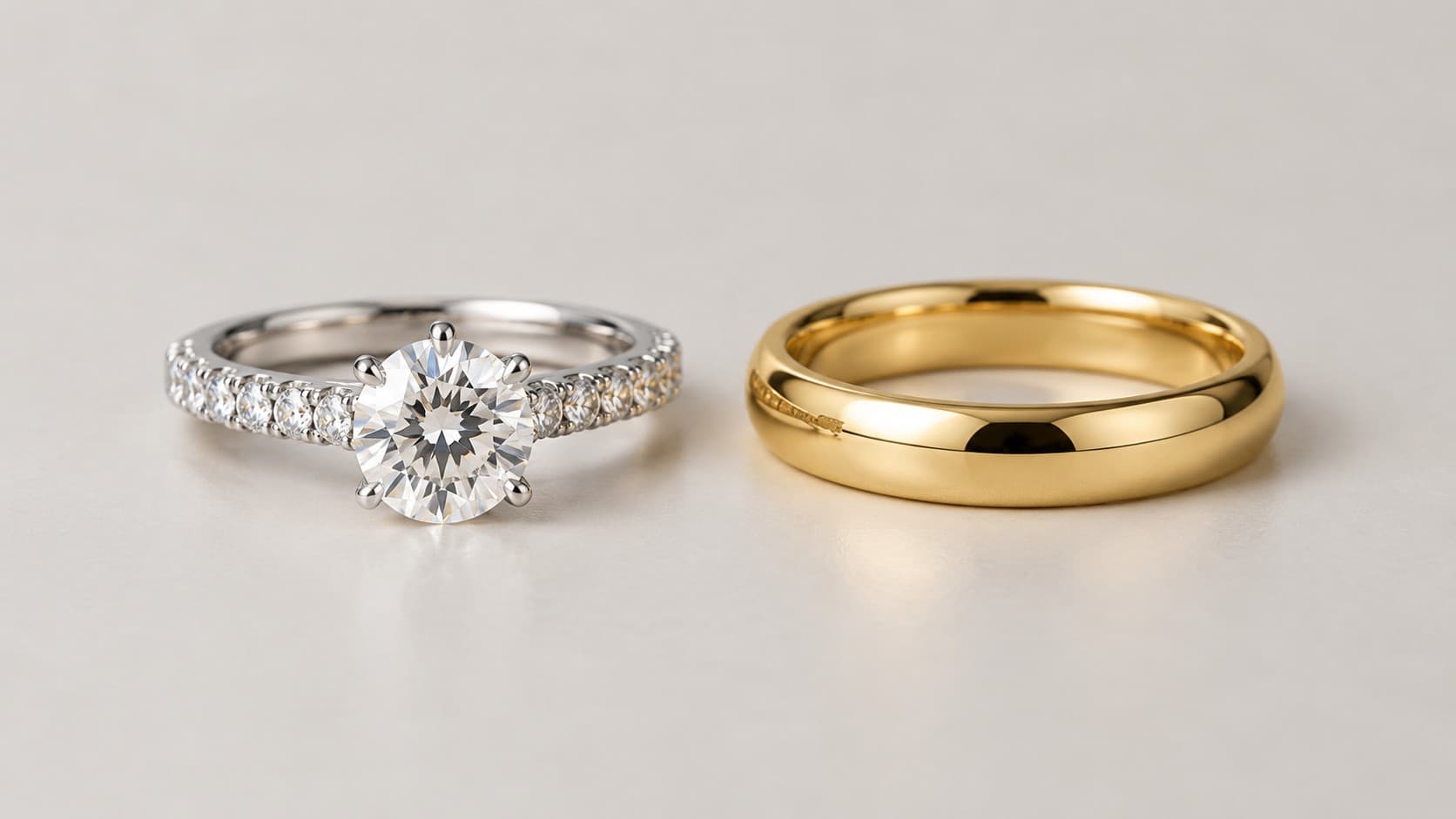
These fundamental differences highlight why it’s important to understand both terms when shopping for jewelry. The distinction ensures you can communicate effectively with jewelers and understand exactly what you’re purchasing, whether it’s a 2-carat diamond or an 18-karat gold band. Consumers who grasp these differences can make more informed purchasing decisions, accurately assess the value of their jewelry collections, and avoid potential misunderstandings when discussing jewelry with professionals or other enthusiasts. The precision of these measurements reflects the high value and detailed quality considerations that have defined the jewelry trade throughout human history.
Common Mistakes People Make About Carat vs Karat
The similarity between “carat” and “karat” has led to several persistent misconceptions that can confuse jewelry shoppers. Clearing up these misunderstandings helps consumers make more informed decisions and avoid potential disappointment when purchasing or valuing jewelry. These misconceptions often lead to unrealistic expectations or inappropriate comparisons between jewelry pieces, highlighting the importance of proper education about jewelry terminology.
- Many people incorrectly believe that “carat” and “karat” are alternative spellings of the same word. They are actually distinct terms measuring completely different properties (gemstone weight vs. gold purity). This fundamental misconception can lead to significant confusion when discussing jewelry specifications or comparing different pieces. The similar pronunciation compounds this problem, particularly in verbal discussions where the spelling distinction isn’t visible.
- A common misconception is that carat measures a gemstone’s size rather than its weight. Two 1-carat diamonds can appear significantly different in size depending on their cut, proportions, and shape. Diamonds cut too deeply or with poor proportions can hide weight in areas that don’t contribute to the visible size, making them appear smaller than well-cut stones of the same weight. This misconception often leads consumers to overemphasize carat weight at the expense of other factors that affect a stone’s appearance.
- Some believe that higher karat gold is always “better” jewelry. While 24K gold has the highest gold content, it may not be the best choice for durability. Many jewelers consider 14K or 18K gold to be the ideal balance of purity and strength for everyday jewelry. This misconception often leads consumers to unnecessarily spend more on higher-karat gold when a lower-karat option might better serve their practical needs, especially for items subject to daily wear and potential impact.
- Many consumers assume that all gold jewelry contains substantial amounts of gold. In reality, 10K gold (common in mass-market jewelry) contains just 41.7% gold, with the majority being other metals. This misconception can lead to unrealistic expectations about the intrinsic value of gold jewelry, particularly when considering resale or melt value. Understanding the actual gold content helps consumers make more appropriate value assessments of their jewelry collections.
- There’s a misconception that carat weight is the most important factor in a diamond’s beauty or value. In reality, cut quality often has a much greater impact on a diamond’s brilliance and appearance than its weight. A well-cut smaller diamond will typically outshine a poorly-cut larger stone. This misconception leads many consumers to prioritize size over quality factors that have a more significant impact on a diamond’s visual appeal and long-term satisfaction.
- Some believe that all countries use the same karat system for gold. While the 24-part system is widely used, some regions like Hong Kong and China traditionally used a different system based on parts per 100 (though this is being phased out). Additionally, European countries often use a numeric marking system based on parts per thousand (585, 750, etc.) rather than karats. This misconception can create confusion when purchasing jewelry internationally or examining pieces with unfamiliar markings.
- Many assume that white gold has less gold content than yellow gold. The karat rating (14K, 18K, etc.) indicates identical gold content regardless of color – the difference lies in the specific alloy metals used. White gold contains the same amount of pure gold as yellow gold of the same karat, but uses different alloy metals (typically nickel, palladium, or silver) to create its silvery appearance. This misconception sometimes leads consumers to perceive white gold as less valuable despite containing equivalent gold content.
Understanding these common misconceptions helps jewelry consumers make more informed decisions based on facts rather than assumptions, leading to purchases better aligned with their preferences and needs. Jewelry education empowers consumers to look beyond marketing claims and make choices based on the properties that genuinely matter for their specific situation, whether that involves daily wear considerations, investment potential, or aesthetic preferences. The complexity of jewelry terminology reflects the intricate balance of art, science, and craftsmanship that defines fine jewelry creation and appreciation.
Why Carat and Karat Matter When Buying Jewelry

Understanding carats and karats goes beyond simple terminology – these measurements have practical implications for jewelry purchases, affecting everything from value and appearance to durability and wearability. These standardized measurements provide essential frameworks for evaluating jewelry quality and making appropriate comparisons between different pieces. Without these established systems, the jewelry market would lack the transparency and consistency necessary for fair valuation and consumer confidence.
- Carat weight directly impacts gemstone pricing, with prices increasing exponentially with size. Understanding this helps consumers set realistic budgets and expectations when shopping for gemstone jewelry. For example, a 2-carat diamond often costs more than twice as much as two 1-carat diamonds of equivalent quality, reflecting the increased rarity of larger stones. This non-linear pricing structure makes knowledge of carat weight essential for making cost-effective purchasing decisions.
- Karat rating affects not just a gold item’s value but also its durability, color intensity, and potential for allergic reactions. Lower karat gold contains more alloy metals, making it stronger but potentially more allergenic for sensitive individuals. 14K gold offers significantly better scratch and dent resistance than 18K or 24K gold, making it more suitable for rings and bracelets that experience regular impact. Understanding these practical implications helps consumers select appropriate karat levels for specific jewelry purposes.
- Insurance valuations for jewelry rely heavily on accurate carat and karat measurements. Proper documentation of these specifications ensures fair coverage in case of loss or damage. Insurance appraisers use these standardized measurements to establish replacement values and verify the authenticity of jewelry pieces. Without accurate carat weights and karat designations, consumers may find themselves under-insured or unable to receive appropriate compensation for lost or stolen items.
- Resale value is directly tied to both measurements. A precisely documented 1-carat diamond in 18K gold will maintain value better than jewelry with vague or undocumented specifications. These measurements provide the foundation for secondary market valuations and allow for objective comparisons between different pieces. The standardization of these measurements across the global jewelry market facilitates transparent trade and value retention over time.
- Understanding karat ratings helps consumers make informed decisions about everyday wearability. Higher karat gold (20K-24K) requires more careful handling and may not be suitable for rings worn daily, while 14K gold offers better scratch resistance. These practical considerations affect how jewelry performs over years of wear. Knowledge of these differences helps consumers match their jewelry selections to their lifestyle needs and usage patterns.
- Knowing the difference between carats and karats helps consumers communicate clearly with jewelers, ensuring they receive exactly what they’re looking for rather than facing confusion or disappointment. This clarity prevents misunderstandings during custom jewelry design processes and helps consumers effectively articulate their preferences and requirements. Clear communication leads to higher satisfaction with final purchases.
- Cultural considerations sometimes influence these measurements – in some cultures, higher karat gold (22K-24K) is strongly preferred for traditional reasons despite its softer nature. In India, for example, bridal jewelry is typically crafted from 22K gold as a symbol of prosperity and value, even though this purity level requires more careful handling. Understanding these cultural preferences provides context for traditional jewelry designs and regional market variations.
These practical considerations demonstrate why understanding carats and karats matters beyond just terminology. This knowledge empowers consumers to make purchases that align with their needs for beauty, durability, and value retention. Whether shopping for an engagement ring, investing in heirloom-quality pieces, or selecting everyday accessories, these measurements provide essential frameworks for evaluating quality and making appropriate comparisons between different options. The precision these systems offer has supported the development of a global jewelry market where consumers can confidently purchase items with predictable characteristics and value.
Easy Ways to Remember Carat vs Karat
Keeping these similar-sounding terms straight can be challenging. Here are some effective memory techniques to help you distinguish between carat and karat consistently. These mnemonic devices create strong mental associations that make it easier to recall the correct term in various jewelry shopping or discussion scenarios. By establishing clear mental connections, you’ll avoid the common confusion that affects even experienced jewelry enthusiasts.
- Remember: “C is for Crystals (gemstones), K is for King’s gold.” This associates each term with its respective domain, creating a visual and conceptual link between the letter and the material it measures. This simple mnemonic works because it connects the spelling difference to the fundamental materials being measured.
- Think of the spelling difference: “CaraT” has a “T” for “weight” (Troy ounces, traditional gemstone weight), while “KaraT” has a “K” for “Kingly metal” (gold). This dual association reinforces both the spelling distinction and connects each term to its measurement purpose. The historical connection to Troy weight systems adds context that can strengthen the memory association.
- Visualize that diamonds and gemstones are Cut (C = carat), while gold is forged by a King (K = karat). This visual imagery creates a stronger memory connection than abstract definitions alone. By picturing a diamond cutter working with carats and a king holding golden objects measured in karats, you create a memorable mental scenario that reinforces the distinction.
- Associate carat (with a C) with other gemstone quality terms that start with C: Cut, Color, Clarity, and Carat – the famous “4Cs” of diamond quality. This connects the term to the broader framework of gemstone evaluation, strengthening the association between carats and gemstones. This works particularly well because the 4Cs are widely referenced in jewelry marketing.
- Remember that karats, like gold itself, are measured in a system of 24 (24K being pure gold). Carats have no such limitation and can be any number. This numerical distinction helps reinforce which term applies to which material. The limitation of karats to a maximum of 24 versus the unlimited nature of carat weights creates a clear conceptual separation.
- Connect the terms to their real-world ranges: Carats are typically decimal numbers (0.5ct, 1.2ct, etc.) while karats are always whole numbers (10K, 14K, 18K, etc.). This practical distinction reflects how you’ll actually see these measurements presented on jewelry tags and certificates. The pattern recognition helps reinforce the correct usage of each term.
- When you see “ct” as the abbreviation, think “carat for gemstone weight.” When you see “K” or “k,” think “karat for gold purity.” These standardized abbreviations provide another way to distinguish between the terms in written contexts. The abbreviations also connect to the spelling distinction (C vs. K) that defines these different terms.
These memory techniques provide multiple ways to keep these terms distinct. Find the association that works best for your learning style, and you’ll never confuse carat and karat again when shopping for or discussing jewelry. The variety of approaches ensures that visual learners, verbal learners, and those who prefer conceptual associations can all find effective strategies for maintaining this important distinction. By solidifying your understanding of these fundamental jewelry terms, you’ll approach your next jewelry purchase with greater confidence and clarity.
Conclusion
Understanding the difference between carats and karats provides essential knowledge for any jewelry shopper. These deceptively similar terms serve entirely different purposes – one measuring the weight of precious gemstones and the other indicating gold purity. By mastering this distinction, you can communicate clearly with jewelers, understand exactly what you’re purchasing, and make informed decisions that balance quality, appearance, durability, and value.
As you venture into the world of fine jewelry, remember that these measurements are just part of a larger picture. While carat weight and karat purity provide important objective data, they work alongside other factors like cut quality, design craftsmanship, and personal meaning to determine a piece’s true worth. The most valuable jewelry isn’t necessarily the heaviest gemstone or the purest gold, but rather the piece that perfectly balances all these elements to create lasting beauty and significance in your collection.