Fingerprint jewelry represents one of the most intimate forms of personalized accessories available today. These unique pieces capture the distinctive patterns of a person’s fingerprint and transform them into wearable mementos that connect us with loved ones in a deeply personal way. Whether commemorating someone who has passed, celebrating a relationship, or preserving a family connection, fingerprint jewelry offers a tangible way to keep someone’s unique identity close to your heart at all times.
Fingerprint Jewelry Explained
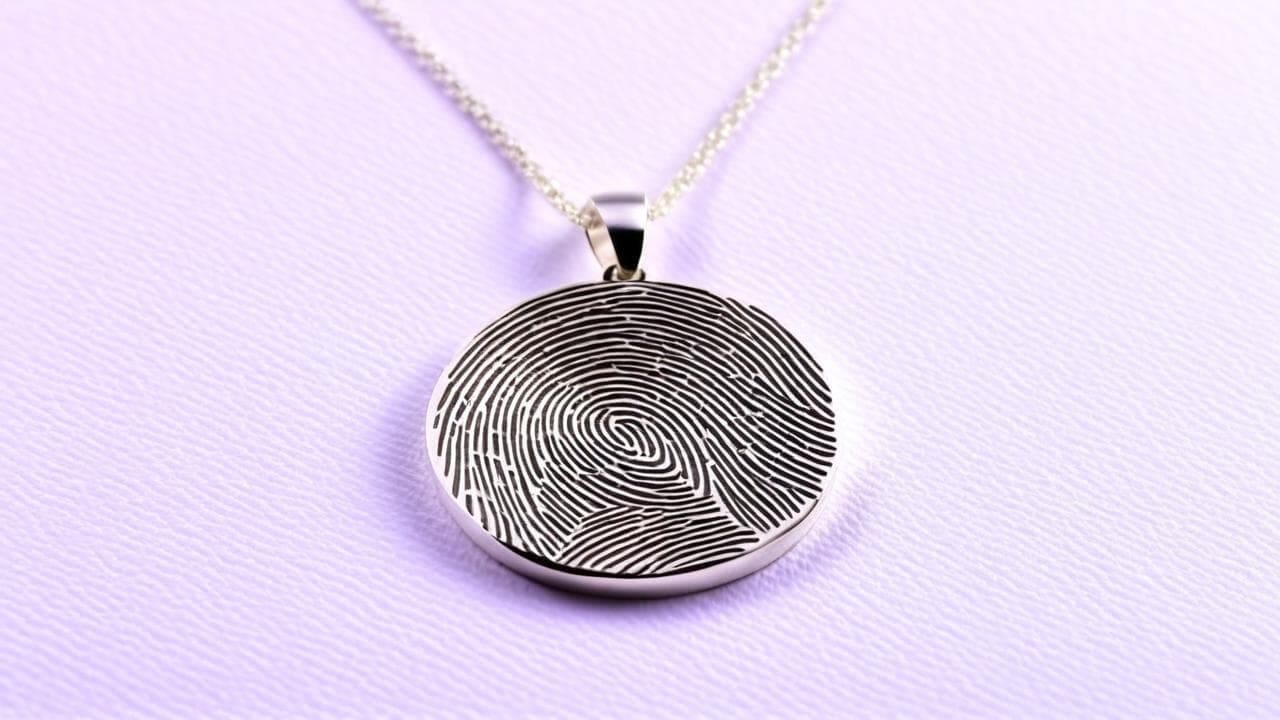
Fingerprint jewelry is a specialized category of personalized accessories that incorporates the unique ridge patterns of an individual’s fingerprint directly into jewelry pieces. These items transform what makes us biologically unique – our fingerprints – into wearable art that carries significant emotional meaning. The fingerprint can be from yourself, a partner, child, parent, friend, or even a beloved pet’s paw print, making each piece completely one-of-a-kind and impossible to replicate.
- Fingerprint jewelry captures the actual impression of someone’s fingerprint through various techniques like direct impression in clay, wax casting, laser engraving, or 3D printing, then permanently preserves this pattern in durable materials designed to last for generations.
- Common materials include sterling silver, gold in various colors (yellow, white, rose), stainless steel, titanium, and platinum, with some pieces incorporating gemstones or diamonds to enhance the design or mark special occasions.
- The impression can appear as a raised design (standing proud from the surface), an engraved depression (recessed into the metal), or as a complete three-dimensional reproduction of the fingerprint’s exact topography, depending on the creation technique and design preferences.
- Modern fingerprint jewelry utilizes advanced digital scanning technology that can capture fingerprints at extremely high resolution, ensuring that even the minutest details of the print’s ridges, loops, and whorls are preserved with remarkable accuracy.
- Most jewelers offer various styling options, from minimalist designs that showcase only the fingerprint to more elaborate pieces that incorporate the print as part of a larger artistic concept, allowing for personal expression within this intimate jewelry category.
This form of personalized jewelry has gained significant popularity in recent years as people increasingly seek meaningful accessories that go beyond mere decoration. The intimate nature of wearing someone’s fingerprint creates a physical connection that many find comforting, special, and deeply significant in ways that conventional jewelry cannot match.
The Meaning and Symbolism of Fingerprint Jewelry
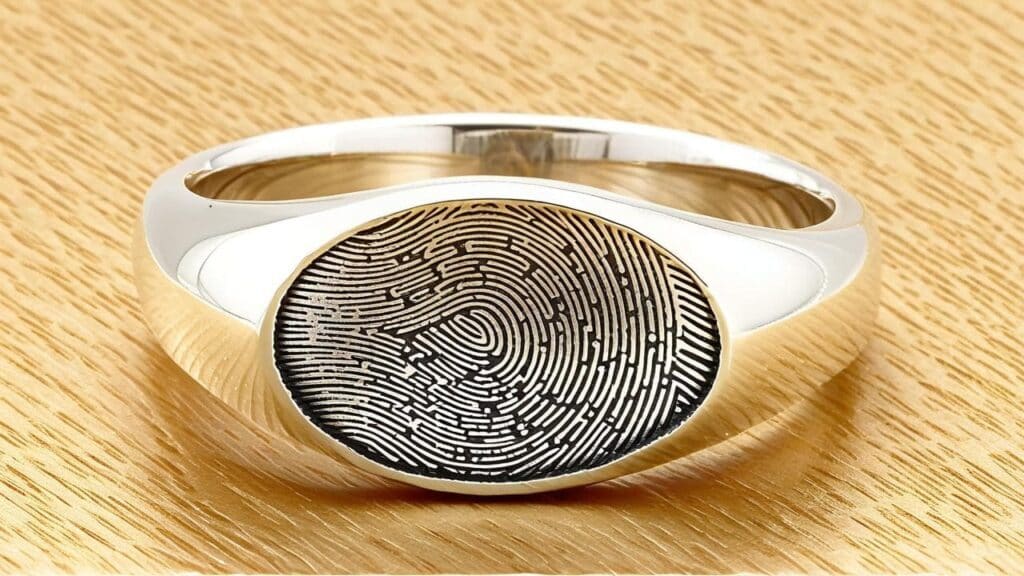
Fingerprint jewelry carries profound symbolic weight that extends far beyond its aesthetic appeal. The fingerprint itself represents the core essence of a person’s identity—something completely unique to them that has existed since before birth. When incorporated into jewelry, this impression becomes a powerful symbol of connection, individuality, and the indelible mark a person leaves on our lives and hearts.
- Fingerprints are formed before birth and remain unchanged throughout life, making fingerprint jewelry a symbol of someone’s permanent, lifelong identity and the enduring nature of your connection to them.
- For those mourning a loved one, fingerprint jewelry offers a deeply personal memorial that contains a physical impression the person actually touched, creating a tangible connection that many find brings significant comfort during the grieving process.
- Parents often create fingerprint jewelry from their children’s tiny prints as precious time capsules, preserving a fleeting moment in their development that would otherwise be lost as they grow.
- Couples exchange fingerprint pieces as wedding bands or anniversary gifts, symbolizing how their individual identities remain distinct even as they build a life together—a powerful metaphor for healthy relationships.
- The scientific uniqueness of fingerprints (even identical twins have different prints) makes this jewelry a celebration of individual identity and the one-of-a-kind nature of each human being.
- Many people report a sense of comfort from physically touching the fingerprint impression in their jewelry, creating a ritual of connection by tracing the same patterns that formed part of their loved one’s physical identity.
- Unlike photographs or other memory items that depict appearance, fingerprints represent something deeper and more fundamental about a person’s essence, making them particularly meaningful for commemorating relationships.
The emotional resonance of fingerprint jewelry transcends simple aesthetics, transforming these pieces into deeply meaningful talismans that connect us to what matters most. For many wearers, these items aren’t just accessories but rather physical embodiments of love, connection, and memory that provide comfort and a sense of closeness to those they hold dear.
The Origins and Development of Fingerprint Jewelry
The concept of preserving fingerprints as keepsakes has surprisingly deep historical roots, though fingerprint jewelry as we know it today is relatively modern. The journey from fingerprints as identification to intimate jewelry pieces reflects our evolving understanding of both technology and personal expression, combining ancient desires for connection with modern techniques for preservation.
- The origin of impression keepsakes dates back thousands of years, with ancient civilizations creating handprints and footprints in clay, though these weren’t typically worn as jewelry but rather preserved as records or symbolic items.
- Fingerprinting as a science emerged in the late 19th century, pioneered by Sir Francis Galton who established the uniqueness of fingerprints and created the first classification system in 1892, laying the groundwork for their later use in personal identification.
- Traditional mourning jewelry of the Victorian era (1837-1901) incorporated locks of hair and photographs but not fingerprints, though these pieces established the concept of wearing physical reminders of loved ones.
- The first true fingerprint jewelry emerged in the 1970s, using basic impression methods in materials like clay that were then fired and finished, though these pieces were relatively crude compared to modern versions.
- Digital fingerprint jewelry became possible in the 1990s with the advent of laser engraving technology, allowing for much higher precision in reproducing the intricate patterns of fingerprints on metal surfaces.
- The early 2000s saw significant technological advances with 3D scanning and CAD (Computer-Aided Design) technologies, enabling the creation of more sophisticated fingerprint jewelry with greater detail and variety of designs.
- The growth of memorial and personalized jewelry after 9/11 and other global tragedies led to increased interest in fingerprint jewelry as people sought meaningful ways to remember loved ones, catapulting this specialty from niche craft to mainstream offering.
- Social media and online sharing in the 2010s dramatically increased awareness of fingerprint jewelry, with bereaved families and couples sharing their personalized pieces online and creating greater demand for these meaningful keepsakes.
Today’s fingerprint jewelry represents the culmination of technological innovation and human desire for connection. What started as simple impressions has evolved into sophisticated pieces that capture incredible detail, allowing people to preserve and carry with them the unique identity markers of those they love most, whether as memorials, celebrations of relationships, or markers of family bonds.
The Process of Making Fingerprint Jewelry
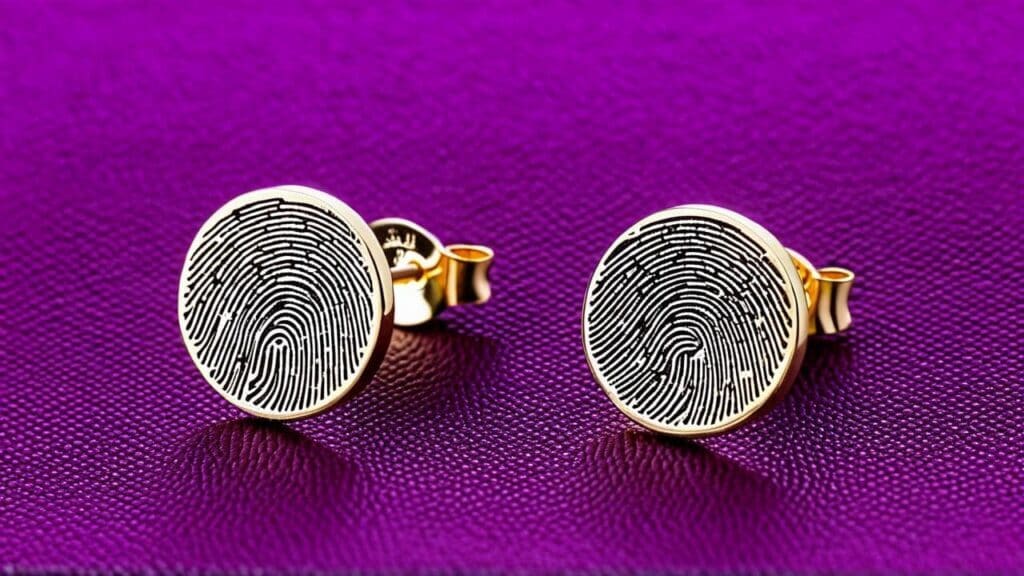
The creation of fingerprint jewelry is a fascinating blend of traditional craftsmanship and modern technology. The process requires precision and attention to detail to accurately capture and transfer the unique patterns of a person’s fingerprint onto a wearable piece. From initial impression to finished product, multiple steps ensure that the final piece faithfully represents the original fingerprint.
- The fingerprint collection process typically uses either an inkless fingerprint kit (similar to those used by law enforcement but non-toxic and mess-free), a simple impression made in a special polymer clay, or increasingly, digital scanning technology that captures the print with extreme precision.
- Once collected, physical impressions are often digitized through high-resolution photography or scanning, creating a digital file that can be enhanced, resized, or adjusted as needed without losing the unique characteristics of the original fingerprint.
- Jewelers use computer-aided design (CAD) software to incorporate the fingerprint into the jewelry design, determining placement, size, and how the print will interact with other design elements while preserving its unique details.
- The actual transfer to metal may use several different techniques: laser engraving (burning the pattern into the metal with precision lasers), lost wax casting (creating a 3D mold from the fingerprint that is then cast in metal), or photo-etching (using chemicals to etch the pattern into the metal surface).
- For raised impressions, the fingerprint pattern is typically cast in relief, while recessed impressions are engraved or etched into the metal surface, each creating a different tactile and visual effect while preserving the same fingerprint details.
- Final finishing involves polishing, setting any gemstones, applying texture or patina to enhance the fingerprint visibility, and adding any requested engravings of names, dates, or messages to complement the fingerprint element.
- Quality control is particularly important for fingerprint jewelry, with artisans carefully examining the finished piece under magnification to ensure that all the unique identifying features of the original fingerprint have been accurately preserved.
The combination of artistic design and technical precision required to create fingerprint jewelry makes each piece a true labor of love. The result is not merely a piece of jewelry but a wearable connection to someone important, with every whorl and ridge serving as a reminder of their unique presence in the wearer’s life.
Common Types of Fingerprint Jewelry
Fingerprint jewelry comes in a wide variety of forms, allowing people to choose pieces that suit their personal style and the way they want to carry their loved one’s print with them. From everyday wear to special occasion pieces, the versatility of fingerprint incorporation means there’s something for everyone, regardless of gender, age, or style preferences.
- Fingerprint rings remain among the most popular options, ranging from simple bands with an exterior or interior fingerprint impression to elaborate designs that incorporate the print alongside gemstones or in creative patterns, making them suitable for wedding bands, memorial rings, or parent-child connections.
- Pendants and necklaces allow for larger, more detailed fingerprint impressions and often serve as the entry point for many people into fingerprint jewelry, with designs ranging from simple disc pendants to heart shapes, dog tags, and custom contours that may include multiple fingerprints.
- Bracelets offer extensive creative possibilities for fingerprint incorporation, from rigid bangles with fingerprint charms to chain bracelets with fingerprint stations, identification-style plates with full fingerprint impressions, or leather bands with metal fingerprint elements.
- Earrings typically feature smaller fingerprint impressions due to size constraints but remain popular, especially as subtle memorials or as gifts between family members, with styles ranging from studs to dangling designs that incorporate the fingerprint in various creative ways.
- Cufflinks make excellent fingerprint jewelry for men, providing a sophisticated way to carry a loved one’s print in a business or formal setting, often featuring the prints of children, partners, or as memorial pieces for fathers or grandfathers.
- Charm bracelets with fingerprint charms allow for collecting multiple fingerprints over time, creating a family collection that can grow with each new addition or significant relationship in the wearer’s life.
- Tie clips, money clips, keychains, and other daily-use items offer practical ways to incorporate fingerprint impressions for those who prefer functional jewelry or who work in environments where traditional jewelry might be impractical.
- Memorial diamonds created from cremation ashes can sometimes be accompanied by fingerprint engravings on their settings, creating multi-dimensional memorial pieces that contain both physical remains and the loved one’s unique print.
The diversity of fingerprint jewelry options ensures that these deeply personal pieces can be integrated into anyone’s lifestyle and wardrobe. Whether worn daily as a constant connection or saved for special occasions as a ceremonial remembrance, fingerprint jewelry adapts to the wearer’s needs while maintaining its powerful emotional significance.
Common Reasons People Choose Fingerprint Jewelry
Fingerprint jewelry appeals to a wide range of people in different life circumstances, all united by their desire for a deeply personal connection to someone important. The versatility and meaningfulness of these pieces make them appropriate for numerous situations, relationships, and emotional needs.
- Those grieving the loss of a loved one often find profound comfort in fingerprint jewelry, which preserves a physical impression their loved one actually touched, creating a tangible connection that helps maintain bonds even after death.
- Parents frequently commission fingerprint jewelry featuring their children’s tiny prints, capturing a fleeting moment in their development and creating heirlooms that can be treasured long after their children have grown.
- Couples exchange fingerprint rings or pendants as uniquely personal alternatives to traditional wedding bands or anniversary gifts, symbolizing their commitment while celebrating their individual identities.
- Families separated by distance, such as military families during deployment or families spread across different countries, use fingerprint jewelry to maintain a physical connection despite geographical separation.
- Adults caring for aging parents sometimes create fingerprint jewelry as a way to preserve their parent’s identity, particularly meaningful for those dealing with conditions like Alzheimer’s where the parent’s sense of self may be fading.
- People marking significant life transitions or survivorship milestones, such as cancer remission, organ transplantation, or recovery from trauma, sometimes create fingerprint jewelry as symbols of resilience and personal transformation.
- Grandparents often receive fingerprint jewelry featuring their grandchildren’s prints as gifts, creating connections across generations that can be passed down as family heirlooms.
- Those with beloved pets sometimes create paw print jewelry as a way to memorialize and celebrate their animal companions, recognizing the significant emotional bonds formed with pets.
The common thread among all these scenarios is the desire for a physical, tangible connection to someone (or something) deeply loved. Fingerprint jewelry transforms this desire into a wearable reminder that’s as unique as the relationship it represents, providing comfort, celebration, or commemoration according to the wearer’s needs.
Cleaning and Preserving Fingerprint Jewelry
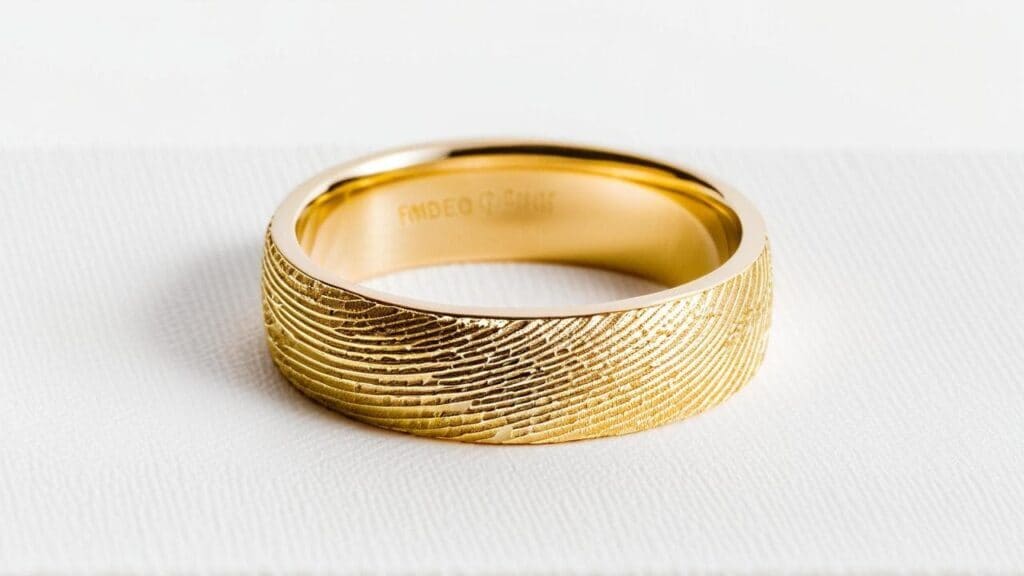
Properly amaintaining fingerprint jewelry ensures that these precious mementos will last for generations, preserving their special connection and significance. Since these pieces often hold immense emotional value beyond their material worth, proper care is especially important to protect both the fingerprint impression and the jewelry itself.
- Fingerprint jewelry should be stored separately from other jewelry pieces to prevent scratching, ideally in individual soft pouches, jewelry boxes with separate compartments, or wrapped in acid-free tissue paper to protect the detailed impression.
- When cleaning fingerprint jewelry, avoid harsh chemicals, ultrasonic cleaners, or abrasive materials that could damage the fingerprint impression; instead, use a soft, lint-free cloth for regular polishing and a mild soap solution with a soft toothbrush for more thorough cleaning.
- Remove fingerprint jewelry before swimming, bathing, exercising, cleaning, or applying lotions and perfumes, as chlorine, salt water, sweat, household chemicals, and personal care products can all potentially damage or tarnish the metal and degrade the fingerprint impression over time.
- Silver fingerprint jewelry will naturally tarnish with exposure to air; use specialized silver polishing cloths for regular maintenance but avoid liquid silver cleaners which may be too aggressive for the detailed fingerprint areas.
- Gold fingerprint jewelry is generally more tarnish-resistant but can still accumulate oils and dirt; clean with mild soap and warm water using a soft brush for the intricate fingerprint areas, then dry thoroughly with a soft cloth.
- Have fingerprint jewelry professionally inspected and cleaned annually, especially pieces worn daily, to check for any loosening settings, weakening clasps, or wear to the fingerprint impression that might need professional attention.
- Consider removing fingerprint rings during hand-intensive activities, even if they don’t involve chemicals, as constant friction against surfaces can gradually wear down the fingerprint impression over many years of daily wear.
- For fingerprint jewelry with gemstones, be particularly careful about cleaning around the stone settings to avoid loosening the stones while ensuring you remove any buildup that might diminish the jewelry’s appearance.
With proper care, fingerprint jewelry can remain a beautiful and meaningful keepsake for decades or even centuries, potentially becoming family heirlooms that pass down through generations. The time invested in proper maintenance protects not just the physical object but the precious memory and connection it represents.
How to Order Custom Fingerprint Jewelry
The process of ordering custom fingerprint jewelry requires some planning and understanding of what to expect. Since these pieces are highly personalized and often commemorate significant relationships or life events, knowing how to navigate the ordering process helps ensure you receive a quality piece that faithfully captures the intended fingerprint and meets your expectations.
- Research jewelers who specialize specifically in fingerprint jewelry rather than general custom jewelry, as the techniques for capturing and transferring fingerprints require specialized equipment and expertise that not all jewelers possess.
- Understand the fingerprint collection options before ordering: some jewelers send fingerprint kits, others accept paper fingerprints or digital scans, and some can even work with existing fingerprints from official documents for memorial pieces when the person is no longer living.
- For memorial fingerprint jewelry when you don’t have a print, explore alternatives like working with funeral homes (who often take fingerprints), checking with hospitals where the person received care, or contacting government agencies that might have fingerprint records on file.
- Compare processing times between different providers, as custom fingerprint jewelry typically takes longer than standard jewelry, ranging from a few weeks to several months depending on the complexity of the design and the jeweler’s workload.
- Request to see digital proofs of how the fingerprint will appear in the final design before production begins, allowing you to verify that the right fingerprint is being used and that the impression captures the level of detail you desire.
- Consider the practicalities of the jewelry’s intended use – daily wear pieces should be sturdy with protected fingerprint impressions, while occasional pieces can be more delicate or elaborate.
- Ask detailed questions about the materials and techniques being used, particularly regarding the permanence of the fingerprint impression and how resistant it will be to wear over time, as different methods offer varying levels of durability.
- Understand the jeweler’s policies on adjustments if the fingerprint impression doesn’t meet your expectations, as some may offer revisions while others consider these highly custom pieces to be final sales.
Ordering fingerprint jewelry is both a practical purchase and an emotional investment. Taking the time to find the right jeweler, understand the process, and communicate your expectations clearly helps ensure that the final piece authentically captures the unique connection you’re seeking to preserve, resulting in a treasured keepsake that fulfills its deeply personal purpose.
Conclusion
Fingerprint jewelry stands as one of the most meaningful forms of personalized accessories available today, offering a tangible way to carry the essence of someone special with you at all times. The science of uniqueness meets the art of jewelry-making in these pieces, creating wearable connections that honor relationships, preserve memories, and celebrate the individual identity of those we love. Whether commemorating someone who has passed, capturing a child’s tiny fingerprint before it changes with growth, or exchanging prints as symbols of commitment, these pieces transform ordinary jewelry into extraordinary keepsakes.
In a world where so much is mass-produced and impersonal, fingerprint jewelry offers something truly one-of-a-kind – just like the people and relationships they represent. The intimate nature of wearing someone’s unique biological identifier creates a physical connection that transcends typical jewelry, providing comfort, celebration, or commemoration according to the wearer’s needs. As technology continues to advance, these deeply personal pieces will likely become even more detailed and accessible, allowing more people to experience the profound emotional significance of carrying a loved one’s fingerprint with them wherever they go.