Kunzite is one of the few gemstones with a known birthday and a named discoverer, which makes it unusual in a world where most stones have been mined for thousands of years with no clear origin story. It belongs to the spodumene mineral family and is prized for its soft pink to lilac color, its large clean crystals, and the way it seems to glow when light passes through it. But kunzite also has a reputation among jewelers as a “delicate” stone, one that needs a little more thought before it goes into a ring or bracelet. Understanding why starts with its chemistry and its short but interesting history.
What Is Kunzite?
Kunzite is the pink-to-violet gem variety of a mineral called spodumene, which is a lithium aluminum silicate with the chemical formula LiAlSi2O6. In plain terms, it’s a crystal built from lithium, aluminum, silicon, and oxygen, and its pink color comes from small traces of manganese mixed into that structure. Spodumene belongs to the pyroxene group of chain silicates and forms long, bar-shaped, heavily striated crystals, which is part of why gem-quality rough often comes out large.
Spodumene has a few gem varieties beyond kunzite. Hiddenite is the green form, colored by chromium or vanadium instead of manganese, while plain spodumene can appear yellow-green or colorless.
| Property | Detail |
|---|---|
| Mineral | Spodumene |
| Chemical Formula | LiAlSi2O6 |
| Mohs Hardness | 6.5–7 |
| Refractive Index | 1.660–1.676 |
| Cleavage | Perfect, in two directions |
| Crystal System | Monoclinic |
Because kunzite crystals often grow large and with few internal flaws, cut stones in big sizes aren’t unusual the way they would be with, say, ruby or emerald. A kunzite can weigh dozens of carats and still cost far less than a small diamond, which is part of why it became popular for statement jewelry during the 20th century.
Who Discovered Kunzite?
Kunzite is named after George Frederick Kunz, the gem expert who first identified it. In 1902, unusual pink crystals turned up in San Diego County, California, and were sent to Kunz, who at the time was the chief gemologist at Tiffany & Co. He confirmed the pink crystals were a new, previously unrecognized form of spodumene. A chemistry professor named Charles Baskerville then formally named the gem “kunzite” in Kunz’s honor in 1903.
Kunz’s career was remarkable on its own. He became a vice president at Tiffany & Co. at just 23 years old and held the role until his death in 1932, spending decades traveling the world to study gem and mineral localities firsthand. His work earned him honorary degrees from Columbia University, the University of Marburg, and Knox University. Kunzite wasn’t his only discovery, either — he’s also credited with identifying morganite, the pink variety of beryl, which he named after his friend and financier JP Morgan.
Tiffany & Co. helped introduce both stones to American jewelry buyers in the early 1900s, and kunzite’s soft color fit right into the romantic jewelry styles of that era.
What Color Is Kunzite?
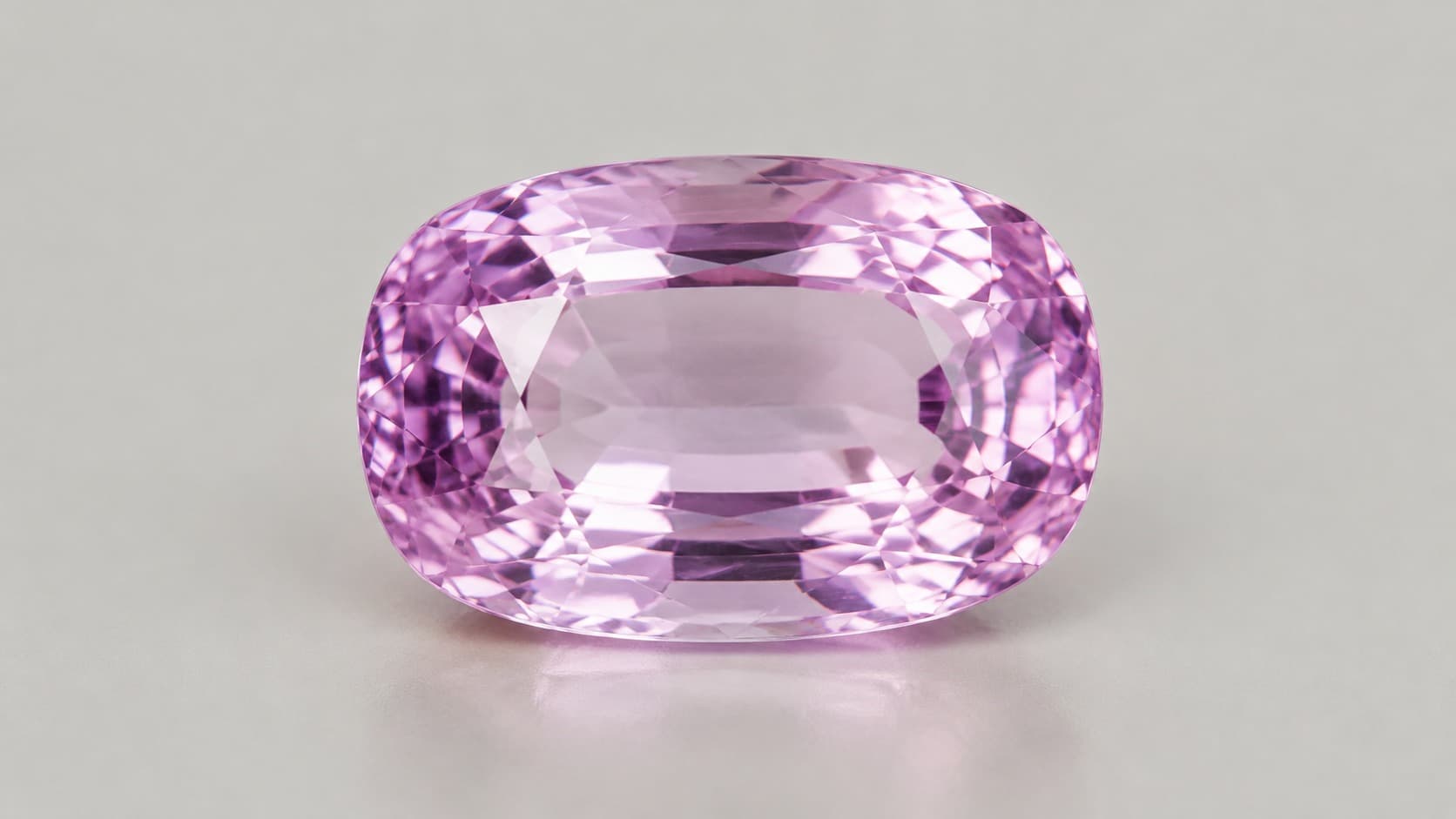
Kunzite ranges from pale pastel pink to a richer pinkish-violet, and the most valued stones show a clear, saturated pink without being too pale or too gray. The color comes from manganese trapped inside the spodumene’s crystal structure when it formed. Lighter stones are more common and more affordable, while deeply saturated pink or violet stones are rarer and cost more.
Why Does Kunzite Show More Than One Color?
Kunzite is strongly pleochroic, which means it shows different colors depending on the angle it’s viewed from. A single kunzite crystal can show pink from one direction, pale violet from another, and almost no color at all from a third. This happens because light moves through the crystal’s internal structure differently depending on direction, and it’s actually a useful clue for identifying genuine kunzite.
Gem cutters have to plan their cuts carefully around this effect, orienting the rough so the finished gem shows its best color face-up instead of its weakest one. A poorly oriented cut can leave a kunzite looking washed out even if the rough crystal had rich color inside it.
Kunzite Mining Locations
Kunzite was first found near Pala, in San Diego County, California, but today most of the kunzite used in jewelry comes from Brazil, Afghanistan, and Madagascar. Smaller deposits have also turned up in Pakistan, though the original California source has never been a major commercial supplier at scale. Afghanistan in particular has produced some of the largest and most vividly colored crystals in recent decades, often found in the same pegmatite deposits that yield emerald and tourmaline.
Pegmatites are slow-cooling rock formations that give crystals room and time to grow large, which is exactly the kind of environment spodumene needs. Because spodumene crystals tend to grow in long, bar-shaped forms, large rough kunzite is relatively easy to find compared to gems that only occur in small nodules. That’s one reason kunzite jewelry so often features big, eye-catching center stones.
Is Kunzite a Durable Gemstone?
Kunzite rates 6.5 to 7 on the Mohs hardness scale, which sounds reasonably tough, but hardness doesn’t tell the whole story. Hardness only measures resistance to scratching, not resistance to breaking, and kunzite has a serious weakness in the second category: its toughness rating is considered poor.
Kunzite has perfect cleavage in two directions that meet at roughly 87 degrees, meaning the crystal structure contains built-in weak planes where it can split cleanly if struck or pressed the wrong way. A sharp knock against a hard surface can snap a kunzite stone even though its surface hardness is similar to amethyst or peridot.
This is why jewelers usually recommend kunzite for earrings, pendants, and occasional-wear rings rather than everyday rings that bump into things constantly. A protective setting, like a bezel that surrounds the edges of the stone, reduces the risk of chipping along those cleavage planes.
Does Kunzite Fade in Sunlight?
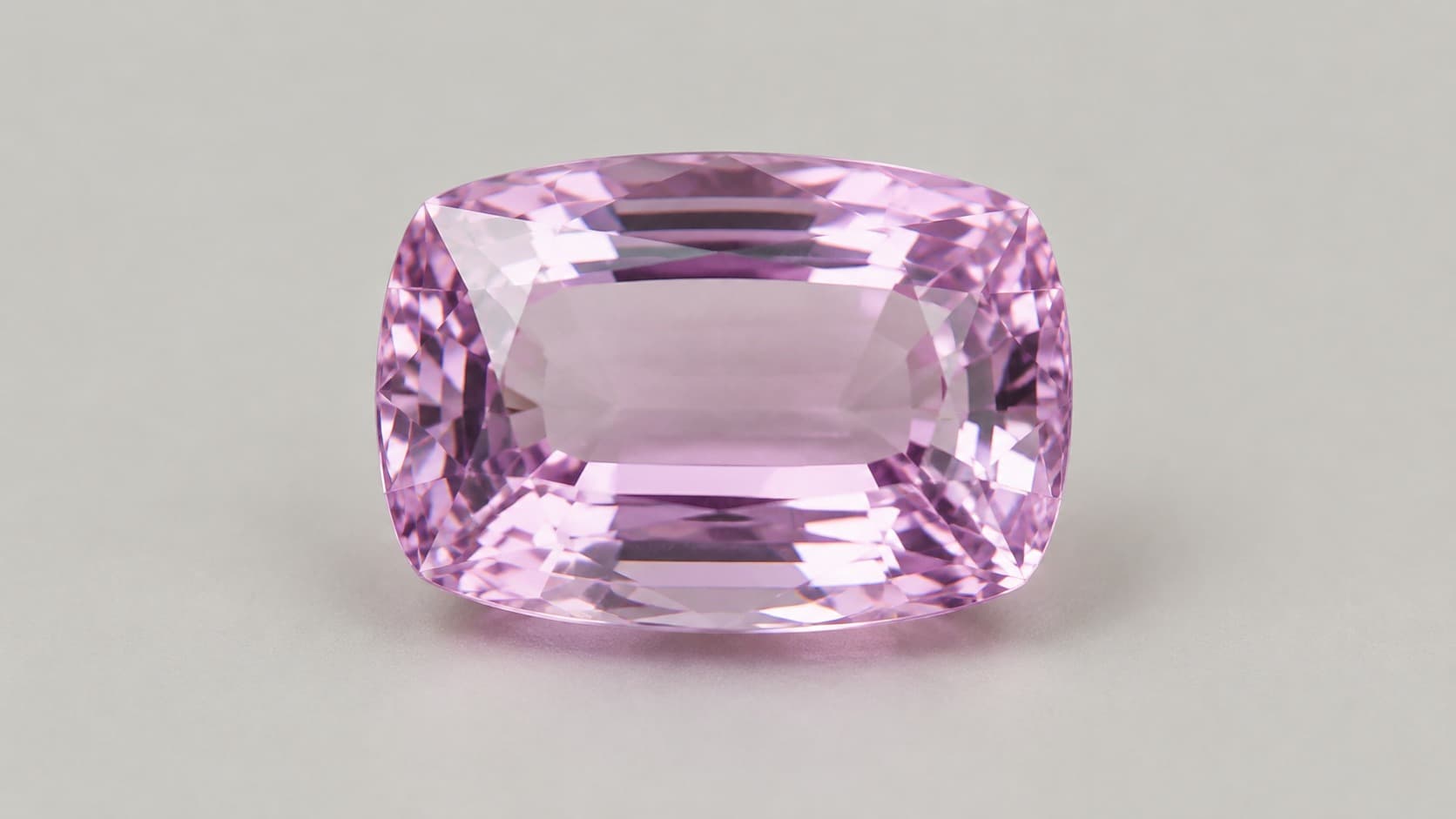
Yes, kunzite’s color can fade with prolonged exposure to strong light, especially direct sunlight and ultraviolet rays. This happens because the same manganese traces that give kunzite its pink color are sensitive to light energy, which can slowly alter them over months or years of exposure. Because of this, some jewelers in the trade nickname kunzite an “evening stone,” meaning it’s better suited to occasional wear or indoor settings than to daily sun exposure.
This doesn’t mean kunzite is fragile to the point of being impractical. A kunzite ring worn occasionally and stored properly will keep its color for a very long time. The fading effect is gradual, not sudden, and it mainly becomes a concern with years of near-constant direct sunlight, such as a stone left on a sunny windowsill or worn outdoors daily for extended periods.
How to Clean and Store Kunzite
Kunzite needs gentler care than most mainstream gemstones because of its cleavage and light sensitivity. A few habits keep it looking its best for decades:
- Clean it with warm, soapy water and a soft brush, then rinse and pat dry. Avoid ultrasonic and steam cleaners, since the vibration and heat can trigger a crack along a cleavage plane.
- Store it away from direct sunlight when it’s not being worn, ideally in a soft pouch or a lined jewelry box away from windows.
- Avoid sudden temperature changes, such as going from a hot car straight into cold air conditioning, because thermal shock can stress the stone.
- Take it off before physical activity, cleaning with harsh chemicals, or anything involving impact, since a sharp knock is the main threat to the stone’s structure.
- Have the setting checked periodically by a jeweler, especially for ring settings, to confirm prongs are secure and not putting pressure on the stone.
Is Kunzite Color Natural or Treated?
Most kunzite on the market is sold in its natural color, but irradiation treatment does exist in the trade to deepen or alter the pink hue. Irradiated kunzite is typically heated afterward to stabilize the new color, though even treated color can fade with continued light exposure, just like natural kunzite does.
A reputable jeweler or gemologist can usually determine whether a specific stone has been treated, and asking is a reasonable question when buying a higher-value piece. Since treatment doesn’t change kunzite’s durability concerns, the same care rules apply either way.
One thing buyers don’t need to worry about is lab-grown kunzite, because it doesn’t really exist. Labs haven’t successfully synthesized spodumene for the gem trade, so anything marketed as “lab-created kunzite” is almost certainly an imitation made from colored glass or a different synthetic material entirely, not a true lab-grown counterpart.
What Affects Kunzite’s Price?
Kunzite is considered an affordable gemstone, especially compared to how large and eye-catching the finished stones can be. Pale, lightly colored kunzite in smaller sizes is the most budget-friendly option, while deeply saturated pink-violet stones in larger carat weights command noticeably higher prices.
Because large, clean rough is relatively available from Brazil, Afghanistan, and Madagascar, kunzite has stayed accessible even as demand for colored gemstones has grown. Clarity, color saturation, and cut quality all factor into price the same way they do with most colored stones, and a well-cut stone that shows its best pleochroic color face-up will typically command more than a flatter-looking one of the same size.
Kunzite vs. Other Pink Gemstones
Shoppers often compare kunzite to morganite or pink tourmaline since all three can show a similar soft pink tone.
| Gemstone | Mineral Family | Mohs Hardness | Key Caution |
|---|---|---|---|
| Kunzite | Spodumene | 6.5–7 | Perfect cleavage; can crack from impact |
| Morganite | Beryl | 7.5–8 | More durable, less prone to cleavage breaks |
| Pink Tourmaline | Tourmaline | 7–7.5 | Durable but can be brittle in thin settings |
Morganite tends to hold up slightly better for everyday rings because beryl doesn’t share spodumene’s cleavage weakness. Kunzite still wins on availability of large, clean stones at accessible prices, which is exactly what drew Tiffany & Co.’s attention to it over a century ago.
Frequently Asked Questions
Is kunzite a birthstone?
Kunzite is not one of the officially recognized modern or traditional birthstones. It’s sometimes chosen as a gift gem for its soft pink color and its connection to love and tenderness in gem lore, but it has no formal birthstone month assignment.
Can kunzite be worn every day?
Kunzite can be worn regularly, but it’s better suited to earrings, pendants, and occasional-wear rings than to a ring worn daily for manual tasks. Its cleavage makes it more prone to chipping from knocks than harder, tougher gems like sapphire.
How can buyers tell if kunzite is real?
Genuine kunzite shows pleochroism, meaning its color shifts noticeably when viewed from different angles, which is difficult to fake convincingly in glass or synthetic imitations. A gemologist can confirm authenticity with refractive index testing, since kunzite has a specific, measurable range.
Does kunzite glow under UV light?
Yes, kunzite often fluoresces orange to pink under shortwave ultraviolet light, which is a trait gem collectors sometimes use to help identify it alongside its pleochroism.
Is kunzite the same as pink spodumene?
Yes, kunzite is simply the gem-trade name for pink-to-violet spodumene. Other spodumene colors have their own names, such as hiddenite for the green variety.
The Bottom Line
Kunzite earned its place in jewelry history through a chance discovery in California and a Tiffany & Co. gemologist sharp enough to recognize something new. More than a century later, it’s still valued for the same qualities that caught George Kunz’s attention: a soft, romantic pink color, large clean crystals, and a glow that few other stones match. The tradeoff is real care requirements, since its perfect cleavage and sensitivity to strong light mean it rewards gentle handling and thoughtful storage rather than rough daily wear. Treated with that care, a kunzite piece can stay vivid and intact for generations, making it a gemstone that rewards a little extra attention with a lot of visual payoff.