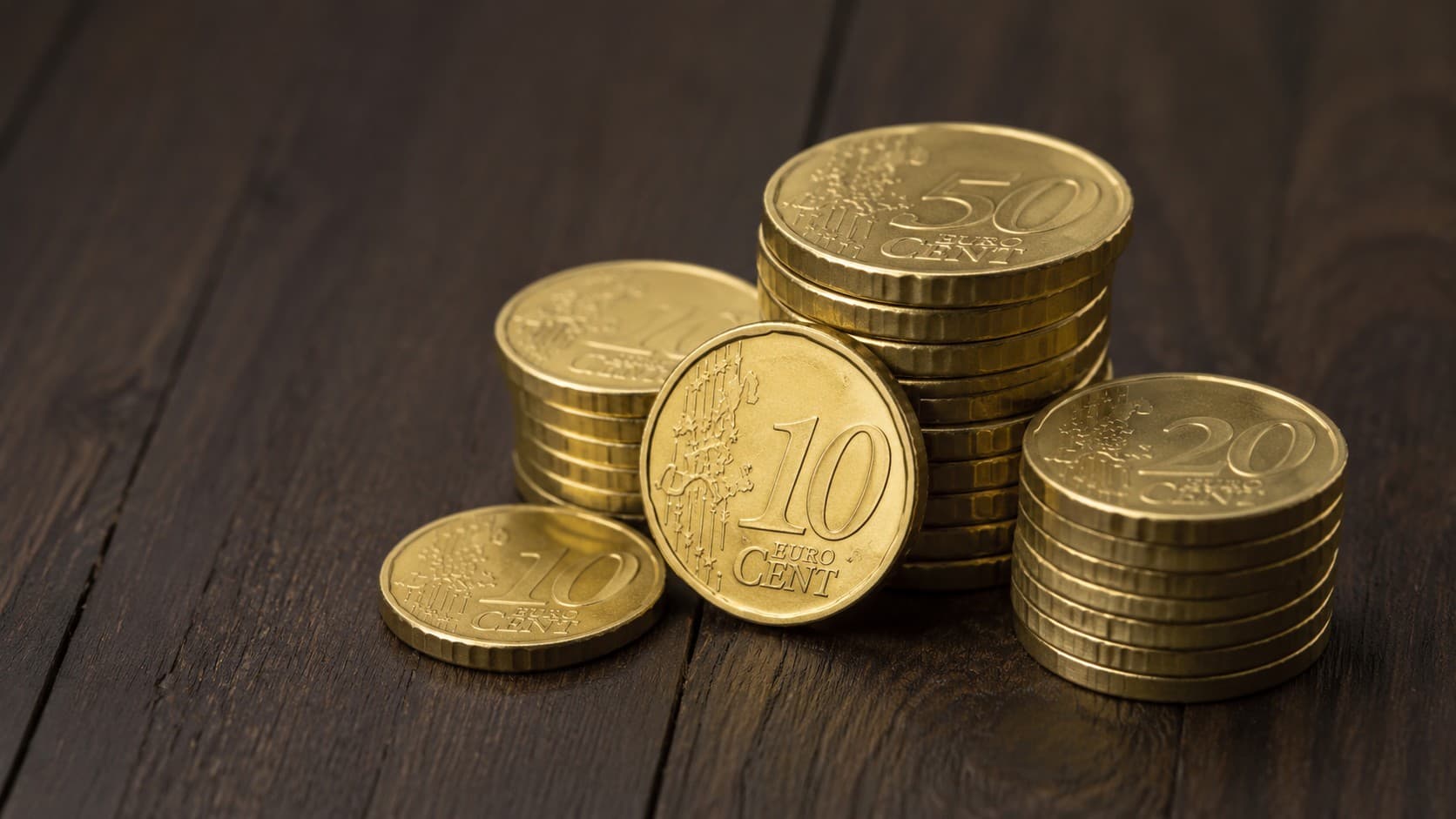
A 10, 20, or 50 euro cent coin has a warm, golden color that tricks a lot of people into thinking there’s real gold in it. There isn’t. The coin is made from an alloy called Nordic gold, a metal blend invented to look rich, resist scratches, and survive being handled by millions of people every day. The same qualities that make it perfect for coins have also made it a popular, budget-friendly choice in jewelry and craft metalwork, which is why the name keeps popping up outside of currency collecting circles.
What Is Nordic Gold Made Of?
Nordic gold is a copper alloy made of 89% copper, 5% aluminum, 5% zinc, and 1% tin, and it contains no actual gold. The mix is sometimes written as Cu89Al5Zn5Sn1, a shorthand that just lists the metals and their percentages. Copper does most of the work here, giving the alloy its base color and workability, while aluminum, zinc, and tin are added in small amounts to change the color, harden the surface, and help it resist tarnish.
Metallurgists classify Nordic gold as a type of aluminum bronze, a family of copper alloys that use aluminum instead of tin as the main hardening ingredient. That classification matters because it explains why Nordic gold behaves so differently from real gold. Pure gold is soft, heavy, and barely reacts with air or skin. Nordic gold is much lighter, harder, and reacts just enough with oxygen to form a thin protective layer that keeps it looking bright for years.
The weight difference is the clearest proof that something isn’t real gold. Nordic gold has a density of roughly 7 grams per cubic centimeter, while pure gold comes in at 19.3 grams per cubic centimeter, nearly three times heavier for the same size. That’s why a Nordic gold coin or ring will always feel surprisingly light compared to a real gold piece of the same dimensions.
| Metal | Density (g/cm³) | Contains gold? | Common use |
|---|---|---|---|
| Nordic gold | ~7.0 | No | Coins, tokens, budget jewelry |
| Pure gold (24K) | 19.3 | Yes, 100% | Fine jewelry, bullion |
| Brass | ~8.4–8.7 | No | Fittings, musical instruments, costume jewelry |
Despite the name, Nordic gold has zero gold content. The “gold” refers only to its color, not its makeup.
Why Is Nordic Gold Called “Gold” With No Gold Inside?
The name comes from where the alloy was invented, not what it contains. Nordic gold was developed in Sweden in the early 1990s, and in Swedish it’s called nordiskt guld, which translates directly to “Nordic gold.” The word “gold” was chosen purely to describe the metal’s appearance, since it was engineered to mimic the warm yellow tone people associate with real gold.
This kind of naming isn’t unusual in metalworking. Alloys often get descriptive names based on color or origin rather than actual ingredients. German silver, for example, contains no silver either — it’s a mix of copper, nickel, and zinc named for its silvery shine. Nordic gold follows the same logic: a practical, honest-sounding name for regular people, even though the actual ingredient list looks nothing like the name suggests.
Who Created Nordic Gold, and When?
Nordic gold was created for the Swedish Mint, which needed a new metal for its 10 krona coin. The person generally credited with developing it is Mariann Sundberg, who worked at the Finnish metals company Outokumpu at the time. The mint’s request was specific: it wanted a coin metal that looked gold, resisted tarnish, could be struck with detailed designs, and wouldn’t trigger skin allergies in the millions of people who would carry it daily.
Sweden began circulating Nordic gold coins in 1991, and the alloy performed exactly as hoped. It held its color, resisted the kind of dulling that plain copper or brass coins suffer from, and proved cheap enough to strike in massive quantities. That track record is what caught the attention of European officials a few years later when they were designing an entirely new currency for the continent.
Sweden wasn’t the first country to try a gold-colored copper alloy for coins, either. Italy had experimented with a similar aluminum bronze called bronzital for its coinage in the late 1930s and refined it further in 1967 for its lira coins, though the exact early history is thinly documented. Nordic gold built on that same basic idea but improved the formula, which is a big reason it eventually spread so much further than its Italian predecessor ever did. The alloy and its name are now trademarked and controlled by Luvata, a metals manufacturing company, which licenses the formula to mints and manufacturers elsewhere.
Why Do Euro Coins Use Nordic Gold?
The European Central Bank chose Nordic gold for the 10, 20, and 50 euro cent coins because it was durable, hypoallergenic, and easy to tell apart from other coin metals. When the euro was being designed in the mid-1990s, planners needed eight different coin denominations that people across dozens of countries could quickly recognize by sight, weight, and even touch. Nordic gold’s warm yellow color created an obvious visual break between the coppery 1, 2, and 5 cent coins and the silver-toned 1 and 2 euro coins.
There was also a practical safety reason behind the choice. A 2004 study in the British Journal of Dermatology tested how people with nickel allergies reacted to different euro coins. Only 16% of participants had a weak reaction to the Nordic gold 50 cent piece, compared to 28% who reacted to the nickel-containing 1 and 2 euro coins, and 48% who had even stronger reactions to those. Because Nordic gold contains no nickel at all, it turned out to be one of the gentler metals in a person’s pocket.
On top of the health angle, Nordic gold is genuinely hard to fake. The European Central Bank notes that the alloy is hard to melt down and reserved solely for coin production, a combination that makes it tough for counterfeiters to source or replicate convincingly. Combined with its specific weight and electromagnetic signature, that difficulty helps vending machines and cash-counting equipment instantly reject fakes.
Each of the three Nordic gold denominations is a slightly different size and weight, which helps people and machines tell them apart just by feel:
| Coin | Mass | Diameter | Thickness |
|---|---|---|---|
| 10 euro cent | 4.10 g | 19.75 mm | 1.93 mm |
| 20 euro cent | 5.74 g | 22.25 mm | 2.14 mm |
| 50 euro cent | 7.80 g | 24.25 mm | 2.38 mm |
Several factors made Nordic gold the practical choice for the job:
- Gold-like color that visually separates the middle-tier coins from copper and silver-toned ones
- No nickel, which meant fewer skin reactions for the millions of people handling the coins daily
- Hard to melt down, making counterfeiting less appealing and less profitable
- Tarnish-resistant, so coins stay recognizable even after years of circulation
- Cost-effective to produce at the massive scale a continent-wide currency demands
Is Nordic Gold Used in Anything Other Than Coins?
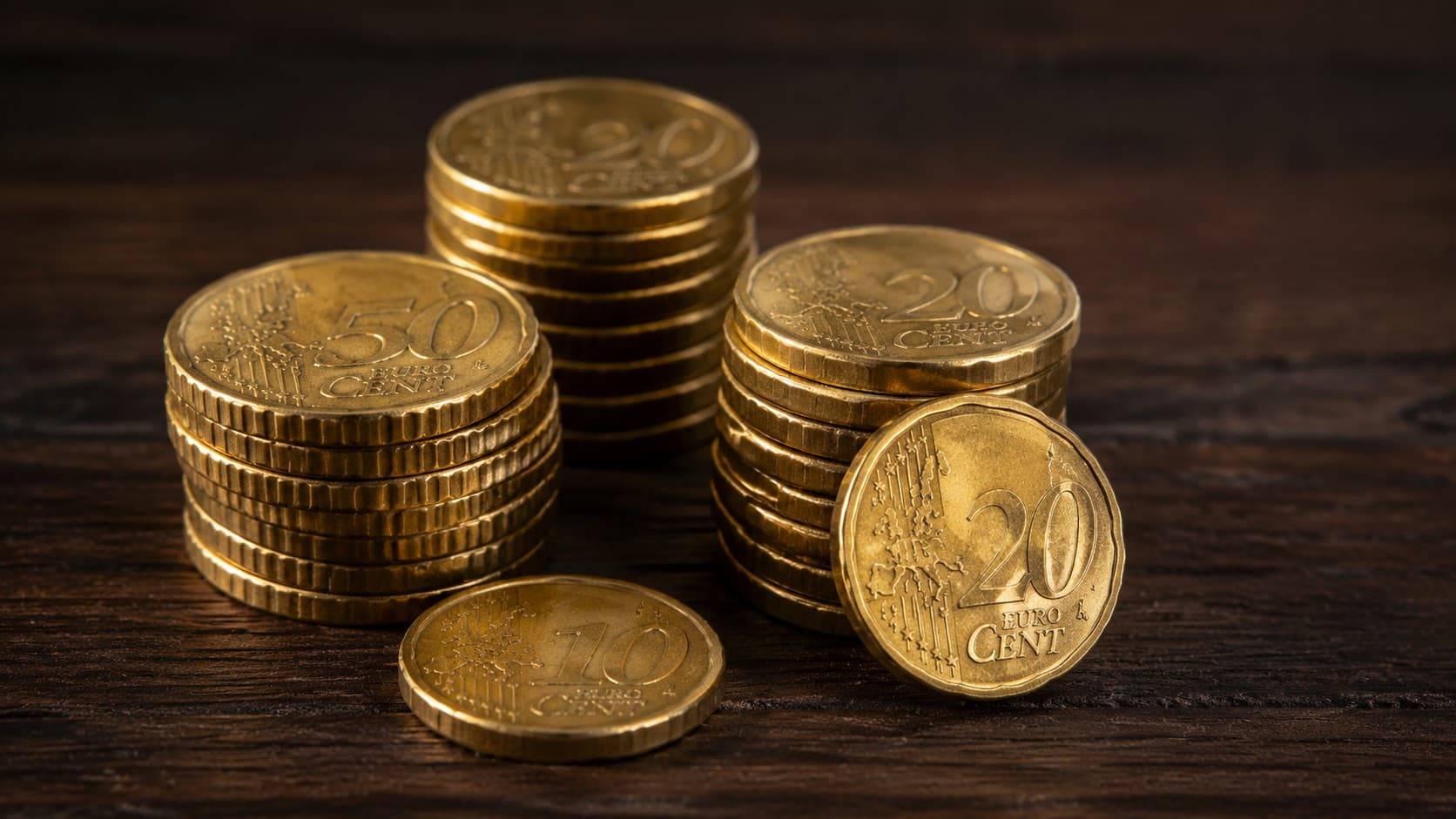
Yes, Nordic gold shows up in several national currencies and increasingly in jewelry and craft metalwork outside of coins. Sweden used it first for its own krona coins, Estonia issued its first Nordic gold coin in 1993 and later switched its 1 kroon coin to the alloy in 1998, and Poland has used it since 1996 for its annual commemorative 2 złoty coins. Each country was chasing the same combination of good looks, durability, and low production cost that made the alloy attractive to Sweden in the first place.
Beyond currency, the same properties that make it a good coin metal — durability, tarnish resistance, and a gold-like shine at a fraction of the cost — have made it a practical choice for tokens used in car washes, laundromats, arcades, and festivals, as well as for jewelry makers and hobbyist metalworkers who want the look of gold without the price tag.
Because Nordic gold is a genuine metal alloy rather than a plated or painted finish, pieces made from it keep their color through normal wear, unlike cheap gold-tone jewelry that can flake or fade over time. It won’t have the weight or softness of real gold, and it won’t carry a karat stamp, since it isn’t a gold alloy in the legal or jewelry-industry sense. Anyone shopping for jewelry described as Nordic gold should understand they’re buying a copper-based alloy valued for its color and toughness, not for precious metal content.
Is Nordic Gold Different From Gold-Plated or Gold Vermeil Jewelry?
Yes — Nordic gold is a solid alloy all the way through, while gold-plated, gold-filled, and gold vermeil jewelry are all a thin layer of real gold wrapped around a different base metal. That distinction matters more than the color similarity might suggest, because it changes how the jewelry ages. Gold plating is often just a fraction of a micron thick, so it can wear thin at points of friction like a ring’s underside or a bracelet’s clasp, eventually showing the base metal underneath. Nordic gold has no such coating to wear through, since the color comes from the alloy itself, not a surface layer.
Gold vermeil pushes the plating idea a bit further, using a thicker layer of real gold over sterling silver, which holds up longer than standard plating but can still wear thin eventually. Gold-filled jewelry uses an even thicker bonded layer of gold, usually over brass, and is the most durable of the three plated categories. Nordic gold sits in a different category entirely: it never had a gold layer to begin with, so there’s nothing to rub off, but there’s also no real gold content anywhere in the piece, unlike all three of those plated options which do contain at least some actual gold.
A plated or vermeil piece loses some of its gold color over years of wear and can potentially be re-plated, while a Nordic gold piece keeps the same color for its entire life because the color runs all the way through the metal.
How Do You Clean Nordic Gold Jewelry?
Nordic gold needs gentler handling than solid gold-karat jewelry because it’s a copper-based alloy, and copper alloys react to moisture and chemicals in ways that gold-rich alloys mostly don’t. A soft, dry polishing cloth is the safest everyday option, and for a deeper clean, lukewarm water with a drop of mild dish soap and a soft-bristled brush works well. Thorough rinsing and complete drying afterward matter more than usual, since leftover moisture is one of the biggest causes of tarnish on copper-based metals.
The bigger difference from gold-karat care shows up in what to avoid. Gold-karat jewelry can usually tolerate an ultrasonic cleaner or a mild jewelry-cleaning solution without much risk, but those same treatments can pit or discolor a copper alloy like Nordic gold, since it’s chemically more reactive than an alloy that’s mostly gold. Chlorine, perfume, lotion, and hairspray are also worth keeping away from direct contact, since the aluminum and zinc in the alloy can react with those chemicals faster than gold would.
A few habits keep Nordic gold looking its best over time:
- Applying perfume, lotion, or hairspray before putting the jewelry on, rather than after
- Removing jewelry before swimming, showering, or handling household chemicals
- Storing pieces somewhere dry, since humidity speeds up tarnishing on copper alloys
- Avoiding ultrasonic cleaners and harsh dips made for gold or silver
- Restoring occasional dullness with a dry polishing cloth rather than an abrasive cleaner
How to Tell Nordic Gold From Real Gold
The easiest way to tell is weight and hallmarks — Nordic gold is noticeably lighter than real gold and won’t carry a karat stamp like 14K or 18K. Gold is one of the densest common metals, so a coin or piece of jewelry made from real gold feels heavier in the hand than its size suggests. Nordic gold, being mostly copper and aluminum, feels much lighter for its size.
A second clue is the stamp, or lack of one. Genuine gold jewelry is legally required in most countries to carry a hallmark showing its purity, like 375, 585, or 999 for different karat levels. Nordic gold items have no such stamp because they aren’t gold alloys to begin with. For a more scientific check, jewelers and metal testers can use an XRF (X-ray fluorescence) scanner or a simple acid test, both of which will immediately show copper, aluminum, zinc, and tin instead of gold.
Frequently Asked Questions
Does Nordic gold contain any real gold?
No. Nordic gold is a copper-based alloy made of 89% copper, 5% aluminum, 5% zinc, and 1% tin. It gets its name purely from its golden color, not from any actual gold content.
Is Nordic gold worth anything?
Nordic gold has some scrap value as a copper alloy, but it doesn’t carry precious metal value the way real gold does. Its worth mostly comes from its use as coinage or as an affordable material in jewelry and tokens, not from the metals themselves being rare or expensive.
Is Nordic gold safe for sensitive skin?
Generally yes. Nordic gold contains no nickel, which is the metal most commonly responsible for jewelry-related skin allergies. Studies on euro coins made from the alloy found much lower allergic reaction rates compared to nickel-containing coins.
Which euro coins are made from Nordic gold?
The 10, 20, and 50 euro cent coins are all struck from Nordic gold. The 1, 2, and 5 cent coins use copper-plated steel instead, and the 1 and 2 euro coins use combinations involving nickel and other alloys.
Can Nordic gold jewelry tarnish over time?
Nordic gold resists tarnish better than plain copper or brass thanks to its aluminum content, which forms a thin protective oxide layer on the surface. It isn’t completely immune to dulling over years of wear, but it holds its color far longer than many other budget metals.
Conclusion
Nordic gold earns its name from a color, not a chemical fact. It’s a copper alloy — 89% copper, 5% aluminum, 5% zinc, and 1% tin — engineered in Sweden in the early 1990s to look gold, resist tarnish, avoid triggering nickel allergies, and survive constant handling. Those same qualities are exactly why the European Central Bank picked it for the 10, 20, and 50 euro cent coins, and why it later found a second life in affordable jewelry and metal crafting. A golden coin, ring, or trinket that feels a little too light to be real gold and carries no karat stamp is most likely made from Nordic gold instead.