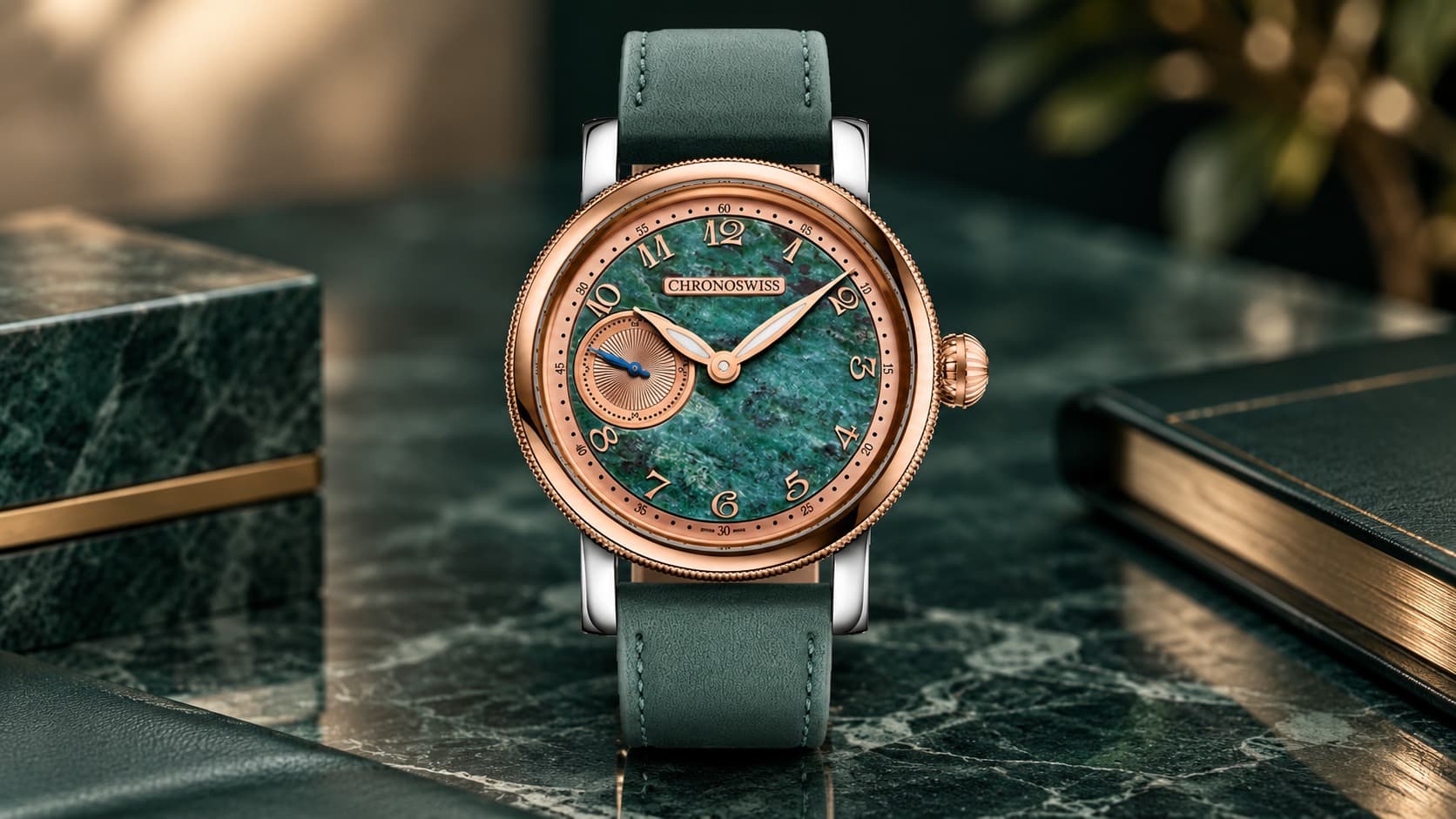
Christopher Ward is one of the few watch brands that genuinely changed how people shop for a mechanical watch. Instead of selling through jewelry shops and boutiques, the British company built its business online from day one, cutting out the usual markups and passing that value straight to the wearer. Two decades later, the brand has grown from a small operation run out of a converted farm building into a name that regularly wins awards against Switzerland’s biggest names, and its catalog now spans everything from rugged dive watches to a chiming complication that once seemed impossible at the price.
Christopher Ward’s History and Origins
Christopher Ward makes Swiss-made mechanical watches designed in England, and it sells them without the usual chain of stores and distributors in between.
The company was started in 2004 by three friends, Mike France, Peter Ellis, and Chris Ward, after a boat trip down the River Thames, and it launched its first two watches, the C5 Malvern Automatic and the C3 Malvern Chronograph, in 2005. There was no shop and barely any marketing budget at first. The tiny company placed a single ad in a British newspaper and relied on its brand-new website to find customers. Sales were slow to begin with, but that changed once watch reviewers started talking about the value on offer, and the brand’s reputation grew from there almost entirely through word of mouth.
A turning point came a few years later. In 2008 the company partnered with a Swiss watch manufacturer called Synergies Horlogères, and the two businesses fully merged in 2014. That same year, Christopher Ward released something very few small watch brands ever manage: its own in-house movement, developed by master watchmaker Johannes Jahnke. Building a movement from scratch, rather than buying one ready-made, takes serious engineering skill and money, and it’s part of why the brand is taken so seriously by collectors today.
One of the co-founders, Chris Ward, left the company in January 2020 to launch a separate brand with his sons, but Christopher Ward has kept growing under Mike France’s leadership. In 2023, the brand became the first British watchmaker ever to win an award at watchmaking’s most respected competition, the Grand Prix d’Horlogerie de Genève, for its C1 Bel Canto chiming watch. That recognition has continued since: the brand was named T3’s Brand of the Year in 2024, and it has picked up WatchPro’s British Watch Brand of the Year award three years running.
Why Christopher Ward Offers Such Good Value
The short answer is the pricing model. Christopher Ward has said it works out what a watch costs to make and multiplies that figure by three to set the retail price, rather than layering on the markups that come from selling through boutiques, distributors, and department stores. That’s the core reason a Christopher Ward watch tends to carry specifications normally expected from something two or three times the price.
The other reason is that Christopher Ward doesn’t just assemble other companies’ movements into its own cases, which is what most watch brands at this price point do. It designs and builds some of its own movements from scratch, something only a small number of manufacturers anywhere in the world are capable of doing. Its first in-house calibre, launched in 2014, marked the first time in half a century that a British watch company had produced a mechanical movement able to go into proper commercial production. That movement has since been built on and expanded into a small family of in-house calibres used across the brand’s more advanced watches.
Finally, the brand backs everything it sells with what it calls its 60:60 Guarantee, covering both returns and the movement warranty.
Best Christopher Ward Watches to Know
C60 Trident Pro 300 — Best Entry-Level Dive Watch
The C60 Trident Pro 300 best sums up what makes Christopher Ward special without a hefty price tag attached. It’s a proper 300-meter dive watch with a Swiss automatic movement, and depending on size and strap it typically starts around $850 and climbs toward roughly $1,320 for bracelet versions.
This watch is part of the Trident family, the collection that first built Christopher Ward’s reputation as a serious dive-watch maker. It uses what the brand calls its Light-catcher case, offered in 38, 40, 42, and 44mm sizes, which is water resistant to 300 meters and was engineered to shave nearly two millimeters off the watch’s thickness compared to older designs. That’s a big deal for comfort, since dive watches can otherwise feel bulky on smaller wrists.
Reviewers have consistently praised the small details that usually only show up on far pricier watches: a ceramic bezel insert, generous Super-LumiNova on the hour markers, and a small trident shape worked into the tip of the seconds hand, a nod to the collection’s name.
C65 Trident — Best Vintage-Style Diver
For buyers who find the modern Trident Pro a little too sporty, the C65 line takes the same dive-watch foundation and dresses it in 1960s styling. Prices typically sit around $795 before options, making it one of the more affordable entries in the whole catalog.
The C65 trades some outright dive credentials for good looks, and reviewers are upfront about that trade-off. It’s less a hardcore tool watch and more an everyday Swiss automatic with a retro dress-watch personality, closer in spirit to something worn with a jacket than taken diving. The case finishing, alternating between brushed and polished surfaces, is a particular highlight for the price, and the watch is genuinely thin for something styled as a diver. It’s a good choice for anyone who wants the retro dive-watch look without the bulk.
C60 Trident GMT 300 — Best for Travelers on a Budget
A GMT watch tracks a second time zone at a glance, which is genuinely useful for frequent travelers or anyone keeping in touch with people abroad. Christopher Ward’s Trident GMT models start around $1,195 on a rubber strap and roughly $1,380 on the brand’s Bader bracelet.
The appeal here is the same as with the standard Trident Pro: a rugged, water-resistant case built for everyday use, but with the added flexibility of a GMT hand. It’s worth knowing that this model uses a “caller” style GMT hand rather than a “flyer” one, meaning the extra hand shows a second time zone rather than allowing the main hour hand to jump independently. For most people who just want to glance at what time it is back home, that distinction won’t matter much day to day.
C63 Sealander True GMT — Best for a “True” Travel Movement
This model is newer and more technically ambitious than the standard Trident GMT. Instead of relying on an outside supplier for its GMT function, Christopher Ward built it around its own movement. The Calibre CW-002 uses the brand’s original in-house movement as its foundation, carrying over the same twin mainspring barrels, five-day power reserve, and COSC chronometer certification, and then adding a genuine GMT complication built from 16 newly designed parts and 7 modified ones.
The difference between this and a standard GMT watch comes down to convenience. A “true” GMT allows the wearer to adjust the main hour hand on its own to jump between time zones, without disturbing the minutes or needing to touch the separate GMT hand, which is exactly how frequent flyers expect a travel watch to work. It’s also impressively slim for a movement with this many extra parts, coming in at just over 14mm thick.
The Twelve — Best Integrated-Bracelet Sports Watch
Integrated-bracelet sports watches, where the bracelet flows directly into the case with no visible lugs, are one of the most talked-about styles in modern watchmaking, but the well-known examples from major Swiss houses often cost tens of thousands of dollars. Christopher Ward’s take, called The Twelve, launched in 2023 and comes in steel and titanium versions, plus a smaller 36mm size, all priced under $2,000.
What surprised reviewers most was the finishing. One long-term reviewer noted the level of polish and detailing was well beyond what the price tag would suggest, easily rivaling watches sold for several times as much, while a separate hands-on writer ranked it among the strongest luxury sport watches available anywhere near the $2,000 mark. For anyone drawn to the polished-and-brushed, retro-1970s look of this watch style but unwilling to spend luxury-brand money, it’s the standout option in the category.
C1 Bel Canto — Best “Wow Factor” Watch
This is Christopher Ward’s most famous watch, and for good reason. The Bel Canto chimes once, automatically, every hour on the hour, which is a complication normally found only in very expensive Swiss watches from long-established manufacturers.
The watch is powered by Christopher Ward’s own FS01 chiming module, which uses a “Sonnerie au Passage” mechanism to strike a titanium gong once per hour, and the whole striking mechanism is visible right on the dial, letting the hammer’s movement be watched in real time. The 41mm titanium case weighs just 53 grams, and titanium was chosen partly for acoustics: the metal carries sound more efficiently than steel, giving the chime a cleaner, clearer tone.
The watch made history for the brand. In November 2023, the C1 Bel Canto won the Petite Aiguille category at the Grand Prix d’Horlogerie de Genève, the industry’s most respected awards, making Christopher Ward the first British brand ever to win a GPHG award. Prices for the standard collection now sit in the region of $4,000 to $5,000 depending on the strap and finish, with a more elaborate “Classic” version featuring a textured guilloché dial priced higher still.
C12 Loco — Best for Collectors Who Want Something Rare
For buyers who already own a Christopher Ward or two and want the brand’s most ambitious release, the C12 Loco stands apart. It’s built around the company’s second-ever in-house movement, Calibre CW-003, a cousin to the original SH21/CW-001 movement, designed by technical director Frank Stelzer, and features an exposed, centrally mounted balance wheel that hasn’t appeared in a Christopher Ward watch before. Thanks to a custom free-sprung balance wheel, the movement runs for 144 hours on a full wind, roughly a day longer than the original SH21 was capable of. It’s a niche pick compared to the rest of the catalog, but it shows how far the brand’s in-house engineering has come since 2014.
Things to Check Before Buying a Christopher Ward
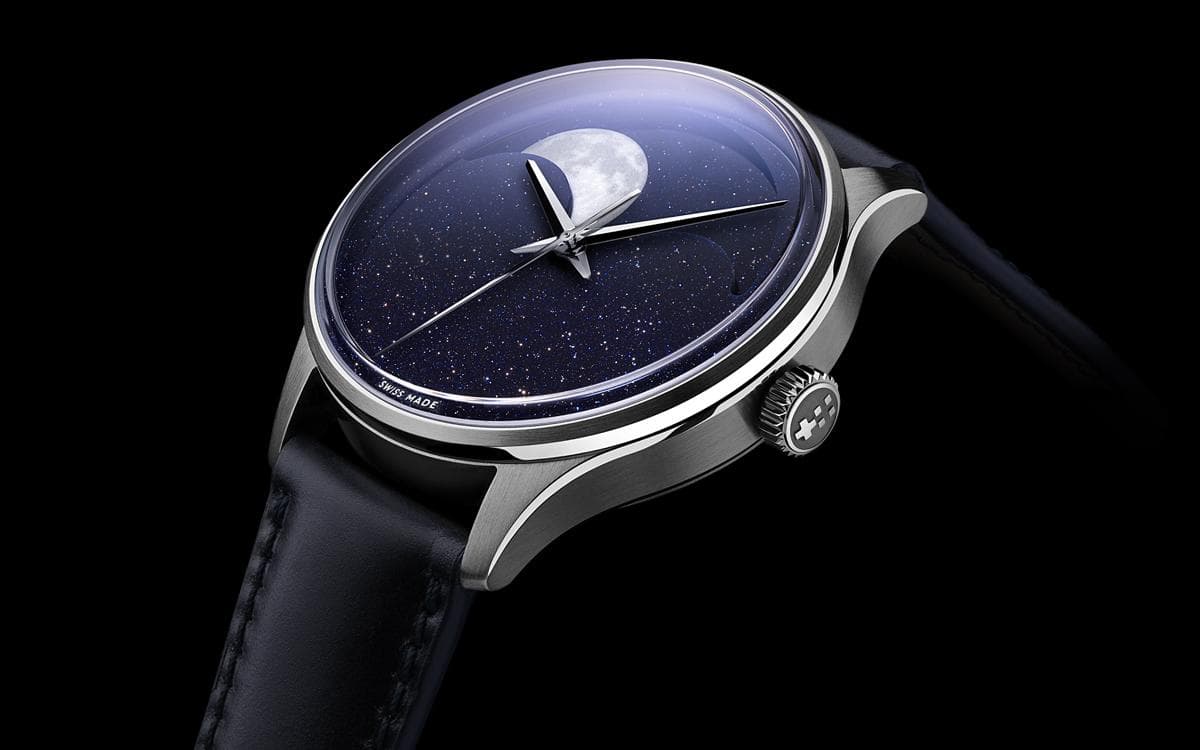
Case size and wrist fit. Christopher Ward sells most models in multiple case sizes, often ranging from 36mm up to 44mm depending on the collection. Because the brand sells directly online rather than through a shop on every high street, buyers are best served by measuring their wrist or comparing dimensions against a watch already owned before ordering, rather than guessing.
Movement type. Most of the catalog uses reliable Swiss third-party movements from suppliers like Sellita, which are well-proven and easy to service almost anywhere in the world. A smaller number of flagship models use Christopher Ward’s own in-house movements (the CW-001, CW-002, and CW-003 family, along with the FS01 chiming module). In-house movements are more technically impressive, but third-party movements are generally simpler and cheaper to have serviced down the line.
Water resistance versus everyday practicality. The Trident and C65 collections cover a wide range of water resistance, from 150m up to 600m or more on select dive-focused models. For anyone not actually diving, a 150m to 300m rating is plenty for swimming, showering, and daily knocks.
Buying new versus pre-owned. Because Christopher Ward sells directly rather than through traditional retail, its watches also show up regularly on the secondhand market and watch forums, sometimes at a meaningful discount to list price. Buying pre-owned can be a smart way in, but it’s worth confirming the movement warranty status, since Christopher Ward’s warranty terms are tied to the original purchase.
Where to Buy a Christopher Ward Watch
Christopher Ward’s business was built on selling directly to customers rather than through third-party jewelers or department stores, and that’s still true today. The brand launched in 2005 as what it describes as the world’s first exclusively online luxury watch retailer, and for many years its own website was the only place to buy one. It has since opened a small number of its own showrooms in the UK where customers can see and try on watches in person, but the online store remains the primary way most people around the world buy directly from the brand.
Because there’s no wide network of authorized third-party dealers the way there is with many established Swiss brands, buying directly from Christopher Ward is generally the simplest way to guarantee a new watch, the full warranty, and access to the brand’s return policy. Pre-owned examples also circulate through watch forums, auction sites, and specialist pre-owned dealers, which can be worth exploring for older or discontinued references.
Is a Christopher Ward Watch a Good Investment?
It’s worth being honest about this one: Christopher Ward is not generally considered an investment brand, and that’s by design rather than a flaw. Unlike a small handful of watch brands that have built decades of scarcity and heritage into a strong secondary market, Christopher Ward’s entire business model is built around selling watches at close to their true cost of production. That’s great for buyers getting genuine value at the point of purchase, but it also means there’s little built-in markup for resale value to hold onto in the way a Rolex or Patek Philippe might.
That said, certain models have developed real demand on the secondary market, particularly limited editions like early runs of the C1 Bel Canto, which sold out within hours of release and have occasionally traded above retail while in high demand. As a general rule, though, the sensible approach is buying a Christopher Ward to wear it, not to bank on it appreciating. For those chiefly seeking resale value, this isn’t the right category of brand to shop in.
Christopher Ward Watch Maintenance Tips
Christopher Ward watches don’t need any special treatment beyond what any mechanical watch requires. Automatic models will keep running as long as they’re worn regularly, since the movement is powered by the natural motion of the wearer’s wrist; if a watch sits unworn for more than a day or two, it will simply need to be reset. Manually wound models, used in some of the C65 line, need to be wound by hand roughly once a day.
Like any mechanical watch, servicing is recommended roughly every four to five years to keep the movement running accurately, and Christopher Ward’s own service center can carry this out for models bought directly from the brand. Every new watch also comes with the brand’s 60:60 Guarantee, which includes 60 days of free returns and a 60-month warranty on the movement, so any mechanical fault within that period is covered without extra cost. Beyond that, ordinary care applies: avoid extreme temperature swings, rinse off salt water or chlorine after swimming, and store the watch somewhere dry when it’s not being worn.
A few simple tools make day-to-day upkeep easier. A soft microfiber cloth is the safest way to wipe fingerprints and dust off the case and crystal without scratching either. For leather straps in particular, a light leather conditioner every few months helps stop the material from drying out and cracking, especially on watches worn often in warm weather. For owners with more than one automatic watch in rotation, a watch winder can be useful for keeping a piece wound and ready to wear, since it keeps the rotor moving even while the watch is off the wrist; it’s not a necessity, but it avoids resetting the time and date each time a different watch goes back into rotation. A small tub of silica gel packets tucked into the watch box also helps absorb excess moisture during storage, a cheap way to protect against internal fogging or corrosion over time.
Frequently Asked Questions
Is Christopher Ward considered a luxury watch brand?
Christopher Ward sits in an unusual middle ground. Its watches use genuine Swiss mechanical movements, real precious materials like titanium, and in-house engineering that’s normally reserved for far more expensive brands, but its direct-to-consumer sales model keeps prices well below traditional Swiss luxury houses. Most people describe it as “affordable luxury” or “accessible independent” watchmaking rather than mass-market fashion watches.
Are Christopher Ward watches made in Switzerland?
Yes. While the brand is designed in England, its movements and cases are largely produced in Switzerland, including at its own manufacturing facility that grew out of the 2014 merger with Synergies Horlogères. This Swiss-made status is part of why the brand can credibly compete with more established Swiss names on quality.
What is the SH21 movement, and is it still used?
SH21 was Christopher Ward’s first in-house mechanical movement, launched in 2014, and it became known for its five-day power reserve from a twin-barrel design. The movement has since been renamed Calibre CW-001, and it still serves as the technical foundation for newer movements like the CW-002 (used for true GMT function) and CW-003 (used in the C12 Loco).
Which Christopher Ward watch is best for a beginner collector?
The C60 Trident Pro 300 is the most commonly recommended starting point. It’s durable enough for daily wear, priced at the lower end of the catalog, and gives a genuine feel for the brand’s build quality before building out a wider collection with something like the Bel Canto or The Twelve.
Does Christopher Ward hold its value on the secondhand market?
Not typically, and that’s consistent with the brand’s own value-first pricing model. Most Christopher Ward watches are priced close to their cost of production, so there’s little built-in margin to sustain strong resale prices. A handful of sold-out limited editions have traded above retail, but buyers should generally think of these watches as pieces to wear rather than assets to flip.
Conclusion
Christopher Ward earned its reputation the hard way, by building genuine in-house mechanical movements and winning industry awards while keeping prices grounded through a direct-to-consumer model that skips the usual retail markups. From the rugged practicality of the C60 Trident Pro 300, to the travel-ready engineering of the C63 Sealander True GMT, to the modern styling of The Twelve, to the sheer novelty of the chiming C1 Bel Canto, the common thread across the catalog is the same: real Swiss watchmaking, priced for people who buy watches to wear them, not just to say they own one.