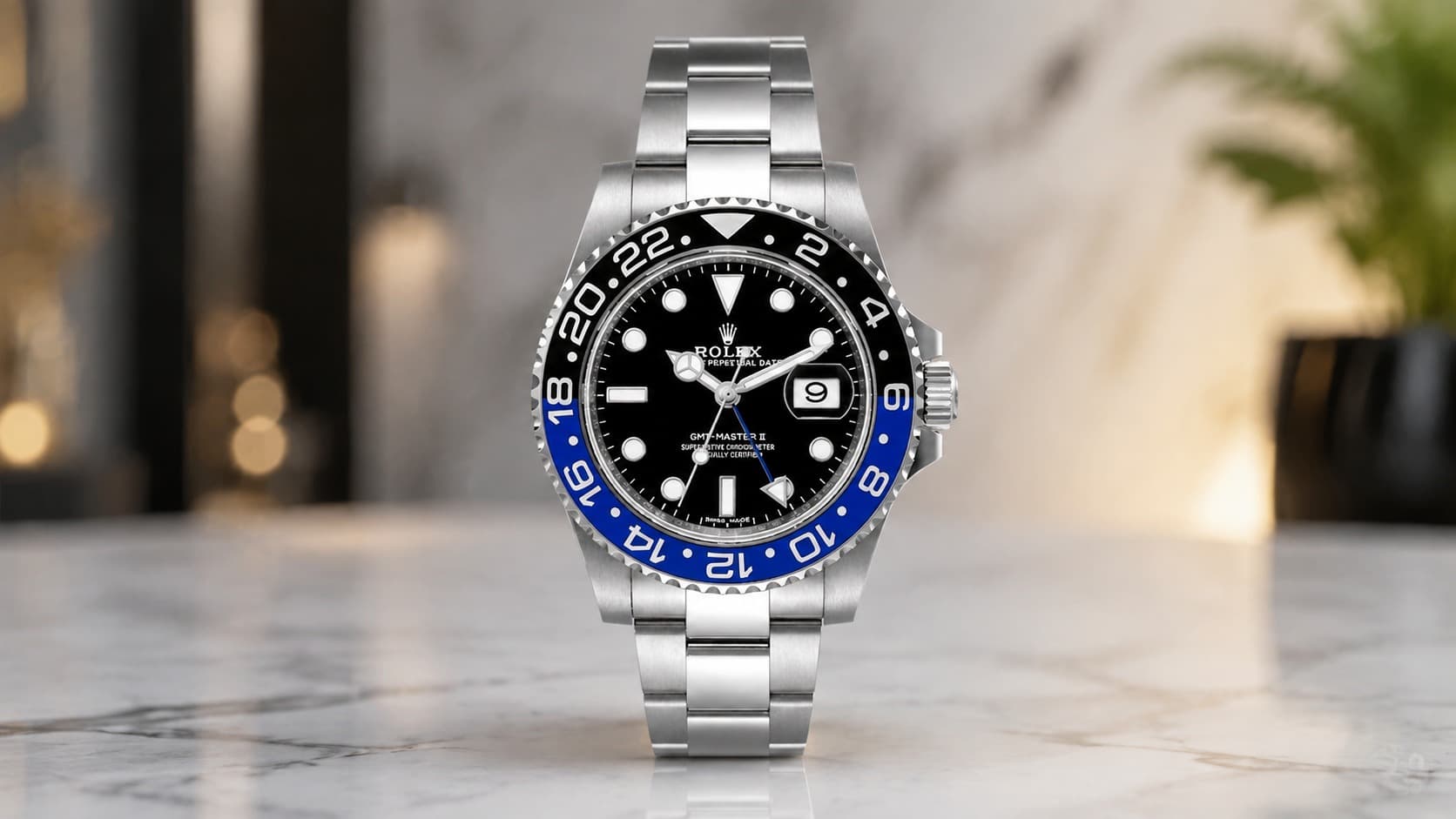
GMT watches represent one of horology’s most practical complications, transforming timepieces into sophisticated tools for our globally connected world. Originally developed in 1954 by Rolex and Pan American Airways for international pilots, these watches have evolved into essential instruments for business travelers and anyone coordinating across multiple time zones. Unlike digital alternatives requiring battery power, GMT watches provide instant visual reference to multiple time zones through elegant mechanical solutions unchanged for over 70 years. They display two or three time zones simultaneously while maintaining intuitive analog readability, offering reliable solutions independent of smartphones for international calls, overseas coordination, or tracking family members abroad.
What Does GMT Mean?
The letters GMT stand for Greenwich Mean Time, a timekeeping system that emerged from one of history’s most dangerous maritime problems. For centuries, sailors could determine their latitude easily by observing the sun and stars, but calculating longitude remained an unsolvable puzzle that led to countless shipwrecks, lost cargo, and thousands of deaths at sea.
- King Charles II founded the Royal Observatory in Greenwich in 1675 after recognizing that Britain’s naval supremacy and merchant fleet faced constant danger from navigation errors. The observatory’s specific mission was solving the longitude problem, with astronomers tasked to develop reliable methods for determining exact position at sea. The location in Greenwich wasn’t random – the hill provided optimal conditions for astronomical observation, and the Thames location allowed easy access for testing chronometers and navigation instruments.
- The observatory developed two revolutionary solutions that changed maritime navigation forever. First came the Lunar Distance Method, which used precise star catalogs and lunar observations to calculate longitude through complex mathematical calculations. Second, John Harrison’s marine chronometers, particularly his H4 model, provided accurate timekeeping at sea despite temperature changes, humidity, and constant ship motion that had defeated previous attempts at portable precision timepieces.
- Greenwich’s practical dominance in navigation made it the logical choice for global time standardization. By the 1880s, over 65% of the world’s shipping already relied on Greenwich-based charts and calculations for ocean navigation. This widespread adoption happened naturally because Greenwich provided the most accurate and reliable navigation data available, making it indispensable for international commerce and safe passage across the world’s oceans.
- The 1884 International Meridian Conference in Washington D.C. formalized what maritime practice had already established. Delegates from 25 countries voted to make the Greenwich meridian the Prime Meridian – the zero point for measuring longitude worldwide. This decision unified global timekeeping, creating the framework that would later enable coordinated international railway schedules, telegraph communications, and eventually aviation operations across continents.
- Modern timekeeping officially uses Coordinated Universal Time (UTC) instead of GMT, but the change affects only scientific precision measurements. For everyday use, including watchmaking, GMT and UTC remain essentially identical – the difference is typically less than one second. The GMT name persists in horology because it carries the romantic heritage of exploration and adventure that appeals to watch enthusiasts and reflects the historical development of precision timekeeping.
The GMT designation on a watch face connects the wearer to this rich history of human achievement in navigation and timekeeping. When pilots, ship captains, and international business travelers rely on GMT watches today, they’re using timepieces that descend directly from the instruments that made safe global travel possible. This historical connection explains why GMT watches maintain their appeal even in our digital age – they represent both practical functionality and a tangible link to the adventures and achievements that connected our world.
How Do GMT Watches Work?
A GMT watch adds a fourth hand to the standard three-hand configuration, creating a surprisingly elegant solution for tracking multiple time zones. This additional hand, called the GMT hand, moves at exactly half the speed of the regular hour hand, completing one full rotation in 24 hours instead of 12 hours like traditional hour hands.
- The GMT hand connects to a special gear train inside the watch movement that rotates at precisely half the speed of the main hour hand’s gear. While your regular hour hand makes two complete rotations during a 24-hour day (once for AM hours, once for PM hours), the GMT hand makes only one rotation. This slower movement eliminates the confusion between morning and afternoon times because the 24-hour scale clearly shows whether it’s 2 AM or 2 PM in your reference time zone.
- The watch face includes a 24-hour scale around the dial’s outer edge, typically marked from 0 to 24 or 1 to 24 depending on the manufacturer’s preference. This scale works with the GMT hand to show time in 24-hour military format, where 14:00 means 2:00 PM and 22:00 means 10:00 PM. The 24-hour format prevents mistakes when coordinating across time zones because there’s no ambiguity about whether you mean morning or evening hours.
- A rotating bezel surrounding the watch face transforms the GMT watch from a dual-time device into a triple-time instrument. The bezel typically features 24-hour markings and can rotate in both directions, unlike diving watch bezels that only turn one way for safety. By rotating this bezel, you can offset the GMT hand reading to display a third time zone without affecting the primary time display or the GMT hand’s position.
- Reading multiple time zones follows a systematic approach that becomes second nature with practice. The regular hour and minute hands show your local time just like any normal watch. The GMT hand points to your chosen reference time zone on the 24-hour scale – many people set this to their home time when traveling, or to UTC for business coordination. For a third time zone, you rotate the bezel so the desired time zone’s offset aligns with 12 o’clock, then read where the GMT hand intersects the rotated bezel scale.
- The mechanical simplicity makes GMT watches incredibly reliable compared to digital alternatives. There are no batteries to die during important meetings, no software to crash during travel, and no screens to become unreadable in bright sunlight. The GMT complication adds minimal complexity to a standard watch movement, which means it doesn’t significantly impact the watch’s accuracy, power reserve, or service requirements compared to a regular three-hand timepiece.
- Crown operation varies between GMT watch types, but most follow a three-position system for setting different functions. The crown pushed all the way in allows normal operation and winding. Pulled to the first position, it typically adjusts either the GMT hand or the date, depending on your watch’s specific movement design. Pulled to the second position, it stops the seconds hand and allows setting of the main time display for precise synchronization.
This mechanical approach to multi-time zone display has remained virtually unchanged since the 1950s because it simply works. The visual reference proves faster than checking multiple digital clocks, the mechanical reliability exceeds electronic alternatives, and the intuitive operation requires no learning curve for anyone familiar with analog watches. These practical advantages explain why GMT watches remain essential tools for pilots, international business travelers, and anyone who regularly coordinates activities across different time zones.
GMT Watch Features: Understanding Key Components
Every GMT watch contains several specialized components that work together to create the multi-time zone functionality. Each part serves a specific purpose, and knowing how they interact helps you get the most from your GMT watch’s capabilities.
- The GMT hand represents the most distinctive visual element of these watches, typically featuring an arrow or triangular tip for easy identification against the other hands. Manufacturers often use bright colors like red, orange, or white to make the GMT hand stand out clearly from the hour, minute, and seconds hands. The GMT hand’s length falls between the hour and minute hands – longer than the hour hand to reach the 24-hour scale, but shorter than the minute hand to avoid visual confusion when reading time quickly.
- The 24-hour scale appears either printed on the dial itself or marked on the rotating bezel, displaying numbers from 0-24 or 1-24 around the watch’s perimeter. Some watches place this scale on an inner track of the dial, while others integrate it into the bezel design. The positioning affects readability and functionality – dial-mounted scales offer better precision but can make the watch face appear busier, while bezel-mounted scales provide cleaner dial layouts but may be harder to read in certain lighting conditions.
- Rotating bezels distinguish GMT watches from simple dual-time displays by enabling third time zone calculations. Unlike diving watch bezels that rotate only counterclockwise for safety, GMT bezels turn in both directions to accommodate positive and negative time zone offsets. Most feature 24 distinct click positions corresponding to each hour, though premium models sometimes offer 48 clicks for half-hour precision needed in regions like India or Iran that use 30-minute time zone offsets.
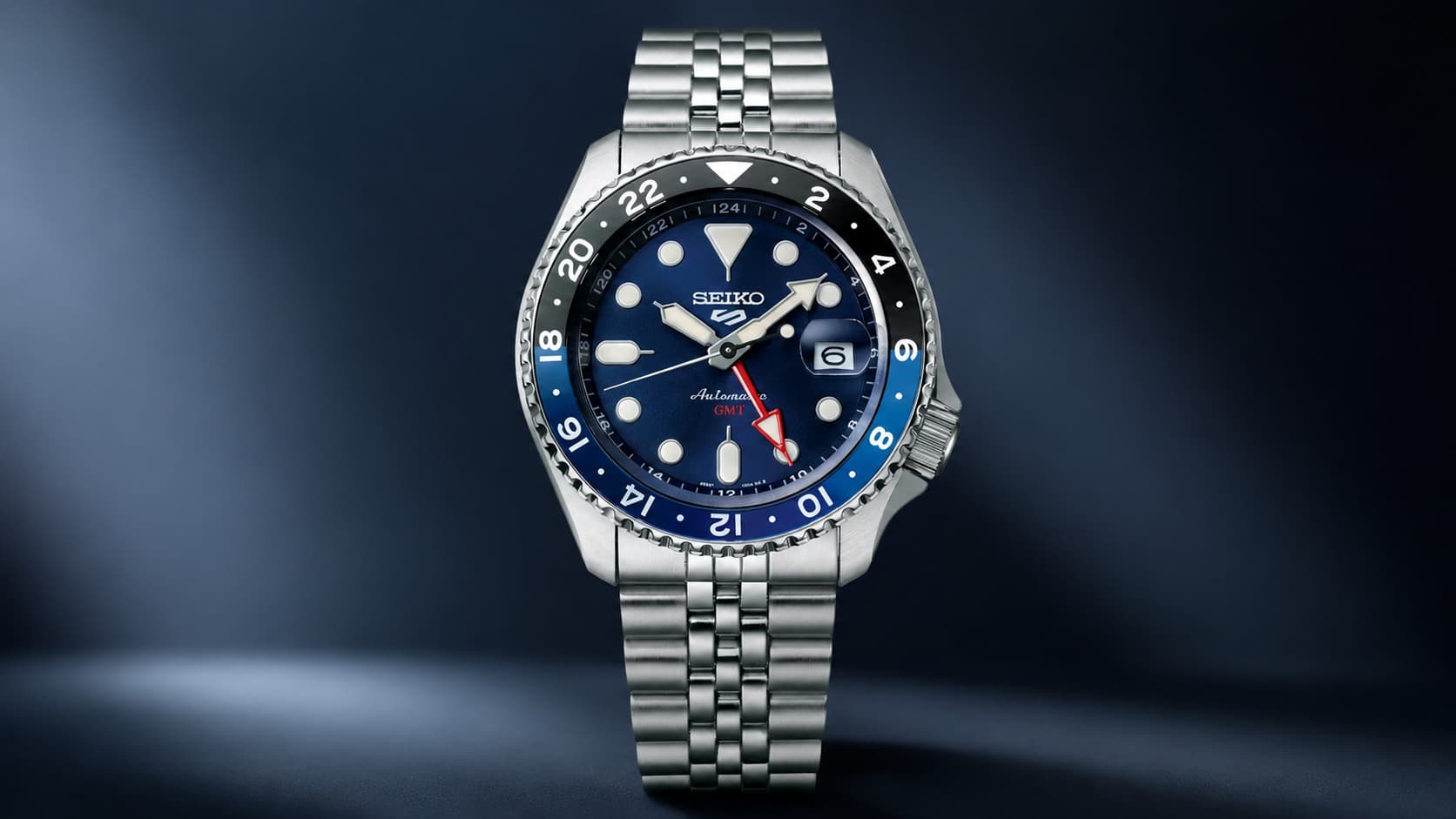
- Color coding on GMT bezels serves both aesthetic and functional purposes, helping users quickly distinguish day and night hours in reference time zones. The traditional “Pepsi” color scheme uses red for daytime hours and blue for nighttime hours, originally chosen to match Pan Am’s corporate colors. The “Batman” combination substitutes black for red, offering a more subdued appearance while maintaining the day/night distinction that prevents inappropriate phone calls to sleeping colleagues overseas.
- Movement modifications required for GMT functionality involve adding an additional gear train to drive the GMT hand at half speed. This gear connects to the main going train through a reduction wheel that cuts the rotation speed in half. The modification requires precise calibration to ensure the GMT hand completes exactly one rotation every 24 hours, maintaining accuracy that matches the base movement’s timekeeping performance.
- Crown positions control different GMT functions depending on the specific movement design inside your watch. Position zero (fully pushed in) allows normal operation and manual winding if your watch lacks automatic winding. Position one (first click out) typically adjusts either the GMT hand independently or controls date changes, varying by manufacturer and movement type. Position two (fully pulled out) stops the seconds hand and allows precise time setting for synchronization with atomic time signals.
- Case size considerations become more complex with GMT watches because the additional complications can increase thickness and diameter compared to simple three-hand watches. The 24-hour scale and potential bezel markings require careful design to maintain readability without creating an oversized appearance. Most successful GMT watches fall between 38-42mm in diameter, providing enough space for clear markings while remaining comfortable for daily wear under shirt cuffs.
These components work together seamlessly once you become familiar with your specific watch’s layout and controls. The key to effective GMT watch use lies in practicing the basic operations until they become automatic, allowing you to quickly reference multiple time zones without interrupting your focus during important meetings or travel situations. Quality GMT watches integrate these elements so naturally that the additional complexity becomes invisible during daily use.
Using GMT Watches: Step-by-Step Guide for Beginners
Learning to operate a GMT watch efficiently requires practice with the specific controls and systematic approach to setting different time zones. While the basic concept seems straightforward, mastering the various functions and avoiding common mistakes takes time and attention to your watch’s particular design.
- Setting your local time starts like any standard watch by pulling the crown to the outermost position, which stops the seconds hand and allows precise time adjustment. Turn the crown to set the correct local time using the main hour and minute hands, paying attention to AM/PM by ensuring the date changes at midnight rather than noon. Push the crown back to the normal position and allow the watch to resume running. This establishes your primary time reference that all other GMT functions will build upon.
- Configuring the GMT hand depends entirely on whether you have a True GMT or Caller GMT movement, and this difference affects every subsequent operation. For True GMT watches, the GMT hand typically stays fixed on your home time zone or UTC while you adjust the local hour hand during travel. For Caller GMT watches, you set the GMT hand to track a secondary time zone while keeping local time constant on the main hands. Check your manual to identify which type you own before attempting GMT adjustments.
- Crown position functions vary between manufacturers but generally follow similar patterns across most GMT watches. Position zero (fully pushed in) allows normal operation and manual winding if your watch lacks automatic winding capability. Position one (first click out) typically controls either GMT hand adjustment, date changes, or both depending on your specific movement design. Position two (fully pulled out) stops the seconds hand and enables main time setting for precise synchronization with reference time signals.
- Reading the 24-hour scale requires converting from standard 12-hour format to military time, which becomes automatic with practice. Hours 1-12 correspond directly to AM times, while hours 13-24 represent PM times minus 12. For example, 14:00 equals 2:00 PM, 18:00 equals 6:00 PM, and 22:00 equals 10:00 PM. The 24-hour format eliminates confusion about whether it’s morning or evening in your reference time zone, crucial for international phone calls or meeting coordination.
- Bezel operation transforms your dual-time GMT watch into a triple-time instrument through simple rotation techniques. Align the bezel triangle or zero marker with 12 o’clock as your starting position. To display a third time zone, rotate the bezel so the desired UTC offset number aligns with 12 o’clock. For Tokyo time (UTC+9), rotate until “9” points to 12 o’clock, then read Tokyo time where your GMT hand intersects the bezel scale. This mathematical relationship works for any time zone once you know its UTC offset.
- Color coding on GMT bezels provides instant visual reference for day and night hours in your reference time zone, helping prevent inappropriate communications with international contacts. Light colored sections (typically red or white) represent daytime hours from 6 AM to 6 PM, while dark sections (blue or black) indicate nighttime hours from 6 PM to 6 AM. This coding lets you immediately see whether it’s appropriate to call colleagues or clients in your GMT reference zone.
- Daylight saving time adjustments require different procedures depending on your GMT setup and which time zones observe the changes. If your GMT hand tracks a zone that changes with daylight saving time, you’ll need to adjust it forward or backward one hour twice yearly. Some users prefer setting their GMT hand to UTC to avoid these adjustments entirely, since UTC never changes and provides a stable reference for calculating any other time zone as needed.
- Common operational mistakes can damage your watch or create time-keeping errors that affect important appointments. Never adjust the date or GMT functions between 9 PM and 3 AM local time, as this can interfere with automatic date change mechanisms and potentially damage the movement. Avoid rapid back-and-forth crown movements when setting time, which can wear the winding mechanism unnecessarily. Always ensure the crown is fully pushed in and screwed down if your watch has a screw-down crown to maintain water resistance.
- Synchronization techniques help maintain accuracy when coordinating with others across time zones. Many GMT watch users synchronize their watches with atomic time signals from radio stations, phone services, or internet time servers. For business travelers, synchronizing with departure airport time before flights ensures accurate arrival scheduling. Some users maintain GMT hand on UTC specifically because it provides the most stable reference for calculating any world time zone accurately.
- Quick reference methods develop with experience and can speed up time zone calculations during busy travel or business situations. Many users memorize key UTC offsets for frequently contacted locations: London (UTC+0/+1), New York (UTC-5/-4), Tokyo (UTC+9), Sydney (UTC+10/+11). Learning these offsets by heart eliminates the need for mental calculations or reference charts when using bezel functions for third time zone displays.
- Practical applications during travel involve maintaining awareness of departure time for connections while adapting to local schedules for meetings and activities. Business travelers often keep GMT hand on home time to coordinate with office schedules, while adjusting local time for appointments. Aviation professionals typically maintain GMT hand on UTC for radio communications while tracking local time for ground operations and passenger service requirements.
Mastering GMT watch operation transforms it from a complex timepiece into an intuitive tool that provides instant time zone awareness without conscious effort. The key lies in consistent practice with your specific watch’s controls until the operations become automatic, allowing you to focus on your travel or business activities rather than struggling with time zone calculations during critical moments.
Types of GMT Watches
GMT watches fall into two main categories based on which hands can be adjusted independently, and this difference dramatically affects how you use the watch in real-world situations. The distinction isn’t just technical – it determines whether the watch works best for office workers tracking overseas colleagues or frequent travelers crossing time zones regularly.
- True GMT watches, also called Traveler or Flyer GMT, allow the local hour hand to jump independently in one-hour increments while the GMT hand, minutes, and seconds continue running normally. When you pull the crown to the first position and turn it, only the local hour hand moves forward or backward, making it perfect for adjusting to new time zones during travel. The GMT hand typically stays set to your home time or UTC, providing a constant reference point no matter where you travel.
- Caller GMT watches, sometimes called Office GMT, work in the opposite way – the GMT hand adjusts independently while the local time hands remain stationary. This design suits people who stay in one location but need to track time in another zone, like calling international clients or coordinating with overseas offices. You set your local time normally, then adjust the GMT hand to point to your desired reference time zone on the 24-hour scale.
- Movement examples help identify which type you’re considering when shopping for GMT watches. True GMT movements include the Rolex calibers 3185, 3285, and 3186, Tudor’s MT5652, Omega’s 8605 and 8615 series, and more affordable options like Miyota’s 9075 and Citizen’s 9054. Caller GMT movements include ETA’s 2893-2, Sellita’s SW330-1, Seiko’s 4R34, and various Miyota calibers like the 9015 with GMT module additions.
- Practical differences become obvious during actual use scenarios. If you’re flying from New York to London, a True GMT lets you immediately adjust the local hour hand from Eastern Time to British Summer Time without stopping the watch or affecting your home time reference. A Caller GMT would require stopping the watch and resetting everything, potentially losing precise time synchronization that’s crucial for connecting flights or business meetings.
- Price implications generally favor Caller GMT watches in entry-level segments because the simpler mechanism costs less to manufacture and service. True GMT movements require more complex gear trains and precision manufacturing, typically adding $200-1000 to a watch’s price depending on the brand and finishing level. However, this price gap has narrowed significantly with Japanese manufacturers offering True GMT movements in surprisingly affordable packages.
- Date function behavior varies between the two types and can cause confusion if you don’t know your watch’s specific design. True GMT watches usually advance the date when the local hour hand passes midnight, which makes sense for travelers who want the date to match their current location. Caller GMT watches typically advance the date based on the main time display, regardless of where the GMT hand points, since the wearer presumably stays in their home time zone.
- Service considerations differ between the movement types, with True GMT mechanisms generally requiring more specialized knowledge during repairs and adjustments. The independent hour hand jumping mechanism involves additional components that can wear differently from the main movement, potentially affecting service intervals or costs. Caller GMT movements often use simpler add-on modules that watchmakers find easier to service and repair.
- Battery life in quartz GMT watches also varies by type, though the difference is usually minimal. True GMT movements with jumping hour hands may consume slightly more power during adjustments, while Caller GMT designs often use more continuous power to operate the independent GMT gear train. In practice, both types typically provide 2-3 years of battery life with normal use.
The choice between True GMT and Caller GMT ultimately depends on your lifestyle and travel patterns. Office workers who rarely travel but coordinate internationally benefit more from Caller GMT functionality, while business travelers and aviation professionals find True GMT indispensable for maintaining accurate time across multiple zones. Many GMT enthusiasts eventually own both types for different situations, using Caller GMT for daily wear and True GMT for travel watches.
GMT Watches vs World Time Watches
While both GMT and World Time watches address multi-time zone needs, they approach the challenge through completely different philosophies that affect daily usability, complexity, and practical applications. Each type excels in specific situations but may prove frustrating in others.
- GMT watches display 2-3 time zones simultaneously using a fourth hand that points to a 24-hour scale, often supplemented by a rotating bezel for additional time zone calculations. The design prioritizes simplicity and quick readability, allowing users to glance at the watch and immediately read their local time plus one or two additional zones. The 24-hour format eliminates AM/PM confusion that plagues 12-hour displays when coordinating across multiple continents, making GMT watches particularly valuable for business calls and meeting scheduling.
- World Time watches feature rotating city rings or discs that display all 24 major time zones simultaneously around the dial perimeter. Each city represents its time zone, with a 24-hour scale or day/night indicator showing the current time in every zone at once. This comprehensive approach provides complete global coverage but creates much busier dial layouts that can overwhelm users who only need to track specific zones rather than worldwide coverage.
- Readability differences become crucial during real-world use, particularly in professional environments where quick time checks are essential. GMT watches maintain the familiar three-hand layout with an additional colored hand, making them as easy to read as traditional watches while providing multi-zone functionality. World Time watches require more concentrated attention to locate specific cities and interpret the corresponding time scales, which can prove challenging during brief glances or low-light conditions.
- Operational complexity varies significantly between the two complications, with GMT watches typically requiring only crown adjustments and bezel rotation for all functions. Most users master GMT operation within days of ownership. World Time watches often involve multiple crowns, pushers, or complex rotation procedures to select cities or adjust for daylight saving time changes. The learning curve extends much longer, and casual users may struggle with the various controls required for different functions.
- Price considerations generally favor GMT watches across all market segments, with quality automatic GMT options now available under $500 from manufacturers like Seiko and Citizen. World Time complications typically require more expensive movements and manufacturing precision, keeping prices elevated even in entry-level offerings. Swiss World Time watches often start around $2,000-3,000, while comparable GMT functionality is available for under $1,000 from the same manufacturers.
- Maintenance requirements differ substantially between the complications, with GMT watches adding minimal complexity to standard three-hand movements. Service procedures remain straightforward, and most qualified watchmakers can handle GMT repairs without specialized training. World Time watches involve more intricate mechanisms with multiple moving parts, city discs, and gear trains that require specialized knowledge and tools for proper service, potentially increasing both service costs and difficulty finding qualified repair facilities.
- Professional applications reveal clear preferences based on specific industry needs. Aviation professionals universally prefer GMT watches because they need UTC reference plus local time, not comprehensive global coverage. International business travelers similarly benefit more from GMT simplicity when tracking home time plus current location. World Time watches serve better for global logistics coordinators, international broadcasting, or diplomatic personnel who genuinely need awareness of multiple zones simultaneously.
- Aesthetic considerations impact daily wearability significantly, with GMT watches offering cleaner, more professional appearances suitable for business environments. The additional GMT hand and 24-hour scale integrate naturally without overwhelming the dial design. World Time watches often appear busy or cluttered due to city names, multiple scales, and complex layouts that may look inappropriate in formal business settings or clash with professional attire.
- Daylight saving time adjustments create ongoing maintenance issues that affect both complications differently. GMT watches typically require only simple crown adjustments twice yearly, similar to regular watches. World Time watches may need complex procedures to adjust multiple cities individually, particularly challenging when different regions change on different dates or when some zones don’t observe daylight saving time at all.
- Battery life in quartz versions generally favors GMT watches due to simpler mechanisms with fewer moving parts. World Time quartz movements often consume more power operating multiple displays, city rings, and complex gear trains, potentially reducing battery life compared to GMT alternatives. This difference matters less in mechanical versions but can affect long-term ownership costs in battery-powered models.
- Travel practicality strongly favors GMT watches for most international travelers who need reliable, quick access to 2-3 specific time zones rather than global coverage. The ability to read home time, current location time, and one additional zone covers the vast majority of travel scenarios without the complexity of interpreting multiple city rings or scales. World Time watches serve specialized users who genuinely coordinate across many zones simultaneously.
For most people considering multi-time zone watches, GMT complications provide optimal balance between functionality and usability. They deliver essential dual-time capability with minimal learning curve, professional appearance, and pricing across all budget levels. World Time watches appeal to specific users who value comprehensive global coverage over simplicity, but their complexity often exceeds practical needs for typical international travelers or business professionals.
GMT Watch Benefits: Who Uses Multi-Time Zone Watches
GMT watches serve specific groups of people whose work or lifestyle requires constant awareness of multiple time zones. While anyone can appreciate the convenience of dual-time functionality, certain professions and situations make GMT watches genuinely essential tools rather than mere conveniences.
- Business travelers represent the largest group of GMT watch users, particularly executives and consultants who frequently cross time zones for meetings, conferences, and client visits. These professionals need to maintain awareness of both their departure time zone for return flights and connecting schedules, plus their current location time for appointments and local business hours. A GMT watch eliminates the mental math required to coordinate across zones and prevents the embarrassing mistakes that come from calling clients at inappropriate hours or missing important meetings due to time confusion.
- Aviation professionals have used GMT watches since their original development in the 1950s, and this remains one of the most critical applications today. Pilots must coordinate with air traffic control using UTC (Zulu time), track local departure and arrival times, calculate flight duration across time zones, and maintain awareness of crew duty time regulations that often reference home base time zones. Flight attendants similarly need to coordinate meal service timing, connecting flight schedules, and passenger assistance across multiple zones during long international routes.
- Maritime officers and merchant marine personnel rely on GMT watches for navigation coordination, port scheduling, and international maritime radio communications that use UTC as the standard reference. Ship captains must coordinate with port authorities in different time zones, track crew watch schedules that often maintain home port time, and calculate arrival times that account for time zone changes during ocean crossings.
- International sales representatives and account managers who work with clients across multiple continents find GMT watches invaluable for maintaining appropriate communication schedules. These professionals often start their day with calls to Asian markets, continue with European clients during midday, and finish with West Coast contacts in the evening, requiring constant awareness of at least three different time zones to avoid calling people during sleeping hours or weekends.
- Military personnel, particularly those in special operations, intelligence, or logistics roles, use GMT watches to coordinate operations across global time zones. Mission planning often involves precise timing coordination between units in different locations, supply chain management across international bases, and communication schedules with command structures that may operate on different time references depending on operational requirements.
- Digital nomads and remote workers have emerged as a growing GMT watch demographic, especially those who maintain clients or employers in their home country while traveling extensively. These individuals need to balance their current location’s business hours with their professional obligations in other time zones, often working split schedules that require constant time zone awareness for video calls, deadline management, and team coordination.
- International families with members living in different countries use GMT watches to maintain connection across distances. Parents with children studying abroad, couples in long-distance relationships, or families with members working internationally rely on GMT watches to avoid calling at inappropriate hours and to maintain awareness of important events happening in different time zones.
- Watch collectors and enthusiasts often gravitate toward GMT watches because they combine practical functionality with mechanical complexity that showcases watchmaking skill. These buyers appreciate the engineering challenge of creating additional gear trains, the aesthetic appeal of colorful GMT hands and bezels, and the historical significance connecting their timepieces to aviation and exploration heritage.
- Medical professionals working in international telemedicine, research collaboration, or humanitarian missions need GMT watches to coordinate with colleagues and patients across time zones. Doctors participating in international conferences, researchers collaborating on global studies, or medical volunteers working in different countries require precise time coordination for patient care schedules and professional obligations.
- Financial traders and investment professionals who monitor global markets use GMT watches to track opening and closing times for major exchanges worldwide. Currency traders particularly benefit from GMT functionality because forex markets operate continuously across time zones, requiring constant awareness of when major market sessions begin and end in London, New York, Tokyo, and Sydney.
The common thread among all GMT watch users is the need for reliable, instant access to multiple time zone information without depending on battery-powered devices that might fail at critical moments. Unlike smartphone apps that require unlocking, loading, and screen navigation, GMT watches provide immediate visual reference that becomes invaluable during high-stress situations where every second counts for making connections, coordinating operations, or maintaining professional relationships across global distances.
Best GMT Watch Models
The GMT watch category spans from legendary luxury pieces that defined the complication to surprisingly affordable modern alternatives that bring multi-time zone functionality to everyday budgets. Each price segment offers distinct advantages, from investment-grade collectibles to practical daily-wear options.
- The Rolex GMT-Master series created the entire GMT watch category and remains the gold standard for luxury GMT timepieces. The original GMT-Master I, produced from 1954 to 1999, established the fundamental GMT design with its distinctive Pepsi bezel and reliable caliber 1565 movement. The GMT-Master II, introduced in 1983, revolutionized GMT functionality by adding the independently adjustable hour hand that makes it a True GMT watch, allowing travelers to change local time without affecting the GMT hand or stopping the movement.
- Current Rolex GMT-Master II models command premium pricing and extensive waiting lists at authorized dealers. The steel GMT-Master II “Pepsi” (reference 126710BLRO) retails for approximately $11,100 but trades for $18,000-25,000 on the secondary market due to extreme scarcity. The “Batman” variant (126710BLNR) shows similar premium pricing, while precious metal versions can exceed $40,000 retail. These watches feature the caliber 3285 movement with 70-hour power reserve and Rolex’s proprietary Cerachrom ceramic bezels.
- Tudor democratized True GMT functionality with the Black Bay GMT, offering Rolex’s sister company engineering at significantly more accessible pricing. The 41mm Black Bay GMT retails for $3,600-4,500 and features the caliber MT5652 movement with COSC certification, 70-hour power reserve, and aluminum Pepsi bezel reminiscent of vintage Rolex models. The smaller Black Bay 58 GMT provides identical functionality in a 39mm case that suits smaller wrists while maintaining the same movement and features.
- Omega Planet Ocean GMT models represent Swiss luxury alternatives to Rolex, featuring the brand’s Master Chronometer movements with anti-magnetic resistance to 15,000 gauss. The 43.5mm steel Planet Ocean GMT with caliber 8906 retails around $6,600 and offers True GMT functionality with 60-hour power reserve. Omega’s advantage lies in better availability compared to Rolex, plus innovative materials like ceramic cases and liquidmetal bezel technology in higher-end versions.
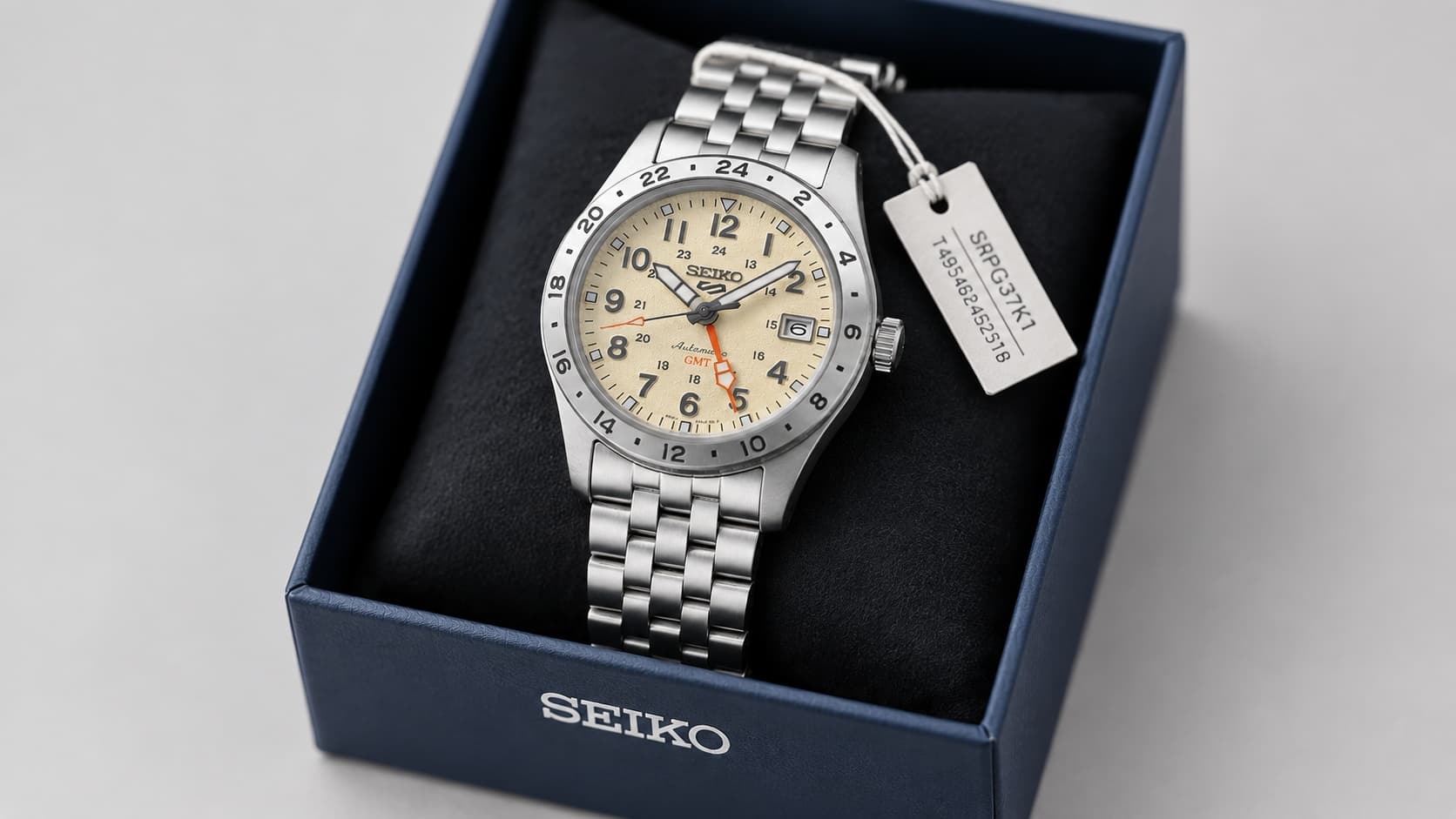
- Seiko revolutionized affordable GMT watches with the 5 Sports GMT series, bringing automatic GMT complications to the sub-$500 market for the first time. Models SSK001, SSK003, and SSK005 feature 42.5mm steel cases, caliber 4R34 Caller GMT movements, and exhibition casebacks at $470-500 retail. While these use Caller GMT rather than True GMT movements, they provide genuine automatic GMT functionality at prices previously impossible in the mechanical watch market.
- Citizen Series 8 Mechanical GMT 880 offers rare affordable True GMT functionality starting around $1,595. The 41mm steel case houses the caliber 9054 movement with 50-hour power reserve, COSC regulation, and sapphire crystal. This represents exceptional value for True GMT capability previously exclusive to luxury Swiss brands, though availability can be limited outside Japan and select international markets.
- Grand Seiko provides high-end Japanese GMT alternatives with models like the SBGM221 featuring the caliber 9S66 True GMT movement. These watches typically retail for $3,000-4,000 and offer exceptional finishing quality, superior accuracy to Swiss standards, and unique aesthetic design that blends traditional Japanese craftsmanship with modern GMT functionality. The movements often exceed COSC chronometer standards significantly.
- Affordable quartz alternatives include the Timex Q GMT at $229, featuring Swiss-made Ronda movement and vintage-inspired Pepsi bezel in a compact 38mm case. Casio offers various GMT options in their G-Shock line starting under $200, providing digital GMT displays with additional features like world time, alarms, and extreme durability for outdoor activities.
- Microbrand GMT watches have emerged as compelling middle-ground options, with companies like Baltic, Traska, and Christopher Ward offering Swiss movements in well-designed cases at $700-1,500 price points. These brands often use established movements like the Miyota 9075 True GMT or ETA 2893-2 Caller GMT while providing unique designs, quality finishing, and direct-to-consumer pricing that undercuts traditional Swiss brands significantly.
- Vintage GMT watches represent both collecting opportunities and investment potential, particularly early Rolex GMT-Master references and Tudor GMT models from the 1980s-1990s. Prices vary dramatically based on condition, rarity, and provenance, with some vintage pieces appreciating faster than modern equivalents. However, vintage GMT watches require careful inspection for movement condition, bezel authenticity, and case integrity before purchase.
- Limited editions and special collaborations create premium GMT options for collectors, such as Tudor’s collaboration with the French Navy or Omega’s Speedmaster GMT variants. These watches often feature unique colorways, special engravings, or modified movements that command premiums over standard production models while offering exclusivity for enthusiasts willing to pay extra for distinctive designs.
The GMT watch market now offers options for virtually every budget and preference, from ultra-luxury investment pieces to practical daily-wear alternatives. The key lies in matching the watch’s capabilities and price point to your actual needs rather than being swayed by brand prestige alone, since even affordable GMT watches now provide the same basic functionality that made this complication legendary among international travelers and aviation professionals.
Choosing a GMT Watch

Shopping for a GMT watch involves balancing multiple factors that affect both immediate satisfaction and long-term ownership experience. The market now spans from under $200 quartz models to $50,000+ luxury pieces, with significant functional differences that go beyond simple price comparisons.
- Budget categories reflect the dramatic expansion of GMT options across all price segments in recent years. Entry-level quartz GMT watches from $100-500 include models like the Timex Q GMT at $229 and Casio G-Shock variants starting around $150, offering reliable dual-time functionality with minimal maintenance requirements. Mid-range automatic options from $500-2,000 feature movements from Seiko, Citizen, and Miyota in well-finished cases with sapphire crystals and solid bracelet construction. Luxury segments above $2,000 provide Swiss movements, premium materials, and comprehensive warranty support from established manufacturers.
- Movement selection between automatic and quartz involves fundamental trade-offs that affect daily ownership experience. Automatic GMT movements provide mechanical satisfaction, independence from battery replacement, and the romantic appeal of traditional watchmaking, but require periodic winding if not worn daily and maintain lower accuracy standards than quartz alternatives. Quartz GMT movements offer superior accuracy, consistent performance regardless of daily wear patterns, and minimal maintenance requirements, but lack the mechanical character that appeals to watch enthusiasts and require battery replacement every 2-3 years.
- True GMT versus Caller GMT functionality determines how effectively the watch serves your actual travel and coordination needs. True GMT movements cost more but provide invaluable convenience for frequent international travelers who need to adjust local time quickly without affecting reference time or stopping the watch. Caller GMT movements suit office workers and occasional travelers who primarily need to monitor one foreign time zone consistently while maintaining stable local time reference, offering similar visual functionality at lower prices.
- Case sizing considerations extend beyond simple diameter measurements to include lug-to-lug length, case thickness, and overall proportions that affect wearability. Most GMT watches range from 38-42mm in diameter, with the sweet spot around 40mm providing adequate space for 24-hour scales without overwhelming smaller wrists. Lug-to-lug measurements under 50mm generally work for most wrist sizes, while case thickness under 13mm ensures comfortable wear under dress shirt cuffs for business environments.
- Brand reliability correlates directly with service network availability, warranty coverage, and long-term parts support that affects ownership costs over decades. Tier-one brands like Rolex, Omega, and Tudor provide global authorized service networks with comprehensive warranty support and guaranteed parts availability for extended periods. Regional manufacturers like Seiko, Citizen, and Tissot offer widespread but geographically variable service coverage with generally good parts support. Microbrand considerations include limited service networks balanced by direct customer relationships and often superior customer service responsiveness.
- Water resistance requirements depend on your intended use patterns and lifestyle activities. GMT watches with 100-200 meters water resistance handle daily activities including swimming and snorkeling safely, while 30-50 meter ratings suit desk work and occasional rain exposure but require caution around water activities. Aviation and maritime professionals often prefer 200+ meter ratings for operational reliability, even though their work rarely involves water exposure, because higher ratings typically indicate better overall case construction and gasket quality.
- Bezel construction affects both durability and long-term appearance retention during regular use. Aluminum bezels offer lightweight construction and vintage aesthetics but scratch easily and fade over time with exposure to sunlight and handling. Ceramic bezels provide scratch resistance and color stability but can chip or crack from impacts and cost significantly more to replace. Steel bezels offer good durability and repairability but may lack the color coding that makes GMT bezels functionally useful for day/night time zone reference.
- Crystal material impacts readability, scratch resistance, and replacement costs during ownership. Mineral crystal provides adequate scratch resistance for most users at reasonable replacement costs but may reflect light poorly in certain conditions. Sapphire crystal offers superior scratch resistance and optical clarity but costs significantly more to replace if damaged and can shatter from impacts that would only chip mineral crystal. Anti-reflective coatings improve readability but can wear off over time and may not be replaceable during routine service.
- Bracelet versus strap considerations affect comfort, adjustability, and long-term durability for daily wear. Quality steel bracelets provide professional appearance and longevity but require proper sizing and may pull arm hair or feel cold initially. Leather straps offer immediate comfort and easy size adjustment but require periodic replacement due to wear and moisture damage. NATO or fabric straps provide ultimate comfort and easy changes but may appear too casual for business environments.
- Warranty coverage and service requirements vary significantly between manufacturers and affect long-term ownership costs. Swiss brands typically offer 2-3 year warranties with global service networks but charge premium prices for out-of-warranty repairs. Japanese manufacturers often provide longer warranty periods with competitive service pricing but may have limited service locations in some regions. Microbrand warranties vary widely but often include direct manufacturer support that larger brands cannot match.
- Resale value considerations matter for expensive GMT watches that may represent significant investments. Rolex GMT models typically retain or appreciate in value due to brand prestige and limited availability, while most other brands depreciate significantly from retail pricing. Limited editions and discontinued models may hold value better than standard production pieces, but predicting collectibility remains challenging and shouldn’t drive purchasing decisions for daily-wear watches.
The key to successful GMT watch buying lies in honestly assessing your actual needs rather than aspirational desires, then finding the best value within your budget that meets those specific requirements. A $500 Seiko GMT that you wear daily provides more value than a $15,000 Rolex that stays in a safe, regardless of the price difference or brand prestige involved.
GMT Watch Care: Maintenance and Service
GMT watches require specific maintenance approaches that account for their additional complications while preserving the specialized functions that make them valuable tools. Proper care extends beyond basic watch maintenance to include GMT-specific considerations that protect the unique mechanisms and ensure reliable multi-time zone performance.
- Daily care routines for GMT watches follow standard watch maintenance principles but require extra attention to crown positions and bezel operation. Always ensure the crown is fully pushed in and properly engaged after making any adjustments, particularly important for GMT watches with screw-down crowns where improper seating can compromise water resistance. Avoid leaving the crown in adjustment positions accidentally, which can happen more easily with GMT watches due to their multiple crown functions and longer adjustment procedures compared to simple three-hand watches.
- Water exposure precautions become critical because GMT watch crowns see more frequent use than standard watches due to time zone adjustments during travel. Even watches rated for significant water resistance can develop problems if the crown is operated while wet or in humid environments like bathrooms after hot showers. Always rinse GMT watches with fresh water after saltwater exposure, paying particular attention to the crown area and rotating bezel, which can accumulate salt deposits that interfere with smooth operation over time.
- Bezel maintenance requires regular cleaning and lubrication to maintain smooth rotation and precise click positioning essential for accurate time zone calculations. Aluminum bezels need gentle cleaning with soft brushes to avoid scratching, while ceramic bezels can handle more aggressive cleaning but may chip if dropped or struck against hard surfaces. Rotate the bezel through its full range weekly to distribute lubricants and prevent the mechanism from seizing, particularly important for watches stored in safes or watch boxes for extended periods.
- Movement servicing intervals depend on the GMT complication type and base movement quality, with True GMT movements generally requiring more frequent attention due to their additional jumping mechanisms. Swiss GMT movements typically need service every 5-7 years, while Japanese movements may require attention every 3-5 years depending on usage patterns and environmental exposure. True GMT movements with jumping hour hands may develop timing issues earlier than Caller GMT movements due to the additional stress on gear trains during frequent adjustments.
- Crown operation care prevents damage to the GMT adjustment mechanisms that can be expensive to repair and may require specialized parts. Never force crown movements if resistance is encountered, particularly when adjusting GMT hands or date functions that may interact with each other in complex ways. Learn your specific watch’s crown position sequence and always move through positions deliberately rather than rushing adjustments, especially important during travel when fatigue can lead to operational mistakes.
- Storage considerations for GMT watches include protecting the bezel mechanism and maintaining power reserve in automatic movements. Store automatic GMT watches in watch winders if not worn regularly, but ensure the winder rotates in the correct direction and appropriate cycles to avoid overwinding or excessive wear. Keep GMT watches away from magnetic sources including speakers, smartphones, and magnetic clasps that can affect timekeeping accuracy more severely in complicated movements than simple three-hand watches.
- Service preparation involves documenting your GMT watch’s current settings and any operational quirks before sending for repair or maintenance. Record which position controls which functions, note any bezel play or crown resistance, and photograph the current GMT hand position relative to the 24-hour scale. This information helps watchmakers understand your specific watch’s condition and ensures proper reassembly after service, particularly important for vintage GMT watches with non-standard configurations.
- Temperature considerations affect GMT watches differently than simple timepieces due to their additional complications and varied materials. Extreme temperature changes can affect the different expansion rates of GMT hands, bezels, and cases, potentially causing binding or poor fit. Avoid exposing GMT watches to rapid temperature changes like moving from air conditioning to hot outdoor environments, and never attempt crown adjustments when the watch is very hot or cold until it reaches room temperature.
- Magnetism protection becomes more critical in GMT watches because the additional gear trains and complications provide more components that can become magnetized and affect timekeeping. Keep GMT watches away from magnetic sources and consider demagnetization if the watch begins running fast or erratically. Modern anti-magnetic movements offer better protection, but older GMT watches may be particularly susceptible to magnetic interference that affects the complex interactions between multiple hands and gear trains.
- Travel precautions for GMT watches include protecting the crown and bezel during baggage handling while ensuring easy access for time zone adjustments. Consider travel cases that protect the bezel and crown while allowing operation, and carry documentation of your watch’s value for customs or insurance purposes. Pack GMT watches in carry-on luggage when possible to avoid baggage handling damage and temperature extremes in cargo holds that can affect lubricants and seals.
- Cleaning procedures for GMT watches require attention to the multiple scales, colored hands, and bezel markings that accumulate dirt and oils from handling. Use soft brushes and appropriate cleaning solutions for your watch’s specific materials, paying particular attention to the junction between the bezel and case where debris can accumulate and interfere with smooth rotation. Clean the crown area carefully to remove any buildup that might prevent proper seating or smooth operation through the various positions.
- Emergency troubleshooting skills help address common GMT watch issues during travel when professional service isn’t available. Learn to identify when the GMT hand has been accidentally moved from its intended position and how to reset it properly. Know the symptoms of crown damage or bezel problems that might require immediate attention versus issues that can wait until returning home for proper service from qualified watchmakers.
Proper GMT watch care ensures these sophisticated timepieces remain reliable tools for international coordination rather than becoming expensive complications that fail during critical travel or business situations. The additional complexity of GMT functions rewards careful maintenance with decades of dependable service and accurate multi-time zone performance.
Frequently Asked Questions About GMT Watches
GMT watch ownership generates numerous questions about functionality, limitations, and practical use that aren’t always obvious from product descriptions or marketing materials. These common concerns reflect real-world usage scenarios that potential buyers and new owners encounter regularly.
- Can you track more than three time zones with a GMT watch? While GMT watches primarily display 2-3 time zones directly, you can calculate additional zones through mental math using the displayed references. For instance, if your GMT hand shows London time and you know that Singapore is 8 hours ahead of London, you can quickly calculate Singapore time. However, this requires memorizing time zone relationships and becomes less practical for multiple calculations. For users who genuinely need more than three time zones regularly, a world time complication or smartphone app proves more effective than trying to extend GMT functionality beyond its design limits.
- Do GMT watches keep better time than regular watches? GMT complications neither improve nor significantly harm timekeeping accuracy compared to the base movement without GMT functionality. The additional gear trains add minimal friction and don’t affect the escapement or regulating components that control accuracy. Quartz GMT movements maintain the same excellent accuracy as standard quartz watches, while mechanical GMT movements perform identically to their three-hand counterparts. Some users mistakenly believe GMT watches run differently because they’re watching the GMT hand, which moves at half speed and may appear to gain or lose time relative to the main hour hand.
- Can beginners learn to use GMT watches easily? Most people master basic GMT operation within a few days of regular use, though the learning curve depends on the specific watch type and individual comfort with mechanical devices. True GMT watches generally prove easier for beginners because the main time display works exactly like a regular watch, with GMT functions acting as simple additions. Caller GMT watches may confuse beginners initially because adjusting the GMT hand changes the apparent time zone reference. The key lies in practicing with your specific watch during non-critical periods until the operations become automatic.
- Are GMT watches more expensive to service than regular watches? GMT watches typically cost 10-20% more to service than equivalent three-hand watches due to the additional complications and specialized knowledge required. However, this increase is usually modest – perhaps $50-100 additional cost during routine service intervals. True GMT movements may cost slightly more to service than Caller GMT due to their more complex jumping mechanisms, but the difference rarely exceeds $25-50. The larger cost factor comes from brand positioning, with luxury GMT watches commanding premium service rates regardless of the complication’s actual complexity.
- Do GMT watches have shorter battery life in quartz versions? Quartz GMT watches typically provide 2-3 years of battery life, similar to standard quartz watches. The additional GMT hand motor draws minimal extra power because it moves very slowly – just once per 24 hours compared to the minute hand’s 1,440 movements daily. Some GMT watches may consume slightly more power if they include additional features like multiple alarms or digital displays, but the GMT complication itself has negligible impact on battery longevity.
- Can you damage a GMT watch by adjusting it incorrectly? Improper GMT adjustments can potentially damage the movement, particularly when changing functions during the date change period between 9 PM and 3 AM. This timing coincides with automatic date mechanisms that engage with gear trains, and simultaneous adjustments can cause component damage requiring expensive repairs. Additionally, forcing crown movements or rapidly rotating between positions can damage the keyless works that control GMT functions. Always move deliberately through crown positions and avoid adjustments during late evening hours.
- Why do some GMT watches cost so much more than others? Price differences reflect movement complexity, manufacturing quality, brand positioning, and materials rather than basic GMT functionality. A $500 Seiko GMT and $15,000 Rolex GMT both track multiple time zones effectively, but differ dramatically in finishing quality, materials, manufacturing tolerances, warranty support, and resale value. True GMT movements cost more to produce than Caller GMT, but this accounts for only a small portion of luxury watch pricing. Brand heritage, marketing, and exclusivity drive most of the price premium in expensive GMT watches.
- Do all GMT watches have rotating bezels? Many GMT watches include rotating bezels for third time zone calculations, but they’re not universal features. Some GMT watches rely solely on the GMT hand and 24-hour scale for dual-time display, while others incorporate fixed bezels with time zone markings. Rotating bezels add functionality but also complexity and potential failure points. For users who only need dual-time capability, GMT watches without rotating bezels often provide simpler operation and cleaner aesthetics while reducing potential maintenance issues.
- Can you wear GMT watches for formal occasions? GMT watches generally work well for business and semi-formal occasions, particularly models with conservative designs and subtle GMT markings. The additional GMT hand and 24-hour scale can make some models appear busier than traditional dress watches, but many GMT watches maintain appropriate elegance for professional environments. Black tie events may call for simpler timepieces, though this depends more on case size, dial layout, and overall design than the presence of GMT functionality specifically.
- How accurate should a GMT watch be? Mechanical GMT watches should maintain accuracy within the same standards as their base movements – typically -4 to +6 seconds per day for COSC certified chronometers, or -20 to +40 seconds per day for standard mechanical movements. Quartz GMT watches should maintain accuracy within 15-30 seconds per month. If your GMT watch exceeds these tolerances, it likely needs service or regulation. The GMT complication itself doesn’t affect accuracy, so performance issues usually relate to the base movement rather than GMT-specific problems.
- Do GMT watches work in all time zones? GMT watches work effectively anywhere in the world, but some regions use 30-minute or 45-minute time zone offsets that can complicate bezel calculations. India (UTC+5:30), Iran (UTC+3:30), and several other countries use half-hour offsets that require mental math for precise bezel positioning. Some premium GMT watches include 48-click bezels that enable half-hour precision, while others require approximation. Additionally, regions that don’t observe daylight saving time may gradually drift from your GMT reference if you don’t adjust for seasonal changes.
- Can you replace GMT hands or bezels if damaged? Replacement parts availability depends heavily on the watch manufacturer and age of your specific model. Current production GMT watches from major manufacturers typically have parts available through authorized service centers, though costs can be substantial – GMT hand replacement might cost $100-300, while ceramic bezel inserts can exceed $500. Vintage or discontinued GMT watches may have limited parts availability, potentially making damage repairs difficult or impossible. This consideration affects purchasing decisions for valuable GMT watches used in demanding environments.
These questions reflect the real-world learning curve that accompanies GMT watch ownership, but most users find the initial complexity quickly gives way to intuitive operation that becomes second nature during regular use.
Conclusion
GMT watches have evolved from specialized aviation tools into essential instruments for anyone navigating our globally connected world, offering mechanical reliability and intuitive functionality that digital alternatives simply cannot match. The remarkable democratization of GMT complications through Japanese innovation has fundamentally transformed the market landscape, making True GMT movements accessible at price points that were unimaginable just a few years ago. Whether you choose a $500 Seiko 5 Sports GMT or invest in a $15,000 Rolex GMT-Master II, the core functionality remains the same – reliable, instant access to multiple time zones without depending on battery-powered devices that might fail at critical moments.
The investment in learning proper GMT operation pays significant dividends in professional coordination, travel efficiency, and maintaining global connections across time zones. From business executives coordinating international conference calls to pilots navigating UTC requirements, GMT watches serve as indispensable tools that combine practical necessity with horological craftsmanship. The choice between True GMT and Caller GMT movements, automatic versus quartz operation, and luxury versus affordable options ultimately depends on your specific lifestyle needs rather than arbitrary notions of prestige or complexity.
For modern consumers living and working across multiple time zones, GMT watches represent the optimal balance between traditional watchmaking excellence and contemporary practical utility. They deliver sophisticated multi-time zone coordination wrapped in mechanical reliability that has proven itself over seven decades of continuous development and refinement. Whether coordinating with international teams, planning global travel, or simply staying connected with family members living abroad, a properly chosen GMT watch becomes an invaluable extension of your professional and personal capabilities in our interconnected world.