Hublot has revolutionized luxury watchmaking since 1980 through its groundbreaking “Art of Fusion” philosophy. The Swiss brand broke conventions by first combining gold with rubber straps, and has since developed remarkable innovations like scratch-resistant Magic Gold and vibrant ceramic cases. Unlike traditional watchmakers bound by heritage, Hublot embraces bold design and technical innovation, attracting celebrities, athletes, and watch enthusiasts seeking distinctive timepieces. From its fascinating history to iconic collections and impressive technical achievements, Hublot continues to forge its path as one of the most dynamic forces in contemporary horology.
History of Hublot Watches
The story of Hublot represents one of watchmaking’s most dynamic trajectories, evolving from a bold startup to a powerhouse of luxury innovation in just a few decades. Founded on the principle of combining unexpected elements, Hublot has maintained this creative approach while expanding its technical capabilities and global influence, particularly after integrating with the LVMH group. The brand’s history demonstrates how visionary leadership and unwavering commitment to distinctive design philosophy can transform an industry outsider into a defining voice in luxury horology.
- Carlo Crocco, an Italian watchmaker born in 1944, left his family’s Binda Group (makers of Breil watches) in 1976 to pursue his own horological vision, investing $4 million to establish his workshop in Switzerland, the epicenter of fine watchmaking.
- Crocco spent three years developing a unique natural rubber strap—an unprecedented material in luxury watches—that would become Hublot’s signature innovation when he unveiled the first watch at the 1980 Basel Watch Fair, naming it “Hublot” after the French word for “porthole.”
- Despite initial skepticism from the conservative watch industry, Hublot gained prestigious admirers throughout the 1980s and 1990s, including King Juan Carlos of Spain, Prince Albert of Monaco, and celebrities like Giorgio Armani and Elton John, establishing its credibility in luxury circles.
- The turning point came in 2004 when Jean-Claude Biver, already renowned for revitalizing Blancpain and leading Omega, took over as CEO, formalizing the “Art of Fusion” philosophy and dramatically expanding Hublot’s design language and technical capabilities.
- Biver’s introduction of the game-changing Big Bang chronograph at Baselworld in 2005 catapulted Hublot into the spotlight, winning multiple international awards and tripling orders within a year, driving sales from 24 million Swiss francs in 2004 to nearly 100 million by 2006.
- LVMH acquired Hublot in April 2008, providing resources that enabled the brand to develop its own manufacture in Nyon, Switzerland, featuring specialized facilities including an in-house foundry for creating proprietary materials like Magic Gold.
- Under current CEO Ricardo Guadalupe (who took over when Biver became Chairman in 2012), Hublot has continued its ascent through strategic partnerships with Ferrari, FIFA, and various cultural and sporting figures, cementing its position as a contemporary force in luxury watchmaking.
Hublot’s journey from industry outsider to influential innovator demonstrates the power of maintaining a clear vision while embracing change. By consistently challenging conventions and refusing to be constrained by tradition, Carlo Crocco’s initial concept of fusion has evolved into a comprehensive philosophy that touches every aspect of the brand’s identity. Today, Hublot continues to blend past and future, integrating centuries-old watchmaking techniques with cutting-edge materials and contemporary cultural references, ensuring its distinctive place in the watchmaking landscape.
Understanding Hublot’s Art of Fusion Philosophy
At the heart of Hublot’s identity lies the revolutionary “Art of Fusion” philosophy, a concept that transcends mere marketing to inform every aspect of the brand’s approach to watchmaking. This principle drives Hublot’s continuous pursuit of innovation, guiding everything from material development and movement design to aesthetic choices and brand partnerships. By deliberately combining elements that traditionally would never meet—whether materials, techniques, or cultural influences—Hublot creates timepieces that challenge expectations and expand the possibilities of luxury watchmaking.
- The “Art of Fusion” concept was pioneered by founder Carlo Crocco when he daringly combined an 18K gold case with a natural rubber strap in 1980—the first luxury watch brand to use rubber, creating a comfortable, durable, and distinctively modern aesthetic.
- Hublot’s research and development department, nicknamed the “F1 of watchmaking,” comprises 30 specialists in watchmaking, engineering, materials science, and chemistry who work collaboratively to develop revolutionary new materials and techniques.
- Magic Gold, developed in partnership with the Swiss Federal Institute of Technology (EPFL) and introduced in 2011, is the world’s first and only scratch-resistant 18K gold alloy, with a hardness of nearly 1,000 Vickers compared to standard 18K gold’s 400 Vickers.
- The brand has mastered colored ceramics, becoming the first to produce vibrant hues like bright red (“Red Magic”) and royal blue ceramics through proprietary high-temperature and high-pressure manufacturing processes that competitors haven’t been able to replicate.
- Hublot has pioneered the use of sapphire crystal not just for watch faces but for entire cases, developing specialized techniques to produce large, perfectly homogeneous sapphire components in various colors including black, blue, yellow, and even pink.
- Proprietary alloys developed by Hublot include King Gold (a warmer shade of red gold with a higher copper percentage), Texalium (carbon fiber coated with aluminum), and Hublonium (a lightweight yet durable magnesium-aluminum alloy).
- Hublot’s in-house movements, like the Unico automatic chronograph and the Meca-10 with its 10-day power reserve, exemplify the fusion philosophy by combining traditional watchmaking principles with innovative architecture and contemporary aesthetics.
The Art of Fusion represents more than Hublot’s technical achievements; it embodies a mindset that actively seeks connections between seemingly disparate worlds. This approach has allowed Hublot to create a distinct visual language and technical identity in an industry often bound by convention. By embracing this philosophy across all aspects of its business—from the laboratory to the design studio to marketing partnerships—Hublot continues to push boundaries and challenge perceptions of what luxury watchmaking can be, cementing its reputation as one of the most forward-thinking brands in contemporary horology.
Top Hublot Watch Collections
Hublot’s collections showcase different expressions of the brand’s innovative spirit, each with a unique character while maintaining core design elements. From the revolutionary Big Bang to the elegant Classic Fusion and architectural Spirit of Big Bang, these collections offer distinct interpretations of luxury sports watches while highlighting Hublot’s technical prowess and material innovation. Each line serves a specific purpose within the brand’s portfolio, appealing to different tastes while reinforcing Hublot’s position at the forefront of contemporary watchmaking.
Hublot Big Bang Watches
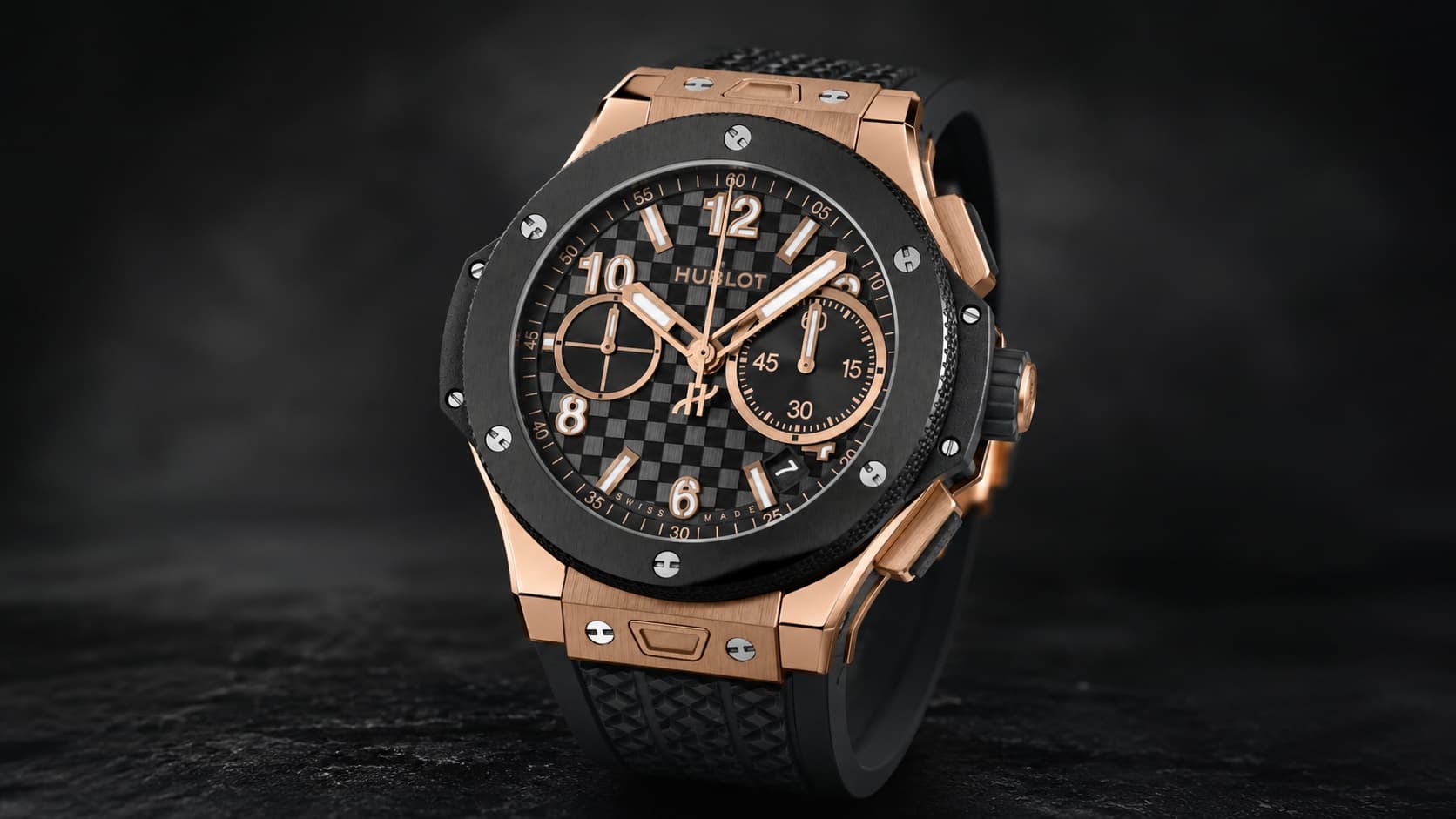
The Big Bang collection, introduced in 2005, revolutionized Hublot’s identity and established the bold aesthetic that defines the brand today. Conceived under Jean-Claude Biver’s leadership, this collection catapulted Hublot into the spotlight, winning multiple awards and dramatically increasing sales. With its distinctive sandwich construction, visible screws, and fusion of materials, the Big Bang embodies Hublot’s philosophy in its purest form.
- The original Big Bang design features a 44mm case with a distinctive porthole shape secured by H-shaped titanium screws, creating a bold yet recognizable silhouette that has become Hublot’s signature look.
- Big Bang watches typically showcase Hublot’s material innovations, incorporating elements like ceramic bezels, carbon fiber components, sapphire crystal cases, and proprietary alloys like Magic Gold and King Gold.
- Most Big Bang models feature the Unico movement, Hublot’s in-house automatic chronograph caliber with a column wheel visible from the dial side, 72-hour power reserve, and a unique architecture designed for optimal reliability and serviceability.
- The collection includes numerous variations beyond the standard chronograph, including GMT models, tourbillons, perpetual calendars, and the innovative Big Bang Meca-10 with its architectural 10-day power reserve movement.
- Limited editions and collaborations within the Big Bang line include partnerships with Ferrari, FIFA World Cup editions, artist collaborations with figures like Takashi Murakami, and special models created with celebrities and athletes.
- The Big Bang Integral introduced in recent years features integrated bracelets rather than the traditional strap, expanding the collection’s versatility while maintaining its bold aesthetic.
- Since its introduction, the Big Bang has won numerous awards, including the “2005 Design Prize” at the Geneva Watchmaking Grand Prix, the “Sports Watch Prize” at Japan‘s “Watch of the Year” ceremony, and the Middle Eastern Prize for “Best Oversized Watch.”
Two decades after its introduction, the Big Bang remains the definitive expression of Hublot’s identity, consistently evolving while maintaining its distinctive character. The collection attracts those who appreciate bold, technical timepieces that make strong visual statements while delivering genuine horological substance.
Hublot Classic Fusion
The Classic Fusion collection represents Hublot’s more refined side, offering the brand’s distinctive design language in a more versatile package. Introduced in 2008, it bridges the gap between Hublot’s avant-garde approach and traditional luxury watchmaking, retaining key brand signatures like the porthole case and visible screws in a slimmer, more elegant profile. For many enthusiasts, the Classic Fusion serves as an ideal entry point to the brand.
- Classic Fusion watches feature a sleeker profile than the Big Bang, with thinner cases (typically 8-11mm compared to the Big Bang’s 13-16mm) and more subtle styling, while maintaining the iconic porthole design and H-screws on the bezel.
- The collection offers a wide range of sizes from 33mm to 45mm, catering to various wrist sizes and preferences, with the smaller models often featuring diamond-set bezels and dials targeted at women.
- While some models feature in-house movements, many Classic Fusion watches contain modified Sellita or ETA-based calibers, allowing for a more accessible price point while maintaining Hublot’s quality standards.
- Materials include titanium, ceramic, King Gold, and various combinations thereof, with the collection showcasing Hublot’s material expertise in a more restrained context than the Big Bang.
- Classic Fusion models are available with various complications including chronographs (the Aerofusion line), power reserve indicators, moon phases, and tourbillons, offering technical sophistication within the more classic aesthetic.
- The collection includes the popular “All Black” variants that feature monochromatic black treatments across all components, showcasing Hublot’s “invisible visibility” concept that prioritizes texture and material contrast over color.
- Limited edition collaborations within the Classic Fusion line include partnerships with Berluti (featuring patinated leather dials), cigar maker Arturo Fuente, and architect Richard Orlinski, demonstrating the collection’s versatility as a canvas for creative expression.
The enduring appeal of the Classic Fusion lies in its versatility and refinement, offering a more subdued interpretation of Hublot’s design ethos without compromising the brand’s innovative spirit. These watches appeal to those who appreciate Hublot’s approach to watchmaking but require something more adaptable for everyday wear and formal occasions.
Hublot Spirit of Big Bang
The Spirit of Big Bang collection represents Hublot’s successful translation of its distinctive design language into a new geometric format, replacing the traditional round case with an elegant tonneau (barrel) shape. Launched in 2014, this collection demonstrates the versatility of Hublot’s design codes while offering collectors a fresh alternative that maintains clear connections to the brand’s identity.
- The Spirit of Big Bang features a tonneau-shaped (barrel) case that provides a distinctive alternative to Hublot’s round watches while maintaining brand signatures like the H-shaped screws, fusion of materials, and technical aesthetic.
- Available in various sizes from 39mm to 45mm, the collection caters to different preferences while offering substantial wrist presence due to its elongated shape and architectural construction.
- Many models in the collection are powered by the HUB4700 caliber, Hublot’s version of the El Primero chronograph movement (developed in collaboration with Zenith, another LVMH brand), featuring a high-frequency 5Hz (36,000 vph) escapement.
- Like other Hublot collections, the Spirit of Big Bang showcases material innovation with cases available in titanium, King Gold, carbon fiber, sapphire, ceramic, and Magic Gold, often with contrasting elements and textured finishes.
- The case construction follows Hublot’s “sandwich” concept, with components layered together to create depth and allow for complex material combinations that would be difficult to achieve with traditional case designs.
- Special editions include the Spirit of Big Bang Tourbillon Carbon Blue, which combines a carbon fiber case with blue accents, and the Spirit of Big Bang Meca-10, featuring Hublot’s innovative 10-day power reserve movement reconfigured to fit the tonneau case.
- The collection has expanded to include skeleton dials, tourbillons, and various color combinations, offering significant technical and aesthetic variety within the distinctive case shape.
Since its introduction, the Spirit of Big Bang has evolved from an alternative case shape into a fully-developed collection with its own identity. The tonneau format provides a compelling option for those who find round watches too conventional but still appreciate Hublot’s technical approach and material innovation.
Hublot MP Collection
The MP (Masterpiece) Collection stands at the pinnacle of Hublot’s technical achievement, representing the brand’s most ambitious timepieces that push the boundaries of conventional watchmaking. First introduced with the MP-01 in 2011, this ultra-exclusive series functions as Hublot’s experimental laboratory, where revolutionary concepts, unprecedented power reserves, and unconventional architectures take center stage.
- The flagship MP-05 LaFerrari, created in collaboration with Ferrari, features an unprecedented vertical tourbillon and 11 series-coupled barrels providing a record-breaking 50-day power reserve, housed in a case designed to resemble the supercar’s engine bay.
- The MP-09 Tourbillon Bi-Axis showcases a multi-dimensional case specifically designed to accommodate the complex movement featuring a tourbillon that rotates on two axes simultaneously at different speeds (30 seconds and 5 minutes).
- MP-07 models feature linear power reserve displays and unique architectural movements that emphasize three-dimensional design, showcasing Hublot’s ability to think beyond traditional watch layouts.
- The MP collection often introduces new materials and manufacturing techniques before they appear in mainstream Hublot collections, serving as a testing ground for innovation.
- MP watches are produced in extremely limited quantities, typically between 20 and 100 pieces per variation, making them highly collectible and sought-after by serious Hublot enthusiasts.
- These pieces typically feature manual-winding movements, as the complex architecture and specialized complications often make automatic winding systems impractical or impossible to integrate.
- The MP-11 features a 14-day power reserve with seven horizontally-aligned barrels visible through the dial, demonstrating Hublot’s focus on both technical innovation and visual spectacle.
The MP Collection represents Hublot at its most experimental and ambitious, creating watches that expand the boundaries of what’s technically possible in modern horology. While their limited production and high price points make them inaccessible to most collectors, these extraordinary timepieces serve a crucial role in establishing Hublot’s credibility among serious watch enthusiasts.
Hublot Square Bang
The Square Bang collection represents Hublot’s most recent evolution, introduced in 2022 as a fresh geometric interpretation of the iconic Big Bang design language. By adapting the brand’s signature aesthetic to a square case format with rounded corners, Hublot has created watches that offer a distinctive architectural presence while maintaining clear visual connections to their circular counterparts.
- Square Bang watches feature 42mm square cases with rounded corners that echo the porthole aesthetic of round Hublot watches while creating a distinctive and more architecturally-inspired presence on the wrist.
- The collection maintains Hublot’s signature elements including the H-shaped screws, sandwich case construction, and integrated straps, ensuring a consistent brand identity despite the new case shape.
- Many Square Bang models are powered by the Unico movement, Hublot’s in-house chronograph caliber, which has been reconfigured to fit the square case while maintaining its technical characteristics and 72-hour power reserve.
- Available materials include titanium, ceramic, King Gold, and Magic Gold, with various combinations and finishes that showcase Hublot’s material expertise in a new geometric context.
- The Square Bang collection includes skeletonized dials that reveal the movement architecture, emphasizing the technical character of the watches while creating visual depth.
- Special editions include models with diamond-set cases and dials, as well as versions featuring Hublot’s colored ceramic in blue, white, and black, offering significant variety within the collection.
- The square format provides a distinctive alternative for collectors who appreciate Hublot’s technical approach and material innovations but prefer a more architectural case shape over the traditional round Big Bang design.
As the newest addition to Hublot’s lineup, the Square Bang collection represents the brand’s future direction while honoring its established design principles. The square format appeals particularly to those who appreciate architectural design and more angular aesthetics but still want the technical innovation and material expertise that Hublot is known for.
Innovative Materials Used in Hublot Watches

Hublot’s reputation for material innovation stands as one of its defining characteristics, with the brand consistently developing new compounds and manufacturing techniques that push the boundaries of what’s possible in watchmaking. This dedication to creating and perfecting new materials goes far beyond aesthetics—it addresses practical concerns like durability, comfort, and performance while creating distinctive visual signatures that set Hublot apart in the luxury watch market. The brand’s substantial investment in research and development, including its own metallurgy laboratory and foundry, demonstrates a commitment to material science that few watchmakers can match.
- Magic Gold, Hublot’s revolutionary scratch-resistant 18K gold alloy, is created through a patented process that fuses 24K gold with boron carbide (ceramic) under extreme pressure and temperature, resulting in a material with a hardness of nearly 1,000 Vickers—making it the world’s hardest gold and virtually impossible to scratch with normal use.
- Hublot’s ceramic expertise extends beyond typical watch industry applications, with the brand developing proprietary techniques to create vibrant colored ceramics including red, blue, yellow, and green—colors that were previously impossible to achieve in high-tech ceramic due to the pigments burning off during the high-temperature sintering process.
- In 2016, Hublot pioneered the use of transparent sapphire crystal for entire watch cases, developing specialized equipment and techniques to machine this extremely hard material (9 on the Mohs scale) into complex shapes while maintaining perfect clarity and structural integrity.
- King Gold, Hublot’s proprietary red gold alloy, contains a higher percentage of copper along with platinum to create a warmer, more intense red hue than traditional 5N red gold while maintaining its long-term color stability (unlike some red gold alloys that can fade over time).
- Texalium, a material exclusive to Hublot in watchmaking, consists of carbon fiber coated with a thin layer of aluminum that can be colored, allowing for the lightweight and strength of carbon fiber with metallic finish options not possible with standard carbon composites.
- Hublot has developed multiple carbon fiber variations including Carbon Fiber, Carbon Fiber with aluminum particles, 3D Carbon (a polymer matrix composite), and Carbon PEEK (Polyether Ether Ketone)—each offering different structural and aesthetic properties for specific applications.
- The brand’s rubber straps, a signature element since the first Hublot watch in 1980, are made from natural rubber blended with specific compounds and infused with vanilla extract to create a comfortable, durable, and subtly scented wearing experience that masks rubber’s natural smell.
Hublot’s commitment to material innovation reflects the essence of its “Art of Fusion” philosophy, creating watches that are technically superior and aesthetically distinctive through the combination of traditional and cutting-edge materials. By establishing its own foundry and materials laboratory and collaborating with scientific institutions like the Swiss Federal Institute of Technology, Hublot has positioned itself at the forefront of watchmaking materials science. These innovations not only enhance the performance and durability of Hublot watches but also create unique visual and tactile experiences that distinguish the brand in an increasingly competitive luxury market.
Hublot Collaborations and Limited Edition Watches
Collaborations and limited editions form a crucial component of Hublot’s strategy, allowing the brand to extend its creative reach beyond traditional watchmaking boundaries while generating excitement among collectors and enthusiasts. These partnerships span diverse fields including motorsports, football, art, music, and fashion, resulting in watches that blend Hublot’s technical expertise with external creative influences. The limited nature of these editions, often produced in small numbers with unique designs or features, creates exclusivity that appeals to collectors while allowing Hublot to explore creative directions that might be too bold for its core collections.
- The Ferrari partnership, one of Hublot’s most successful collaborations, began in 2011 and has produced numerous models including the Big Bang Ferrari, Classic Fusion Ferrari GT, and the revolutionary MP-05 LaFerrari with its 50-day power reserve and vertical tourbillon inspired by the supercar’s engine bay.
- Hublot made history as the first luxury watch brand to establish a significant presence in football (soccer), becoming the Official Timekeeper for FIFA World Cup tournaments since 2010 and developing special Big Bang Unico Bi-Retrograde chronographs specifically designed for timing football matches.
- The UEFA partnership established Hublot as the Official Watch of major European football competitions including the Champions League, Europa League, and European Championship, with special editions created to commemorate these tournaments.
- Hublot’s collaboration with Japanese artist Takashi Murakami resulted in the striking Big Bang Tourbillon Sapphire Rainbow watches featuring Murakami’s iconic smiling flower, combining fine art aesthetics with high watchmaking expertise.
- The partnership with French leather goods company Berluti produced unique Classic Fusion models featuring patinated Venezia leather dials and straps, bringing the artisanal craft of leather patination into the world of haute horlogerie.
- Musician collaborations include limited editions with Depeche Mode supporting the charity: water organization and watches developed with DJ and producer Hublot ambassador Steve Aoki, connecting the brand with contemporary music culture.
- Other notable partnerships include watches created with cigar maker Arturo Fuente, fashion brand Italia Independent, sculptor Richard Orlinski, and tattoo artist Maxime Plescia-Büchi of Sang Bleu, each bringing unique aesthetic influences to Hublot’s technical foundation.
Hublot’s collaborative approach allows the brand to remain culturally relevant and creatively vibrant, connecting watchmaking with broader cultural contexts and attracting diverse audiences who might not otherwise engage with traditional luxury timepieces. These partnerships extend Hublot’s “Art of Fusion” philosophy beyond materials into the realm of ideas and influences, creating watches that tell stories beyond their technical specifications. For collectors, limited editions represent opportunities to own unique timepieces that often appreciate in value while expressing personal interests and affiliations, making them particularly appealing in an increasingly personalized luxury market.
How Much Do Hublot Watches Cost?
The pricing structure of Hublot watches reflects their positioning in the upper echelons of the luxury watch market, with considerable variation based on materials, complications, limited edition status, and collection type. While generally expensive compared to mainstream luxury watches, Hublot offers different entry points across its collections and maintains a complex relationship with investment value—certain limited editions and special collaborations have shown strong appreciation, while more common models typically experience standard luxury watch depreciation. Understanding Hublot’s pricing tiers and investment characteristics can help potential buyers make informed decisions based on their collecting goals and financial considerations.
- Entry-level Hublot watches typically start around $5,000-$7,000 for quartz models like the smaller Classic Fusion pieces, while automatic three-hand watches generally range from $7,000-$12,000 depending on case material and size.
- Mid-range Hublot chronographs, including many Big Bang and Classic Fusion models, typically cost between $12,000 and $25,000, with titanium versions at the lower end and gold or ceramic variants commanding higher prices.
- High-end models featuring complicated movements like tourbillons, perpetual calendars, or minute repeaters generally start at $40,000 and can exceed $300,000 for pieces like the MP-05 LaFerrari Sapphire or limited-edition tourbillon models.
- Material choice significantly impacts price, with titanium models typically the most affordable, followed by ceramic and stainless steel, then King Gold and Magic Gold, with sapphire crystal cases commanding the highest premiums due to their complex manufacturing process.
- Limited edition collaborations with Ferrari, FIFA, or artists like Takashi Murakami generally command 10-30% premiums over standard models with similar specifications, with the rarest editions (under 100 pieces) showing the strongest investment potential.
- According to market data from auction houses and pre-owned watch platforms, limited production MP series watches and early Ferrari collaboration models have demonstrated the strongest appreciation, with some examples doubling in value over 8-10 years.
- For investment purposes, Hublot watches with unique technical innovations, significant historical importance to the brand, or featuring discontinued materials or movements typically perform better than standard production models available at retail.
The investment landscape for Hublot watches differs significantly from established brands like Rolex or Patek Philippe, with fewer models demonstrating consistent appreciation across their entire catalog. Instead, Hublot’s investment value tends to be more specific to particular limited editions, collaborations, or technically innovative pieces that appeal to dedicated collectors. For most buyers, Hublot watches should be purchased primarily for their design, technical merits, and personal enjoyment rather than investment potential alone, though carefully selected limited editions can sometimes prove financially rewarding. The brand’s continued innovation in materials and complications, combined with its cultural relevance through strategic partnerships, suggests that certain special Hublot pieces will likely maintain collectible status in the long term.
How to Spot a Fake Hublot Watch
The popularity and premium positioning of Hublot watches have made them frequent targets for counterfeiters, with fake versions ranging from obvious knockoffs to sophisticated replicas that can fool casual observers. Learning to identify authentic Hublot watches requires attention to detail across multiple aspects including dial quality, movement finishing, case construction, and documentation. While professional authentication is always recommended when making significant purchases, understanding these key indicators can help potential buyers avoid common counterfeits and make more informed decisions when navigating the pre-owned market.
- Authentic Hublot dials feature precise printing, with the “HUBLOT” logo always outlined in black (a detail often missed by counterfeiters) and evenly spaced hour markers with clean, sharp edges rather than the blurry or misaligned printing common in fakes.
- The date window on genuine Hublot watches displays numbers that are perfectly centered within the aperture, while counterfeit versions typically have off-center or misaligned numerals that sit too high or too close to one edge of the window.
- Hublot’s distinctive H-shaped screws on the bezel are deeply defined on authentic watches, with clearly visible lines forming the H shape, whereas fake versions often have shallow, poorly defined screws that lack the precise manufacturing of the originals.
- The case back engravings on real Hublot watches are deep, crisp, and precisely executed, while counterfeit versions typically feature thin, shallow engravings that lack definition and may have spelling errors or incorrect spacing.
- Every authentic Hublot watch has a unique serial number (6-7 digits long) clearly engraved on the case back that matches the number on the warranty card, providing a critical verification point when purchasing pre-owned pieces.
- Genuine Hublot watches with leather straps feature a distinctive construction with a narrow rubber base and the leather portion fitting inside the rubber—a complex manufacturing detail that counterfeiters rarely replicate correctly.
- The movement quality in authentic Hublot watches shows consistent finishing appropriate to their price point, while fake versions typically contain cheaper Chinese movements with rough finishing, unpolished edges, and plastic components visible through the display back.
Protecting yourself from counterfeit Hublot watches ultimately requires purchasing from reputable sources—authorized dealers for new watches or established secondary market vendors with rigorous authentication processes for pre-owned pieces. The price itself can be a significant indicator: if a deal seems too good to be true, it almost certainly is, as genuine Hublot watches maintain substantial value even in the secondary market. When examining a potential purchase, take your time to check multiple authentication points rather than focusing on just one aspect, as sophisticated counterfeits may get some details right while missing others. When in doubt, seeking expert authentication from Hublot or recognized watch specialists provides the strongest assurance of authenticity before making a significant investment.
How to Care for Hublot Watch
Proper maintenance of a Hublot watch ensures its longevity, performance, and appearance, protecting what is both a precision instrument and a significant investment. While Hublot watches feature innovative materials and robust construction, they still require appropriate care to maintain their condition and functionality. Understanding the specific maintenance requirements for different Hublot materials and movements allows owners to preserve their timepieces in optimal condition while avoiding potential damage from improper handling or environmental factors.
- Hublot recommends professional servicing every 3-5 years for mechanical watches, with the service interval depending on wearing frequency and conditions—watches worn daily in demanding environments may require more frequent maintenance than occasionally worn pieces.
- Water resistance should be checked annually by an authorized service center, as gaskets and seals can degrade over time even without visible damage, potentially compromising the watch’s ability to resist moisture.
- After exposure to saltwater or chlorinated pools, Hublot watches should be thoroughly rinsed with fresh water and dried with a soft cloth to prevent corrosion or damage to case materials and gaskets.
- Ceramic and sapphire crystal components, while highly scratch-resistant, can still chip or crack if subjected to sharp impacts, so care should be taken to avoid dropping the watch or striking it against hard surfaces.
- Rubber straps should be cleaned regularly with mild soap and water, then thoroughly dried, as body oils and environmental contaminants can degrade the material over time if allowed to accumulate.
- Magic Gold, while scratch-resistant, should still be handled with appropriate care, and owners should note that while the material resists scratching, it’s not immune to other types of damage such as dents from significant impacts.
- When not being worn, Hublot watches should be stored in their original boxes or quality watch winders (for automatic models) away from strong magnetic fields, which can affect movement accuracy, and extreme temperature or humidity variations, which can stress materials and potentially damage lubricants.
Maintaining a Hublot watch is an essential aspect of ownership that preserves both its functionality and value over time. While the brand’s innovative materials like ceramic, sapphire, and Magic Gold offer exceptional durability compared to traditional watch materials, they still benefit from proper care and periodic professional attention. By following Hublot’s recommended service intervals, storing the watch appropriately when not in use, and being mindful of potential hazards like impacts, magnetic fields, and water exposure beyond stated resistance ratings, owners can ensure their timepieces continue to perform optimally for generations. Remember that professional service, while representing an ongoing cost of ownership, is ultimately an investment in the longevity and reliability of a sophisticated precision instrument that may well become a treasured heirloom.
Conclusion
A Hublot watch represents a contemporary interpretation of luxury watchmaking that balances technical innovation with bold aesthetics. The brand’s “Art of Fusion” philosophy has produced remarkable advancements like scratch-resistant Magic Gold, vibrant colored ceramics, and architectural movements that demonstrate genuine horological innovation rather than merely surface-level design. Whether you’re drawn to the iconic Big Bang, the refined Classic Fusion, or the boundary-pushing MP series, each timepiece delivers exceptional craftsmanship alongside a distinctive visual presence that sets it apart in the luxury watch landscape.
For the right collector, a carefully selected Hublot offers compelling value through its technical sophistication, material innovation, and unique design language—qualities that justify its premium positioning for those who appreciate watches that challenge conventions rather than merely perpetuating them. While financial appreciation shouldn’t be the primary motivation for purchase, limited edition collaborations and technically innovative pieces often maintain stronger value than standard production models. Ultimately, a Hublot represents a bold statement about modern luxury for individuals who want their timepieces to reflect contemporary sensibilities while still showcasing the meticulous attention to detail that defines fine watchmaking.