A handbag that’s been squashed on a closet floor for a few months rarely looks the same when it comes back out. The corners cave in, the leather creases in places it shouldn’t, and the whole silhouette can end up looking tired even if the bag was barely used. The good news is that keeping a bag’s shape has almost nothing to do with luck and almost everything to do with a few small habits — how it’s filled, how it’s wrapped, and which way it sits on the shelf.
Stuff the Bag Before Storage
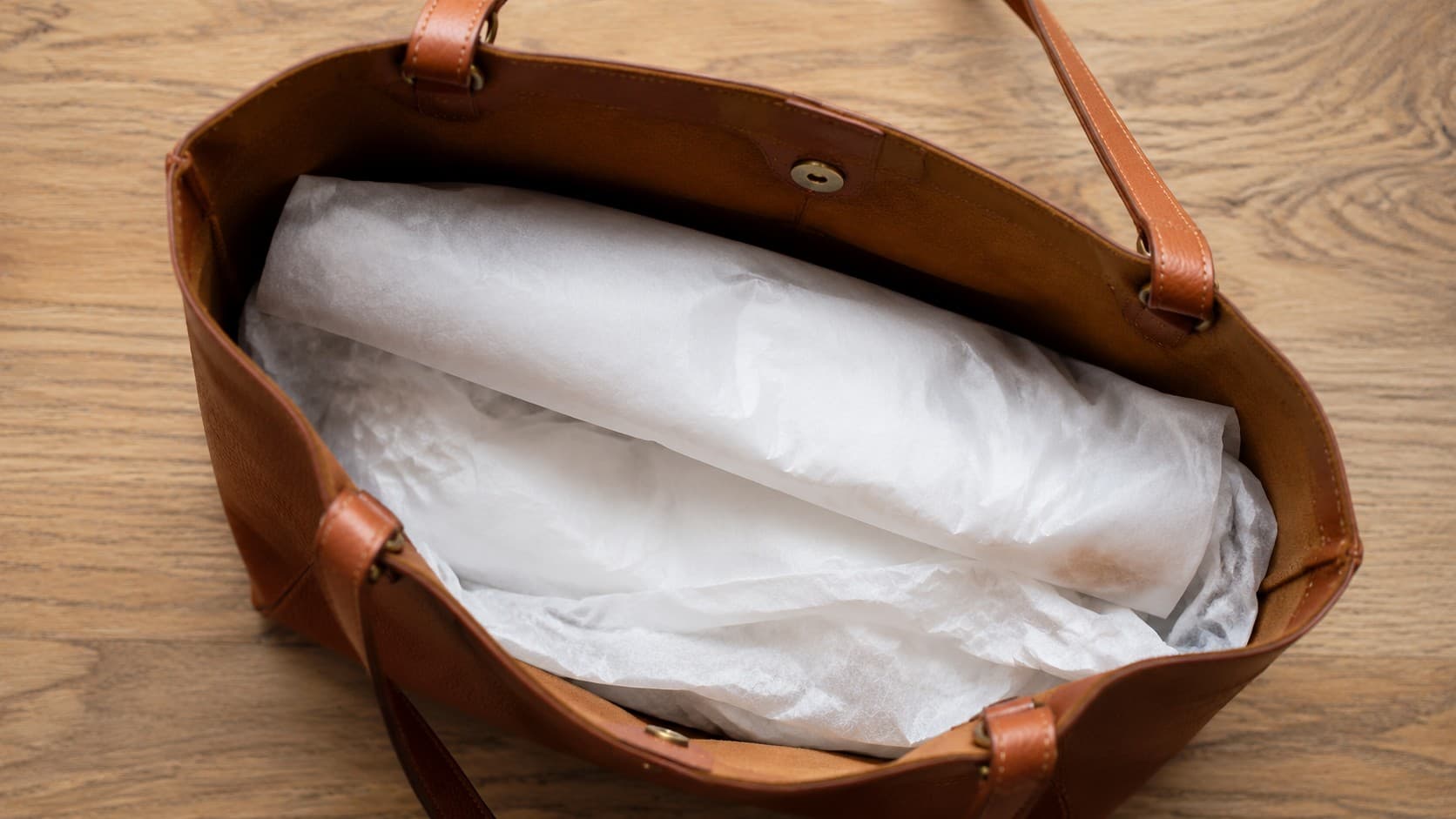
The single most important step is filling the inside of the bag so it holds its own shape instead of folding in on itself. An empty bag has nothing pushing back against gravity, so the sides slowly cave in over weeks and months of sitting empty.
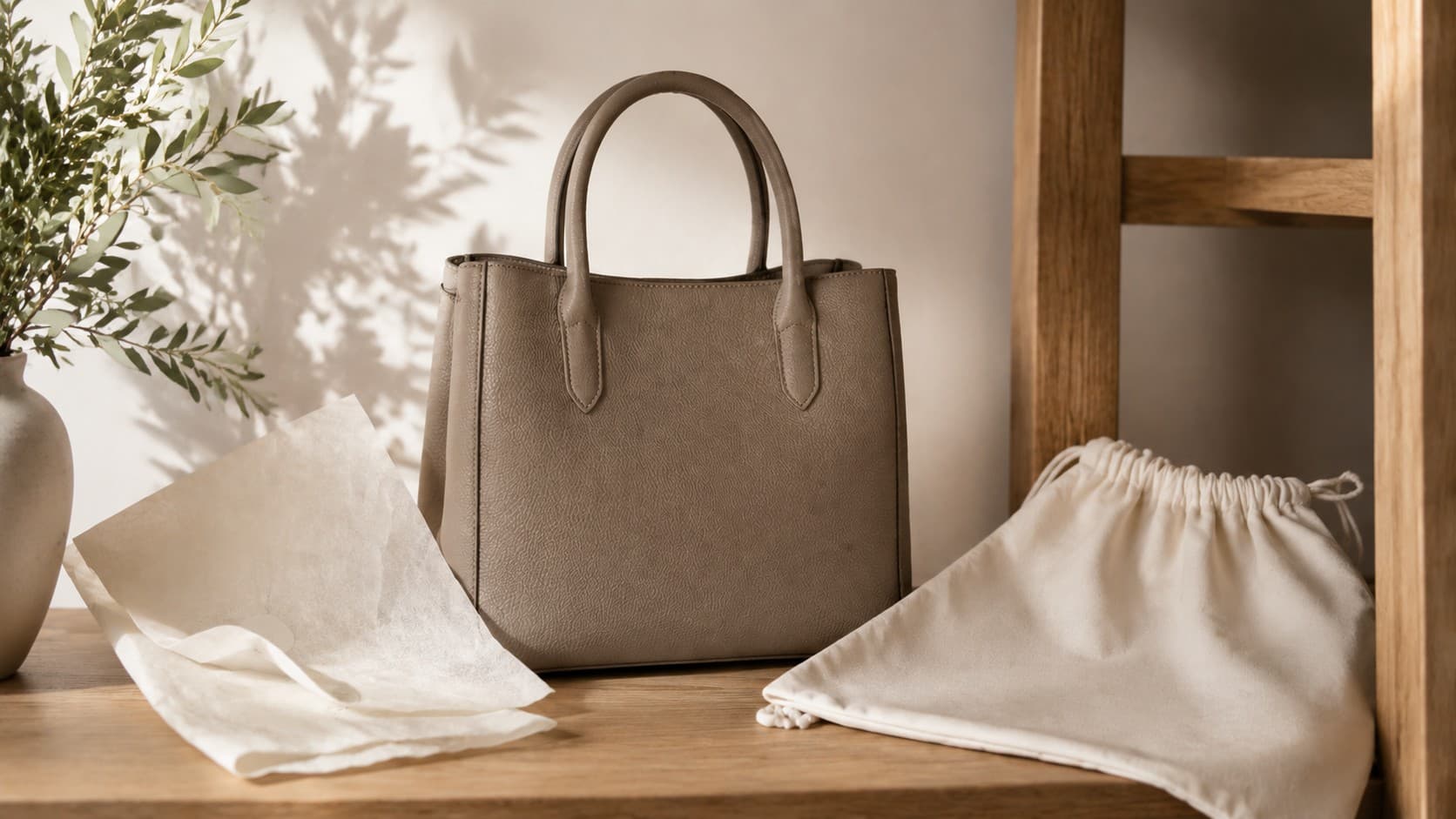
The material used matters just as much as the act of stuffing itself. Ordinary paper — the kind found in magazines and newspapers — contains chemicals that break down as it ages, and that breakdown can leave stains or discoloration on whatever it’s touching. That’s why professionals reach for acid-free tissue paper instead — it’s the same paper museums use to wrap fragile objects because it won’t react with fabric or leather over time. Clean, plain white cotton towels or old white t-shirts work well too, as long as they have no dye or print that could rub off on the interior.
Not every filler works the same way, since the right choice changes with the bag and the length of storage:
| Stuffing Material | Best For | Watch Out For |
|---|---|---|
| Acid-free tissue paper | Leather and fine fabric bags, long-term storage | Costs more than household paper |
| Plain white cotton towels or t-shirts | Everyday and larger bags | Colored or printed fabric can transfer dye |
| Purse shaper or insert | Single-compartment bags with a defined shape | Needs to fit the bag closely, or it won’t help |
| Bubble wrap | Short-term storage or wrapping around handles | Can trap moisture if used to fill the whole bag |
- Fill to the bag’s natural shape, not beyond it. Packing in more filler than the bag naturally holds puts strain on the seams and lining, and can leave it looking loose and shapeless rather than crisp.
- Skip anything printed, since ink from magazines, gift bags, or patterned fabric can bleed onto light-colored linings.
- Avoid packing the whole bag with bubble wrap. Its density blocks air from moving through the bag, which can trap moisture and lead to mold or mildew, especially in humid climates — a thin layer around the handles is fine, but relying on it as the main filler isn’t.
- Clean the inside before stuffing it. A quick wipe with a soft cloth, or a light pass with a handheld vacuum for the corners, keeps crumbs, ink, or coins from staying pressed against the lining for months at a time.
A simple trick jewelry and accessory specialists use: stuff the bag to look exactly like it did the day it was bought. If it looks over-inflated, some of the filling should come back out.
Wrap the Handles and Hardware Separately
Straps, chains, and buckles need their own bit of care, because they’re usually the first part of a bag to get scuffed or stretched in storage.
Long straps should be tucked inside the bag rather than left hanging outside, where they can stretch under their own weight or pick up creases from being folded against a shelf edge. A layer of acid-free tissue paper wrapped around chains or other metal hardware keeps the hard edges from pressing marks into the leather or fabric sitting next to them. If the bag has a structured, short handle that stands upright on its own, it’s usually fine to leave it as is rather than forcing it into an unnatural position.
Any metal plaques, clasps, or logos on the front of the bag benefit from a small barrier of soft cloth or a felt protector, since these tend to be exactly where a bag rubs against its dust bag or against other items on a crowded shelf.
Use a Breathable Dust Bag, Not Plastic
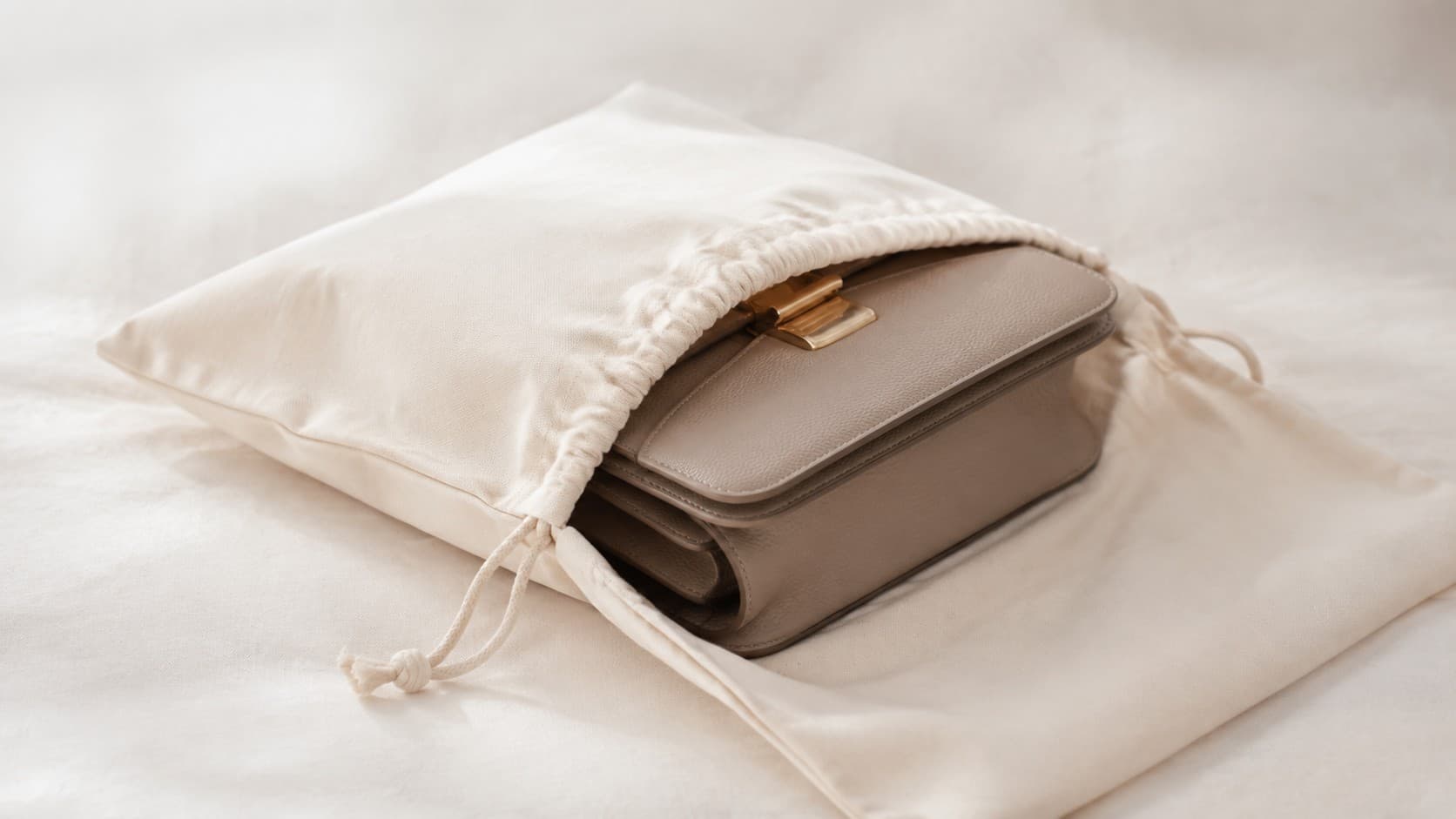
Once a bag is stuffed and its hardware protected, it needs a cover — but not just any cover. A soft, breathable fabric dust bag (cotton or a similar natural fiber) is the standard choice, and for good reason: it keeps dust and light off the bag while still letting air circulate.
Plastic bags and vacuum-sealed storage bags are worth avoiding entirely for leather goods. Trapping leather in an airtight plastic environment can cause the material to become brittle, encourage condensation to build up, and in humid conditions, invite mold growth. If a bag didn’t come with its own dust bag, a plain cotton pillowcase is a perfectly good substitute.
Store Bags Upright, Not Stacked or Lying Flat
How a bag sits on the shelf matters almost as much as what’s inside it. Piling several bags in a stack puts the full weight of everything above onto the bag at the bottom, and that pressure can push its shape out of alignment no matter how well it was stuffed beforehand. A bag stored flat on its side for a long stretch of time can also develop a lasting crease along wherever it was folded.
Standing each bag upright on the shelf, the way it would naturally sit if set down on a table, keeps the base and sides from bearing weight they weren’t built for. Leaving a small gap between bags stops them from pressing against each other, and where shelf space is tight, dividers or small stands work better than stacking bags two or three high.
For bags with structured bottoms, standing upright comes naturally. Softer, slouchier styles may need a shaper insert or a rolled towel along the base to help them stand rather than tip over and fold sideways.
Rotating which bags get used throughout the year, instead of leaving the same few sitting untouched for months, also helps. Moving a bag every so often makes small problems easier to catch — a loose thread, a bit of moisture, stuffing that’s shifted — before they turn into bigger ones, and it spreads wear evenly rather than putting it all on one favorite while the rest sit idle.
Keep Bags Away From Heat, Light, and Damp Air
Where the closet is matters as much as what’s inside it. Direct sunlight fades leather and fabric unevenly over time, so a shelf near a window is one of the worst spots for long-term storage. Heat sources like radiators or attic spaces that get warm in summer can dry leather out and make it more prone to cracking, while damp basements or humid rooms create the exact conditions mold needs to grow.
A cool, dry closet with stable temperature is really all a bag needs. Leather specifically tends to hold up best somewhere around 60-75°F with humidity in the 45-55% range — outside of that, dry air pulls moisture out of the leather and makes it stiff, while damp air pushes it the other way and invites mold.
| Condition | Ideal Range | Risk Outside That Range |
|---|---|---|
| Temperature | 60-75°F (15-24°C) | Cracking (too hot) or brittleness (too cold) |
| Humidity | 45-55% relative humidity | Mold and mildew (too high) or dryness and cracking (too low) |
| Light | Away from direct sunlight | Fading and uneven discoloration |
In storage spaces that tend to run humid, a small silica gel packet tucked inside the bag or dust bag — ideally in a pocket rather than pressed directly against the leather — can help absorb excess moisture. The packets lose their effectiveness over time, so swapping them out every so often keeps them doing their job.
Frequently Asked Questions
Can I use regular tissue paper instead of acid-free tissue paper?
It’s better to avoid it if the bag will be stored for more than a few weeks. Regular tissue and paper products contain acids that break down over time and can leave stains or a musty smell on the lining. Acid-free tissue paper costs a little more but is treated specifically so it won’t react with fabric or leather.
Is it okay to store a handbag in its original box?
Yes, as long as the bag is stuffed and wrapped in its dust bag first. A sturdy box adds an extra layer of protection against dust and accidental knocks, but it shouldn’t replace the stuffing and dust bag — an empty bag will still lose its shape even inside a box.
How often should I check on stored handbags?
Checking every few months is a reasonable habit, especially for leather bags. It allows the bag to air out, confirms no moisture or mold has developed, and gives a chance to reshape the stuffing if it’s settled or shifted.
Do all bag materials need to be stored the same way?
The core principles — stuffing, breathable covers, upright storage, and avoiding heat and sunlight — apply broadly, but some materials need extra caution. Suede, for example, is more sensitive to humidity than smooth leather, and canvas bags are generally more forgiving overall.
Will stuffing a bag too much damage it?
Yes. Packing a bag beyond its natural shape puts strain on the seams, zippers, and closures, and can permanently stretch out the material. The goal is to restore the bag’s normal silhouette, not to inflate it larger than it was designed to be.
Conclusion
Keeping a handbag looking the way it did on day one really comes down to four habits: fill it with acid-free tissue paper or clean white cotton so it holds its shape, wrap the handles and hardware separately so they don’t scratch or stretch, store it upright in a breathable dust bag rather than stacked or sealed in plastic, and keep the whole setup in a cool, dry spot away from direct light. None of this takes special equipment or much time — it’s mostly about building a five-minute routine every time a bag goes back on the shelf, which is a small trade for a bag that still looks new years later.