A leather bag can survive years of daily use, but a single rainy afternoon still makes most owners nervous, and for good reason. Leather is not plastic. It is made of skin fibers that soak up water the same way a sponge does, which means rain and damp air actually change the material a little every time they touch it. Understanding what is really happening when a bag gets wet, and what to do about it, is the difference between a bag that ages beautifully for decades and one that stiffens, stains, or cracks within a year.
Why Does Rain Affect Leather So Much?
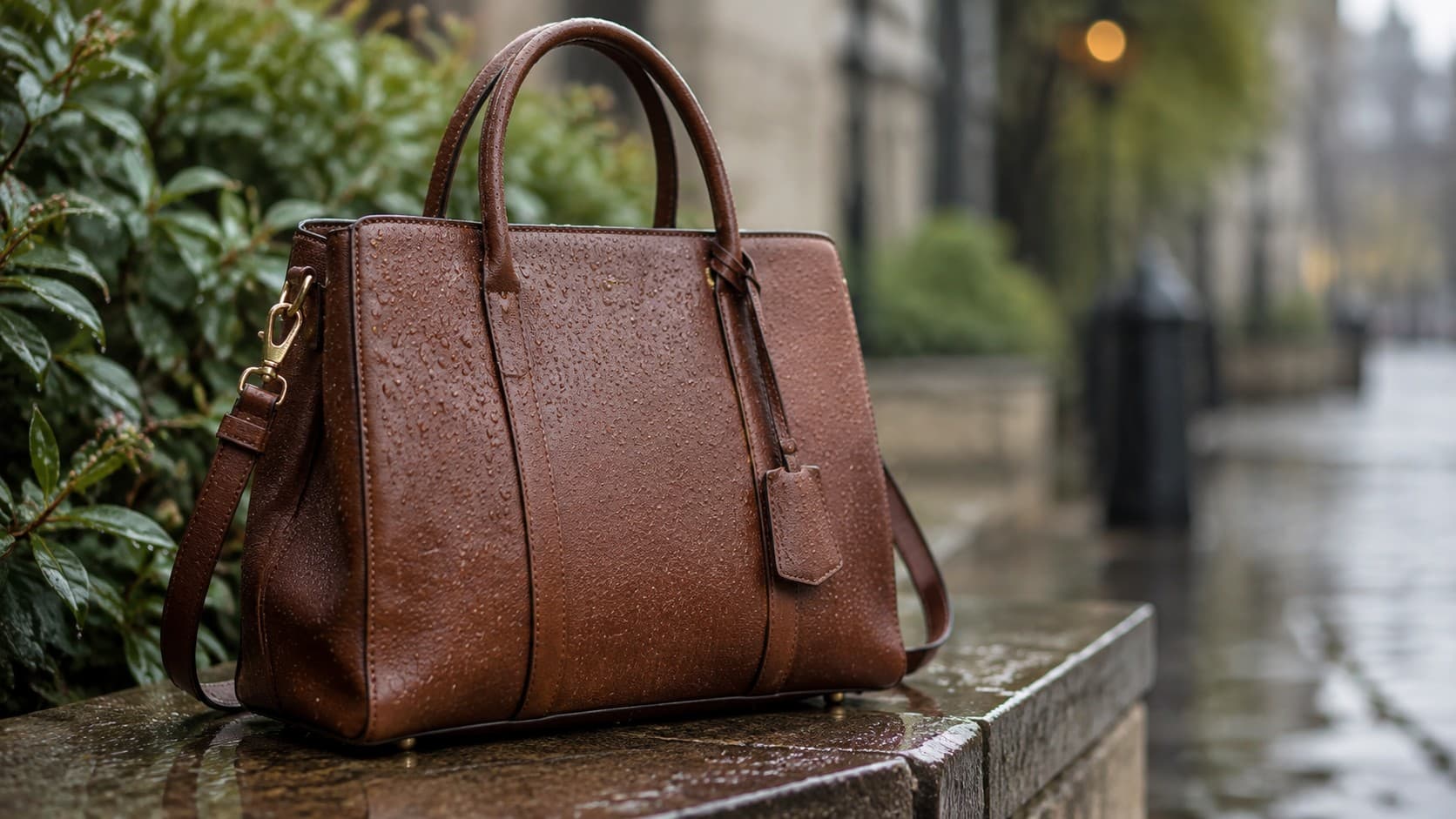
Leather reacts to rain because it is full of thousands of tiny pores that soak up water like a sponge soaks up spilled juice. Those pores are what makes leather feel soft and breathable in the first place, but they also let water sneak inside the material instead of sliding off the surface.
Once water is absorbed, the tiny fiber channels inside the leather swell up, and the material temporarily loses its softness. When the water finally evaporates, it can leave the leather stiffer and sometimes slightly warped, especially if it dried too fast or too close to a heater. A light drizzle usually causes only a small, temporary darkening. A soaking, on the other hand, pushes water deeper into the hide, and the longer that moisture sits, the further it travels toward the leather’s interior structure, where it can weaken the material and eventually lead to cracking. A quick splash and a genuine downpour, in other words, call for very different responses.
Quick fact: Leather is technically described as water-resistant, not waterproof. Even the toughest full-grain hide will eventually let moisture through if it stays wet long enough.
How Does Humidity Affect Leather?
Humidity can be just as damaging as rain, only slower and sneakier. Instead of one big soaking, humid air feeds leather a steady drip of moisture every single day, which adds up over weeks and months.
Leather naturally pulls in a certain amount of moisture from the surrounding air, and at normal humidity levels this is actually a good thing, since it keeps the material supple rather than dried out. Problems start when the air stays consistently too wet or too dry for long stretches. Leather absorbs water vapor from humid air, which can oversaturate its fibers, encourage mold and mildew growth, and gradually soften or distort a bag’s shape. Go too far in the other direction and the opposite trouble shows up: very dry air pulls moisture and natural oils back out of the leather, leaving it brittle and prone to cracking. Most leather care experts recommend keeping indoor humidity somewhere around 30 to 50 percent to strike that balance, a useful benchmark whether a bag sits in a closet or travels through a very different climate.
Signs of Humidity Damage on Leather
Humidity damage tends to build quietly, and a few clues usually show up before it becomes obvious:
- A musty or slightly sour smell, especially inside pockets
- Small dark or fuzzy spots, which can be early mold
- A surface that feels tacky, soft, or slightly slimy
- Hardware such as zippers or buckles that has started to rust or feels stiff
How to Make a Leather Bag Water-Resistant
Waterproofing a leather bag starts with cleaning it, then applying a proper leather protector spray or wax that seals the pores without smothering them. Skipping the cleaning step is the most common mistake, since sealing dirt or dust into the leather traps it there permanently.
The process begins with a soft, slightly damp cloth wiped across the entire bag to remove surface grime, followed by a full dry before anything else is applied. Once dry, a protector made specifically for leather works better than a generic fabric spray, since fabric sprays can leave a strange sheen or feel on leather grain. It should go on in thin, even layers in a well-ventilated space, with each coat drying before a second is considered. Testing any new product on a hidden spot first, such as the underside of a strap, is worth the extra minute, since some sprays can very slightly darken lighter leather colors.
There are two main types of leather protector, and they work differently. Wax-based products, often beeswax, sit closer to the surface and double as a light conditioner, which makes them a common choice for natural, uncoated leather bags. Silicone-based sprays repel water more aggressively and are simple to apply, but they form a tighter seal that can limit how well the leather breathes if used too often, so they work best as an occasional layer rather than a frequent routine. Either way, a reliable sign that reapplication is due is when rain stops beading on the surface and starts soaking straight in.
A moderate indoor humidity level around 40 to 50 percent is ideal for storing leather, which makes waterproofing one part of a larger routine rather than a single fix that solves everything on its own.
What to Do When a Leather Bag Gets Wet
The right response is to act quickly but gently: blot the water out, air dry the bag away from heat, then condition it once it is completely dry. Rushing any of these three steps is usually what turns a wet bag into a permanently damaged one.
A damp bag should be blotted immediately with a soft, absorbent cloth, never rubbed, since rubbing can disturb the grain or cause discoloration. A bag that took on serious water, rather than a light splash, needs a slightly different approach. Setting it down flat on a solid surface rather than propping it up keeps the leather from drying into folds or creases it did not originally have. Loosely packing the inside with plain newspaper gives the bag something to hold its form against as the material dries, and swapping that newspaper for a dry batch once it turns damp keeps it actively pulling moisture rather than just sitting there soaked. A hairdryer, radiator, or direct sun should be avoided entirely, since drying too quickly near heat sources can make the leather brittle instead of just damp.
Only once the bag is dry all the way through, not just dry on the surface, should conditioner come into play. Water pulls natural oils out of leather as it evaporates, and conditioner is what puts those oils back so the material stays supple instead of turning brittle. Small circular motions work the product in evenly, and a slightly damp cloth afterward removes anything the leather did not absorb. Doing this twice a year keeps a bag in good shape even without any rain damage at all, since dry air pulls out the same oils that water does.
A Simple After-the-Rain Routine
- Blot excess water with a soft, dry cloth — never rub
- Stuff the bag lightly with newspaper if it is a structured style
- Air dry at room temperature, away from heaters or sunlight
- Once fully dry, apply a leather conditioner in light, even circles
- Buff gently with a clean cloth to finish
Does Leather Type Affect Water Protection?
Different leather finishes handle water very differently, so the right level of protection depends on the kind of bag involved. A coated leather bag and an untreated, natural-grain leather bag can react to the exact same rainstorm in almost opposite ways.
Coated leather gets a thin polyurethane finish during manufacturing, which acts almost like a raincoat: water sits on top and slides off rather than soaking in, leaving the bag looking barely touched even after a real downpour. Leather finished without that coating behaves very differently, since its natural surface has nothing blocking the pores, so moisture soaks straight in on contact. A single raindrop is often enough to leave a faint dark spot right where it landed. This is less alarming than it sounds. Years of ordinary handling, light exposure, skin oils, and the occasional shower are exactly what give uncoated full-grain leather its signature aging, a warmer, richer color that builds up gradually over time. Individual water spots from any one rainy day tend to fade into that overall patina long before anyone would notice them separately. Suede and nubuck are the real exception here, since their raised, fuzzy texture soaks up water fast and shows staining far more obviously than smooth grain leather, which is why they call for a dedicated suede-and-nubuck spray rather than a standard leather protector, which can flatten or stain the nap.
| Leather Type | How It Reacts to Rain | Best Protection |
|---|---|---|
| Coated leather | Water beads and rolls off; little to no visible change | Occasional wipe-down; protector rarely needed |
| Full-grain / natural leather | Absorbs water, darkens temporarily, dries back to normal | Wax or spray protector, reapplied periodically |
| Suede or nubuck | Absorbs water quickly, stains and mats easily | Suede-specific spray only, never wax or oil |
How to Store Leather Bags to Avoid Moisture Damage
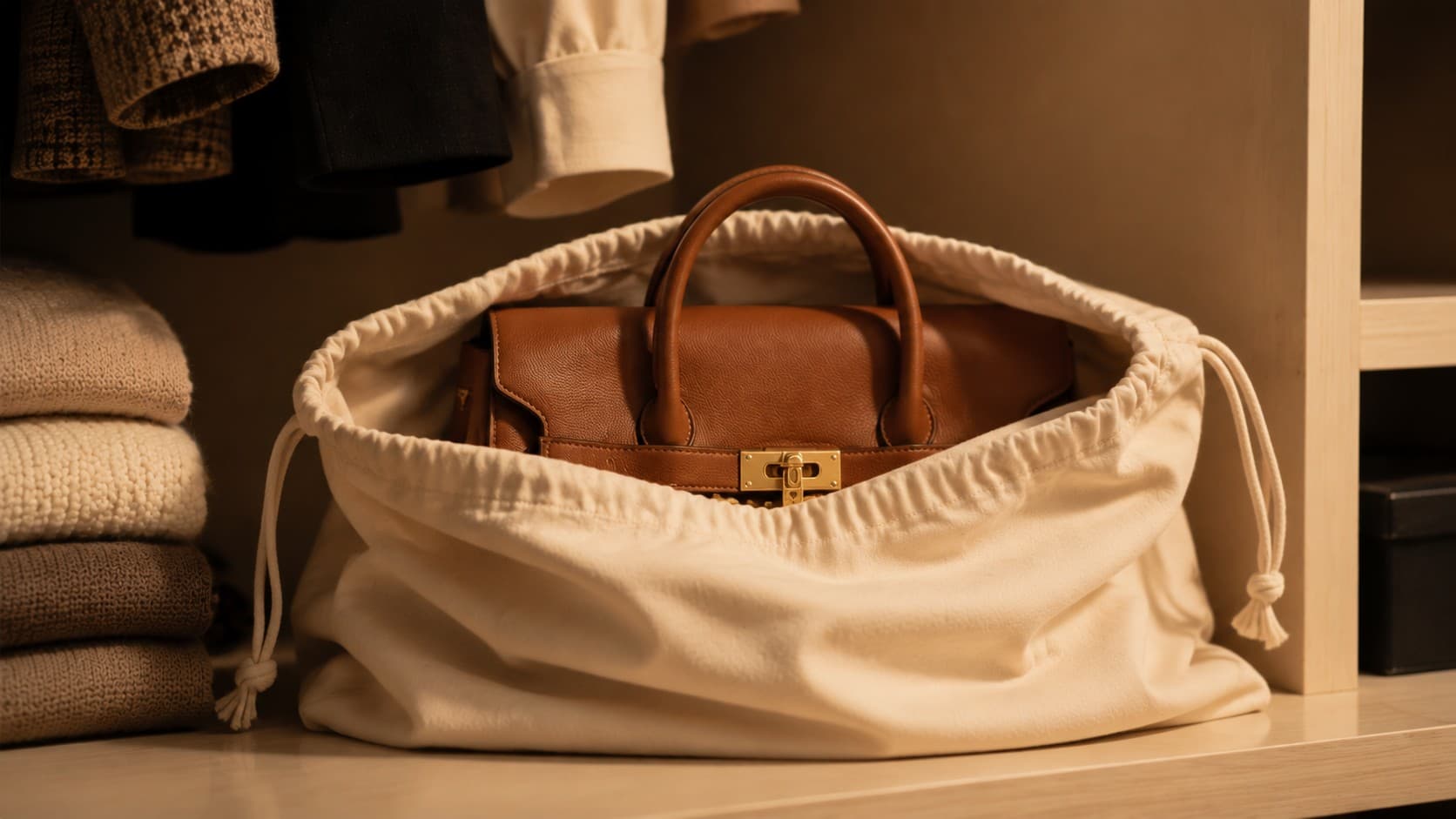
Leather bags fare best somewhere with steady, moderate humidity, good airflow, and no direct sunlight, kept in a breathable cotton dust bag rather than plastic. Plastic feels protective, but it actually traps whatever moisture is already inside the bag against the leather.
Sealed plastic works against leather rather than for it, since any moisture already inside the bag has nowhere to go and stays trapped against the material. A cloth dust bag or cotton pillowcase lets air pass through instead, which is why leather care professionals generally recommend fabric storage over plastic. Loose stuffing with acid-free tissue paper helps a bag hold its shape without creases forming, and heavy items are best kept off the top of stored bags in a closet. In genuinely humid climates, a small silica gel packet tucked inside the bag can quietly absorb extra moisture between uses, and keeping a closet or storage area around 40 to 50 percent humidity limits both the mold risk of overly damp air and the dryness and cracking that comes from air that is too dry.
Coastal or winter climate: Salt from sea air or road salt behaves like a moisture magnet on leather, drawing in extra dampness and sometimes leaving faint white marks on the surface or corrosion on metal hardware. A bag exposed to salty air or slush benefits from a wipe-down with a barely damp cloth soon after, rather than waiting for the next regular cleaning.
Frequently Asked Questions
Can a hairdryer be used to dry a leather bag faster?
No, a hairdryer or any direct heat source should be avoided. Heat pulls moisture out of leather too quickly, which can make it stiff, shrink slightly, or crack, so slow air drying at room temperature is always the safer choice.
Will rain permanently stain a leather bag?
Usually not, as long as it is dried and conditioned properly afterward. Light water marks on natural-grain leather typically fade or blend into the material’s patina over time, though very dark stains or repeated soakings without follow-up care can leave a more lasting mark.
How often should waterproofing spray be reapplied?
Most leather protector sprays need reapplying every two to three months with regular use, or right after any deep cleaning, since cleaning can strip away the previous protective layer. Bags used mostly indoors or kept for special occasions need it far less often.
Is it safe to use household oils, like olive oil, on a leather bag?
It is best avoided. Kitchen oils are not formulated for leather, can go rancid, attract dust, or darken the leather unevenly, and offer none of the balanced ingredients found in a proper leather conditioner made for this purpose.
Can mold be removed from a leather bag at home?
Small surface mold can sometimes be wiped away with a cloth lightly dampened with a mild leather-safe cleaner, then dried thoroughly in sunlight-free, well-ventilated air. Anything beyond a small surface spot, or mold with a strong smell, is worth taking to a professional leather cleaner rather than risking further damage.
Conclusion
Rain and humidity are not really the enemy of a leather bag; neglecting what happens after exposure is. Leather is naturally water-resistant rather than waterproof, which means the occasional splash or damp commute is expected and rarely a problem on its own. What actually causes lasting damage is fast drying near heat, letting a soaked bag stay wet for too long, or storing leather in airtight plastic where trapped moisture has nowhere to go. Blotting instead of rubbing, drying slowly away from heat, conditioning once fully dry, and storing in a breathable space with moderate humidity are what let a good leather bag handle decades of unpredictable weather without losing what makes it worth keeping.