Mid-Century Modern jewelry emerged from post-war America (1945-1965) as a revolutionary movement that transformed personal adornment into wearable art. This era of unprecedented prosperity and atomic age fascination produced bold geometric forms, innovative materials, and sculptural designs that reflected technological optimism. Designers abandoned ornate traditions for clean lines, space-age motifs, and architectural forms that celebrated scientific progress. The movement fundamentally changed how people viewed jewelry—from status symbols to statements of individual style and cultural participation.
History of Mid-Century Modern Jewelry
The Mid-Century Modern jewelry movement arose during a unique period when American society underwent dramatic transformation following World War II. Economic prosperity, scientific breakthroughs, and cultural shifts combined to create an environment where jewelry designers could abandon traditional approaches and embrace radical new aesthetics that reflected the era’s optimism and technological advancement.
- The conclusion of World War II in 1945 unleashed unprecedented economic growth as returning veterans used GI Bill benefits to purchase homes, start families, and enter the middle class with disposable income previously unavailable during the Great Depression and wartime rationing. This newfound prosperity meant Americans could afford jewelry as personal expression rather than necessity, while the psychological relief of peacetime encouraged experimentation with bold, optimistic designs that celebrated freedom from wartime constraints and limitations.
- Nuclear technology’s development created dual cultural responses of both anxiety and fascination, with jewelry designers choosing to emphasize the positive aspects by incorporating atomic symbols, molecular structures, and radiating patterns that suggested scientific progress and peaceful applications of nuclear energy. The famous Atomium structure at the 1958 Brussels World’s Fair became an international symbol of atomic optimism, inspiring countless jewelry pieces featuring spherical forms connected by thin rods that mimicked atomic models and brought laboratory aesthetics into everyday fashion.
- America’s space exploration ambitions, particularly intensified after the Soviet Union’s Sputnik launch in 1957, generated widespread cultural fascination with celestial themes, rocket shapes, and satellite-inspired designs that appeared throughout the decorative arts. Jewelry designers incorporated star motifs, planetary arrangements, and sleek metallic finishes that evoked spacecraft materials, while the broader cultural narrative of reaching for the stars translated into pieces that suggested movement, progress, and humanity’s expanding horizons.
- Wartime industrial research had accelerated development of synthetic materials including improved plastics, advanced metal alloys, and precision manufacturing techniques that became available for civilian applications after 1945. Designers gained access to materials like clear Lucite that could be molded into complex forms, colorful Bakelite with consistent properties, and lightweight aluminum that could be anodized in vibrant colors, enabling creative possibilities that would have been impossible with traditional materials alone.
- The broader Mid-Century Modern design movement encompassed architecture, furniture, and decorative arts, with jewelry designers adopting similar principles of clean lines, functional beauty, and democratic accessibility that characterized the work of architects like Richard Neutra and Charles Eames. Scandinavian design philosophy particularly influenced American jewelry through its emphasis on natural materials, honest construction, and elegant simplicity that made sophisticated design available to middle-class consumers rather than only wealthy elites.
- Women’s changing social roles following the war created new contexts for jewelry wearing, as many women who had worked in factories during wartime continued careers while others embraced suburban domesticity with increased social activities that required appropriate accessories. This expanded the market for both daytime pieces suitable for professional settings and evening jewelry for the cocktail parties and dinner gatherings that became central to suburban social life.
These converging forces created a perfect storm for jewelry innovation, allowing designers to break free from centuries-old traditions and establish entirely new aesthetic principles. The movement represented more than changing fashion trends—it embodied America’s post-war confidence and collective belief that scientific progress and technological innovation could create a brighter future for everyone.
How Mid-Century Modern Jewelry Changed Fashion and Society
Mid-Century Modern jewelry reflected and influenced profound transformations in American society as post-war prosperity, changing gender roles, and evolving lifestyle patterns created new contexts for personal adornment. These pieces became cultural artifacts that documented shifting social values while helping to define new standards of sophistication and personal expression.
- Fashion evolution created distinct categories of jewelry appropriate for different social contexts as women’s wardrobes expanded beyond basic functional clothing to include specialized outfits for various occasions and activities. Daytime jewelry featured simple gold pieces, classic pearl strands, and minimal gemstone designs that complemented tailored suits and casual separates, while evening occasions demanded diamond and platinum pieces, colorful stones, and dramatic designs that sparkled under artificial lighting and matched the glamour of formal entertaining that had become central to suburban social life.
- Women entering the professional workforce in unprecedented numbers required jewelry that conveyed competence and sophistication without appearing frivolous or distracting in male-dominated environments. Simple gold-tone bangles, conservative charm bracelets, and understated earrings became standard professional accessories that demonstrated good taste while maintaining appropriate boundaries, leading to the development of separate jewelry collections specifically designed for workplace wear versus social occasions.
- Suburban lifestyle changes reflected post-war prosperity through the rise of cocktail culture, backyard entertaining, and country club social activities that required appropriate accessories for new social rituals including pool parties, barbecues, and informal dinner gatherings. Department stores actively marketed jewelry to suburban housewives through advertisements that connected specific pieces to lifestyle activities, while television shows normalized certain jewelry choices as symbols of successful domestic life and social participation.
- Television influence accelerated jewelry trend adoption as programs like “Leave it to Beaver” and “Father Knows Best” established pearl necklaces as symbols of ideal motherhood and suburban respectability, while variety shows and dramatic programs exposed audiences to glamorous evening jewelry that inspired purchases for special occasions. The visual medium allowed viewers to observe jewelry styling techniques and social contexts that had previously been limited to fashion magazines and personal observation.
- Celebrity style icons profoundly shaped jewelry preferences through their public appearances and film roles, with Audrey Hepburn popularizing elegant pearl necklaces and understated diamond pieces that epitomized sophisticated restraint. Marilyn Monroe’s performances reinforced diamond desirability while demonstrating how jewelry could enhance feminine allure, and Grace Kelly represented the ideal balance between daytime elegance and evening glamour that many American women sought to emulate in their own jewelry choices.
- Jackie Kennedy’s sophisticated minimalism influenced countless women to choose quality over quantity in jewelry selection, favoring well-designed pieces in excellent materials rather than elaborate or ostentatious displays that might appear nouveau riche or inappropriately showy. Her coordination of jewelry with tailored clothing demonstrated how accessories could enhance rather than compete with overall ensemble planning and personal style development.
- The De Beers “A Diamond is Forever” advertising campaign, launched with increased intensity in 1948, successfully targeted the newly prosperous middle class with messaging that connected diamond ownership to romantic commitment and social achievement. By 1965, approximately 80% of American brides wore diamond engagement rings, demonstrating how effective marketing could create cultural expectations and transform luxury items into perceived necessities for important life milestones.
- Casual lifestyle adoption required jewelry designers to create pieces suitable for informal social activities including suburban entertaining, outdoor recreation, and family-centered gatherings that characterized post-war domestic life. This led to development of jewelry that remained elegant while being appropriate for less formal contexts, bridging the gap between costume jewelry and formal pieces through sophisticated design and quality materials.
- Social mobility expectations meant that jewelry became an important tool for signaling class aspirations and cultural sophistication as families moved from urban apartments to suburban homes and sought to demonstrate their success through appropriate material possessions. Jewelry purchases often represented significant investments in social positioning rather than simple personal decoration, with pieces chosen to communicate education, taste, and economic achievement.
These cultural changes established jewelry as an essential component of post-war American identity, where personal adornment choices reflected individual values, social aspirations, and cultural participation while contributing to the broader narrative of prosperity, progress, and democratic access to sophisticated design and quality materials.
Key Characteristics of Mid-Century Modern Jewelry
Mid-Century Modern jewelry broke from centuries of traditional design by embracing bold geometric forms, atomic-age symbolism, and architectural principles that transformed personal adornment into sculptural art. These pieces prioritized clean lines and innovative construction over ornate decoration, creating a distinctive aesthetic that remains instantly recognizable today.
- Geometric shapes formed the foundation of Mid-Century Modern jewelry design, with circles, triangles, squares, and hexagons arranged in balanced compositions that emphasized mathematical precision and visual harmony. Designers favored perfect symmetry in some pieces while exploring dynamic asymmetrical arrangements in others, often combining multiple geometric elements within single designs to create complex visual relationships that drew the eye through carefully planned pathways across the jewelry’s surface.
- Starburst patterns became the most iconic motif of the entire movement, featuring radiating lines or spokes that emanated from central points to suggest atomic energy, solar power, or celestial explosions in designs that appeared across all jewelry categories from tiny earrings to large statement brooches. These patterns varied from simple linear arrangements with straight spokes to complex compositions incorporating curved rays, multiple focal points, and three-dimensional elements that created dramatic light-catching surfaces.
- Atomic and molecular imagery permeated jewelry design as creators drew inspiration from scientific diagrams, incorporating orbital patterns where small spheres appeared to revolve around larger central elements, electron cloud representations through clustered beads or stones, and abstract molecular structures that suggested the invisible forces governing matter itself. These scientific motifs transformed complex physics concepts into accessible decorative elements that celebrated humanity’s growing knowledge of the natural world.
- Negative space received equal importance to solid metal elements, with designers creating openwork patterns, pierced designs, and mesh constructions that allowed light to pass through pieces and created visual lightness despite substantial scale. This approach reflected architectural principles where structural elements defined space as much as solid materials, resulting in jewelry that appeared to float on the wearer while maintaining bold visual presence.
- Boomerang and kidney shapes represented the era’s fascination with organic abstraction and space-age aesthetics, appearing in earrings, brooches, and pendant designs that suggested movement, asymmetry, and futuristic transportation while maintaining the smooth, flowing lines that characterized the atomic age design vocabulary. These biomorphic forms bridged the gap between geometric precision and natural inspiration.
- Surface textures replaced traditional high-polish finishes as designers explored hammered, brushed, and deliberately roughened surfaces that caught light differently and emphasized the inherent properties of metals rather than disguising them with mirror-like reflectivity. Florentine finishing techniques created fine crosshatch patterns, while bark textures and linear brushing added tactile interest that invited closer examination.
- Scale dramatically increased compared to previous jewelry eras, with statement pieces designed to complement the bold silhouettes of contemporary fashion including wide-shouldered jackets, full skirts, and architectural necklines that could support substantial jewelry without appearing overwhelmed. Cocktail rings grew to cover multiple fingers, brooches measured three inches or more across, and necklaces featured chunky links or beads that created strong visual impact.
This revolutionary approach to jewelry design created pieces that functioned as wearable sculpture, challenging traditional notions of feminine delicacy and precious materials while establishing new criteria for beauty based on form, proportion, and innovative construction rather than gemstone rarity or metalwork complexity.
Materials Used in Mid-Century Modern Jewelry Making
Mid-Century Modern jewelry revolutionized the industry through innovative materials and manufacturing methods that reflected the era’s embrace of technological progress and democratic design principles. Designers combined traditional precious metals with synthetic materials and industrial techniques to create pieces that were both artistically sophisticated and accessible to a broader audience.
- Bakelite reached its creative peak during the 1940s and early 1950s as this thermosetting plastic offered designers unprecedented molding possibilities, allowing complex three-dimensional forms to be cast as single seamless pieces without visible joints or construction lines. The material’s density and weight gave it substantial feel despite being synthetic, while its ability to be produced in rich, saturated colors including deep burgundy, forest green, amber, and jet black made it ideal for bold geometric bangles, sculptural brooches, and architectural necklaces that would have been impossible to achieve with traditional materials.
- Lucite transformed jewelry design through its crystal-clear transparency and moldability, enabling designers to create pieces that appeared to be carved from solid blocks of ice or glass while remaining lightweight and durable for everyday wear. Variations included embedded glitter or metallic flakes for “confetti” effects, luminescent additives that created ethereal “moonglow” pieces, and clear sections containing preserved flowers, insects, or abstract patterns that added visual interest while maintaining the material’s essential transparency.
- Traditional gold underwent surface treatment innovations as designers moved away from high-polish finishes toward textured surfaces that celebrated the metal’s inherent properties rather than creating mirror-like reflectivity. Florentine finishing created fine crosshatch patterns through hand-engraving techniques, while brushed surfaces used directional abrasion to create linear patterns that caught light differently throughout the day, and hammered textures added irregular surfaces that emphasized handcraft over machine perfection.
- Silver embraced architectural applications through large-scale sculptural pieces that emphasized structural elements and geometric forms rather than decorative surface treatments. Oxidation techniques created deliberate contrast between dark recessed areas and bright raised surfaces, while mesh construction and wire work celebrated linear elements and openwork designs that allowed pieces to interact dynamically with light and shadow.
- Industrial materials entered high-fashion jewelry as designers incorporated lightweight aluminum that could be anodized in brilliant colors including turquoise, magenta, and chartreuse, stainless steel for its modern appearance and exceptional durability, and mixed-metal combinations that juxtaposed different materials within single pieces to create visual and textural contrast. These choices reflected the era’s faith in technological progress and celebration of industrial aesthetics.
- Lost-wax casting techniques enabled reproduction of complex modernist forms with intricate geometric patterns and three-dimensional elements that would have been extremely difficult to fabricate through traditional metalworking methods. This process allowed designers to create multiple copies of successful designs while maintaining hand-finished quality, making sophisticated pieces available at various price points without compromising artistic integrity.
- Wire construction methods advanced significantly during this period, with designers developing techniques for creating mesh patterns, kinetic elements that moved with the wearer, and structural frameworks that supported gemstones or decorative elements while remaining visually light and architecturally elegant. These approaches emphasized linear design elements and created jewelry that appeared to have been constructed rather than simply formed.
- Precision gemstone cutting innovations included Margaret De Patta’s pioneering “opticuts” that created custom-faceted quartz stones designed to bend and refract light in specific ways, producing optical illusions and light effects that had never been achieved in jewelry before. These techniques transformed inexpensive materials into visually spectacular elements that rivaled traditional precious stones for visual impact.
The combination of these material innovations and manufacturing techniques created jewelry that embodied the era’s optimistic belief in progress while making sophisticated design accessible to middle-class consumers who could afford synthetic materials even if precious metals remained beyond their budgets.
Famous Mid-Century Modern Jewelry Designers and Brands
The Mid-Century Modern jewelry movement was shaped by visionary designers who transformed personal adornment into sculptural art, combining traditional craftsmanship with innovative aesthetics that reflected post-war optimism and atomic age fascination. These creators established new design vocabularies that influenced both high-end studio work and mass-market production.
- Ed Wiener emerged as a central figure after taking a craft course at Columbia University in 1945, opening his Greenwich Village shop “Arts and Ends” in 1947 before relocating next to the Museum of Modern Art on West 53rd Street from 1953 to 1966. His hand-hammered silver pieces featured abstract geometric elements created using unconventional tools borrowed from plumbing and carpentry, with his famous “squiggle brooch” designs becoming iconic representations of the movement’s spontaneous, jazz-influenced aesthetic that reduced forms to their essential elements while drawing inspiration from Alexander Calder’s mobile sculptures.
- Art Smith created what he termed “wearable sculpture” through biomorphic forms and large-scale pieces that remained surprisingly lightweight and comfortable despite their dramatic visual impact. Born in Cuba and raised in Brooklyn, this Afro-Caribbean designer trained at Cooper Union before opening his Greenwich Village workshop in 1946, working primarily in silver, copper, and brass with carefully controlled patinated finishes that created rich surface colors and textures that attracted clients including Duke Ellington, Harry Belafonte, Lena Horne, and Eartha Kitt who appreciated his bold, artistic approach.
- Sam Kramer brought Surrealist influences to modernist jewelry by incorporating unconventional materials including fossils, meteorites, coral, rhinoceros tusks, and glass taxidermy eyes into pieces that challenged conventional notions of appropriate jewelry materials. Operating from his famous West 8th Street workshop with its distinctive hand-shaped door handle, Kramer described his creations as “fantastic jewelry for people who are slightly mad,” producing biomorphic forms and avant-garde designs that influenced an entire generation of studio jewelers who began treating jewelry as expressive art rather than mere decoration.
- Margaret De Patta pioneered the integration of Bauhaus design principles with jewelry creation after studying under László Moholy-Nagy, developing innovative light transmission techniques and optical illusions that transformed inexpensive quartz into visually spectacular gems through custom faceting methods. Her work demonstrated how modernist aesthetics could elevate humble materials while exploring themes of space, form, tension, and light that connected jewelry design to contemporary architecture and sculpture movements.
- Georg Jensen company continued Scandinavian modernist traditions through artistic directors including Harald Nielsen, creator of the influential “Pyramid” flatware pattern whose geometric principles influenced jewelry design, and Henning Koppel, widely recognized as one of the most significant Scandinavian designers for his abstract, sculptural pieces with organic flowing forms. Nanna Ditzel became the first woman to design for Georg Jensen starting in 1954, creating bold, elegant silver jewelry with fluid lines that demonstrated how feminine sensibility could enhance rather than soften modernist aesthetics.
- Alexander Calder applied his sculptural sensibilities to create over 2,000 pieces of jewelry that reflected his mobile and stabile work through simple, direct designs emphasizing movement and balance. Working primarily in brass and silver wire, Calder created pieces that functioned as miniature sculptures while remaining completely wearable, demonstrating how fine art principles could translate successfully into personal adornment without losing their essential artistic character.
- Monet Jewelry democratized modernist aesthetics through mass production techniques that created what the company called “serious fashion fantasies,” producing chokers, bracelets, and earrings that incorporated clean lines, geometric forms, and innovative materials including white resin elements that reflected Mid-Century Modern minimalism while remaining affordable for middle-class consumers who wanted sophisticated design without precious metal prices.
- Trifari established itself as a leader in luxury-appearing costume jewelry by hiring talented designers who created pieces that successfully mimicked the scale, proportion, and visual impact of fine jewelry while using affordable materials and efficient production methods that made fashionable accessories available to women across economic classes during an era when personal style had become increasingly important for social participation.
These designers and manufacturers created a design ecosystem where artistic innovation could flourish at multiple price points, ensuring that modernist jewelry aesthetics reached beyond wealthy collectors to influence mainstream fashion and establish lasting design principles that continue shaping contemporary jewelry creation.
Popular Mid-Century Modern Jewelry Styles and Pieces
Mid-Century Modern jewelry embraced bold proportions and sculptural forms that complemented the era’s fashion revolution, creating distinctive categories of pieces that served both as personal adornment and artistic statements. These jewelry types reflected changing social roles and lifestyle patterns while incorporating the movement’s signature atomic age aesthetics and geometric principles.
- Statement necklaces dominated evening wear through multi-strand pearl arrangements that ranged from close-fitting chokers to dramatic waist-length styles, often featuring elaborate decorative clasps that functioned as focal points when worn at the back of the neck. Bib necklaces filled the décolletage area with cascading rhinestones, crystals, or beads arranged in geometric patterns, while torsades featured twisted multi-strand designs using pearls, beads, or chains that created rich textural effects and substantial visual weight perfect for complementing Christian Dior’s “New Look” silhouettes.
- Sculptural brooches reached unprecedented artistic heights through three-dimensional designs that transformed traditional pin concepts into wearable sculpture, with naturalistic motifs including stylized flowers, birds, and animals rendered in textured metals and colorful stones that captured the era’s optimism about nature and scientific progress. Double-clip brooches offered versatility by functioning as single large pieces or separating into matching clips for lapels or necklines, while “scatter pins” allowed wearers to create personalized arrangements using multiple small themed brooches across garments or accessories.
- Chunky bracelets and cuffs embraced the period’s preference for substantial jewelry through wide flexible designs featuring rhinestones, textured gold, or mesh construction that complemented the three-quarter length sleeves popular in contemporary fashion. Charm bracelets gained sophisticated appeal through carefully curated collections of travel mementos, milestone symbols, and personal interests that told individual stories, while gold mesh bracelets and geometric cuff designs were specifically created to be worn high on the arm where they would remain visible above gloves during formal occasions.
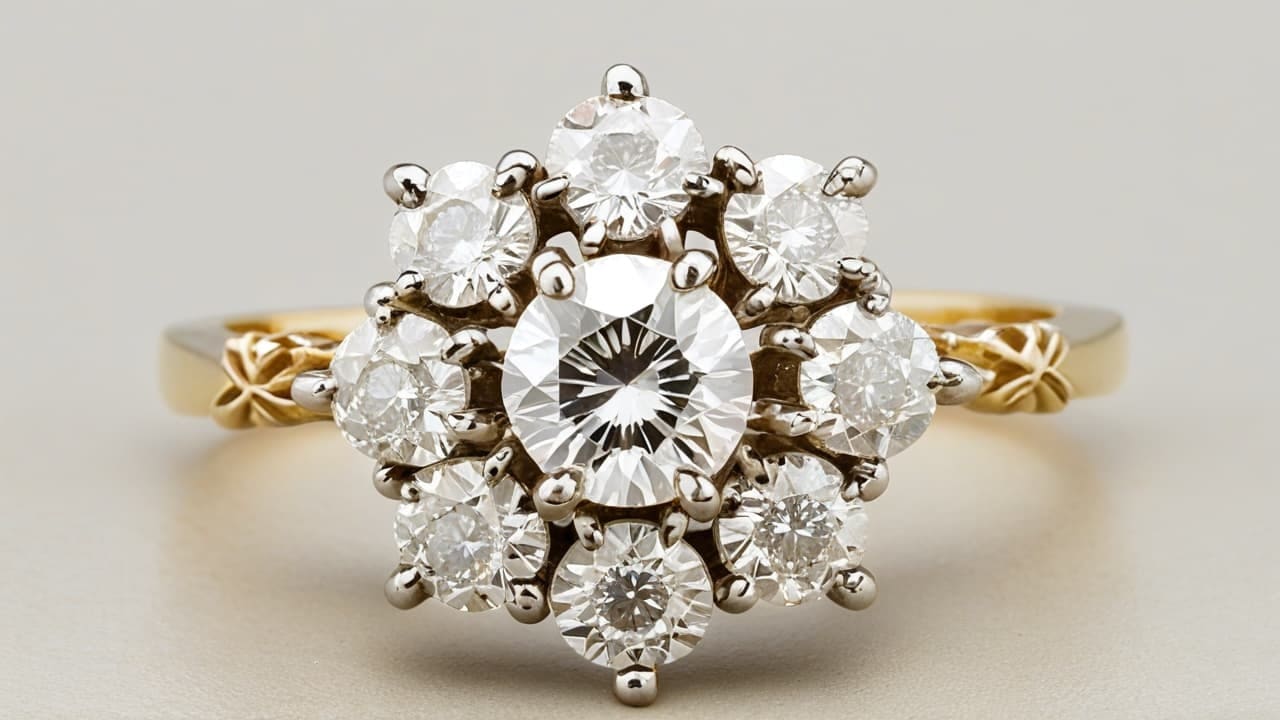
- Cocktail rings earned their nickname “knuckle-dusters” through oversized proportions featuring large central stones surrounded by smaller gems in high prong settings that maximized light reflection and visual impact. Bombé style rings featured rounded, three-dimensional forms that created substantial finger coverage, while cluster rings and ballerina rings used multiple stones arranged in radiating patterns that echoed the era’s starburst motifs, and bypass rings showcased asymmetrical designs that wrapped around fingers in dynamic sculptural forms.
- Earring innovations responded to the prevalence of clip-on styles, since pierced ears remained uncommon until the late 1960s, through engineering that distributed weight effectively while creating maximum visual drama. Cascade styles featured dangling elements that moved with the wearer and framed the face with light-catching motion, while large button earrings in gold-tone metals provided sophisticated options for daytime wear that complemented professional attire without appearing overly decorative.
- Atomic and space-age motifs appeared across all jewelry categories through starburst patterns, satellite-inspired spherical designs, and radiating elements that suggested atomic energy, solar systems, or molecular structures. These pieces ranged from delicate everyday versions suitable for casual wear to dramatic evening statements that incorporated rhinestones, colored stones, or metallic finishes that caught light dramatically under artificial illumination.
- Complete parures, or matching jewelry sets, became essential for well-dressed women who valued coordination and completion in their accessories, typically including necklace, earrings, bracelet, and brooch designed as unified compositions. These sets often featured graduated sizing that created visual harmony while allowing individual pieces to function independently, with shared motifs, materials, or construction techniques that demonstrated sophisticated design planning and execution.
- Textured gold pieces celebrated the metal’s inherent beauty through surface treatments that moved away from traditional high-polish finishes toward bark textures, linear brushing, and geometric patterns that created visual interest through light interaction rather than gemstone decoration. These pieces often featured substantial scale and architectural forms that made gold itself the primary decorative element rather than simply a setting for precious stones.
The diversity and boldness of Mid-Century Modern jewelry types reflected the era’s confidence and prosperity while establishing new standards for personal adornment that emphasized artistic merit, innovative design, and individual expression over traditional concepts of precious materials and conventional beauty.
Mid-Century Modern Jewelry Collecting Tips and Values
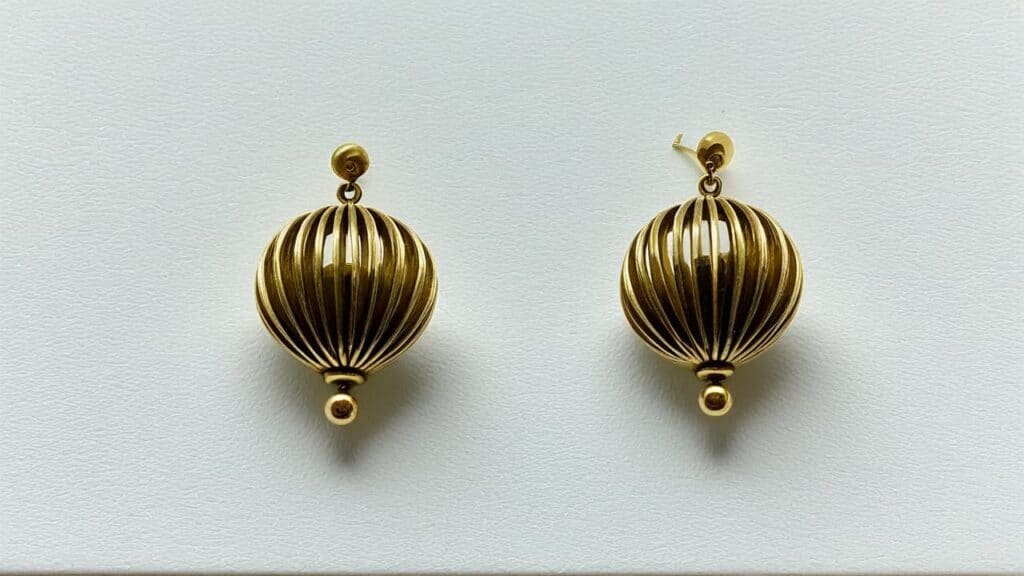
Contemporary collectors of Mid-Century Modern jewelry navigate a sophisticated market where historical significance, design merit, and craftsmanship quality determine value alongside condition and provenance. The collecting field has matured considerably as museums, auction houses, and specialized dealers have established clear criteria for evaluating pieces from this transformative design era.
- Collectors should prioritize pieces demonstrating authentic design characteristics including clean geometric lines, atomic or space-age motifs, sculptural three-dimensional forms, innovative material combinations, and construction techniques that reflect the era’s emphasis on architectural principles and modernist aesthetics. Exceptional examples feature bold proportions appropriate to the period, surface textures that move beyond traditional high-polish finishes, and design elements that clearly connect to broader Mid-Century Modern movements in architecture, furniture, and industrial design.
- Authentication requires careful examination of maker’s marks, hallmarks, and construction details that indicate genuine period production rather than contemporary reproductions attempting to capitalize on the style’s popularity. Period-appropriate marks include “14K,” “18K,” “Sterling,” and “925” stamps in fonts and locations typical of 1945-1965 manufacturing, while designer signatures from established houses like Cartier, Tiffany & Co., or studio artists should show appropriate aging, wear patterns, and engraving techniques consistent with the claimed production date.
- Construction quality indicators include hand-set stones showing slight irregularities that demonstrate human craftsmanship rather than machine precision, solder joints and finishing work consistent with period techniques, and wear patterns that reflect authentic age and use rather than artificial distressing. Genuine pieces often display natural patina development, appropriate scratches and dings from normal handling, and stone cuts that match historical availability including old European cuts for diamonds and period-appropriate synthetic materials.
- Market values reflect strong collector interest across multiple price segments, with museum-quality pieces from renowned designers commanding substantial premiums at auction houses including Sotheby’s and Christie’s where exceptional examples regularly exceed original retail prices by significant multiples. High-end designer pieces from houses like Cartier, Van Cleef & Arpels, and Tiffany & Co. can reach $60,000 to several hundred thousand dollars depending on rarity, condition, and historical significance.
- Studio artist works represent particularly active collecting areas as pieces by Ed Wiener, Art Smith, Sam Kramer, and Margaret De Patta have gained recognition as important American decorative arts, with values ranging from $3,000 for smaller pieces to $75,000 or more for exceptional examples that demonstrate innovative techniques or historically significant design approaches. Signed costume jewelry from quality manufacturers like Monet, Trifari, and European producers can command $500 to $5,000 depending on design complexity and condition.
- Condition assessment requires specialized knowledge of period materials and their typical aging characteristics, including how Bakelite develops patina and potential stress cracks, how Lucite may yellow or develop crazing over time, and how various metal finishes respond to decades of wear and environmental exposure. Professional restoration should preserve original materials and techniques whenever possible, with any modifications clearly documented for future buyers.
- Provenance documentation adds significant value through original purchase receipts, period advertisements showing specific pieces, exhibition catalogs from museum shows, or family histories that establish continuity of ownership from the original purchase date. Estate sales and auction records provide additional verification while helping establish fair market values for similar pieces.
- Storage and insurance considerations include appropriate climate control to prevent material degradation, individual storage compartments to prevent scratching and tangling, and specialized insurance coverage that reflects current market values rather than original purchase prices. Many collectors work with appraisers who specialize in vintage jewelry to ensure accurate valuations for insurance purposes and estate planning.
- Investment potential remains strong as institutional collecting by museums continues to increase market awareness while supply remains limited due to the relatively short production period and the fact that many pieces were worn regularly rather than preserved as collectibles. Quality examples from recognized designers or manufacturers tend to appreciate steadily, though market values can fluctuate based on fashion trends and economic conditions.
The Mid-Century Modern jewelry collecting field offers opportunities for both serious investors and enthusiasts who appreciate the era’s innovative design and cultural significance, with careful research and professional guidance helping collectors build meaningful collections that preserve important examples of this revolutionary design movement.
Modern Ways to Wear Vintage Mid-Century Jewelry
Mid-Century Modern jewelry seamlessly integrates with contemporary fashion through its timeless geometric forms and bold proportions that complement current maximalist trends and statement accessory preferences. These vintage pieces offer sophisticated alternatives to mass-produced jewelry while providing authentic historical character that enhances both professional and social wardrobes.
- Contemporary integration works exceptionally well with current fashion trends that favor chunky gold chains, oversized geometric earrings, and statement rings worn individually or in carefully curated combinations that create visual impact without appearing cluttered. Mid-Century pieces naturally complement modern minimalist clothing by providing focal points of interest, while their substantial scale pairs effectively with structured blazers, architectural knitwear, and clean-lined dresses that echo the era’s emphasis on form and proportion.
- Professional styling achieves sophistication through single statement pieces that demonstrate confidence and artistic awareness without overwhelming business-appropriate attire, such as a bold geometric brooch positioned on a jacket lapel, a substantial textured gold bracelet worn with rolled sleeves, or classic pearl strands that bridge vintage elegance with contemporary professionalism. The key lies in allowing one Mid-Century piece to serve as the outfit’s focal point while maintaining clean, uncluttered lines elsewhere.
- Evening and formal occasions showcase Mid-Century jewelry’s dramatic potential through cocktail rings that serve as conversation starters, statement earrings that complement updos or sleek hairstyles, and vintage parures for special events where complete matching sets create cohesive glamour reminiscent of the era’s sophisticated entertaining culture. These pieces work particularly well with solid-colored evening wear that provides neutral backgrounds for the jewelry’s geometric patterns and textural interest.
- Mixing eras successfully requires maintaining consistent metal tones throughout an outfit while balancing proportions to avoid overwhelming the wearer with multiple large pieces competing for attention. Art Deco geometric jewelry complements Mid-Century pieces through shared emphasis on clean lines and architectural forms, while contemporary minimalist pieces provide modern counterpoints that prevent vintage styling from appearing costume-like or overly nostalgic.
- Daytime casual styling benefits from Mid-Century jewelry’s substantial scale and interesting textures that elevate simple clothing including jeans, sweaters, and basic dresses through carefully chosen accessories that add sophistication without formality. Textured gold bangles, geometric earrings, and bold brooches transform everyday outfits into polished ensembles that demonstrate personal style and appreciation for quality design.
- Color coordination considers the warm gold tones prevalent in Mid-Century pieces, which complement earth tones, rich jewel colors, and classic neutrals while potentially clashing with cool silver-based color schemes or overly bright contemporary palettes. Understanding these relationships helps create harmonious outfits where vintage jewelry enhances rather than competes with clothing choices.
- Occasion appropriateness includes gallery openings and cultural events where the jewelry’s artistic heritage is appreciated and contextually relevant, cocktail parties that echo the era’s social entertaining traditions, professional networking events where sophisticated accessories demonstrate taste and cultural awareness, and formal celebrations where vintage glamour creates memorable personal style statements that stand apart from contemporary mass-market options.
- Layering techniques work best when combining pieces of different scales, such as pairing substantial Mid-Century necklaces with delicate contemporary chains, or mixing textured vintage bangles with sleek modern bracelets that create interesting contrasts without appearing chaotic. The goal involves creating intentional combinations that respect each piece’s individual character while building cohesive overall effects.
- Hairstyle considerations recognize that Mid-Century jewelry was designed for specific beauty standards including shorter hairstyles, structured updos, and carefully styled waves that showcased earrings and necklaces effectively. Contemporary wearers can adapt these principles through sleek bobs, elegant chignons, or pulled-back styles that provide clean backgrounds for statement pieces while avoiding hair interference with dangling elements.
- Seasonal adaptations acknowledge that Mid-Century jewelry’s substantial scale works particularly well during cooler months when clothing provides appropriate backgrounds for bold accessories, while summer styling may require lighter pieces or strategic placement that accounts for exposed skin and casual fabrics that might not support heavy vintage pieces effectively.
Successful Mid-Century Modern jewelry styling requires understanding both the pieces’ historical context and their contemporary relevance, allowing vintage accessories to enhance personal style while maintaining authenticity to the era’s design principles and cultural significance.
How Mid-Century Modern Jewelry Influences Modern Design
Mid-Century Modern jewelry continues to shape contemporary design through its revolutionary principles of geometric abstraction, innovative materials, and sculptural forms that established jewelry as wearable art rather than mere decoration. Today’s designers draw extensively from this era’s aesthetic vocabulary while adapting its concepts to modern manufacturing techniques, sustainability concerns, and evolving cultural contexts.
- Contemporary designers demonstrate clear Mid-Century influences through their embrace of substantial scale, architectural forms, and textured surfaces that echo the movement’s emphasis on structural beauty over applied ornamentation. Matthew Harris of Mateo creates sculptural gold and diamond earrings with bold geometric profiles, while Sorellina produces wide collar necklaces featuring sprays of gold and diamonds that recall atomic age starburst motifs, and Selim Mouzannar crafts weighty diamond cluster rings that celebrate the era’s preference for substantial, statement-making proportions.
- Design elements experiencing contemporary revival include chunky chain necklaces and bracelets that reflect the period’s substantial scale preferences, textured gold surfaces with bark finishes and linear brushing that move beyond traditional high-polish treatments, bold geometric forms that prioritize architectural structure, and mixed gemstone compositions featuring multiple colors and materials that demonstrate confident design choices rather than conventional precious stone hierarchies.
- Modern manufacturing techniques enable designers to achieve Mid-Century aesthetics while incorporating contemporary innovations including computer-aided design for precision geometric forms, advanced casting methods that reproduce complex sculptural elements, sustainable material sourcing that addresses current environmental concerns, and modular construction systems that allow pieces to transform into different configurations echoing the era’s kinetic jewelry experiments.
- Luxury fashion houses maintain Mid-Century connections through ongoing collections that reference historical designs while updating them for contemporary markets, with Tiffany & Co. continuing Jean Schlumberger’s nature-inspired legacy through organic forms and innovative gemstone settings, Cartier producing modern interpretations of vintage Panthère and geometric designs that bridge past and present, and Van Cleef & Arpels exploring kinetic elements and transformable pieces that recall the era’s fascination with movement and change.
- Independent studio jewelers carry forward the Mid-Century tradition of treating jewelry as fine art through experimental materials, one-of-a-kind pieces, and collaborative relationships with contemporary artists that echo the 1950s studio movement’s emphasis on individual expression and artistic integrity. These creators often work in small editions or unique pieces that maintain the handcrafted quality and innovative spirit that characterized the original movement’s most important practitioners.
- Museum recognition has elevated Mid-Century Modern jewelry from fashion accessory to important decorative art through major exhibitions at institutions including the Brooklyn Museum, Museum of Arts and Design, and Cooper Hewitt Smithsonian Design Museum that examine the movement’s cultural significance and artistic achievements. These exhibitions establish scholarly frameworks for understanding the jewelry’s historical importance while influencing contemporary collectors and designers.
- Auction market strength demonstrates sustained interest in quality Mid-Century pieces as major auction houses regularly feature dedicated jewelry sections highlighting work from the period, with strong prices achieved for pieces by recognized designers and manufacturers that reflect both historical significance and continued aesthetic appeal. Recent sales show particular strength for studio artist work and innovative material combinations that exemplify the era’s experimental spirit.
- Celebrity and fashion editor endorsement continues to drive interest in Mid-Century Modern jewelry through red carpet appearances, editorial styling, and Instagram influence that introduces vintage pieces to younger audiences who appreciate their bold aesthetics and authentic craftsmanship. Contemporary fashion magazines regularly feature vintage Mid-Century pieces alongside modern designs, demonstrating their continued relevance and timeless appeal.
- Educational programs at art schools and design institutions increasingly include Mid-Century Modern jewelry in their curricula as important examples of democratic design, material innovation, and cultural expression that demonstrate how decorative arts can reflect and influence broader social movements. Students study these pieces as case studies in successful design that balanced artistic merit with commercial viability and cultural relevance.
- Cultural resonance persists because Mid-Century Modern jewelry embodies optimistic values including faith in technological progress, belief in democratic access to quality design, and confidence in humanity’s creative potential that continue appealing to contemporary audiences facing their own technological and social transformations. These pieces represent a moment when American culture successfully balanced innovation with accessibility, creating lasting design principles that remain relevant for addressing current challenges in sustainable production, inclusive design, and meaningful material culture.
The enduring influence of Mid-Century Modern jewelry demonstrates how truly innovative design transcends its original historical moment to provide ongoing inspiration for creative expression, cultural commentary, and personal adornment that connects past achievements with future possibilities.
Conclusion
Mid-Century Modern jewelry represents a pivotal transformation in the history of personal adornment, marking the moment when accessories evolved from status symbols into vehicles for artistic expression and cultural commentary. The movement’s revolutionary embrace of atomic age aesthetics, geometric abstraction, and innovative materials created pieces that functioned as wearable sculpture while remaining accessible to middle-class consumers who sought sophisticated design beyond traditional luxury markets. From Ed Wiener’s spontaneous silver creations to Margaret De Patta’s optical experiments, from Bakelite bangles to starburst brooches, these pieces captured post-war America’s optimistic faith in technological progress and democratic design principles that celebrated both individual creativity and collective prosperity.
The cultural significance of Mid-Century Modern jewelry extends far beyond fashion trends to encompass broader themes of social mobility, gender role evolution, and lifestyle transformation that defined American society between 1945 and 1965. These pieces documented women’s changing roles as they entered professional workforces while maintaining domestic responsibilities, reflected suburban prosperity through cocktail culture and entertaining rituals, and demonstrated how thoughtful design could bridge artistic merit with commercial viability. The jewelry served as cultural artifacts that recorded shifting values around formality, personal expression, and material culture while establishing new standards for sophisticated living that emphasized quality, innovation, and individual taste over traditional hierarchies of precious materials and conventional beauty.
Contemporary relevance ensures that Mid-Century Modern jewelry continues influencing designers, collectors, and wearers who appreciate its timeless combination of bold aesthetics, quality craftsmanship, and cultural authenticity in an era dominated by mass production and disposable fashion. The movement’s emphasis on geometric forms, textured surfaces, and architectural principles provides ongoing inspiration for creators seeking to balance artistic integrity with commercial appeal, while its celebration of innovative materials and democratic accessibility offers valuable lessons for addressing current challenges in sustainable production and inclusive design. As auction houses report strong performance and museums recognize these pieces as important decorative arts, Mid-Century Modern jewelry maintains its position as both historical documentation and contemporary inspiration, proving that truly revolutionary design transcends its original moment to provide lasting value for future generations seeking authentic alternatives to ephemeral trends.