Most people don’t think twice about climbing into bed with a favorite ring still on a finger or a necklace still around the neck. It feels harmless, almost like part of getting dressed for the day and never undressing from it. Skin spends about a third of its life resting under the covers, though, and what stays on it during that time can matter more than most people realize, both for the body and for the jewelry itself.
Is It Bad to Sleep With Jewelry On?
For most people, sleeping in jewelry now and then won’t cause serious harm, but doing it every night raises the odds of skin irritation, tangled chains, bent settings, and faster wear on the pieces themselves. The bigger the piece, the more metal touching the skin, and the more moving parts it has, such as clasps, hooks, or dangling charms, the higher the risk. A smooth, well-fitted ring in solid gold behaves very differently overnight than a long, dangly necklace or a pair of hoop earrings.
The risk level depends heavily on the type of jewelry and what it’s made of, which is why the details below matter more than a single blanket rule.
How Jewelry Affects Skin While You Sleep
Skin irritation and allergic reactions
The biggest risk of sleeping in jewelry is contact with metals the skin reacts to, especially nickel, which is one of the most common causes of skin allergies in the world. When jewelry sits against skin for eight hours straight instead of just a few hours during the day, there’s far more time for sweat, body heat, and friction to work that metal into the pores.
Redness, itching, small bumps, or even blistering can show up in the exact spot where metal touched skin, whether that’s a finger, an earlobe, or the back of the neck. This kind of reaction is called contact dermatitis, and it tends to get worse the longer and more often the skin is exposed. For anyone whose skin already reacts to certain metals, sleeping in that jewelry simply extends the hours the irritation has to build.
Metal allergies can develop even in people who never had one before. Repeated, prolonged exposure is one of the main ways these allergies start in the first place.
Nickel allergy is far more common than most people realize. Studies put the rate at roughly 8 to 19 percent of adults, and it skews heavily toward women, largely because ear piercing at a young age is one of the biggest risk factors for developing it in the first place. A rash that keeps returning in the same spot no matter what changes can usually be traced with a simple dermatologist patch test, which identifies the exact metal responsible rather than leaving it to guesswork.
Trapped moisture and bacteria
Skin needs to breathe, and jewelry gets in the way of that overnight. During sleep, the body naturally sweats a little, and that moisture can get trapped underneath a ring, bracelet, or necklace instead of evaporating away. Combined with natural skin oils and any leftover soap, lotion, or dead skin cells, this creates a small, warm, damp environment where bacteria thrive.
Over weeks and months, this can lead to mild breakouts, a dull rash, or a sour smell developing under rings and bracelets that never come off. It isn’t usually dangerous, but it is uncomfortable, and it’s easily avoided by giving skin a break at night.
People with eczema or psoriasis tend to notice this effect more than most, since their skin barrier is already more fragile and reacts faster to trapped moisture and friction. If the skin under a ring or bracelet is ever broken, cracked, or already irritated, sleeping in that piece adds a real infection risk on top of the irritation, since bacteria gain direct access to a wound rather than just intact skin.
Can Sleeping in Jewelry Damage the Piece Itself?
Tangled chains and weakened clasps
Necklaces move far more than expected during a normal night of sleep. Tossing, turning, and shifting positions can wrap a chain around itself, pull it tight against the neck, or catch it on a pillow or blanket. Fine chains, especially delicate styles like box chains or rope chains, are the most likely to end up in a tight knot that’s hard to undo without snapping a link.
Even when the chain doesn’t break outright, constant pulling and twisting puts stress on the clasp, usually the weakest part of any necklace. A clasp forced open and shut by accidental tugging night after night wears out faster than one only handled during normal daily use.
Some chain styles hold up to this treatment far better than others. Sturdier links like curb chains or cable chains resist knotting fairly well because their links are thicker and less flexible, while delicate styles like snake chains, herringbone chains, or fine rope chains are much more prone to permanent kinks once knotted, sometimes badly enough that a jeweler has to repair the damaged section rather than simply untangle it.
Bent prongs, loosened stones, and scratches
Rings and bracelets take a different kind of beating overnight: pressure. Hands press against the mattress, get tucked under a pillow, or bump against a nightstand throughout the night, and a ring on a finger absorbs all of that impact. Over time, this can bend prongs holding a stone in place, loosen a setting, or even cause a stone to fall out entirely without anyone noticing until it’s already gone.
Bracelets and watches face similar wear from rubbing against sheets and blankets all night, which can leave fine scratches on polished metal or gemstone surfaces. None of this happens from a single night of sleeping in jewelry, but it adds up quickly once it becomes a daily habit.
The type of gemstone matters here too. Diamonds and sapphires are extremely hard and shrug off nightly friction with little issue, but softer stones like pearls, opals, turquoise, and emeralds scratch and dull much more easily. Pearls in particular can be damaged by the same sweat and body oils that irritate skin, since their surface is porous and absorbs moisture over time.
What Jewelry Is Safe to Sleep In?
Rings that fit well
A ring that fits properly, is made from a metal the skin tolerates well, and has a smooth, low-profile setting is generally the safest piece to sleep in. Wedding bands are a good example: many people wear theirs around the clock for years without issue, because a plain band has no dangling parts, no sharp prongs, and nothing to snag on fabric.
The exception is anything with a raised stone or delicate prongs, since those settings are far more likely to catch on bedding or take a hard knock overnight. A ring with a large centerpiece stone is generally better removed before bed, even when a plain band worn alongside it stays on.
Fingers also naturally swell slightly overnight, partly from lying down for hours, which shifts fluid around the body, and partly from the salt and warmth of sleep. A ring that feels perfectly comfortable during the day can feel noticeably tighter by morning, and a ring that’s hard to remove or leaves a deep indentation after sleep is a sign it should come off before bed rather than being pushed through the tightness.
Fine, hypoallergenic metals
Not all metals are equally likely to irritate skin overnight. Solid metals like platinum, titanium, and higher-karat gold (14k and above) are much less reactive than mixed alloys containing nickel or other cheaper metals used to bulk out lower-cost jewelry. Sterling silver and surgical-grade stainless steel also tend to be well tolerated by most skin types.
That said, “hypoallergenic” doesn’t mean risk-free. Even the calmest metals can still trap moisture and bacteria against skin, so material comfort only solves one part of the equation, not all of it.
White gold is a case worth calling out on its own. Pure gold is naturally yellow, so white gold gets its color by being alloyed with white metals, most commonly nickel or palladium, then finished with a thin layer of rhodium plating for that bright white shine. Nickel-based white gold has historically been the more common and affordable version, though palladium-based alloys are a nickel-free alternative increasingly used for people with sensitive skin. Constant friction from sleeping in a white gold ring wears that rhodium layer down faster than normal daytime wear, and once it thins out enough on a nickel-based piece, the alloy underneath can start touching skin directly. This is why a ring that never caused a problem before can suddenly start causing irritation after a year or two of round-the-clock wear.
Permanent and welded jewelry
Permanent jewelry, the welded bracelets, anklets, and necklaces a jeweler links closed with no clasp at all, is a different situation from everything else covered here, since it’s built specifically to be worn day and night without ever coming off. Without a clasp, there’s nothing to catch on bedding, tangle in hair, or pop open under pressure, which removes most of the mechanical risks that make regular chains and bracelets a problem overnight.
The same skin rules still apply, though. A welded piece made from a metal that doesn’t suit the wearer’s skin can still cause irritation, and because it can’t be removed for a break, that irritation has no natural stopping point until the piece is cut off. This is exactly why reputable jewelers offering permanent jewelry stick to solid, skin-friendly metals like 14k gold or sterling silver rather than cheaper mixed alloys.
Risks of Sleeping in Necklaces and Earrings
Necklaces and earrings carry a risk that rings and bracelets simply don’t: proximity to the face, neck, and airway. A long necklace that wraps around the neck during a restless night can tighten enough to feel uncomfortable, and in rare but serious cases, tangled chains have caused real injury. This risk matters even more for children, who move around a great deal more in their sleep and have less awareness of a chain pulling too tight.
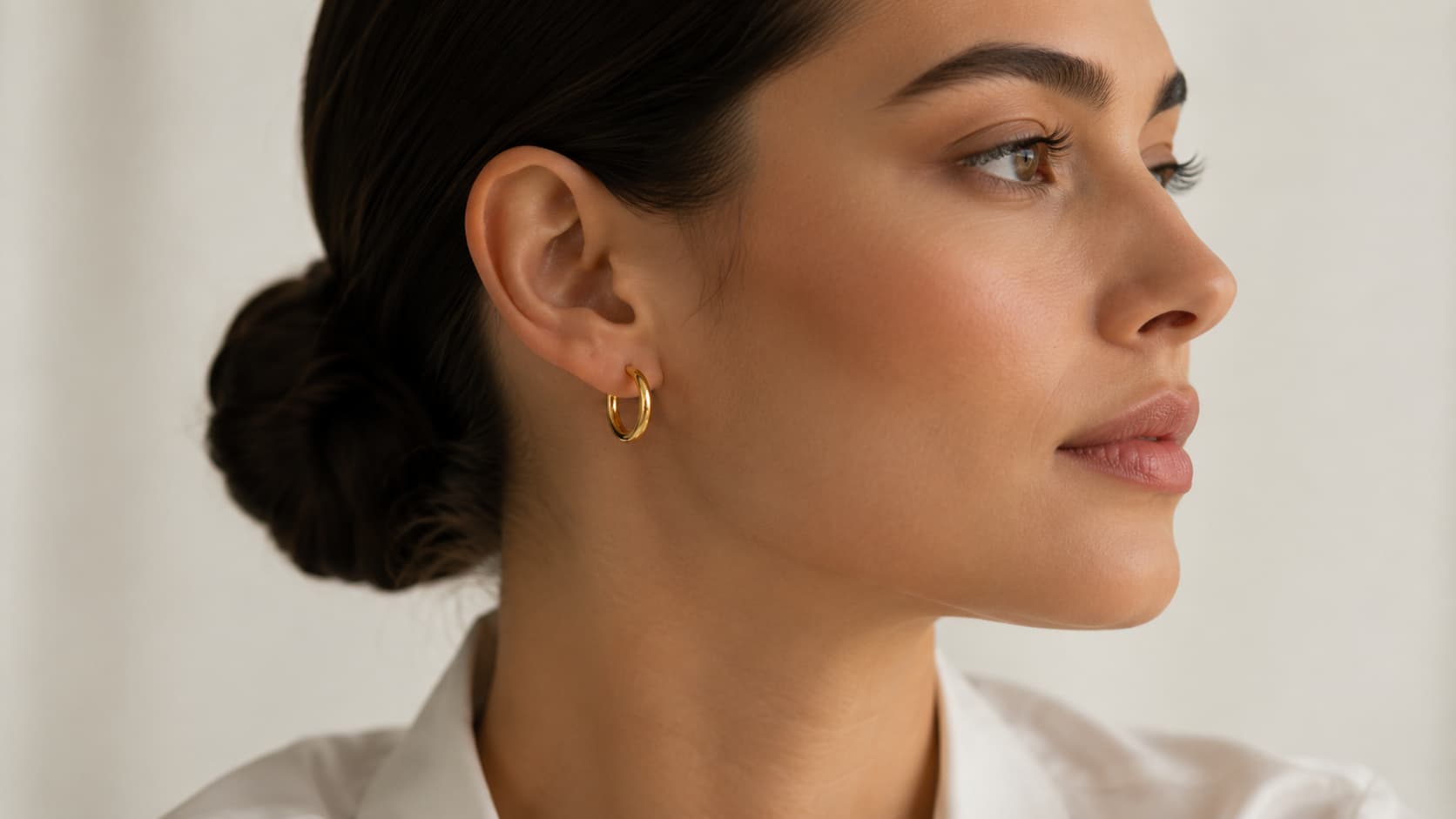
Earrings bring a smaller but still real risk of getting caught on a pillow or hair and pulled sharply, which can tear an earlobe or a healing piercing. Fresh piercings are especially vulnerable, since the surrounding skin hasn’t fully healed and is more prone to infection if bacteria get trapped against it overnight.
Long hair adds another layer of risk on top of this, since strands can wrap around an earring back or a necklace clasp during the night and pull tight without waking the sleeper. Some necklaces are made with a safety feature built for exactly this situation, called a breakaway or magnetic clasp, designed to pop open under sudden pressure instead of staying locked. It’s a useful feature to look for in any necklace likely to be worn overnight.
As a general rule, the closer a piece of jewelry sits to the neck or a healing piercing, the more sense it makes to remove it before bed.
Should You Wear a Watch to Bed?
Watches face a mix of the same problems as rings and bracelets, plus a few of their own. A watch strap can trap sweat and moisture against the wrist overnight, a common cause of the skin irritation people notice under a watch band, especially with leather or fabric straps that hold onto moisture longer than metal ones. The case and crystal can also pick up scratches from rubbing against sheets, and a watch caught at an odd angle under the wrist can simply be uncomfortable enough to disturb sleep.
There’s also a practical reason many people avoid sleeping in a mechanical watch: automatic movements rely on wrist motion to stay wound. Wearing one in bed doesn’t harm the movement, but a watch left completely still on a nightstand overnight may need a manual wind or a shake in the morning to get going again.
Smartwatches and fitness trackers are a different case, since many are worn to bed intentionally to track sleep quality and heart rate. That’s a reasonable use as long as the band fits comfortably rather than tightly, since a snug silicone or fabric band trapping sweat against the wrist for a full night is one of the more common causes of the itchy rash associated with fitness trackers. Loosening the band slightly for sleep and giving the wrist an occasional bare day is usually enough to avoid it.
How to Care for Jewelry at Night
A few small habits make this an easy problem to manage rather than something requiring daily thought.
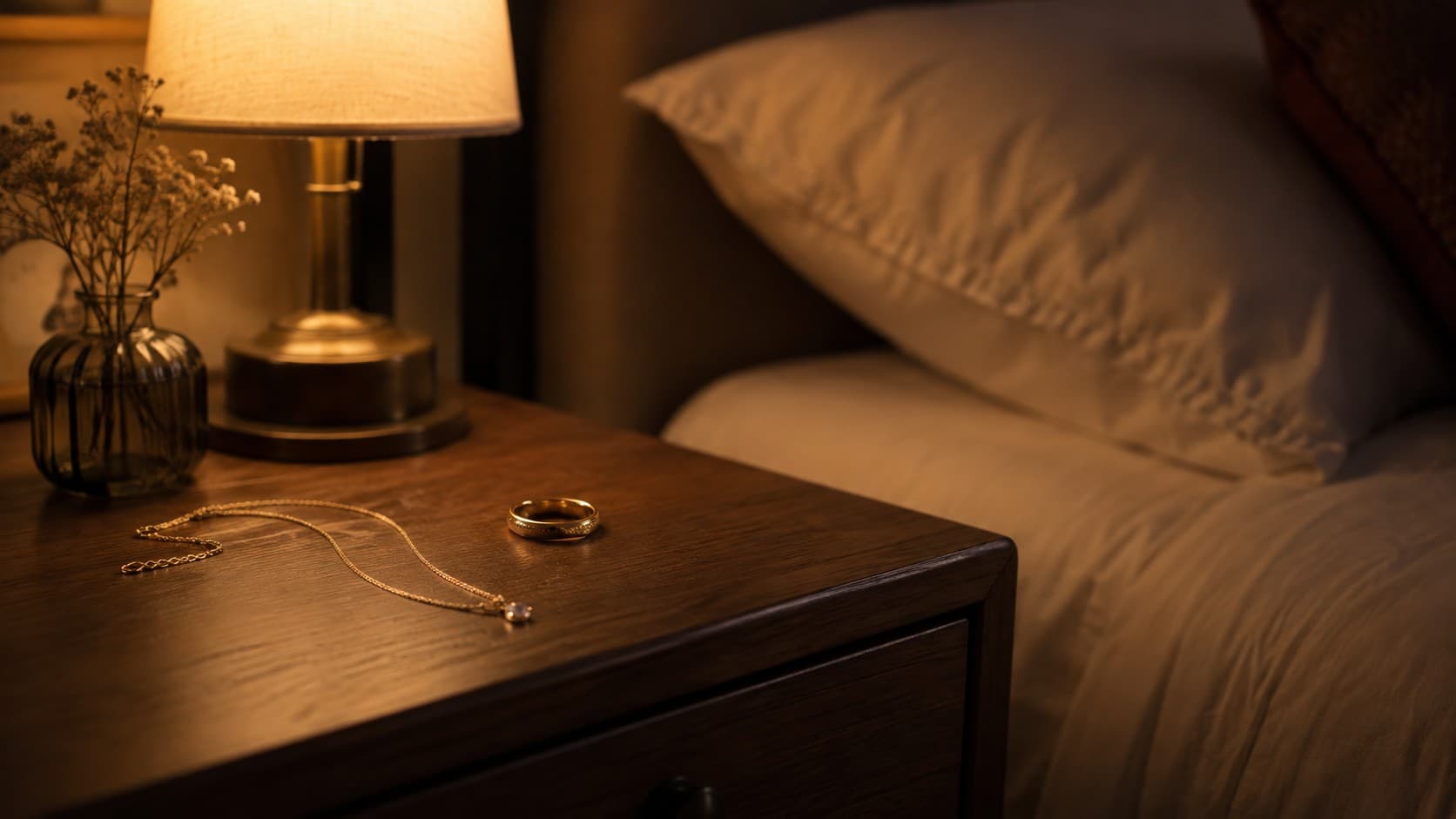
- A small dish or tray by the bed turns removing jewelry into a five-second habit instead of a search for a safe spot.
- Necklaces, dangling earrings, and any ring with a raised stone are worth removing before bed, even when a plain wedding band stays on.
- Regular cleaning matters, since dirt and oil buildup is a major contributor to irritation, whether or not the jewelry is worn to bed.
- Jewelry removed overnight lasts longer when stored in a lined box or anti-tarnish pouch rather than left out in open air, since exposure to air and humidity is what causes silver and lower-karat gold to tarnish fastest.
- Redness, itching, or a rash forming under a frequently worn piece is a signal to stop wearing it overnight first and see whether the irritation clears.
- Fresh piercings heal best when a piercer’s aftercare instructions are followed closely, which almost always means keeping the original jewelry in while avoiding pressure or friction while it heals.
Frequently Asked Questions
Is it OK to sleep with a wedding ring on every night?
For most people, yes, especially with a plain band in a solid metal like gold or platinum, since it has no dangling parts or raised stones to catch on anything. Any redness or irritation developing on that finger is a reason to remove the ring for a few nights and see whether the skin calms down.
Can sleeping in earrings cause an infection?
It can, particularly with fresh piercings, because trapped moisture and bacteria have all night to build up around the piercing site. Established piercings with simple stud earrings carry much less risk, though any redness, swelling, or discharge is a signal to clean the area and let it rest.
Does sleeping in jewelry make it tarnish faster?
Yes. Sweat, body oils, and the moisture trapped under jewelry overnight all speed up tarnishing, especially on sterling silver and lower-karat gold. Removing jewelry before bed and storing it somewhere dry is one of the simplest ways to keep pieces looking newer for longer.
Is it safe for kids to sleep in jewelry?
It’s generally best to avoid it, especially with necklaces, since children move around more during sleep and are less able to free themselves if a chain gets caught or tightens. Simple stud earrings in solid metal are usually lower risk than necklaces or bracelets with moving parts.
Can a tight ring or bracelet cut off circulation overnight?
It can, especially since fingers naturally swell a little overnight from lying down and the salt and warmth of sleep. Numbness, tingling, or a ring that’s dug a deep groove into the skin by morning are signs that piece was too tight, and a looser fit or removal before bed is worth switching to going forward.
What’s the safest jewelry to wear to bed?
A well-fitted, low-profile ring in a solid, skin-friendly metal like platinum or 14k+ gold is generally the safest option, since it has nothing to snag and minimal moving parts. Anything with a raised stone, a long chain, or dangling elements carries meaningfully more risk and is better removed.
Conclusion
Sleeping in jewelry occasionally isn’t going to ruin skin or destroy a favorite piece, but making it a nightly habit slowly stacks the odds toward skin irritation, tangled or damaged jewelry, and faster tarnishing. The safest approach is straightforward: plain, well-fitted rings in solid metals can usually stay on, while necklaces, dangly earrings, and anything with raised stones or delicate settings are worth the few seconds it takes to remove before the lights go out.