Glasses seem simple until eyes start needing help focusing at more than one distance, and suddenly words like “bifocal,” “trifocal,” and “progressive” get thrown around at the optometrist’s office without much explanation. A trifocal lens is one of the older solutions to this problem, and it’s still prescribed today because it does something bifocals can’t: it provides a dedicated zone for that awkward middle distance, like a computer screen or a car dashboard, instead of forcing a choice between reading vision and driving vision.
What Is a Trifocal Lens?
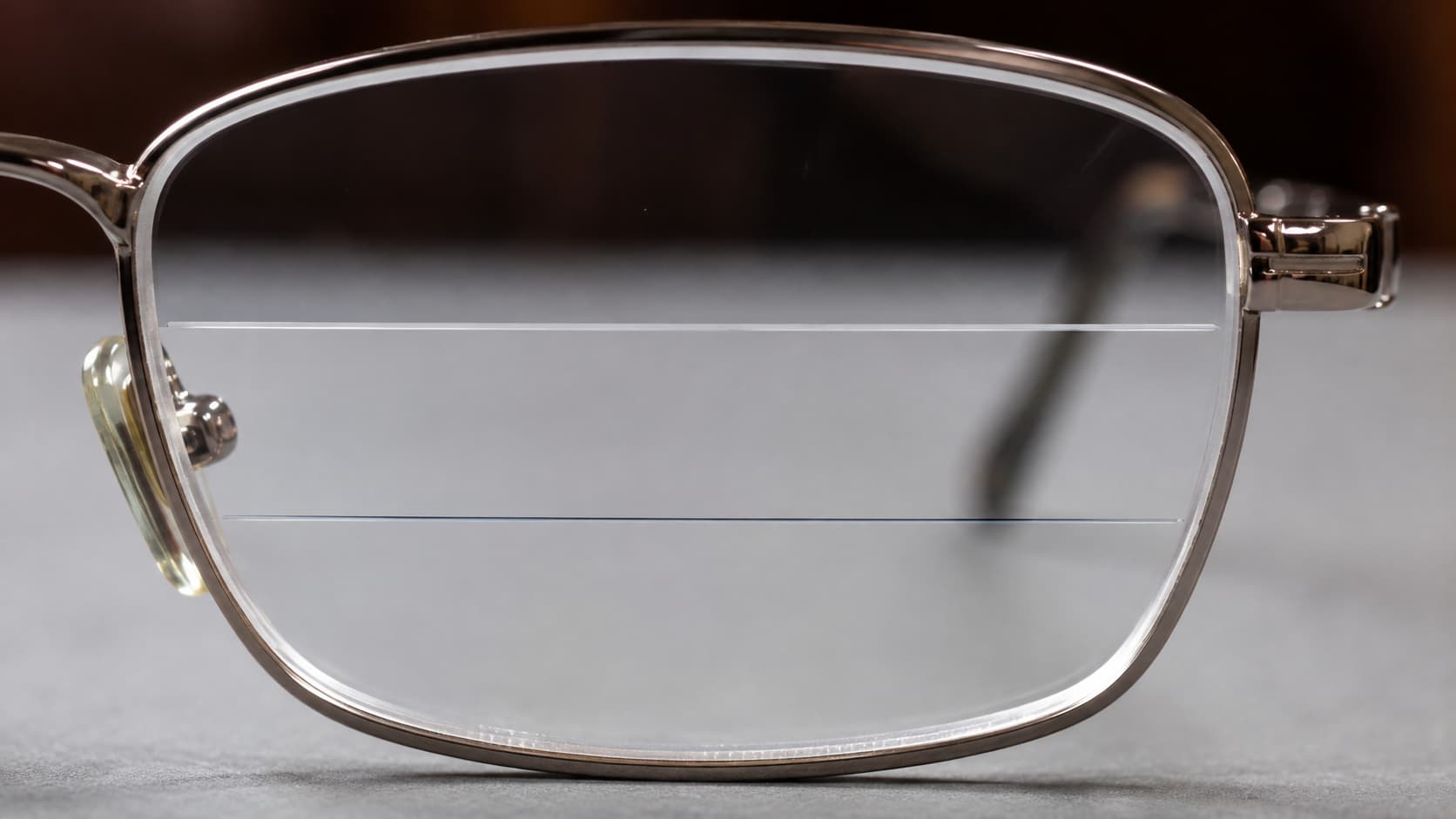
A trifocal lens is a single eyeglass lens split into three sections, each ground to a different power so the eye can focus clearly at three separate distances: far away, arm’s length, and up close. The three regions correct for distance vision, intermediate vision at roughly arm’s length, and near vision. A trifocal lens is easy to spot because it has two visible horizontal lines running across the glass, marking where one power zone ends and the next begins.
Trifocals exist because a lens with only two powers leaves a gap. A lens that only corrects for reading and for distance leaves anything in between blurry, a laptop screen, a menu at a restaurant, sheet music on a stand. The middle strip on a trifocal lens closes that gap.
The most common version is called a flat-top or D-segment trifocal, where the intermediate and near sections sit stacked in a half-moon shape toward the bottom of the lens, commonly sized around 7mm tall by 28mm wide. There’s also an executive-style trifocal, where each of the three zones stretches the full width of the lens rather than sitting in a smaller D-shaped block. That design gives a wider field of view for every distance, though the extra visible line tends to be more noticeable.
The Three Vision Zones
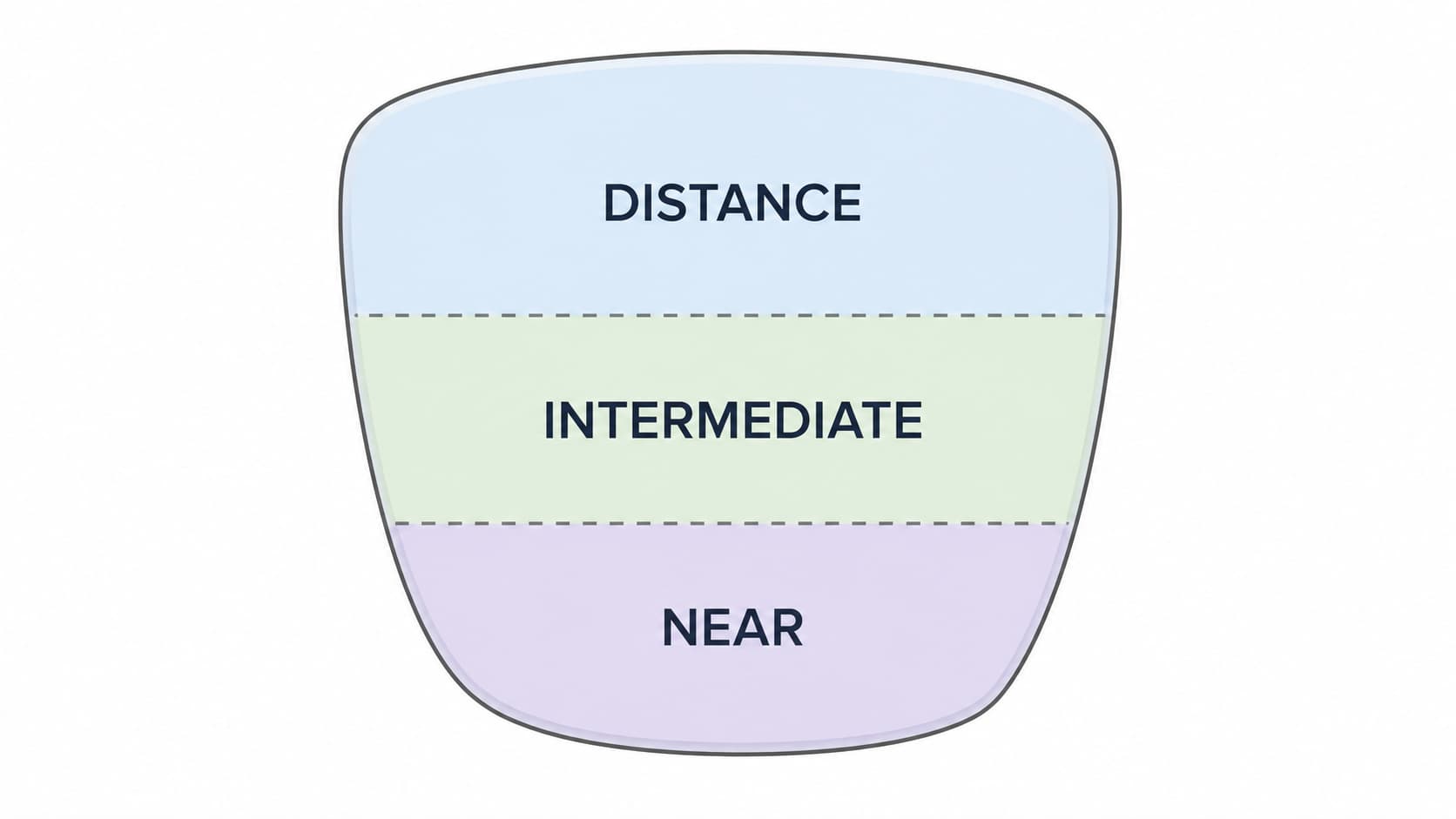
Each section of a trifocal lens has a specific job, and where the eye looks on the lens determines what’s actually in focus.
- Top zone (distance): Handles anything far away, covering tasks like driving, watching television, or scanning across a room.
- Middle zone (intermediate): Covers arm’s-length tasks such as computer work, reading a dashboard, or checking price tags, a zone that bifocals skip entirely.
- Bottom zone (near): Sits at the lower part of the lens and is meant for close-up work like reading or sewing.
Because the eyes naturally drop lower when focusing on something closer, wearing trifocals mostly comes down to letting the eyes fall into the right band rather than tilting the whole head around.
The middle “intermediate” section usually isn’t as strong as the reading section. It’s typically set at about half the magnifying power of the near zone, since arm’s length sits roughly halfway between reading distance and the far horizon.
How Do Trifocal Lenses Work?
Trifocals work by using the eye’s natural up-and-down movement to switch between three fixed powers ground into one piece of glass or plastic. There’s no smooth blending between the zones, just a clean jump from one lens power to the next, which is exactly why the lines are visible.
Looking straight ahead usually means looking through the top, distance-correcting zone. A slight drop of the gaze moves the eyes into the intermediate strip. Looking down further, toward the chin, lands in the near zone meant for reading. Some wearers notice a brief “jump” in the image the moment their eyes cross one of those lines, since the power changes instantly instead of gradually. Most wearers stop noticing this after a short adjustment period, though it depends on the person.
This instant switch is the biggest thing that separates trifocals from progressive lenses, which correct for the same three distances but blend the powers together with no visible lines.
Trifocals are also fitted slightly differently than bifocals. The top edge of the intermediate zone is usually lined up with the center of the pupil, rather than lower down, so the zone sits exactly where the eyes naturally rest when looking at something like a monitor. If that height is off even by a couple of millimeters, the zones stop lining up with where the eyes actually look, one of the more common reasons a pair of trifocals feels wrong even when the prescription itself is correct.
Trifocals vs. Bifocals vs. Progressives
| Lens Type | Distance Zones | Visible Lines | Best For |
|---|---|---|---|
| Bifocal | 2 (far + near) | 1 line | Switching mainly between distance and reading |
| Trifocal | 3 (far + intermediate + near) | 2 lines | Clear vision for screens or dashboards as well as distance and reading |
| Progressive | 3+ (blended) | None | A seamless look with no visible jump |
A bifocal lens typically carries one power for distance and one for near vision, while a trifocal lens typically adds a third power in between for intermediate vision. Progressives cover similar ground optically, but instead of three fixed steps, the power changes gradually across what’s called a “corridor,” so there’s no line and no sudden jump, just a smaller usable width for each zone.
Trifocals tend to offer a wider, more precise intermediate zone than progressives, without the smooth-blend distortion at the edges of the lens that some progressive wearers struggle with. They’re generally less expensive than premium progressive lenses, and the adjustment period tends to be shorter and more predictable since each zone has a clear, fixed edge rather than a gradual transition to learn.
The trade-offs sit on the other side of the same design. Two visible lines run across the lens, which some wearers find cosmetically unappealing, and a noticeable “jump” in the image happens right as the eyes cross a line. Trifocals are also less useful than progressives for quickly scanning between many different distances, since the design is limited to three fixed powers rather than a continuous range.
Who Actually Needs Trifocals?
Trifocals are typically prescribed for people with more advanced presbyopia, the age-related loss of the eye’s ability to focus up close. They’re generally recommended once someone needs a reading correction of about 2 diopters or more, since at that point the gap between near and distance prescriptions becomes wide enough that intermediate vision starts to suffer too.
A few everyday signs tend to point toward this stage: holding a phone farther away than usual, squinting at a computer screen even with reading glasses on, or getting headaches from constantly swapping between two different pairs of glasses. None of these confirm a need for trifocals specifically, but they’re worth raising with an eye doctor during a routine exam.
People who spend a lot of time at a computer, behind the wheel checking a dashboard, or doing detailed hands-on work often get the biggest benefit from the middle zone specifically, since that’s the range a plain bifocal simply doesn’t cover. Eye doctors also tend to bring up trifocals with patients around age 40 and older who already have a history of wearing corrective lenses, since that’s typically when the eye’s focusing ability declines enough for the intermediate gap to become noticeable.
A specialty design known as the E-D trifocal runs the intermediate zone the full width of the lens like an executive style, but keeps a smaller D-shaped near segment at the bottom. It’s built for people who need a wide field of clear intermediate vision, such as someone monitoring several screens at once, while still having a dedicated reading zone for notes or a clipboard.
Why Do Trifocal Lenses Have Visible Lines?
The lines exist because trifocals use three separate, fixed-power sections rather than one smooth gradient, and there’s no way to fuse three distinct powers together without a visible boundary. Those two horizontal lines are exactly what separate the three power zones from each other.
For some wearers, this is a non-issue. For others, it’s the main reason they eventually switch to progressives, since progressive lenses hide the transition entirely and look more like a standard single-vision lens from across the room. The trade-off is that progressive lenses often have narrower usable zones for each distance, especially the intermediate area, which is one reason people with heavy computer use are still steered toward trifocals or a computer-specific lens instead.
Do Trifocals Take Time to Get Used To?
Most new wearers need an adjustment period, and it’s completely normal to feel a bit off in the first days or weeks. Adjusting to trifocals can take several weeks, largely because the eyes and brain have to learn to associate a specific downward gaze angle with a specific lens power.
During that adjustment period, it’s common to feel like the image “jumps” slightly when the eyes cross one of the lines, or to catch the wrong zone for a task by accident. Getting the segment height right, meaning exactly where the lines sit on the lens, makes a real difference here, since a poorly fitted trifocal won’t line up naturally with where the eyes actually rest for each task. Anyone struggling weeks after getting new trifocals is usually better off going back to whoever fitted the glasses rather than assuming it will resolve on its own.
Who Invented the Trifocal Lens?
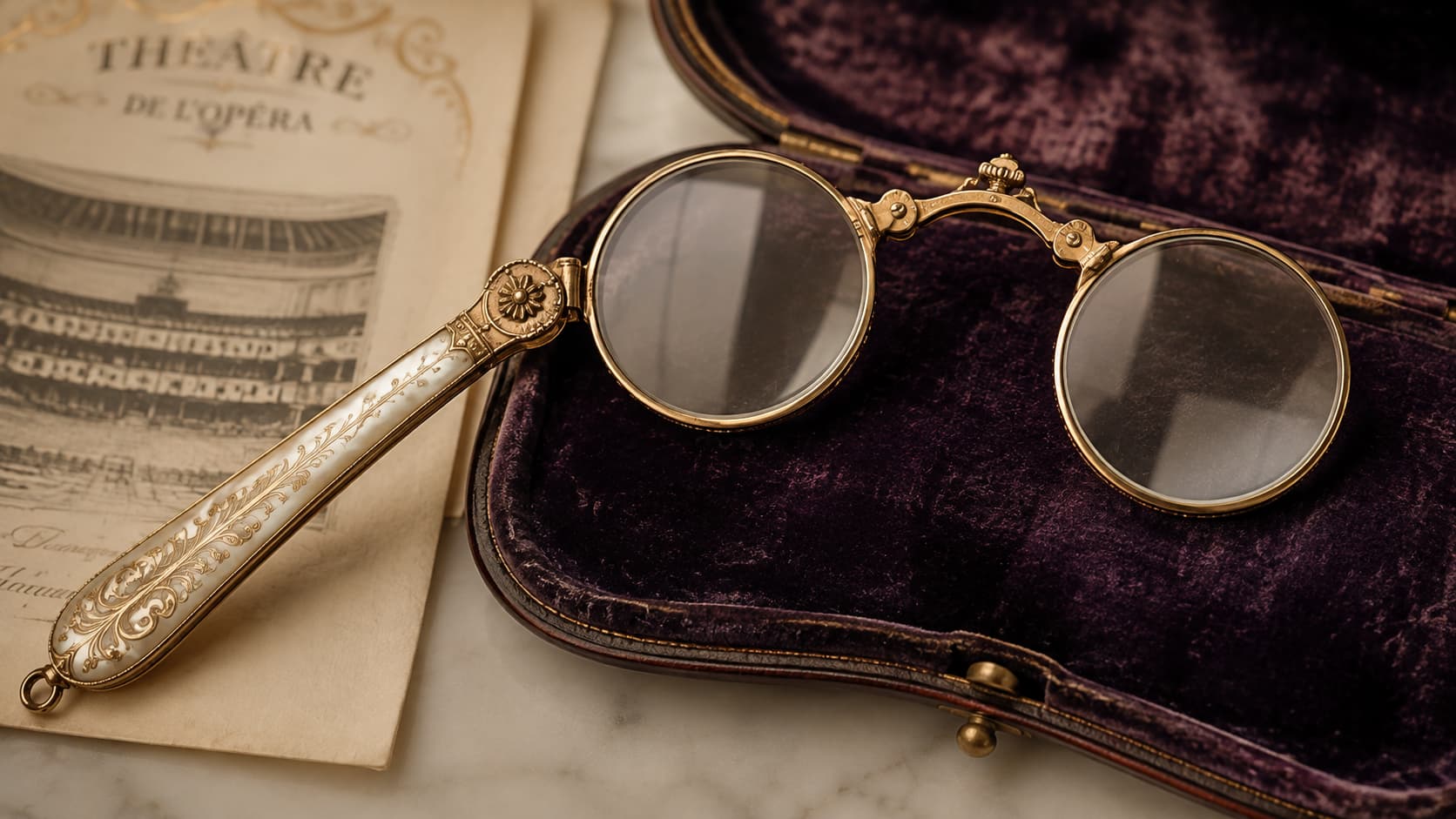
Trifocals aren’t a modern invention. The design traces back to 1827, when optician John Isaac Hawkins patented a lens with three separate power zones, building on the two-zone bifocal concept most famously associated with Benjamin Franklin decades earlier. Bifocals solved the problem of switching between two pairs of glasses, but they still left a blurry gap for anything at arm’s length, and Hawkins’ three-zone design was the fix.
Hawkins has an odd footnote in this story too: he’s the one who gave Franklin’s earlier invention its name. Franklin himself never used the word “bifocal,” calling his creation “double spectacles” instead, and it wasn’t until decades later that Hawkins coined the term while working on his own trifocal design. Trifocals stayed a standard option for most of the 20th century, but they’ve gradually become less common as more people choose progressive lenses, which correct the same three distances without any visible lines. Even so, trifocals never disappeared: they’re still manufactured, still prescribed, and still preferred by wearers who want a wider, more clearly defined zone for each distance rather than the smoother but narrower bands a progressive lens provides.
Frequently Asked Questions
Are trifocals still commonly prescribed today?
They’re less common than they once were, since many people now choose progressive lenses for a more seamless look, but trifocals are still prescribed regularly, especially for wearers who want a wider, more precise intermediate zone or who find progressives harder to adapt to.
Can trifocal lenses be made in sunglasses or non-prescription frames?
Trifocal power can be ground into a wide range of frames, including sunglasses, as long as the lens is large enough to comfortably fit three distinct zones. Smaller or heavily curved frames can make it harder to fit all three sections without cutting off part of one zone.
Do trifocals cost more than bifocals?
Trifocals typically cost somewhat more than basic bifocals because of the added complexity of grinding a third power zone, but they’re generally more affordable than premium progressive lenses, particularly high-end digital progressive designs. Prices climb further with customizations like an executive or E-D style, a larger segment size, or specialty coatings, and in some cases a fully customized pair of trifocals can run close to $1,000.
Is it dangerous to walk down stairs while wearing trifocals?
It can feel awkward at first, since looking down through the reading zone while walking can distort the sense of where the step edges are. Most wearers learn to lower the chin slightly and look through the distance or intermediate zone instead, but extra caution on stairs is recommended during the adjustment period.
What’s the difference between a “flat-top” trifocal and an “Executive” trifocal?
A flat-top trifocal has a D-shaped near and intermediate segment sitting in the lower portion of the lens, while an Executive trifocal runs each zone the full width of the lens. Executive styles give a wider field of view for each distance but make the visible lines more prominent.
Conclusion
Trifocal lenses solve a very specific problem: the blurry no-man’s-land between reading distance and the far horizon that plain bifocals were never built to handle. They do this with three clearly defined zones instead of a smooth blend, which means visible lines and a short adjustment period, but also a wider, more predictable band of clear vision for each distance, particularly the middle one most wearers rely on for screens and dashboards all day. Whether trifocals or progressives make more sense comes down to how much a visible line matters cosmetically versus how much value there is in a precise, dependable intermediate zone.