The phrase “Dirty Dozen” comes up often in stories about vintage watches. It sounds like the name of a heist movie, and it actually is borrowed from one. In the watch world, though, it refers to something much more real: a set of twelve tough, no-frills watches built for British soldiers during the final years of World War II. These watches were never meant to be fashionable or expensive. They were built to survive mud, water, cold, and combat, and to keep working when a soldier’s life depended on knowing the time. Decades later, they have become some of the most respected and collected military watches in history.
Where Does the Name “Dirty Dozen” Come From?
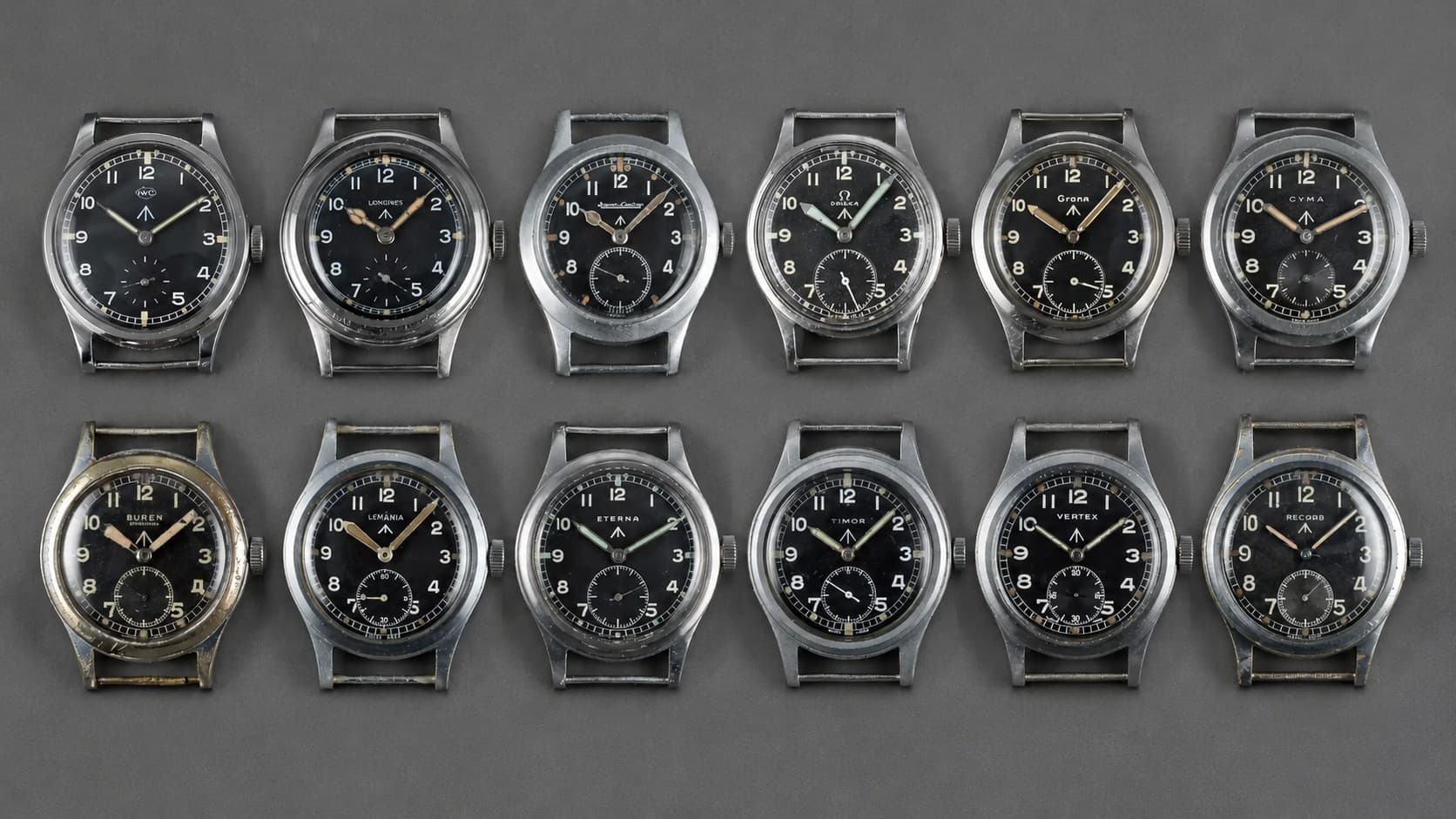
The “Dirty Dozen” refers to twelve Swiss watch companies that the British military hired during World War II to build a standardized watch for soldiers. Each company built its own version of the watch, but every version had to follow the same strict rulebook set by the British War Office. That means twelve different brands, twelve slightly different watches, but one shared purpose.
The nickname itself is a bit of a joke among collectors. It borrows its name from the 1967 war movie The Dirty Dozen, about a group of twelve soldiers sent on a dangerous mission. Watch collectors later attached that name to these twelve wartime watch brands because the comparison felt fitting: a small, mixed group brought together for one tough job.
Why Did Britain Need These Military Watches?
Britain needed a reliable, standardized watch because soldiers could no longer depend on whatever civilian watch they happened to own. Before this program, British troops often carried personal wristwatches that were never designed for war. Some broke in the mud. Some fogged up in the rain. Some simply were not accurate enough for tasks like coordinating an attack or timing an artillery strike.
During World War Two, every major military power wanted a durable, precise timekeeper for its soldiers — the Americans had the A-11, the Germans had the B-Uhr, and the Japanese used Seikosha watches. Britain’s answer was a formal specification for a rugged wristwatch, and since British watch factories were already busy building weapons and instruments for the war effort, the country turned to Switzerland, which had stayed neutral and kept its watch industry running at full strength.
The Dirty Dozen was not actually Britain’s first attempt at this. From 1939, British forces already carried a watch known as the ATP, short for Army Trade Pattern. It had a cream-colored dial rather than black, and roughly 16 to 17 Swiss manufacturers supplied around 130,000 to 150,000 of them over the course of the war. The ATP did most of the actual work on the front lines. The Dirty Dozen, by contrast, arrived very late, mostly in 1945, and was issued largely to officers and specialists such as engineers and communications staff rather than ordinary infantry. So while the Dirty Dozen gets nearly all the attention today, the ATP watch quietly carried more of the war on its wrist.
What Does W.W.W. Mean on a Watch?
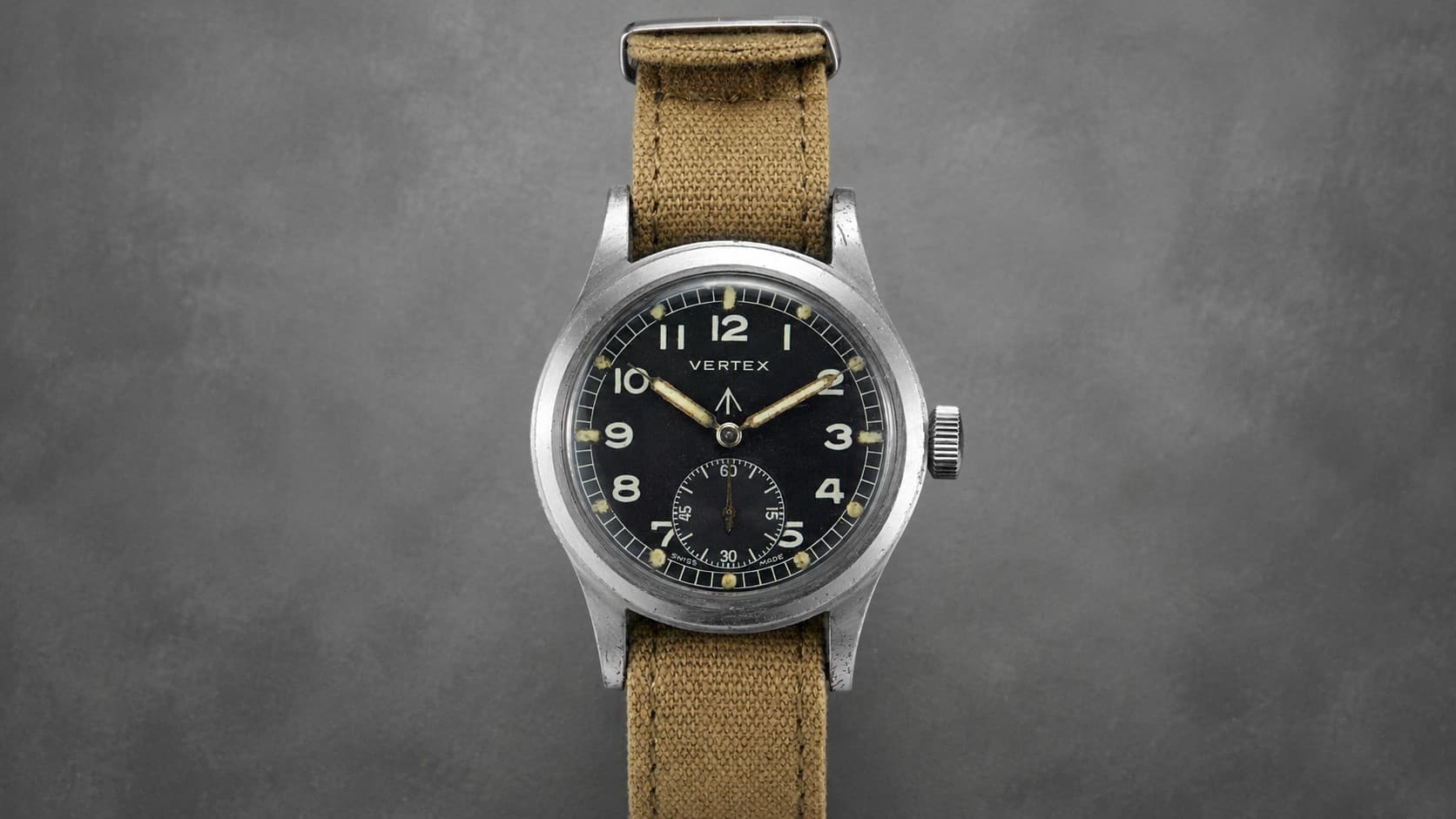
The letters “W.W.W.” are generally translated as “Wrist Watch Waterproof,” though the formal War Office paperwork referred to the watches as “Watches, Wristlet, Waterproof” — either way, the acronym was the official shorthand for the specification these watches had to meet. It functioned as a shared checklist that every one of the twelve brands had to follow, no matter how they normally built their own watches.
The British War Office issued this specification, numbered R.S./Prov/4373A, and it demanded that the watch be a luminous wristlet type in a stainless steel or other approved waterproof case. On top of that baseline, the rules got quite specific:
- Black dial with bold, easy-to-read numbers, so a soldier could check the time in a split second.
- Small seconds hand set in its own little circle at the 6 o’clock position.
- Luminous paint on the hands and numbers, so the watch could be read in total darkness without a flashlight.
- A shatter-resistant crystal, usually made of an early type of tough plastic instead of glass, since glass could shatter and injure the wearer.
- A 15-jewel movement built to chronometer-level accuracy, inside a case around 36.5mm wide, with water and shock resistance built in.
- A broad arrow stamp, a small symbol on the case back marking the watch as property of the British government.
Every one of these details existed for a reason. A soldier in a trench or a cockpit did not have time to squint at a fancy dial or worry about scratching delicate glass. The watch had to just work, every time, without complaint.
The W.W.W. holds a small but genuine place in watchmaking history: unlike most military watches before it, which were simply civilian designs adapted after the fact, this one was drawn up from scratch with soldiers in mind. The spec even affected how the watch attached to the wrist: because the case had fixed metal bars instead of the spring bars used on most watches, straps had to loop all the way through and around the case rather than clip on. That looped design is a direct ancestor of the “NATO strap,” the striped nylon band still popular on watches today.
The movements themselves were also tightly controlled. The rules called for 15-jewel movements between 11.75 and 13 lignes across, an old European unit for movement diameter, so that every brand’s engine, despite looking different on the outside, met a similar standard of size and accuracy on the inside.
The 12 Dirty Dozen Watch Brands
Twelve companies answered the British Ministry’s call: Buren, Cyma, Eterna, Grana, Jaeger-LeCoultre, Lemania, Longines, IWC, Omega, Record, Timor, and Vertex. Some of these names are still famous luxury brands today. Others quietly disappeared or got folded into bigger companies decades ago.
| Brand | Roughly How Many Were Made | Status Today |
|---|---|---|
| Omega | About 25,000 | Still one of the world’s most famous watch brands |
| Record | About 25,000 | Was eventually absorbed into Longines |
| Cyma | Around 20,000–25,000 | Still exists, though far smaller than in the 1940s |
| Buren | Around 10,000–15,000 | No longer an independent watchmaker |
| Lemania | Around 10,000–15,000 | Went on to make chronograph movements used by Omega, including in the Speedmaster |
| Timor | Around 10,000–15,000 | Has released a modern reissue inspired by its wartime design |
| Vertex | Around 10,000–15,000 | Discontinued for decades, then revived in 2015 |
| Eterna | Around 5,000–8,000 | Later evolved into the brand known as Certina |
| Jaeger-LeCoultre | Around 5,000–8,000 | Still a top-tier luxury brand |
| Longines | Around 5,000–8,000 | Still an active, respected Swiss brand |
| IWC | Around 5,000–6,000 | Still a major luxury watchmaker |
| Grana | Fewer than 5,000 | The rarest and shortest-lived of the twelve |
These numbers are best estimates, not exact counts, and sources don’t always agree — a few even cite a much higher figure for Omega specifically. Only IWC, Jaeger-LeCoultre, and Omega kept detailed production records at the time, so historians have had to piece together the rest from surviving watches and old paperwork.
Vertex is often noted as the only British-based company on the list, though its actual watch production still ran through factories in Switzerland. A thirteenth brand, Enicar, was reportedly asked to join the program too, but for reasons lost to history, it never delivered its watches, so it never made the official twelve.
Is Rolex One of the Dirty Dozen Watches?
Rolex is not part of the Dirty Dozen because it was not one of the twelve companies contracted for this specific 1945 program. It was already a respected Swiss name by then, but the War Office simply looked elsewhere when assembling this particular group of twelve. That does not mean Rolex sat out military watchmaking entirely. Later on, the brand built a modified diving watch, nicknamed the “MilSub” for its Royal Navy use, and issued it to Navy divers on two separate occasions roughly two and three decades after the war. Those watches are hugely collectible in their own right today, but they are a separate chapter of military watch history, built for a different job at a different time, and are not counted among the official Dirty Dozen.
How Rare Are Dirty Dozen Watches Today?
Some Dirty Dozen watches are fairly easy to find, while others are nearly impossible to track down, because the twelve brands did not produce equal numbers. Estimates put total wartime production somewhere in the neighborhood of 145,000 watches across all twelve makers combined, and that figure was distributed very unevenly from one brand to the next.
Grana stands out as the rarest of the group. It was the shortest-lived of the twelve makers, and today fewer than 5,000 examples are believed to still exist. Eterna sits in a similar position: its wartime output is generally put at around 5,000 pieces, a fraction of what larger suppliers like Omega or Longines managed to turn out.
Because of this uneven production, a genuine collector’s goal has long been to assemble one authentic watch from each of the twelve brands. Watch people sometimes call this a “full set,” and it is considered one of the toughest challenges in vintage watch collecting, since a few of the brands’ watches turn up only rarely at auction.
Part of what makes surviving examples special is what may have happened to many of them after the war ended. According to some accounts, a number of Dirty Dozen watches were not simply retired but sold onward to other countries’ militaries, including Dutch, Indonesian, and Pakistani forces, keeping them in active use for decades after 1945. Some sources also describe the Ministry of Defence stripping original radium-based luminous markings from surviving watches on safety grounds before disposal, since radium was later recognized as a health hazard. These details are harder to independently confirm than the production numbers above, but between genuine decades of hard use and any later removal of original material, well-preserved, all-original examples are considerably harder to find today than the raw production figures alone would suggest.
How Much Are Dirty Dozen Watches Worth?
Prices depend heavily on which brand made the watch and how well it survived. At the lower end, common brands like Vertex, Lemania, Cyma, or Record in honest, well-worn condition have sold at auction for as little as $700 to $1,500. Slightly rarer names such as Eterna, Jaeger-LeCoultre, Longines, and IWC typically land somewhere between $1,500 and $8,000, with exceptional or fully original examples pushing toward the higher end.
Grana is the clear outlier. As the rarest of the twelve, an authentic Grana in good condition regularly sells for $15,000 to $25,000 at major auction houses, and standout examples have gone even higher. A complete set with one genuine watch from all twelve brands is a different proposition entirely, since it depends on finding every single maker at once, and reported sales of complete sets have put the total cost well above $30,000, though because these transactions are rare and often private, a precise, reliable figure is hard to pin down.
These figures move around a lot based on condition, whether the original radium lume and hands survived, and whether the watch has its correct military case-back markings. As with any vintage collectible this old, fakes and heavily modified “franken-watches” do circulate, so buying from a reputable specialist dealer or auction house — and knowing how to check a watch’s authenticity before paying — matters more here than with most modern watches.
The Lasting Legacy of Dirty Dozen Watches
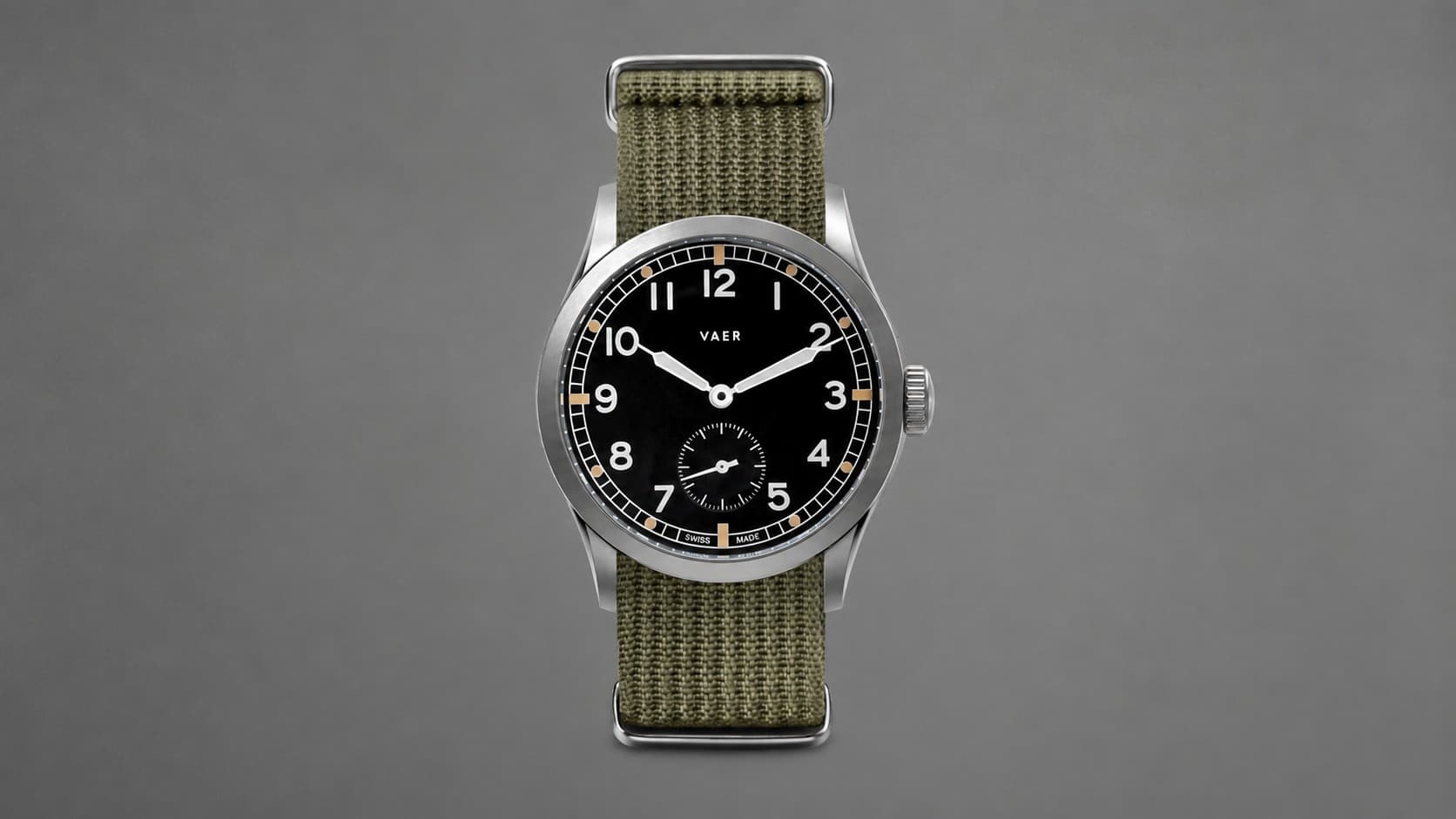
These watches still matter because their design shaped almost every “field watch” made since. Even though some of the original twelve manufacturers no longer exist, their design lives on in modern military-style watches, and IWC’s own Pilot’s Watch line can trace its roots directly back to its Dirty Dozen model. The simple black dial, bold numbers, and small seconds subdial found on countless watches today, whether they cost fifty dollars or five thousand, all trace back to this one wartime specification.
IWC’s own postwar Mark 11 pilot’s watch grew directly out of its W.W.W. design, adding features like a magnetic shield for pilots working around aircraft instruments. That watch went on to serve air forces across the British Commonwealth for decades. In other words, a rulebook written for wartime soldiers ended up influencing watch design for the rest of the century.
A few of the original names have also come back from the dead specifically to revisit this history. Vertex was relaunched in 2015 and now sells a modern M100 model built around its original wartime specs. Timor, another of the twelve, has done the same with its Heritage Field WWW reissue. Beyond the original brands, a whole category of budget and mid-range “field watches” from companies with no historical link to the Dirty Dozen still borrow the same black dial, small seconds, and Arabic numeral layout, simply because it has proven itself as one of the most legible watch designs ever put on a wrist.
Frequently Asked Questions
What does W.W.W. stand for on a military watch?
W.W.W. stands for “Wrist Watch Waterproof,” the name of the official British specification these twelve brands had to follow. It is often stamped or noted on original paperwork and case backs from these watches.
How many Dirty Dozen watches were made in total?
Roughly 145,000 watches were produced across all twelve brands combined, though the number made by each individual brand varied enormously, with some brands supplying tens of thousands and others only a few thousand.
Is Rolex one of the Dirty Dozen watches?
No. Rolex was not one of the twelve brands contracted for this specific 1945 program, even though it was a respected Swiss watchmaker at the time and made its own separate military watches for British forces.
Are Original Dirty Dozen Watches Still Available to Buy?
Yes, original examples do appear at auctions and through vintage watch specialists on a regular basis. Common brands can sell for under $1,500, while a rare Grana can fetch $15,000 or more, so budget expectations depend heavily on which brand is in question.
Why is it called the “Dirty Dozen” if it was a serious military program?
The nickname was not used during the war itself. Collectors gave it that name later, borrowing the title from the 1967 war film about twelve soldiers on a dangerous mission, because the comparison to twelve companies pulled together for one shared task felt fitting.
Conclusion
The Dirty Dozen story is really the story of twelve different companies solving the same hard problem: building a watch a soldier could trust with his life. The answer was a strict specification covering everything from the dial color to the crystal material, followed by twelve Swiss manufacturers with varying degrees of size and fame. Some of those names, like Omega and IWC, are still giants in the watch world. Others, like Grana and Buren, faded away and left behind only a small number of watches that collectors now chase for years. What ties all twelve together is that simple, honest design built for function over flash, a design that still shows up in field watches made today, more than eighty years later.