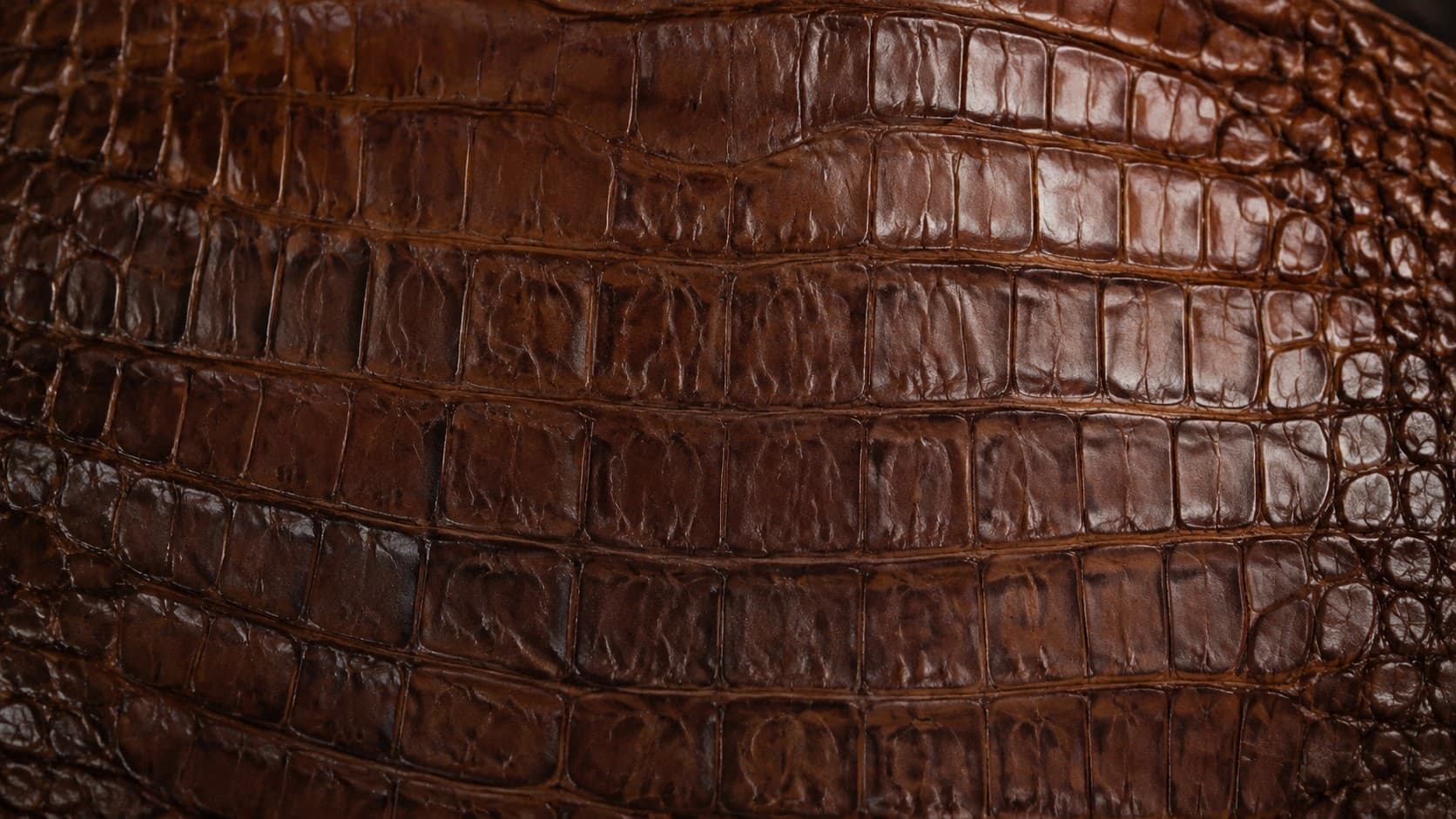
Walk past a glass counter in any luxury boutique and a handbag might catch the eye with a bumpy, scaled texture that looks nothing like the smooth cowhide found on an everyday wallet. That texture usually comes from an animal like an alligator, crocodile, snake, or ostrich, and the leather made from its skin is called exotic leather. Because many of these animals are wild species, or close relatives of wild species that governments worry about protecting, the trade in their skins is watched far more closely than ordinary cow or pig leather. Understanding what exotic leather actually is, and why so much paperwork follows it around the world, helps explain why these materials cost more and why some countries block certain finished goods from crossing their borders at all.
What Makes a Leather “Exotic”?
Exotic leather comes from any animal outside the usual cow, pig, goat, and sheep families used for everyday leather goods. The most common types are alligator, crocodile, python, ostrich, and stingray, though lizard and even shark skin show up occasionally too. Each species has its own texture: crocodile and alligator skins have small bony bumps called osteoderms, python skin has a distinct scale pattern, and ostrich leather is known for the raised bumps left behind where feathers once grew.
What separates these materials from ordinary leather isn’t just how they look. It’s where they come from and how tightly that supply is controlled. A cow can be raised almost anywhere with few restrictions, but a saltwater crocodile or a reticulated python belongs to a species that international treaties track by name. That single fact changes everything about how the leather gets made, sold, and shipped.
Why Some Animal Skins Need Government Rules
Governments regulate exotic skins because overhunting in the past pushed several species toward extinction, and nobody wants that mistake repeated. Crocodile and alligator populations in particular were hunted so heavily for their skins in the mid-1900s that numbers crashed in parts of the world. Regulation exists to make sure today’s leather industry doesn’t drain wild populations the same way, whether by capping how many animals can be taken from the wild, requiring farms to prove where their animals came from, or banning trade in a species altogether.
The regulation isn’t only about counting endangered animals. It’s also about making it hard to disguise an illegally caught animal as a legally farmed one. Because a finished handbag looks nothing like a wild-caught skin, officials need a paper trail stretching back to the animal itself. That’s where an international agreement called CITES comes in.
How CITES Controls the Exotic Leather Trade
CITES stands for the Convention on International Trade in Endangered Species of Wild Fauna and Flora, and it’s the main rulebook the world uses for trading animal products across borders. Roughly 185 countries have joined the agreement, and together they use it to track and limit trade in species considered at risk. Almost every exotic leather sold today, from crocodile to python, falls somewhere on its list of protected species.
CITES sorts species into three tiers based on how much danger they’re facing. The top tier covers species so close to extinction that commercial trade is essentially off the table except in rare, extraordinary cases. A middle tier covers species that aren’t currently endangered but could become so if trade went unmonitored, and this is exactly where most alligator, crocodile, and python species used in leather goods land. A third, narrower tier covers species that one individual country has flagged as needing outside help to control trade within its borders. Falling into that middle tier means a skin can legally cross borders, but only alongside paperwork proving it was obtained the right way.
CITES has been around since 1975, making it one of the oldest wildlife protection treaties in the world, and it now has roughly 185 member countries on board. Its reach is huge: the treaty currently covers more than 40,000 species of animals and plants combined, everything from orchids and corals to elephants and crocodiles. Leather is just one small slice of what it regulates, but it’s the slice most people run into personally, whether they realize it or not, whenever they buy a wallet, watch strap, or handbag made from an animal skin.
Appendix I species generally cannot be sold commercially at all, no matter how well-documented the item is. If a material is listed there, like most elephant ivory, it’s effectively off the table for trade.
Permits and Tags: How Legal Leather Is Proven
Every legal crocodilian or python skin is supposed to carry a small identifying tag linking it back to the farm or licensed harvest it came from. This tag system lets customs officers and buyers confirm a skin wasn’t poached, and it’s meant to travel with the hide all the way through tanning, manufacturing, and into the finished handbag or belt. Losing that tag along the way, or buying a product that never had one to begin with, can turn what should be a straightforward purchase into a genuine legal headache.
Getting the actual paperwork usually starts with an export permit from the country where the animal was raised or harvested. Whether an import permit is also required on the receiving end depends on both the country and the specific species involved. The United Kingdom generally requires both export and import permits for CITES-listed skins, while the United States and Canada require an export permit and, for certain species, an import permit as well. A handful of countries let travelers bring home a small number of personal items, like a single handbag or wallet, without extra paperwork attached.
Skipping this paperwork isn’t a minor technicality, it carries real legal risk. In the United States, a law called the Lacey Act makes it a federal crime to knowingly trade in wildlife that was obtained illegally, and a felony conviction for importing or exporting such wildlife knowingly can lead to as much as five years behind bars, with a fine that could run as high as $250,000. Customs agencies around the world run dedicated wildlife enforcement teams specifically to catch shipments without proper tags or permits, which is one reason a suspiciously cheap exotic leather item with no documentation should raise a red flag rather than feel like a lucky find.
Does Farmed or Wild-Caught Leather Matter?
Yes, it matters a great deal, both for animal populations and for how confident anyone can be that a skin was legally sourced. Farm-raised animals are bred and raised in captivity specifically for leather, similar to how cattle are raised for beef, which takes pressure off wild populations. Wild-caught skins come from animals taken directly from their natural habitat, which is far more tightly capped and, in some regions, banned outright.
The American alligator is often held up as proof that regulation combined with farming can work. Alligators were hunted to alarmingly low numbers in the mid-1900s, but after legal protections and licensed farming took hold, the population rebounded dramatically. Louisiana alone, now home to a large share of the licensed alligator farming industry, has reported hundreds of thousands of farmed alligators processed for skins and meat in a single year, a scale that would have been impossible while the species was still recovering from overhunting.
That said, regulation isn’t a guarantee of perfect behavior everywhere. Investigations have documented cases in parts of Southeast Asia where wild-caught pythons were fraudulently labeled as farm-raised to slip through the permit system, which is exactly the kind of laundering CITES paperwork is designed to catch, even if it doesn’t catch every instance. Separately, animal welfare investigators have also raised concerns at some individual farms over how animals are housed and killed, which is a distinct issue from population numbers. A species can be perfectly stable and still raise fair questions about the conditions individual animals are raised in, and the two concerns don’t cancel each other out.
The Most Restricted Exotic Leathers
Elephant leather sits at the strictest end of the spectrum because elephants are listed under CITES Appendix I, meaning commercial trade is essentially banned worldwide. Crocodile, alligator, and python fall under the more workable Appendix II, so they can be legally traded with the correct permits and tags. Ostrich leather faces the lightest regulation of the group since it comes almost entirely from farmed birds raised much like poultry, with none of the wild-population concerns attached to reptiles.
A few other materials round out the strictest end of the list. Sea turtle shell and skin, once common in vintage jewelry and accessories, are almost entirely banned today because every sea turtle species sits in Appendix I. Kangaroo leather sits in a stranger middle ground: it isn’t CITES-listed at all since Australia manages kangaroo populations through its own harvest quotas, yet California has banned the commercial sale of kangaroo leather within the state since the 1970s, making it an outlier example of a material that’s freely traded almost everywhere but blocked in one specific place by a decades-old domestic law rather than by CITES.
The differences between these materials become clearer side by side:
| Material | Typical CITES Status | Main Source Today |
|---|---|---|
| Elephant | Appendix I (largely banned) | Wild populations, heavily protected |
| Crocodile / Alligator | Appendix II (permitted with permits) | Licensed farms, some wild harvest |
| Python | Appendix II (permitted with permits) | Farms and licensed wild harvest, mostly Southeast Asia |
| Ostrich | Generally unregulated | Commercial bird farms |
| Stingray | Varies by species and country | Wild-caught and farmed |
State and Local Laws on Exotic Leather
International rules aren’t the only hurdle exotic leather faces, because individual countries and even individual states sometimes pass their own restrictions on top of CITES. California is a well-known example: the state passed a law banning the sale of alligator and crocodile products in 2019, only for a federal court to rule in 2023 that a federal law called the Endangered Species Act already allows this kind of trade under specific conditions, which meant California’s stricter state ban couldn’t legally stand. The back-and-forth shows how a material can be perfectly legal under international treaty rules yet still get caught up in years of local legal debate.
That kind of legal patchwork is exactly why buyers should never assume a rule in one country automatically applies somewhere else. A skin that’s freely sold in one region might require special permits, or be banned outright, just a border away.
Frequently Asked Questions
Is all exotic leather illegal to own?
No, most exotic leather is completely legal to own when it comes from a properly permitted, farmed, or legally harvested source. Problems arise specifically with Appendix I species like elephant, or with any skin that lacks the documentation proving it was legally obtained.
How can I tell if an exotic leather item is legal?
A species protection tag attached to the item is the clearest sign of a legal origin, since it links back to a licensed farm or harvest along with its export permit. If a seller can’t explain where a crocodile, alligator, or python skin came from, that gap is a warning sign worth taking seriously.
Does buying exotic leather harm endangered species?
It depends entirely on the species and the supply chain behind the specific item. Well-regulated farming of species like the American alligator has actually supported population recovery, while poorly enforced wild harvesting of other species remains a genuine conservation concern.
Can I bring an exotic leather item back from another country?
Sometimes, but it depends on the country and the species involved. Some places allow travelers to bring home a small number of personal items like a single handbag without extra paperwork, while others require a CITES permit even for personal use, so it’s worth checking the specific rules of both countries before traveling with one.
Why is python leather less strictly controlled than elephant?
Python populations, especially the reticulated python most commonly used for leather, are not considered at risk of extinction the way elephants are, so they sit in a less restrictive CITES category. That still means permits and documentation are required, just not the near-total trade ban that applies to Appendix I species.
Conclusion
Exotic leather isn’t inherently mysterious or shady, it’s simply leather from animals whose populations governments have decided need extra protection. CITES permits, species tags, and country-specific laws exist to draw a clear line between a legally farmed crocodile skin and one that was poached, even though both might look identical once they’re stitched into a finished bag. An Appendix I listing like elephant means trade is essentially off the table, while Appendix II species like crocodile, alligator, and python can move through legal channels with the right paperwork, and that single distinction explains why some exotic materials sit behind glass with a hefty price tag and a small paper tag to match. Anyone shopping for a watch strap or handbag made from one of these skins now has a clearer way to judge whether it’s the real, legal deal.