Rows of rings in almost any jewelry store today show a center stone wrapped in a ring of tiny sparkling diamonds. That design is called a halo setting, and it is one of the most requested styles for engagement rings right now. It looks more expensive than it actually is, it makes a smaller diamond look much bigger, and it catches light from every angle. Its mechanics, origins, and drawbacks explain why the style has become such a mainstay in fine jewelry.
Halo Setting Definition
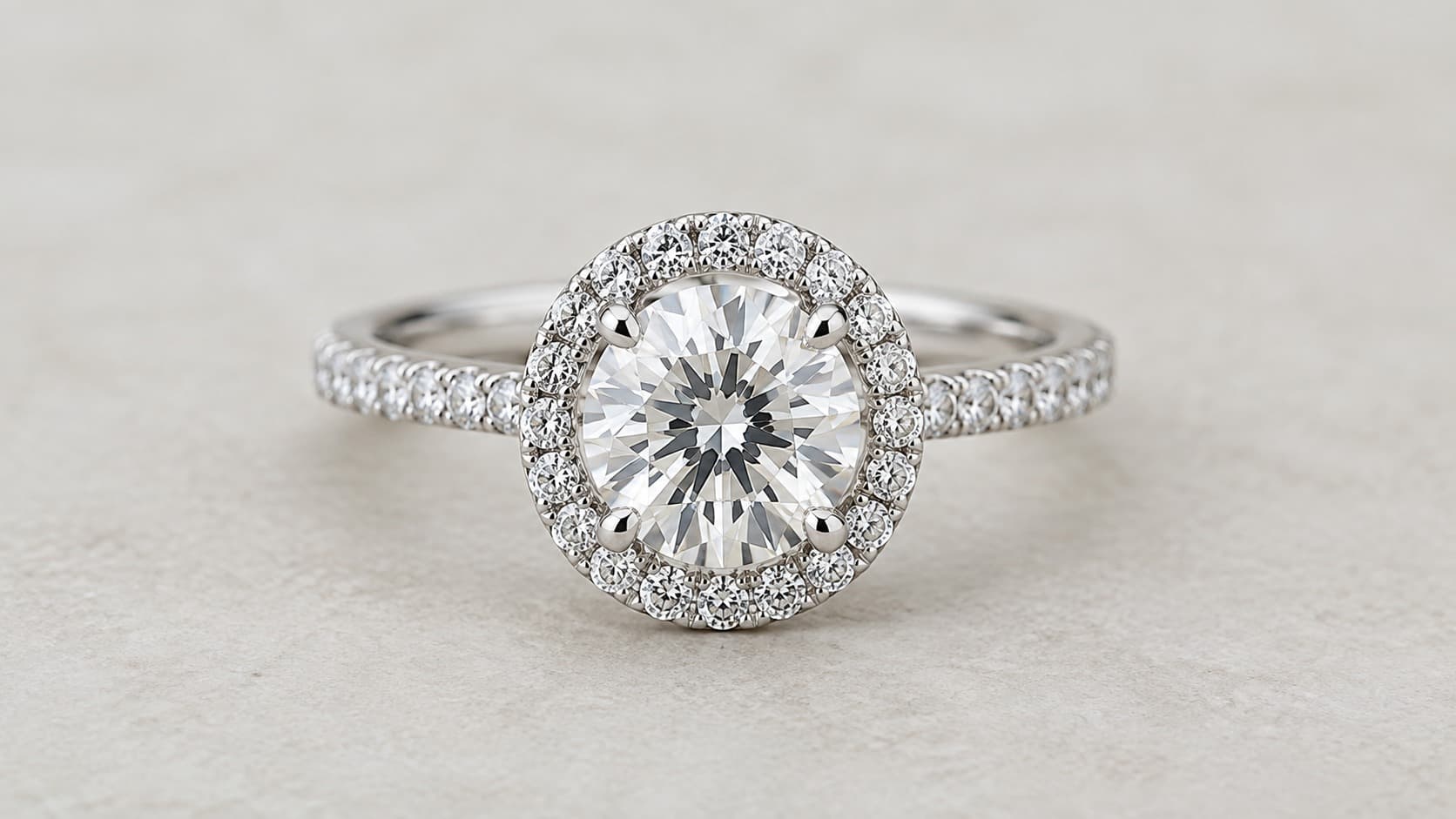
A halo setting is a style where small gemstones, usually diamonds, circle around a larger center stone like a ring of light. The small stones sit close together in a tight circle, so from a distance the center stone looks bigger than it really is.
The effect works much like a picture frame. The center stone is the photo, and the halo is the frame that makes the photo stand out. Jewelers build the halo by setting tiny diamonds into metal prongs or a thin metal band that wraps completely around the main stone. Because the small stones reflect light too, the whole ring sparkles more than a ring with just one stone alone.
The word “halo” comes from the glowing ring of light seen around the sun or moon, and in religious art, around the heads of saints. Jewelers borrowed the term because the circle of small diamonds creates a similar glowing effect around the center stone. It is a design idea, not a specific brand or patented style, which is why halo rings appear at nearly every price point and from nearly every jeweler.
The Origins of the Halo Setting
Halo-style rings are not a new invention. Jewelers were surrounding center stones with smaller accent stones as far back as the Georgian and Victorian eras, roughly the 1700s and 1800s, when candlelight made extra sparkle especially valuable. The style continued through the Edwardian and Art Deco periods of the early 1900s, often paired with intricate metalwork.
The modern halo boom, the one that made the style so common in jewelry stores today, really took off in the early 2010s. A major turning point was increased public attention on Princess Diana’s engagement ring, a 12-carat oval blue sapphire surrounded by a ring of diamonds, which Prince William later gave to Catherine, Princess of Wales, when they announced their own engagement in 2010. That ring put the halo style in front of a global audience, and jewelers saw demand for similar designs climb sharply in the years that followed.
Since then, the halo has settled in as a mainstay rather than a passing fad. It has gone through smaller waves of popularity, sometimes trading the spotlight with plain solitaires or three-stone rings, but it has never really disappeared the way some trends do.
How Does a Halo Setting Work?
A halo setting works by using optical size, not just actual carat weight, to make a diamond or gemstone look bigger. Jewelers call this effect “spread.” The small stones around the edge blend visually with the center stone, so the eye reads the whole thing as one large sparkling shape instead of two separate parts.
This matters because diamond price jumps quickly as carat weight goes up. A one-carat diamond in a halo setting can look close to the size of a one-and-a-half or even two-carat diamond worn alone, which is the core appeal of the style for buyers seeking a larger look without a larger price tag.
The setting also adds extra sparkle because of a technique called “pavé,” where small stones sit so close together that very little metal shows between them. This lets light bounce between the stones, which is part of why halo rings photograph so well under bright light. Pavé comes from the French word for “paved,” because the stones are set so tightly they resemble cobblestones paving a street.
The amount of extra size a halo adds also depends on how the halo is set. A “bead-set” halo, where tiny metal beads hold each stone in place, tends to let in more light between stones and can look slightly more textured. A “channel-set” or “bright-cut” halo uses continuous metal edges instead of individual beads, giving a smoother, more seamless look. Neither method is better, but they do change the ring’s overall texture and how much it sparkles in different lighting.
Types of Halo Settings Explained
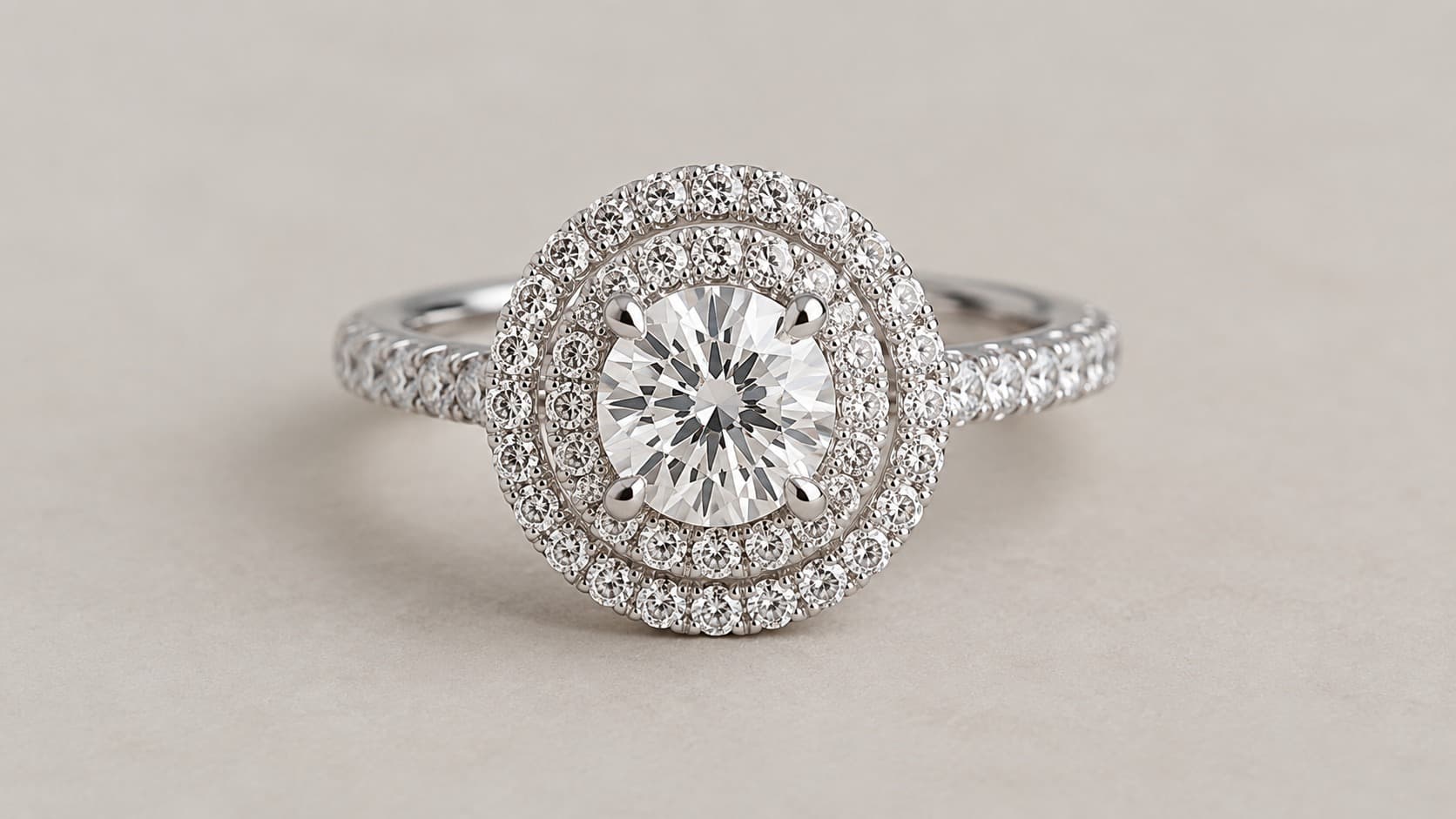
Jewelers have created several halo variations over the years, and each one changes the ring’s overall shape and personality. While diamonds are the most common choice for the accent stones, the center stone itself does not have to be a diamond. Sapphires, morganite, emeralds, and moissanite are all popular center stone choices for a halo, since the diamond halo offers contrast and extra brilliance around a colored stone.
Single Halo
A single halo is the classic, most common version. One ring of small diamonds surrounds the center stone, following the stone’s natural shape, whether that is round, oval, or cushion. This is usually the most affordable halo option, since it uses the fewest accent stones while still delivering a noticeable boost in apparent size.
Double Halo
A double halo adds a second, slightly larger ring of diamonds around the first one. This version makes the center stone appear even bigger and suits buyers seeking extra drama without a larger, more expensive center diamond. Because it uses more accent stones, a double halo costs more than a single halo and adds more surface area that needs regular cleaning.
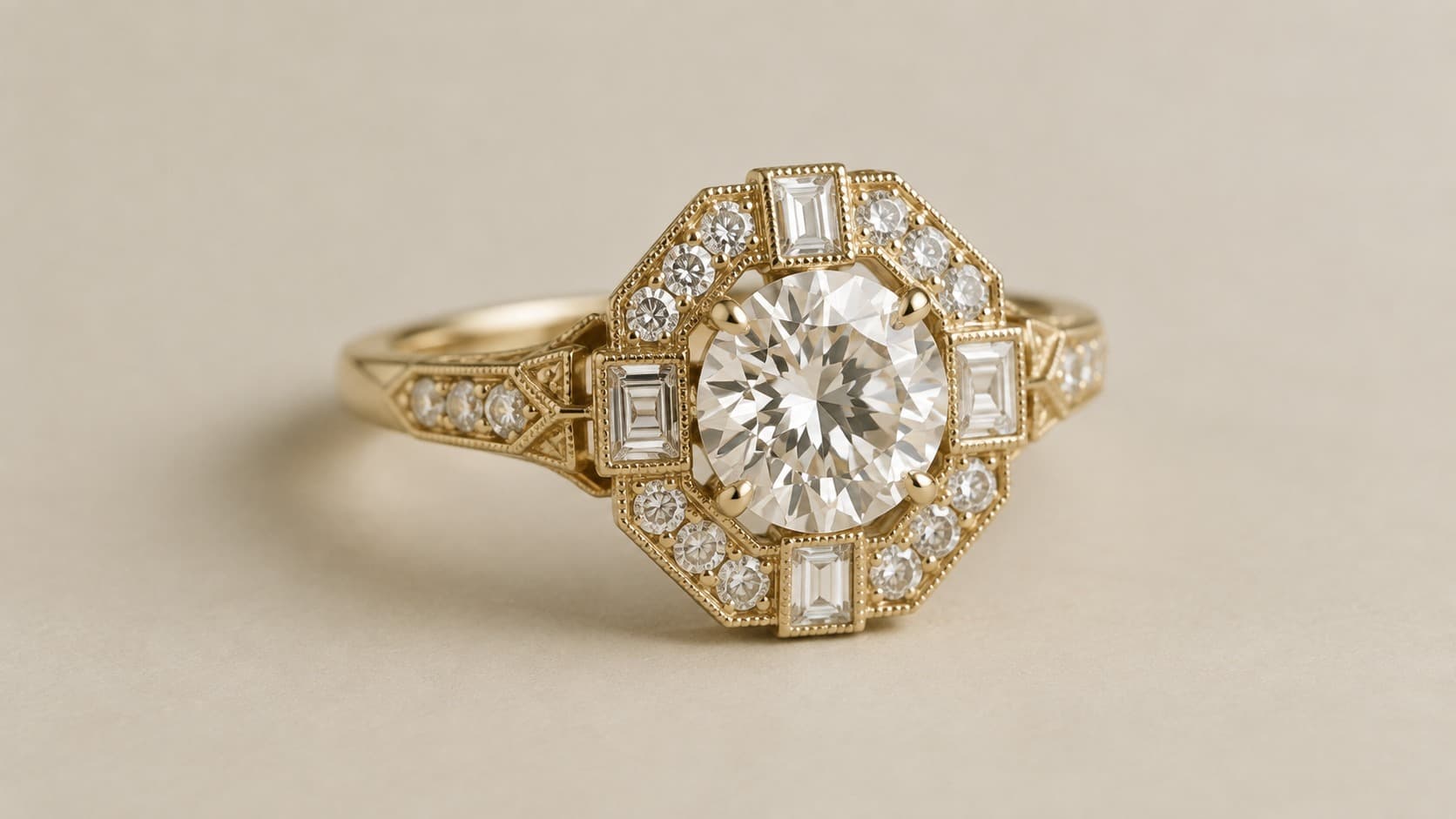
Vintage or Cushion Halo
Some halos are shaped like a cushion, meaning they have soft, rounded corners instead of a perfect circle or oval. This style is often paired with ring designs inspired by the Edwardian and Art Deco eras of the early 1900s, when surrounding a stone with smaller accent stones first became a recognizable jewelry trend, often combined with filigree metalwork and milgrain edging for an antique look.
Floating Halo
A floating halo sits slightly above the band on nearly invisible prongs or a thin wire, so it looks like it is hovering just above the ring rather than connected directly to it. This creates a more delicate, airy look compared to a traditional halo, though the thinner connecting metal is more fragile and may need a jeweler’s attention sooner than a standard halo.
Hidden Halo
A hidden halo sits underneath the center stone rather than around its visible edge, so it is only noticeable from the side or when the ring catches certain light. It adds a quiet sparkle and a bit more perceived size without changing the ring’s overall silhouette from a straight-on view, a subtler take on the effect than a visible halo.
Halo Setting Advantages and Disadvantages
A halo setting has real benefits, but it is not the right choice for every ring or every wearer.
Pros:
- Makes a smaller center stone look noticeably larger
- Adds extra sparkle from multiple angles
- Offers a way to achieve a bigger look for less money
- Comes in many shapes, so it works with round, oval, cushion, emerald, and pear-cut stones
- Can soften the visibility of small flaws in a center stone by drawing the eye to the overall sparkle instead of one single point
Cons:
- The small accent stones can loosen or fall out over time if not checked regularly
- Cleaning is harder because dirt and lotion collect between the tiny stones
- Resizing the ring can be more complicated and sometimes more costly for a jeweler
- Some styles can look dated faster than a plain solitaire, since halo popularity rises and falls in cycles
- Daily wear, especially manual work or exercise, puts more small prongs at risk of snagging or bending
A halo setting is best thought of as a way to maximize visual impact per dollar spent, not a way to avoid the cost of a quality center stone entirely. The center stone’s cut and clarity still matter most for how the ring sparkles up close.
Halo Ring vs Solitaire Ring: What’s the Difference?
A solitaire setting holds just one stone alone, with no smaller stones around it, while a halo setting surrounds that same stone with extra diamonds. The solitaire is simpler, easier to clean, and tends to stay in style for decades, since it is the most traditional engagement ring look, going back to designs popularized in the late 1800s. The halo, on the other hand, gives more visual size and sparkle but comes with more maintenance.
| Feature | Solitaire Setting | Halo Setting |
|---|---|---|
| Visual size | True to actual carat weight | Looks larger than actual carat weight |
| Sparkle | Comes from one stone | Comes from center stone plus accent stones |
| Cleaning | Simple, fewer spots for dirt | Needs more frequent cleaning |
| Maintenance | Fewer prongs to check | More prongs, more frequent jeweler checkups |
| Resizing | Usually straightforward | Can be more complex depending on design |
| Style longevity | Very classic, rarely dated | Trend-influenced, though a long-running style |
Neither style is objectively better. A solitaire suits a clean, timeless look and easier upkeep, while a halo suits a buyer prioritizing apparent size and sparkle over simplicity, along with the willingness to bring the ring in for regular jeweler check-ups.
How Much Extra Does a Halo Setting Add?
A halo setting typically adds a few hundred to over a thousand dollars to the cost of a ring, depending on how many accent diamonds are used and their quality. Because the accent stones are much smaller than the center stone, they cost far less per stone, even though there may be twenty or more of them in a double halo design.
The biggest cost factor is still the center stone itself. A halo does not replace the need for a well-cut, good-quality center diamond; it enhances one. Buyers often choose a halo specifically because it allows for a smaller, less expensive center stone while still achieving a ring that looks larger overall.
The metal used for the halo also affects price. Platinum holds small prongs more securely than gold but costs more per gram, while white gold is a common middle-ground choice. Because a halo has so many tiny prongs, the labor cost of setting all those small stones by hand is also a meaningful part of the total price, not just the cost of the stones themselves.
Halo Ring Cleaning and Maintenance Tips
A halo setting ring needs more frequent cleaning and inspection than a simple solitaire because dirt, lotion, and soap can build up between the small stones. A soft brush, warm water, and mild dish soap work well for home cleaning, followed by a gentle pat dry with a soft cloth.
Because halo rings have many small prongs holding many small stones, routine jeweler checks every six months to a year are worthwhile. Loose prongs are more common with this style simply because there are more of them, and catching a loose stone early prevents losing it completely. Many jewelers offer this inspection for free, especially for rings purchased from them, which is worth confirming at the time of purchase.
Halo rings are best removed during activities like gardening, exercising with weights, or housework, since the tiny prongs can snag on fabric or bend more easily than a thicker solitaire setting. Removing the ring before applying lotion, hairspray, or perfume also helps, since these products can build up residue in the tight spaces between the accent stones and dull their sparkle over time.
Frequently Asked Questions
Does a halo setting make a diamond look bigger than it is?
Yes. A halo setting uses small diamonds around the edge of the center stone to visually increase its spread, so the ring looks larger from a distance than the center stone’s actual carat weight would suggest alone.
Is a halo setting more expensive than a solitaire?
Usually, yes, but not dramatically. The extra cost comes from the labor and small accent diamonds used to build the halo, though these add-ons cost far less than increasing the center stone’s carat weight would.
Can any diamond shape have a halo?
Yes. Halos can be built around round, oval, cushion, emerald, pear, princess, and marquise cut stones. The halo is simply shaped to match the outline of whatever center stone is chosen.
Do halo settings go out of style?
Trends do shift over time, and halo popularity has risen and fallen across different decades. That said, the basic idea of framing a stone with smaller diamonds has existed for over a century and has returned repeatedly, so it has staying power even if specific halo styles go in and out of fashion.
Are halo rings harder to resize?
Often, yes. Because the halo wraps closely around the band near the center stone, resizing can require more careful work from a jeweler compared to a plain band, and in some cases a significant size change may affect how the halo sits.
The Bottom Line
A halo setting earns its popularity by doing one thing very well: making a center stone look bigger and sparkle more without requiring a bigger budget for carat weight. It takes slightly more upkeep than a plain solitaire, since more small stones mean more spots that need occasional checking, but for many buyers that tradeoff is worth it for the extra size and shine. For a new engagement ring or a piece already worn for years, understanding how the halo actually works explains the sparkle, and points to how to keep it in good condition for years to come.