Bonded leather shows up on tags more often than most shoppers realize, tucked into the fine print of belts, wallets, book covers, and furniture. It looks like leather in the store and often feels smooth to the touch, which is exactly why so many people bring it home without knowing what it actually is. Understanding what sits inside this material, and why leather experts rank it at the very bottom of the leather ladder, explains why it tends to fall apart long before a genuine hide ever would.
What Is Bonded Leather Made Of?
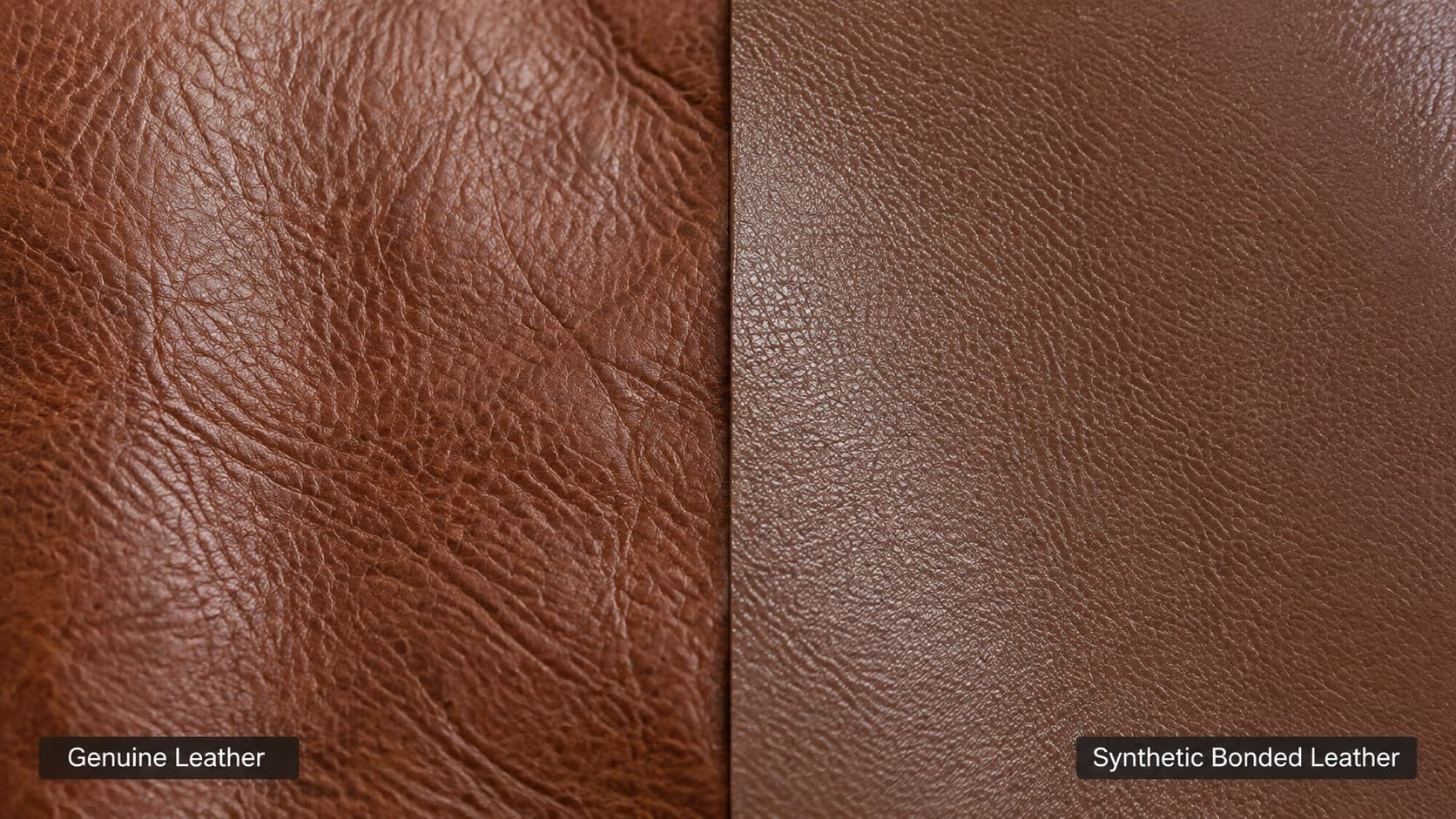
Bonded leather is a man-made material built from leftover leather scraps glued together with plastic, not a single piece of animal hide. Manufacturers take the dust, shavings, and offcuts left behind after cutting real leather for other products, then grind that waste into a pulp. That pulp gets mixed with a polyurethane or latex binder, pressed onto a backing made of paper or fabric, and finally stamped with a pattern so it looks like natural grain.
Because animal leather is involved somewhere in the process, companies are legally allowed to call it “leather,” even though the finished sheet behaves nothing like the real thing. It sits in the same category as products labeled “reconstituted leather,” “composition leather,” or “blended leather.” These are all different names for the same basic idea: scraps and glue, dressed up to look premium.
How Much Real Leather Does It Contain?
Only about 10 to 20 percent of bonded leather is real animal hide, and the rest is plastic and backing material. That means the surface of a bonded leather product is mostly polyurethane, not skin. The exact ratio shifts depending on the manufacturer, and some cheaper batches drop even lower than that 10 percent floor.
“Bonded leather” earns its name from a legal technicality, not from quality. As long as some genuine leather fiber is present, the label is allowed on the tag.
This is different from something like faux leather or vegan leather, which contains zero animal product at all. Bonded leather sits in an odd middle ground: not fully synthetic, but nowhere close to genuine.
In the United States, this percentage isn’t just marketing talk, it’s actually regulated. The Federal Trade Commission’s Guides for Select Leather and Imitation Leather Products require that if a company uses the term “bonded leather” (or similar terms like “reconstituted” or “shredded leather”), the tag must disclose the exact percentage of real leather fiber versus non-leather material. A compliant label might read something like “Bonded Leather Containing 20% Leather Fibers and 80% Non-Leather Substances.” A tag that just says “leather” with no percentage or qualifier at all is often a sign the seller is skipping a disclosure it’s supposed to make.
Bonded leather compares to the other two materials it’s most often confused with in the table below.
| Material | Real Leather Content | Typical Lifespan | Relative Price | Vegan? |
|---|---|---|---|---|
| Genuine / Full-Grain Leather | 100% animal hide | 10-20+ years with care | Highest | No |
| Bonded Leather | 10-20% leather scraps | 1-3 years | Lowest | No |
| Faux / PU Leather | 0% animal product | 3-5 years | Low to mid | Yes |
Why Bonded Leather Ranks Lowest
Bonded leather ranks lowest because it lacks the strong fiber structure that makes real hide durable. Genuine leather, even in its lower grades like split leather, still comes from a connected piece of animal skin with natural fibers running through it. Bonded leather has none of that structure. It’s essentially ground-up scrap held together with glue, which means it has no natural strength of its own.
The plastic coating on top is doing almost all the work. That top layer is what gives bonded leather its shine and its leather-like texture, but plastic doesn’t age or flex the way skin does. Once that thin polyurethane skin starts to crack, there’s nothing underneath strong enough to hold the material together. Top-grain and full-grain leather, by contrast, actually get softer and develop character as they age, which is what makes the gap in quality so obvious.
Even split leather, which is one of the lower grades of genuine hide, still beats bonded leather in this respect. Split leather comes from the lower, fibrous layer of the hide after the top grain has been sliced away, so while it’s not as strong as full-grain, it’s still one continuous, connected piece of skin. Bonded leather never had a continuous piece of skin to begin with, which is the main reason leather graders place it below every genuine leather type, including the lowest of them.
How Fast Does Bonded Leather Wear Out?
Most bonded leather products start peeling, cracking, or flaking within one to three years of regular use. This happens because the polyurethane layer separates from the backing over time, especially with everyday friction, sunlight, or changes in temperature. Once that separation starts, it usually spreads quickly and can’t be stopped.
Genuine leather can be conditioned with oils and creams to keep it flexible for decades. Bonded leather doesn’t have that option. The plastic surface doesn’t absorb conditioner, so once it starts drying out and cracking, there is no real fix. Repair shops generally can’t patch it either, since there’s no solid hide underneath to work with, just shredded fiber and glue.
How to Identify Bonded Leather
The tag is the fastest giveaway, since labels that avoid the words “genuine,” “full-grain,” or “top-grain” are the biggest warning sign. A product that simply says “leather” with no qualifier, or that uses phrases like “leather match” or “bonded leather,” is signaling exactly what it’s made of.
Beyond the tag, a handful of physical clues separate bonded leather from the real thing:
- Texture: The grain pattern looks too perfect and repeats in an identical pattern across the surface, unlike real hide, which always has small natural variations.
- Smell: Genuine leather has a rich, earthy scent. Bonded leather often smells slightly chemical or plasticky instead.
- Weight and feel: Bonded leather tends to feel thin and slightly stiff compared to the softer, heavier drape of real hide.
- Price: A “leather” item priced far below what real leather normally costs is a sign the material inside is mostly scrap and plastic.
- The bend test: Folding a corner of the material shows the difference clearly. Genuine leather creases softly and settles back into shape, while bonded leather often shows a sharp, plastic-like crease line where the coating stresses at the fold.
Sellers in the US are required to disclose the leather-fiber percentage whenever they use terms like “bonded leather” or “reconstituted leather,” so a missing percentage paired with a suspiciously low price is one of the clearest red flags a shopper can find before buying.
Common Uses for Bonded Leather
Bonded leather shows up most often in furniture, book covers, and low-cost accessories where price matters more than lifespan. Office chairs, budget sofas, journal covers, and some entry-level belts and wallets are common places to find it, since the material is cheap to produce and easy to cut into large, uniform sheets.
It isn’t inherently a scam when a brand is upfront about it. Plenty of buyers genuinely just want a low-cost, leather-look item for short-term use, and bonded leather can serve that purpose fine. The real problem happens when it’s marketed to look and sound like genuine leather without making the difference clear.
Frequently Asked Questions
Is bonded leather real leather?
Only in a very small part. It typically contains 10 to 20 percent genuine leather fiber, with the rest made up of polyurethane and a paper or fabric backing, so it’s more accurate to think of it as a leather-scrap composite than real hide.
Is bonded leather vegan?
No. Because it contains actual animal leather fibers, even in small amounts, bonded leather isn’t a vegan material. Anyone avoiding animal products would need to look for items labeled “100% vegan leather” or “PU leather” instead.
Is bonded leather cheaper than genuine leather?
Yes, and by a wide margin. Bonded leather is significantly less expensive to manufacture because it recycles leather waste and uses far less real hide per item, which is why it’s popular for budget furniture and accessories.
Can bonded leather be repaired once it starts peeling?
Not really. Once the polyurethane coating separates from the backing, there’s no solid leather underneath to condition or patch, so most repair specialists can’t restore it the way they can with genuine leather.
Is bonded leather the same as faux leather?
No. Faux leather is 100 percent synthetic and contains no animal product at all, while bonded leather always includes a small percentage of real leather scraps mixed into the plastic layer.
The Bottom Line
Bonded leather earns its reputation as the lowest grade because it trades real durability for a lower price tag and a convincing surface look. The small amount of genuine leather inside doesn’t change how the material behaves, since the plastic coating and glued-together fibers wear out far faster than a solid hide ever would. Reading the tag before buying, and knowing that words like “genuine,” “top-grain,” or “full-grain” signal something entirely different from plain “leather,” remains the simplest way to know exactly what a product is actually made of.