Fluorite is one of nature’s most captivating minerals, celebrated for its remarkable spectrum of colors and distinctive crystal structures. Often called “the most colorful mineral in the world,” fluorite has enchanted collectors, healers, and jewelry enthusiasts for centuries with its vibrant hues and unique properties. Whether you’re considering purchasing fluorite jewelry, starting a mineral collection, or simply curious about this fascinating gemstone, this comprehensive guide will provide everything you need to know about fluorite’s properties, history, and significance.
Understanding Fluorite
Fluorite is a mineral composed of calcium fluoride (CaF₂) that belongs to the halide mineral family. Its name derives from the Latin word “fluere,” meaning “to flow,” referencing its historical use as a flux in metal smelting processes. With a Mohs hardness of 4, fluorite strikes a balance between beauty and practicality in jewelry applications, though it requires more careful handling than harder gemstones. What truly distinguishes fluorite is its incredible color range - from deep purples and blues to vibrant greens, sunny yellows, and even colorless varieties - sometimes with multiple colors appearing in bands or zones within a single crystal.
- Fluorite’s chemical composition is calcium fluoride (CaF₂), creating its distinctive cubic crystal structure that often forms perfect octahedrons or cubes when geological conditions are ideal for slow, undisturbed growth.
- The gemstone’s remarkable color diversity comes from impurities and structural defects in its crystal lattice; these include rare earth elements, oxygen replacement of fluorine, and exposure to natural radiation over geological timeframes - creating purples, blues, greens, yellows, pinks, browns, and colorless varieties.
- Fluorite exhibits perfect octahedral cleavage in four directions, meaning it breaks along smooth planes at 60° and 120° angles - this property makes it more fragile than many gemstones but also allows it to create naturally perfect geometric shapes.
- The phenomenon of fluorescence (glowing under ultraviolet light) was first documented in fluorite specimens and actually gave this optical effect its name; many fluorite varieties glow brilliant blue, purple, green, or yellow under UV light, adding to their visual appeal.
- Some rare fluorite specimens demonstrate the phenomenon of thermoluminescence (emitting light when heated) or phosphorescence (continuing to glow after exposure to light has ended), further distinguishing it in the mineral kingdom.
- Fluorite has a specific gravity of 3.01-3.25 and a refractive index of 1.433-1.435, properties that help gemologists distinguish it from similar-looking stones like amethyst or colored glass imitations.
Fluorite stands apart from many gemstones by displaying nature’s complete color spectrum while remaining relatively affordable and accessible. Its perfect geometric crystals and color-changing properties make it both scientifically significant and aesthetically captivating. While its moderate hardness requires some care in jewelry applications, this hasn’t diminished its popularity among those who appreciate its natural beauty and fascinating optical characteristics.
Physical Properties of Fluorite Gemstones
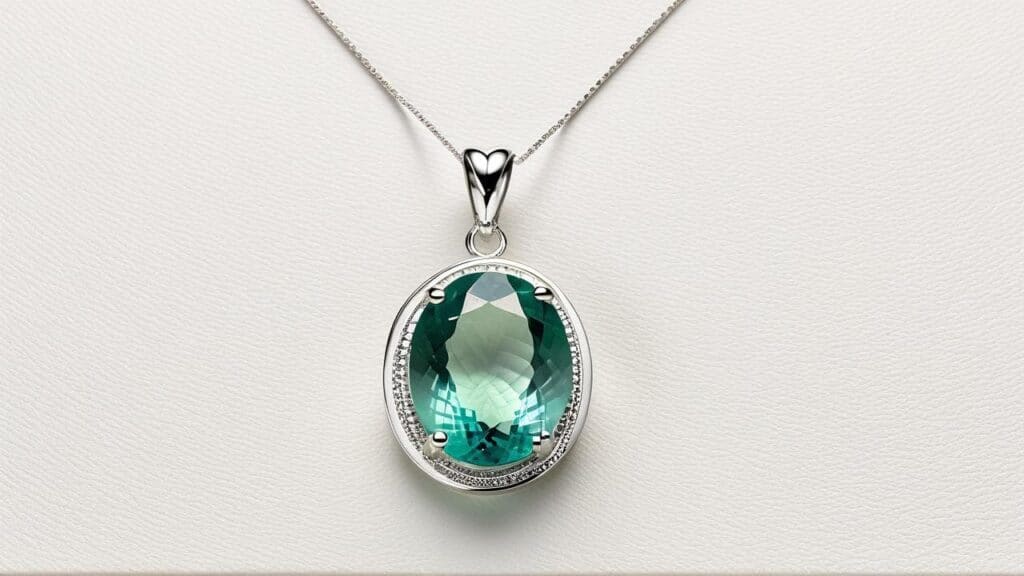
Fluorite possesses a unique set of physical characteristics that distinguish it from other minerals and determine its suitability for various applications, including jewelry. Its moderate hardness of 4 on the Mohs scale places it between calcite (3) and apatite (5), making it soft enough to work with relative ease but requiring protection from scratches and impacts. The mineral’s density, cleavage patterns, and optical properties all contribute to its distinctive appearance and behavior when cut, polished, or set in jewelry pieces.
- Fluorite registers at 4 on the Mohs hardness scale, making it relatively soft for a gemstone – this means it can be scratched by many common materials including steel, quartz, and even a copper penny, requiring protective settings in jewelry applications.
- The mineral crystallizes in the isometric (cubic) crystal system, forming perfect cubes, octahedrons, dodecahedrons, or combinations of these forms when growth conditions are optimal; these geometric crystals can reach impressive sizes, with museum specimens sometimes exceeding a foot in diameter.
- Fluorite displays perfect octahedral cleavage, splitting easily along four planes to create new octahedral shapes – this property, while aesthetically interesting, makes fluorite more vulnerable to damage from impacts and pressure.
- The gemstone has a vitreous (glass-like) to sub-vitreous luster when polished, giving it a bright, reflective quality that enhances its appearance in jewelry settings.
- Color zoning is common in fluorite, with bands or layers of different colors appearing in a single crystal – this can create striking natural patterns that jewelers and lapidaries highlight through strategic cutting and polishing.
- Some varieties of fluorite exhibit pleochroism, appearing different colors when viewed from different angles, adding another dimension to their visual complexity.
- A distinctive property called fluorescence (named after fluorite itself) causes many specimens to glow under ultraviolet light – purple varieties often glow blue, while other colors may emit different fluorescent hues entirely unrelated to their visible color.
- Fluorite’s refractive index of 1.433-1.435 is relatively low compared to many gemstones, giving it less brilliance than diamonds or sapphires but a subtle, ethereal quality that many collectors appreciate.
The physical properties of fluorite create both opportunities and challenges for its use in jewelry. Its perfect cleavage and moderate hardness require protective settings and careful handling, but these same qualities make it easier to cut into precise shapes that showcase its remarkable colors and optical effects. Understanding these physical characteristics helps jewelry enthusiasts appreciate the craftsmanship involved in creating fluorite pieces and informs proper care practices for this beautiful but somewhat delicate gemstone.
History and Cultural Importance of Fluorite
Fluorite has a rich historical legacy spanning thousands of years, with evidence of its use appearing across numerous civilizations. From practical applications in metallurgy to decorative arts and spiritual practices, this versatile mineral has played many roles throughout human history. Its distinctive properties made it valuable in different contexts, and understanding this historical significance adds depth to our appreciation of fluorite in modern jewelry and collections.
- Ancient Egyptians carved fluorite into scarabs and decorative objects as early as 3000 BCE, while Chinese artisans prized certain varieties (particularly the purple-blue “Dream Blue” fluorite) for elaborate carvings dating back to at least 300 BCE.
- Romans valued fluorite vessels for drinking wine, believing the mineral prevented intoxication – Emperor Nero reportedly paid the equivalent of hundreds of thousands of modern dollars for a single fluorite drinking cup.
- In medieval Europe, fluorite became known as “fluorspar” and was primarily valued for its utility as a flux in metal smelting, where it lowered the melting point of metals and helped remove impurities in metallurgical processes.
- The scientific understanding of fluorite advanced significantly in 1852 when George Gabriel Stokes formally described the phenomenon of fluorescence, naming it after fluorite’s distinctive glow under ultraviolet light.
- During the Industrial Revolution, fluorite gained industrial importance when it was discovered to be a primary source of fluorine for hydrofluoric acid production, essential for aluminum processing, uranium enrichment, and later, refrigerants.
- Native American tribes, particularly in the southwestern United States, incorporated fluorite into religious ceremonies and healing practices, believing purple varieties enhanced spiritual awareness and communication with ancestors.
- Victorian-era collectors popularized fluorite as a collector’s mineral during the natural history collecting boom of the 19th century, with fine specimens from English and German mines becoming prized cabinet pieces.
- The mineral’s name evolved over time – from the Latin “fluere” (to flow) to “fluorspar” (the historical mining term) and finally to “fluorite” in modern mineralogical classification, reflecting its changing roles in science and industry.
- In China’s Ming and Qing dynasties, master carvers created elaborate art pieces from blue and purple fluorite, demonstrating the material’s significance in fine decorative arts despite its relative softness.
Fluorite’s journey through human history reveals a mineral that has consistently found new purposes and meanings in different cultures and eras. From practical industrial applications to spiritual significance and artistic expression, fluorite’s versatility and beauty have made it relevant across millennia. Today’s appreciation for fluorite in jewelry and mineral collections is just the latest chapter in this gemstone’s long cultural story, connecting modern enthusiasts to an ancient legacy of human fascination with this colorful crystal.
Varieties of Fluorite
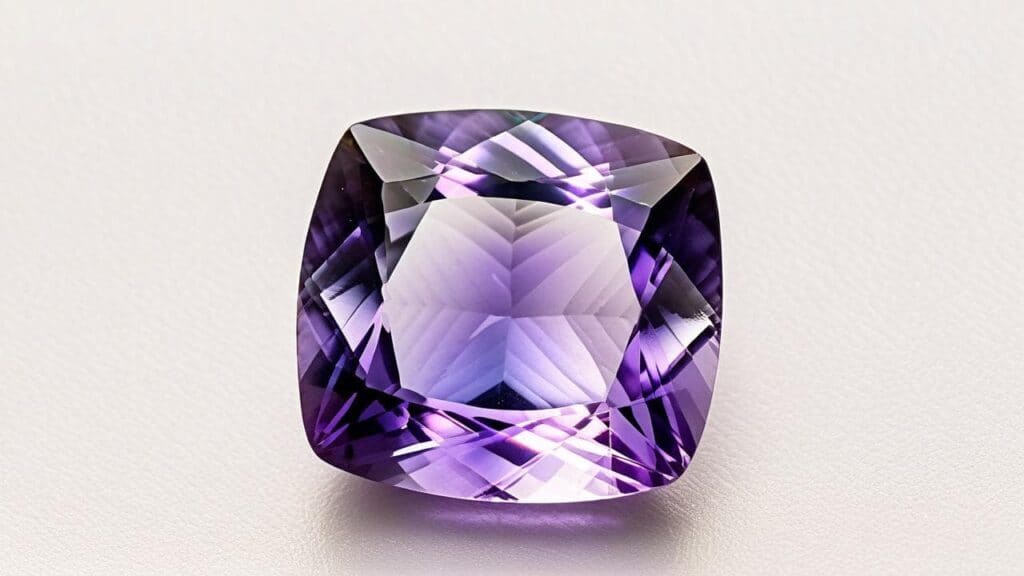
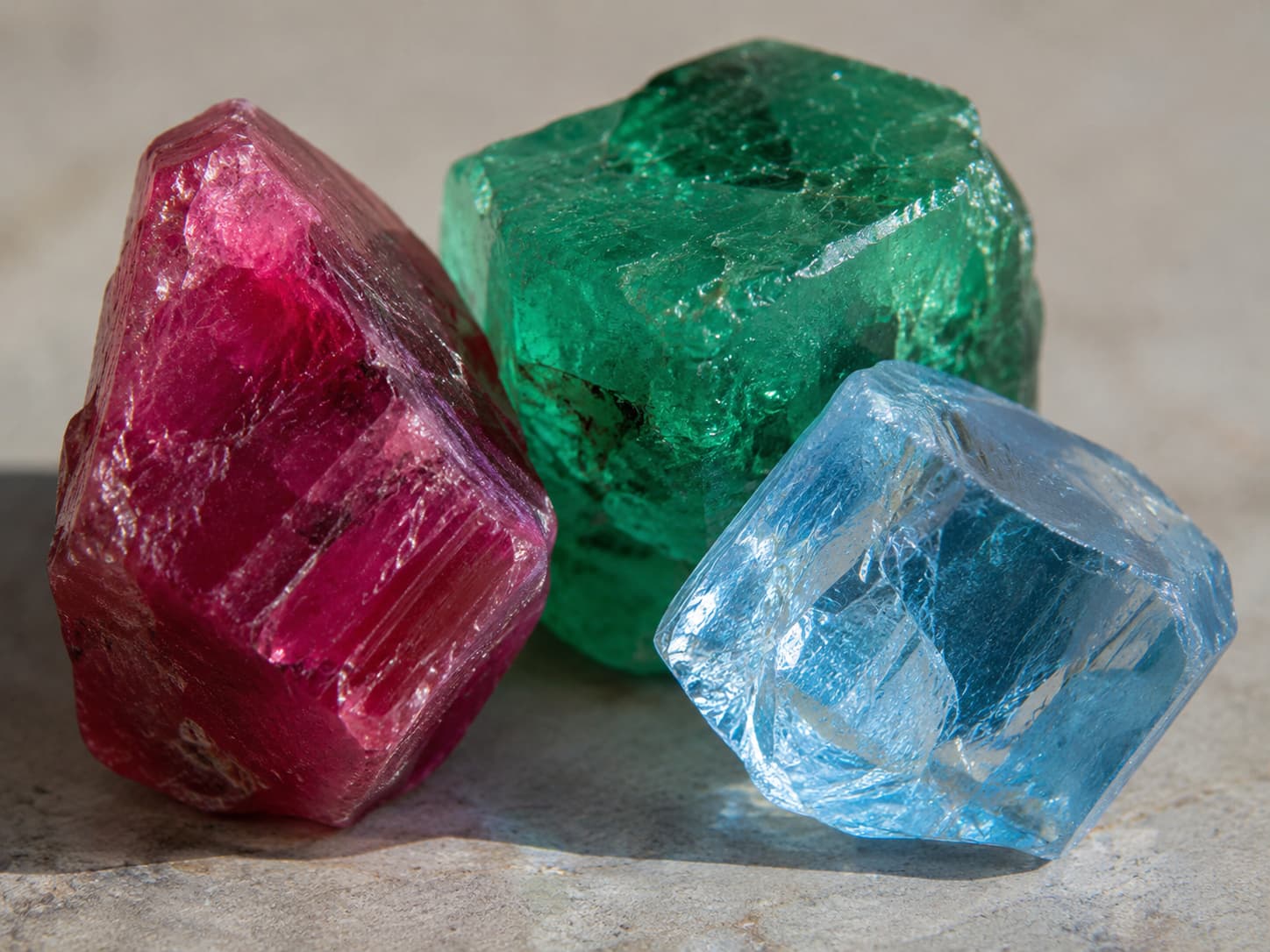
Fluorite’s extraordinary color range is perhaps its most celebrated feature, earning it the nickname “the most colorful mineral in the world.” This remarkable diversity results from various impurities and atomic-level defects within its crystal structure. Each color variety carries its own unique qualities, rarity factors, and value in both collector and jewelry markets. Understanding these varieties helps in selecting and appreciating the perfect fluorite specimen for any collection or jewelry piece.
- Purple fluorite (often called amethystine fluorite) is the most commonly recognized variety, ranging from pale lavender to deep royal purple; these colors typically come from radiation-damaged calcium atoms within the crystal structure.
- Blue fluorite ranges from sky blue to deep ocean tones and owes its coloration primarily to rare earth elements like yttrium and europium; the highly prized “electric blue” varieties from England’s Rogerley Mine change color in different lighting conditions through a phenomenon called tenebrescence.
- Green fluorite appears in shades from pale mint to deep emerald, with coloration typically caused by incorporated rare earth elements or radiation centers within the crystal – some specimens from China display remarkable “phantom” inclusions of earlier growth stages.
- Yellow and honey-colored fluorite (sometimes called “champagne fluorite”) derives its warm hues from organic carbon inclusions or yttrium impurities; particularly vibrant specimens come from mines in Spain, Mexico, and Illinois.
- Pink and rose fluorite, more uncommon than other varieties, gets its delicate coloration from manganese or colloidal rare earth elements; these specimens are especially prized by collectors when found in well-formed crystals.
- Colorless or “optical” fluorite is valued for scientific applications due to its high transparency to both ultraviolet and infrared light; historically, optical-grade fluorite was essential for microscope lenses before modern synthetic alternatives.
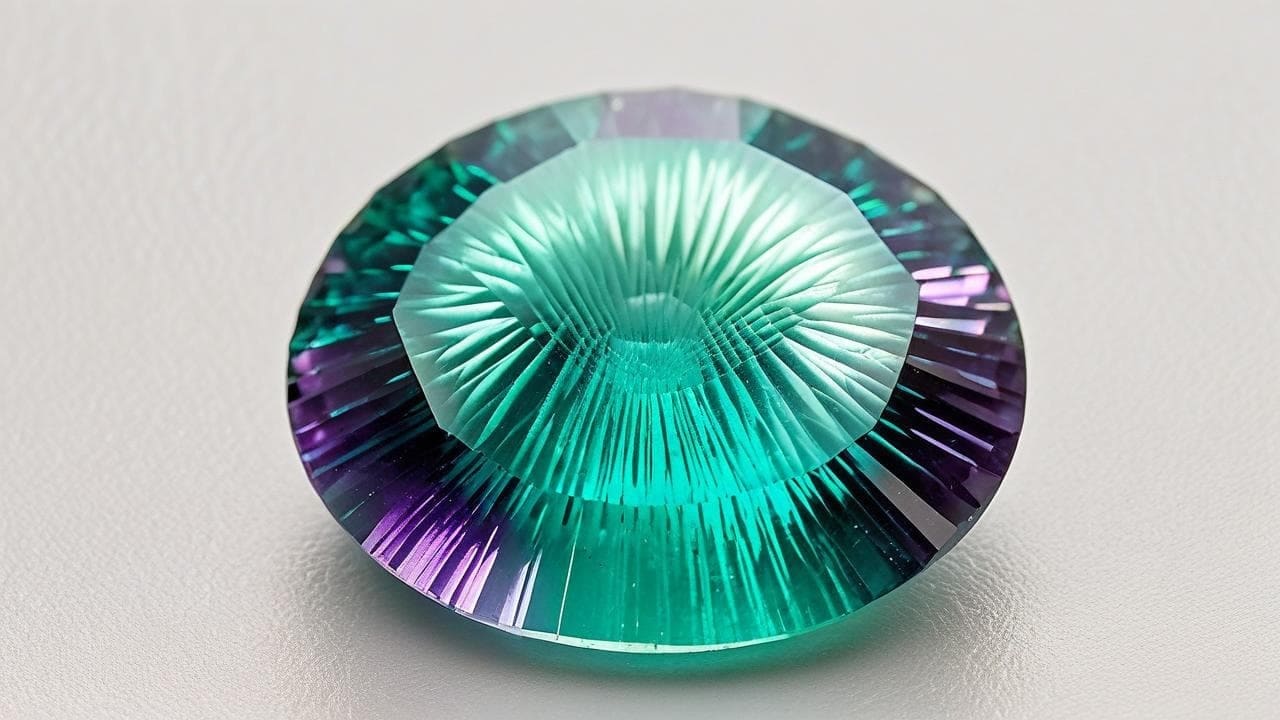
- Rainbow fluorite exhibits dramatic color zoning with multiple colors banded or segmented within a single specimen – these striking pieces often display purple, green, and clear zones and are highly sought after for both display specimens and statement jewelry.
- “Blue John” is a famous banded purple-yellow-white variety found almost exclusively in Derbyshire, England; prized since Roman times, these specimens show distinctive purple and yellow banding and were used historically for fine decorative objects.
- “Chlorophane” fluorite is a rare variety that turns emerald green when heated and continues to glow after the heat source is removed (thermoluminescence); this historically important variety helped early scientists understand phosphorescence phenomena.
Fluorite’s color diversity makes it uniquely valuable to collectors and jewelry designers alike. Unlike many gemstones that are prized for consistent color, fluorite is celebrated for its variations and combinations. Some specimens even change color under different lighting conditions or display multiple colors within a single crystal. This natural palette makes fluorite a versatile addition to jewelry collections, offering options that can complement any style or color preference while connecting wearers to one of nature’s most visually diverse minerals.
Global Fluorite Deposits
Fluorite occurs worldwide in diverse geological settings, with significant deposits spread across several continents. The quality, color variations, and crystal formations of fluorite differ dramatically depending on the geological conditions of each deposit. Major mining locations have historically produced distinctive varieties that are recognizable to collectors and jewelry enthusiasts, with some locales achieving legendary status for their exceptional specimens.
- China has emerged as the world’s largest producer of fluorite, with mines in Hunan, Zhejiang, and Inner Mongolia yielding impressive green, purple, and blue specimens; the famous Yongchun and De’an deposits produce exceptional green cubic crystals that are highly prized by collectors.
- England’s Peak District, particularly the Blue John Cavern in Derbyshire, is home to the unique banded “Blue John” fluorite that shows distinctive purple and yellow layering; this historically significant deposit has been worked since Roman times and now produces only limited quantities annually.
- Mexico’s diverse deposits include the Navidad Mine in Durango, which produces exceptional golden-yellow crystals, and the Las Cuevas Mine in San Luis Potosí, known for its blue and green varieties with remarkable transparency.
- The United States has several important fluorite localities, including the world-famous deposits in southern Illinois and western Kentucky that once formed the Illinois-Kentucky Fluorspar District; Cave-in-Rock, Illinois produced exceptional honey-yellow and purple specimens before commercial mining ceased in the 1990s.
- Spain’s Asturias region contains the La Collada Mine, renowned for producing extraordinary purple cubic crystals that rank among the world’s finest fluorite specimens; these crystals often show exceptional form with sharp, perfect edges.
- Germany’s Black Forest region, particularly around Freudenstadt, has yielded exceptional fluorite specimens for centuries, including rare pink and rose varieties that are highly sought by collectors.
- Russia’s Dalnegorsk Mining District in the Far East produces distinctive green fluorite with unusual modifications to the cubic crystal form, creating complex and aesthetically pleasing specimens.
- South Africa’s Riemvasmaak region in the Northern Cape Province has recently gained recognition for producing deep purple fluorite crystals with exceptional clarity and intense color saturation.
- Canada’s St. Lawrence Fluorspar District in Newfoundland was historically significant for producing blue and green varieties before mining operations ceased; recent efforts to revive these mines may bring new Canadian specimens to the market.
- Mongolia’s growing fluorite industry has produced some impressive specimens in recent years, with mines in the Gobi Desert yielding purple and green varieties that are increasingly appearing in international mineral markets.
The global distribution of fluorite means that collectors and jewelry enthusiasts have access to a remarkable diversity of specimens, each with characteristics reflecting their unique geological origins. Some deposits are now depleted or closed to commercial mining, making specimens from these locations increasingly valuable. New discoveries continue to emerge, however, ensuring that fluorite remains accessible while still offering the excitement of novel finds. For collectors, the provenance of fluorite specimens adds an important dimension to their value, connecting each piece to the specific geological conditions that created its unique characteristics.
Fluorite in Jewelry
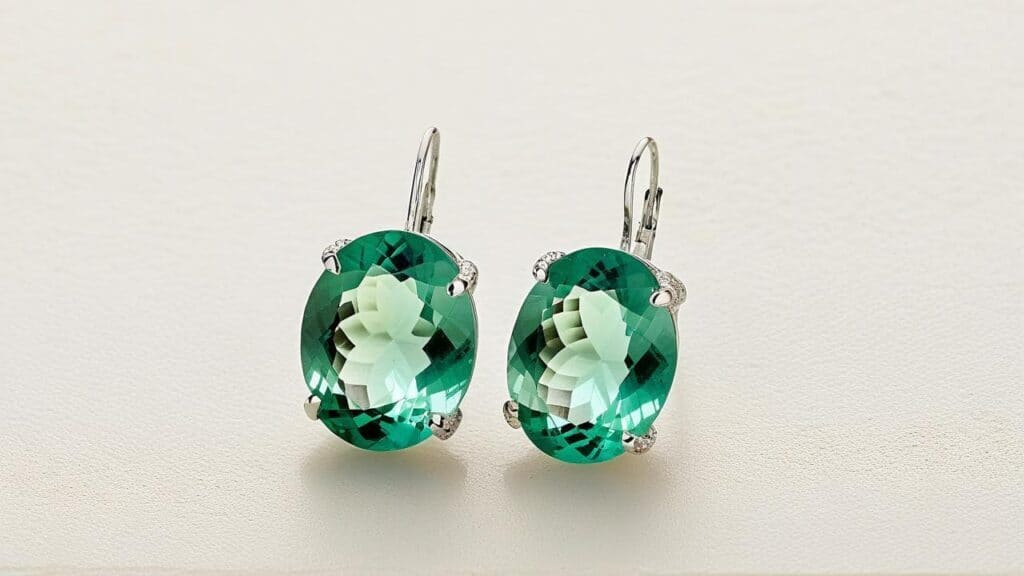
Fluorite presents both opportunities and challenges as a jewelry material. Its spectacular color range and affordable price point make it appealing to designers and consumers alike, while its moderate hardness requires thoughtful setting and care. When properly designed with these considerations in mind, fluorite jewelry pieces can be both beautiful and durable, offering wearable art that showcases this remarkable mineral’s best qualities.
- Fluorite’s moderate hardness (4 on the Mohs scale) makes it better suited for occasional-wear jewelry like pendants, earrings, and brooches rather than everyday rings or bracelets where it would be subjected to frequent impacts or abrasion.
- Protective settings are essential for fluorite jewelry – bezel settings that surround the stone’s edge, deep prong settings that minimize exposure, or inlay techniques that integrate fluorite with more durable materials all help prevent damage to this relatively soft gemstone.
- Cabochon cuts (smooth, rounded shapes without facets) are often preferred for fluorite jewelry as they minimize the risk of chipping along cleavage planes while showcasing the stone’s color and any interesting inclusions or color zoning.
- Faceted fluorite is less common but can be spectacularly beautiful, particularly in larger statement pieces; skilled lapidaries cut fluorite “with the grain” to prevent cleaving during the cutting process and create designs that place minimum stress on vulnerable areas.
- Color zoning in fluorite creates opportunities for creative cutting – some jewelers deliberately orient stones to display multicolored banding or phantom inclusions, creating one-of-a-kind pieces that highlight these natural features.
- Fluorite’s affordability allows for use of larger stones than would be financially feasible with precious gems, enabling bold statement pieces with substantial visual impact at reasonable price points.
- Combination with complementary materials enhances fluorite’s durability and visual appeal – setting fluorite with harder gemstones or framing it within metal designs provides both protection and aesthetic contrast.
- Rainbow fluorite with its multiple color bands has become particularly popular in contemporary jewelry design, offering versatile pieces that coordinate with various outfits through their natural color combinations.
- Fluorite’s translucency creates interesting light effects in jewelry, especially when backlit or when light can pass through the stone – this quality makes it particularly effective in earrings, pendants, and pieces where light transmission enhances the visual experience.
- Contemporary designers increasingly pair fluorite with unusual metals like oxidized silver, bronze, or copper to create distinctive pieces that highlight the mineral’s unique character while providing sufficient protection for everyday wear.
When considering fluorite jewelry, understanding the stone’s physical limitations helps inform appropriate care and wearing practices. Fluorite jewelry should be stored separately from harder gemstones to prevent scratching, removed before strenuous activities or exposure to chemicals, and cleaned only with mild soap and water. Despite these considerations, fluorite’s extraordinary beauty and remarkable affordability make it an increasingly popular choice for distinctive jewelry that connects wearers to one of nature’s most colorful treasures. With proper care, fluorite jewelry pieces can be enjoyed for generations, their natural beauty becoming even more precious as some historic mining localities become depleted.
Fluorite Metaphysical Properties and Healing Uses
Throughout history, fluorite has been associated with various metaphysical and healing properties across different cultures and spiritual traditions. While these beliefs are not scientifically proven, they represent an important aspect of fluorite’s cultural significance and continue to influence how many people relate to and use this colorful mineral today. The following information presents what people commonly believe about fluorite’s metaphysical attributes, without making claims about their efficacy.
- Fluorite is widely regarded in crystal healing communities as a “genius stone” believed to enhance mental clarity, focus, and analytical thinking; practitioners often recommend it for students, writers, and those in analytical professions.
- The mineral has a reputation as a powerful energy cleanser – many crystal enthusiasts believe it can absorb and neutralize negative energies from environments and other crystals, making it popular for maintaining energetic balance in homes and healing spaces.
- Different color varieties of fluorite are associated with different chakras in traditional energy healing systems: purple with the third eye chakra (intuition), blue with the throat chakra (communication), green with the heart chakra (compassion), and yellow with the solar plexus chakra (personal power).
- Many crystal healers consider fluorite an effective stabilizer for chaotic emotions, particularly during times of stress or change; some traditions hold that it helps bring scattered thoughts into coherent order and aids in objective decision-making.
- In feng shui practices, fluorite is sometimes used to enhance concentration and bring clarity to spaces dedicated to study, meditation, or focused work – particularly purple varieties placed in the knowledge and wisdom area of a home or office.
- Some alternative healing traditions suggest that fluorite may provide support for bone and dental health due to its calcium content, though it’s important to note that these claims have no medical validation, and fluorite should never replace professional medical care.
- Crystal therapy proponents often recommend rainbow fluorite specifically for balancing all chakras simultaneously and for bringing harmony to disparate aspects of one’s personality or life circumstances.
- Historically, Chinese medicine incorporated fluorite in various remedies, believing it could help with clearing “heat” conditions and supporting skeletal health – these practices date back thousands of years in traditional Chinese medical texts.
- Many who work with crystals consider fluorite particularly effective at enhancing intuition and psychic awareness, especially the purple and blue varieties; it’s frequently recommended for meditation practices aimed at developing spiritual insight.
- Contemporary crystal healing practitioners often suggest placing fluorite near computers or in workspaces to help protect against electromagnetic field (EMF) stress and mental fatigue during long periods of concentration.
While the metaphysical properties attributed to fluorite aren’t supported by scientific evidence, they represent meaningful cultural and spiritual traditions for many people. The psychological benefits of working with beautiful natural objects as focal points for intention-setting, meditation, or personal meaning-making have their own validity in human experience. Whether approached from a spiritual perspective or simply appreciated for its natural beauty, fluorite continues to offer a connection to the earth’s mineral kingdom that many find both aesthetically pleasing and personally meaningful.
How to Clean and Maintain Fluorite
Fluorite’s moderate hardness and perfect cleavage require specific care practices to maintain its beauty and integrity over time. With proper attention to storage, cleaning, and wearing habits, fluorite jewelry can remain stunning for years to come. Understanding these care requirements helps owners protect their investment while enjoying this colorful gemstone to its fullest potential.
- Store fluorite jewelry separately from harder gems to prevent scratching – individual fabric pouches, compartmentalized boxes with soft linings, or dedicated slots in a jewelry box provide ideal protection when pieces aren’t being worn.
- Remove fluorite jewelry before engaging in physical activities, household cleaning, gardening, or any situation where the stone might be subject to impacts, harsh chemicals, or abrasive materials that could damage its relatively soft surface.
- Clean fluorite gently using only lukewarm water and mild soap (like unscented dish soap), applied with a soft microfiber cloth or very soft brush; avoid ultrasonic cleaners, steam cleaners, and commercial jewelry cleaning solutions which can damage the stone.
- After cleaning, rinse fluorite thoroughly with clean water to remove all soap residue, then dry completely with a soft, lint-free cloth – never use paper towels or tissues which can scratch the surface.
- Protect fluorite from prolonged exposure to direct sunlight or heat sources, as some varieties may fade or change color with extended UV exposure; avoid wearing fluorite jewelry at the beach, in hot tubs, or in other situations with intense sun or heat.
- Apply cosmetics, perfumes, hairsprays, and other personal products before putting on fluorite jewelry, and allow these products to dry completely before the jewelry comes into contact with them to prevent chemical damage or residue buildup.
- Inspect fluorite jewelry periodically for loose settings or signs of wear, especially along edges or at pressure points; address any issues promptly with a professional jeweler who has experience working with softer gemstones.
- When traveling with fluorite jewelry, use protective cases or pouches and avoid packing it in checked luggage where it might be subjected to rough handling or extreme temperature and pressure changes in baggage compartments.
- If fluorite jewelry appears dull or develops a light film over time, resist the temptation to polish it with commercial jewelry polishing cloths, which often contain abrasives too harsh for fluorite; instead, clean gently as described above and consult a professional if more intensive restoration is needed.
- Consider having important fluorite pieces professionally cleaned and checked by a jeweler familiar with this gemstone once every year or two, especially for pieces with complex settings or those worn frequently.
With thoughtful care, fluorite jewelry can be enjoyed for generations, its remarkable colors and optical properties continuing to delight and fascinate. The moderate effort required to maintain fluorite is well worth the reward of preserving these natural treasures in their best condition. By understanding and respecting fluorite’s physical properties, owners can protect their pieces while fully appreciating the unique beauty that makes this mineral so beloved among gemstone enthusiasts worldwide.
How to Identify Real Fluorite
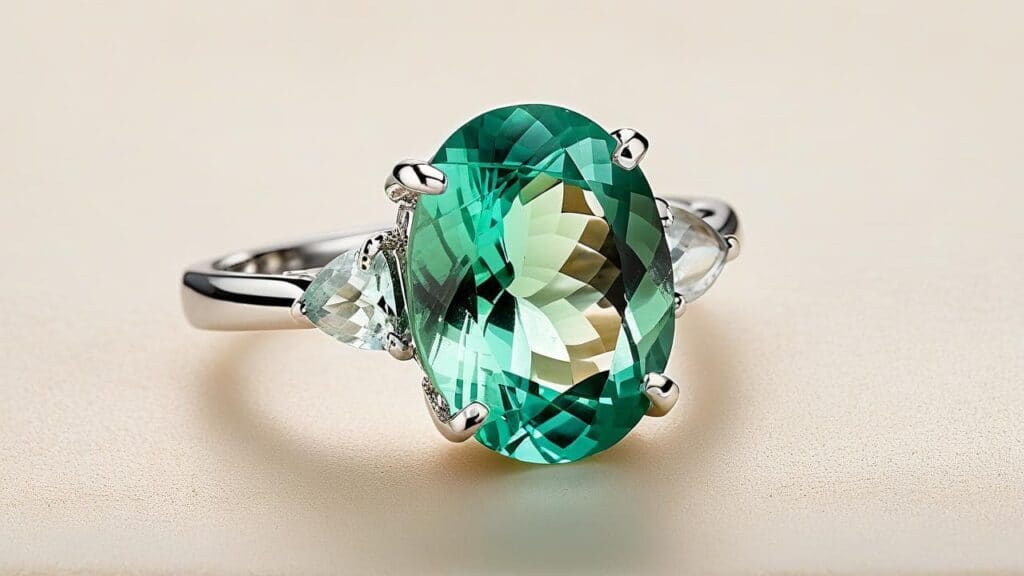
Distinguishing genuine fluorite from imitations or similar-looking materials is important for collectors, jewelry buyers, and mineral enthusiasts. Several distinctive properties can help confirm fluorite’s identity, though some tests require specialized equipment or expertise. The following identification techniques range from simple observations anyone can make to more technical methods that might require professional assistance.
- Fluorite’s perfect octahedral cleavage is highly distinctive – when examined closely, genuine specimens often show triangular or diamond-shaped cleavage patterns where the stone has chipped, unlike glass or plastic imitations which typically break in curved patterns.
- Under UV light, many (though not all) genuine fluorite specimens will fluoresce in distinctive colors – typically blue or purple-blue for purple fluorite, and various colors for other varieties; this property was named after fluorite and is particularly helpful for identification.
- The hardness test can confirm fluorite’s identity – at Mohs 4, genuine fluorite can be scratched by a steel knife or nail (Mohs 5.5) but will scratch a copper coin (Mohs 3.5); this non-destructive test should be performed discreetly on an inconspicuous area.
- Genuine fluorite feels noticeably dense and “cold” to the touch compared to glass or plastic imitations, due to its higher specific gravity (3.01-3.25) and thermal conductivity; this subjective test becomes more reliable with experience handling various materials.
- Color zoning is common in natural fluorite but difficult to replicate in synthetic materials – look for distinct bands or zones of color that follow crystal growth patterns rather than appearing as uniform or artificially arranged color distributions.
- When lightly tapped against teeth or other fluorite pieces, genuine fluorite produces a distinctive “clink” sound unlike glass or plastic; this subtle auditory test requires some experience but can be helpful when examining loose stones.
- A refractometer can confirm fluorite’s refractive index of 1.433-1.435, which differs from most look-alike materials like glass, plastic, or other gemstones; this test requires specialized equipment usually available at gemological laboratories or jewelers.
- Inclusions in natural fluorite typically appear as phantoms (internal crystal outlines from growth stages), liquid pockets, or mineral inclusions with natural distribution patterns – these differ significantly from the bubbles or swirls often found in glass imitations.
- Price can be an indicator – if a large, perfectly clear “fluorite” specimen with intense color is offered at an unusually low price, it warrants careful scrutiny, as natural specimens of exceptional quality command appropriate market values.
- When purchasing significant fluorite specimens or jewelry, obtaining authentication from a certified gemologist or mineralogist provides the highest level of certainty – these professionals have access to advanced testing methods including spectroscopy that can conclusively identify the material.
Identifying genuine fluorite becomes easier with experience and familiarity with this mineral’s unique characteristics. For major purchases, professional verification provides valuable peace of mind. Most reputable jewelry and mineral dealers accurately represent their fluorite products, but understanding these identification techniques helps buyers make informed decisions and appreciate the authentic natural beauty of true fluorite specimens. The distinctive properties that help identify genuine fluorite are the same qualities that make this mineral so fascinating to collectors and so appealing in jewelry applications.
Frequently Asked Questions About Fluorite
Common questions about fluorite reveal the practical considerations, misconceptions, and special interests that people typically have regarding this popular mineral. Addressing these frequently asked questions provides helpful information for those considering fluorite for jewelry, collection, or other purposes, clarifying important aspects of this colorful gemstone’s properties and uses.
Is fluorite suitable for everyday jewelry like rings and bracelets?
Fluorite requires careful consideration for everyday wear. With a hardness of 4 on the Mohs scale and perfect cleavage, it’s better suited for occasional wear jewelry like pendants and earrings. If used in rings or bracelets, protective settings and mindful wearing habits are essential to prevent damage.
Will fluorite fade or change color over time?
Some fluorite varieties, particularly certain purple and green specimens, may gradually fade with prolonged exposure to sunlight due to their photosensitivity. Storing fluorite jewelry away from direct sunlight and UV sources helps preserve its original colors for many years.
Is fluorite the same as fluoride used in dental products?
While related, they’re not the same. Fluorite is the natural mineral calcium fluoride (CaF₂). Fluoride compounds used in dental products are typically sodium fluoride (NaF) or stannous fluoride (SnF₂), which are manufactured substances, though they contain the same fluorine element found in natural fluorite.
How can I tell the difference between fluorite and similar-looking gemstones like amethyst or aquamarine?
Fluorite’s lower hardness (it can be scratched by a steel knife) and perfect octahedral cleavage distinguish it from harder gemstones. Additionally, fluorite often displays color zoning patterns that differ from those in quartz varieties, and many specimens fluoresce under UV light – a property less common in similar-looking stones.
Is fluorite toxic or dangerous to handle?
Natural fluorite specimens are generally safe to handle. However, fluorite should never be used in applications where it might be ingested, and cutting or grinding fluorite requires proper ventilation and safety equipment as inhaling the dust can be harmful. Normal handling of finished fluorite jewelry or specimens poses no significant health risks.
Does the value of fluorite vary significantly by color?
Yes, certain colors and combinations command premium prices. Electric blue fluorite from England’s Rogerley Mine, vivid purple specimens with exceptional transparency, and rare pink or colorless optical-grade varieties typically command higher prices than common green or yellow specimens. Rainbow fluorite with multiple distinct color zones is also highly valued.
Can fluorite be treated or enhanced to improve its appearance?
Unlike many gemstones, fluorite is rarely treated or enhanced commercially. Its natural colors are sufficiently vibrant and varied that treatments are generally unnecessary. Any treatments would likely focus on stabilizing the stone rather than changing its appearance.
How does fluorite compare to other popular gemstones in terms of value and investment potential?
Fluorite is generally considered a collector’s stone rather than an investment gem. Its relative softness and abundance keep prices moderate compared to precious gems, though exceptional specimens from famous localities can command significant prices. Its value derives more from aesthetic and mineralogical interest than from rarity or investment potential.
Is lab-created or synthetic fluorite available on the market?
While synthetic calcium fluoride is produced for optical and industrial applications, synthetic fluorite for gemstone purposes is uncommon in the marketplace. The natural material is relatively affordable and abundant, making synthesis for jewelry purposes economically impractical.
Can I clean my fluorite jewelry using commercial jewelry cleaners?
No, commercial jewelry cleaners often contain chemicals too harsh for fluorite. Use only mild soap and lukewarm water with a soft cloth for cleaning, avoiding ultrasonic cleaners, steam, and chemical solutions that could damage this relatively delicate gemstone.
Understanding these common concerns about fluorite helps potential buyers and collectors make informed decisions and properly care for their specimens. Fluorite’s combination of spectacular beauty and moderate durability makes it a gemstone that rewards knowledgeable handling and appropriate use. With proper care and realistic expectations about its physical properties, fluorite offers remarkable visual appeal and mineralogical interest at relatively accessible price points.
Conclusion
Fluorite stands as one of nature’s most magnificent artistic expressions, offering an unrivaled palette of colors in perfectly geometric crystal formations. From deep purple and electric blue to vibrant green, sunny yellow, and delicate pink, this calcium fluoride mineral captures the essence of Earth’s creative forces. Despite its moderate hardness requiring thoughtful care and settings, fluorite’s affordable beauty and remarkable properties have secured its place in both mineral collections and jewelry designs worldwide.
The journey through fluorite’s history, properties, and varieties reveals a gemstone that connects us to both ancient civilizations and contemporary scientific understanding. As we appreciate fluorite’s perfect cleavage, stunning color zoning, and mysterious fluorescence, we participate in humanity’s long fascination with this colorful crystal. Whether admired for its aesthetic appeal, collected for its mineralogical significance, or worn as a personal adornment, fluorite reminds us of the extraordinary beauty that emerges from the depths of our planet.