Hajime Asaoka stands as Japan’s most celebrated independent watchmaker, a self-taught artisan who has achieved what many considered impossible—creating haute horlogerie timepieces that rival Swiss manufactures while maintaining distinctly Japanese aesthetic principles. His extraordinary journey culminated in becoming the first Japanese member of the prestigious Académie Horlogère des Créateurs Indépendants (AHCI), joining only 30 independent watchmakers worldwide. Recent auction results demonstrate global recognition with his timepieces achieving record-breaking prices over $348,000, representing 200-300% premiums above estimates. This success stems from technical innovations including revolutionary ball bearing movements and oversized balance wheels, combined with extreme production limitation of fewer than five haute pieces annually.
How Hajime Asaoka Became Japan’s Top Watchmaker
Hajime Asaoka’s journey from product designer to Japan’s most celebrated independent watchmaker defies conventional wisdom about how one enters the world of haute horlogerie. Born in 1965 in Kanagawa Prefecture, his unconventional path began in 2005 when he decided at age 40 to teach himself watchmaking using only George Daniels’ textbook and online videos. What makes his story remarkable isn’t just the self-taught approach, but the speed of his mastery—creating his first tourbillon prototype in seven months and completing Japan’s first in-house wristwatch tourbillon by 2009.
- Asaoka graduated from Tokyo University of the Arts in 1990 and established his design consultancy in 1992, spending fifteen years developing expertise in industrial design, CAD modeling, and precision manufacturing processes. His client work involved creating products requiring exact tolerances and aesthetic refinement, skills that translated directly to watchmaking when he decided to change careers. This industrial background gave him advantages over traditionally trained watchmakers, allowing him to approach movement design from an engineering perspective and question established methods that had remained unchanged for centuries.
- When Asaoka began learning watchmaking in 2005, he relied entirely on George Daniels’ “Watchmaking” textbook and YouTube tutorials, despite speaking limited English. His engineering mindset led him to focus immediately on the most complex complications rather than starting with simple movements like traditional apprentices. Within seven months, he had created a functioning tourbillon prototype—a timeline that typically requires years of formal training to achieve. This rapid progress demonstrated how modern manufacturing knowledge could accelerate traditional craft learning when combined with determined self-study.
- The completion of Japan’s first in-house wristwatch tourbillon in 2009 marked a watershed moment for Japanese independent watchmaking, proving that non-Swiss makers could master the most demanding complications. Asaoka’s achievement attracted international attention because he had accomplished this milestone entirely through self-directed learning, without access to traditional Swiss training or established Japanese horological infrastructure. The watch featured innovations like ball bearings instead of traditional jewels, showing his willingness to challenge conventional construction methods.
- His exceptional work earned him admission to the Académie Horlogère des Créateurs Indépendants (AHCI) in 2012, making him the first Japanese member of this exclusive organization limited to 30 independent watchmakers worldwide. AHCI membership requires unanimous approval from existing members and represents the highest recognition in independent watchmaking. This honor validated his unconventional approach and placed him alongside legendary figures like Philippe Dufour and Kari Voutilainen, fundamentally changing global perceptions about Japanese horological capabilities.
- The 2012 launch of his Tsunami series established Asaoka’s signature aesthetic combining Art Deco geometry with Japanese minimalism. These watches featured his largest innovation—oversized 15-16mm balance wheels operating at 18,000 beats per hour, nearly twice the diameter of conventional movements. The 2014 Project-T Tourbillon collaboration with aerospace manufacturers OSG Corporation and Yuki Precision pushed technical boundaries further, incorporating titanium components and the world’s smallest ball bearings. Each piece demonstrated how aircraft-grade manufacturing could enhance traditional complications while maintaining classical proportions.
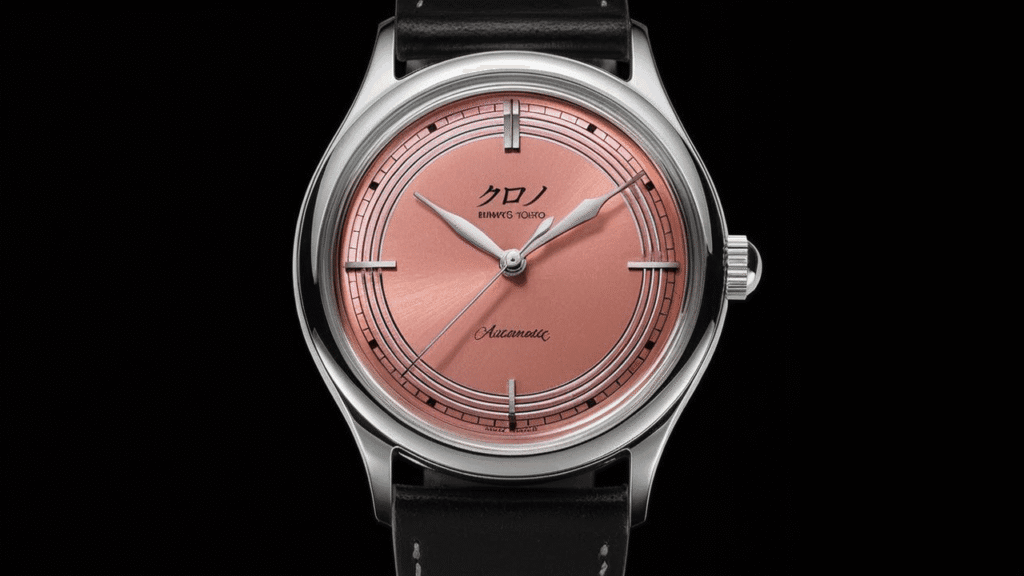
- Asaoka’s business evolution shows strategic thinking beyond pure craftsmanship. The 2019 creation of Kurono Tokyo provided accessible timepieces sharing his design philosophy while preserving haute piece exclusivity. Recent expansions include reviving the historic Takano brand in 2024 and founding Precision Watch Tokyo to train future Japanese independents. His workshop philosophy centers on complete personal involvement—he designs every component, operates CNC machinery, applies hand-mixed urushi lacquer, and assembles each watch personally, limiting annual production to fewer than five haute pieces.
- Production methods reflect his unique blend of traditional Japanese craft principles and modern precision manufacturing. Asaoka personally mixes urushi lacquer based on weather conditions and applies it in five rapid layers, a high-failure technique requiring complete restart if any layer fails. He machines most components in-house using aerospace-grade materials like A7075 duralumin for tourbillon carriages. His movements feature modular construction allowing independent removal of major components for servicing—an innovation addressing long-term maintenance challenges facing independent watch owners.
The synthesis of Asaoka’s engineering background, self-taught watchmaking skills, and Japanese aesthetic sensibilities created something genuinely new in modern horology. His work proves that innovation often emerges from outsiders who question established practices rather than blindly following tradition. By combining shogi strategy principles, Zen aesthetic philosophy, and cutting-edge manufacturing techniques, he has created timepieces that are unmistakably Japanese while achieving Swiss-level technical excellence. This unique positioning has made his watches increasingly sought after by collectors who appreciate both horological innovation and cultural authenticity in an era dominated by Swiss manufacturing traditions.
The Unique Features of Hajime Asaoka Timepieces
Asaoka’s timepieces stand apart in the crowded luxury watch market through their revolutionary technical innovations and distinctly Japanese design philosophy. While most independent watchmakers follow established Swiss construction methods, Asaoka has reimagined fundamental aspects of mechanical timekeeping, from replacing traditional jewel bearings with precision ball bearings to creating movements with modular architecture that simplifies long-term maintenance. His watches embody a perfect synthesis of aerospace-grade manufacturing precision and traditional Japanese craft aesthetics, resulting in timepieces that are both technically superior and culturally authentic.
- Asaoka pioneered the use of precision ball bearings throughout his movements instead of relying solely on traditional ruby jewels, creating smoother energy transfer and enhanced durability compared to conventional construction. His Project-T Tourbillon incorporates 13 ball bearings alongside 17 jewels, with the world’s smallest ball bearings measuring just fractions of a millimeter in the titanium tourbillon carriage. This innovation reduces friction at critical pivot points while providing superior shock resistance, addressing long-standing limitations of traditional jeweled movements. The ball bearing system requires extreme manufacturing precision but delivers measurably improved chronometric performance and longevity.
- Movement architecture follows pocket watch principles scaled to wristwatch dimensions, featuring oversized 15-16mm balance wheels that dwarf conventional 10-12mm components found in most mechanical watches. These massive balance wheels operate at the traditional 18,000 beats per hour frequency, providing superior timekeeping stability through increased inertia and reduced sensitivity to positional variations. The full-plate construction with custom wolf-tooth winding gears creates exceptional visual drama when viewed through exhibition casebacks while ensuring robust mechanical performance. This approach prioritizes long-term reliability over compact modern construction trends.
- Japanese aesthetic principles permeate every design decision, from dial execution using traditional urushi lacquer techniques to case proportions reflecting classical elegance rather than contemporary oversized trends. Asaoka personally hand-mixes urushi lacquer viscosity based on ambient humidity and temperature, applying five layers in rapid succession to achieve depth impossible through machine application. His Art Deco influences draw specifically from 1930s automotive design, particularly French luxury car manufacturers like Delage and Delahaye, creating geometric patterns that enhance rather than dominate the dial surface. Weather conditions factor into every lacquer mixing session, and the high-failure-rate process often requires complete restarts when layers don’t cure properly.
- Manufacturing capabilities rival major Swiss manufactures despite operating from a modest Tokyo workshop, with Asaoka designing all movements using advanced CAD systems before machining components on precision CNC equipment. His unique dial-making expertise serves other high-end independent makers who commission his transfer-printing services using gelatin cones rather than conventional silicone methods, achieving superior color saturation and registration accuracy. Materials innovation includes A7075 duralumin aircraft-grade aluminum for tourbillon carriages and Extra Super Duralumin for ultra-thin dial construction, demonstrating how aerospace materials can enhance traditional complications.
- Modular movement architecture represents perhaps his most practical innovation for long-term ownership, allowing major components to be removed and serviced independently without complete disassembly. This approach dramatically simplifies maintenance compared to traditional integrated movements where replacing a single component often requires rebuilding the entire mechanism. Combined with synthetic lubricants and corrosion-resistant materials throughout, this design philosophy extends service intervals while reducing long-term ownership costs. The modular concept also enables component upgrades and modifications impossible with conventional construction methods.
- Production philosophy emphasizes complete personal involvement in every aspect of creation, from initial design sketches through final assembly and regulation. Asaoka operates all machinery personally, applies every layer of lacquer by hand, and assembles each watch component individually in his workshop. This hands-on approach limits annual production to fewer than five haute pieces but ensures each timepiece receives attention to details invisible to casual observation. His 16-hour work sessions and perfectionist standards mean some watches require months to complete, with progress updates posted on social media at all hours showing his obsessive dedication to craft excellence.
- Technical innovations extend beyond visible complications to fundamental improvements in movement efficiency and reliability through careful material selection and precision manufacturing. His use of synthetic lubricants specifically formulated for extended performance intervals, combined with corrosion-resistant alloys throughout the gear train, addresses common long-term reliability issues plaguing mechanical watches. Component tolerances achieved through CNC manufacturing exceed hand-fitted parts in consistency while maintaining the aesthetic appeal of traditional finishing techniques applied post-machining.
The combination of technical innovation, aesthetic refinement, and cultural authenticity creates timepieces that transcend mere functional objects to become expressions of Japanese craftsmanship philosophy applied to Swiss mechanical traditions. Asaoka’s willingness to question fundamental assumptions about movement construction has resulted in genuine improvements to mechanical timekeeping while maintaining the visual appeal and emotional connection that make mechanical watches compelling. His work demonstrates how individual innovation can advance an entire industry when backed by sufficient technical expertise and unwavering commitment to excellence, establishing new benchmarks for what independent watchmaking can achieve in the modern era.
Top 10 Best Hajime Asaoka Watches
Selecting the finest examples from Asaoka’s extremely limited production requires balancing technical achievement, aesthetic refinement, and historical significance. With total haute piece production numbering fewer than 50 watches across his entire career, each timepiece represents a significant milestone in independent Japanese watchmaking. These ten watches showcase the evolution of his technical mastery, from early breakthroughs to recent innovations that continue pushing horological boundaries while maintaining his distinctive aesthetic vision.
- Project T Tourbillon (2014) stands as Asaoka’s technical masterpiece, featuring collaboration with aerospace manufacturers OSG Corporation and Yuki Precision to achieve unprecedented precision in tourbillon construction. The 43mm stainless steel case houses a manually-wound movement with titanium tourbillon carriage incorporating the world’s smallest ball bearings, measuring fractions of a millimeter yet providing superior shock resistance compared to traditional jeweled pivots. The glossy black DLC-coated dial showcases Art Deco geometric patterns while the inverted tourbillon architecture at 6 o’clock creates mesmerizing visual depth through the exhibition caseback. Limited to single-digit production with current market values reaching $60,000-$120,000, examples rarely appear at auction due to their extreme rarity and collector reluctance to sell.
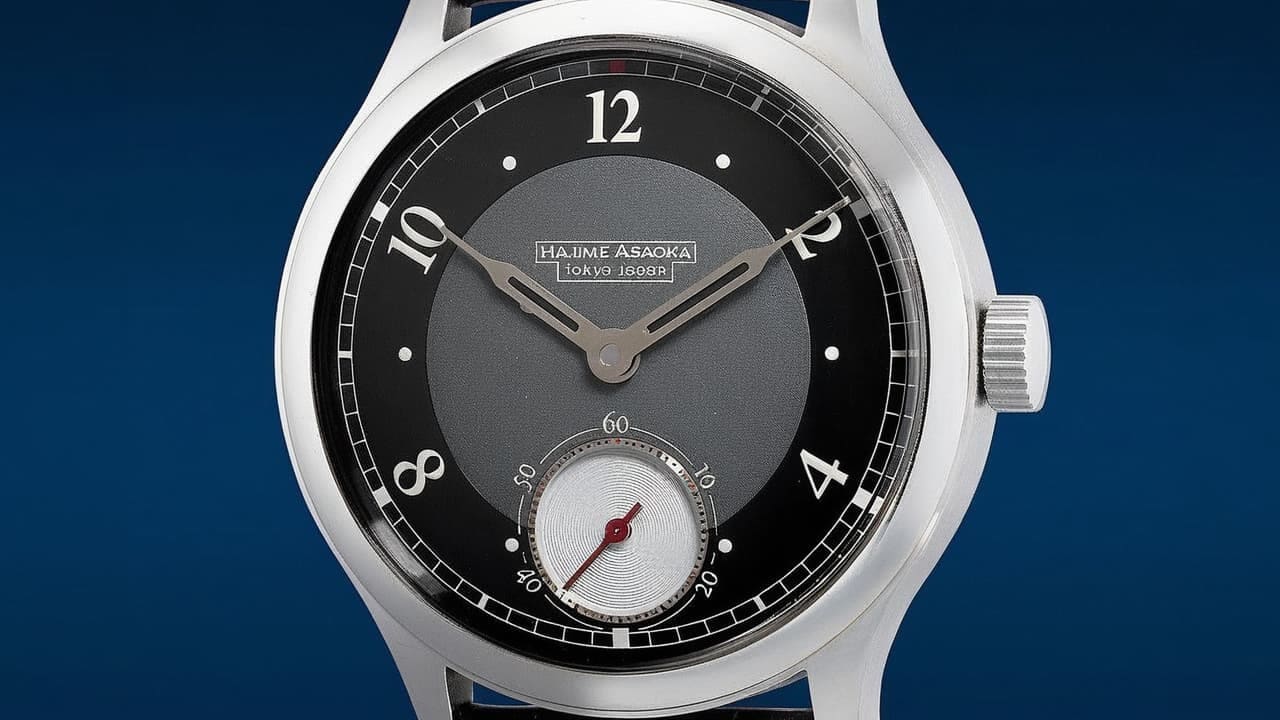
- Tsunami Series (2012-present) represents Asaoka’s signature aesthetic achievement and most recognizable design, featuring the distinctive 37mm stepped-bezel case housing his first complete in-house movement with the massive 15mm balance wheel centerpiece. The “tuxedo” two-tone dial configuration became his signature look, while recent variations like the 2024 Art Deco model with blue-green striped center earned GPHG nomination recognition. With fewer than 10 total examples produced across all variations, Tsunami watches epitomize his philosophy of technical excellence within classical proportions, commanding $80,000-$150,000 when they occasionally surface in the secondary market.
- Tourbillon #1 (2009) holds immense historical significance as Japan’s first wristwatch tourbillon, marking the moment when Japanese independent watchmaking achieved parity with Swiss technical capabilities. The 42mm case positions the tourbillon at 9 o’clock with an extended bridge creating asymmetrical visual drama, while the hand-finished movement showcases early examples of his ball bearing innovations. Only two examples exist worldwide, with one achieving the record-breaking $348,093 at Phillips auction in November 2024, demonstrating the market’s recognition of its importance in horological history and establishing benchmarks for future Japanese independent valuations.
- Chronograph (2017) showcases Asaoka’s problem-solving brilliance through its unique display of all chronograph mechanics from the dial side, requiring complete reimagining of traditional column-wheel architecture. Based on his Tsunami movement foundation with added chronograph module, the 38mm watch features visible chronograph components through carefully planned dial openings while maintaining aesthetic harmony. Limited to three pieces at approximately $107,600 each, this watch demonstrates how technical innovation can enhance rather than dominate visual appeal, with the mechanical display serving as decoration rather than mere functionality.
- Kurono Tokyo GMT 1 (2023) earned GPHG finalist status in the Challenge category, representing Asaoka’s successful translation of haute complications into more accessible pricing while maintaining technical excellence. The 38mm high-polish case features a glazed bi-directional rotating bezel and modified Miyota 9075 movement enhanced for local jumping hours functionality. The contrasting black, gray, and crimson dial rings create Art Deco concentric patterns serving as intuitive day/night indicators, while the $2,230 retail price made it instantly collectible despite 500-piece production limiting availability through timed online releases.
- Kurono Chronograph Series provides the most accessible entry point to Asaoka’s design universe while maintaining his aesthetic DNA and quality standards. The Chronograph 1 with 68 pieces per color variant earned 2020 GPHG nomination, while Chronograph 2 featuring copper, silver, and brown palette combinations expanded to 500 pieces worldwide. Current secondary market values of $6,000-$10,000 represent substantial appreciation from $4,000 retail pricing, demonstrating sustained collector demand even for his more accessible offerings through the systematic sellouts occurring within minutes of each release.
- Tourbillon Noir (2023) demonstrates Asaoka’s continued evolution toward technical refinement through its completely modular construction allowing major components to be removed independently for simplified servicing. The 37mm case contains his smallest tourbillon movement while the black Tsuikoshi lacquer dial creates exceptional depth through multiple hand-applied layers impossible to achieve through machine application. This watch represents the culmination of his technical development, incorporating lessons learned from previous complications while pushing miniaturization boundaries and improving long-term serviceability for collectors.
- Kurono Anniversary Green “Mori” (2020) achieved iconic status through strategic film placement in “The Invisible Man” and subsequent GPHG nomination, establishing Kurono’s reputation for sophisticated color application and immediate sellout status. Limited to 288 pieces commemorating the brand’s launch, it demonstrated how limited production could create sustained collector interest while maintaining accessible pricing. The forest green dial became instantly recognizable among collectors, with secondary market appreciation to $8,000+ levels proving the strength of Asaoka’s design aesthetic even in higher-volume applications.
- Tourbillon Pura showcases Asaoka’s materials mastery through its A7075 duralumin tourbillon carriage weighing significantly less than traditional brass construction while providing superior strength and corrosion resistance. The simplified aesthetic focuses attention on the mechanical beauty of the tourbillon itself, with minimal dial elements allowing the complication to serve as primary decoration. Recent auction achievement of $361,950 reflects growing collector recognition and positions this watch among the most valuable modern Japanese timepieces ever sold at public auction.
- Special Commissioned Pieces including collaborations with contemporary artists and the revival of historic Japanese brand Takano demonstrate Asaoka’s versatility beyond his signature aesthetic while maintaining technical standards. These unique timepieces command premium pricing due to their one-off nature and offer glimpses into alternative design directions while preserving his core technical innovations. The Takano revival particularly showcases his ability to interpret historical Japanese watch design through modern manufacturing capabilities, creating bridges between past and present that appeal to collectors interested in horological continuity.
Each watch in this selection represents a specific achievement in Asaoka’s development as both technician and artist, from early breakthrough moments establishing Japanese credibility in haute complications to recent innovations improving practical ownership experience. The extreme rarity of his haute pieces, combined with growing international recognition through auction results and critical acclaim, has created a market dynamic where ownership represents participation in horological history rather than mere luxury consumption. These timepieces demonstrate how individual innovation can advance entire industries while creating objects of lasting beauty and technical significance.
Hajime Asaoka Watch Buying Tips for Beginners
Acquiring an Asaoka timepiece requires strategic planning, patience, and realistic expectations about availability, pricing, and long-term ownership responsibilities. The extreme scarcity of his haute pieces, combined with growing international recognition, has created a complex marketplace where traditional buying approaches often fail. Success depends on balancing budget constraints with opportunity recognition, while preparation for the unique challenges of owning handcrafted timepieces from Japan’s most exclusive independent maker.
- Budget planning must account for three distinct market tiers with vastly different entry requirements and appreciation patterns. Kurono Tokyo models offer the most accessible entry at $1,170-$2,230 retail pricing, though secondary market premiums immediately add 150-400% to actual acquisition costs due to instant sellouts and speculator activity. Hajime Asaoka atelier pieces span $26,700-$120,000 for new examples when available, while historically significant pieces like early tourbillons now command $300,000+ at auction. Buyers should budget beyond purchase price for insurance, potential servicing costs, and secure storage solutions appropriate for investment-grade timepieces.
- Availability challenges demand both patience and strategic positioning across multiple acquisition channels simultaneously. Hajime Asaoka haute pieces involve multi-year waiting lists with uncertain prospects, as he produces fewer than five annually and no longer accepts new orders from unknown collectors. Kurono Tokyo releases occur 4-5 times yearly through timed purchasing windows lasting mere minutes, requiring advance account registration, single-watch purchase limits, and precise timing during Tokyo business hours. Success rates remain extremely low even for prepared buyers, with some releases selling out in under 60 seconds despite anti-bot measures.
- Authentication considerations become crucial given the investment levels involved and the handcrafted nature of production methods. Genuine Asaoka pieces exhibit specific hand-finishing details including Zaratsu case polishing, hand-mixed urushi lacquer dial surfaces with characteristic depth variations, and proprietary movement components like custom “octopus wheels” and ball bearing installations. Documentation should include certificates from Tokyo Watch Precision Co., numbered production records, and original presentation materials. The extremely limited production makes counterfeiting uncommon but potentially devastating financially, making verification through authenticated dealers essential for secondary market purchases.
- Sizing philosophy emphasizes vintage elegance over contemporary trends, requiring acceptance of classical proportions that may feel small to modern tastes. Most Asaoka models measure 34-38mm diameter with 7-11mm thickness, reflecting his preference for dress watch proportions suitable for formal occasions rather than casual wear. The Art Deco aesthetic works best in professional environments, though 50-meter water resistance and robust steel construction allow daily wear for those appreciating smaller watch sizes. Potential buyers should physically experience similar dimensions before committing to avoid disappointment with perceived size expectations.
- Intended use considerations affect model selection significantly, as different Asaoka watches serve distinct purposes in collector wardrobes. Haute pieces like Tsunami and Project-T represent investment-grade acquisitions requiring careful handling and occasional wear patterns to preserve condition and value. Kurono Tokyo models offer more practical daily wear options while maintaining design DNA, though their collectible status still warrants careful treatment. Buyers seeking pure functionality should consider whether paying premiums for artisanal construction makes sense compared to established Swiss alternatives offering similar features.
- Market timing requires balancing immediate gratification against potential future opportunities and pricing evolution. Secondary market premiums fluctuate based on recent auction results, new model releases, and overall collector sentiment toward Japanese independent watches. GPHG nominations and major media coverage tend to spike demand temporarily, while economic uncertainty can create brief buying opportunities. Patient collectors may benefit from monitoring market cycles, though the fundamental scarcity ensures strong long-term value support regardless of timing considerations.
- Purchase protection becomes essential given the international nature of transactions and limited recourse options for problematic purchases. Reputable dealers offer authentication guarantees, warranty coverage, and return policies that protect buyers from fraud or misrepresentation. Direct purchases from collectors or unverified sources carry significant risks given the investment levels and complexity of verification processes. Credit card protection, escrow services, and professional authentication can justify additional costs when purchasing high-value pieces through uncertain channels.
- Long-term ownership planning should address servicing, insurance, and eventual disposition considerations before purchase. Asaoka’s custom movements require specialized knowledge found primarily in Japan, potentially necessitating international shipping for service work with associated costs and risks. Insurance valuations must reflect recent auction results rather than purchase prices, as values may appreciate significantly beyond original cost. Estate planning should consider the collectible nature and potential difficulty of liquidation for heirs unfamiliar with the independent watch market.
The combination of extreme scarcity, growing demand, and unique ownership challenges makes Asaoka watch acquisition fundamentally different from purchasing established Swiss brands with extensive dealer networks and predictable availability. Success requires treating the process as collecting rather than shopping, with emphasis on relationship building, market knowledge, and patient opportunity recognition. Buyers who approach Asaoka timepieces with realistic expectations about the challenges involved while appreciating the cultural significance and technical achievement often find the effort worthwhile regardless of financial considerations.
Where to Buy Authentic Hajime Asaoka Watches
The acquisition landscape for Asaoka timepieces presents unique challenges due to extremely limited authorized distribution and the handcrafted nature of production that prevents traditional retail relationships. Success requires navigating a complex ecosystem of direct sales, specialized dealers, auction houses, and secondary markets while avoiding the numerous pitfalls that can result in financial loss or counterfeit purchases. Each channel offers distinct advantages and risks that must be carefully evaluated based on individual circumstances and risk tolerance.
- Direct sales through the official website represent the primary retail channel for accessible models, though success requires mastering their unique release system and anti-speculation measures. The brand conducts 4-5 releases annually through timed purchasing windows announced via social media, typically lasting 10-45 minutes before complete sellouts occur. Account registration requires advance setup with verified payment methods and shipping addresses, while purchase limits restrict buyers to single watches per release to discourage speculation. The lottery-style reservation system for high-demand models adds additional complexity, with selection notifications arriving days or weeks after initial registration periods close.
- Tokyo salon experiences in Aoyama district and international popup events provide the only opportunities to physically examine pieces before purchase, though availability remains extremely limited. These appointments-only showings allow serious collectors to experience Asaoka’s finishing quality firsthand while discussing technical details with knowledgeable representatives. International events in cities like Shanghai and Hong Kong offer regional access, though scheduling often requires months of advance planning. The personal nature of these interactions can influence future purchase opportunities, making relationship building valuable for long-term collecting strategies.
- Authorized secondary dealers in major cities provide authenticated pre-owned options with warranty coverage and professional expertise that protect buyers from fraud while commanding premium pricing. These established dealers offer authentication guarantees, condition reports, and return policies that justify higher costs through reduced risk and professional oversight. Services often include detailed photography, condition assessment, and historical research that adds value beyond simple transaction facilitation. The limited number of authorized dealers worldwide means geographic proximity rarely influences dealer selection decisions for serious collectors.
- Major auction houses have become increasingly important for historically significant pieces and estate collections, though pricing often exceeds private collector transactions significantly. Recent Geneva sales achieved record results including $348,093 for early tourbillons, establishing new benchmarks for Japanese independent valuations. Auction premiums typically add 25-30% to hammer prices through buyer’s fees, insurance, and shipping costs. Pre-sale viewing opportunities allow hands-on examination while condition reports provide professional assessment, though bidding dynamics can drive prices beyond rational market levels during competitive situations.
- Specialized online platforms offer curated selections with in-house authentication services and collector-focused expertise that combine traditional dealer functions with modern e-commerce convenience. These platforms maintain sporadic inventory due to limited supply but provide authentication processes involving multiple experts and detailed documentation that justify premium pricing through reduced fraud risk. Customer service often includes educational content and technical support that benefits new collectors navigating the independent watch market complexities for the first time.
- Private collector networks and enthusiast forums facilitate direct transactions between collectors, though these channels require significant expertise to navigate safely without professional protection. Community-driven platforms enable collector-to-collector sales with potentially lower pricing than dealer channels, though transaction risks increase significantly without professional authentication services. Reputation systems and community oversight provide some protection, but buyers assume full responsibility for verification and dispute resolution when problems arise during or after transactions.
- Geographic considerations affect both availability and practical ownership support, with Japan-based purchases offering the most comprehensive service access but potential import complications. Tokyo-based transactions provide direct access to the workshop for service needs and authentic parts availability, though international shipping and customs procedures add complexity and cost. European and American dealers offer local convenience and established customer service, though technical support may require coordination with Japanese specialists. Import duties and taxes can add 10-30% to purchase costs depending on destination country regulations.
- Warning signs of problematic sellers include prices significantly below market rates, poor quality photographs, reluctance to provide detailed specifications, and lack of proper documentation or authentication certificates. Legitimate sellers readily provide movement photos, serial number verification, and original packaging when available. Pressure tactics, limited-time offers, and requests for unconventional payment methods often indicate fraudulent activity. The high value and limited production makes these pieces attractive targets for sophisticated counterfeiting operations requiring careful verification through multiple independent sources.
- Payment protection strategies should include credit card coverage, escrow services for high-value transactions, and verification of seller credentials through multiple independent sources before finalizing purchases. Bank wire transfers offer limited recourse compared to credit card purchases with dispute resolution capabilities built into consumer protection regulations. Professional escrow services justify additional costs for transactions exceeding personal insurance coverage limits. Independent authentication before final payment provides crucial protection, though service availability varies significantly by geographic location and piece complexity.
The fragmented nature of distribution requires a multi-channel approach combining patience, preparation, and risk management to achieve collecting goals successfully. Success often depends more on timing and relationship building than pure financial capability, as the most desirable pieces rarely reach open market channels. Collectors who invest time in market education, authentication expertise, and dealer relationships typically achieve better results than those relying solely on financial resources to overcome marketplace challenges and acquire genuinely rare timepieces.
Are Hajime Asaoka Watches Good Investments?
Hajime Asaoka watches have emerged as among the strongest performing timepieces in the modern independent watch market, with recent auction results demonstrating exceptional appreciation rates that far exceed traditional luxury watch investments. The combination of extreme production scarcity, growing international recognition, and historical significance as Japan’s entry into haute horlogerie has created investment dynamics more similar to fine art than conventional collectibles. However, the nascent nature of this market segment requires careful analysis of underlying fundamentals and risk factors before considering financial returns as primary motivation for ownership.
- Recent auction performance has established new benchmarks for Japanese independent watchmaking values, with multiple pieces achieving 200-400% premiums over conservative estimates. The November 2024 Phillips Geneva sale saw Tourbillon #1 reach $348,093 against a $50,000-$100,000 estimate, while Tourbillon PURA achieved $361,950 versus $120,000-$240,000 guidance. These results represent compound annual growth rates exceeding 25% for pieces held since original purchase, though the small sample size makes statistical analysis challenging. Bidding patterns showed sustained international participation from Asian, European, and American collectors, indicating broad geographic demand rather than regional speculation.
- Secondary market dynamics for Kurono Tokyo pieces demonstrate immediate appreciation upon delivery, with most models achieving 150-400% of retail pricing within weeks of purchase. The Chronograph 1 models originally priced at $4,000 now command $6,000-$10,000 depending on condition and variant, while Anniversary Green “Mori” pieces have reached $8,000+ levels. This appreciation occurs despite brand efforts to discourage speculation through anti-flipping measures including warranty voids for early resales and purchase restrictions designed to identify genuine collectors. The persistent premiums suggest underlying demand fundamentals rather than temporary speculation driving valuations.
- Scarcity economics strongly favor continued appreciation given Asaoka’s production constraints and growing international collector base expanding faster than supply increases. Annual haute piece production of fewer than five watches, combined with Kurono Tokyo’s limited releases of 68-500 pieces per model, creates classic supply-demand imbalances that typically support luxury goods valuations. The passing of time makes early examples increasingly rare, while new production barely addresses growing collector interest from markets like China, Southeast Asia, and younger demographics discovering independent watchmaking. Population growth in high-net-worth individuals globally suggests demand expansion will continue outpacing supply availability.
- Market fundamentals supporting long-term strength include Japanese cultural appreciation reaching new heights globally and independent watchmaking gaining respect alongside established Swiss manufacturing. Cultural trends toward authenticity, craftsmanship appreciation, and alternative luxury goods benefit Japanese makers generally, while Asaoka’s unique position as the first Japanese AHCI member provides historical significance beyond pure collecting appeal. The broader movement toward supporting independent creators over large corporations aligns with evolving luxury consumption patterns among younger affluent buyers who prioritize story and authenticity over traditional status signaling.
- Comparative analysis against other independent makers shows similar appreciation patterns among established names like Philippe Dufour, Kari Voutilainen, and Roger Smith, suggesting Asaoka pieces may follow comparable trajectories. Early Dufour Simplicity watches purchased at $50,000 now trade for $200,000+, while Voutilainen pieces have shown consistent 15-20% annual appreciation over extended periods. Asaoka’s current pricing levels appear reasonable compared to Swiss independents with similar production volumes and technical achievement, potentially offering appreciation runway as his international recognition grows through museum exhibitions and academic study.
- Risk considerations include market concentration among relatively few serious collectors and limited liquidity compared to major Swiss brands with established dealer networks. The narrow collector base means market sentiment can shift rapidly based on individual buyer preferences or economic conditions affecting luxury spending. Liquidity challenges may arise during broader economic downturns when discretionary spending contracts and specialized markets suffer disproportionately. Geographic concentration in Asia-Pacific markets creates vulnerability to regional economic disruption, though growing European and American interest provides some diversification.
- Investment quality varies significantly across Asaoka’s portfolio, with historically significant pieces like early tourbillons likely maintaining premium valuations while more recent production may experience greater volatility. Tourbillon #1 benefits from being Japan’s first wristwatch tourbillon, providing historical significance that transcends pure collecting interest. Later production pieces, while technically superior, lack comparable historical narrative and may prove more sensitive to market conditions. Kurono Tokyo models offer broader collector accessibility but face greater competition from increased production volumes over time.
- Market development indicators suggest continued institutional recognition through major auction houses, museum acquisitions, and academic study programs focusing on independent watchmaking history. Phillips’ dedicated attention to Asaoka pieces in major sales indicates growing auction house confidence in sustained collector interest. Museum exhibitions showcasing Japanese craftsmanship increasingly include his work alongside traditional arts, while horological schools begin studying his techniques as legitimate alternatives to Swiss methods. These institutional endorsements typically precede broader market recognition and sustained value appreciation.
- Exit strategy considerations require planning for the specialized nature of the market and potential challenges in liquidation during personal financial stress or estate settlement. The narrow collector base means finding qualified buyers may require months rather than weeks, while authentication requirements add complexity to private sales. Auction consignment provides professional marketing but involves significant fees and timing constraints. Estate planning should consider the specialized knowledge required for proper valuation and the potential difficulty heirs may face in managing sophisticated timepiece collections.
The investment case for Asaoka watches rests primarily on fundamental scarcity, growing recognition, and cultural significance rather than speculative demand or fashion trends. Collectors who purchase based on personal appreciation while considering financial aspects secondarily typically achieve the best outcomes, as the emotional satisfaction from ownership provides protection against short-term market volatility. The extreme production limitations ensure that supply will remain constrained regardless of demand fluctuations, providing downside protection for quality pieces while allowing participation in potential upside as Japanese independent watchmaking achieves broader recognition.
Hajime Asaoka Watch Service and Maintenance
Owning an Asaoka timepiece requires adopting maintenance practices that respect both the handcrafted nature of components and the innovative technical solutions that distinguish these watches from conventional mechanical timepieces. The combination of traditional Japanese craft techniques, aerospace-grade materials, and custom movement architecture creates unique care requirements that extend beyond standard luxury watch maintenance protocols. Proper stewardship ensures these exceptional timepieces continue performing optimally while preserving their value and cultural significance for future generations.
- Daily handling practices should accommodate the hand-applied urushi lacquer dials that require gentler treatment than conventional enamel or metal surfaces. Avoid exposing the watch to harsh chemicals including household cleaners, perfumes, and hand sanitizers that can damage the multiple lacquer layers applied by Asaoka personally. Store pieces in individual soft cloth pouches or dedicated watch boxes with adequate spacing to prevent contact between timepieces. Remove watches before activities involving potential impact or vibration, as the custom ball bearing systems, while robust, can be affected by extreme shock loads exceeding normal daily wear parameters.
- Environmental considerations protect both mechanical components and aesthetic elements from damage that may be irreversible given the custom nature of replacement parts. Maintain storage temperatures between 15-25°C with stable humidity levels around 40-60% to prevent expansion and contraction cycles that stress custom-fitted components. Avoid direct sunlight exposure that can fade hand-mixed lacquer colors or cause thermal stress in the movement, while magnetic field exposure near electronics should be minimized despite improved magnetic resistance compared to traditional movements. Climate-controlled storage becomes essential for collectors in extreme environments or those storing pieces for extended periods.
- Winding procedures for manual movements require understanding the custom gear trains and energy storage characteristics specific to Asaoka’s designs. Wind watches slowly and steadily rather than rapidly, as the custom wolf-tooth gears and oversized mainsprings respond differently than conventional movements. Stop winding immediately upon feeling resistance rather than forcing the mechanism, as the hand-fitted components may have tighter tolerances than mass-produced alternatives. The large balance wheels and custom escapements may require 24-48 hours to stabilize timekeeping after extended storage periods, making patience essential when resuming regular wear after storage.
- Professional servicing intervals typically extend 4-6 years for haute pieces due to synthetic lubricants and improved materials, though individual wear patterns and environmental exposure affect timing significantly. Asaoka’s use of advanced synthetic oils and corrosion-resistant alloys throughout movements extends service intervals compared to traditional Swiss movements requiring 3-4 year maintenance cycles. However, the custom components and specialized techniques require service by technicians familiar with his specific methods and materials. Early signs needing attention include timekeeping deviation exceeding ±10 seconds daily, visible moisture under the crystal, or unusual sounds during winding or time setting operations.
- Service provider selection becomes critical given the specialized knowledge required for Asaoka’s custom movements and finishing techniques. Tokyo Watch Precision Co. provides factory service with access to original parts and Asaoka’s direct oversight for complex repairs, though international shipping adds time and potential risk to the process. Qualified independent specialists trained in his techniques exist in major markets but remain extremely limited, making advance planning essential for service needs. Unauthorized service attempts can cause irreversible damage to custom components that may be impossible to replace, making provider verification crucial before entrusting valuable timepieces.
- Documentation preservation protects both authenticity and value while facilitating future service needs and potential resale considerations. Maintain original certificates, numbered production records, and any correspondence from Tokyo Watch Precision Co. in secure, climate-controlled storage separate from the timepieces themselves. Photograph watches periodically to document condition changes over time, including detailed movement shots through exhibition casebacks. Service records should include dates, work performed, and parts replaced to maintain provenance trails essential for authentication and value preservation.
- Insurance coverage requires specialized jewelry policies with professional appraisals reflecting recent auction results rather than original purchase prices. Standard homeowner’s policies typically exclude high-value timepieces or provide inadequate coverage limits for current market values. Professional appraisals should occur every 2-3 years given the rapidly appreciating values demonstrated in recent auction results. Detailed photography and documentation support insurance claims while facilitating replacement value determination if loss occurs. Consider separate floater policies for individual pieces exceeding standard policy limits.
- Travel considerations address the practical challenges of wearing valuable handcrafted timepieces while maintaining proper care standards. Carry watches in dedicated travel cases with adequate protection against shock and temperature extremes during air travel. Airport security procedures may require removal for inspection, making scratch-resistant case materials and proper handling technique important. International travel requires customs documentation for valuable timepieces to avoid complications during border crossings, while travel insurance should specifically cover high-value personal effects including watches.
- Long-term preservation strategies for collectors building significant holdings should address storage, rotation, and eventual disposition planning. Professional-grade watch winders maintain movement operation for pieces not worn regularly, though Asaoka’s robust movements tolerate storage well compared to more delicate complications. Rotation schedules ensure all pieces receive adequate use while preventing over-wearing of individual examples. Estate planning should include detailed inventories with current valuations and care instructions for heirs who may lack horological expertise.
The investment in proper care and maintenance pays dividends through sustained performance, preserved aesthetics, and maintained value appreciation potential. Asaoka timepieces represent significant cultural artifacts beyond their function as luxury goods, making responsible stewardship important for preserving Japanese horological heritage. Collectors who embrace the specialized requirements while developing relationships with qualified service providers typically enjoy decades of reliable performance from these exceptional timepieces while contributing to their historical preservation for future enthusiasts.
Frequently Asked Asaoka Watch Questions
The unique nature of Asaoka’s handcrafted timepieces and the complex marketplace surrounding them generates numerous questions from both prospective buyers and existing owners. These frequently asked questions address the most common concerns about availability, authenticity, investment potential, and practical ownership considerations based on real collector experiences and market observations. Clear answers to these questions help potential owners make informed decisions while setting realistic expectations about the challenges and rewards of Asaoka ownership.
How long are waiting lists for new Hajime Asaoka haute pieces and what factors influence selection?
Asaoka no longer accepts new orders for haute pieces as his waiting list exceeds realistic production capacity. Existing clients wait 3-5 years or more, with some orders placed years ago still pending. Selection appears based on established relationships and demonstrated appreciation for independent watchmaking rather than purely financial considerations. Kurono Tokyo releases offer the only realistic acquisition path for new collectors through competitive online sales.
What distinguishes Asaoka from other Japanese brands like Seiko, Citizen, or Grand Seiko?
While established Japanese manufacturers excel in mass production, Asaoka operates exclusively in haute horlogerie with handcrafted movements featuring innovations like ball bearing systems unavailable elsewhere. His AHCI membership places him among the world’s 30 most respected independent makers, while production of fewer than five haute pieces annually creates extreme scarcity. His position as Japan’s first independent haute horlogerie maker provides unique historical significance.
Are Asaoka watches worth purchasing purely as investments?
Recent auction results showing 200-400% appreciation suggest strong performance, though small sample sizes limit statistical analysis. Extreme scarcity and growing recognition provide fundamental support for appreciation, while cultural significance offers protection against fashion trends. However, purchasing solely for investment ignores specialized authentication, maintenance, and resale knowledge requirements, making personal appreciation essential for successful ownership.
How can collectors verify authenticity when purchasing pre-owned pieces?
Authentic pieces exhibit Zaratsu case polishing, hand-mixed urushi lacquer with visible depth variations, custom “octopus wheels,” and proper ball bearing installations. Documentation should include Tokyo Watch Precision Co. certificates, numbered production records, and original packaging. Limited production makes sophisticated counterfeiting uncommon but potentially devastating, making authentication through established dealers essential for significant purchases.
What are the practical differences between Asaoka’s various movement types?
Haute pieces feature custom movements with oversized 15-16mm balance wheels requiring careful handling, while Kurono Tokyo uses modified base movements offering conventional operation and improved daily wear reliability. Recent haute pieces include modular architecture simplifying maintenance, while synthetic lubricants extend service intervals compared to traditional movements.
Can Asaoka watches be serviced outside Japan?
Tokyo Watch Precision Co. provides factory service, but qualified international specialists remain extremely limited. International shipping adds time, cost, and risk, while parts availability outside Japan can be problematic. Unauthorized service often causes irreversible damage, making advance planning and qualified technician relationships essential for international owners.
What is the most affordable way to experience Asaoka’s craftsmanship?
Kurono Tokyo models at $1,170-$2,230 retail provide accessible entry, though secondary market premiums often double costs due to instant sellouts. Success requires participation in competitive online releases with sub-10% success rates, making patience and persistence essential for retail pricing acquisition.
How do Asaoka pieces compare to Swiss independents like Dufour or Voutilainen?
Asaoka’s technical innovations represent genuine advancement comparable to Swiss masters, while his AHCI membership provides unique historical importance as Japan’s first member. Current pricing appears reasonable compared to similar production volume Swiss makers, though market maturity differences affect liquidity. Choice largely reflects personal preference between Japanese minimalism and Swiss classical approaches.
What specific risks should buyers consider?
Limited collector base creates reduced liquidity compared to major Swiss brands, while authentication requires specialized knowledge. Service challenges outside Japan complicate ownership, particularly for custom haute pieces. Rapidly appreciating values create insurance complications requiring regular appraisals. Market concentration in Asia-Pacific creates regional economic vulnerability.
How do collectors acquire multiple Asaoka pieces given extreme scarcity?
Successful collectors often begin with Kurono Tokyo pieces while building dealer relationships and market knowledge. Patient relationship building with Tokyo Watch Precision Co. and participation in collector events provides networking opportunities. Success requires demonstrating authentic appreciation rather than pure financial capability, as placement prioritizes collectors who will preserve pieces rather than immediate resale.
These answers reflect current market realities while acknowledging evolving conditions as recognition grows. Prospective owners should conduct additional research and consult qualified experts before significant purchases. The specialized nature requires education and patience, but rewards those who approach it with appropriate preparation and realistic expectations about both opportunities and challenges.
Conclusion
Hajime Asaoka’s remarkable journey from self-taught enthusiast to Japan’s most celebrated independent watchmaker demonstrates how individual innovation can transform entire industries while creating objects of lasting cultural significance. His timepieces represent far more than luxury accessories—they embody the synthesis of traditional Japanese craft principles with cutting-edge horological technology, establishing new benchmarks for what independent watchmaking can achieve in the modern era. The combination of extreme production scarcity, technical innovation, and growing international recognition has created investment dynamics that reward both financial participation and cultural appreciation, though the primary motivation should always center on personal connection to these exceptional timepieces.
The acquisition landscape for Asaoka watches demands patience, preparation, and realistic expectations about the challenges involved in entering this exclusive collecting segment. Success requires treating the process as cultural participation rather than simple luxury consumption, with emphasis on relationship building, market education, and long-term perspective that transcends immediate gratification. Whether pursuing accessible Kurono Tokyo pieces as introduction to his aesthetic philosophy or seeking historically significant haute pieces for serious collecting, the specialized knowledge and persistent effort required often prove as rewarding as the timepieces themselves.
For collectors seeking alternatives to Swiss horological dominance while supporting genuine independent craftsmanship, Hajime Asaoka watches represent an exceptional opportunity to participate in horological history as it unfolds. His unique position as the first Japanese AHCI member, combined with technical innovations that advance the entire industry, ensures these timepieces will remain culturally significant regardless of market fluctuations. The future promises continued recognition of his contributions to independent watchmaking, making current ownership participation in a movement that has fundamentally changed global perceptions about Japanese capabilities in haute horlogerie.