A lot of people assume that owning a watch from a name like Rolex, Omega, or Cartier means spending tens of thousands of dollars. That is true for some models, but it is not the whole story. Every one of these brands makes at least one watch built to be a starting point rather than a finish line, and those watches use the same steel cases, the same quality control, and often a close cousin of the same movement found in pieces that cost far more. Knowing which model is the real entry point at each brand, what history sits behind it, and what that money actually buys prevents overpaying for the wrong reference or assuming a brand is out of reach when it isn’t.
What Counts as an Entry-Level Luxury Watch?
An entry-level luxury watch is the cheapest model a brand sells new, through its own boutiques or authorized dealers, that still carries full brand backing and warranty. It is not a cheap knockoff or a lesser version pretending to be the real thing.
Brands create these models on purpose. A young professional or first-time watch buyer is more likely to fall in love with a brand through an accessible piece, then move up to a flagship model years later. Because of that, most entry-level watches share the exact case material, water resistance testing, and quality checks used on the brand’s most expensive pieces. The differences usually come down to three things: a simpler movement (sometimes quartz instead of automatic), a smaller case size, and fewer complications like chronographs or GMT hands.
A $6,200 Rolex and a $40,000 Rolex are held to the same finishing and testing standards inside the same factory. The price gap comes from materials and complexity, not from a lower bar for quality.
Cheapest Longines Watch: Starting at $800
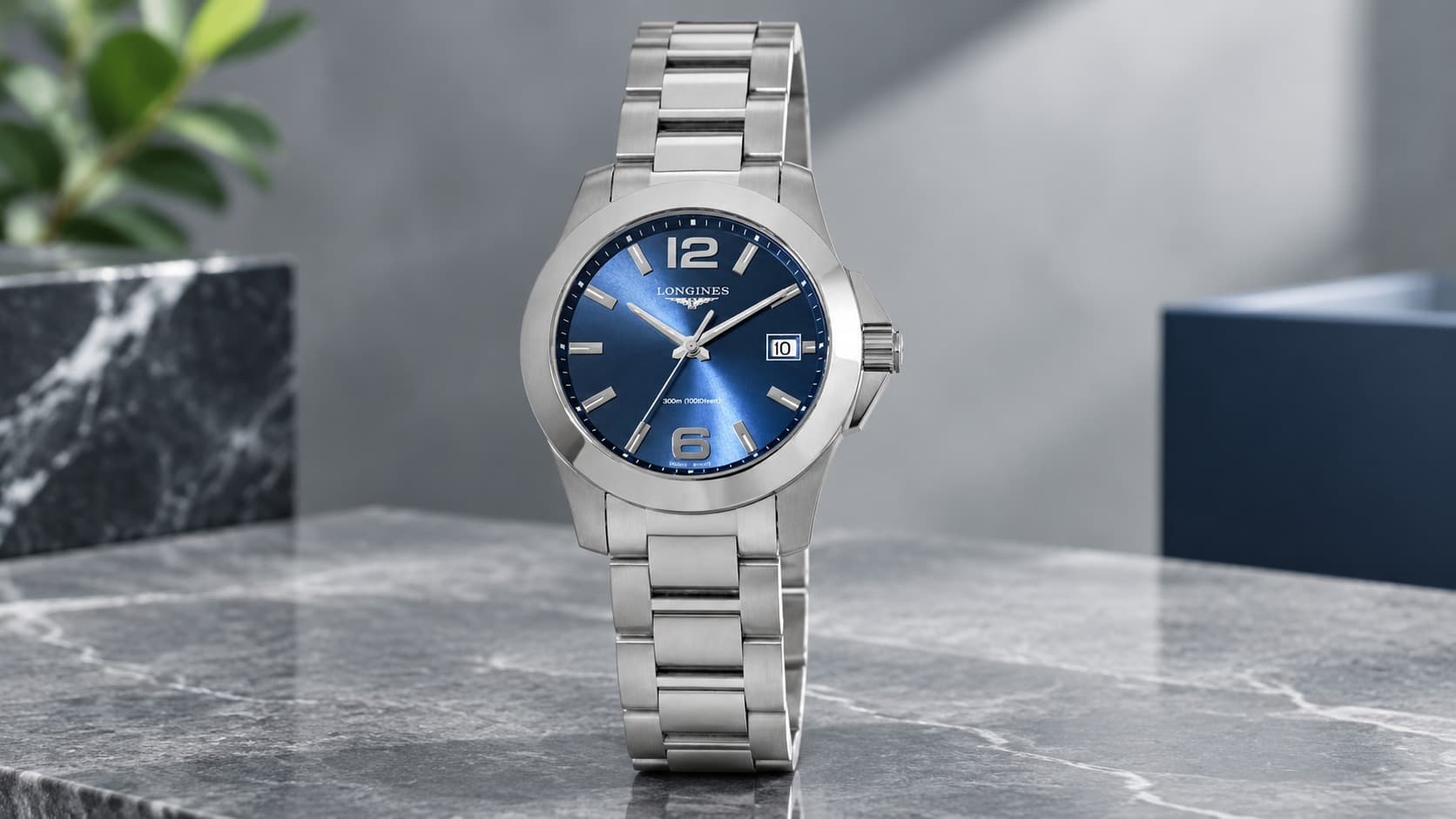
The cheapest way into a genuine Swiss luxury brand is the Longines Conquest, which starts around $800 for a quartz model. Longines sits under the Swatch Group, the same parent company as Omega, and it ranks just below Omega in the group’s internal hierarchy of prestige.
Founded in 1832, Longines built its reputation on aviation and sports timing, and that heritage still shows up in collections like the HydroConquest dive watch and the Spirit pilot’s line. One of the brand’s proudest chapters happened in 1931, when Charles Lindbergh, four years after his solo flight across the Atlantic, worked directly with Longines to design the Hour Angle Watch. Lindbergh built it around a navigation method developed by Philip Van Horn Weems, letting pilots read their longitude straight off the dial instead of doing the math mid-flight, and Longines still sells a modern tribute version today.
Most current Longines watches retail between $1,000 and $3,500, and select models in the Spirit collection carry COSC chronometer certification, the same independent accuracy testing used on far pricier Swiss watches. For a first automatic (self-winding) Longines, the Conquest or Présence collections are the usual starting point, generally landing between $1,000 and $1,500. Longines will not turn heads the way a Rolex does, and that is part of its appeal: legitimate Swiss engineering and a nearly 200-year history for a fraction of what a comparable Omega or Rolex costs.
Cheapest TAG Heuer Watch: Starting at $1,800
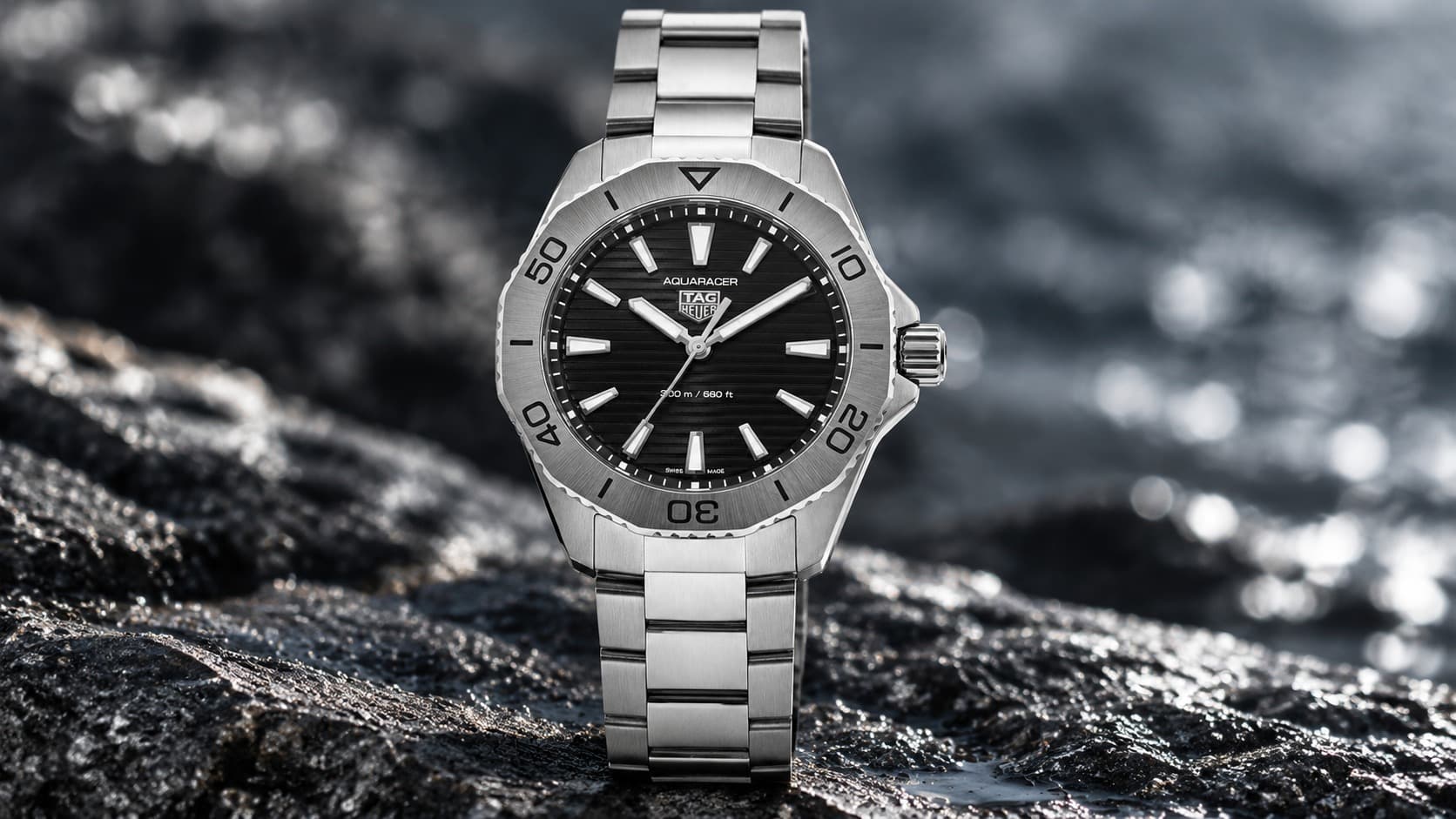
TAG Heuer’s most affordable models sit in the Aquaracer and Formula 1 collections, both of which have started as low as $1,800 to $2,000 for quartz versions. The Carrera, TAG’s more dressed-up motorsport line, has also had entries near $1,850.
The Carrera’s name has a genuine story behind it. In 1963, a young Jack Heuer, who had just taken control of the family company, was at the 12 Hours of Sebring race when he got talking with the parents of Mexican racing brothers Pedro and Ricardo Rodriguez. They mentioned the Carrera Panamericana, a brutally dangerous road race across Mexico that had claimed 27 lives before it was shut down in 1954. Heuer was so taken with the name that he registered it on the spot and built a new chronograph around it, launching the first Carrera watch later that year.
The Formula 1 collection, created in 1986, was designed to be TAG’s approachable, everyday sports watch, aimed at buyers who wanted the racing pedigree without the Carrera-level price. The Aquaracer, TAG’s dive watch line, offers automatic versions with real diving specs (200 to 300 meters of water resistance, a ceramic bezel) that typically start a bit higher, closer to $3,000. An automatic movement rather than quartz at TAG Heuer pushes the price toward $2,500 to $3,500, since quartz is what keeps the very cheapest models in the lineup.
Cheapest Tudor Watch: Starting at $2,600
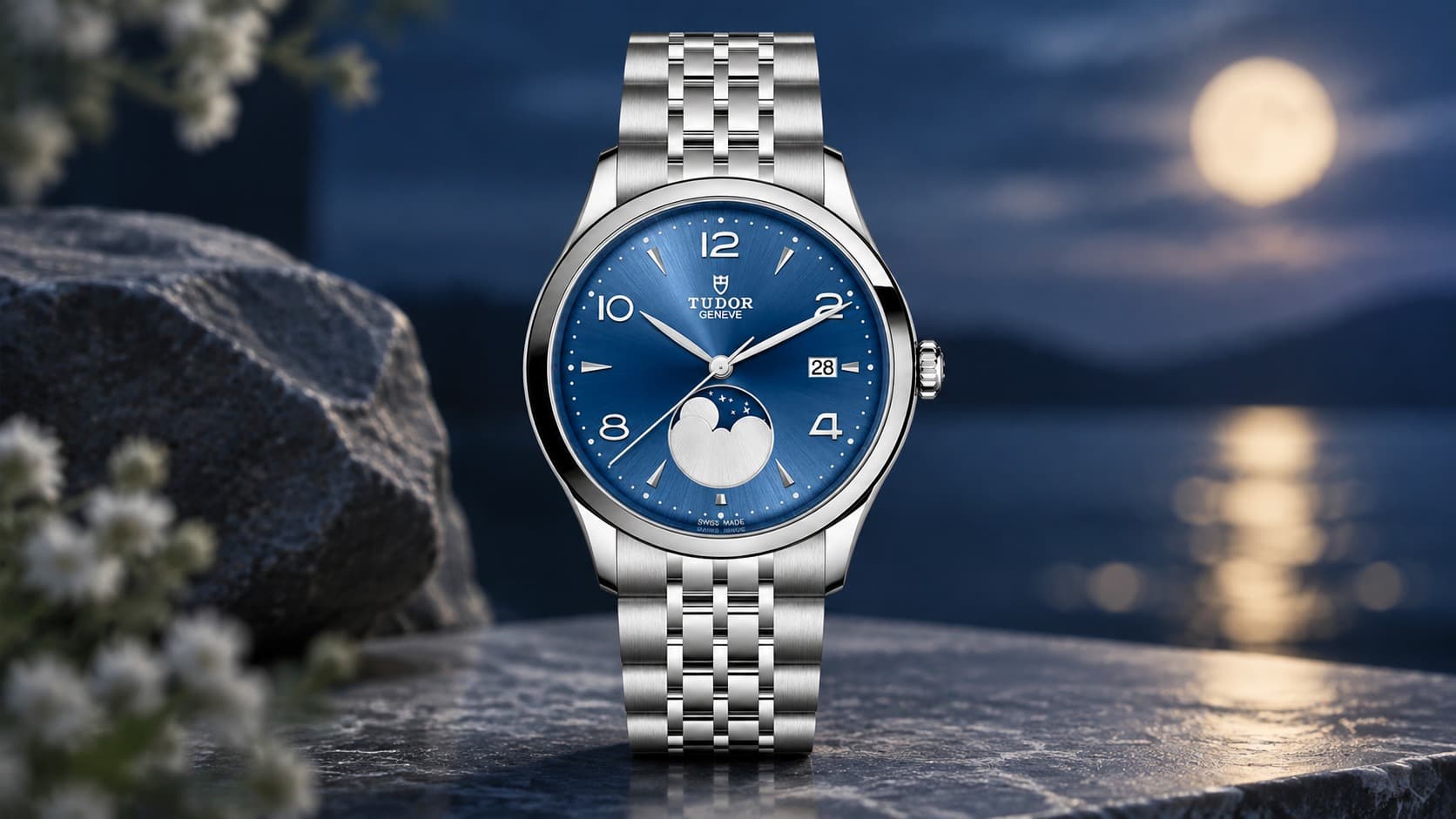
Tudor’s most affordable current watches are the 1926 collection, generally starting around $2,575, with the Royal collection close behind at roughly $2,650. The brand’s more famous Black Bay and Pelagos dive watches sit higher, typically between $4,000 and $6,000.
Tudor and Rolex are both owned by the Hans Wilsdorf Foundation, and Tudor has historically shared design language, case suppliers, and even movement components with its sister brand. That relationship goes back decades. Starting in 1954, Tudor became a supplier of dive watches to the French Navy, and by the 1970s divers were asking for hands that were easier to tell apart underwater. Tudor’s response was a set of broad, diamond-tipped “snowflake” hands, first issued on Submariners engraved “MN” for the Marine Nationale, which still show up on today’s Black Bay and Pelagos models as a design signature.
A modern Tudor Black Bay uses Tudor’s own in-house automatic movement (the MT5 series), independently chronometer-certified, at roughly half the price of a comparable Rolex. That is exactly why watch collectors treat Tudor as the practical door into “Rolex-adjacent” ownership.
Tudor is not a cheaper version of Rolex. It is a separate manufacturer that happens to share an owner, a supply chain history, and a lot of the same engineering philosophy.
Cheapest IWC Watch: Starting at $5,250
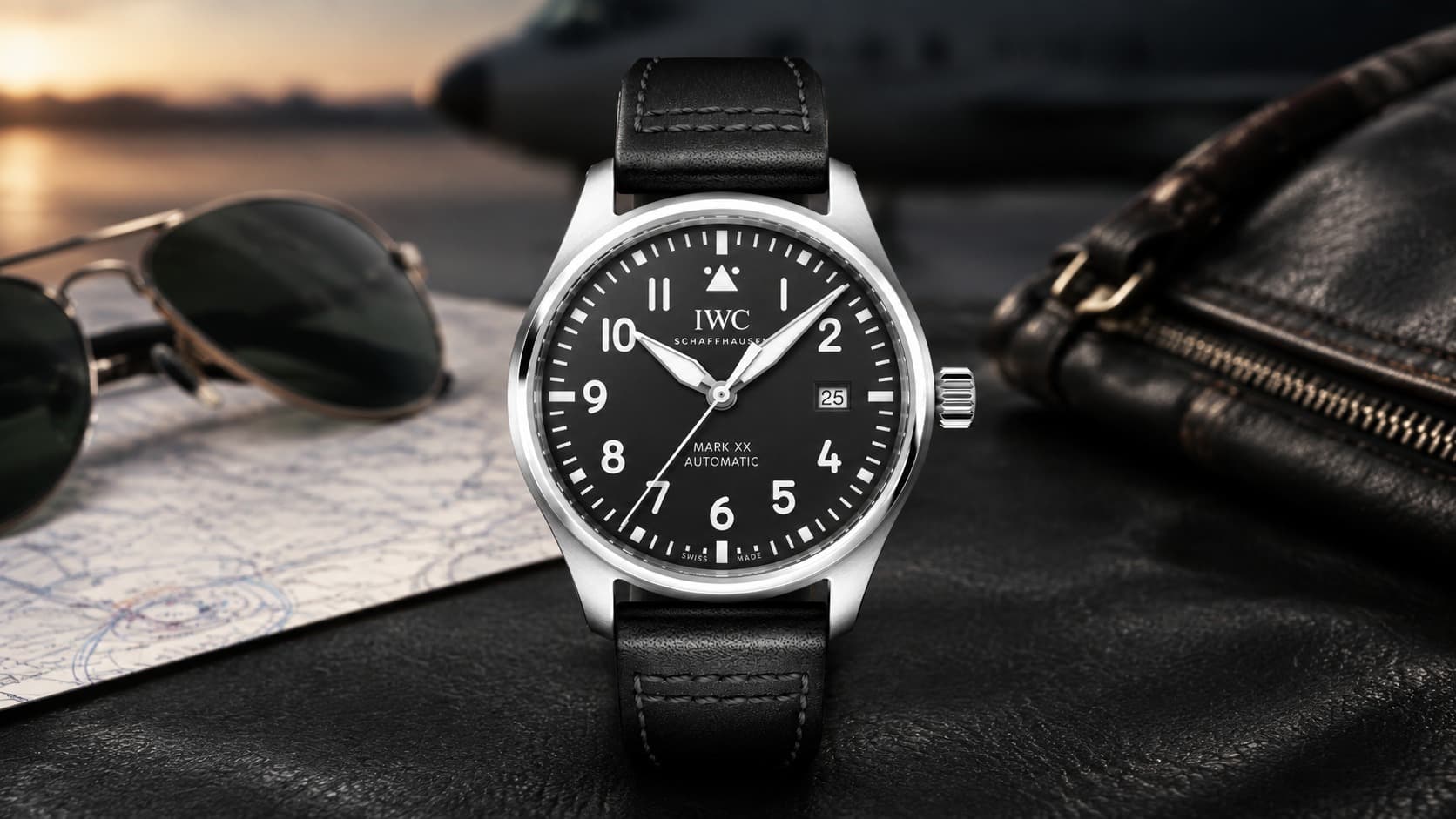
IWC’s most affordable current watch is the Pilot’s Watch Mark XX, priced at roughly $5,250. That’s IWC’s cheapest model built around an in-house movement, the Caliber 32111, which carries a 120-hour power reserve, five full days, well beyond what most watches in this price range offer.
The Mark XX carries real history in its DNA. It’s the direct successor to the Mark 11, an antimagnetic instrument watch IWC developed in 1948 specifically for Royal Air Force navigators and pilots, who needed a cockpit-reliable watch immune to the magnetic fields generated by aircraft instruments. That military brief is why the Mark line still has the same core layout today: a stark, high-contrast dial, a triangle marker at 12 o’clock, and nothing extra to distract from legibility.
The next tier above the Mark XX is the Big Pilot 43, a larger 43mm case with more wrist presence, followed by the Portugieser Chronograph at roughly $8,900 to $9,500. IWC’s pricing structure is fairly linear that way, each collection level adding size, complications, or finishing rather than jumping around unpredictably.
Cheapest Breitling Watch: Starting at $5,700
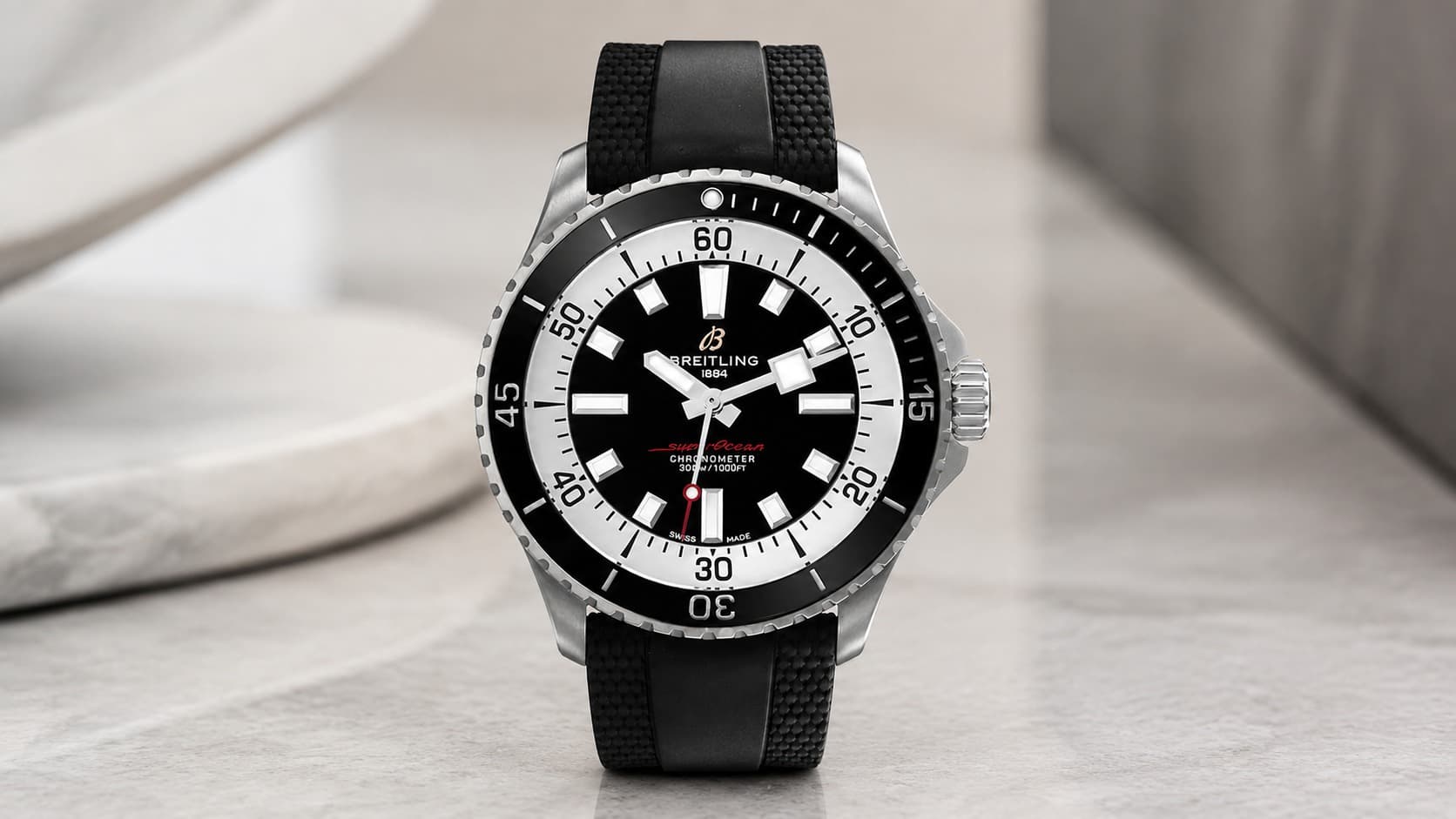
Breitling’s entry point sits with the Superocean Automatic 42, a dive watch retailing around $5,700, with 300 meters of water resistance and Breitling’s in-house Caliber 17 automatic chronometer movement.
Breitling’s real claim to fame predates dive watches by decades. In 1915, Gaston Breitling built the first wristwatch chronograph with a pushpiece separated from the crown, letting a wearer start, stop, and reset the stopwatch function without disturbing the time. That single mechanical idea became the standard used in essentially every chronograph made since, which is why Breitling is often credited as the inventor of the modern chronograph. The company leaned further into that precision-timing reputation through the 1930s, supplying onboard cockpit chronographs to airlines and, later, to the Royal Air Force during the Second World War.
Buyers drawn to that aviation story rather than diving specifically usually look at the Breitling Colt or the entry versions of the Navitimer, both of which sit in a similar $3,500 to $6,000 range depending on configuration. The Navitimer in particular still carries Breitling’s circular slide-rule bezel, introduced in 1952, which pilots once used to calculate fuel consumption and flight time by hand.
Cheapest Omega Watch: Starting at $5,900
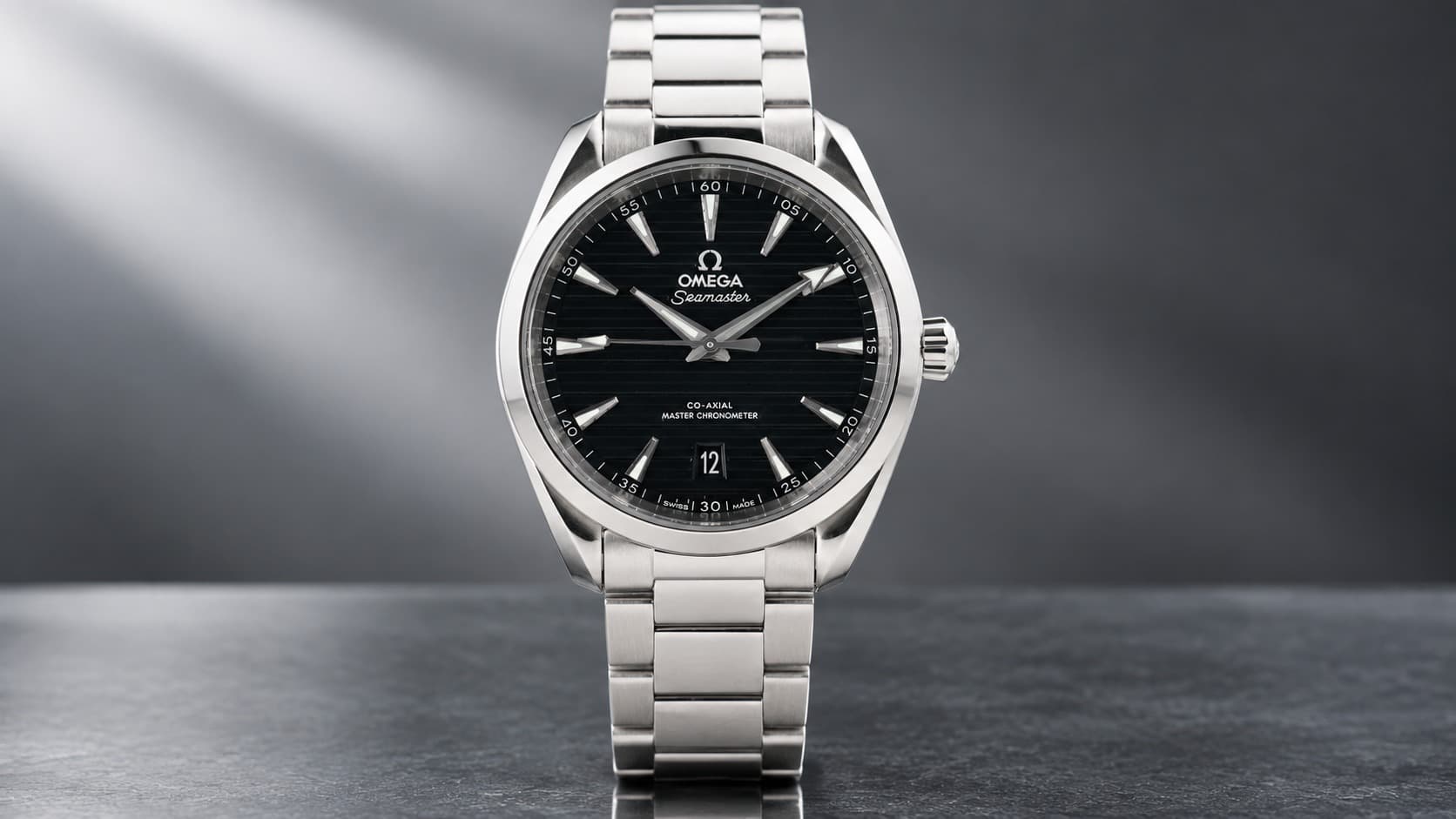
Omega’s entry point sits with the Seamaster Aqua Terra, which starts around $5,900 for a 41mm steel model on a leather strap. The brand’s most famous watch, the Speedmaster Moonwatch, now starts closer to $7,000, which has pushed Aqua Terra and Seamaster Diver 300M models into the role of “true” entry-level Omega.
What makes even the cheapest current Omega technically serious is the Co-Axial escapement inside it. British watchmaker George Daniels invented the design in 1974 to cut friction between the tiny parts that keep a mechanical watch ticking, and after years of no major manufacturer taking it on, Omega bought the patent from him in the early 1990s. The first production Co-Axial watch appeared in 1999, and today nearly every mechanical Omega, from the cheapest Aqua Terra to the Moonwatch, uses a version of Daniels’ invention.
Every current Aqua Terra also runs on Omega’s Co-Axial Master Chronometer movement, tested by METAS (a Swiss federal metrology institute) for accuracy and resistance to magnetic fields up to 15,000 gauss. That is the same testing standard applied to Omega’s higher-end Speedmaster models, the watch line that first went to the moon on Apollo 11 in 1969, decades before METAS certification existed. Buyers looking for something under $5,000 usually turn to the pre-owned market, where older Aqua Terra and Seamaster references regularly trade for 30 to 45 percent less than current retail.
Cheapest Cartier Watch: Starting at $3,750
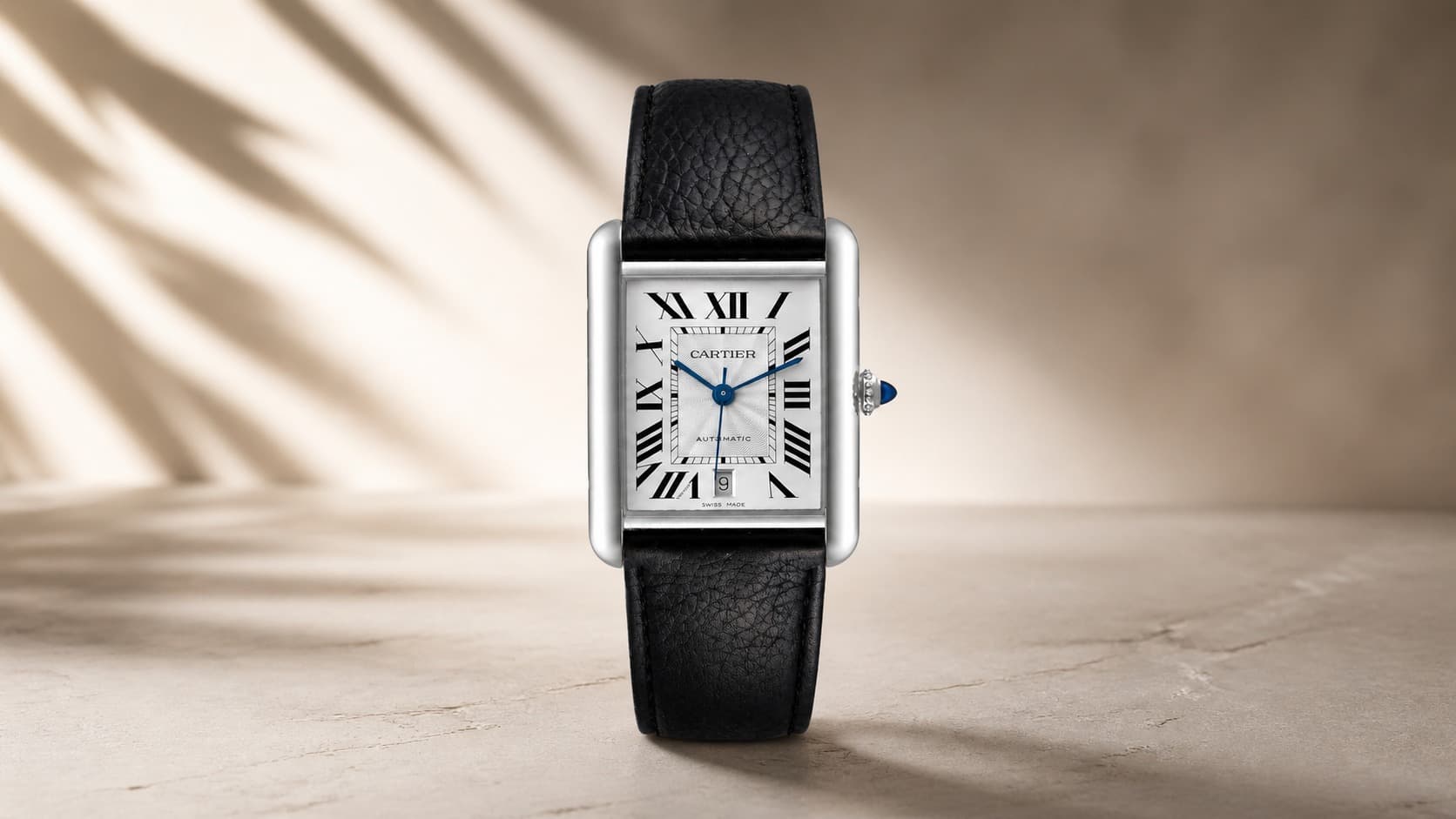
The Cartier Tank Must, in stainless steel with a quartz movement, is the brand’s most accessible new watch, generally priced between $3,750 and $4,300 depending on size and dial. It carries the same rectangular case shape, Roman numeral dial, and blued sword hands that have defined the Tank since 1917.
That shape has an unusual origin story for a dress watch. Louis Cartier designed it in 1917, reportedly after seeing the new Renault FT tank in action on the Western Front during World War I. He translated the tank’s tracks into the watch’s lugs, called brancards, which run down the sides of the case and blend directly into the strap. Cartier gave one of the first six pieces to American General John J. Pershing, and the design has barely changed in over a century, which is rare for anything in fashion.
Cartier is better known for jewelry and precious-metal watches than for tool watches, so its entry-level strategy looks different from Rolex or Omega’s. Rather than shrinking down a sport watch, Cartier simplifies its most iconic dress watch: smaller case, quartz movement instead of automatic, and steel instead of gold. The Tank Solo and Santos-Dumont sit in a similar price bracket, usually between $4,000 and $5,000. The Santos de Cartier is the step up for an automatic movement, starting closer to $6,500 to $7,000.
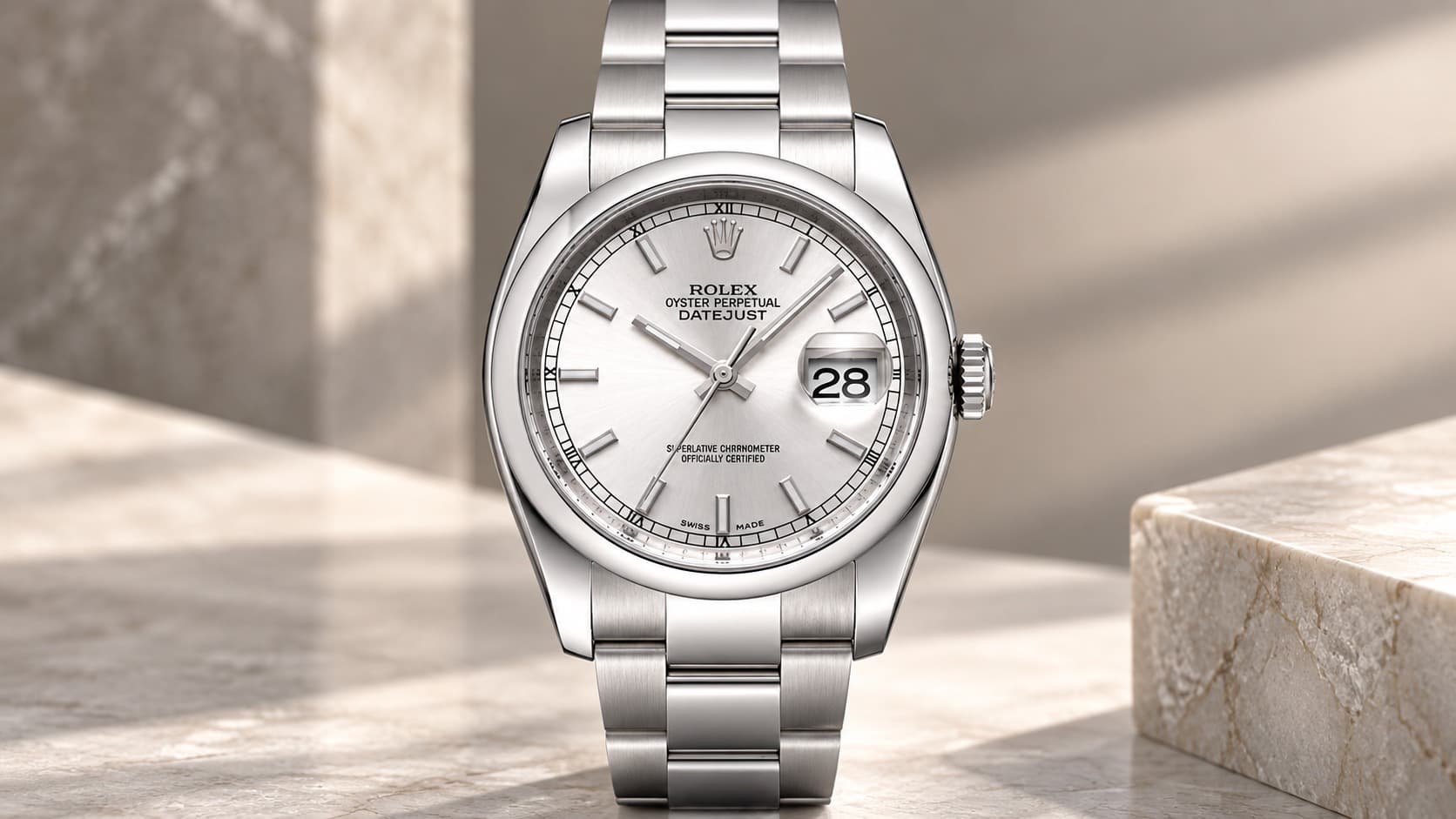
Cheapest Rolex Watch: Starting at $6,200
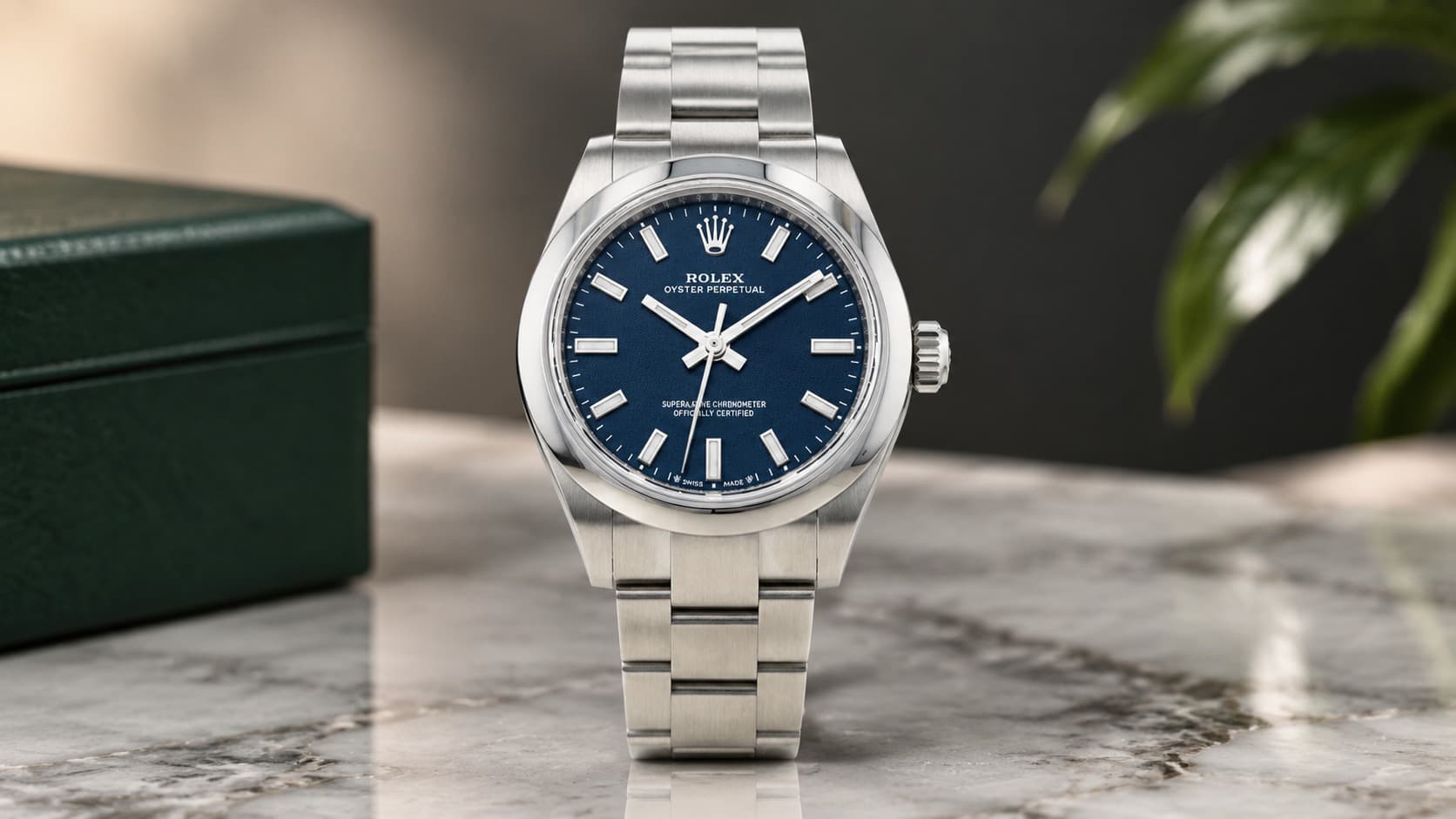
The least expensive new Rolex is the Oyster Perpetual 28, reference 276200, priced at $6,200 in the United States. It uses Rolex’s automatic caliber 3230, tested to the brand’s Superlative Chronometer standard, which requires accuracy within -2/+2 seconds per day after full assembly, roughly twice as strict as the standard -4/+6 seconds per day required for basic COSC chronometer certification.
The “Oyster” name traces back to one of the most famous product demonstrations in watch history. Rolex patented its sealed, waterproof Oyster case in 1926, and the following year British swimmer Mercedes Gleitze wore one on a ribbon around her neck during a highly publicized attempt to re-swim the English Channel. She spent over ten hours in cold water, and the watch kept perfect time the whole way through. Rolex ran newspaper ads about it immediately afterward, and that single swim became the foundation of the brand’s reputation for durability that still drives demand today.
Getting an Oyster Perpetual at that exact retail price is often harder than affording it. Popular steel sports models like the Submariner or Datejust routinely involve waitlists, but the Oyster Perpetual line is generally easier for authorized dealers to sell at list price since it carries less hype. Buyers who don’t mind pre-owned can also find older Rolex references, including vintage Oyster Perpetual, Air-King, and Datejust models, for $4,000 to $6,000 through reputable dealers.
Entry-Level Watch Prices Compared
| Brand | Entry Model | Approx. Starting Price | Movement |
|---|---|---|---|
| Longines | Conquest (quartz) | ~$800 | Quartz |
| TAG Heuer | Formula 1 / Aquaracer (quartz) | ~$1,800–$2,000 | Quartz |
| Tudor | 1926 Collection | ~$2,575 | Automatic |
| Cartier | Tank Must | ~$3,750–$4,000 | Quartz |
| IWC | Pilot’s Watch Mark XX | ~$5,250 | Automatic |
| Breitling | Superocean Automatic 42 | ~$5,700 | Automatic |
| Omega | Seamaster Aqua Terra 41mm | ~$5,900 | Automatic |
| Rolex | Oyster Perpetual 28 | $6,200 | Automatic |
Prices reflect new retail as of late 2026 and will shift with currency changes, tariffs, and brand price increases, which most of these companies apply at least once a year.
What Entry-Level Buyers Get, and What They Give Up
Choosing the cheapest model from a premium brand always involves a trade-off, and understanding it up front prevents disappointment later.
- Case size: Entry-level watches often run smaller (36 to 41mm) than flagship sport models, which some buyers actually prefer for everyday wear.
- Movement type: Several entry points, including the cheapest Cartier and TAG Heuer models, use quartz batteries instead of automatic (self-winding) movements. Quartz is more accurate day to day, but automatic movements are usually what collectors associate with “real” mechanical watchmaking.
- Materials: Nearly all entry-level models use stainless steel rather than gold, platinum, or ceramic, which keeps costs down without lowering durability.
- Complications: Extra functions like chronograph stopwatches, GMT hands for a second time zone, or moon phase displays are rare at the entry level and typically appear only further up a brand’s lineup.
None of these trade-offs make an entry-level watch a worse purchase. They simply define what “starting point” means at each brand.
Frequently Asked Questions
Is it worth buying the cheapest model from a luxury watch brand?
Yes, as long as the buyer understands what they’re getting. Entry-level models from Rolex, Omega, Tudor, and similar brands go through the same quality control and carry the same warranty as flagship pieces, just with simpler movements or smaller cases. The watch itself is not a lesser product; it’s a different tier of the same standard.
Why do some entry-level watches use quartz instead of automatic movements?
Quartz movements cost less to produce and keep better daily time than mechanical ones, which lets a brand hit a lower price point. Cartier’s Tank Must and TAG Heuer’s cheapest Formula 1 and Aquaracer references both use quartz for this reason. Automatic movements, which wind themselves from wrist motion, tend to cost more and are usually reserved for a brand’s mid-tier and flagship watches.
Why is Tudor cheaper than Rolex if they’re related companies?
Tudor and Rolex share an owner (the Hans Wilsdorf Foundation) but operate as separate manufacturers with separate factories, separate movements, and separate pricing strategies. Tudor uses simpler finishing on some parts, fewer precious materials, and a different marketing position aimed at a younger, less established buyer, which lets it price its watches at roughly half of a comparable Rolex.
Do entry-level luxury watches hold their value?
It depends heavily on the model and brand. Rolex’s entry-level Oyster Perpetual has historically held value well due to constant demand outpacing supply. Quartz-powered entry models from brands like Cartier or TAG Heuer tend to depreciate faster than automatic sport watches, since collectors generally prize mechanical movements and don’t chase quartz references the same way.
Is it better to buy new or pre-owned for a first premium watch?
Pre-owned almost always stretches a budget further, sometimes by 30 to 45 percent compared to new retail, and it opens up discontinued references that are no longer sold new. Buying new brings a full manufacturer warranty and the exact configuration wanted, without hunting. Pre-owned buyers should stick to dealers who offer authentication and a return policy.
The Bottom Line
Each of these eight brands, from Longines at $800 to Rolex at $6,200, proves that “premium” doesn’t have to mean unreachable. The real question isn’t whether a name-brand watch is affordable; it’s which trade-off fits best, whether that’s Longines’ Swiss heritage on a modest budget, Tudor’s Rolex-adjacent engineering in the $2,500 range, an in-house IWC or Breitling movement in the $5,000-to-$6,000 tier, or the Oyster Perpetual as the most attainable true Rolex. Knowing each brand’s actual starting point, rather than the price of its most famous model, makes the whole category look far more accessible than the marketing suggests.