A messy handbag is more than an annoyance. Loose lipstick can stain a lining, coins can scratch a phone screen, and a crumpled receipt can jam a zipper if it slips into the track. Keeping the inside of a handbag organized protects both the items carried inside and the bag itself, since leather and fabric linings wear out faster when stretched by clutter or stained by leaking pens and lip balm. An organized bag doesn’t require expensive gadgets or hours of effort. A handful of small habits, applied consistently, keep everything in its place and easy to find.
Small Pouches Group Similar Items Together
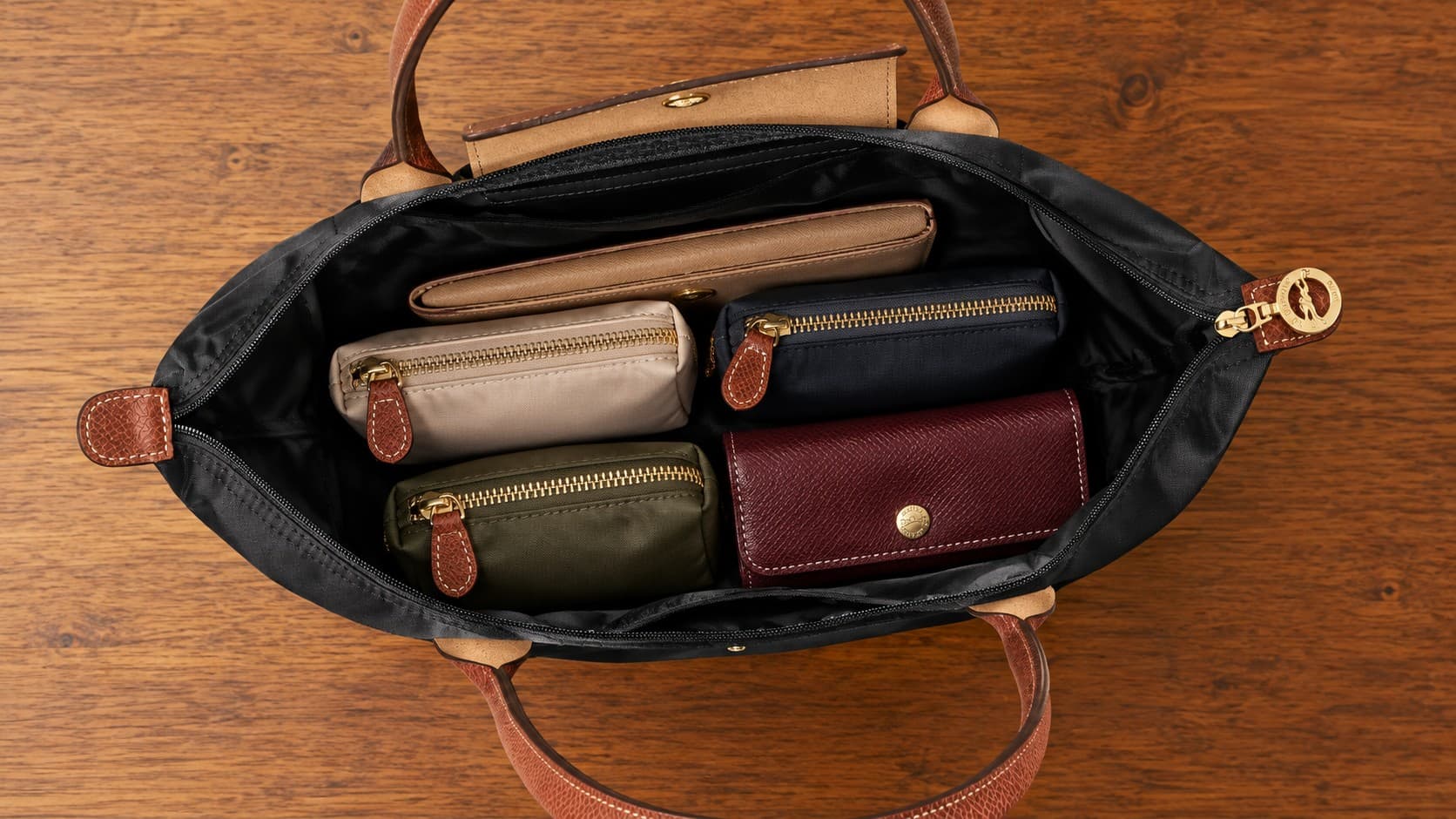
Sorting items into small pouches instead of letting them float loose is the fastest way to organize a bag. A zippered pouch for makeup, a separate one for tech cords and chargers, and a small case for medicine or hand sanitizer keeps each category contained. When every category has its own pouch, one small bag can be lifted out to find what’s needed instead of digging through the entire handbag.
Pouches also protect a bag’s lining from damage. Lipstick, lip balm, and liquid makeup can melt in a hot car or crack open under pressure, and without a pouch that mess soaks straight into the fabric or leather underneath. A cheap pouch is far easier to wipe clean or replace than the interior of an expensive bag.
Grouping by category matters more than grouping by size. A tiny lipstick and a tiny phone charger don’t belong together just because they’re both small — they belong in different pouches because they’re needed at different times.
Material matters as much as size. A wipeable nylon or vinyl pouch cleans up in seconds if something leaks, while a cotton or canvas pouch can absorb a stain permanently. For pouches opened often, a clear or mesh front saves time too, since the contents are visible without unzipping and searching.
A Bag Organizer Insert Adds Structure
A bag organizer insert gives a handbag real shape and built-in sections, so items stop sliding into one pile at the bottom. These inserts are fabric or felt liners shaped to fit inside a bag, usually with several pockets and slots sewn in. Once placed inside, an insert holds a wallet, phone, keys, and other items upright instead of letting them shift with every movement.
Inserts also make switching bags far easier. Because everything stays inside the insert, the whole organized unit can be lifted out of one handbag and dropped into another in seconds. This is especially useful for anyone who owns several bags and doesn’t want to repack from scratch with every outfit change.
Some inserts come with a rigid or semi-rigid base, which does double duty by helping a soft, slouchy bag hold its shape while it sits on a table or in storage. A bag that tends to collapse in on itself when it isn’t full benefits from a rigid-base insert, since it solves that problem at the same time it organizes the contents.
Keep Keys Easy to Find With a Clip
The quickest fix for lost keys inside a handbag is a key clip or key leash attached to the interior. Keys clipped to a small hook or strap near the top opening stay in the same spot every time, instead of sinking under everything else.
Keys are one of the most time-sensitive items people search for in a bag, and few things are more frustrating than dumping an entire bag’s contents onto a doorstep because keys slipped under a wallet. A clip removes that guesswork, and it also protects a bag’s lining from scratches, since loose keys are one of the most common causes of small tears and scuffs inside a handbag.
A simple carabiner-style clip works for most situations, snapping open and shut in one motion. For anyone carrying multiple sets of keys, such as house keys and car keys, a retractable leash allows the keys to extend to the full length of the bag opening without unclipping, which is useful when unlocking a door while still holding the bag.
Sort Receipts and Papers Regularly
Receipts, ticket stubs, and old notes build up quickly, and letting them pile loose in a bag is one of the biggest causes of clutter. A specific pocket set aside for paper items, emptied once a week, keeps that pocket from overflowing. A build-up of paper adds unnecessary weight, and crumpled receipts can slide into zipper tracks and jam them.
A weekly rhythm works for most people, though frequent shoppers or travelers who collect a lot of paper may need to check every few days instead. The point isn’t a strict schedule — it’s catching clutter before it spreads into other pockets and pouches.
For anyone who collects a lot of paper at once, such as travel tickets, business cards, and receipts, a small accordion-style folder with a few slots keeps those types separated instead of mixed into one crumpled stack. This makes finding a specific receipt later much faster, especially for returns or expense tracking.
Pouch Size Should Match Bag Size
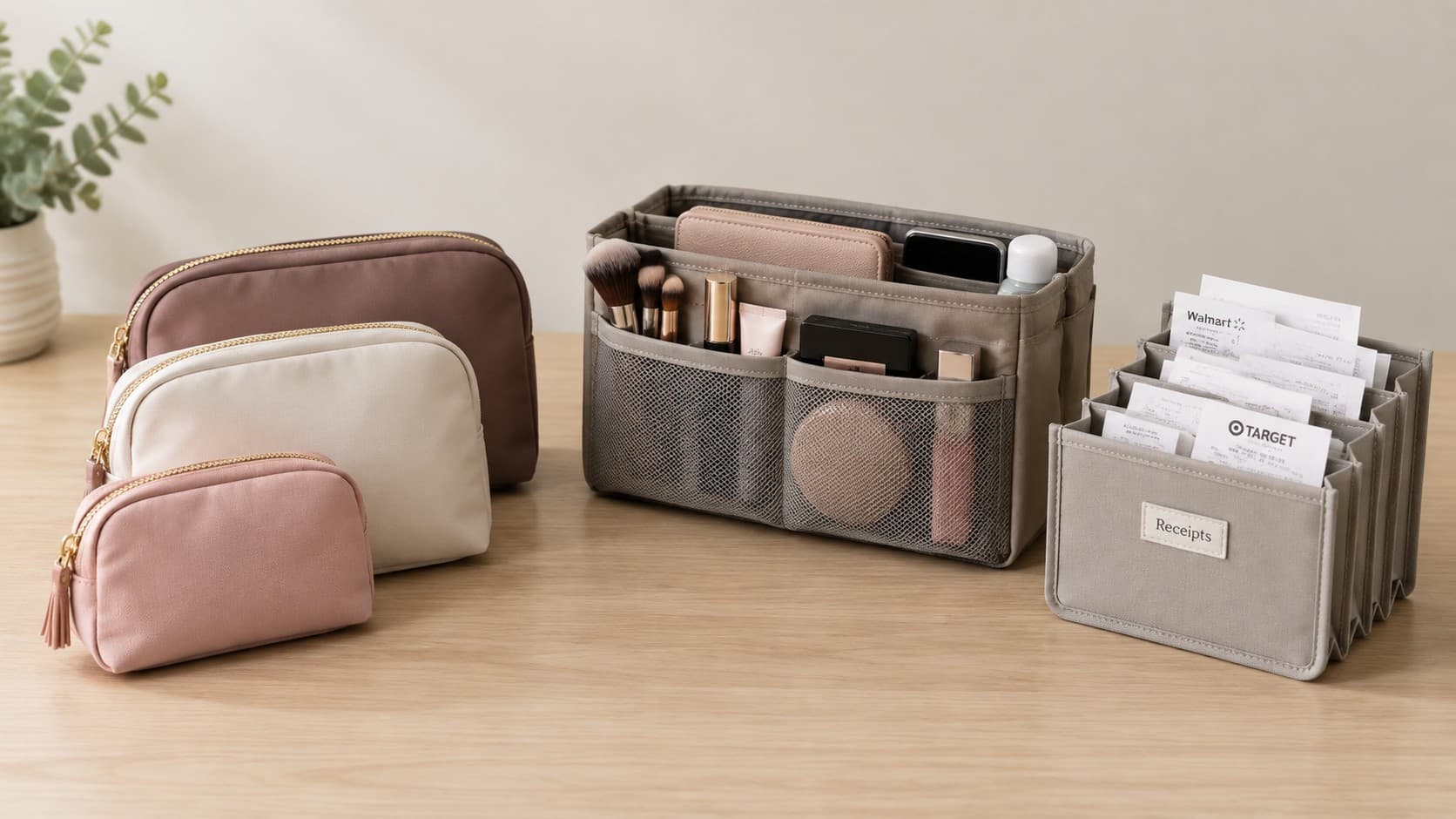
A pouch too large for a bag defeats its own purpose, since it takes up space other items need and still lets small things shift around inside it. A pouch too small won’t hold what’s needed and forces items into a half-zipped, squeezed pile.
| Bag Type | Suggested Pouch Size | Good For |
|---|---|---|
| Small crossbody or clutch | 4–5 inches | Cards, lip balm, a few coins |
| Mid-size tote or shoulder bag | 6–8 inches | Makeup, chargers, small first-aid items |
| Large tote or work bag | 8–10 inches or a full organizer insert | Tech accessories, snacks, extra layers |
Measuring a bag’s interior before buying pouches prevents ending up with organizers that don’t actually fit. Width isn’t the only measurement that matters — depth counts too. A pouch that matches a bag’s width but is too tall will poke out of the top or stop the zipper from closing all the way, so both dimensions are worth checking beforehand.
Use a Bag’s Own Pockets Wisely
Most handbags already come with exterior slip pockets, interior zippered pockets, and smaller slots sewn into the lining, and using them with a system removes the need for extra pouches altogether. The exterior or quick-access pocket works best for the item reached for most often, usually a phone, removing the need to open the main compartment just to check a notification.
Interior zippered pockets are the safest spot for anything worth protecting, like cash, cards, or a spare key, since they zip shut and sit against the body side of the bag rather than near the open top. Smaller slip pockets built into the lining suit a pen or lip balm well, items that should be available without digging but don’t need to be fully zipped away.
Treating a bag’s own pockets as part of the system, rather than ignoring them and dumping everything into the main compartment, cuts down on how many extra pouches are needed in the first place.
Keep a Handbag Fresh With Weekly Resets
Even a well-organized bag needs a full reset occasionally. Emptying it completely once a week, wiping down the interior with a dry cloth, and returning only what’s actually needed catches loose crumbs, spilled powder, or a leaking pen before it becomes a bigger problem.
A full reset also stops what might be called “bag creep” — the slow build-up of items that aren’t used daily, like an extra pair of sunglasses, a half-used pack of tissues, or an old parking ticket, until the bag feels cluttered again despite a week of good habits. Emptying it fully breaks that cycle.
Food and snack wrappers deserve special attention during a reset, since crumbs left in a bag too long can attract pests or cause a lingering odor that’s hard to remove later. Shaking the bag out upside down over a trash can and running a lint roller along the bottom seam catches crumbs that a quick glance misses.
Frequently Asked Questions
What’s the cheapest way to organize a handbag?
Small zippered pouches are the most affordable option, and most households already have a few from old toiletry kits or past purchases. Grouping items by category into existing pouches costs nothing and instantly reduces clutter, even before a dedicated organizer insert enters the picture.
How often should a handbag be cleaned out?
A quick check every few days catches loose receipts and trash before they spread, while a full empty-and-wipe reset once a week keeps the lining clean and prevents buildup of crumbs, dust, or spilled makeup.
Do bag organizer inserts fit every handbag?
Most inserts come in a few standard sizes and shapes, fitting a wide range of totes and shoulder bags, but very small or unusually shaped bags may need a custom or trimmable insert. Measuring the bag’s interior before buying is the safest way to avoid a poor fit.
Can an organizer insert damage a bag’s lining?
A properly sized insert made from soft fabric or felt won’t harm a lining, since it sits inside without pressing hard against any one point. Problems only arise with stiff or oversized inserts that stretch the bag’s shape or push against seams.
What should never be left loose in a handbag?
Keys, coins, and lipstick or lip balm cause the most damage when left loose, since they scratch phone screens, leave marks on leather, and can leak or melt onto fabric linings. Keeping these three categories contained in a pouch or on a clip prevents most common handbag damage.
The Bottom Line
Keeping a handbag organized comes down to giving every category of item its own place — pouches for makeup and cords, a clip for keys, a dedicated spot for paper, and intentional use of the bag’s own pockets — paired with a weekly reset so small clutter never turns into a bigger mess. None of this requires expensive gear; a few pouches sized to fit the bag and a consistent weekly habit keep a handbag both tidy and protected for years of daily use.