A good pair of designer sunglasses can cost as much as a nice dinner out, sometimes a lot more, so it stings to find out later that the pair sitting on your face isn’t actually real. Counterfeiters have gotten scary good at copying logos, boxes, and even the little authenticity cards that used to be a dead giveaway. The good news is that real sunglasses still give themselves away in ways a copy almost never gets right, from how the lens is engraved down to how the metal feels between your fingers. Knowing what to look for takes only a couple of minutes and can save you from paying full price for a pair of glorified toy glasses.
Check the Lens Etching First
The fastest way to check is looking for a small, laser-etched logo in the corner of one of the lenses, usually the right one. On genuine designer sunglasses, this etching is tiny, sharp, and doesn’t rub or scratch off with a fingernail, because it’s cut into the lens itself rather than printed on top of it.
Fakes usually try to copy this detail, but they get sloppy. The text might be a little blurry, sit slightly crooked, or come off when scratched gently with a fingernail. Some counterfeits skip the etching altogether and instead use a sticker on the lens that peels away completely, which is an instant red flag. Holding the sunglasses up to bright light and looking closely at both lenses reveals a lot, since real pairs are consistent on both sides while cheap copies sometimes only bother etching one.
Brands like Ray-Ban etch their name in tiny, precise lettering in the lower corner of a lens — a detail that’s genuinely difficult and expensive for counterfeiters to replicate cleanly.
It also helps that etching placement and style stay fairly consistent within a brand’s own lineup, so a side-by-side comparison with the official product photos on the brand’s website usually settles any doubt. A logo sitting in a different spot, a font weight that’s slightly off, or lettering that’s noticeably larger or smaller than the brand’s official images is a strong sign something’s wrong, even if the etching itself looks clean at first glance.
Check the Inside of the Temple Arms
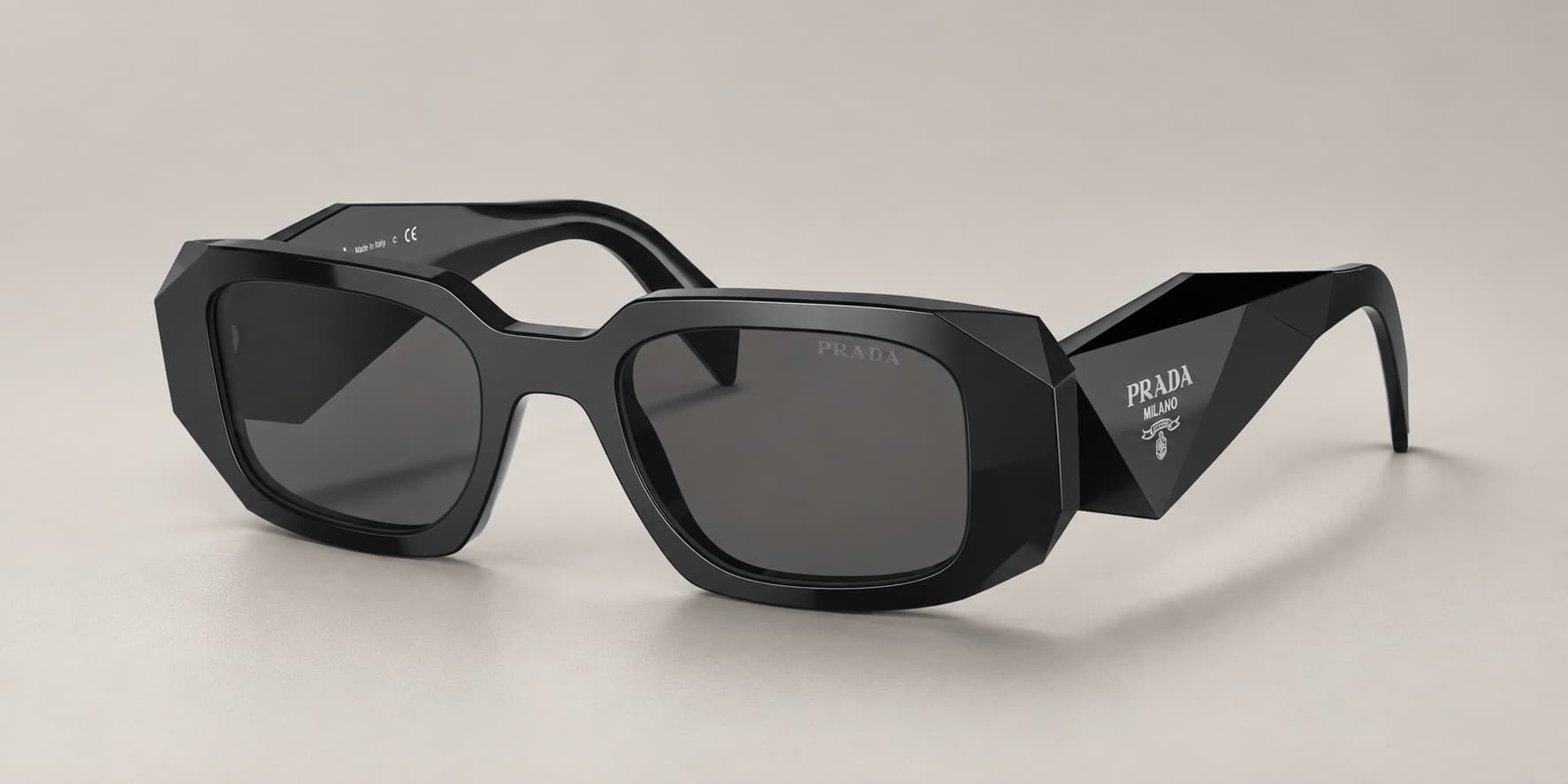
Flip the sunglasses over and look at the inside of the temple arms, the parts that rest against the ears. Genuine designer sunglasses almost always engrave a model number, size code, and country of manufacture here, and the text should be crisp, evenly spaced, and sit in a perfectly straight line. Most European luxury brands are made in Italy and will say so directly, often alongside a small “CE” mark confirming the frame meets European safety standards.
Counterfeiters tend to slip up here because it’s a lot of small text to fake accurately. Warning signs include a misspelled country name, letters that vary slightly in depth or size, a font that doesn’t match the brand’s usual style, or a model number that doesn’t turn up at all when searched on the brand’s official website. Some fakes even copy a real model number correctly but print it on the wrong frame shape or color, so it’s worth comparing the number against a photo of that exact model online rather than just checking that a number exists.
Fine, consistent engraving is a sign of real craftsmanship: even depth, straight lines, and a font that clearly belongs to the brand. Counterfeit markings often look scorched or hazy under a laser that wasn’t calibrated properly, with color bleeding faintly into the plastic around each letter.
A magnifying glass, or a phone camera zoomed in, makes these details much easier to judge than the naked eye, especially since the text is often only a couple of millimeters tall.
Check the Frame Quality and Hinges
Pick up the sunglasses and open and close the arms a few times. A real pair should feel smooth, snug, and quiet, with no wobble, creaking, or looseness in the hinges. Fakes often use cheaper metal or plastic parts that feel gritty or loose after just a few uses, because the manufacturer cut corners on the tiny screws and springs that make a hinge feel expensive.
Weight matters too, though it’s a little trickier than people expect. Authentic frames made from things like acetate, titanium, or quality stainless steel feel balanced in the hand, not obviously heavy or oddly light for their size. Counterfeits swing in both directions: some feel suspiciously light because they’re made from cheap, hollow-feeling plastic, while others made to imitate steel frames feel unnaturally heavy because the maker used thicker, lower-grade metal to fake a sense of solidity. Sunglasses set down on a flat table and viewed from above tell the story too — genuine frames sit level and symmetrical, while a lot of fakes are slightly crooked because the mold wasn’t precise.
Signs of a Well-Made Frame
- Hinges that open and close without grinding or catching
- No visible glue, rough edges, or seams where the frame was joined
- A finish that’s smooth everywhere, including inside the arms
- Screws that are flush and don’t wiggle when pressed
The material itself is also worth a closer look. Genuine acetate frames, the kind used for most classic designer shapes, have a slight depth and richness to the color when held up to light, almost like looking into layered glass, because acetate is built up in sheets rather than injection-molded in one flat shot like cheap plastic. Injection-molded fakes tend to look flat and uniformly colored all the way through, without that subtle depth. If the frame is metal, check the weld points where the temples meet the front of the frame; on a real pair these joins are smooth and nearly invisible, while on a fake you can often feel or see a rough seam. Genuine metal frames are usually made from stainless steel or titanium, both of which hold a weld line far more cleanly than the soft alloys counterfeiters tend to use.
Check the Lens Quality
Real designer sunglasses use lenses built for clarity and real UV protection, not just tinted plastic. Holding the sunglasses at arm’s length and looking through them at a straight line, like a door frame or window edge, is a quick test — a line that warps, bends, or wobbles as the glasses move slightly means the lens has optical distortion, which is common in cheap counterfeit lenses and basically unheard of in a genuine pair.
A simple polarization check also works, if the sunglasses are supposed to be polarized. Looking at the glare on a smooth, reflective surface like a car window or wet pavement, then tilting the sunglasses about 60 degrees, should noticeably dim or shift that glare on real polarized lenses. If nothing changes at all, the “polarized” label is probably a lie.
The label “UV400” makes a specific promise: it means the lens blocks light all the way up to a wavelength of 400 nanometers, which covers the full range of harmful UVA and UVB rays. A genuine designer pair should list this clearly on a tag or sticker when new, and a fake will sometimes print the same “UV400” text without the lens actually filtering anything. Since UV protection isn’t visible to the naked eye, an optical shop or eye doctor can test the lenses with a UV meter in seconds, which is the most reliable way to confirm the glasses are actually protecting the eyes and not just darkening vision. That distinction matters more than most people realize, because dark lenses without real UV filtering are arguably worse than wearing no sunglasses at all — the tint makes pupils open wider to let in more light, so unfiltered UV rays reach deeper into the eye than they would otherwise.
Check the Case and Documents
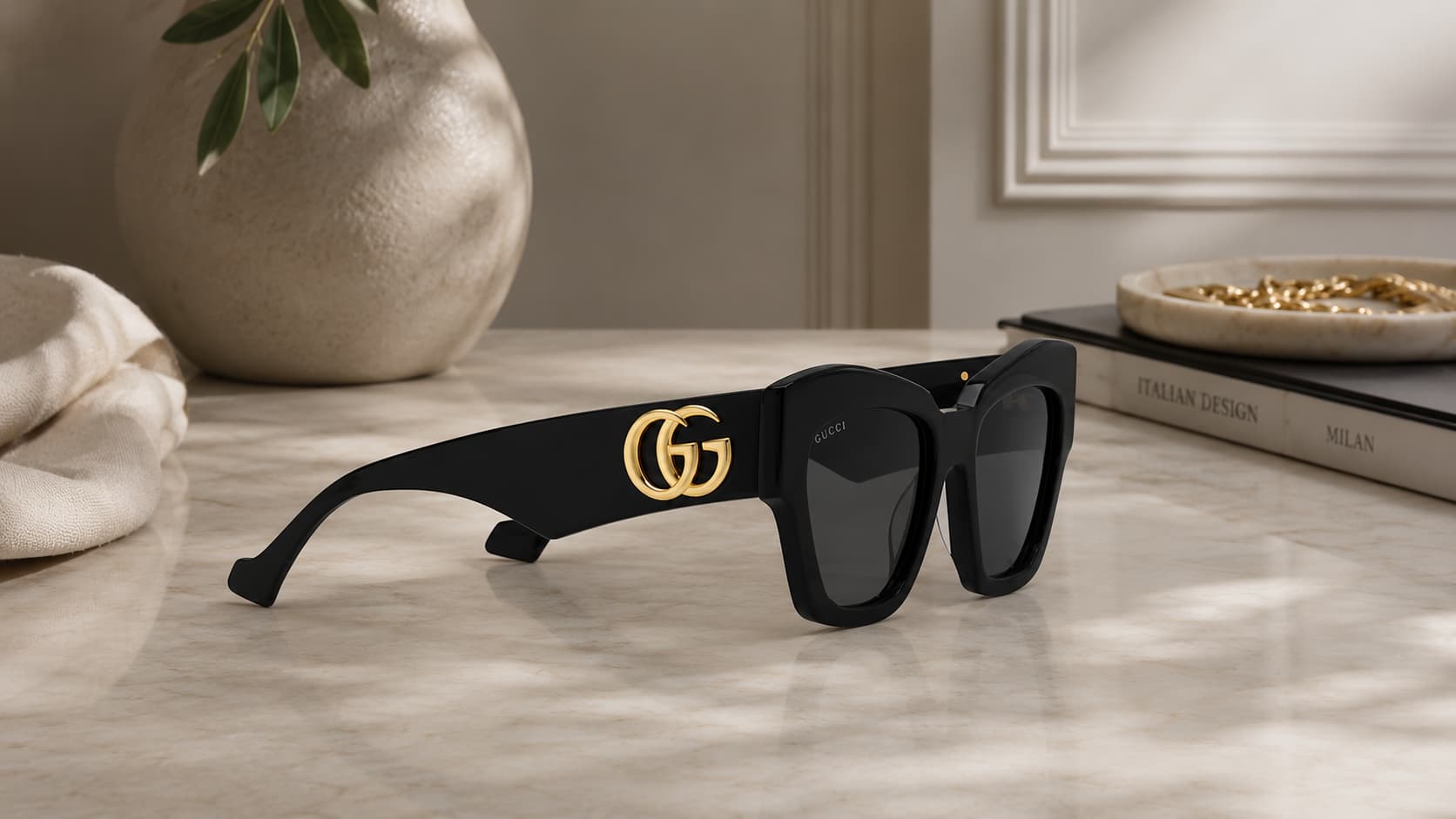
Genuine designer sunglasses almost always arrive with more than just the glasses themselves. Expect a branded hard case, a cleaning cloth, and often a small authenticity card or booklet with a serial number that matches one printed inside the arm of the frame. If a seller can’t provide any of this, or the case feels flimsy and the logo print looks smudged or off-center, treat it as a warning sign.
It’s worth cross-checking the serial number on the box or card against the number etched inside the sunglasses’ temple arm. On authentic pairs, these numbers should match exactly, and matching numbers should also line up with what the brand’s own customer service team can confirm.
Keep in mind that packaging alone isn’t proof either way, since experienced counterfeiters can copy boxes and cards convincingly. It’s one more piece of evidence to weigh alongside everything else, not a single test that settles the question on its own.
Buy From a Trusted Seller
Where the sunglasses come from reveals almost as much as the sunglasses themselves. Buying directly from the brand’s own website or from a store that’s listed as an authorized retailer on that brand’s site is the safest route, because those sellers are contractually required to only stock genuine product. Big department stores and established optical retailers are generally reliable too.
Prices that are dramatically lower than what the brand normally charges are the biggest red flag of all. A real pair of designer sunglasses rarely gets marked down more than 40 or 50 percent, even during a big sale, so a listing selling them for a fraction of retail is almost never legitimate. Marketplaces with lots of third-party sellers, street vendors, and pop-up shops in tourist-heavy areas are where most counterfeits circulate, so extra caution is worth it in those settings.
Real vs. Fake Comparison
The checks above tend to separate a genuine pair from a counterfeit in fairly predictable ways.
| What to Check | Genuine Sunglasses | Likely Counterfeit |
|---|---|---|
| Lens logo | Small, sharp laser etching that resists scratching | Blurry, crooked, or a sticker that peels off |
| Temple arm text | Crisp, straight, matches official model number | Fuzzy, misspelled, or model number doesn’t exist |
| Hinges | Smooth, quiet, no wobble | Gritty, loose, or squeaky after light use |
| Frame symmetry | Level and even when viewed from above | Slightly crooked or uneven |
| Lens clarity | No distortion looking through at a straight line | Visible warping or waviness |
| Polarization test | Glare visibly dims when tilted 60 degrees | No change in glare at all |
| Packaging | Branded case, cloth, and matching serial number | Missing extras or numbers that don’t match |
| Price | Rarely more than 40–50% off retail | Dramatically cheaper than normal retail |
Frequently Asked Questions
Can fake sunglasses actually hurt my eyes?
Yes. Many counterfeit sunglasses use dark-tinted plastic with little or no real UV filtering. Since dark lenses make your pupils widen, wearing them without real UV protection can let in more harmful rays than wearing no sunglasses at all, which over time raises the risk of sun-related eye damage.
Do all real designer sunglasses have a serial number?
Most do, especially from major brands, and it’s usually printed on the inside of one temple arm. That said, a small number of designer lines and older models skip serial numbers, so their absence alone isn’t proof of a fake — it needs to be checked alongside the lens etching, build quality, and seller.
Is it safe to buy secondhand designer sunglasses?
It can be, as long as you inspect them using the same checks covered here — lens etching, frame quality, matching serial numbers, and lens clarity. Buying from a reputable resale platform or a seller with verifiable reviews lowers the risk considerably compared to buying from an unknown individual.
Can an optician tell me for certain if my sunglasses are real?
An optician or the brand’s own customer service line can often verify authenticity using the serial number and can test lens quality with proper equipment, which makes them one of the most reliable resources if you’re still unsure after checking everything yourself.
Why do some real sunglasses feel lighter than I expected?
Premium materials like titanium and certain acetates are engineered to be strong while staying light, so a lighter feel isn’t automatically suspicious. The concern is a frame that feels cheap, hollow, or flimsy rather than one that’s simply lightweight by design.
Conclusion
Spotting fake designer sunglasses comes down to slowing down and checking a handful of specific details rather than relying on gut feeling alone: a clean laser-etched logo, sharp and accurate temple arm markings, hinges and screws that feel solid, lenses that don’t distort or fail a polarization check, packaging with a matching serial number, and a trustworthy seller. No single test is bulletproof by itself, but running through all of them together makes it very hard for a counterfeit to slip through. The extra five minutes of checking is a small price to pay for making sure the money spent actually bought what the label promised.