An anklet is one of the oldest pieces of jewelry still worn today, yet most people know surprisingly little about it beyond how it looks on a summer evening. It has been worn by queens, dancers, brides, and teenagers on the beach, and its meaning has shifted so many times across so many cultures that no single story explains it. Its history, the styles it comes in, and the reasons people still reach for it say a lot about how jewelry travels between cultures and generations.
What Is an Anklet?
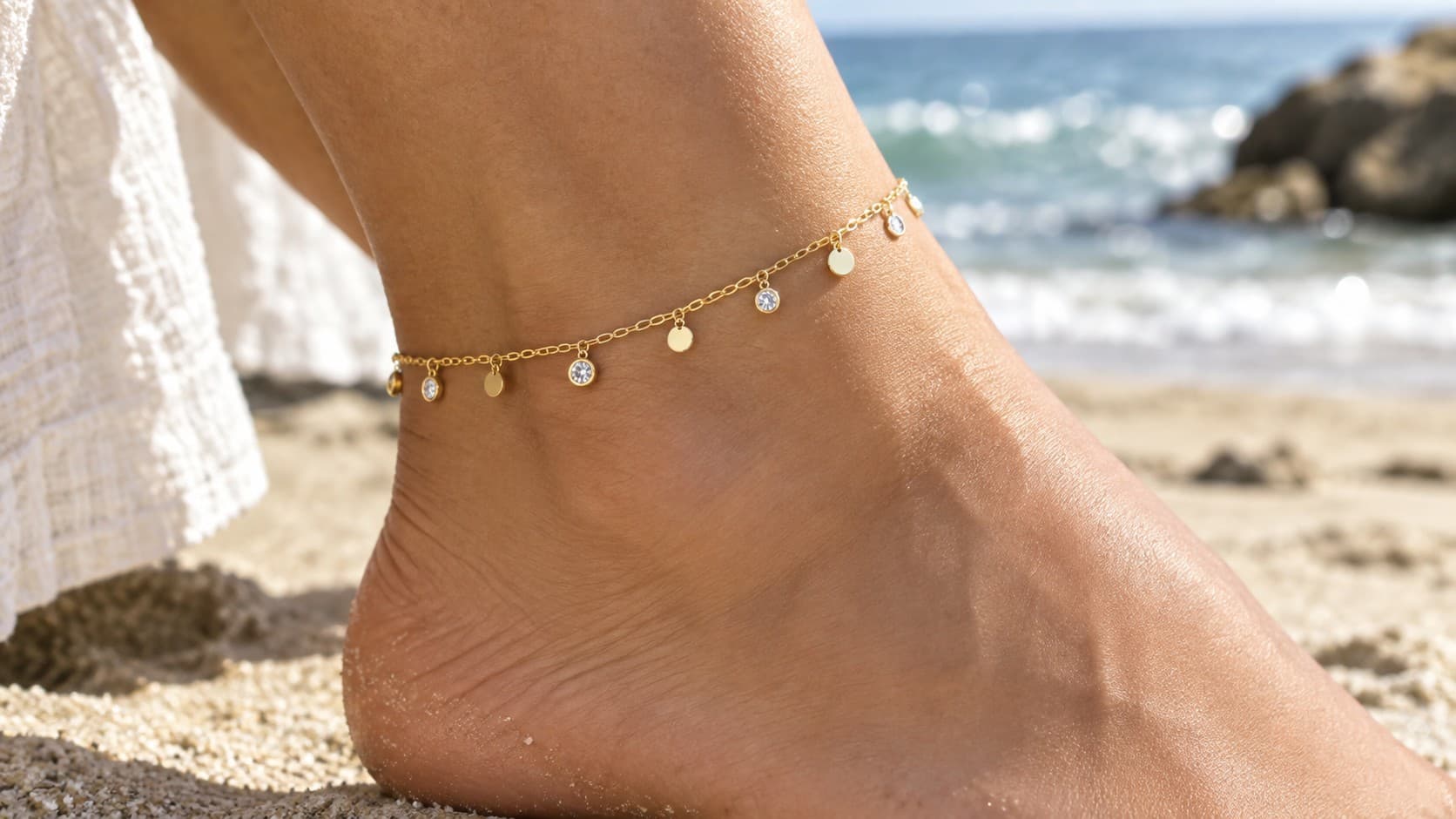
An anklet is a piece of jewelry worn around the ankle, usually made from a chain, cord, or string of beads. It sits either right at the ankle bone or just below it, and it can be plain, charmed, or set with small stones.
Anklets are sometimes called ankle bracelets or ankle chains, and they work the same way a bracelet does, just on a different joint. Some are simple and thin. Others carry pendants, bells, or clusters of beads that make noise or catch light with movement. Because the ankle flexes constantly, anklets are usually built lighter and more flexible than bracelets made for the wrist.
Most anklets close with one of three fasteners: a small lobster clasp, a spring ring, or a toggle. Lobster clasps are the most common because they’re secure and simple to open. Cord and beaded anklets often skip a clasp entirely and tie in place instead, which makes them naturally adjustable but a little less secure for daily wear.
Different Types of Anklets
Most anklets fall into a handful of recognizable styles, and the names below cover the ones that show up most often.
- Chain anklets – a plain, single strand of connected links, usually in gold or silver. This is the most common style and suits both casual and dressier outfits.
- Charm anklets – a chain with one or more small pendants attached, such as a heart, star, or shell. The charms can be purely decorative or chosen for personal meaning.
- Beaded anklets – strung from small beads, gemstones, or pearls instead of metal links. These tend toward a more casual look and are common in beach and festival styles.
- Ankle cuffs – a rigid or semi-rigid band that wraps most of the way around the ankle without a full clasp closure, similar to a cuff bracelet. Cuffs sit more snugly and move around less than a chain does.
- Bell anklets – anklets fitted with tiny bells that produce a soft sound with each step. These come directly from South Asian tradition, though they’re now worn more broadly as a style choice.
- Toe-ring anklets – a chain that connects the ankle to a ring worn on one toe, most commonly the second toe. This style is rooted in South Asian jewelry traditions and is less common in Western fashion, but it’s still sold as a distinct product.
None of these styles ranks above the others. The choice mostly comes down to how much movement and sound a piece adds, and whether it’s meant for a dressed-up look or a casual one.
Anklets Through History
Anklets are not a modern trend. People have worn them for thousands of years, and different regions developed the tradition independently, which is part of why the jewelry looks and means something different almost everywhere it appears.
Ancient Egypt
Egyptian women wore anklets as everyday jewelry starting from the earliest periods of ancient Egyptian history. The Egyptians even had a specific word for them, menefret, closely related to their word for bracelet. Wealthier women wore anklets made of gold, while women from poorer households wore versions made of silver or iron.
During certain dynasties, anklets were often made from rows of beads held together with small metal bars, and tomb paintings from ancient Egypt even show dancers wearing them while performing. This detail matters because it shows anklets weren’t only decorative in Egypt. They were also part of performance and movement, a role they still play in other cultures today.
South Asia
In the Indus Valley region of South Asia, anklets have been worn by women for more than 8,000 years, making them one of the oldest jewelry styles still worn today. In India today, they are still known by names like payal, pattilu, or nupur, and remain closely tied to marriage traditions. Many Indian brides receive anklets as part of their wedding jewelry, and some traditional designs include small bells that chime softly with each step.
Africa
Anklets across the African continent have often marked a stage of life rather than just an outfit. The Igbo people of Nigeria have a tradition of brass anklets called Adala, given to girls once they reached marrying age as a marker of the shift from childhood into adulthood, with the brass itself doubling as a display of a family’s wealth. A related example from central Africa: some anklets were coiled from heavy brass wire and slid on as a single, unbreakable loop, so once worn they stayed on for good, standing in as a lasting, visible marker of a husband’s wealth.
Anklets in Western Fashion
In the United States and Europe, anklets came and went in waves rather than staying constant. They became a recognizable fashion item in the 1930s, faded, then returned during the 1960s and 1970s hippie movement, when simple cord or beaded anklets stood in for a relaxed, free-spirited style. They resurfaced again in the 1990s as a beachy summer accessory, often as a thin gold or silver chain worn with a pendant, and have made another comeback in recent years alongside the broader return of Y2K-era fashion.
Anklets have never belonged to one culture or one decade. They keep reappearing because they solve the same problem every time: how to add a small detail of style to a part of the body that’s usually left bare.
What Do Anklets Mean?
Anklets have carried different meanings depending on where and when they were worn, so there is no single universal answer. In ancient Egypt, they mostly signaled wealth and social status. In parts of India, they still represent marriage and are worn as part of bridal tradition. In the Middle East, anklets have long been associated with dance, especially heavier styles made with coins or bells that accent the movement of the feet and hips during performance.
Some cultures have also used anklets to mark protection rather than status. In parts of China, anklets have historically been placed on children as a kind of talisman, believed to guard them against harm. That purpose stands in sharp contrast to a fashion accessory, and it’s a reminder that the same piece of jewelry can carry entirely different weight depending on where it’s worn.
In most of the Western world today, an anklet doesn’t carry a fixed meaning at all. It’s worn mainly as a fashion choice, similar to a bracelet or a ring, and any symbolism it holds usually comes from the wearer’s own culture or personal taste rather than a rule everyone follows.
The Left Ankle vs. Right Ankle Myth
A popular idea claims that wearing an anklet on the left ankle signals being single, while wearing one on the right signals being taken (or the reverse, depending on who’s telling the story). This idea spread mostly through word of mouth in Western pop culture during the late 20th century, and no consistent historical or cultural evidence backs it up. Different sources contradict each other, some claiming the exact opposite meaning, which is usually a sign that a supposed “rule” isn’t a rule at all.
Claims that a specific ankle carries a fixed meaning are best treated as folklore rather than fact. In practice, the choice of ankle comes down to comfort or preference rather than any real signal.
Common Anklet Materials
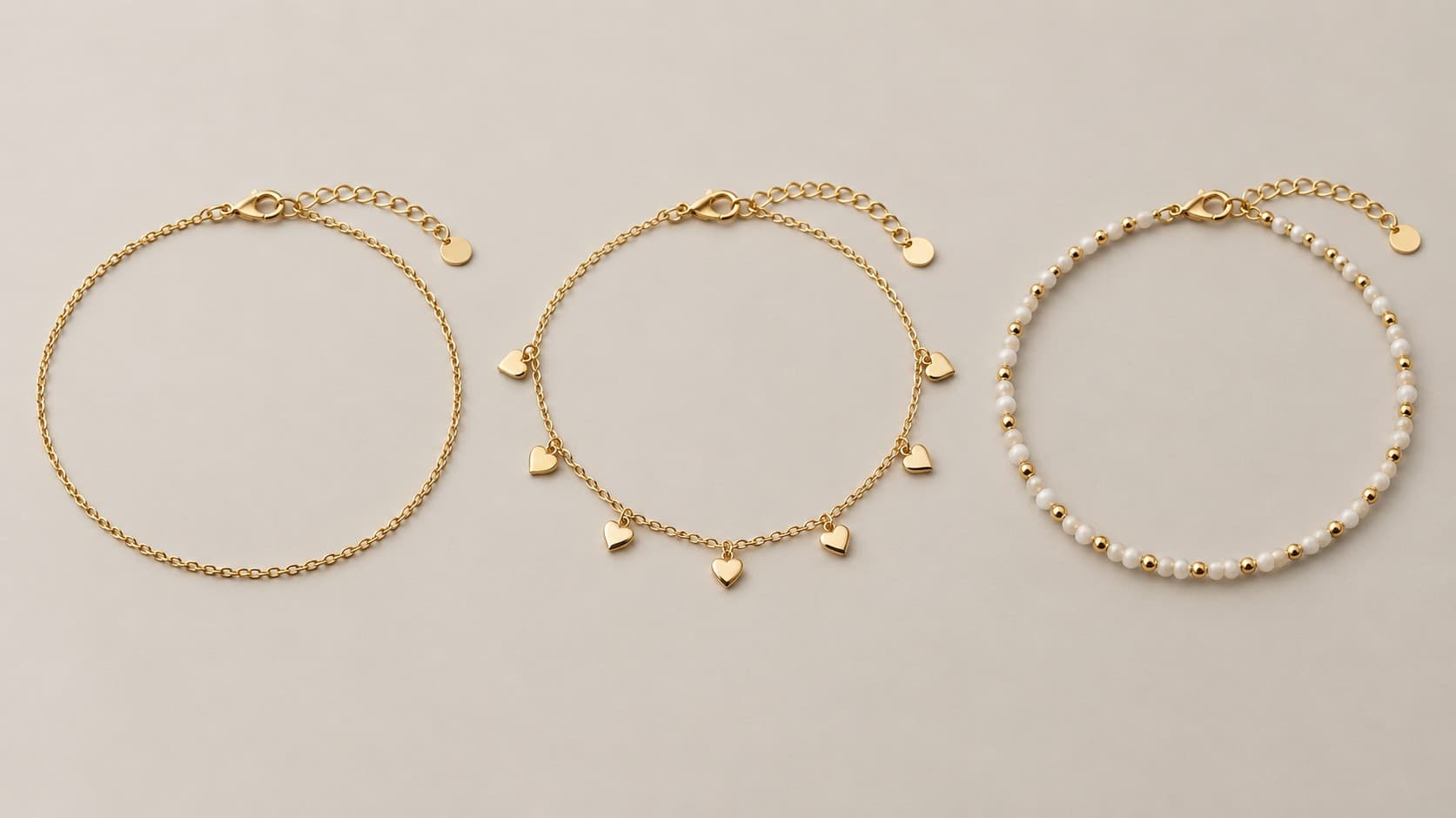
Anklets can be made from almost anything, but a few materials show up far more often than others because they hold up well against the daily bending, brushing, and friction that ankles go through.
Metals
- Sterling silver – affordable, easy to find, and flattering against most skin tones, though it can tarnish over time without care.
- Gold and gold-filled – more resistant to tarnish than silver and a common choice for anklets meant to be worn daily.
- Stainless steel – very durable and a strong pick for anything that needs to handle sweat, water, or rough daily wear without much upkeep.
Metal content matters more for anklets than the styling alone. Anklets sit against skin that’s often covered by socks or shoes for hours at a time, which can trap moisture and irritate skin more than a bracelet would. Hypoallergenic options like titanium or niobium are worth considering for anyone whose skin has reacted to silver or mixed-metal alloys in the past.
Cords, Beads, and Charms
Not every anklet is made of metal. Woven cord, leather strips, and strings of small beads have been used for anklets for centuries, especially in casual and beach-inspired styles. These materials are usually lighter on cost and easier to adjust, since many cord anklets tie rather than clasp, which sets the exact fit at the moment of wear.
How to Measure Your Anklet Size
Getting the size right matters more with anklets than with most other jewelry, because an anklet that’s too tight digs into the skin while walking, while one that’s too loose can slip down over the heel or catch on things.
The most reliable way to measure is wrapping a soft measuring tape or a piece of string around the ankle, right where the anklet is meant to sit, then adding between half an inch and a full inch for comfort, since an anklet needs a little room to move as the foot flexes.
| Fit Style | Typical Length | Best For |
|---|---|---|
| Snug | 8–9 inches | Smaller ankles or a close-to-skin look |
| Standard | 9–10 inches | Most average ankle sizes |
| Loose | 10–11+ inches | Larger ankles or a relaxed, draped look |
Between two sizes, sizing up is generally the safer choice. A slightly loose anklet is only a minor annoyance, while a tight one can leave marks or press uncomfortably on the ankle bone after a full day of wear. Many anklets also include a small extender chain near the clasp, which allows the fit to shift by half an inch or so without needing an exact custom size.
Tips for Wearing an Anklet
There’s no strict rule for how many anklets to wear at once or which outfits they suit, but a few small choices change how the final look reads.
- Bare skin gives the cleanest look, since anklets are designed to be seen rather than hidden.
- Matching the metal to other jewelry (gold with gold, silver with silver) creates a coordinated appearance.
- Thicker or noisier anklets, like those with bells or heavy charms, tend to suit casual settings better than formal ones.
- Two or three thin anklets stacked together add visual detail without adding real weight.
Anklet Cleaning and Care
Anklets take more physical wear than most jewelry because they sit near the ground, brush against shoes and socks, and get exposed to sweat and dirt more often than a necklace or a ring would.
A soft, dry cloth wiped over the anklet after wearing it helps, especially with silver, since skin oils and sweat speed up tarnishing. Storing it flat or hanging rather than balled up in a drawer also helps, since chains tangle easily and repeated tangling weakens the links over time. Cord or thread anklets hold up best when kept dry, since repeated soaking can cause fraying or fading.
Removing anklets before sleeping or exercising is also worth building into a routine. Both activities involve a lot of ankle movement in tight spaces, like bedsheets or shoes, which is exactly the kind of friction that snaps delicate chains or loosens clasps over time.
Frequently Asked Questions
Can an anklet be worn every day?
Yes, most metal anklets, especially those made of stainless steel or gold, are sturdy enough for daily wear. Cord or thread anklets tend to wear out faster with constant use, so they suit occasional wear or periodic replacement better.
Do anklets have to be worn on bare feet?
No. Anklets work with sandals, flats, or any open-toed shoe, and are commonly worn under jeans or looser pants without issue. They’re simply easiest to see against bare ankles.
Is it okay to shower or swim while wearing an anklet?
It depends on the material. Stainless steel and solid gold generally hold up fine, but sterling silver can tarnish faster with frequent water exposure, and cord anklets can weaken or discolor. Removing the anklet before swimming in chlorinated or salt water is the safer choice.
Can men wear anklets?
Yes. Anklets have been worn by men throughout history, including in some African and Middle Eastern traditions, and men wore simple cord anklets alongside women during Western movements like 1960s and 1970s hippie fashion. Nothing about the jewelry itself ties it to one gender; modern fashion habits are what made anklets feel more associated with women in some regions.
What is the standard length for an anklet?
Most anklets fall between 9 and 10 inches, which fits an average adult ankle comfortably. Smaller and larger sizes are available for more petite or larger ankles, and many anklets include an adjustable extender chain to fine-tune the fit.
The Bottom Line
Anklets have survived for thousands of years because they do something simple well: they turn a part of the body most jewelry ignores into a place for personal style. The history behind them, the traditions they still carry in certain cultures, and the sheer variety of styles available all point to the same conclusion: an anklet’s meaning depends far more on who’s wearing it than on any myth about which foot it sits on. Getting the size and material right matters more than any of the folklore attached to the jewelry.