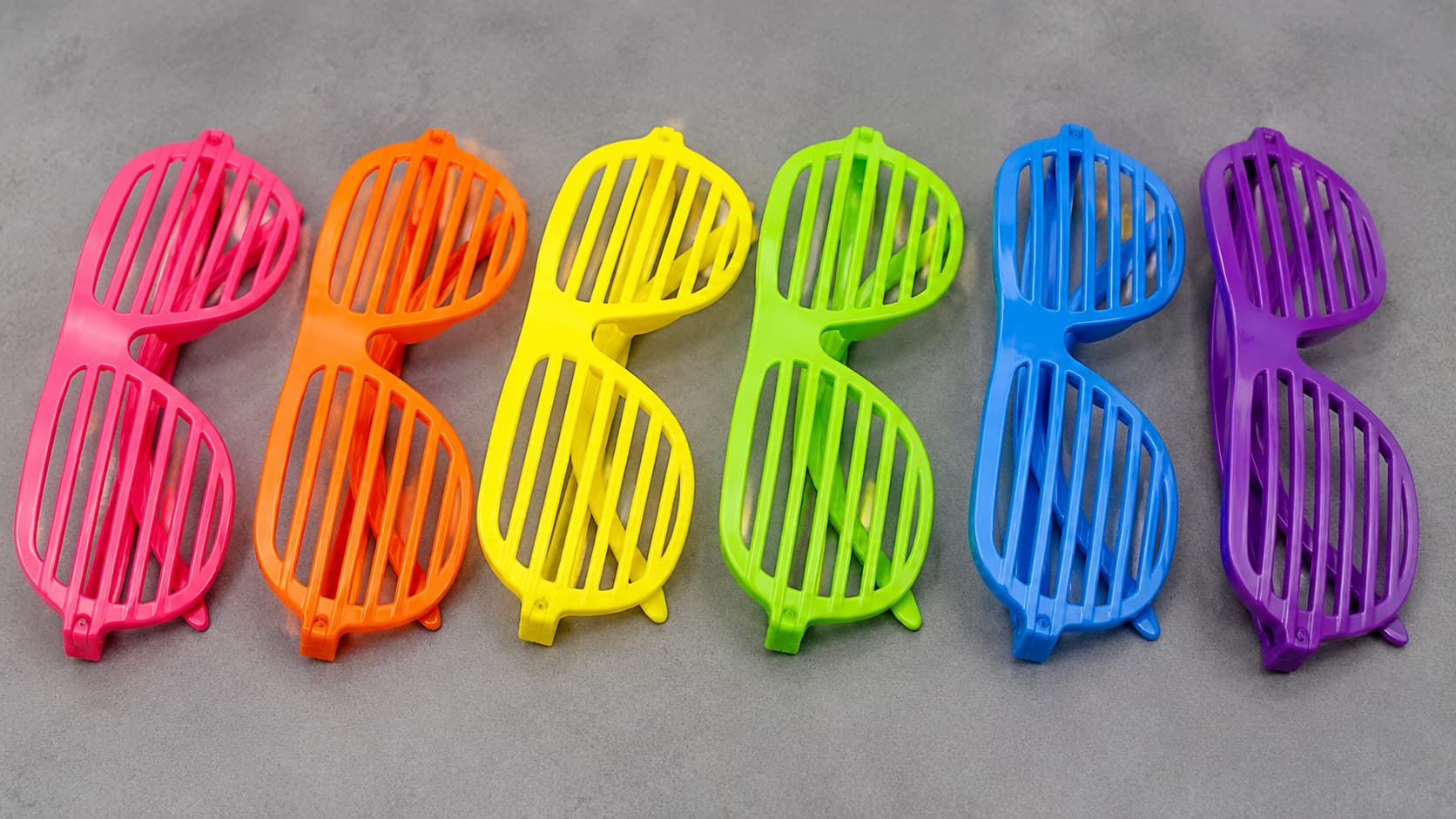
Shutter shades are the sunglasses that look like tiny window blinds strapped across the face. They do not have glass or plastic lenses like normal sunglasses. Instead, they have a row of thin horizontal bars where the lenses would normally go, so light gets broken up as it passes through instead of being blocked or tinted. They became a huge fashion moment in the late 2000s and still pop up today whenever a decade-throwback trend rolls around, which makes it worth knowing exactly what they are, where the look came from, and whether they do anything besides look striking.
What Are Shutter Shades?
Shutter shades are sunglasses that swap out the usual solid lenses for a set of narrow horizontal slats, similar to a miniature window blind or shutter. The frame still wraps around the face like a normal pair of glasses, but instead of one solid piece of tinted plastic or glass, there are several thin strips of material with gaps between them.
Because there is no solid lens, shutter shades let a lot of light straight through the gaps. That means they are worn almost entirely for looks rather than for blocking sunlight, which sets them apart from pretty much every other style of eyewear on this list of sunglasses categories. Some modern versions do add a thin tinted lens behind the slats for a bit of extra style or light coverage, but the classic design is just open bars.
Where Did the Shutter Shades Trend Start?
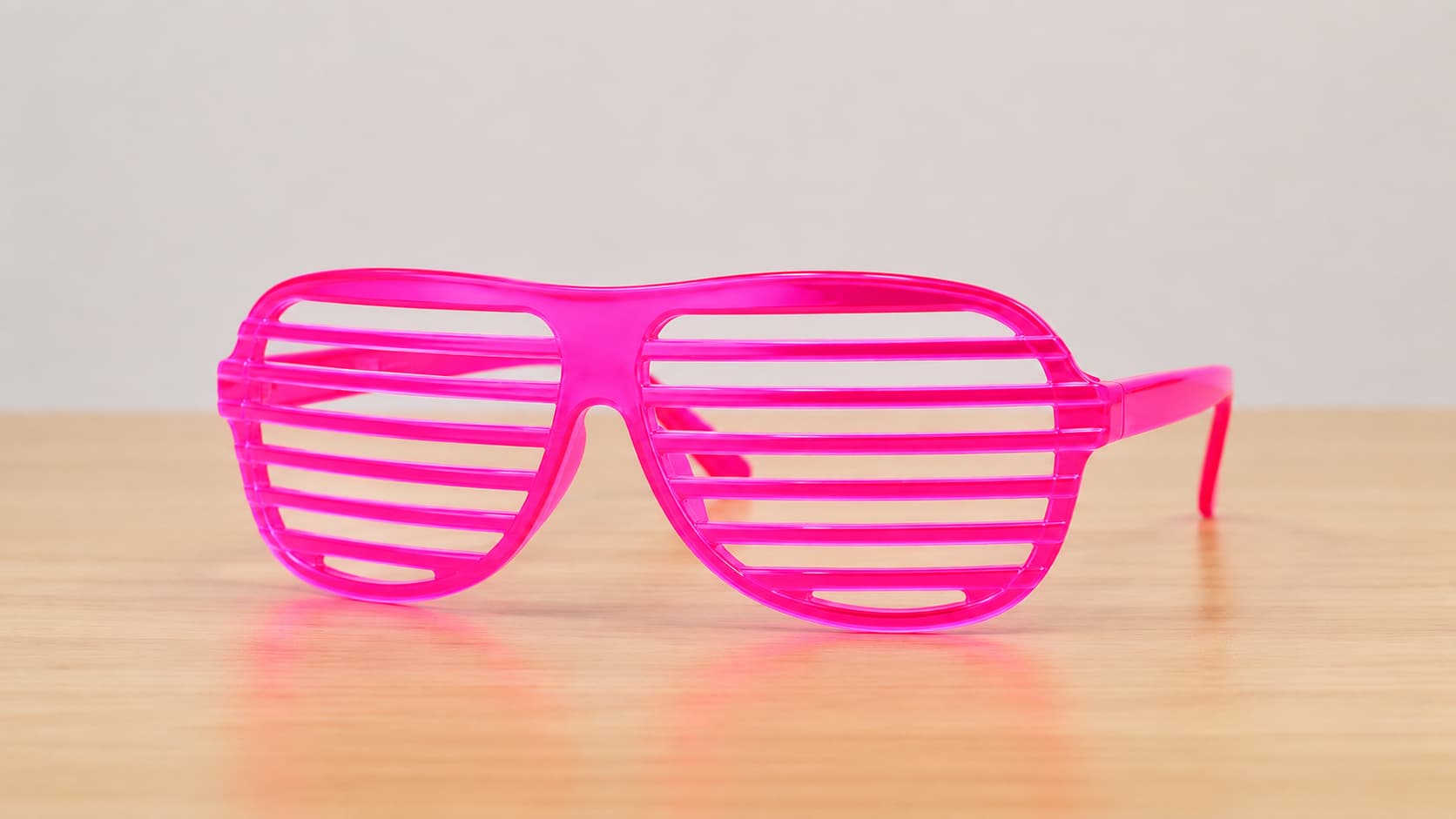
Shutter shades did not start with Kanye West, even though most people associate the look with him. The slatted design has shown up in different forms across several decades, with each version borrowing a little from the one before it.
Before Shutter Shades: Arctic Snow Goggles
The basic idea behind shutter shades, using narrow openings instead of a solid lens to manage light, is actually thousands of years old. Inuit and Yupik communities in the Arctic carved snow goggles from bone, antler, driftwood, or walrus ivory, cutting a thin slit into each side to cut down the blinding glare that bounces off snow and ice. Archaeologists have found examples of this eyewear dating back roughly 2,000 years, and unlike shutter shades, the narrow slit actually worked like a real pinhole, sharpening the wearer’s vision instead of blocking it.
Shutter shades are not a direct copy of this design, since Arctic snow goggles use one tight slit per eye rather than several horizontal bars, and their goal was genuine eye protection rather than style. Still, it is worth knowing that “block most of the light, keep a narrow opening to see through” is an idea people were using long before anyone called it a fashion trend.
The 1950s Origin: Venetian Blinders
The earliest known version of this style dates back to the 1950s, when they were sometimes called Venetian blinders because of their resemblance to window blinds. These early pairs were more of a novelty item than a fashion staple, and they mostly disappeared for a few decades after their initial run.
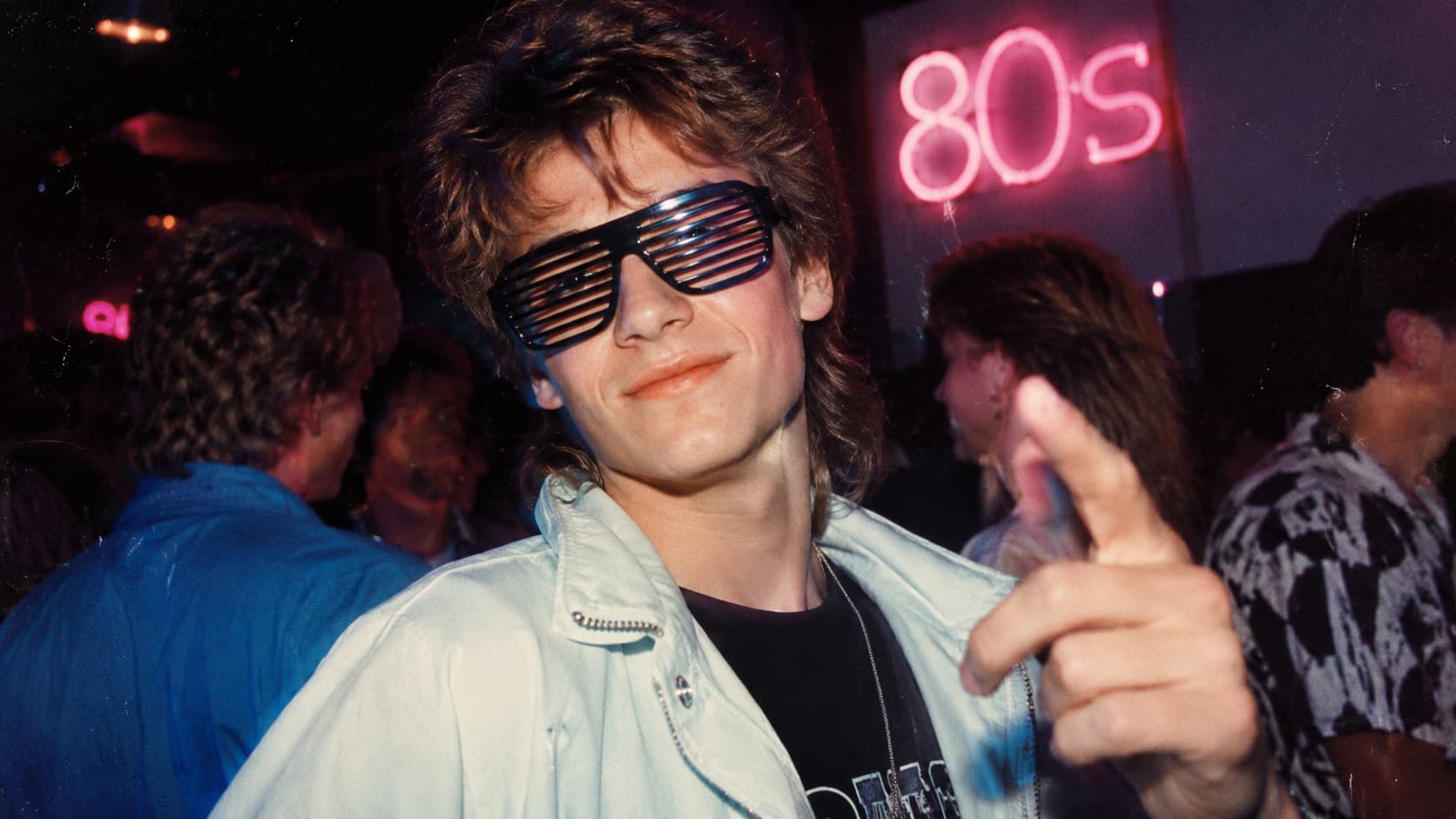
The 1980s Comeback of Shutter Shades
The look resurfaced in the early 1980s, popularized in part by the eyewear brand Alain Mikli and worn by figures like professional wrestler “Macho Man” Randy Savage, who sported a slatted style during his matches and promos. Around the same period, the shades also made cameo appearances in music videos, including Simple Minds’ “Glittering Prize” and Animotion’s “Obsession.”
Kanye West and the 2007 Explosion
The version most people recognize today traces back to 2007, when Kanye West wore a custom pair made by French designer Alain Mikli in the music video for “Stronger.” The look spread fast, and later that year a company called Shutter Shades, Inc. trademarked the term “shutter shades” and started selling an affordable plastic version in several colors. By 2008, the brand had partnered with Kanye’s merchandise company to sell the glasses at concerts, which helped turn a niche fashion statement into something you could buy at a mall kiosk.
Other celebrities picked up the look almost as fast as it appeared, including Paris Hilton, and Kanye brought the style to an even bigger stage at the 2008 Grammy Awards, performing “Stronger” in a version of the shades fitted with LED lights. Within a year, a design that started as one custom pair made for a music video had turned into a genuine pop culture symbol of that era.
Shutter shades are a good example of how a fashion trend can loop back around more than once. The same basic idea got picked up in the 1950s, the 1980s, and the 2000s, each time finding a new audience.
How Are Shutter Shades Made?
Most shutter shades are made from lightweight plastic, which keeps them cheap to produce and comfortable enough to wear for a night out. The frame is usually molded as one piece, with the horizontal slats built directly into the front instead of being added separately like a normal lens would be.
Higher-end versions, like the custom Alain Mikli pairs, have been made with more refined materials and sometimes decorative details like crystals or unusual colors, since Mikli’s original designs for Kanye West were handmade rather than mass-produced. The mass-market versions that took off after 2007 kept things simple by comparison: injection-molded plastic, a handful of color options, and a design that could be produced quickly and sold cheaply once Shutter Shades, Inc. patented its own sleeker take on the shape.
That gap between the two versions is a big part of why the trend spread so fast. A design that started as an expensive, one-of-a-kind piece worn by a single celebrity turned into something a teenager could pick up at a mall kiosk within months, and that kind of quick, affordable copy is exactly what let the look jump from music videos to everyday streetwear.
Can You Actually See Through Shutter Shades?
Wearing shutter shades still allows some vision, but not much. The horizontal bars block a good chunk of the field of view, especially straight ahead, so most wearers describe the experience as looking through a slightly annoying set of blinds rather than a clear window.
This is part of why shutter shades were never meant to be practical, everyday sunglasses. They were designed as a statement piece worn for short bursts, like a party, a photo, or a performance, rather than something worn while driving or walking around all day.
Do Shutter Shades Protect Your Eyes From the Sun?
Shutter shades offer little to no real protection from the sun. Because there is no solid lens covering your eyes, UV rays and bright light pass straight through the gaps between the bars, so they do not function like standard sunglasses in terms of eye safety.
A look with some of that retro, slatted style but still real eye protection is possible with versions that add a tinted lens behind the bars. Even then, it is worth checking that the pair is labeled with actual UV protection, since a dark tint alone does not guarantee that it protects your eyes from harmful rays.
Narrow openings can cut down on glare, which is exactly why the ancient Arctic snow goggles mentioned earlier actually worked. There is an important difference, though: those goggles used one tight slit that limited light from almost every direction, while shutter shades use several wider gaps stacked on top of each other, so a lot more light and UV exposure gets through. The shape looks similar at a glance, but the amount of real protection is not.
Do People Still Wear Shutter Shades?
Shutter shades are no longer a mainstream trend the way they were in 2007 and 2008, but they have not disappeared either. They show up regularly in Y2K and 2000s-themed fashion moments, costume parties, music festivals, and nostalgia-driven social media content.
Fashion trends from the 2000s have been making a broader comeback in recent years, and shutter shades tend to ride along with that wave whenever it picks up. A handful of smaller eyewear sellers still produce the classic slatted design today, mostly for people looking for a costume piece, a festival accessory, or a nod to the original 2007 look rather than a daily pair of sunglasses. They are less of an everyday accessory now and more of a throwback piece people reach for when they want to reference that specific era.
How to Style Shutter Shades
Shutter shades work best as a bold, playful accent rather than a piece to build an entire outfit around, most commonly in one of a few forms:
- An all-black outfit for a stripped-down, graphic look
- Costume or theme parties leaning into 2000s or Y2K style
- A prop for photos rather than something worn for long stretches
- Bright or neon colors that lean into their original party-accessory roots
Because they are so recognizable, a little goes a long way. Most people wear them for a specific moment rather than as a regular accessory in daily rotation.
Frequently Asked Questions
Did Kanye West invent shutter shades?
No. Kanye West did not invent shutter shades, but he is the person most responsible for making them famous. The style dates back to the 1950s and had an earlier revival in the 1980s before Kanye wore a custom Alain Mikli pair in his 2007 video for “Stronger,” which sparked the trend most people remember today.
Why don’t shutter shades have lenses?
Shutter shades don’t have traditional lenses because they were designed as a fashion statement rather than functional eyewear. The horizontal slats replace the lens entirely, which is part of what makes the style so recognizable, but it also means they let in far more light than a normal pair of sunglasses.
Can shutter shades damage your eyes?
Shutter shades themselves won’t damage your eyes, but they also won’t protect them. Wearing them in bright sunlight without any UV-blocking lens behind the slats leaves your eyes just as exposed as if you weren’t wearing sunglasses at all, so they are best treated as a costume or style piece rather than sun protection.
Where can I still find shutter shades?
Shutter shades are typically found through novelty eyewear retailers, costume shops, and specialty online sellers rather than mainstream sunglasses brands. Since the trend is now more of a nostalgic throwback than a current mainstream style, availability tends to be more limited than it was during the original 2007-2008 boom.
Are shutter shades unisex?
Yes, shutter shades have always been worn by people of any gender. From Randy Savage in the 1980s to Kanye West and the many celebrities who followed him in the late 2000s, the style has never been marketed as belonging to one gender in particular.
Conclusion
Shutter shades are less about seeing clearly and more about making a statement, and that has been true since their very first appearance back in the 1950s. The look has bounced between decades, picked up by a wrestler in the 80s and then turned into a genuine pop culture moment by Kanye West in 2007, before settling into its current role as a nostalgic throwback piece. A pair worn today works best treated the way the original wearers treated it: a bold, temporary accessory for a specific moment, not a replacement for real sun protection.