A chunk of pyrite can look like a small fortune at first glance, and for centuries it convinced plenty of people that it was exactly that. That golden shine has fooled prospectors, miners, and treasure hunters for hundreds of years, which is exactly how this mineral earned its famous nickname. Pyrite is its own material with its own chemistry, its own history, and its own quirks, and once its real makeup is understood, it turns out to be a lot more interesting than a simple gold impostor.
What Is Pyrite Made Of?
Pyrite is made of iron and sulfur, combined into a mineral scientists call iron sulfide, with the chemical formula FeS₂. Every bit of pyrite contains one iron atom bonded to two sulfur atoms.
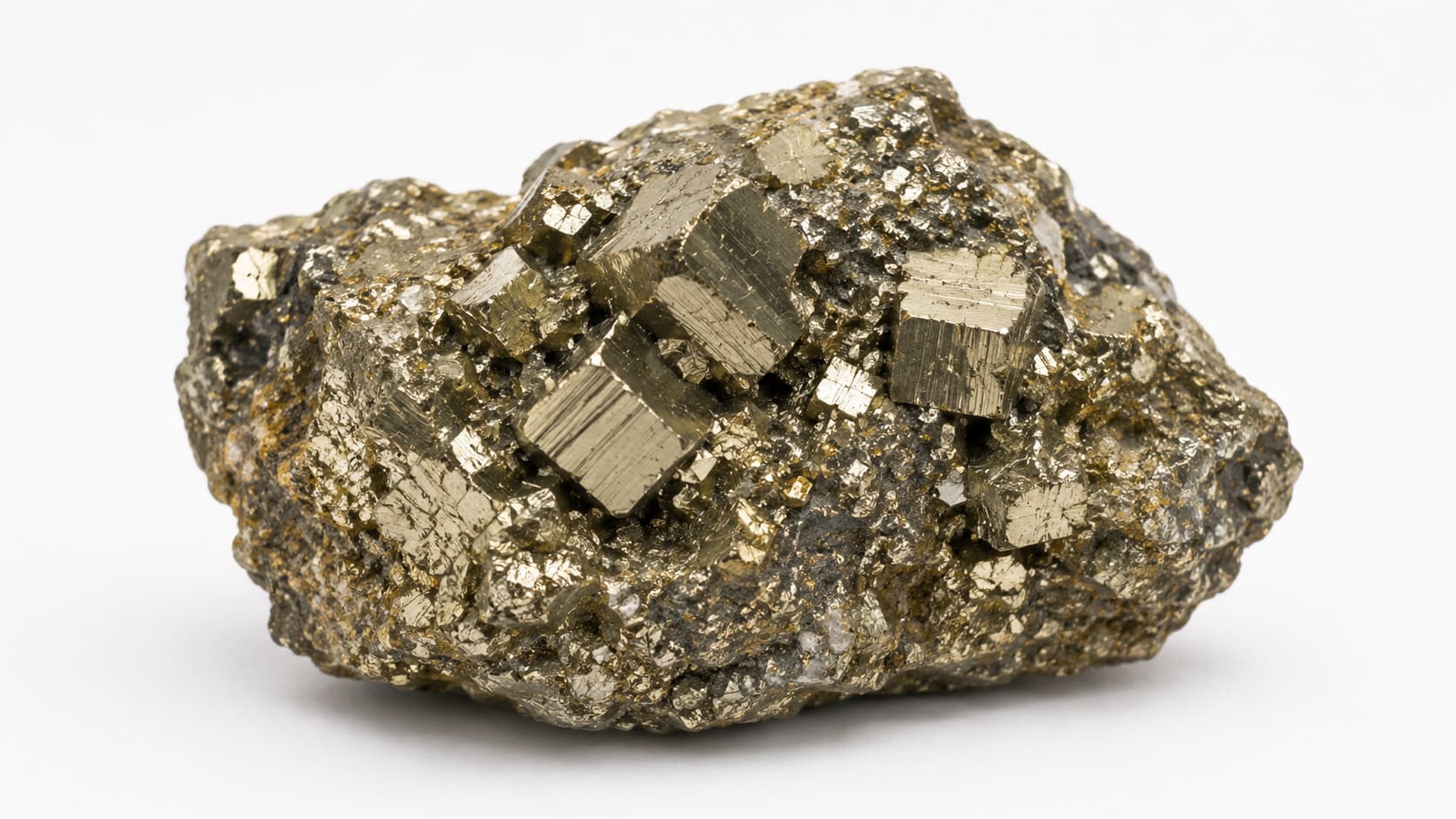
This combination is what gives pyrite its brassy, metallic yellow color and its shiny surface. Because it’s a sulfide mineral rather than a pure metal, pyrite behaves very differently from actual gold even though the two can look similar at a glance. Pyrite also tends to grow in neat geometric shapes, often forming as cubes or as twelve-sided crystals called pentagonal dodecahedra, with flat, mirror-like faces that catch the light and make the mineral look even more gold-like than it already is. Some crystals even grow together at an angle in a pattern collectors call “iron cross” twins, symmetrical enough to look almost artificial.
Pyrite is also noticeably heavy for its size, with a specific gravity around 5, meaning it weighs roughly five times as much as an equal volume of water. Real gold is far denser still, at nearly nineteen times the weight of water, but pyrite’s heft is still enough to feel surprisingly weighty compared to most other rocks and minerals.
Why Is Pyrite Called “Fool’s Gold”?
Pyrite earned the nickname “fool’s gold” because its golden color and metallic shine tricked so many amateur prospectors into thinking they had struck it rich. During gold rushes across the world, miners regularly hauled home bags of pyrite believing they were sitting on a fortune, only to learn otherwise.
The mix-up wasn’t entirely a matter of carelessness. Pyrite bears a golden color, a metallic luster, and a heavy, dense feel, all of which make it easy to confuse with gold without close inspection. To make matters even more confusing, pyrite and real gold often form in the same rock formations. Gold deposits are frequently found sitting right next to, or even mixed within, pyrite veins, which is part of why the two got tangled up in prospector folklore in the first place.
Even the word “pyrite” points to one of the mineral’s other famous traits. It comes from an ancient Greek word related to fire, because striking a piece of pyrite against steel or another hard surface throws off sparks. That spark-making trick was so reliable that pyrite was used in early firearms and fire-starting tools centuries before it ever ended up as jewelry.
How Can Pyrite Be Told Apart From Real Gold?
The clearest way to tell pyrite from gold is by comparing the streak, the hardness, and the shape. Real gold is soft, bends easily, and leaves a golden-yellow streak when scratched against unglazed porcelain, while pyrite is harder, brittle, and leaves a dark greenish-black streak instead.
| Property | Pyrite | Real Gold |
|---|---|---|
| Streak color | Greenish-black | Golden yellow |
| Hardness (Mohs scale) | About 6 to 6.5 | About 2.5 to 3 |
| Texture | Brittle, breaks apart | Soft, bends and dents |
| Crystal shape | Cubes or geometric faces | Rarely forms sharp crystal shapes |
| Weight for its size | Heavy, but noticeably lighter than gold | Roughly four times heavier than pyrite |
| Reaction when struck | Sparks | No sparks |
A geologist or jeweler can confirm the difference within seconds using these tests, which is exactly how so many pyrite “gold rushes” ended in disappointment once the ore reached an assay office. Weight tends to be the fastest field test: pyrite is about five times denser than water, while gold is close to nineteen times denser than water, so a real gold nugget feels distinctly, almost surprisingly heavier than a pyrite lookalike of the same size.
How Hard Is Pyrite?
Pyrite sits at about 6 to 6.5 on the Mohs hardness scale, which measures how well a mineral resists scratching. That makes it noticeably harder than gold, silver, or copper, but still softer than a diamond or even everyday quartz sand.
That hardness number is a little misleading on its own, though, because pyrite is also brittle. A hard mineral isn’t automatically a tough one. Pyrite resists a scratch from a fingernail or a coin easily enough, but it can still crack, chip, or crumble under a sharp hit, a detail that matters for anyone handling raw pyrite specimens or pyrite jewelry.
Where Is Pyrite Found?
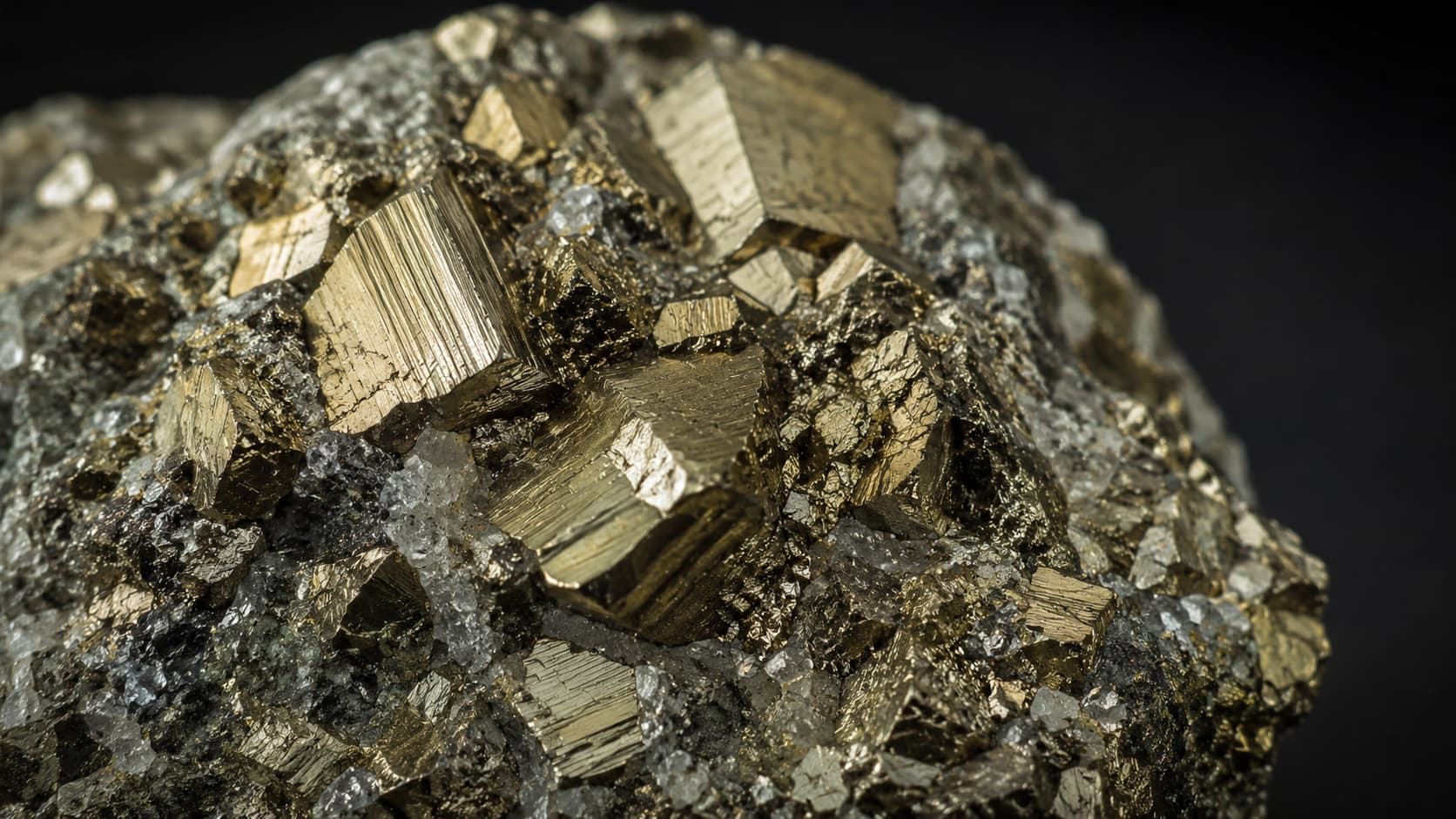
Pyrite is one of the most common minerals on Earth, turning up almost everywhere rocks are formed. It occurs in igneous, metamorphic, and sedimentary rocks around the world, including notable deposits in the United States, Italy, Spain, and Kazakhstan.
Because it forms in so many different environments, from deep volcanic rock to sedimentary layers built up over millions of years, pyrite shows up in coal seams, riverbeds, and hydrothermal veins. Some of the most prized display specimens, the ones with large, sharp, mirror-bright cube crystals, come from famous localities in Spain and Peru.
Pyrite even turns up inside fossils. Under the right underwater conditions, buried sea creatures like ammonites can have their original shell material slowly replaced, molecule by molecule, with pyrite instead of the more usual calcite or silica. The result is a fossil that keeps its spiral shape but gleams with a metallic golden shine, a genuine piece of prehistoric sea life turned into fool’s gold over millions of years.
Is Pyrite Used in Jewelry?
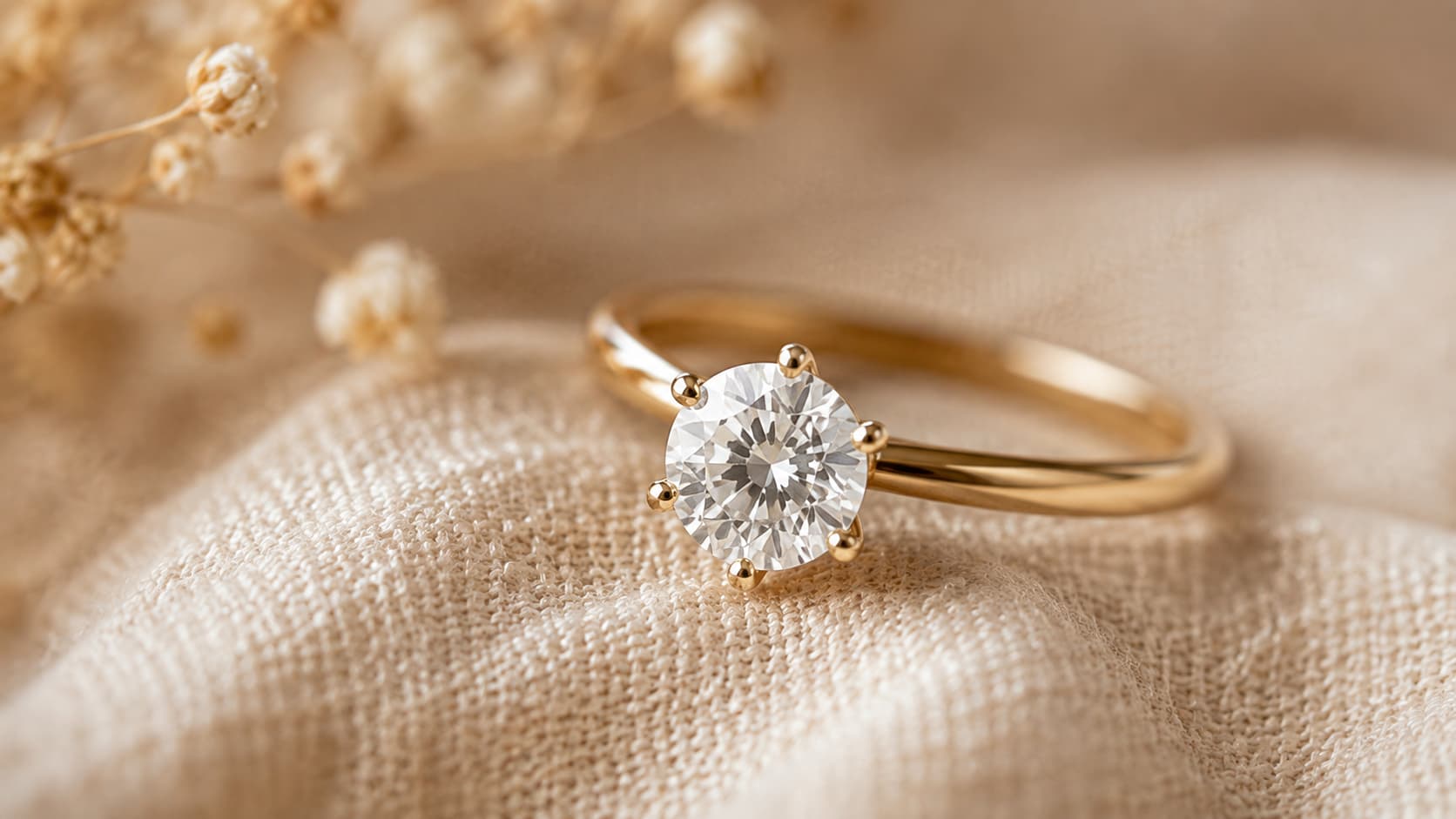
Pyrite has been used in jewelry for centuries, most famously in a style called marcasite jewelry. Despite the name, most historic and modern “marcasite” jewelry is actually made with cut and polished pyrite rather than the more fragile mineral marcasite, because pyrite holds up far better to being shaped and set.
Marcasite jewelry became especially popular during the Victorian era, when small, faceted pieces of pyrite were set in silver to create pieces with a soft, glittering sparkle rather than a big, bold shine.
Pyrite still appears today in rings, pendants, and earrings, prized for its metallic luster and its bold geometric crystal shapes when left in a more natural, raw form. It remains an affordable option compared to many gemstones, which is part of why jewelry designers keep returning to it for a striking look without a high price tag.
How Should Pyrite Jewelry Be Cared For?
The single most important rule for pyrite jewelry is keeping it away from water. The iron and sulfur that make up pyrite don’t stay inert when moisture and air get involved for long enough; a slow chemical breakdown sets in, leaving behind a rust-colored discoloration and a faint, sulfur-like odor that signal the surface has started to corrode.
Removing pyrite jewelry before showering, swimming, washing dishes, or exercising prevents most of the damage before it starts. A soft microfiber cloth is generally enough to wipe away oils and sweat after each wear, since anything rougher risks scuffing the metallic surface. Between wears, storage in an airtight jewelry box or a resealable pouch, ideally with a silica gel packet or anti-tarnish strip tucked inside, helps absorb excess moisture, and keeping pieces out of direct sunlight or humid rooms like bathrooms adds further protection. Water, ultrasonic cleaners, and harsh chemical jewelry cleaners should be avoided entirely.
A dry polishing cloth is really the only tool pyrite needs on a regular basis. Once a piece has already picked up a dull, hazy film from humidity, a jeweler can sometimes restore the shine through careful dry buffing, though prevention remains far easier than reversing rust after the fact. Sticking to these habits keeps the metallic shine intact for years, while skipping them can leave even a beautiful pyrite piece with a dull, rusty film over time.
Does Pyrite Have Symbolic Meaning?
Beyond its geology, pyrite has picked up plenty of cultural meaning over the years. Historically it has been linked to ideas like confidence, protection, and abundance, largely thanks to its gold-like glow and its long association with wealth and prosperity, even if that wealth turned out to be fool’s gold rather than the real thing. These meanings belong to folklore and personal belief rather than scientific fact, but they’re a large part of why pyrite remains a popular choice in jewelry and home décor today.
Frequently Asked Questions
Is pyrite valuable?
Pyrite itself is generally inexpensive compared to real gold or precious gemstones, since it’s a common mineral found in large quantities worldwide. Its value comes more from its striking appearance, sharp crystal shapes, and use in affordable jewelry than from rarity.
Can pyrite turn into gold?
No, pyrite cannot turn into gold. The two are chemically different materials, iron sulfide versus pure metallic gold, and no amount of time, heat, or pressure changes one into the other.
Can pyrite go in water?
It’s best avoided. Water combined with oxygen can react with the iron and sulfur in pyrite, causing it to rust, dull, or develop a sulfurous smell over time, which is why pyrite jewelry should be kept dry.
Is pyrite the same as marcasite jewelry?
Not technically. Marcasite is a separate, more brittle mineral, but most jewelry sold as “marcasite” throughout history has actually been made with cut pyrite, since pyrite is sturdier and easier to facet.
Is pyrite dangerous to wear?
Wearing polished pyrite jewelry in normal, dry conditions is generally considered safe. The main risk isn’t to the wearer but to the stone itself, since prolonged exposure to moisture can gradually corrode its surface.
Conclusion
Pyrite earns its “fool’s gold” reputation honestly: it looks the part, forms in gold-bearing rock, and has genuinely fooled generations of prospectors. Once the tells are known, the greenish-black streak, the harder and more brittle feel, the sparks it throws when struck, it becomes easy to spot for what it actually is: a common, striking iron sulfide mineral with its own long history in fire-starting, jewelry-making, and folklore. Kept dry and cared for properly, a piece of pyrite, whether raw or polished into jewelry, holds onto its metallic shine for a very long time.