A small workshop in Glasgow has quietly become one of the most talked-about names in independent watchmaking, and it got there by mastering a craft most big watch brands gave up on decades ago. anOrdain makes watches with hand-fired enamel dials, a technique so slow and unpredictable that even some Swiss manufacturers outsource it rather than do it themselves. What started as one designer’s stubborn experiment with powdered glass and a kiln has turned into a brand with multi-year waiting lists, a cult following among collectors, and a reputation for proving that serious, beautiful watchmaking doesn’t have to come from Switzerland or Japan.
What Makes anOrdain Unique
anOrdain stands out because it makes its enamel dials entirely in-house, by hand, in Scotland. Most watch brands that use enamel dials buy them from specialist suppliers in Switzerland or France. anOrdain built its own enamelling studio from scratch and trained its own artisans to do it, which almost no other brand at this size attempts.
Vitreous enamel is powdered glass that gets painted onto a metal disc and fired in a kiln at extremely high heat, sometimes dozens of times for a single dial. The brand is led by founder Lewis Heath, who works alongside a team of artisans, watchmakers, and designers in Glasgow. The process has a high failure rate, which is part of why enamel dials stay rare and expensive across the whole watch industry, not just at anOrdain. Because the team controls every step themselves, each dial carries small, natural variations that make every watch slightly unique, something rarely found on a mass-produced dial stamped out by machine.
anOrdain’s Founding Story
anOrdain was founded in Glasgow, Scotland, in 2015 by designer Lewis Heath, who wanted to combine old-fashioned enamel craftsmanship with clean, modern watch design. Heath had a background in design and a personal interest in mechanical watches, which pushed him to build a company around a craft that had mostly disappeared from everyday watchmaking. The name “anOrdain” comes from Loch an Ordain, a small, remote loch in the Scottish Highlands, a place tied to the quiet, patient character the brand tries to put into its watches.
Getting the enamel process right took years before anOrdain ever sold a single watch. According to the brand, perfecting the technique took about three years of trial and error before the team felt confident enough to put it into production. That patience paid off. The debut Model 1 launched in 2018 as a small, independent project run by a handful of people, and it introduced the custom typography the brand still uses today, a font inspired by old British Ordnance Survey maps.
Since launch, anOrdain has grown slowly and deliberately rather than chasing fast expansion. The enamelling side of the business now runs on a small team of dedicated enamellers learning from a master craftsperson, and the company has been developing a larger, purpose-built workshop in Glasgow to bring staff and production under one roof as demand has grown. That combination, growing slightly but staying stubbornly handmade, is a big part of why the brand’s watches stay hard to get.
How anOrdain Makes Its Enamel Dials
Every anOrdain dial starts as a blank disc of metal, usually copper or silver, not as a finished pattern. Powdered glass enamel is applied by hand in thin layers, and after each layer the dial goes into a kiln and gets fired at temperatures well over 800°C. This gets repeated several times, with the dial checked and sometimes reworked between firings, since cracks, bubbles, or uneven color can ruin a dial at any stage.
Firing glass onto metal and getting a flawless, even surface is one of the least forgiving crafts in watchmaking, which is exactly why most brands leave it to outside specialists instead of attempting it themselves.
This difficulty is also why anOrdain can only make a limited number of watches each year, and why certain colors or finishes sell out fast. In the brand’s early years, its enamellers were producing only about eight dials a week, a pace that explains the long waiting lists anOrdain has become known for. The payoff for that slow process is a dial with real depth and texture, something that looks different depending on the angle of light hitting it, which is hard to replicate with a printed or stamped dial.
Best anOrdain Watch Models
anOrdain’s lineup is small on purpose, with each model representing a distinct step in the brand’s design and enamel work rather than yearly reissues of the same thing.
anOrdain Model 1
The Model 1 is anOrdain’s flagship and the watch that first put the brand on the map. It launched as a time-only automatic watch with a 38mm steel case, an enamel dial made by the brand’s own enamellers, and a Sellita SW200 automatic movement sourced from the well-known Swiss movement maker. The case received a special hardening treatment that made its surface roughly five times harder than ordinary stainless steel, and the watch used open, syringe-style hands paired with the brand’s custom map-inspired typeface.
Over time, anOrdain expanded the Model 1 into several dial finishes, including a smoked “fumé” version with a gradient color effect and, more recently, a true fired porcelain dial as an alternative to the standard vitreous enamel. The Model 1 Fumé dial ended up roughly twice as thick as a standard stamped brass dial because of how the enamel builds up during repeated firing. This model remains the easiest entry point into the brand, though “easy” is relative given the waiting lists involved.
anOrdain Model 2
The Model 2 is a smaller, sportier watch built around a hand-wound movement instead of an automatic one. It measures 36mm across and about 11mm thick, runs on a Sellita SW-210-1 hand-wind movement with a 42-hour power reserve, and carries 50 meters of water resistance, making it more of a daily-wear piece than a dress watch. Some versions use a hammered texture beneath the enamel, giving the dial a rougher, more rugged look compared to the smoother Model 1, and the model has also been offered on a leather strap or a Milanese mesh bracelet.
anOrdain later released a larger, field-watch-style version of the Model 2 for people who wanted the same enamel work in a bigger, tougher case. That version measures 39.5mm across and 11mm thick, keeps the 50-meter water resistance, and uses a Sellita SW210-1 movement with an Incabloc shock-protection system, giving it more durability for everyday knocks than the standard dress-sized models. Reviewers have compared its look loosely to vintage field and explorer-style watches, thanks to the gold accents and clean minute track available on certain dial colors.
anOrdain Model 3 Method
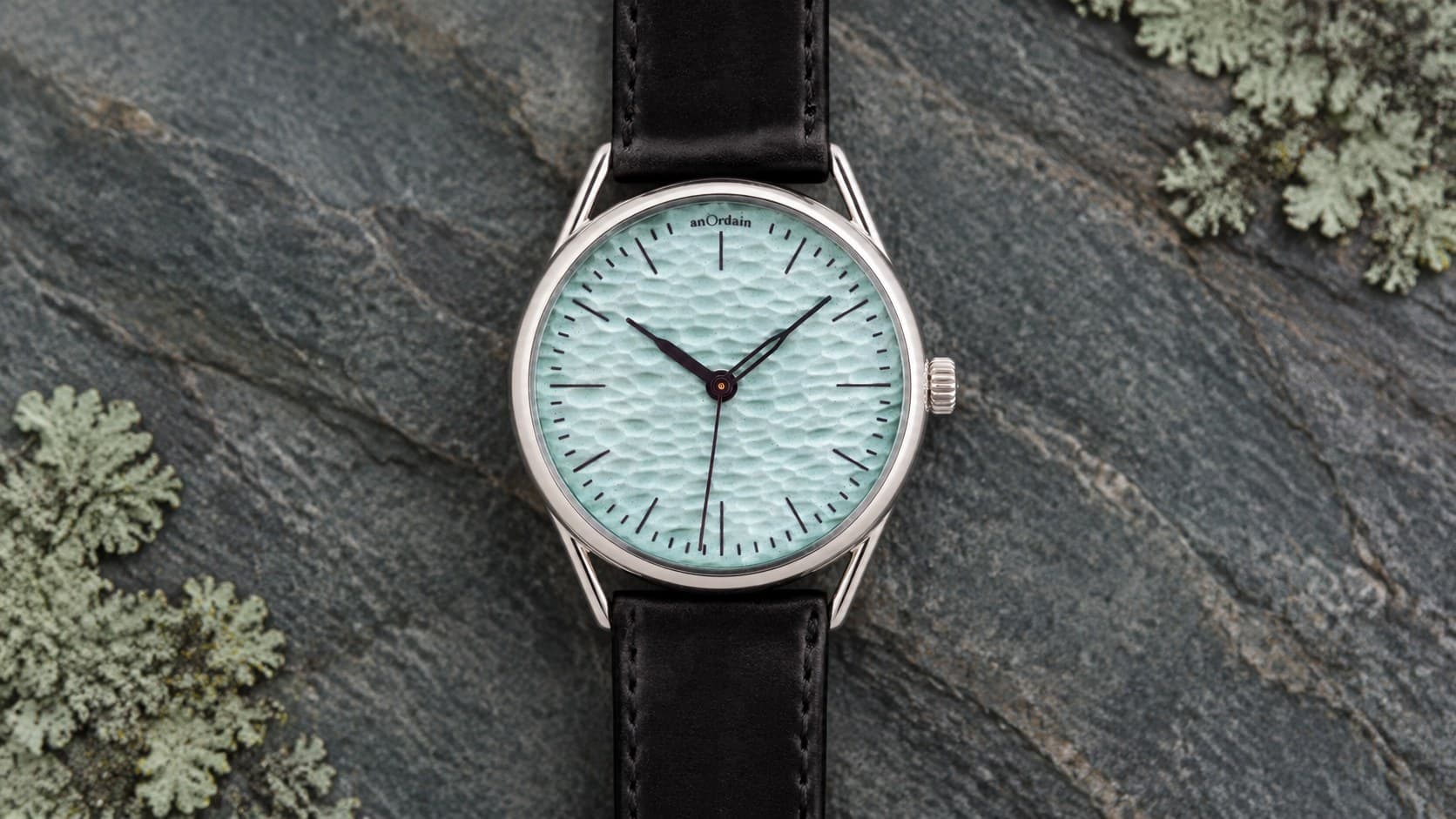
The Model 3 Method is anOrdain’s most ambitious watch and a good example of how far the brand is willing to push its enamel work. The dial’s rippled, wood-grain-like texture started life as a hand-carved block of ash made by Scottish artisan woodworkers at Method Studio, a company that has also worked with major luxury houses on bespoke projects. anOrdain scanned the carved wood in 3D, translated it into a stamped silver dial, and then hand-enamelled it in-house, a development process that reportedly took around four years to get right.
The watch itself uses a 39mm steel case that’s 10.5mm thick, a self-winding Sellita SW300 mechanical movement with a 42-hour power reserve, and 30 meters of water resistance, making it clearly a dress-oriented piece rather than a tool watch. It launched in 2023 at £3,500 plus VAT, making it the most expensive watch in the regular lineup, and it remains the clearest sign yet that anOrdain treats its enamel studio as a long-term creative tool rather than just a way to make colorful dials.
anOrdain’s Watch Collaborations
anOrdain’s biggest moment in the spotlight so far came through a collaboration with watch publication Hodinkee, built around the Model 3 case. The two worked together on a limited run of 25 watches featuring what was reportedly the world’s first hand-engraved sunburst enamel dial, with each individual dial demanding dozens of hours of hand engraving from a single enameller before it could be fired. Priced at $6,000 and powered by a Sellita SW300 movement, the watches reportedly sold out within minutes of going on sale.
That collaboration also highlighted just how in-demand the brand had become. At the time, anOrdain’s standard waiting list for a new watch was reported at around five years, though the company runs it as a simple queue rather than a priority system, meaning everyone moves up one spot each time someone at the front takes delivery. It’s an unusual way to sell watches, but it fits a brand whose whole identity is built around patience and craft over speed.
How Much Do anOrdain Watches Cost
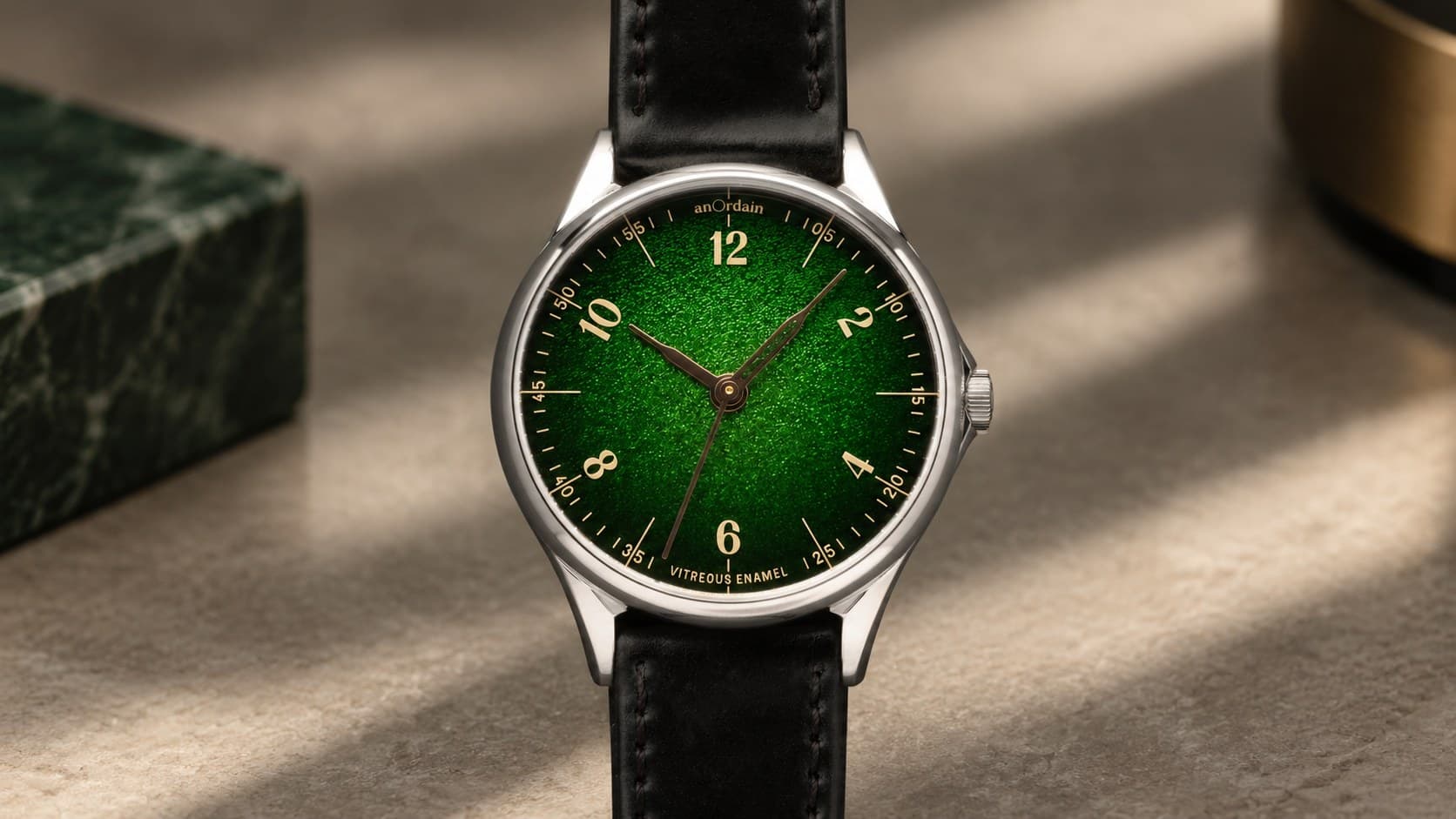
anOrdain watches generally fall between roughly £950 and £4,000 depending on the model, dial finish, and case size, with prices rising steadily as the brand’s reputation has grown. When the Model 1 first launched in 2018, it was priced at £1,050, or about $1,360 at the time, which was considered a genuine bargain for a hand-enamelled dial. The original Model 2 launched a year later at £950 for the standard enamel dial and £1,500 for the hammered enamel version, with both prices including UK VAT.
More recent and more technically complex releases cost significantly more. The Model 1 Fumé launched at around £1,750 before tax, roughly $2,330 at the time. The Model 3 Method launched at £3,500 plus VAT, and the special hand-engraved Hodinkee edition sold for $6,000 as a one-off limited run. Across the current lineup, buyers can generally expect to pay somewhere between £2,200 and £3,500 for a standard model, with rare finishes and collaborations landing higher still.
| Model | Launch Price (approx.) | Movement |
|---|---|---|
| Model 1 (original) | £1,050 | Sellita SW200 automatic |
| Model 2 (standard dial) | £950 | Sellita SW210-1 hand-wind |
| Model 2 (hammered enamel) | £1,500 | Sellita SW210-1 hand-wind |
| Model 1 Fumé | £1,750 (ex. VAT) | Sellita SW210 manual |
| Model 3 Method | £3,500 (ex. VAT) | Sellita SW300 automatic |
| Model 3 Hodinkee Limited Edition | $6,000 | Sellita SW300 automatic |
Secondary market and current retail prices run higher than these original launch figures, since anOrdain’s output stays limited and demand has only grown since each model first appeared.
Buying an anOrdain Watch: What to Expect
The biggest factor in buying an anOrdain watch is the wait, which can run long. Because every dial is hand-made and fired in small batches, popular colors and models regularly sell out, and new orders can sit on a waiting list that has stretched to several years for some references. This isn’t a marketing tactic. It comes directly from the fact that enamel work genuinely can’t be rushed without ruining the dial.
Several practical factors shape the buying experience beyond the wait itself:
- Buying direct from anOrdain avoids inflated secondary-market markups, since the brand sells primarily through its own website.
- Natural variation is normal. Because dials are hand-fired, no two are perfectly identical, so the exact shade or texture can differ slightly from online photos.
- Case size and wrist feel matter as much as color. The Model 1 and Model 3 run closer to dress-watch proportions, while the larger Model 2 field watch suits a sportier, everyday wrist.
- Movement type is worth checking. Some models are hand-wound and need daily winding, while others are automatic, a distinction that matters for anyone who doesn’t wear the same watch every day.
- Joining the waiting list early matters most for a specific color or limited run, since restocks are infrequent and the queue moves in order rather than by priority or purchase history.
For anyone seeking an enamel dial watch without the years-long wait associated with Swiss haute horlogerie houses, anOrdain remains one of the few realistic, attainable paths into that craft, even if “attainable” still means patience.
Frequently Asked Questions
Is anOrdain a luxury watch brand?
anOrdain sits in the independent “microbrand” category rather than the traditional luxury tier, but its prices and hand-finishing put it closer to entry-level luxury than to mainstream fashion watches. The hand-fired enamel dials are genuinely comparable in skill to work found in much pricier Swiss watches, which is part of why the brand has earned respect from collectors despite its relatively small size.
Why are anOrdain watches so expensive for a small brand?
The cost comes almost entirely from the enamel dial process, which is slow, labor-intensive, and has a high failure rate even for skilled enamellers. Each dial can require multiple firings in a kiln at temperatures over 800°C, and any small flaw usually means starting over, so the final price reflects wasted materials and hours as much as the finished product itself.
Where are anOrdain watches made?
anOrdain designs, enamels, and assembles its watches in its own workshop in Glasgow, Scotland. The brand uses outside suppliers, mainly Swiss movement maker Sellita, for the mechanical movements inside the watches, but the dials and final assembly happen in-house.
How long is the wait for an anOrdain watch?
Wait times vary by model and dial color, but some references have carried waiting lists stretching to several years due to limited weekly dial production. Checking the brand’s own site for current availability is the most reliable way to get an accurate estimate, since wait times shift depending on demand and workshop capacity at any given time.
Who owns anOrdain?
anOrdain remains an independent, founder-led company rather than part of a larger watch group or conglomerate. Lewis Heath, who started the brand in 2015, still leads the business alongside its in-house team of designers, watchmakers, and enamellers in Glasgow, which is part of why the brand has been able to stay focused on slow, handmade production instead of scaling up for mass output.
What movements do anOrdain watches use?
anOrdain uses Swiss-made Sellita movements across its range rather than building its own calibers from scratch. The Model 1 and Model 3 typically use automatic Sellita movements, while several Model 2 references use a hand-wound Sellita caliber, so the choice between automatic and manual winding depends on the specific model and version.
The Bottom Line
anOrdain built its reputation on doing something almost nobody else in modern watchmaking bothers to attempt: making enamel dials by hand, in-house, at prices that don’t require a second mortgage. The Model 1 remains the most accessible way into that world, the Model 2 offers a tougher, more casual alternative, and the Model 3 Method, along with the Hodinkee collaboration, shows just how far the brand is willing to push the craft creatively. Anyone drawn to watches with real texture, color, and a bit of unpredictability built into every piece will find anOrdain one of the more honest stories in independent watchmaking today, even if that honesty comes with a waiting list attached.