Open up almost any conversation between watch collectors and sooner or later someone brings up whether a movement is “in-house” or “outsourced,” usually with a tone that suggests one is obviously better than the other. The truth is a lot less dramatic and a lot more interesting than the marketing copy suggests. Both types of movements can be excellent, both can be disappointing, and the label alone reveals surprisingly little about how well a given watch will actually keep time. Understanding what these terms really mean — and why the watch industry ended up split this way in the first place — makes it much easier to see what a given price tag is actually paying for.
What Is a Watch Movement?
A movement is the engine inside a watch — the collection of gears, springs, and components that make the hands move and keep track of time. Every mechanical or quartz watch has one hidden under the dial, and it’s arguably the single most important part of the whole timepiece, since everything else is really just housing for it.
Movements come in two basic types: mechanical, which run on a wound spring and tiny oscillating parts, and quartz, which use a battery and a vibrating crystal. Within both categories, a brand either builds its own movement from scratch or buys one from a company that specializes in making them. That single choice is where the in-house versus outsourced debate begins.
What Is an In-House Watch Movement?
An in-house movement is one that a brand designs, manufactures, and assembles largely on its own, rather than buying a ready-made engine from an outside supplier. The idea is that the company controls the entire process, from the first sketches to the final assembly.
That sounds simple, but the watch industry doesn’t have an official rulebook defining exactly how much of a movement has to be made internally before a brand can call it in-house. There’s no formal standard for what percentage of a movement’s components need to be produced domestically before it earns that title, so brands are largely left to define it themselves. Some companies genuinely machine, finish, and assemble nearly every part under their own roof. Others design a movement internally but send the actual manufacturing to a separate factory, and still call the result in-house because the design and tooling are exclusive to them.
A movement being “in-house” is really a spectrum, not a yes-or-no switch — and brands know that ambiguity works in their favor.
What Is an Outsourced Watch Movement?
An outsourced movement is one a brand buys from an outside supplier and installs into its own watch case, rather than building the engine itself. The brand still designs the case, dial, hands, and overall look — it just doesn’t manufacture the mechanism ticking away inside.
This is far more common than casual watch shoppers usually realize. A watch brand purchasing movements from producers such as ETA or Miyota and fitting them into its own cases, with its own name on the dial, describes a huge share of watches sold today — including plenty from well-respected, established names. Buying movements isn’t a shortcut invented recently either; specialist movement makers have been supplying the wider watch industry for well over a century, and for most of that time nobody considered it unusual.
Top Outsourced Watch Movement Makers
A small handful of specialist manufacturers supply the movements found in a huge percentage of the world’s watches, and knowing their names helps make sense of what’s inside a given piece.
- ETA — a Swiss movement maker with roots going back to 1856, now owned by the Swatch Group, and the supplier behind everything from entry-level Swiss watches to the higher grades used in more expensive pieces.
- Sellita — founded in 1950 by Pierre Grandjean in La Chaux-de-Fonds, Sellita spent decades as an assembly partner for ETA before becoming a major movement manufacturer in its own right.
- Miyota — a Japanese movement maker, part of the Citizen Group, known for affordable and dependable automatic and quartz calibers used across a wide range of price points.
- Seiko — Japan’s largest watchmaker, which supplies movements to other brands in addition to using them in its own watches.
Why So Many Watches Use ETA or Sellita
ETA became the industry’s default supplier because of its scale and consistency, and for decades most Swiss watch brands below the very top price tier relied on it. That began changing in 2002, when the Swatch Group signaled it wanted to stop selling movements to outside brands entirely. Switzerland’s competition regulator intervened and forced a gradual, court-supervised reduction in supply instead, a process that dragged on for close to two decades and left most brands outside the Swatch Group scrambling for alternatives well before it was resolved.
Sellita filled much of that gap. Having previously worked as a major assembler of ETA’s own movements, Sellita had no choice but to start producing its own calibers once ETA moved to cut off outside suppliers, and it used decades of hands-on experience with ETA’s designs to do it quickly. Because the patent on the ETA 2824-2 had already expired around the same time, Sellita was able to bring out a close equivalent, the SW200, without infringing on ETA’s intellectual property. Today, Sellita’s movements power watches across dozens of brands, from accessible microbrands to established Swiss names.
Understanding ETA Movement Grades
Buying “an ETA movement” doesn’t mean every watch with one performs the same, because ETA sells its popular calibers in several quality tiers, and each tier is genuinely different, not just a sticker price bump. The ETA 2824-2, for example, comes in four grades: Standard, Elaboré, Top, and Chronomètre.
A Standard-grade 2824-2 is only adjusted in two positions and can drift up to roughly 12 seconds a day, which is fine for an everyday, budget-friendly watch. Move up to Elaboré and the movement is regulated in three positions with tighter accuracy, while Top grade is adjusted in five positions and swaps in a Glucydur balance wheel and red-ruby pallet jewels for noticeably better performance. The Chronomètre grade sits at the top, built to the same specification as Top grade but with one added step: every individual unit gets independently tested and certified by the COSC, Switzerland’s official chronometer institute, before it ever reaches a case. Sellita mirrors this same four-tier structure with its own grade names, so a watch listing “Sellita chronometer grade” is describing the same level of independently verified precision as an ETA equivalent.
The Gray Area Between In-House and Outsourced
Plenty of movements sit somewhere between the two extremes, and this is where a lot of the marketing confusion comes from. Some brands take a base movement from an outside supplier, modify it significantly, give it a new name, and market it as their own creation.
Tudor’s MT5652, TAG Heuer’s Calibre 1887 (later renamed Heuer 01), and Panerai’s P.9000 series all illustrate how far this modification can go, and how little it says about final quality:
| Movement | What It’s Based On |
|---|---|
| Tudor MT5652 | A movement built by Kenissi, a manufacturer Tudor co-founded in 2016 and remains the lead partner in, alongside Chanel and Breitling |
| TAG Heuer Calibre 1887 (Heuer 01) | Architecture licensed from Seiko’s TC78 platform, re-engineered in Switzerland |
| Panerai P.9000 Series | Marketed as fully in-house, though watch journalists have traced its production and internal date-stamp codes to Richemont’s shared movement maker, ValFleurier |
None of this makes these movements bad — several are excellent performers — but it does mean the line between “in-house” and “outsourced” is often blurrier than a spec sheet suggests. There’s also a genuinely strange wrinkle involving the Swatch Group: since ETA, Omega, Breguet, and several other brands all sit under the same parent company, a movement built by ETA and dropped into an Omega can reasonably be called that brand’s own, even though the same base engineering might appear in far cheaper Swatch Group watches too.
It’s also common for brands to simply take an unmodified ETA movement and give it an entirely new, brand-specific caliber name, without changing much of anything internally. This doesn’t make the movement worse, but it can make a watch feel more exclusive than it really is, and it’s worth knowing that a proprietary-sounding caliber number doesn’t automatically mean proprietary engineering.
Watch Brands That Make True In-House Movements
A genuine handful of manufacturers design and produce the vast majority of their movements internally, and these names come up constantly in any discussion of “true” in-house watchmaking. Rolex, Patek Philippe, A. Lange & Söhne, Jaeger-LeCoultre, and Grand Seiko are among the most frequently cited examples of brands that primarily develop and build their own calibers rather than relying on outside suppliers.
Even among these companies, the strictest definition of a true “manufacture” movement — one built entirely in-house down to every last spring — is rarer than most people assume. Producing a hairspring is one of the hardest steps in the entire process, and the list of watchmakers with that capability in-house is short: Rolex and A. Lange & Söhne can do it, and Patek Philippe has produced its own silicon Spiromax hairsprings in-house since 2006. Some well-regarded brands also take a hybrid approach: Breitling combines its own in-house calibers with sourced movements depending on the model, and Tudor has steadily added in-house movements to its lineup in recent years while still using outside calibers in some watches. This middle path shows that relying partly on outsourced movements doesn’t disqualify a brand from also producing excellent proprietary ones.
Does In-House Mean Better Quality?
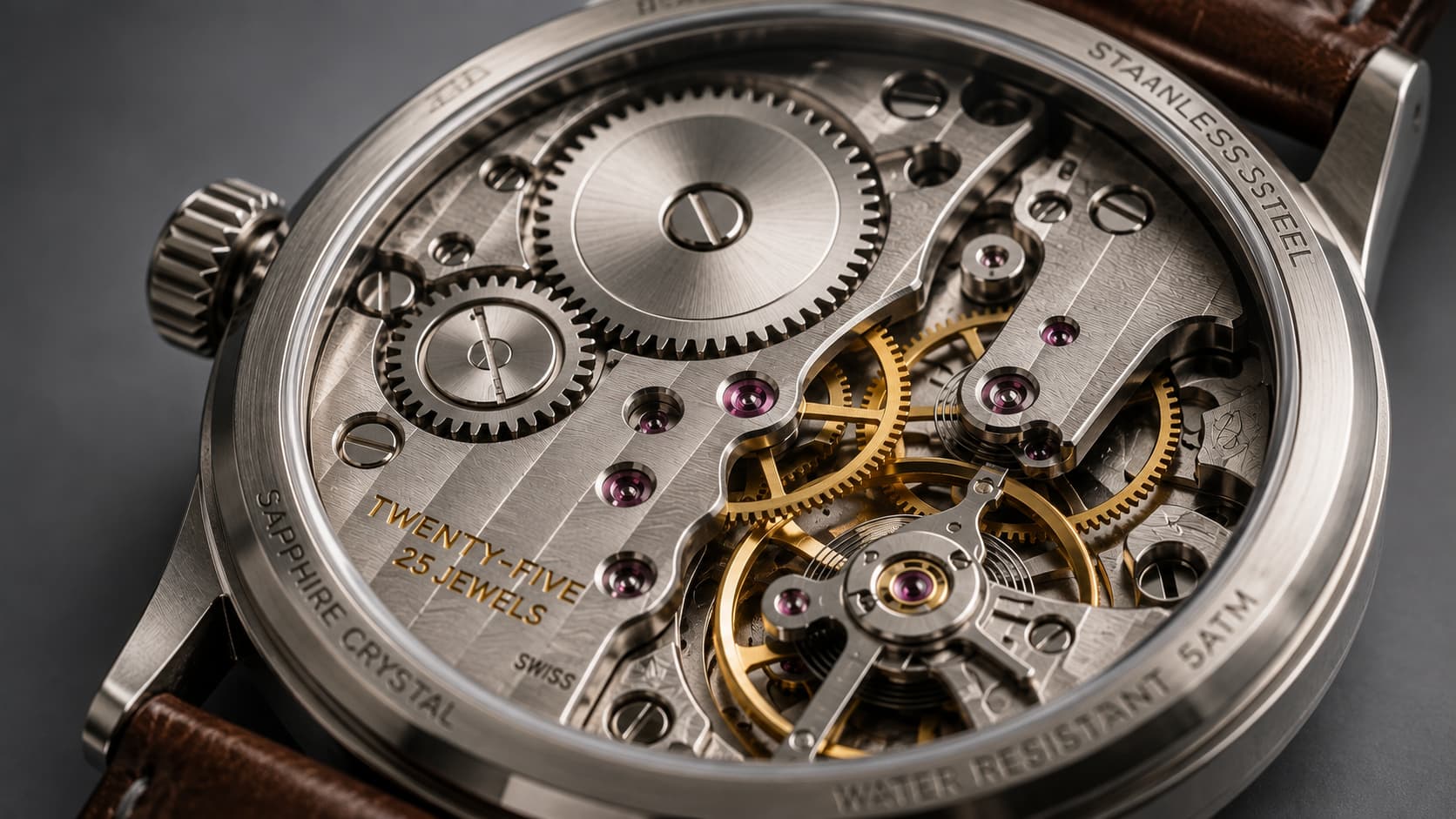
Not automatically, and this is the part the marketing rarely admits. What actually determines how well a watch performs is the quality of the engineering and the precision of the manufacturing — not which building the parts came out of.
ETA has been producing movements since 1793 in one form or another, with the modern company taking shape in 1856, which is an extraordinary amount of time to refine a single craft. Movements like the ETA 2824-2 and 7750 have powered chronometers accurate enough to meet strict independent testing standards for decades. Meanwhile, plenty of in-house movements from newer or smaller manufacturers simply haven’t had the same runway to iron out flaws. One frequently cited comparison pits a well-regarded in-house Seiko workhorse movement against a properly finished outsourced ETA 2824 — and most watch collectors comparing the two would choose the outsourced chronometer-grade ETA over the in-house Seiko caliber, because raw accuracy has never been the Seiko movement’s strong point. The lesson: in-house isn’t a guarantee of superiority, and outsourced isn’t a mark of inferiority. It comes down to the specific movement inside the specific watch being considered.
Why Do In-House Movements Cost More?
Even when performance is similar, in-house movements almost always add cost — and that’s less about quality and more about economics. Designing, tooling, and manufacturing a movement from the ground up requires enormous upfront investment in machinery, engineering talent, and testing, all of which gets built into the retail price.
Buying an established movement from a specialist supplier spreads that same development cost across every brand using it, which is exactly why outsourced movements tend to appear in more affordable watches. There’s also a longer-term cost difference worth knowing about: overhauling and repairing an in-house caliber is often pricier, since parts and trained technicians are less widely available compared to a mass-produced movement like an ETA or Sellita, which almost any competent watchmaker can service using easily sourced parts.
In-House vs. Outsourced: Repair and Servicing
An outsourced movement is generally easier and cheaper to get serviced, simply because so many watchmakers already know it inside and out. Parts for movements like the ETA 2824-2 or Sellita SW200 are widely stocked, and independent watchmakers everywhere have serviced thousands of them.
In-house movements often have to go back to the brand itself or to a small number of specially trained repair centers, which usually means higher costs and longer waiting times. This isn’t a dealbreaker for most owners, but it’s a real practical difference worth weighing for anyone planning to wear and service a watch for decades rather than keep it as a display piece.
How to Tell If a Movement Is In-House or Outsourced
Figuring out what’s ticking inside a watch is usually straightforward with a little digging.
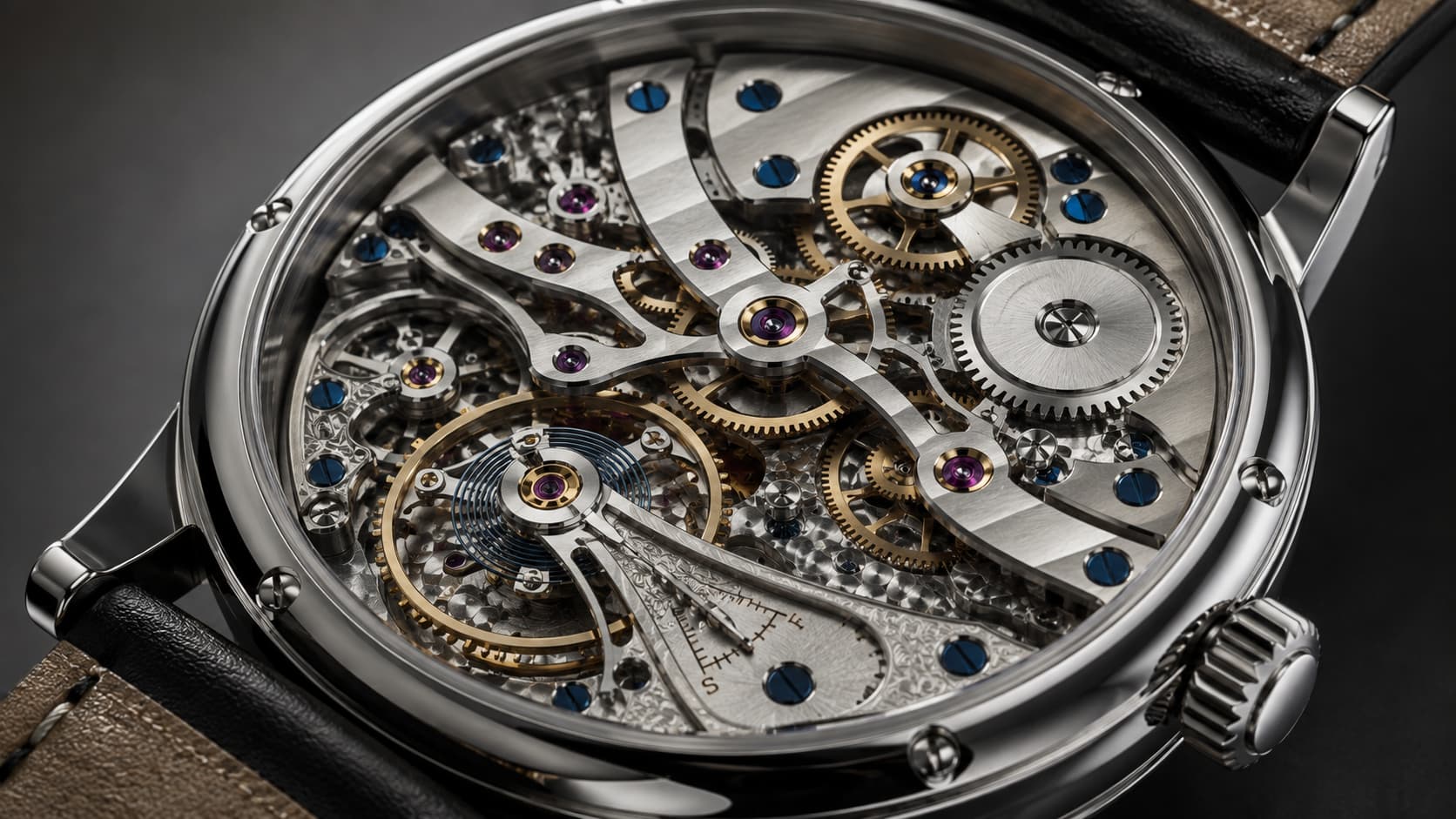
- The case back. Many watches with display case backs reveal the movement directly, with the caliber name often engraved on the bridge or rotor.
- The reference documentation. Brands typically list the caliber name in a watch’s official specifications, on the box, papers, or warranty card.
- The caliber name itself. Searching a term like “ETA 2824” or “Sellita SW200” usually confirms the source instantly, since these movements are extremely well documented.
- The manufacturer’s customer service. Support teams can usually confirm whether a movement is proprietary, modified, or sourced from an outside supplier.
Frequently Asked Questions
Are outsourced movements bad quality?
No. Reputable suppliers like ETA, Sellita, Miyota, and Seiko produce movements known for long-term reliability, and many are used in watches that perform just as well as far more expensive in-house alternatives.
Why did some brands stop using ETA movements?
Starting in 2002, the Swatch Group signaled it wanted to stop supplying ETA movements to outside brands, and a lengthy, regulator-supervised phase-down followed over the next two decades. That squeeze pushed many brands to develop their own movements or switch to alternative suppliers like Sellita and Miyota well before the legal dispute was fully settled.
Does a higher price always mean a better movement?
Not necessarily. Price often reflects development costs, finishing, brand positioning, and exclusivity rather than a direct measure of accuracy or durability. A well-made outsourced movement can outperform a poorly engineered in-house one.
Is Sellita the same as ETA?
They’re separate, competing Swiss companies today, though Sellita spent years as an ETA assembly partner before developing its own movements. Sellita’s SW200 was built to replicate the ETA 2824-2 closely enough that brands could switch between the two without redesigning their watch cases.
What do ETA and Sellita movement grades actually mean?
They indicate how precisely the movement has been regulated and finished, ranging from Standard (adjusted in two positions, looser accuracy) up to Chronomètre (adjusted in five positions and independently certified by the COSC). A higher grade means tighter timekeeping and, usually, a higher price for the watch.
Can an in-house movement ever be worse than an outsourced one?
Yes. Movement quality depends on engineering and manufacturing precision, not simply on who built it. A newer or less-refined in-house caliber can genuinely underperform a well-established outsourced movement with decades of fine-tuning behind it.
The Bottom Line
The in-house versus outsourced debate isn’t really about which side wins — it’s about understanding what a given price tag is actually paying for. In-house movements can offer exclusivity, brand-specific engineering, and bragging rights, but they come with a real cost premium and often pricier, slower servicing down the road. Outsourced movements from specialists like ETA, Sellita, and Miyota trade some of that exclusivity for proven reliability, easy repairs, and lower prices, without necessarily giving up accuracy or durability. The smartest approach isn’t to rule out either category on principle, but to look at the specific movement inside a specific watch, since that’s what actually determines how it will perform for years to come.